speaking of the confederate flag

ok, so, i like kid rock a little bit.  for three reasons: 1. he’s from detroit (well, Michigan anyway) 2. i think his song Amen is brilliant and beautiful 3. he has a biracial son (is that, like, racist of me…or some kind of positive prejudice…or just silly?)

anywho, i do not like his use of the confederate flag.  to be fair, i don’t like anyone’s use of it.  especially if the user has a child of some significant color.  i understand that to some people the flag is simply a symbol of “southern pride.”  i really do believe that said people do not view the flag as a pro-slavery emblem… they don’t go around looking at black people wishing they were allowed to own them.  that’s too easy, too “obvious racist bad-guy.”  but, i think it is from a vantage point of either white privilege or ignorance (or both) that one can insistently be so insensitive as to say (or infer) “i know that this flag is hurtful to many, it reminds them of a time when they were considered less than human and were treated no better than cattle, it may make them feel unsafe…they may get the idea that i think back on those days as the good old days and wish we could revert back to them.”  i’m sorry, but the flag is just  not THAT cool, not worth all of that.  nothing is.  i would like to believe that it would be an easy “sacrifice” to put that flag away (as in not on your car, belt buckle, t-shirt…but whatever you want in your own home…) so as not to bring up all of that hateful, hurtful stuff to the people who are still negatively affected by the history of the flag, the implications of it.  how about a little more love, compassion, sensitivity… amen.

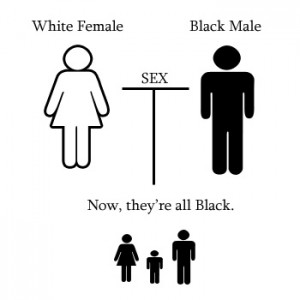
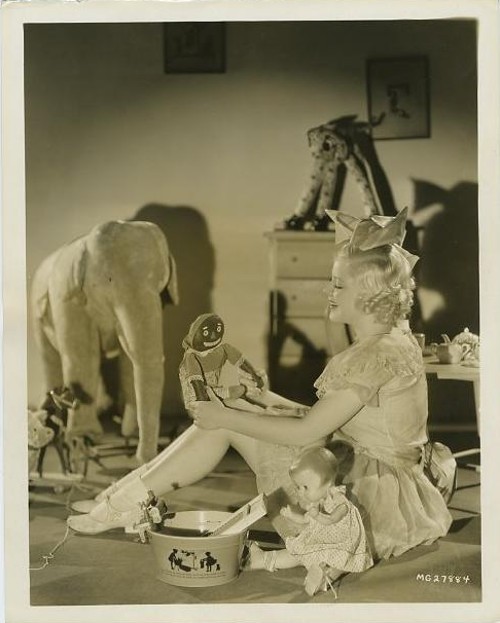
i mean, this is really not that much cooler than this….

not enough to warrant offending people to their core… even if it’s only 14 people, even one… especially if the one might be your kid, Kid.

Kid Rock’s NAACP Award Protested Over Use Of Confederate Flag

via HuffPost Entertainment

Some people don’t think Kid Rock is meeting their great expectations.

The rocker is set to accept the NAACP’s Detroit chapter’s Great Expectations Award at their annual Freedom Fund dinner in May, and some members of the historic black rights organization are so unhappy about it, they’re boycotting the 10,000 person affair.

It’s the singer’s use of the Confederate flag in his stage shows that has them so upset, according to the Detroit News.

“It’s a slap in the face for anyone who fought for civil rights in this country,” Adolph Mongo, head of Detroiters for Progress and a boycotting NAACP member told the paper last week. “It’s a symbol of hatred and bigotry.”

For his part, Rock defended the use of the flag in a 2008 interview with the Guardian. “Why should someone be able to own any image and say what it is?” he said. “Sure, it’s definitely got some scars, but I’ve never had an issue with it. To me it just represents pride in southern rock’n’roll music, plus it just looks cool.”

He also spoke about touring with a famed rapper and how it impacted his audience.

“I’ve got Rev Run [from Run DMC] on tour with me right now – we have fun trying to count the number of black people every night. We’re like, ‘There’s 14 tonight, yeah!'”

Though he was a staunch defender of President George W. Bush, the singer went to back for Barack Obama after his election, in the process defending America against accusations of racism.

“It’s good the U.S. has proved it’s not as racist as it’s sometimes portrayed,” he told Metro UK (via Spin Magazine).

He also spoke about his own experience growing up with black people in the interview, saying, “Black people were kind to me growing up and taught me hip-hop and the blues.”

For more on the NAACP controversy, click over to the Detroit News.

social differences/systematic consequences

I’ve just spent the last two hours transfixed by this website.  Definitely worth perusing!

A few personal asides:

I must say that I’m sure my (white) dad would have gotten on the bus and had some words with folks if that thing had happened to me (you’ll read it)…

biracial people can be as insensitive as everybody else and aren’t always the “victims” of ignorant words…

the “you’re gay be with that gay guy” one reminds me of the times someone has wanted to fix me up with someone they’re sure I’m perfect for and it turns out it’s just the other “black” person they know….

ABOUT THIS PROJECT

this project is a response to “it’s not a big deal” – “it” is a big deal.  ”it” is in the everyday.  ”it” is shoved in your face when you are least expecting it.  ”it” happens when you expect it the most.  ”it” is a reminder of your difference.  ”it” enforces difference.  ”it” can be painful.  ”it” can be laughed off.  ”it” can slide unnoticed by either the speaker, listener or both.  ”it” can silence people.  ”it” reminds us of the ways in which we and people like us continue to be excluded and oppressed.  ”it” matters because these relate to a bigger “it”: a society where social difference has systematic consequences for the “others.”

but “it” can create or force moments of dialogue.

~~~~~~~~~

This blog seeks to provide a visual representation of the everyday of “microaggressions.” Each event, observation and experience posted is not necessarily particularly striking in and of themselves.  Often, they are never meant to hurt – acts done with little conscious awareness of their meanings and effects.  Instead, their slow accumulation during a childhood and over a lifetime is in part what defines a marginalized experience, making explanation and communication with someone who does not share this identity particularly difficult.  Social others are microaggressed hourly, daily, weekly, monthly.

The term “microaggressions” was originally coined to speak particularly to racialized experiences.

“Racial microaggressions are brief and commonplace daily verbal, behavioral, or environmental indignities, whether intentional or unintentional, that communicate hostile, derogatory, or negative racial slights and insults toward people of color.”  – “Racial Microaggressions in Everyday Life”

This blog, however, is a space to extend this concept to different socially constructed identities that embody privilege in different ways – sexuality, class, religion, education level, to name a few – in hopes of making visible the ways in which social difference is produced and policed in everyday lives through comments of people around you.

  • Me, a light-skinned biracial girl at a party last weekend:: Okay, a Jack means categories.
  • White guy:: How about minorities you would sleep with?
  • Me:: As a minority, I find that offensive, like sleeping with us is a sacrifice.
  • He looks at me like he hadn’t realized he was in “mixed” company and back-pedals (“I didn’t mean it THAT way”); kisses my ass for the rest of the night, but never apologizes. Made me feel frustrated and invisible.
  • Teacher :: Black men are naturally more aggressive and strong than white men.
  • Me:: No, it has to depend on the man, surely.
  • Teacher :: Not really, no white man could…
  • Me:: Your husband is 6ft tall well built and my dad is 5’7ft and very lean, your husband could wipe the floor with him.
  • Teacher :: There are odd exceptions but, in general.
  • I was 15, Secondary School, England 2001. Made me feel gobsmacked, worried that I would be graded unfairly.
  • I was at the mall earlier today with a group of friends. Another guy from school joins us.
  • New guy:: So, what are you?
  • Me:: My ethnic background?
  • Him:: Yeah
  • Me:: Well, I’m French, Spanish, Irish, Italian, Black American, Mexican, Puerto Rican, American Indian–
  • Him:: No you’re not
  • Me:: Pardon?
  • Him:: You can’t be American Indian. They’re all extinct.
  • I am a 17 year old girl, at a shopping mall. Made me feel frustrated, invisible, patronized.

    They probably just had a crush on you.”

    -What my white father said when I told him two white students called me the n-word on the bus.

    “I would never, ever hire someone with a “black” name on their resume. I wouldn’t even interview them.

    -An African American co-worker at a team dinner.

    • Girl at country themed bar:: Hey, you’re black…
    • Me, a 23-year old male::
    • Girl:: I’m not racist or anything…but WTF are you doing here? There are Confederate rebel flags and sh*t here.
    • Me:: ….
    • Girl:: Oh, I know. You’re here for the white girls.
    • Me:: -_-
    • Girl:: Buy me a drink.
    • Made me a bit uncomfortable.
    • Customer:: If more black people were like you the world would be a better place.
    • Black me:: Have a nice day.
    • What I wanted to say:: If fewer people were as ignorant as you, people who look like me would have better lives. I was 18. (He was in his 40s or 50s.) when: spring 1998, working at Barnes & Noble in Louisiana. 

    You know, it’s so amazing. I was just looking at your hands and feet- they’re so dark on the top, but then at the palms they look just like ours! Hahaha.”

    -My gymnastics coach in front of my suburban, entirely-white team, in which I am the only black person.

    • Workfriend:: Hey that new guy at work is gay; you should totally be with him.
    • Me:: No I don’t find him attractive.
    • Workfriend:: But… he’s gay! You’re gay, he’s gay, what’s stopping you??
    • Me:: Just because he’s gay doesn’t mean-
    • Workfriend:: Ummmmm, he’s gay. He likes having sex with guys like you. You’re just afraid. Duhhh.

    I was 21, at work. Made me feel annoyed, hurt and trivialized. Gay people don’t have sex with anyone just because they are both gay.


    He was pretty dark, so he’s probably not paying rent because he’s an illegal and doesn’t know English.”

    -My (white) stepfather regarding one of his renters. Made me ashamed because I’m Hispanic, too.

    I’m a black woman. My black female friend once told me that a white guy once said to her, “You’re really pretty for a black girl.” And her response was, “I know.”

    Made me realize her and my own unrecognized self hate. Made me feel sad and guilty.

    You could pass for Dominican; some of them are really dark and have bad hair like you. Luckily, I got the GOOD hair”.”

    -Said to me by the black Dominican-American boyfriend of my biracial (black/white) friend visiting us during Spring Break. I am a 20 year old black American woman with naturally kinky-curly hair. Made me feel shocked, ugly, unimportant.

    This 1895 charicature is an unkind parody of a woman seeking to smooth out her hair. The comic strip suggests that her hair stood out on end because of a hair-raising novel.
    • My black/white biracial friend looks at the Facebook profile of a black man she’s crushing on.
    • Her:: Ugh, his [mono-racial and black] girlfriend is so ugly. They’d have kids with huge nasty noses. He needs to get with me and my good mixed nose. *giggles*

    I am a black 20 year old American woman. We were studying together at another friend’s apartment. Made me feel insulted, ugly, disfigured, and defective.

    You know why Vermont is so safe, don’t you? There’s hardly any minorities in it!”

    I was in NY yesterday, meeting my future in-laws for the first time when my fiance’s father said this. He is a white man in his 70s. I am a 22 year old biracial black cis woman …who lives in Vermont. It made me feel furious, invisible, helpless, rejected.

    this is not ok

    The picture is super-cute.  It’s totally o.k.  One could come up with adorable captions.  However, half of the “cleverly cavalier commenters” offered up offensive ones.  It almost pains me to say that I assume (which we all know is a stupid thing to do… ass-u-me) that these smart a**es are privileged white kids tooling around on their macbook pros feeling quite awesome and funny while totally oblivious to… well, i don’t know exactly what… to everything?

    SOURCE

    sup?

    Rated Comments:
    machofinger -BEST- 33 points: 2 days ago
    soo…do i give you my wallet now or ten years later?
    MichaelPorter 10 points : 2 days ago

    That’s actually a pretty culturally-artistic picture.

    RyFro 7 points : 19 hours ago

    yo dawg, we got those flintstones. Orange $5, Purple $10, Red $15.

    joshtherealist 6 points : 1 day ago

    no i didnt enslave your great grandparents! no i wont give you my back pack.. stop blaming me for everything i wasnt around for!!!

    jokesonpics 2 points : 18 hours ago

    Can you take this bag through customs for me girls? Dont worry theres nothing illegal in it.

    kuroi 2 points : 2 days ago

    Watching ‘The Wire’ makes this picture funnier, to me.

    edarruda 1 point : 2 hours ago

    Were you made at night?

    tmonster 1 point : 22 hours ago

    adorable!

    a more appropriate (not to mention genius) exhibit

    now this is the kind of exhibit i’d pay to see! i would like to take this time to say “told ya so.”  not that anyone’s really argued against this point with me.  i’m just sayin’… it doesn’t exist… and yet it dictates life chances and prevents us from being open to what exists and really matters in ourselves and each other.

    Museum of Science explores science, concept of race

    By Chris Bergeron/DAILY NEWS STAFF

    BOSTON —An African, an Asian and a North American viewing the new exhibit “Race” at the Museum of Science might be surprised to discover they have more in common than individuals of any other species on Earth.

    They would learn their variously colored complexions derive from how their skin processes folate and vitamin D. The African would find he’s susceptible to sickle cell anemia, not because of his race but because of the prevalence of malaria in his homeland.

    And all three might be troubled to learn world-famous psychologist Arthur Jensen has written that differences in their intelligence can be attributed to their racial origins.

    By the exhibit’s end, each might answer the question in its subtitle, “Are We So Different?” by saying, “No, not based on our genes.”

    Combining scientific, anthropological and historical evidence, the exhibit argues the fundamental concept of race and racial differences has no biological basis but is a man-made distinction with immeasurable social consequences over the centuries.

    Developed by the American Anthropological Association and Science Museum of Minnesota, “Race” invites visitors to examine race and racism through exhibits, interactive stations and artifacts.

    1x1334355984.jpg

    Museum President and Director Ioannis Miaoulis said it’s the first exhibit to examine race and human variations using the most up-to-date genetic discoveries.

    “This exhibit can be inspiring, revealing and even life-changing,” he said opening the show last Thursday.

    Chioma Nnaji, research coordinator of the UMass Horizon Center in Boston, praised the exhibit for explaining how a broad misunderstanding of race “complicated” relations between people by emphasizing superficial differences over shared interests.

    Citing cutting-edge genetic research, the exhibit states, “Race is a recent human invention.”

    Nina Catubig Nolan, chairwoman of the museum’s Race education team, said, “The idea of race doesn’t have a basis in biology. Humans from around the world share 99.5 percent of their genes. That’s more than chimpanzees or fruit flies,” she said.

    Flawed science results in social injustice.

    The failure to recognize our common genetic heritage is demonstrated by a photo that shows how the U.S. Census labeled people based on mistaken ideas of pigmentation and appearance.

    From 1850 to 2000, a mixed-race woman would have been variously described as “mulatto,” “Negro” or, recently, “White and African American.” From 1930 to 1990, a woman from Tijuana who moved to Texas would have been labeled “Mexican,” “white” and “Hispanic white.” Over the course of the 20th century, Inuit women have been called “Indians,” “Eskimos” and in 2000 “Alaska natives.”

    Wall text by that photo states: “The idea of race is tied to power and hierarchy among people. The legacy of race continues to shape the lives and relationships of people in the U.S. and around the world.”

    Paul Fontaine, vice-president of education at the Museum of Science, said “Race” provides “a perfect opportunity to look at a sociological issue through a scientific lens.”

    Museum official sought to open the exhibit just before Martin Luther King Jr. Day and over the following months to encourage discussion about a timely issue and provide an opportunity to present related events and activities, he said.

    “When we first saw ‘Race,’ we loved the way it was presented. It was powerful and emotional and based on current genetic research. From this exhibit, visitors will learn race is an artificial construct. Yet it has been the basis for categorizing people and all the negative reactions that have followed from that,” said Fontaine.

    “Race” includes fascinating, even a few disturbing, artifacts.

    A “hair color table” that measured the spectrum of hair color from Aryan blonde to less desirable shades was used by Nazis to provide a scientific basis for the practice of “racial hygiene” that legitimized the deaths of millions of “non-Aryan” Jews, gypsies and Slavs.

    Closer to home, visitors can see a placard for a “Colored Waiting Room” and a sign announcing “We want white tenants for our white community.”

    And debunking a television crime show staple, the exhibit uses photos and expert testimony to show forensic pathologists can not definitively determine a victim’s race from their bones and teeth with the regularity or ease of investigators on “CSI Miami.”

    Unlike many Museum of Science exhibits, “Race” devotes more than half its gallery space to establishing a historical and social context for its premise that humans have misused the idea as a tool to discriminate rather than seek common ground.

    The most effective parts of the exhibit help visitors understand the genetic science that provides the exhibit’s foundation. By twisting a dial, visitors can direct human migration from 100,000 B.C. to 40,000 B.C. across a world map.

    At the exhibit’s opening, musician and sound artist Halsey Burgund previewed a segment of his audio installation, “Voices Without Faces, Voices Without Race,” which consists of snippets of conversation from more than 250 people discussing race.

    Commissioned by the museum, he recorded people along Rte. 128 responding to three questions: When did you first become aware of race? When were you first privileged by or discriminated against because of race? And, What is your experience of race in Boston? The audio installation will open Feb. 3.

    Khaalie Parham, a 15-year-old sophomore at Community Charter School in Cambridge, said people react differently to him depending on whether he’s in his predominantly white hometown of Belmont or among his peers.

    “Race has a huge significance in my life. If I’m in Belmont, people look at me differently or cross to the other side of the street than I’m walking on,” he said. “In my school, race isn’t much of a factor. But if people look past differences and what other people say and follow their own mind, then race stops dividing people.

    THE ESSENTIALS:

    WHAT: “Race: Are We So Different?”

    WHERE: Museum of Science, Science Park, Boston

    WHEN: Through May 15

    ADMISSION: $21 for adults, $19 for seniors (60+) and $18 for children (3-11)

    INFO: 617-723-2500, TTY 617-589-0417, www.mos.org.

    Visit the American Anthropological Association’s Race Project at www.understandingrace.org

    SOURCE

    recently on the interweb

    I’ve come across some interesting stories, commentary, and subsequent comments all dealing with… Biracialness! Big shocker, right?  I love reading the comments.  So many different opinions, which simply reinforce my will to stay with my self and stand confident in my personal ideology.

    The Seattle Times

    Via

    Rant and Rave Rant to the women on the bus who, when asked to quell their use of expletives around my young children, disparaged me for having a biracial family and insulted my daughters’ hair. Rave to the man who told them my request concerning their language was valid and that they had no reason to insult me and my family. Thank you, sir.

    Answer.com

    JUST ASK AND LET THE OTHER TO ANSWER IT FOR YOU

    Via

    Pregnancy & Parenting

    How do I tell my mum I’m having a mixed race baby?

    the baby is going to be half black but i don’t think my mum or my family would be too happy about it.. I want my family to accept the baby but what can do I to make them accept my unborn baby…

    5 Responses to “How do I tell my mum im having a mixed race baby?”

    blessed says:

    all you can really do is explain to them as much as you can to get them to understand, but even at that it might not change their minds, but if it doesn’t then just say it’s my baby and no matter what it is going to be family and they’ll just have to get over it.

    Charles J says:

    You don’t. I would recommend getting an abortion. No one likes a half-breed.

    VincentL says:

    just tell them straight up…they probably be very mad at first but sooner or later they will adjust to i

    Due 12.3.10 says:

    just tell her its ur child..

    R.I.P Michael Jackson says:

    u don’t have to they will c it when u have it………….

    Run, Racists, Run! Biracials Are Everywhere!

    By Sam Watson

    Via

    Gone are the days where the majority of people will shout racist remarks at those of color on the streets. It still happens, but nowhere near as much as in the past. Racists are kind of afraid to spew their hatred in public, and I feel us biracials are to blame. We represent an abomination to racists. An old, white guy- a complete stranger- once saw my mom (white, Ukrainian) with my sister and I, when we were very young children, and he shouted, “Slut!” at her. We’re mixed – half white and half black. We represent an absolute breakdown of a racist’s hateful beliefs.

    …Racists don’t know whether or not the “white” person next to them is either mixed or married to someone of a different race. Racists better up their paranoia levels, and warn the town sheriff in Bigotville.  During the World Cup, I turned to my seemingly white co-worker, and started ragging on the Mexican team. She instantly scowled at me in return. I forgot! She’s half white and half Mexican! Even I- a biracial- was fooled! We’re everywhere, now, and this is a racist’s worst nightmare.

    Comments

    -You are right. When it comes to black people, they now hate themselves much more. All of us are mixed up with something. We are one human race. Our race is different from that of the animals, not each other.
    -A study I heard cited recently encouraged parents to discuss race and racism with their kids. Several families dropped out because they were so uncomfortable with this requirement of the study.

    The study discovered that racism is not discussed at all in many progressive, liberal households. The idea is that if we’re all supposed to be colorblind, discussing race, or any difference for that matter, is taboo. Of course, that’s the best way to make it a dark, secretive thing- precisely the problem. People who desperately want their kids to be not just tolerant, but accepting, are practically guaranteeing their kids get no exposure to the subject by pretending it’s not there.

    Racism and bigotry is a vampire- it can’t stand the light. If we want it to die out, we have to do the uncomfortable, inconvenient thing and talk about it even when it’s not a major in-your-face problem.

    -I am half German (white) and Puerto Rican (brown) and I always baffle people. I think it’s interesting that we assume that racism is disappearing when I feel like it is only growing. In an all colorful nation I still feel like I need to watch what I say when I am naming a race ~ whether it’s politically “correct” or not because I never know who is going to be offended.

    -You better believe we are everywhere. Though I know I’m not the only unique biracial person out there, I do admit that people are surprise when they hear that my mom is from Dominican Republic and my father is from Afghanistan. Talk about fusing two totally different cultures.

    I also understand when you talk about racism being a private thing. My step mother is racist, even though she’s married to my father. It makes me mad when she makes stupid comments regaurding race. She also tries to inplant her ideas on my half brother. I try my best to counter these thoughts though… my diverse background has raised me to be open to new ideas, cultures, and people. The more people who are biracial, the more tolerance we have of one another.

    -Racism is still alive but it’s a endangered species. I say this because the current generation doesn’t hold race as important as the previous ones. Most of my friends (I, myself included) have bi-racial children. At times I wonder when these kids grow up will that look at their peers and ask in shock “You’re not mixed?” I think it’s a great thing, however as parents we still need to pour our cultures into the children, letting them know they have and even more extended set of roots and the beauty contained within both.

    -Racism is part of human nature. Embrace it!

    -I’m old enough to have seen overt racism, as well as the more prevalent covert racism. Sometimes I feel that the only hope we have to eradicate racism is the gradual blending of all races into an “everyman.”

    -I was recently showing off pictures of my friends in New York to some people here. They nodded politely at all of them, but paused at a picture of two my best friends.

    “What race are they?” I was asked.

    I couldn’t believe it mattered. A lot of my previous pictures had been of people who were black or Asian or of some non-white race, but these two mixed-race girls came into question?

    “Er, she’s Romanian and Jamaican, and she’s Indian, Portuguese and Italian.”

    “Oh, okay.” The guy replied. “I just couldn’t figure it out.”

    Why should you have to?

    whiteness defined

    This one is so good that I don’t have perspective to add or anything witty to say about it.  However that could just be because I’ve only had three hours of sleep and just can’t do any better.  Either way, this excerpt of a transcript of an NPR interview is definitely worth reading and pondering.  You could also listen to it in it’s entirety HERE.

    Author Examines ‘The History Of White People’

    Once upon a time, notorious laws in this country defined as black anyone with as much as one drop of black blood. Similar laws struggled with the rights of people of mixed race, octoroons, for example. But nowhere can you find a definition of white people, and as a practical matter, that non-definition has changed. Ethnic groups now regarded as white Irish, Jews, Italians – were once very much on the outside.

    These points (are) from Nell Irvin Painter’s new book, “The History of White People,” which traces ideas about color and race from antiquity to the Obama administration.

    This is TALK OF THE NATION. I’m Neal Conan in Washington. Nell Irvin Painter is our guest…

    CONAN: …you conclude at the end of your book, you say the fundamental black-white binary endures even though the category of whiteness or we might say more precisely a category of non-blackness effectively expands. That non-blackness, is that by lack of a definition of whiteness?

    Ms. PAINTER: Yeah, that’s about how it goes. There as you noted, there have not been legal definitions of whiteness. It’s kind of what’s leftover from blackness.

    CONAN: What isn’t.

    Ms. PAINTER: And blackness, there’s the idea of a one-drop rule is an idea. What the states did was say one-fourth, one-eighth, that kind of thing, one grandparent, one great-grandparent. That’s how they decided what one drop was.

    I suppose people use the word one drop because actually color disappears very quickly in people. And so you can look functionally white with one black grandparent, which in most places would make you legally black. So what makes you black has been defined and redefined and re-re-redefined. What makes you white is what’s leftover.

    CONAN: And in fact, you say that has been, well, ill-defined but redefined and redefined over the years, too.

    Ms. PAINTER: Yeah…  The whole point of defining races is mostly to put people down, and so those needs change over time. Who do you want to put down? Well, you want to put down, say, Jews and Italians and Slavs 100 years ago, but 150 years ago, you wanted to put down the Irish.

    …We think of race as something physical, biological and permanent, but the way people used race in the 19th and 20th centuries and probably still today is that it has to do with temperament, racial temperament. So how people look on the outside is a key to what they’re like on the inside, their temperament. So that had to do with Protestantism, too.

    …CONAN: It’s interesting, Nell Irvin Painter, you describe how, in fact, racial laws made a transition in the late part of the 20th century from being used to exclude persons of color to define injustices against persons of color.

    Ms. PAINTER: Not persons of color, Negroes, to be exact. The laws were against Negroes. But you’re absolutely right that before desegregation, before the Civil Rights Act of 1964, all those laws, exclusionary laws, were meant to keep Negroes out. And the counting up was to keep Negroes out.

    And after that, particularly after the 1970s, the need to rectify the injustices meant that we had to count people in order to straighten things out. So now we count up racial categories, say, to track mortgage lending, where there’s still a good deal of racial discrimination.

    So in the census, the census keeps counting us by race for purposes of undoing racial harm in the past.

    Read more (or listen) HERE

    profiled

    Yes, I believe they were… Disturbing.

    Teen With Asperger’s Arrested: Were Callers Racial Profiling?

    by Ken Reibel

    VIA

    Reginald Latson loves to walk.

    “He’ll walk five or 10 miles, it’s nothing to him. Sometimes he walks five miles just to grab a bite to eat at Chili’s,” says his mother, Lisa, who lives in Stafford, Virginia. “Walking is his release.”

    Neli, as his family calls him, is 18 and has Asperger’s, a mild form of autism. Three Mondays ago, he rose early and left home without telling his mother. “When I entered his room at 6:30 am and didn’t see him, I assumed he had gone for another walk,” she says. It was a school day.

    Four hours later Stafford County authorities had ordered a lock down for eight schools, and Neli was in police custody, facing one count of malicious wounding of a law enforcement officer, one count of assault and battery of a law enforcement officer, and one count of knowingly disarming a police officer in performance of his official duties. The cascade of missteps that led to the arrest suggest a combination of public racial profiling and the over reaction of law enforcement officers who are unfamiliar with autistic behavior.

    * * *

    After Neli left home early that morning he walked two miles to Porter Library on Parkway Blvd. “He goes there frequently. There’s a teen room there, and he enjoys it,” says Lisa. The library was closed, so he sat under a tree, in the grass, at the front of the building. The parking lot at Park Ridge Elementary, about 400 feet to the west, was filling up.

    According to officials reports, someone at the school called police at about 8:38 am to report a suspicious person sitting outside the library, “possibly in possession of a gun.” A bulletin went out with Neli’s description, and officials, concerned that a gunman was on the loose, ordered a school lockdown and set up a search perimeter.

    When police arrived at the library, Neli was gone. Unaware of the report, and impatient for the library to open, he began walking in the direction of the high school. A forested green belt of trees some 500 feet-wide with a well-worn path separates the school from nearby homes. At about 9 am, a “school resources officer” who is also a Stafford County Sheriff deputy approached Neli. That’s when accounts begin to diverge.

    Lisa said her son complied with a search, which failed to find a weapon. Police say Neli “attacked and assaulted the deputy for no apparent reason.”

    Neli told his mother that the school officer threatened him, and that Neli said “You’re harassing me. You’re not allowed to do that. I know my rights,” then turned and walked away. According to Neli, the officer grabbed him from behind and choked him. Police reports say a scuffle ensued, during which the officer pepper sprayed Neli. The police version, which you can read here, says Neli then took the spray from the officer and turned it on him.

    According to Lisa, Neli said he took the spray and ran into the woods. The deputy, Thomas Calverley, reportedly suffered a cut to the head and a broken ankle, and underwent surgery.

    By this time sheriff deputies were combing the area with search dogs, and at least one TV news crew offered a breathless live report of the manhunt. Neli somehow eluded the dragnet for another 45 minutes before being spotted and arrested in the high school parking lot, shortly before 10 am.

    No gun was found “and subsequent investigation has indicated that that a gun was not actually seen by the reporting parties,” according to the official report.

    Lisa learned of the arrest at 10:30 am, when she called the police to report that her son was missing. “I was told that he was in custody and was currently being questioned but I was not told why,” she said. “They wouldn’t tell me anything, and wouldn’t allow me to visit him. I told the police that Neli has autism, but they didn’t seem to care.”

    For the next 11 days, Neli was held without bail, and in isolation at the Rappahannock Regional Jail. Police allowed Neli’s school counselor to visit, and she relayed messages and information to Lisa, who was allowed only one visit. “He wasn’t able to speak or communicate with me. He appeared to be in a catatonic state,” Lisa says.

    She is understandably frustrated and angry.

    “The actions that were taken by the police that day were excessive in the least and grossly mishandled,” she wrote on a website started to counter inaccurate local media reports. “Someone says ‘I see a suspicious black male’ and he ‘could’ have a gun, while all my son was doing was sitting in the grass at the library. And you shut down six schools and go out on a manhunt for this dangerous black man who was sitting in the grass. Anyone can read between the lines and see that this just doesn’t add up.”

    2010-06-13-Neli61310.jpg

    Neli is from a military family, and during his 18 years has lived in Florida, Germany, Oklahoma and Georgia. Seven years ago his family moved to Stafford, a sprawling bedroom community about an hour south of Washington, DC. The family struggled to find appropriate school placement, finally settling on a private school. “The public high school was crowded, with about 30 kids to a class. Neli wasn’t getting the attention he needed, and his self esteem was slipping.” But he had never been in serious trouble. Never like this.

    Lisa heeded the warning signs. A month earlier, she asked Neli how he would feel about wearing a medical alert bracelet that identified him as a person with Asperger’s. “He said that he didn’t have a problem with that, but I didn’t follow up. I’m just kicking myself for that,” she said.

    Lisa, who works as a defense contractor, had also asked for a two month leave of absence to spend more time with Neli. That Monday was her first day off work. Her husband, Neli’s stepfather, retired from the Army and is currently stationed in Iraq as a military contractor.

    * * *

    As Neli’s time in isolation dragged on, police interrogators found him non-responsive and disturbed, and a judge ordered the young man transferred to a state mental institution for 30-days of treatment and evaluation. If the case is not resolved by then, he will end up back in jail.

    The hospital is a two-and-a-half hour trip from Stafford, which Lisa says she has made four times. Horrified, she watched her son’s mental state worsen with each visit. “He is locked away and doesn’t understand why,” says Lisa. “He’s been through an ordeal.”

    That ordeal has also changed Lisa, and the way she thinks about race, the police, and her community. She suspects Neli’s arrest was in part racially motivated, but it is not a charge she makes lightly.

    “I used to donate money to the police benevolent society. I never imagined something like this could happen,” she says.

    “I don’t think in terms of ‘watch out for those kinds of people’ or ‘you need to be scared,'” she says. “I grew up in south Florida. That’s a melting pot of cultures. I know there are good people and bad of every race.” Her life in the military, she says, has brought her friends “of every racial background.”

    Has the ordeal changed her views on race and racism?

    “It has,” she said, her voice trailing off. “It most definitely has.”

    * * *
    Cross posted at AutismNewsBeat.com

    exception

    …to the “race doesn’t matter” mantra.  It seems to be relevant when physical health is the issue.  Actually, mental health as well, but that’s a different story.  Anywho, I’m happy to read of this research and find it interesting that supremacists are happy to hear of it too.

    Genetic screening may redefine medical treatments

    by Carolyn Johnson

    SOURCE

    SAN FRANCISCO (KGO) — New research out of UCSF shows that tracking a patient’s genetic ancestry can improve the diagnosis of asthma and other lung diseases. The results could have broader implications for other diseases that also rely on standard benchmarks such as race, gender and age.

    Doctor’s office visits are the norm for 9-year-old Shamatay Hayes. She was diagnosed with asthma at age 2, something she and her mom have struggled to keep under control.

    “It is challenging,” her mother says.

    At San Francisco General Hospital and at asthma clinic across the country, Shamatay’s lung function is tracked using standard benchmarks such as age, gender and race. But, researchers say there is now a better way.

    “So, what we can now do with modern techniques is estimate what a person’s ancestry is or what their heritage is using a series of genetic markers,” says UCSF researcher Dr. Melinda Aldrich.

    The genetic markers more accurately determine lung function rather than a patient’s self-identification as simply white, black or Hispanic.

    “With increasing African ancestry, we saw a decrement in lung function,” says UCSF associate professor Dr. Esteban Burchar.

    Burchard is director of UCSF’s Center for Genes, Environment and Health, and senior author of a paper just published in the New England Journal of Medicine.

    “We said forget what you think you are, what people think you are, and we looked at your genetic ancestry. We were able to reclassify patients more accurately than just using self-identified criteria,” explains.

    That is increasingly important because race is used to establish normal reference values for everything from diagnosing disease to establishing disability payments. For instance, a mixed-race firefighter who suffers smoke inhalation might not meet the standards for disability of what is considered normal lung function since that is based on just three racial categories right now.

    “What we showed is when you use these race-based standards, you could have as much as a 10 percent error rate depending upon what your true ancestry,” Burchard says.

    Burchard believes this research brings us closer to truly-personalized medicine, but he is also aware of the potential controversy.

    “We’ve had people contact us who were supremacists that said you know what you’re doing is validating what we believe,” he says.

    But, the research actually tells a different story.

    “Most of us, all of us in fact, are racially mixed,” he says. “We have a very rich heritage and what we’re doing is acknowledging that mixture and incorporating it into our clinical assessments.”

    Scientists believe their results on lung function are just the beginning.

    Aldrich says, “Wherever potentially we use race now for making medical decisions, it may have an impact with other diseases.”

    This would ultimately make medicine more effective for everyone. The genetic tests used by researchers at UCSF cost about $10 per patient. Scientists see it as a small price to pay for a more accurate assessment of disease, which could lead to more effective treatments for patients.

    (Copyright ©2010 KGO-TV/DT. All Rights Reserved.)

    re: doubles

    I’m not a fan of the old “best of both worlds” myth.  Not unless the other side of that coin -worst of both worlds- is given as much weight.  However, I didn’t want to simply tout a “tragic japanese-american” fallacy over here today either.  Here’s what I found to counteract that.

    The Hapa Advantage

    By Leah Nanako Winkler

    via

    “Hybrids are better”—Shayne Kao

    …In the belated honor of “LOVING DAY,” I’ve asked 10 hapas in NYC and beyond (including myself) the following: what we like about being biracial, and how it has shaped us in this world. So, let’s eat some good food and enjoy the sunshine as this community continues to grow and we find each other and ourselves among the masses!

    PERSPECTIVE


    Name: Teddy Hose

    OCCUPATION: Illustrator, Animator, Graphic Designer

    NATIONALITY: Dad is American (3rd Generation German), Mom is Japanese (straight from Japan).

    TEDDY SAYS:
    I definitely enjoy being biracial, it gives me perspective culturally, and I usually get a positive response when people ask me about it.  I like the feeling of being unique because I work in the creative field where that is highly valued.  I also believe it makes me more tolerant since the East’s values and tendencies are clearly different than the West.  I can’t help but see things from more than one angle, which can be refreshing. I’m honestly able to communicate better with non-white people in my experience.  Being able to connect with someone based on feeling “different” is always something I look for, as cliché as that sounds.

    I think one advantage with being hapa is that we don’t have the typecasting that comes with being one race. Not to say there are those who equate mixed race people to one race (Obama being declared as the first “black” president), but this aspect is great for someone who’s an artist like me.

    THE IN-BETWEEN LIFE

    NAME: Stephanie Silver

    OCCUPATION: Actress

    NATIONALITY: Half-Japanese, Half-German/Austrian/Hungarian—aka Germanese, or Double-Jap, or Jap-Squared, or the Axis Powers (minus Italy).

    STEPHANIE SAYS:  I grew up with ramen and tempura dishes one week, and pastrami sandwiches and matzo ball soup the next. Which dessert do I like more: mochi or cheesecake? At a frozen yogurt shop, I don’t have to choose anymore. I can have both flavors, a twist, a blend, a hybrid!

    Feeling a connection to two distinct cultures. Recognizing my features in an Expressionist painting, and my emotions in a woodblock print. Strangers telling me I should go to Israel, no Berlin, no…Okinawa. Remembering trips to Hawaii during Summer, and New York in the Fall. Learning to surf and going to Temple. Living the in-between life in Los Angeles. Being accepted by most Asian and Jewish groups and looking non-descript enough to pretend I was Latin or Creole to fit in there too. But feeling especially drawn to people with a similar mixed heritage. I had a deeper understanding with them and I was eager to find common ground.

    I think seeing how one side of my family would ostracize one or the other of my parents made me embrace different ethnicities more. I’m constantly finding myself attracted to minorities. And I think their families are more accepting of me because of my mixed heritage. It’s as if I’m neutral territory, truly American. I could date Raymond, who is Korean, and his parents wouldn’t mind because I was only half-Japanese. My Japanese grandparents certainly would not feel the same about him. I could be considered as a potential wife for David and Daniel, both Jewish, simply because of my last name.

    People are comfortable around me because I blend easily, but they’re curious too. I hear them saying to their friends with pride, “she looks Hawaiian, right, but her father’s Jewish!” I was born into something exciting and somewhat new. We’re a growing group of biracial mixes, foreign yet distinctly native. We’re the physical manifestation of the end of racism.

    THE ROAD LESS TRAVELED

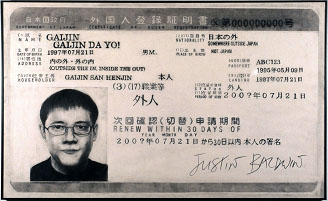
    NAME: Justin Baldwin

    OCCUPATION: Artist, but an unknown one, so I have a day job working for a Japanese company.

    NATIONALITY: I am an American, as is my father. My mother is now a U.S. citizen, but was born in Japan. On my father’s side of the family, there is Irish, German, British, and who knows what else … and, I suspect that on my mother’s side, there may be some Russian (going back a couple hundred years), since my mother has fair skin and green eyes (plus, she’s from Sapporo, and the prefecture of Hokkaido is closer to Russia than anywhere else in Japan).

    JUSTIN SAYS:
    Although I didn’t study Japanese until I finished college, the biracial factor inspired me to study Japanese and eventually live in Japan. This has subsequently made a profound impact/influence on who I am, and what I do. I suppose, in this sense, it has helped secure jobs (first with the JET Program, and then with the Kurashiki Board of Education, and now with my current corporate incarnation as a Professional Gaijin/Scapegoat). Being biracial in college helped me connect with Roger Shimomura as a student, who remains a close friend and mentor. So in many ways, even though being biracial has not always resulted in the most pleasant experiences, it has led me down avenues that I might not otherwise have taken, meeting new people and places that do end up being very beneficial and positive. Besides, as I mentioned, there’s a certain freedom to being undefined.

    DOUBLE NOT HALF

    Leah Nanako Winkler

    As I scroll through these responses, once again, I am overwhelmed with a simultaneous sense of comfort and disorientation. Entering my mid-20s, I’ve come to accept and embrace the positive effects of my ethnic background, by associating with and learning from the people mentioned in this article. I am learning quickly that my identity crisis/investigation is only a small fraction of a cultural search of where we, as biracial people, stand in this society. The importance of seeing the glass as half-full, as opposed to half-empty, is equal to seeing ourselves as double, rather than “half” of two races. In many ways, we are lucky and unsheltered. I am excited to see how this perspective continues to grow, as I meet more and more of you and hope to strengthen our voice in any and every way possible.

    © 2009 Leah Nanako Winkler

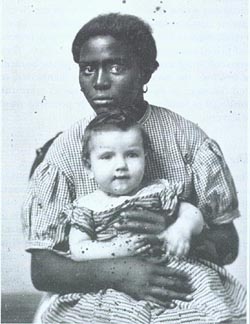
    re: a mammy tale

    I want to yell so loud that Baby Girl can hear me that dirty ain’t a color, disease ain’t the Negro side a town.  I want to stop that moment from coming-and it come in ever white child’s life- when they start to think that colored folks ain’t as good as whites.- The Help

    old photo of baby Ralph in an elaborate lace christening dress held proudly by a large black woman

    "Black man with white child and dog." http://www.flickr.com/photos/george_eastman_house/2720789660/

    “Black man with white child and dog.” via a “Manny”

    "White-capped nurse holding infant." http://www.flickr.com/photos/floridamemory/3248110220/

    “White-capped nurse holding infant.” via
    "Negro domestic servant, Atlanta, GA, May 1939." http://www.flickr.com/photos/nypl/3110575890/“Negro domestic servant, Atlanta, GA, May 1939.” via

    "Child and nurse." http://www.flickr.com/photos/george_eastman_house/2678243048/

    “Child and nurse.” via

    …the dichotomy of love and disdain living side-by-side is what surprises me- The Help

    Mammy & Child-1850

    some photos found @ postpostracial