
Reply

And I don’t mean California Pizza Kitchen.
Once upon a time it would have been my life’s goal to attain a collection like this:

or this:

I loved those things. I probably had ten of them. My first one’s name was Joanne Abby. I loved her. She was black and was wearing a jogging suit. I found the white version on ebay:
 I resisted placing a bid.
Other fun things I remember:



Thank you, Xavier Roberts.

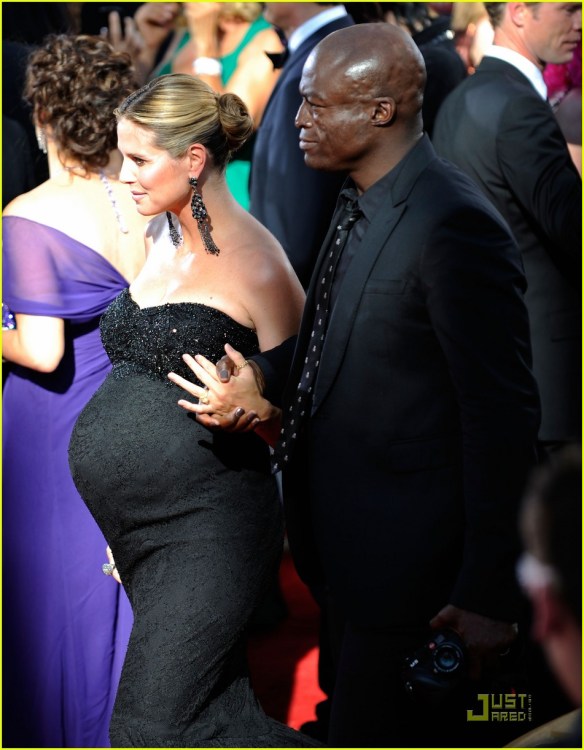
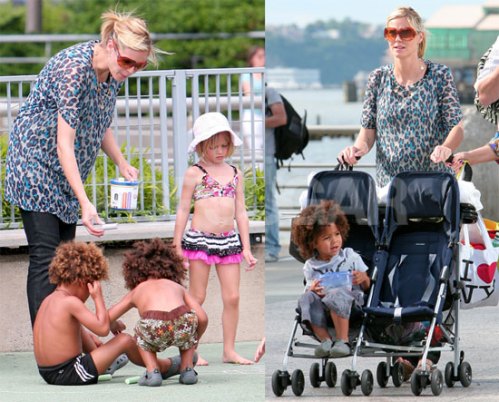
Supermodel Heidi Klum and husband Seal have welcomed a new addition to their family.
According to a report from RadarOnline.com, Klum gave birth to her fourth child, daughter Lou Samuel, early Friday morning.
Labor was induced shortly after midnight and by 1 a.m., the baby was born.
Klum, who recently filed a petition to change her last name to her married name Samuel, has a daughter, Leni, and two sons, Henry, 3, and Johan, 2, with Seal.

I found some more! I think they’re so great. I can’t imagine how they pulled it all together. The placement. The wardrobe. Everything.
 The Human US Shield: 30,000 officers and men at Camp Custer, Battle Creek, Michigan, 1918
 The Living Uncle Sam: 19,000 officers and men at Camp Lee, Virginia, January 13, 1919
 The Human Liberty Bell, formed by 25,000 officers and men at Camp Dix, New Jersey, 1918
The images, taken by Englishman Arthur S Mole and his American colleague John D Thomas, use over 18,000 US Soldiers, and some of the ones at the tops of the icons are over 1/2 mile away from the lens. They took the photographs in camps across the US using soldiers returning to America after World War I. Mole and Thomas were commissioned by the US government to take the pictures as a way to raise morale among the troops and raise money by selling the shots to the public. Mole and Thomas’ work was the first to use a unique technique to beat the problem of perspective after they devised a clever way of getting so many soldiers in the pictures. Arthur’s great nephew Joseph explains: “Arthur was able to get the image by actually drawing an outline on the lens, he then had the troops place flags in certain positions while he looked through the camera…”
see more here

On Feb. 1, 1951, Henrietta Lacks–mother of five, native of rural southern Virginia, resident of the Turner Station neighborhood in Dundalk–went to Johns Hopkins Hospital with a worrisome symptom: spotting on her underwear. She was quickly diagnosed with cervical cancer. Eight months later, despite surgery and radiation treatment, the Sparrows Point shipyard worker’s wife died at age 31 as she lay in the hospital’s segregated ward for blacks.
Not all of Henrietta Lacks died that October morning, though. She unwittingly left behind a piece of herself that still lives today.
While she was in Hopkins’ care, researchers took a fragment of Lacks’ tumor and sliced it into little cubes, which they bathed in nutrients and placed in an incubator. The cells, dubbed “HeLa” for Henrietta Lacks, multiplied as no other cells outside the human body had before, doubling their numbers daily. Their dogged growth spawned a breakthrough in cell research; never before could investigators reliably experiment on such cell cultures because they would weaken and die before meaningful results could be obtained. On the day of Henrietta’s death, the head of Hopkins’ tissue-culture research lab, Dr. George Gey, went before TV cameras, held up a tube of HeLa cells, and announced that a new age of medical research had begun–one that, someday, could produce a cure for cancer.
When he discovered HeLa could survive even shipping via U.S. mail, Gey sent his prize culture to colleagues around the country. They allowed HeLa to grow a little, and then sent some to their colleagues. Demand quickly rose, so the cells were put into mass production and traveled around the globe–even into space, on an unmanned satellite to determine whether human tissues could survive zero gravity.
In the half-century since Henrietta Lacks’ death, her tumor cells–whose combined mass is probably much larger than Lacks was when she was alive–have continually been used for research into cancer, AIDS, the effects of radiation and toxic substances, gene mapping, and countless other scientific pursuits. Dr. Jonas Salk used HeLa to help develop his polio vaccine in the early ’50s. The cells are so hardy that they took over other tissue cultures, researchers discovered in the 1970s, leading to reforms in how such cultures are handled. In the biomedical world, HeLa cells are as famous as lab rats and petri dishes.
Yet Henrietta Lacks herself remains shrouded in obscurity. Gey, of course, knew HeLa’s origins, but he believed confidentiality was paramount–so for years, Henrietta’s family didn’t know her cells still lived, much less how important they had become. After Gey died in 1970, the secret came out. But it was not until 1975, when a scientifically savvy fellow dinner-party guest asked family members if they were related to the mother of the HeLa cell, that Lacks’ descendants came to understand her critical role in medical research.
The concept was mind-blowing–in a sense, it seemed to Lacks’ family, she was being kept alive in the service of science. “It just kills me,” says Henrietta’s daughter, Deborah Lacks-Pullum, now 52 and still living in Baltimore, “to know my mother’s cells are all over the world.”
In the 27 years since the Lacks family serendipitously learned of Henrietta’s unwitting contribution, little has been done to honor her. “Henrietta Lacks Day” is celebrated in Turner Station each year on Feb. 1. In 1996, prompted by Atlanta’s Morehouse College, that city’s mayor proclaimed Oct. 11 Henrietta Lacks Day. The following year, Congress passed a resolution in her memory sponsored by Rep. Robert Ehrlich (R-Md.), whose 2nd District includes Turner Station, and the British Broadcasting Corp. produced a documentary on her remarkable story. Beyond that, however, virtually nothing has been done to celebrate Lacks’ contribution–not even by Hopkins, which gained immeasurable prestige from Gey’s work with her cells.
read much more here
It is a shame that this isn’t common knowledge. It is a shame that her family had no that this was going on. It is a shame that she most likely received insufficient care in the black ward of the hospital. It is a beautiful thing that she lived and made such a contribution to medical advancement.

Unless you’re keeping her as a collector’s item, I think this is an amazingly creative (yet creepy) way to recycle any kind of Barbie you may have…


Artist Statement:
Barbie dolls played a fundamental role in fueling my creative life growing up and are what cultivated my interest in adornment. An invaluable tool for my imagination as a child, ironically, Barbie continues to be such for me as an adult.
Whether revered or despised, there are few who feel neutral about the plastic princess. I am fascinated with who she is as a cultural icon and the vast impact she has had on our society.
I also enjoy the funny juxtaposition of wearing the body, on the body. Barbie has become the accessory instead of being accessorized. I take pleasure in the contrast and contradiction of mass-produced materials transformed and revealed as handmade, wearable works of Art.
– Margaux Lange

 Fraser Robinson III and his wife, Marian, with their children, Craig and Michelle, now the first lady.
By RACHEL L. SWARNS and JODI KANTOR Published: October 7, 2009
WASHINGTON — In 1850, the elderly master of a South Carolinaestate took pen in hand and painstakingly divided up his possessions. Among the spinning wheels, scythes, tablecloths and cattle that he bequeathed to his far-flung heirs was a 6-year-old slave girl valued soon afterward at $475.
In his will, she is described simply as the “negro girl Melvinia.” After his death, she was torn away from the people and places she knew and shipped to Georgia. While she was still a teenager, a white man would father her first-born son under circumstances lost in the passage of time.
In the annals of American slavery, this painful story would be utterly unremarkable, save for one reason: This union, consummated some two years before the Civil War, represents the origins of a family line that would extend from rural Georgia, to Birmingham, Ala., to Chicago and, finally, to the White House.
Melvinia Shields, the enslaved and illiterate young girl, and the unknown white man who impregnated her are the great-great-great-grandparents of Michelle Obama, the first lady.
Viewed by many as a powerful symbol of black advancement, Mrs. Obama grew up with only a vague sense of her ancestry, aides and relatives said. During the presidential campaign, the family learned about one paternal great-great-grandfather, a former slave from South Carolina, but the rest of Mrs. Obama’s roots were a mystery.
Now the more complete map of Mrs. Obama’s ancestors — including the slave mother, white father and their biracial son, Dolphus T. Shields — for the first time fully connects the first African-American first lady to the history of slavery, tracing their five-generation journey from bondage to a front-row seat to the presidency.
The findings — uncovered by Megan Smolenyak, a genealogist, and The New York Times — substantiate what Mrs. Obama has called longstanding family rumors about a white forebear.
While President Obama’s biracial background has drawn considerable attention, his wife’s pedigree, which includes American Indian strands, highlights the complicated history of racial intermingling, sometimes born of violence or coercion, that lingers in the bloodlines of many African-Americans. Mrs. Obama and her family declined to comment for this article, aides said, in part because of the personal nature of the subject.
 mulatto diaries