henrietta lacks

On Feb. 1, 1951, Henrietta Lacks–mother of five, native of rural southern Virginia, resident of the Turner Station neighborhood in Dundalk–went to Johns Hopkins Hospital with a worrisome symptom: spotting on her underwear. She was quickly diagnosed with cervical cancer. Eight months later, despite surgery and radiation treatment, the Sparrows Point shipyard worker’s wife died at age 31 as she lay in the hospital’s segregated ward for blacks.

Not all of Henrietta Lacks died that October morning, though. She unwittingly left behind a piece of herself that still lives today.

While she was in Hopkins’ care, researchers took a fragment of Lacks’ tumor and sliced it into little cubes, which they bathed in nutrients and placed in an incubator. The cells, dubbed “HeLa” for Henrietta Lacks, multiplied as no other cells outside the human body had before, doubling their numbers daily. Their dogged growth spawned a breakthrough in cell research; never before could investigators reliably experiment on such cell cultures because they would weaken and die before meaningful results could be obtained. On the day of Henrietta’s death, the head of Hopkins’ tissue-culture research lab, Dr. George Gey, went before TV cameras, held up a tube of HeLa cells, and announced that a new age of medical research had begun–one that, someday, could produce a cure for cancer.

When he discovered HeLa could survive even shipping via U.S. mail, Gey sent his prize culture to colleagues around the country. They allowed HeLa to grow a little, and then sent some to their colleagues. Demand quickly rose, so the cells were put into mass production and traveled around the globe–even into space, on an unmanned satellite to determine whether human tissues could survive zero gravity.

In the half-century since Henrietta Lacks’ death, her tumor cells–whose combined mass is probably much larger than Lacks was when she was alive–have continually been used for research into cancer, AIDS, the effects of radiation and toxic substances, gene mapping, and countless other scientific pursuits. Dr. Jonas Salk used HeLa to help develop his polio vaccine in the early ’50s. The cells are so hardy that they took over other tissue cultures, researchers discovered in the 1970s, leading to reforms in how such cultures are handled. In the biomedical world, HeLa cells are as famous as lab rats and petri dishes.

Yet Henrietta Lacks herself remains shrouded in obscurity. Gey, of course, knew HeLa’s origins, but he believed confidentiality was paramount–so for years, Henrietta’s family didn’t know her cells still lived, much less how important they had become. After Gey died in 1970, the secret came out. But it was not until 1975, when a scientifically savvy fellow dinner-party guest asked family members if they were related to the mother of the HeLa cell, that Lacks’ descendants came to understand her critical role in medical research.

The concept was mind-blowing–in a sense, it seemed to Lacks’ family, she was being kept alive in the service of science. “It just kills me,” says Henrietta’s daughter, Deborah Lacks-Pullum, now 52 and still living in Baltimore, “to know my mother’s cells are all over the world.”

In the 27 years since the Lacks family serendipitously learned of Henrietta’s unwitting contribution, little has been done to honor her. “Henrietta Lacks Day” is celebrated in Turner Station each year on Feb. 1. In 1996, prompted by Atlanta’s Morehouse College, that city’s mayor proclaimed Oct. 11 Henrietta Lacks Day. The following year, Congress passed a resolution in her memory sponsored by Rep. Robert Ehrlich (R-Md.), whose 2nd District includes Turner Station, and the British Broadcasting Corp. produced a documentary on her remarkable story. Beyond that, however, virtually nothing has been done to celebrate Lacks’ contribution–not even by Hopkins, which gained immeasurable prestige from Gey’s work with her cells.

read much more here

It is a shame that this isn’t common knowledge.  It is a shame that her family had no that this was going on.  It is a shame that she most likely received insufficient care in the black ward of the hospital.  It is a beautiful thing that she lived and made such a contribution to medical advancement.

the first lady’s mix

New York Times

In First Lady’s Roots, a Complex Path From Slavery

Fraser Robinson III and his wife, Marian, with their children, Craig and Michelle, now the first lady.
By RACHEL L. SWARNS and JODI KANTOR Published: October 7, 2009

WASHINGTON — In 1850, the elderly master of a South Carolinaestate took pen in hand and painstakingly divided up his possessions. Among the spinning wheels, scythes, tablecloths and cattle that he bequeathed to his far-flung heirs was a 6-year-old slave girl valued soon afterward at $475.

In his will, she is described simply as the “negro girl Melvinia.” After his death, she was torn away from the people and places she knew and shipped to Georgia. While she was still a teenager, a white man would father her first-born son under circumstances lost in the passage of time.

In the annals of American slavery, this painful story would be utterly unremarkable, save for one reason: This union, consummated some two years before the Civil War, represents the origins of a family line that would extend from rural Georgia, to Birmingham, Ala., to Chicago and, finally, to the White House.

Melvinia Shields, the enslaved and illiterate young girl, and the unknown white man who impregnated her are the great-great-great-grandparents of Michelle Obama, the first lady.

Viewed by many as a powerful symbol of black advancement, Mrs. Obama grew up with only a vague sense of her ancestry, aides and relatives said. During the presidential campaign, the family learned about one paternal great-great-grandfather, a former slave from South Carolina, but the rest of Mrs. Obama’s roots were a mystery.

Now the more complete map of Mrs. Obama’s ancestors — including the slave mother, white father and their biracial son, Dolphus T. Shields — for the first time fully connects the first African-American first lady to the history of slavery, tracing their five-generation journey from bondage to a front-row seat to the presidency.

The findings — uncovered by Megan Smolenyak, a genealogist, and The New York Times — substantiate what Mrs. Obama has called longstanding family rumors about a white forebear.

While President Obama’s biracial background has drawn considerable attention, his wife’s pedigree, which includes American Indian strands, highlights the complicated history of racial intermingling, sometimes born of violence or coercion, that lingers in the bloodlines of many African-Americans. Mrs. Obama and her family declined to comment for this article, aides said, in part because of the personal nature of the subject.

barack like me

BarackLikeMe.small

David Alan Grier: Is beige the new black?

Comedian writes about how Obama has made being multiracial cool

excerpt from chapter 2

Every pundit from Larry King to Atlantic magazine agrees: black is in. All shades of black. Which is good for most people, because so many of us are of mixed race. Myself included. It’s mind-boggling that we have ended up here, at this point in our history. There was a time, only a few generations ago, that being of mixed race was not so cool. In fact, it was illegal to try to pass yourself off as a different race. If the authorities found out, you lost everything — your position, your home, and all your possessions. You’d be separated from your family and often lynched.

President Barack Obama has changed all that. People now want to be mixed. Bi-racial, tri- racial, quad- and quinti-racial, how many you got? The more the better. Multiracial is the hot new facial, the best look in the book. Mixed race is the new superrace. If you look too black, people seem disappointed. They look at you and say, “You’re just black. Oh. That’s too bad. Are you sure? Anything else in there?”

They’re looking for the Obama mix. It’s like a new kind of coffee. “We just came up with it. Try this. The new Obama roast. It’s the perfect blend. Strong, but not sharp. Seductive. Bold. Sweet. Smooth. And not too dark. Not like that Dikembe Mutombo roast they’re brewing across the street.”

And why not be black like Barack? He’s the coolest guy on the planet right now. He’s bigger than any rapper, more popular than any rock star. He’s huge. We admire him and kids aspire to be like him.

…It’s still hard to get my head around this, though, the idea of acceptance that comes with the Barack Obama presidency. There is a part of me that acknowledges — and remembers, historically — that people of color who tried to deny any part of themselves were suspect. They would have to make a decision and stick with it. If it was found out that they were denying a part of themselves, they would be accused of running away from themselves and be rejected by their own. We’re looking at a whole new playing field as of right now. You can embrace all the parts of you. You can say, forthrightly, “I am who I am. I am all my parts,” or even, “I am all my parts, but I am embracing this particular one. This is who I am.” And we, as a people, will embrace it as well.

Excerpted from “Barack Like Me” by David Alan Grier with Alan Eisenstock. Copyright (c) by David Alan Grier.

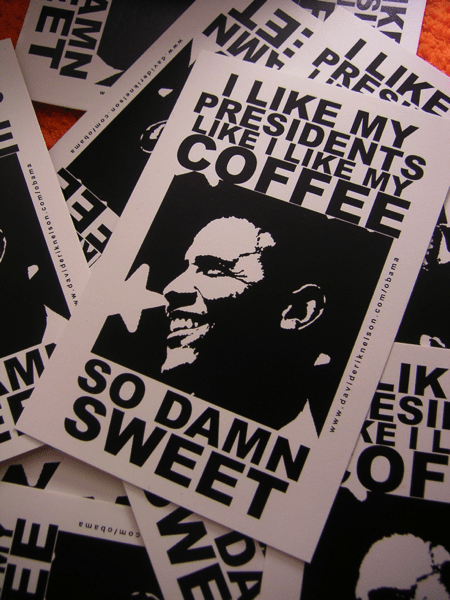
i like my coffee like my presidents'

further proof that we are far from post-racial

Though this (hopefully) isn’t something that happens every day in America, the fact that it has happened in 2009 is so very disheartening.  This is why we keep talking about these issues.  Many of us have risen above the confines of race, many of us have not.  Many reside somewhere in between.  All I know for sure is that this country has still got a long way to go in healing from our sordid racial history.  And I think it would help if they would just admit that this was a hate crime.  I just don’t understand the benefit of pretending that this was just some random act of violence.  The truth will set us free, right?

bxp68039

Mixed-Race Couple Confronted With Racist Question, Stalked, Then Gunned Down In Arizona Park

by Dawn Teo

PHOENIX, AZ — Phoenix police say the gunning down of an interracial couple by a stranger in a local Phoenix park is being investigated as a possible hate crime. A 39-year-old white female was shot to death after being confronted with a racist question about being with her black boyfriend, Jeffrey Wellmaker.

The couple was out for a walk in La Palma Park in Phoenix early Saturday morning when a heavily tattooed man with a shaved head approached them and asked Wellmaker, “What are you doing with that white woman?”

The couple tried to ignore the question and immediately walked away. The gunman followed on foot for a short distance, then got into the passenger seat of a nearby car. The car followed the couple for approximately half a mile before the gunman fired two shots from the passenger window, and the car sped away.

Both the 39-year-old woman and 48-year-old Wellmaker were hit. The woman, who has not yet been identified by police, was transported to the hospital where she died later Saturday. Wellmaker did not sustain serious physical injury.

Phoenix police officer James Holmes says he cannot say for certain that the shooting was a hate crime, “but it does lead us in that direction just because of the fact that the suspect made a comment to the race of both victims,” explaining, “He’s bald. He’s got tattoos. He’s making a comment about a white woman with a black man. One could assume that it might be a hate crime.”

The suspect has not been identified and is described as a white male, about 5’6″, heavily tattooed. The suspect fled the scene in a white four-door car with tinted windows.

Read more at: http://www.huffingtonpost.com/dawn-teo/mixed-race-couple-confron_b_308842.html

i “needs to talk” to obama about this too

Mariah Carey: in a frank interview, the singer tells all

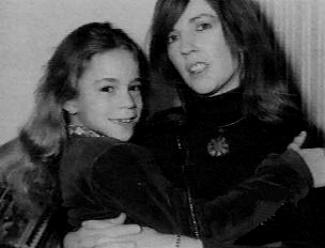
Mariah_Carey_mother

…Carey’s own parents divorced when she was little, and although her father materialised occasionally to take her on trips – hiking or to the races – she didn’t get to know him properly until she was an adult… He was tough. He’d been in the military. I do miss him. At the end of his life we spent a lot of time together. And I learned a lot about his side of the family.”

Her mother grew up in the midwest. “She came from – er –?” Carey frowns. “Middle of America?” She brightens –”Illinois!” – and as such, she says wryly, “is among the whitest people I know”. Her father was half-African American, half-Venezuelan. “I’m a black woman who is very light skinned.” As a child, she was self-conscious of her mixed race, and it is still enough of an issue, in the US and elsewhere, that Carey is routinely accused of “trying too hard” in one racial direction or another.

“White people have a difficult time with [mixed race]. It’s like, my mother’s white – she’s so Irish, she loves Ireland, she’s like, yay, Ireland! Waving the flag and singing When Irish Eyes Are Smiling. And that’s great. I appreciate that and respect it. But there’s a whole other side of me that makes me who I am and makes people uncomfortable. My father identified as a black man. No one asked him because he was clearly black. But people always ask me. If we were together, people would look at us in a really strange way. It sucked. As a little girl I had blond hair and they’d look at me, look at him, and be disgusted.”

She says she “needs to talk” to Obama about this. When he became president, she was overwhelmed and delighted, “but for years we never believed it would happen. There’s a group who will never get it, never want to get it. Because you have to lose the purity of both races and there are certain people who really don’t want that to happen. I think it starts with people teaching their children that it’s not OK, because they don’t want their kid to come home with someone of another race. I understand people want to hold on to their roots. But for me, I was a complete nonentity because of it. Maybe that was part of my drive to succeed. I’ll become accepted.”

And now? Oh, she says, sarcastically, “it’s in vogue now. So I’m sitting here thinking, now it’s cool, great.”

mariah-carey-cover-md

burden of mixed-race?

Raising multi-racial kids in a color-conscious society

by LYLAH M. ALPHONSE

In spite of having a mixed-race president — or, perhaps, because of it — the issue of race is very much alive in modern America.
In 2000, for the first time the U.S. Census offered people the option of identifying themselves by more than one race. About 6.8 million recorded themselves as being multi-racial; more than half of those who consider themselves multi-racial are younger than 20 years old, which seems to indicate a growing acceptance of interracial relationship and a rise in the number of biracial and multiracial kids.
And yet, when it comes to raising these children, some parents are still facing questions and, at times, criticism.
At Babble, Elizabeth G. Hines shares a friend’s reaction to her donor-assisted pregnancy: Why, the friend wondered, would you choose to create a mixed race child? Why wouldn’t you just stick with one race or the other?
She writes:
“… she asked me what my ideal donor would look like. I answered honestly that I had no pre-set “ideal” in mind, but assumed that my partner and I would pick a donor that reflected the racial background of the one of us who was not biologically related to the child. At the time, I was in an interracial relationship — which meant, she quickly deduced, that I was talking about conceiving a bi-racial child. That, and that alone, was enough to make my fair-minded, thoughtful friend shed her liberal cool and call into question my credibility as a potential parent. Not my identity as a gay woman, mind you, which might have been an easy target. This was about race, and the perceived disadvantage I would be burdening a child with by choosing to create him or her from two different racial gene pools.”
The idea that belonging to more than a single racial group could be a disadvantage or a burden is one that I’ve never understood. I’m multiracial. My kids are, too — even my stepkids. My father is of mixed race. As are his parents. And their parents. And their parents. When it comes to mixed marriages, my family’s been doing it for generations.
So, when it comes to defining my race on a form, I check ‘other’ and, if that’s not an option, I don’t check anything at all. Maybe it’s a matter of privilege, but I’ve never been adversely affected by being multi-racial.

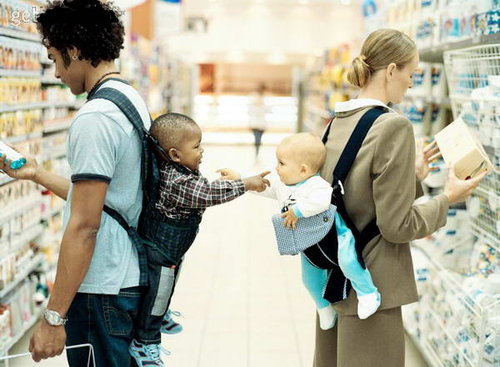
babies on backs in store

dear abby: biracial edition

Dear Abby: Meaning of ‘African-American’ reflects nation’s past, present

by Dear Abby

Posted on Wed, Sep. 30, 2009

DEAR ABBY:: On July 23, “Wondering” asked why President Obama is considered to be African-American and you responded that the term “African-American” is used in this country as a label that describes skin color. However, in the U.S. the term is generally applied to black Americans of slave ancestry.

Before the Civil War we were African-American slaves, not considered fully human by the U.S. Constitution. After the Civil War and the outlawing of slavery, former slaves gained citizenship through amendments to the Constitution but were not able to exercise the full rights of citizenship. Most former slaves wanted to just be “Americans” with all the rights and privileges associated with it – but because of the color of their skin were discriminated against and given second-class citizenship.

The term “African-American” is the result of a search for identity by these new Americans, former slaves and their descendants. We were called by many names – most of them negative, such as “Negro,” “Colored,” “African,” the infamous “N- word,” “Afro-American” and finally, “black.” All of these at one time we considered negative because they didn’t represent self- identification.

The black power movement occurred when Black Americans changed the negative term “black” to the positive term “Black.” The musician James Brown coined the phrase, “Say It Loud, I’m Black and I’m Proud.” Later other black folk began to adopt the term “African-American,” which brings us to the present.

We are a nation that has roots in all nations of the world. Truly, “we ARE the world.” We’re all American, either by birth or naturalization. The labels tend to divide us into groups which separate us rather than bring us together. The saying “United We Stand, Divided We Fall” is true. Let us all come together and all be blessed.

– Rev. Alton E. Paris, American

DEAR REV. PARIS: Thank you for your letter, which is both inspiring and educational. Many readers had comments about my answer, and they were all over the map. Read on:

DEAR ABBY: I am a white female with many African-American friends, and yes, I did vote for Obama. When Obama became president, most of my black friends said: “Finally! We have a black man as president. All this racism will stop. The white man is no longer in charge of things.”

To me, it was like it didn’t matter that his mother was white, he was raised by his grandmother who was white, and he is half-white. What I’m trying to say is, he’s a man of equal parts – not all black. So why do African-Americans make it sound like he is of all black heritage? Isn’t he of white heritage also? A lot of my white friends feel the same way I do.

– Nancy G. in Cleveland

DEAR ABBY: Please inform “Wondering” that according to Webster’s Dictionary, President Obama is mulatto, which is a person who is a first-generation offspring of a black person and a white person.

– William B., Clayton, N.J.

DEAR ABBY: When living in America, I am called an African-American. If I move to Africa, would I be called an American-African?

– Kenneth F., Saraland, Ala.

DEAR ABBY: Many biracial children are considered to be part of the ethnic group they resemble the most. While some may consider it disrespectful to say that someone is of one race when he or she is really biracial, this is the world we live in. We do, truly, “call ’em like we see ’em”!

– Devyn B., Fayetteville, N.C.

Posted on Thu, Oct. 1, 2009

Dear Abby: Is President Obama black, mixed-race or just American?

DEAR ABBY: “Wondering in Goldsboro, N.C.” asked why President Obama is considered to be African-American when he’s biracial.

While your response was accurate, you missed an opportunity to educate your readers by failing to give the historical context as to why most people refer to him as African-American.

There was a time in this country when “blacks”/African-Americans were considered to be only three-fifths of a human being.

Also, if a person had one drop of “black” blood they were considered black.

Although as a society we have progressed intellectually and in our understanding of what a human being is, we continue to hold on to archaic beliefs about skin color that not only pigeonhole an individual, but may force an individual to choose what so-called racial group that he/she identifies with most.

I can clearly see that the conversation regarding “race” and skin color must be continued in this country.

Though we’ve “come a long way, baby,” we still have a long way to go in understanding this country’s deep-rooted responses to skin color.

– Living in America

DEAR LIVING: I think if one digs deep enough, we will come to the realization that there has always been a component of economic exploitation and perceived economic threat that is, and has been, at the root of racial discrimination.

(But that’s just my opinion.)

Read on:

DEAR ABBY: In Obama’s book “Dreams From My Father” he calls himself a black man of mixed descent.

His decision to do that is as much a political decision as it is a personal one.

Most people of color of mixed race in our society have felt we had to choose to be the darker color because we can never be white.

In our society, most people who do or don’t know of Obama’s mixed background would treat him as a black man. (If you saw him walking down the street, would you say, “Hey, that guy’s half-white!”?)

By embracing his political identity he supports and strengthens all black people in the U.S. by standing proudly as one of us.

– Nicole in Marin, Calif.

DEAR ABBY: African-American does not denote skin color, but an ethnic culture, a term that describes those of us who are descendants of captive Africans in America.

It holds the same level of pride as it does for those who pronounce they are Italian-American or Asian-American.

– Michelle in Maryland

DEAR ABBY: You write that the term African-American is used in this country as a label that describes skin color.

I believe you are correct, and that’s the problem.

“African-American” identifies origin or ancestry, not skin color.

Furthermore, if the anthropologists are right, then – going back far enough – we are all African-American.

– African-American Member of the

Human Race in New Jersey

DEAR ABBY: Why can’t we all be called just plain Americans if we grow up in America and are citizens of America?

I think a lot of people have wondered this.

– Sandy B. in Harrisburg, Pa.

DEAR SANDY: That’s a good question and one that I hope will one day be put to rest – if not by our children, then by our children’s children.

– Sincerely, Abby

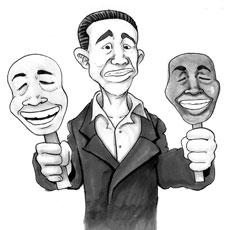
black mask