speaking of the confederate flag

ok, so, i like kid rock a little bit.  for three reasons: 1. he’s from detroit (well, Michigan anyway) 2. i think his song Amen is brilliant and beautiful 3. he has a biracial son (is that, like, racist of me…or some kind of positive prejudice…or just silly?)

anywho, i do not like his use of the confederate flag.  to be fair, i don’t like anyone’s use of it.  especially if the user has a child of some significant color.  i understand that to some people the flag is simply a symbol of “southern pride.”  i really do believe that said people do not view the flag as a pro-slavery emblem… they don’t go around looking at black people wishing they were allowed to own them.  that’s too easy, too “obvious racist bad-guy.”  but, i think it is from a vantage point of either white privilege or ignorance (or both) that one can insistently be so insensitive as to say (or infer) “i know that this flag is hurtful to many, it reminds them of a time when they were considered less than human and were treated no better than cattle, it may make them feel unsafe…they may get the idea that i think back on those days as the good old days and wish we could revert back to them.”  i’m sorry, but the flag is just  not THAT cool, not worth all of that.  nothing is.  i would like to believe that it would be an easy “sacrifice” to put that flag away (as in not on your car, belt buckle, t-shirt…but whatever you want in your own home…) so as not to bring up all of that hateful, hurtful stuff to the people who are still negatively affected by the history of the flag, the implications of it.  how about a little more love, compassion, sensitivity… amen.

i mean, this is really not that much cooler than this….

not enough to warrant offending people to their core… even if it’s only 14 people, even one… especially if the one might be your kid, Kid.

Kid Rock’s NAACP Award Protested Over Use Of Confederate Flag

via HuffPost Entertainment

Some people don’t think Kid Rock is meeting their great expectations.

The rocker is set to accept the NAACP’s Detroit chapter’s Great Expectations Award at their annual Freedom Fund dinner in May, and some members of the historic black rights organization are so unhappy about it, they’re boycotting the 10,000 person affair.

It’s the singer’s use of the Confederate flag in his stage shows that has them so upset, according to the Detroit News.

“It’s a slap in the face for anyone who fought for civil rights in this country,” Adolph Mongo, head of Detroiters for Progress and a boycotting NAACP member told the paper last week. “It’s a symbol of hatred and bigotry.”

For his part, Rock defended the use of the flag in a 2008 interview with the Guardian. “Why should someone be able to own any image and say what it is?” he said. “Sure, it’s definitely got some scars, but I’ve never had an issue with it. To me it just represents pride in southern rock’n’roll music, plus it just looks cool.”

He also spoke about touring with a famed rapper and how it impacted his audience.

“I’ve got Rev Run [from Run DMC] on tour with me right now – we have fun trying to count the number of black people every night. We’re like, ‘There’s 14 tonight, yeah!'”

Though he was a staunch defender of President George W. Bush, the singer went to back for Barack Obama after his election, in the process defending America against accusations of racism.

“It’s good the U.S. has proved it’s not as racist as it’s sometimes portrayed,” he told Metro UK (via Spin Magazine).

He also spoke about his own experience growing up with black people in the interview, saying, “Black people were kind to me growing up and taught me hip-hop and the blues.”

For more on the NAACP controversy, click over to the Detroit News.

more on the civil war

I’ve been sucked into the Civil War on the great interweb today.  Haven’t even watched Glory yet.  I’m so fascinated by this history.  Most of the photos and information in this post were found on one of Life Magazine’s photo galleries dedicated to the Civil War.  I must say that I would bet money that the man in the photo entitled Ready to Fight is a mulatto.  To call him biracial for the sake of political correctness would not be historically accurate, and sounds as preposterous to me as do all of the captions claiming that “African Americans” are depicted in the photos.  White folks of the day had a difficult enough time even agreeing that they were human beings… 3/5ths of a person… That’s one of the reasons that I currently hate to use that terminology.  We don’t go around being so specific with Irish Americans, or Italian Americans, or German Americans.  Still seems like some 3/5ths mentality to me.  That is just my opinion though.  I am also of the opinion that the difference between what was going on in the Union Camp in the photo entitled At Your Service and the goings on in the Confederate camp photo titled Off the Clock is… absolutely nothing.  Contrary to popular youtube belief, I am not one of those Yankees who thinks that the Union and President Lincoln were perfect and had nothing but the best of intentions for black people.  Nor am I under the impression that if I dug back far enough in my family tree, I would find abolitionists and/or soldiers fighting for the North.  Quite the contrary, I’m almost positive.  That’s why my existence is a miracle!  Of course everyone’s is, I’m just sayin’… today… in light of this complex history… how did I even happen?

[Nick+Biddle.jpg]

First Blood

Even before blacks were officially recognized as federal soldiers, many slaves — including the man in this portrait, known as Nick Biddle — escaped and joined Union lines. In 1861, Biddle was the orderly of a white Pennsylvania militia officer and, wearing a uniform, traveled with his employee’s company to Baltimore to help protect Washington, D.C., after the surrender of Fort Sumter. Once there, he was set upon by a pro-Confederate mob, attacked with slurs and a brick that hit him in the head so severely it exposed his skull. Some consider him the first man wounded in the Civil War.

VIA

The Grave of Nick Biddle:
By Chaplain James M. Guthrie

The grave of Nick Biddle a Mecca should be
To Pilgrims, who seek in this land of the free
The tombs of the lowly as well as the great
Who struggled for freedom in war of debate;
For there lies a brave man distinguished from all
In that his veins furnished the first blood to fall
In War for the Union, when traitors assailed
Its brave “First Defenders,” whose hearts never quailed.

The eighteenth of April, eighteen-sixty-one,
Was the day Nick Biddle his great honor won
In Baltimore City, where riot ran high,
He stood by our banner to do or to die;
And onward, responsive to liberty’s call
The capital city to reach ere its fall,
Brave Biddle, with others as true and as brave,
Marched through with wildest tempest, the Nation to save.

Their pathway is fearful, surrounded by foes,
Who strive in fierce Madness their course to oppose;
Who hurl threats and curses, defiant of law,
And think by such methods they might overawe
The gallant defenders, who, nevertheless,
Hold back their resentment as forward they press,
And conscious of noble endeavor, despise
The flashing of weapons and traitorous eyes

Behold now the crisis—the mob thirsts for blood:-
It strikes down Nick Biddle and opens the flood—
The torrents of crimson from hearts that are true—
That shall deepen and widen, shall cleanse and renew
The land of our fathers by slavery cursed;
The blood of Nick Biddle, yes, it is the first,
The spatter of blood-drops presaging the storm
That will rage and destroy till Nation reform.

How strange, too, it seems, that the Capitol floor,
Where slaveholders sat in the Congress of yore,
And forged for his kindred chains heavy to bear
To bind down the black man in endless despair,
Should be stained with his blood and thus sanctified;
Made sacred to freedom; through time to abide
A temple of justice, with every right
For all the nation, black, redman, and white

The grave of Nick Biddle, though humble it be,
Is nobler by far in the sight of the free
Than tombs of those chieftains, whose sinful crusade
Brought long years of mourning and countless graves made
In striving to fetter their black fellowmen,
And make of the Southland a vast prison pen;
Their cause was unholy but Biddle’s was just,
And hosts of pure spirits watch over his dust.


Ready for a Fight

A black soldier poses with his revolver in 1865. Many military leaders didn’t believe African Americans were capable of fighting effectively at first, but battles including the one at Port Hudson…proved them wrong.


Mulatto Confederate Soldier Daniel Jenkins and his wife. Jenkins was with the Confederate 9th Kentucky Infantry and was killed at Shiloh on 4/6/62.-VIA


Off the Clock

Confederate soldiers at their campsite play poker, while drinking and smoking between battles, with two slaves serving them.

At Your Service

Four white Union soldiers sit outside their tents at Warrenten, Va., as an African American soldier hands a bottle and a plate of food to one of them, in 1862.
Download now

Women in the War: Mary Walker, American Hero

Caption: Mary Edwards Walker (1832-1919), US Civil War doctor, wearing her Medal of Honor in 1866. Walker was awarded the medal in November 1865 for her service in the US Civil War (1861-1865). She served in the Union Army in several battles, first as a nurse and later as the first-ever female US Army Surgeon. She was captured in April 1864 by Confederate forces and accused of spying, though she was later released. After the ordeal, the government awarded Walker the Medal of Honor for her bravery, the only woman to ever given such an honor.  After the war, she was involved in the temperance movement and the women’s rights movement. She would often wear men’s clothes, and campaigned for dress reform for women. This photograph is from the Matthew Brady Collection, a collection of photographs from during and after the US Civil War.

Download now

Caption: Mary Edwards Walker (1832-1919), US surgeon. Walker received her medical degree from Syracuse Medical College in 1855. During the US Civil War (1861-1865) she served as the first female surgeon in the US Army. She was awarded the Medal of Honour for her wartime service, an award revoked in 1917 and restored in 1977. Walker also campaigned on women’s rights and suffrage, and was well-known for wearing male dress, including a top hat. This photograph dates from between 1911 and 1917. It is from the Harris and Ewing Collection, which mostly consists of photographs taken in Washington DC, USA.


War Orphans Used in Propaganda

An African American brother and sister, both former slaves, pose for a photograph after being freed by Union soldiers in Virginia in 1864. The children’s mother was beaten, branded, and sold at auction because she had been kind to Union soldiers.

Free Children

The same brother and sister are photographed after having been sent to an orphanage in Philadelphia.

Jumping Ship

In some cases, having blacks in their ranks worked against the South, as with Robert Smalls, a slave forced to serve in the Confederate Navy (which permitted slaves to serve with their masters’ consent — technically so long as African Americans made up no more than 5 percent of the crew). Smalls took over his CSA ship and delivered it to Union forces, became a ship pilot in the U.S. Navy, and rose to the rank of captain. Smalls…later became a member of the South Carolina State House of Representatives.


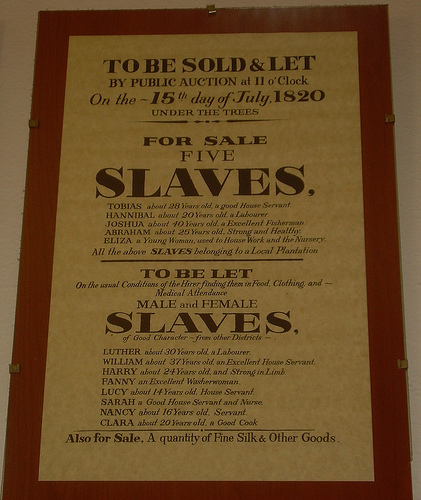
Advertisements for slaves, such as the one by William F. Talbott of Lexington, Ky., were commonplace while Lincoln was growing up.Photo: © PoodlesRock/Corbis

Slavery Lasted Longer in the Union Than in the Confederacy

Slavery technically existed in the North longer than it did in the South, as the 1863 Emancipation Proclamation only applied to the states that had seceded. The Union slave states of West Virginia, Maryland, and Missouri abolished slavery during the war. Kentucky and Delaware, however, continued allowing slavery until the Thirteenth Amendment abolished slavery throughout the United States in December 1865.
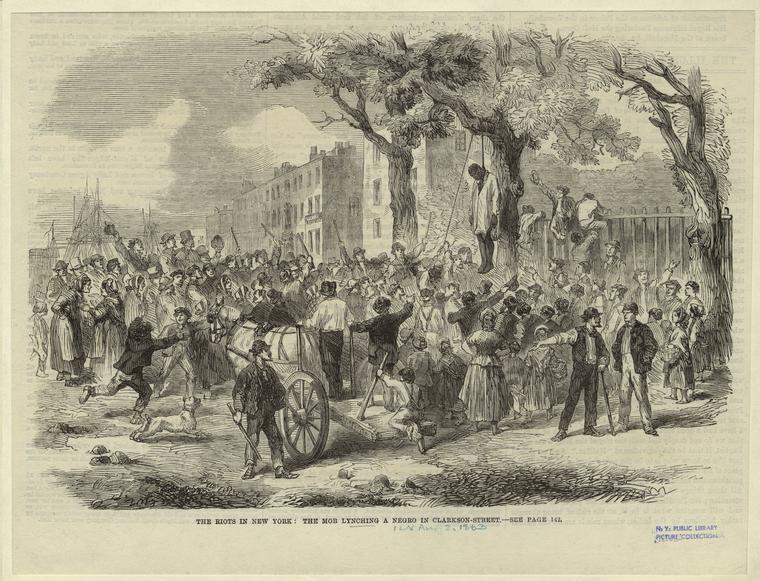
The riots in New York : the mob lynching a negro in Clarkson-Street.

New York City Considered Seceding From the Union

Though New York is viewed by much of America as the emblematic Northern city, it was actually a hotbed of pro-South and anti-war sentiment before and during the Civil War, not least because the city thrived on trade with cotton plantations. In January 1961, Mayor Fernando Wood even tried to convince the City Council to officially secede from the Union and declare itself a neutral city-state. Anti-war feelings crested with the bloody Draft Riots in July 1863, when working-class New Yorkers went on a rampage to protest new laws Congress passed to institute a draft.

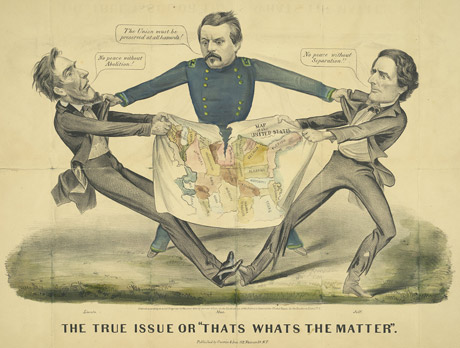
The Great Emancipator Rejected Emancipation at First

Though he’s now lauded as the man who freed the slaves, President Abraham Lincoln was routinely lambasted by the abolitionists of his time for not moving fast enough or far enough in ridding the country of the institution of slavery. When the Emancipation Proclamation finally was issued, it exempted the Union border states, Tennessee, seven counties of Virginia, New Orleans, and 13 Louisiana parishes. It also implicitly offered Southern secessionist states a chance to keep their slaves if they rejoined the Union by Jan. 1, 1863.

on this day in american history

it was the beginning of the end… when will it really end?  i think it’s a great day to re-watch the movie Glory.

150 Years Later, America’s Civil War Still Divides

by MELISSA BLOCK

On April 12, 1861, the first shots of the Civil War rang out in South Carolina.

Confederate forces, firing on the Union garrison at Fort Sumter in Charleston Harbor, helped launch a four-year war that would kill more than 620,000 soldiers.

It’s been nearly 150 years since the war began. But even now, the city of Charleston is still figuring out how to talk about the war and commemorate the anniversary.

Defending The Confederate Story

Think back 150 years to what led up to those first shots on Fort Sumter: Abraham Lincoln had just been elected president, promising to restrict the growth of slavery. That prompted South Carolina, on Dec. 20, 1860, to become the first state to secede from the Union.

Last December in Charleston, there was a re-enactment of that Secession Convention. It was followed by a Secession Ball — billed as “a joyous night of music, dancing, food and drink.”

Costumed revelers waltzed and sang Dixie. Many South Carolinians were appalled; the NAACP protested outside.

“There was some criticism,” says South Carolina state Sen. Glenn McConnell. “But I don’t let that bother me.”

McConnell re-enacted the role of the president of the Secession Convention, D.F. Jamison. “It was a fiery speech,” McConnell says. “And I gave it verbatim because I was not gonna be part of sanitizing it or making it appear to be something other than it was.”

A fervent Civil War re-enactor, McConnell brings some heavy artillery with him to the battleground: his own 3,000-pound cannon, known as “Big Ray.”

“Made out of marine bronze, it’s a beautiful thing. It looks like a stick of gold,” he says. “But it can bark — and it can bark loud.”

McConnell is active with the Sons of Confederate Veterans and wants to defend their story, making sure it doesn’t get overshadowed in this year’s commemorations.

“I’ve taken the position that the best way that we can stand up is to try to tell our story, and tell it in the context of, we’ve got a shared historical experience,” he says. “And you don’t have to like something, just tolerate it. Political correctness is almost now the new narrow-mindededness.

“To me, that’s not what we should be about,” he adds. “We should be about being able to say what we think, show what we respect — and you can accept it, reject it, but it doesn’t have to be to the exclusion of the other.”

But there are fears that this anniversary will rekindle old hatreds. How do you honor the Confederate cause without also honoring the institution of slavery?

Righting The Wrongs Of The Past

At Charleston’s Old Slave Mart Museum, you’ll hear the sound of heartbeats.

“It’s so soft that it’s usually subliminal,” says museum director Nichole Green. “It’s just representing in this space the enslaved person … and the anxiety that they must have felt.”

The museum is in the old Ryan’s Mart — a narrow, low-ceilinged building where Green estimates that at least 10,000 slaves were put on the auction block and sold.

The museum displays newspaper ads from the time. “Prime gang of 27 orderly country-raised negroes,” reads one. Among them:

Hercules: prime field hand.

16-year-old Richard: field hand — lost one eye.

Young Patty, age 3.

Green says she’s hopeful the sesquicentennial is part of a healing process.

“The fear that I have is that they … will try to use the sesquicentennial to divide people rather than bring them together,” she says. “And I just have to work harder to make sure that that doesn’t happen.”

Many people in Charleston talk about using this anniversary to right the wrongs of the Civil War centennial, 50 years ago. Then, it was celebrated as a joyful tribute to South Carolina’s Confederate heritage. Now, many remember the 1961 anniversary with embarrassment.

Back then, white Charlestonians gathered with cocktails in hand to cheer fireworks and the re-enactment of the assault on Fort Sumter. Longtime Charleston Mayor Joe Riley was then a freshman cadet at The Citadel, the historic military college. He remembers watching that segregated celebration.

“[People were] celebrating something that we now quite solemnly understand was the beginning of a terrible tragedy that was caused because the South was dependent upon the inhumane practice of slavery,” he says. “And 50 years ago, there was close to universal denial among white Southerners that slavery was the cause.”

The Men Of The 54th: A Story Of African-American Bravery

Among the many stories that wouldn’t have been told 50 years ago: a story of African-American valor on Morris Island, in Charleston Harbor.

The movie Glory showed what happened here in 1863. The 54th Massachusetts Volunteer Infantry — one of the first official black units of the Union army — took huge losses. It was a slaughter, really, as they launched an assault.

“It was a battle that the 54th lost,” says Civil War re-enactor Joseph McGill. “The Confederate forces were successful in holding the fort, but the 54th did manage, indeed, to prove themselves as soldiers.”

McGill wears his Civil War history as close as his Union blues. He’s a re-enactor of Company I with the 54th Massachusetts Regiment.

“The centennial was an opportunity — I think a missed opportunity,” he says. “As African-Americans, we were engaged in a larger fight — a fight for civil rights. And with that, some scholarship — some stories that were told may have gone unchallenged.


U.S. Colored Troops

“There we were, 50 years ago, still fighting the battles that the men of the 54th had already won for us.”

And now?

“Oh we’ve made a lot of progress,” he says. “I was in Washington, D.C., in my Civil War uniform with a bunch of other African-American Civil War re-enactors marching in the inaugural parade for our current president.”

‘It’s My Family; It’s Our People’

The man who encouraged McGill to become a re-enactor — and then trained him how to do it right — is Randy Burbage.

Burbage has 11 Civil War uniforms in all, both Confederate and Union. “In fact,” he says, “we probably portray Union soldiers more than we do Confederates around here, because it’s hard to get real Yankees this far South.

“You know, it’d look bad for 500 Confederate soldiers to lose a battle to 10 Union soldiers, wouldn’t it?”

Burbage is past commander of the South Carolina division of the Sons of Confederate Veterans. He feels a strong connection to his 56 Confederate ancestors.

Talk about the Civil War, and he’ll also mention what happened to his great-great-grandmother when the Union Army occupied Charleston in 1865.

“She was here with the children, and while she was out searching for food for the kids one day, she was raped on the streets of Charleston by a Union soldier while officers watched this happen,” he says. “She never spoke again the rest of her life — it was such a traumatic experience for her.”

On April 12, for the 150th anniversary, Burbage will raise a Confederate flag outside his home. It’s not a racist symbol, in his view. But he’s mindful that Confederate commemorations can be taken that way.

“We gotta be careful how we do this,” he says, “because we don’t want to project that image that we are some sort of racist organization or individuals, because we’re not.”

Burbage knows just how close to the surface these tensions are — and how fraught with emotion the Civil War still is.

After that controversial Secession Ball in December, he met with the NAACP to try to talk through their differences. “I attempted to explain why I feel the way I feel, and listen to the way they feel the way they do,” he says. “It didn’t go too well. It resorted to some name-calling and accusations.”

Burbage says members of the NAACP wanted him to admit that his ancestors were traitors. Months later, his eyes well up with tears as he talks about it.

“Oh yeah it gets to me, it gets to me some,” he says. “It’s my family; it’s our people. And it’s part of our mission as descendants of Confederate veterans to defend their good name and be guardians of their history. And I take that mission pretty seriously.”

There’s a lot riding on it, Burbage says. “I think this next five years is going to be a crucial part of us mending those fences and moving on from what happened 150 years ago.”

Beginning Saturday, if there’s no government shutdown, there will be a single beam of light shining up from Fort Sumter to the sky.

At 4:30 a.m. on April 12 — the moment the first shot was fired in 1861 — that beam of light will split to symbolize the division of the nation.


W. T. F!

I mean… I just don’t have words… which is weird for me… a little sick to my stomach over this, actually… talk about a different fourth grade experience…

I’d love to believe that were I subjected to this horror show I would have been able to poke fun at the situation.  That maybe I would have been able to choose one male white friend and taken the ‘performance’ to a whole ‘nother level by crying, “Oh please don’t sell me away, father…” However, being nine or ten and shy, I probably would at best have refused to participate, but, more likely, gone along, swallowing my anger, humiliation, and shame until I got in the car after school and told my mother who would promptly have taken care of it.  I assure you of that.

My mother would have gone to school and ripped the teacher, and anyone else who was walking by, a new a**hole had this happened to me.  She did that when she didn’t like the way they taught about the Mayflower and the Indians in first grade.  We did it together in the fifth grade when Sr. Mary Ann said some offensive b.s. about MLK and used me, the only student of color, as a reference.  She got fired.

As a “black” student who nearly always served as a speck of pepper in a sea of salt, I can tell you that it is uncomfortable enough to go through the history lessons on the Civil War when the class is simply reading straight from the textbook, but to actually be used to physically demonstrate the atrocity….  It feels bad enough when you’re in geography and your friend accidentally reads the “river Niger” aloud as the river nigger and a hush falls over a crowd and everyone is looking at you in your desk at the back of the room even though their eyes are facing forward… but THIS.  I just can’t… Jessica Boyle, imho, you officially suck as a teacher and a human being.  Hopefully this will open your eyes to all that you have had the privilege of being blind to, and you’ll come out of this a better person.  Good f***ing luck!

Norfolk principal apologizes for mock auction of black students

By Steven G. Vegh The Virginian-Pilot © April 9, 2011

NORFOLK

The principal of Sewells Point Elementary School has apologized to parents for a teacher’s classroom exercise last week that cast her black and mixed-race fourth-graders as available for sale.

The apology came after the teacher separated the students from their white classmates and auctioned them, division spokeswoman Elizabeth Thiel Mather said. The exercise was part of an April 1 class on the Civil War.

In an April 6 letter sent to parents of students in the class, Principal Mary B. Wrushen wrote: “I recently became aware of a history lesson that was presented to the students in Ms. Jessica Boyle’s fourth grade class. Although her actions were well intended to meet the instructional objectives, the activity presented was inappropriate for the students.

Image

“The lesson could have been thought through more carefully, as to not offend her students or put them in an uncomfortable situation,” Wrushen wrote.

Wrushen said the exercise was not supported by the school or division. “I will follow up with the classroom teacher to ensure nothing like this ever occurs again,” the letter said. “In addition, the guidance counselor is available to discuss any concerns your child may still have concerning this classroom lesson.”

Wrushen declined to comment Friday. Boyle, who has been with the division since 2005, did not return a call to the school. She has taught at Sewells Point for three years, and before that was at Dreamkeepers Academy, according to the division website.

Mather said the division was responding to the incident with “appropriate personnel action.” She did not give details.

Wrushen became aware of the auction exercise after receiving complaints from two parents, and spoke to the class about the incident, Mather said.

“This lesson was not part of the approved curriculum,” Mather said.

Chris Lee, whose daughter is in Boyle’s class, was among parents picking up their children Friday at the school on Hampton Boulevard near Norfolk Naval Station. He said he’d heard no details about the exercise, though he received Wrushen’s letter.

“My wife and I were trying to figure out what the letter was about, because we heard nothing about it, we just saw the letter,” he said.

Letter: Principal Mary Wrushen wrote to the parents of students at Sewells Point Elementary to apologise for the controversial history lesson

Told by a reporter about the auction, Lee said, “That sounds inappropriate to me. Wow. That’s interesting – that’s something I have to digest.” He said he would ask his daughter to tell him about the incident.

The school has 590 students.

Contacted Friday by The Virginian-Pilot, School Board Chairman Kirk Houston said he had not known about the auction.

“That’s very disturbing to me, extremely disturbing to me,” he said. “Mock slave auctions involving children are absolutely unacceptable in a classroom. At this point this is a personnel matter, and the School Board will monitor its outcome.”

Peggy Scott, treasurer of the Norfolk Council PTA, also first heard about the incident from The Pilot.

“I’m sitting here with my mouth hanging open,” Scott said. “There are some things you don’t do.”

In a statement Friday, Superintendent Richard Bentley said: “The school district does not condone this type of lesson in any way. It was wrong. It was outside the boundaries of the curriculum and appropriate instructional practices.”

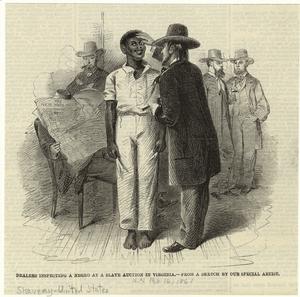
London Illustrated News, February 16, 1861, depicting a slave auction in Virginia. The sign on the podium reads “Negroes for sale at auction this day at 1 o’clock.”

Dealers inspecting a negro at a slave auction in Virginia.

Dealers inspecting a negro at a slave auction in Virginia.  [The Inspection]

Slave Auction, Virginia

by Lefevre James Cranstone Image rights owned by the Virginia Historical Society

Silvia Federici’s Slave auction, United States

again i have to ask, what year is this!?

oh, mississippi… you never cease to amaze me!  sure hope to hear about the rest of the results as soon as they’re in.

Poll: 46 percent of Mississippi Republicans want interracial marriage ban

And more of those who oppose interracial marriage have a favorable view of Sarah Palin, a new poll reports

BY JUSTIN ELLIOTT

The Dem-leaning firm Public Policy Polling has a new survey out that’s sure to raise some eyebrows.

When usual Republican primary voters in the state of Mississippi were asked if they think interracial marriage should be legal or illegal, a whopping 46 percent said it should be illegal, compared to 40 percent who think it should be legal. The remaining 14 percent were unsure.

PPP also breaks down how these voters view the GOP presidential field, with some interesting results. Here’s how those respondents would vote:

As PPP’s Tom Jensen notes, there are some interesting differences between the candidates’ favorability ratings when broken down according to respondents’ views of interracial marriage:

Palin’s net favorability with folks who think interracial marriage should be illegal (+55 at 74/19) is 17 points higher than it is with folks who think interracial marriage should be legal (+38 at 64/26.) Meanwhile Romney’s favorability numbers see the opposite trend. He’s at +23 (53/30) with voters who think interracial marriage should be legal but 19 points worse at +4 (44/40) with those who think it should be illegal

Dustin Ingalls, assistant to the director at PPP, tells me that the firm also asked non-Republican voters the interracial marriage question, and he expects those results will be released sometime in the future. He added that PPP also asked whether respondents believe the right side won the Civil War. Those results should also prove interesting.


what year is this!?

oh my jesus… yes, i had to go there.  i keep searching for an indication that this piece was written forty years ago, and only recently re-published just for… fun… or something.  i do think that there are, like, two valid, worthwhile points contained herein… but… um… oriental!?!?  that, of course, is not my main concern here, but it does point to the antiquated lens through which our dear (he does look kind of sweet and it says he volunteers a lot) mr. raiford views the world around him.  i don’t mean to come down on him.  i thank him for the unique opportunity to analyze the old “what about the children?” plea which i rarely see argued under the guise of modern day quandry.

maybe you should take a moment to skip down to the article and then come back to my stuff…  i’m never sure if it’s best for me to put my thoughts at the beginning or not… you’ve been warned… here they come…

first off, i’d wager to say that parents of mixed race children have long questioned the validity of discrete racial categories that require a child to choose.  i’d also wager to say that the white parents have probably had more questions than the black or ‘minority’ ones.  if this article was indeed written in the 21st century, i think it would be more accurate to say that (some fraction of) the rest of the country is finally beginning to question the validity of discrete racial categories.

most off… i cannot even believe that this man, who uses the term oriental multiple times, has the nerve to caution human beings who love each other and dream of starting a family to grow through life with… not to do so because race “matters” and (in his opinion) the children will be confused and unsupported outside of said family.  how about cautioning the rest of the country, those who haven’t caught up with the times, not to be so rigid in their notions of “us” in opposition to “them,” or who belongs with whom and why?  how about saying something to move us toward the idea that we are all fundamentally the same?  we are people.  who seek love and joy and connection.  and any time people are lucky enough to stumble upon those things we should encourage them to leap right in and build something beautiful from there.  which will encourage the rest of us to do the same. which will cause this society in which race matters more than who a person really is to change because the lines are blurred, have been crossed, eventually forgotten.  there you have a solution for the problem of the 6 year old that mr. raiford proposes will be confused and hurt by not belonging to any group outside of the immediate family.

and another thing… hasn’t the recent census informed us that there actually is a viable mixed-race reference group?  the only satisfaction that brings me personally is that it appears to be a necessary step toward the ultimate realization of the human-race reference group.  only one box to check.

to be fair… parts i liked… which really means agree with:

  • When a black and white couple produces a child, the child, by logical extension of definition, is black and white…
  • Race in the United States is a very discrete category. It is not based on any kind of scientific definition. It is based on a draconian sociological one and a divisive political one.
  • The United States has carefully and systematically created a society where race is a tremendously more important determinant of who we are than ethnicity, religion, national origin or personal achievements.

again, i do not mean to bring down a reign of fury on mr. raiford.  i’m truly grateful for the opportunity to blast these notions.  he seems like a nice guy with misguided concerns.  actually with misguided solutions to concerns that are unfortunately still mildly valid as we seem to be in an in between (united)state(s).  in between where we were and where we’re going.

awesome photo unrelated, source/subject unknown

HARD TIMES FOR MIXED-RACE CHILDREN

Written by GILBERT L. RAIFORD

In the pursuit of accuracy and personal pride, interracial parents are beginning to question the validity of discrete racial categories that require their children to designate single-race identification.

On the surface, this is a laudable pursuit and certainly a legitimate one. After all, we do define people as black or white. So, when a black and white couple produces a child, the child, by logical extension of definition, is black and white or neither black nor white. However, this satisfies only the biological, and perhaps anthropological, approach to understanding race.

There is a more compelling reality: Race in the United States is a very discrete category. It is not based on any kind of scientific definition. It is based on a draconian sociological one and a divisive political one. People here are defined as black or white or Oriental. This takes precedence over being defined as Jewish, Jamaican, Cuban, Haitian, Russian, Chinese, French, Catholic, Protestant, etc. The United States has carefully and systematically created a society where race is a tremendously more important determinant of who we are than ethnicity, religion, national origin or personal achievements. Witness the confusion of black Cubans or black Puerto Ricans or the Eurasians.

In the United States, an African-American parent, no matter how fair-skinned, cannot procreate a “white” child. The system does not make exceptions for an African American whose child is the product of interracial coupling. Of course, the reverse is not true for Anglo-Americans. They can have any race of child they want – black, white or oriental. That is the reality of this society.

I write this not at all to chide or even inform interracial parents. They are adults who most likely know a great deal about the race issues and are intellectually and emotionally strong enough to ignore the stupidity that is generated out of personal and institutionalized racism. Their lives together attest to this fact.

But what about the children?

It is not easy growing up black in this society. It becomes considerably more difficult for one who does not know that he or she is black, but is confronted by this sociological fact everyday and in so many ways, some of them hurtful and insidious. No amount of parental love can shield a 6-year-old from the confusion and hurt of not belonging to any group outside of the immediate family. Adolescents are particularly fragile, having to live with this confusion at the very crossroads of their lives when they are struggling to overcome self-doubt and needing to feel good about themselves, needing self-validation – things that one gets from people other than the immediate family, from a reference group. Presently, there is no viable mixed-race reference group. One is forced to choose. Mental health directs one towards choosing a reference group which minimizes our degree of race-mixing and provides us with full membership.

Superimposed on race is ethnicity.  Ethnicity is a reference group. For African Americans, it provides for a very sustaining sense of identity. It is no wonder that people like Lena Horne, Cab Calloway, W.E.B. DuBois, Walter White and Adam Clayton Power, even though white-looking, affirmed their blackness. It was not race that they were affirming, it was ethnicity, the sustaining sentiment which makes being non-white in America palpable and even enjoyable.

Hopefully, the day will arrive when we are no longer a racial society, a society where race does not matter. That day has not yet come. In the meanwhile, I caution interracial parents to consider the consequences of making their child a cause célèbre in search of a miscegenation reference group. Of course, it is important that a child knows the reality of his or her family genealogy and to even embrace it. It is at least equally important that a child is prepared to negotiate life based on the social context of society. Sadly, race matters.

Gilbert L. Raiford is semi-retired after a career in teaching and working for the U.S. Department of State. He lives in Miami where he volunteers at homeless facilities, the Opera House in Miami and after-care school programs as a fund-raiser. He may be reached at graiford@hotmail.com

just thought we should know

David M. French Dies at 86

Ever wonder who tended to the injuries of demonstrators brutalized during the civil rights protests of the 1960s? David M. French, a former Howard University professor of pediatric surgery and one of the first African-American board certified surgeons, coordinated many of those first aid efforts, as just one piece of a long career that merged medicine and public service. He died March 31 at the age of 86.

David M. French (Ellsworth Davis/Washington Post)

After witnessing firsthand the lack of quality health care available to blacks in the South at civil rights protests (he once converted his family van into an ambulance to lead a medical unit overseeing the care of Mississippi activists demonstrating against racism), French became committed to improving the health of underserved people and began to focus on preventative and community medicine.

French founded Boston University’s department of community health in 1969. He also established a network of community health centers in Boston before moving to Ivory Coast in the 1970s. There, he led an effort to train nurses and improve public health in 20 countries across the continent.

French returned to the United States in the mid-1980s and retired to Barboursville, Va. But his work didn’t end then. He went on to serve as medical director of Helen Keller International, a New York-based nonprofit organization that runs public health programs in developing countries. More recently, he served as medical officer for the nonprofit service and development African Methodist Episcopal Church.

Read more at The Washington Post.

not. hilarious.

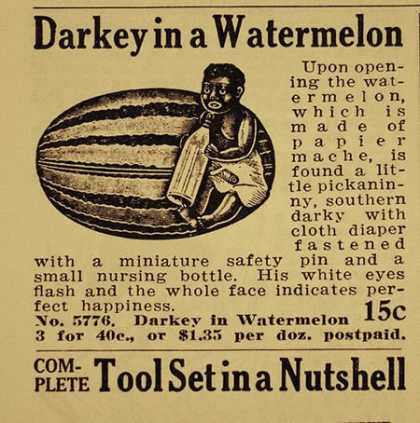
or, “how things got this way.” or, “thank you, racist advertising, for so effectively screwing us up.”

I had never heard the “made at night” thing before reading the comments on the picture I posted last week.  “Funny” how that’s still going around all these years later.  Kind of reminds me of the time my three year old self was called tar baby by a fellow (white)toddler.  I don’t think this is an ad.  It’s probably from a children’s book (perhaps that commenter’s favorite childhood bedtime story.)  Even “better.”

These previous two are another reason why “light skin vs. dark skin dodgeball tournament” cannot be funny to me. Ever. I have answered my own question.  Not ok.

copy reads:
Jell-O is known to all sections as “America’s Most Famous Dessert.”  In the South, for instance, it is inexpensive enough to be found in the cabins of the old plantations.  It is delicious enough to meet the standards of good living at the “Big House.” It is dainty enough for milady’s afternoon tea.  It is appealing enough to turn the sinful, of any color, away from his neighbor’s melon patch.

Let’s break this down:

“cabins of the old plantations” = slave quarters.

“sinful of any color” = just kidding, we mean the darkys… get it?  melon patch! ha! they sure do love watermelon!

I, personally, have always hated jell-o.

centenarians

A couple of days ago I found the (written) interviews with centenarians on one of my favorite blogs (which wordpress refuses to let me link to right now, but on my blogroll it’s lickystickypickyme.) I was intrigued, so I dug around the interweb for some more interesting 100-plus-year-olds and came up with the videos.  I just love them.

Touching interviews with centenarians, about their look on their long lives:(clockwise)   Alice Herz-Sommer, 108 I survived the concentration camps, and this is something extraordinary.  Thousands and millions that had to die, and we are sitting here. When  we are old, we are aware of the beauty of life. Young people take  everything for granted. It all depends on the character you’re born  with.  Everything I forget. Even if I write it down, I forget to  look. I had an excellent memory and now, I’m an idiot! [Laughs] What do  I do against it? I learn Bach by heart and play the piano. My son died  aged 64. He was a gifted musician, and a wonderful son. My only child.   Nellie Wright, 103 I don’t get by, I exist from one day to the other. I’m hoping for the  end to come. I’m tired of it. Why should it be like this? Not a penny in  my purse! I’ve worked 74 years. Why am I here? I’m waiting for God to straighten this out. I should be  home! My husband died while I was in here. I never even got to his  funeral. It doesn’t matter. I’ve been a decent girl, never drunk or gone  with men. I’ve just lived and worked like a silly fool.   Helen Turner, 101 I’m going to live to 120! I had a party and champagne at 100. Actually, I can’t remember much of it, as I’d had a lot to drink. I was engaged once, but I never met… well, I knew what I was looking  for and I found it, but too late. He’s a professor. Of course he’s  married. And I can’t imagine he’s the sort of person to go off the  rails. Not that I wouldn’t want him to. I’m not saying I’m that good!   Nora Hardwick, 105 It’s in the genes, I suppose. My mother was 94 and my eldest sister was  96. Granny was 97. I’ve kept my brain active. I read and do crosswords.  And I have a little shot of whisky at bedtime. I think that helps.  If it wasn’t for my daughters, I’d have to have somebody in every day,  but, you see, Maureen has showered me today and Jan’s washed my hair.  They keep me clean, that’s the main thing. I’ve treated myself to a  little scooter that I can get out on, in the fresh air. I don’t like  sitting all day. I take every day as it comes. Each one is a bonus.

Touching interviews with centenarians, about their look on their long lives:
(clockwise)

  1. Alice Herz-Sommer, 108
    I survived the concentration camps, and this is something extraordinary. Thousands and millions that had to die, and we are sitting here. When we are old, we are aware of the beauty of life. Young people take everything for granted. It all depends on the character you’re born with.
    Everything I forget. Even if I write it down, I forget to look. I had an excellent memory and now, I’m an idiot! [Laughs] What do I do against it? I learn Bach by heart and play the piano. My son died aged 64. He was a gifted musician, and a wonderful son. My only child.
  2. Nellie Wright, 103
    I don’t get by, I exist from one day to the other. I’m hoping for the end to come. I’m tired of it. Why should it be like this? Not a penny in my purse! I’ve worked 74 years.
    Why am I here? I’m waiting for God to straighten this out. I should be home! My husband died while I was in here. I never even got to his funeral. It doesn’t matter. I’ve been a decent girl, never drunk or gone with men. I’ve just lived and worked like a silly fool.
  3. Helen Turner, 101
    I’m going to live to 120! I had a party and champagne at 100. Actually, I can’t remember much of it, as I’d had a lot to drink.
    I was engaged once, but I never met… well, I knew what I was looking for and I found it, but too late. He’s a professor. Of course he’s married. And I can’t imagine he’s the sort of person to go off the rails. Not that I wouldn’t want him to. I’m not saying I’m that good!
  4. Nora Hardwick, 105
    It’s in the genes, I suppose. My mother was 94 and my eldest sister was 96. Granny was 97. I’ve kept my brain active. I read and do crosswords. And I have a little shot of whisky at bedtime. I think that helps.
    If it wasn’t for my daughters, I’d have to have somebody in every day, but, you see, Maureen has showered me today and Jan’s washed my hair. They keep me clean, that’s the main thing. I’ve treated myself to a little scooter that I can get out on, in the fresh air. I don’t like sitting all day. I take every day as it comes. Each one is a bonus.

jazz’s lasses

I’m freaking out about this right now!  How on earth have I never heard of these women!?  I read the first article and thought “Oh, very cool.”  Then I saw the video…moments ago…currently freaking out.  Anybody wanna make a movie about this with me?  It would be like A League of Their Own kinda.  But with people of color actually doing something other than standing around wishing they could be doing something at which they, too, are really good.  That’s one of my favorite movies of all time, by the way.  I digress.  I wonder if it’s the racism or the sexism that’s kept this a “secret.”  Both I’m sure, but when I watch that video I’m mostly struck by the fact that these are women in positions I don’t think I’ve ever seen held by a woman.  Not then, not now.  And they came out of Mississippi!? O. M. G.

First All-Female Interracial Band Celebrated At Smithsonian

Written by News One

The International Sweethearts of Rhythm, the first all-female interracial band in America, faced down both Jim Crow and sexism in the 1930s and 1940s. Then, they faded into obscurity.

This week the Smithsonian Institution celebrates the Sweethearts’ legacy as part of the launch of the museum’s Jazz Appreciation Month.

the international sweethearts of rhythm

The Sweethearts’ exhibit will be on display at the National Museum of American History in Washington, DC from March 25 to May 31. Members of the Sweethearts, which included Black, white, Latino and Asian women, will participate in several events on March 29 and 30 at the museum. Radio One founder Cathy Hughes, whose mother Helen Jones Woods was an original band member, will also be a participant [NewsOne is a division of Radio One]:

…Ms. Hughes will facilitate an brief (10 minute) onstage discussion with six of the original Sweethearts who will participate in programming at the Smithsonian:  They are Helen Jones Woods (trombonist), Ms. Hughes’ mother; Willie Mae Wong Scott (saxophonist), the child of a Chinese father and mixed race Native American mother, she grew up on Mississippi in 1920s; Sadye Pankey Moore (trumpeter), African American; Johnnie Mae Rice Graham (pianist), African American; Lillie Keeler Sims (trombone), African American woman who played with the Sweethearts their first year but later served as an educator and administrator in the NYC school system 40 years;  and Roz Cron, one of the first white woman to join the band. On March 30th, the Sweethearts and Cathy Hughes will participate in a 60 minute discussion on the Sweetheart’s legacy that will be webcast via UStream.


First integrated, female big band highlighted at Smithsonian

By Sally Holland, CNN

Washington (CNN) — When Rosalind Cron left home in the 1940s to join a teenage girl jazz band called the International Sweethearts of Rhythm, she had no idea what it would be like, as a white girl, traveling with the predominantly black band.

At the time, Cron said she thought “Jim Crow” was a man they were supposed to meet in the South. “I didn’t realize it was a law, and a very strict law — laws, plural,” she said.

State and local ordinances that mandated separate public facilities for blacks and whites made it illegal for Cron to share facilities with her band members.

Cron felt the discrimination because she lived on their tour bus with the other girls, hiding her race. For three years, she said, they were like her sisters.

She spent several hours in jail in El Paso, Texas, in 1944 when authorities didn’t believe the story she had made up that her father was white and her mother was black.

“They went though my wallet and there was a picture of my mother and dad right in front of the house,” she said. She was sprung a few hours later when the band’s manager brought two black girls to the jail who claimed to be Cron’s cousins.

By that time, according to Cron, the authorities that were holding her were glad to get rid of her.

“They just told us never to return. And as far as I know, we didn’t,” she said.

The risks were worth it to play her saxophone with what became known as the nation’s first integrated, female jazz band.

The International Sweethearts of Rhythm were founded at Piney Woods School in Mississippi in 1937, in part as a way for the students to help pay for their education.

They recruited members of different races to help with the “international” part of their image.

Willie Mae Wong had a Chinese father, a mixed-race mother, and no visible musical skills when she was recruited to the group as a 15-year-old. She was out on the street playing stickball when they picked her up.

“The director of the music was named White,” Wong said. “They called me ‘White’s Rabbit’ because he had to spend more time with me to teach me the beat.”

The name “Rabbit” has stuck to this day.

In 1941, the group separated from the school and went professional. They traveled on a bus to gigs across the United States, including venues like the Apollo Theater in New York and the Howard Theater in Washington.

During World War II, the Sweethearts traveled to France and Germany as part of a USO tour in 1945.

Pictures and mementos from the International Sweethearts of Rhythm are on display at the Smithsonian’s American History museum for their 10th annual Jazz Appreciation Month celebration in April.

Thatmanofmine

Six members of the band were in Washington this week to reminisce.

“It was a privilege to come from Mississippi and go and see the other parts of the world,” said Helen Jones, who played the trombone from the band’s founding until it disbanded.

“All I ever wanted to do was play a trumpet,” Sadye Pankey told a group gathered at the museum. And as for music education today, she feels bad for today’s students.

“Some of our schools in our country now have abolished the music, and it’s not fair,” she said.

Cron told the group that if music is your passion, you need to stick with it.

“Don’t let anyone come between you and your horns, or music,” she added.