yay, corbin bleu

and his dad!

Emmy_Suite-3

Hollywood Exclusive by Marilyn Beck and Stacy Jenel Smith – Oct 12th, 2009

via

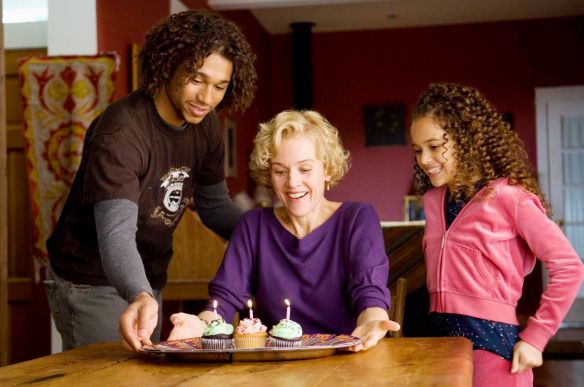
Twenty-year-old “High School Musical” cutie Corbin Bleu is more than glad that his character’s family in his new “Free Style” movie is biracial, just like his own family. He made a point of seeing to it that casting was done that way.

He tells us that, with himself and his father two of the producers on the feature, opening tomorrow (10/9), “It was one thing we definitely wanted to play to. So many times in films, you’ll have interracial kids, but they’ll still have two black parents. At this time, right now, where we are now, you’re seeing many more interracial families. So many people are mixing and it’s wonderful and that needs to be portrayed more in our films.”

Corbin notes that, being a producer, “This is the first time I got to take hold of some of the reins and I’d like to do more. I was involved in locations and casting and wardrobe and all that.”

free_style03

Synopsis: (via)

In the film, Bleu takes center stage as Cale Bryant, a biracial, Pacific Northwest teen whose father left his mom, Jeanette (Penelope Ann Miller), years ago when Cale’s young sister Bailey (Madison Pettis) was born. Regardless, Cale’s a polite, well-raised young man who, when not busy at the electronics store, delivers pizzas, takes care of sis while Mom waitresses, and races alongside his bud Justin (Jesse Moss), dreaming of turning pro.

Cale briefly gets angry with his mom, who turns out to have known the whereabouts of the kids’ deserter dad (David Reivers, Bleu’s real-life father and a producer of this film), and suffers taunts from rich-boy rider Derek (Matt Bellefleur).

91125489

barack like me

BarackLikeMe.small

David Alan Grier: Is beige the new black?

Comedian writes about how Obama has made being multiracial cool

excerpt from chapter 2

Every pundit from Larry King to Atlantic magazine agrees: black is in. All shades of black. Which is good for most people, because so many of us are of mixed race. Myself included. It’s mind-boggling that we have ended up here, at this point in our history. There was a time, only a few generations ago, that being of mixed race was not so cool. In fact, it was illegal to try to pass yourself off as a different race. If the authorities found out, you lost everything — your position, your home, and all your possessions. You’d be separated from your family and often lynched.

President Barack Obama has changed all that. People now want to be mixed. Bi-racial, tri- racial, quad- and quinti-racial, how many you got? The more the better. Multiracial is the hot new facial, the best look in the book. Mixed race is the new superrace. If you look too black, people seem disappointed. They look at you and say, “You’re just black. Oh. That’s too bad. Are you sure? Anything else in there?”

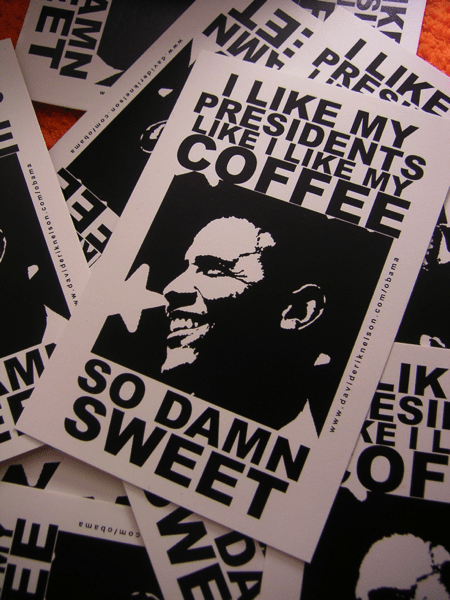
They’re looking for the Obama mix. It’s like a new kind of coffee. “We just came up with it. Try this. The new Obama roast. It’s the perfect blend. Strong, but not sharp. Seductive. Bold. Sweet. Smooth. And not too dark. Not like that Dikembe Mutombo roast they’re brewing across the street.”

And why not be black like Barack? He’s the coolest guy on the planet right now. He’s bigger than any rapper, more popular than any rock star. He’s huge. We admire him and kids aspire to be like him.

…It’s still hard to get my head around this, though, the idea of acceptance that comes with the Barack Obama presidency. There is a part of me that acknowledges — and remembers, historically — that people of color who tried to deny any part of themselves were suspect. They would have to make a decision and stick with it. If it was found out that they were denying a part of themselves, they would be accused of running away from themselves and be rejected by their own. We’re looking at a whole new playing field as of right now. You can embrace all the parts of you. You can say, forthrightly, “I am who I am. I am all my parts,” or even, “I am all my parts, but I am embracing this particular one. This is who I am.” And we, as a people, will embrace it as well.

Excerpted from “Barack Like Me” by David Alan Grier with Alan Eisenstock. Copyright (c) by David Alan Grier.

i like my coffee like my presidents'

i “needs to talk” to obama about this too

Mariah Carey: in a frank interview, the singer tells all

Mariah_Carey_mother

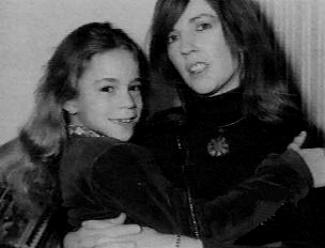
…Carey’s own parents divorced when she was little, and although her father materialised occasionally to take her on trips – hiking or to the races – she didn’t get to know him properly until she was an adult… He was tough. He’d been in the military. I do miss him. At the end of his life we spent a lot of time together. And I learned a lot about his side of the family.”

Her mother grew up in the midwest. “She came from – er –?” Carey frowns. “Middle of America?” She brightens –”Illinois!” – and as such, she says wryly, “is among the whitest people I know”. Her father was half-African American, half-Venezuelan. “I’m a black woman who is very light skinned.” As a child, she was self-conscious of her mixed race, and it is still enough of an issue, in the US and elsewhere, that Carey is routinely accused of “trying too hard” in one racial direction or another.

“White people have a difficult time with [mixed race]. It’s like, my mother’s white – she’s so Irish, she loves Ireland, she’s like, yay, Ireland! Waving the flag and singing When Irish Eyes Are Smiling. And that’s great. I appreciate that and respect it. But there’s a whole other side of me that makes me who I am and makes people uncomfortable. My father identified as a black man. No one asked him because he was clearly black. But people always ask me. If we were together, people would look at us in a really strange way. It sucked. As a little girl I had blond hair and they’d look at me, look at him, and be disgusted.”

She says she “needs to talk” to Obama about this. When he became president, she was overwhelmed and delighted, “but for years we never believed it would happen. There’s a group who will never get it, never want to get it. Because you have to lose the purity of both races and there are certain people who really don’t want that to happen. I think it starts with people teaching their children that it’s not OK, because they don’t want their kid to come home with someone of another race. I understand people want to hold on to their roots. But for me, I was a complete nonentity because of it. Maybe that was part of my drive to succeed. I’ll become accepted.”

And now? Oh, she says, sarcastically, “it’s in vogue now. So I’m sitting here thinking, now it’s cool, great.”

mariah-carey-cover-md

burden of mixed-race?

Raising multi-racial kids in a color-conscious society

by LYLAH M. ALPHONSE

In spite of having a mixed-race president — or, perhaps, because of it — the issue of race is very much alive in modern America.
In 2000, for the first time the U.S. Census offered people the option of identifying themselves by more than one race. About 6.8 million recorded themselves as being multi-racial; more than half of those who consider themselves multi-racial are younger than 20 years old, which seems to indicate a growing acceptance of interracial relationship and a rise in the number of biracial and multiracial kids.
And yet, when it comes to raising these children, some parents are still facing questions and, at times, criticism.
At Babble, Elizabeth G. Hines shares a friend’s reaction to her donor-assisted pregnancy: Why, the friend wondered, would you choose to create a mixed race child? Why wouldn’t you just stick with one race or the other?
She writes:
“… she asked me what my ideal donor would look like. I answered honestly that I had no pre-set “ideal” in mind, but assumed that my partner and I would pick a donor that reflected the racial background of the one of us who was not biologically related to the child. At the time, I was in an interracial relationship — which meant, she quickly deduced, that I was talking about conceiving a bi-racial child. That, and that alone, was enough to make my fair-minded, thoughtful friend shed her liberal cool and call into question my credibility as a potential parent. Not my identity as a gay woman, mind you, which might have been an easy target. This was about race, and the perceived disadvantage I would be burdening a child with by choosing to create him or her from two different racial gene pools.”
The idea that belonging to more than a single racial group could be a disadvantage or a burden is one that I’ve never understood. I’m multiracial. My kids are, too — even my stepkids. My father is of mixed race. As are his parents. And their parents. And their parents. When it comes to mixed marriages, my family’s been doing it for generations.
So, when it comes to defining my race on a form, I check ‘other’ and, if that’s not an option, I don’t check anything at all. Maybe it’s a matter of privilege, but I’ve never been adversely affected by being multi-racial.

babies on backs in store

diversity in dialogue

I was first intrigued by this article because I once had dreams of going to Amy Grant’s alma mater,  Vanderbilt University.  Then I got to the “biracial factor” at the end and I knew I had to post it.  I’m encouraged that this program has garnered such interested and seems to truly be seeking open and HONEST dialogue.  “Mandatory honesty.”  I like that.  I don’t know an institution can mandate honesty, but it’s a great idea!  And I think it’s also important to remember that once talking about race was considered racist.  I’ve totally been accused.

Race, not immigration is hot topic at Scarritt-Bennett’s Diversity in Dialogue program

By Janell Ross • THE TENNESSEAN • September 28, 2009

Prevailing social wisdom says race, politics and religion don’t make for civil conversation.

But this year, for the first time, the Scarritt-Bennett Center had a waiting list of people who want to participate in its multi-week group dialogues on race in America.

The program, dubbed Diversity in Dialogue, is one of two small local groups that meet over a six-week period to foster discussion and understanding of various hot-button topics.

The conversations are led by group facilitators trained by Scarritt-Bennett. They lay out a series of ground rules that include only one person speaking at a time, mandatory honesty, and what’s said in the circle stays in the circle unless specific permission to share is granted.

“Participation tends to go up and go down,” said Diana Holland, the program’s coordinator. But when race is being discussed “in the media or is part of the general national affairs or even seems to be a big local issue, we do see more interest.”

The 2008 election of Barack Obama, the nation’s first African-American president, has led to many conversations behind closed doors about race, its meaning and its impact, said Tony Brown, a Vanderbilt University sociologist who specializes in social psychology, as well as racial and ethnic relations.

“There was in some circles so much regret that (Obama) was elected and fear about what sort of change this moment represents. Then, there is so much joy,” Brown said.

“I think the fact that both of these emotions were happening in large circles simultaneously just flooded the social system. That conversation couldn’t be held back to private spaces anymore.”

But having honest conversations about race isn’t easy or simple in a country where terms like “post-racial” are being thrown around after a long period in which talking about race was itself considered racist, Brown said.

Jessica Swader is a person who longs for a world where labels — particularly those attached to race — don’t matter. Swader, a biracial 22-year-old Vanderbilt University graduate student with a biracial husband and two children, said she too often finds herself on the receiving end of commentary about how her behavior and choices are “white.”

“I feel really strongly about racism,” she said. “You know my culture, my skin, they don’t define who I am or what I like. I define that.”

Swader says she is hoping to emerge from the six-week, two-hour sessions with a better understanding of the way that people think about biracial individuals — why there is a persistent demand for biracial individuals to identify as one race or another.

Swader says she arrived at the group’s first session last week with the assumption that the group of people who voluntarily came together to discuss race would be almost completely black. Instead she found what she described as a good mix of people younger and older, black and white.

The latest circle formed includes six black participants and eight white.

Diversity In Dialogue logo

meet the de blasios

05_Flatbed_2 - AUGUST

Such an innocent act.  A simple family photo.  I’m so disappointed that anyone even thought to turn this into a “scandal.”  In my opinion, a white man who has a “black” family very likely does “get it” more than one who has not or would not cross that line.  He’s become black by association to a degree, and even if he doesn’t fully understand the experience and the struggles, I’m pretty sure that he cares a lot.  For it affects him.  It affects everyone, but chances are de Blasio cannot and will not ignore it.

New York Post Attack On Bill de Blasio Is Bogus

by Sheryl McCarthy

The New York Post claims that Bill de Blasio’s use of photographs of his interracial family in his campaign mailings for the public advocate’s job amounts to pandering to black voters. Frankly, I was delighted to see the photographs of the Brooklyn City Councilman’s family.

With his wife, Chirlane, an attractive, dark-skinned black woman who wears her hair in natural braids, and his children, Dante and Chiara, who are clearly biracial, the de Blasios are the picture of an attractive and apparently happy family. Leave it to the Post to lend credence to claims by City Councilman Charles Barron that the photographs are designed to pander to black voters, and that they were mailed only to voters in predominantly black sections of the city, while voters in predominantly white areas received mailings with no photos or photos of the candidate only.

DeBlasio’s press secretary’s told me the family photos were sent out citywide and were not intended to appeal to just black voters or other voters of color. They were sent out because, as de Blasio told WNYC interviewer Brian Lehrer, “I’m showing my family, and I’m showing my family to all communities because that is who I am.”

The Post story is a shoddy piece of reporting which quotes only Barron and two anonymous sources who reportedly claim that black women are complaining about the campaign flier in which Chirlane de Blasio says of her husband “He gets it,” because it suggests that de Blasio understands black residents’ concerns simply because he’s married to a black woman.

…It’s customary for politicians to run ads featuring their families. So why shouldn’t de Blasio feature his? They’re certainly attractive, and if the fact that they’re black and bi-racial wins him points in the black community and any other community in the city, so what? When I was a columnist for Newsday I interviewed de Blasio on several occasions, without knowing the race of his wife and children. When I saw the campaign photos, I was frankly delighted. His wife looks adorable, his children attractive, and aware as I am of the dearth of suitable mates for black women in this country, I’m always thrilled to run across a successful man who’s attracted to black women. Since most of the five candidates for the public advocate’s job are more or less qualified for the job, I have to admit this fact makes me think more favorably of de Blasio’s candidacy.

mailer1.JPG

willing to accept

This isn’t the first I’ve heard of biracial children falling under the umbrella of “hard to place” in the adoption world,  but this little article still made me sad.  As if it would be a great sacrifice, or a kind of acquiescence, perhaps an inconvenience to bring one of “those” children into your family.  But hey, they’ll pay you to take one…

Adoption Resourcess, under the umbrella of Jewish Family and Childrens’ Services, is a licensed, nonprofit adoption agency in Massachusetts. They have been in business for 140 years…

“The agency is a conduit for contact”, states the director. They provide counseling, support and education to birthparents before and after the birth. These services are also provided to the adoptive parents, and to adoptees seeking information on their heritage.

For a flat fee, the prospective parent(s) can adopt a healthy, Caucasian infant within one to two years. For those willing to accept biracial or at risk children that wait time can be as little as one year. Betsy notes that the agency is particularly proud of its Lindelli Fund, which provides subsidies to any parent wishing to adopt hard-to-place children.- via

DSCF4909.JPGpj_hair

These children are not up for adoption.  They’re just cute and biracial.

katerina graham

ReelArtsy.com has a great interview with biracial actress Katerina Graham.  You can read it in it’s entirety here.

katerina-graham

On being black/biracial in Hollywood:

“Luckily I’ve worked my butt off. I’ve been able to do roles that weren’t necessarily meant for me because of what I look like. I’ve been fortunate enough to surpass certain expectations that anyone might have had of me. Sometimes it’s been hard, sometimes they’re like ‘oh you’re not black enough’ or ‘you’re not white enough’ or ‘we don’t know what to do with you’ or ‘you don’t match up with this person’. And sometimes it’s been a blessing, sometimes I’ve been able to blaze my own way trails and say: you know what I’m biracial, I don’t come from necessarily the background that some other people have but if you give me a chance I’ll promise I’ll do a good job and I know what I’m doing. And I think that color aside, and all of that aside, it’s work that matters. You being a good actor, being a good person, you know, it’s who you are inside that is going to make it either…you succeed or you fail.

And I have great parents. I have great people around me. I have a great cast who doesn’t judge each other on anything physical. It’s a very loving environment and I think that I’m just fortunate enough to break certain stereotypes and hopefully lead the way maybe for other African-American women who would love the same opportunities or who would love to do something different.”

biracial comedienne sued

By her mother-in-law! I sure wouldn’t want to be at their Hanukkah celebration this year.

Comedienne Sunda Croonquist sued by her mother-in-law over mother-in-law jokes

Legal News ExaminerWilliam Pfeifer, Jr.


AP Photo/Matt Sayles

Sunda Croonquist, a comedienne whose comedy routine often includes jokes about her family, has been served with prime new material that she probably won’t  use.

Croonquist has been sued by her mother-in-law over her mother-in-law jokes.

The lawsuit against Croonquist alleges that Croonquist made false, defamatory, and racist jokes about her mother-in-law, Ruth Zafrin.  Zafrin is joined in the lawsuit by her daughter, Shelley Edelman, and Edelman’s husband, Neil.  In the lawsuit, they demand that Croonquist remove the offensive statements from her website, comedy routines, and recordings.

Croonquist, the biracial child of a Swedish father and an African-American mother, married into a Jewish family.  She asserts she is clearly not an anti-semite because she converted to Judaism before even meeting her Jewish husband.

Croonquist states that she will drop the allegedly offensive jokes from her comedy routine, but she flatly refuses to pay any monetary damages.

biracial wedding

I thought this was a sweet story for Sunday blogging.  Yay, biracial couple!

Jodi Hilton for The New York Times

New York Times

By KATIE ZEZIMA

Vows

SOMETIMES the one for whom you’ve been searching your entire life turns out to have been beside you all along or, in the case of Leah Elizabeth Squires and Eric Raymond Traub, in the next crib.

“The memories of her go as far back as I can remember,” Mr. Traub, now 32, said.

In the 1970s, their parents, Helen Gagel and Bob Squires and Linda and Ray Traub, were neighbors in Evanston, Ill., and became close friends, sharing a bond that ran deeper than their camaraderie and commitment to social justice. Ms. Squires’s parents are an interracial couple, while Mr. Traub, of mixed race himself, is an adopted son of white parents. Back then, Linda Traub said, “It wasn’t as accepted.”

Leah Squires and Eric Traub, the most bookish of the children, could always be found, said Catherine Squires, an older sister, “with their heads together” reading mystery and fantasy books. So independent and feisty was Ms. Squires that she even got Mr. Traub to play with her Barbies, her mother said.

After leaving for college they stayed in touch, if only sporadically, leading lives that were quite different yet oddly in sync.

In the winter of 2002, when the Varoom Group, a collective of dancers and choreographers of which Ms. Squires was a member, gave a performance, Mr. Traub and his girlfriend at the time came to New York to see it.

Their next reunion — the funeral of Ms. Squires’s father in October 2004 — was sad, but far more telling about their relationship. Mr. Traub was a pallbearer, which served to remind Ms. Squires of just how deep the bond between the two families remained.

“My dad was one of his first role models of being an African-American man,” she said.