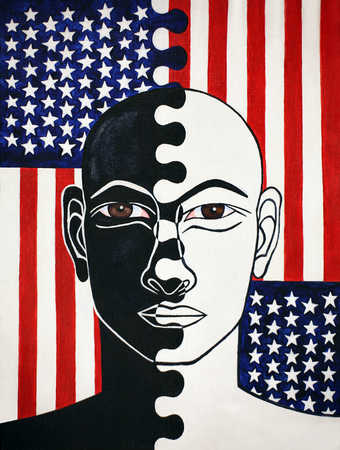
fair and good features….on the dark half

Good Lord!!

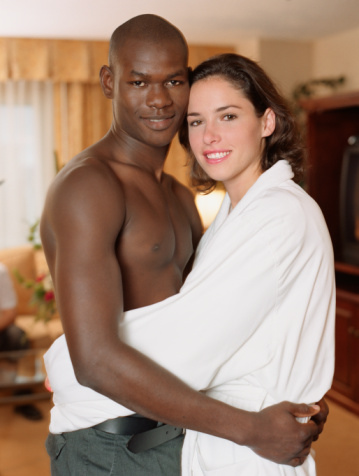
Ebony & Ivory

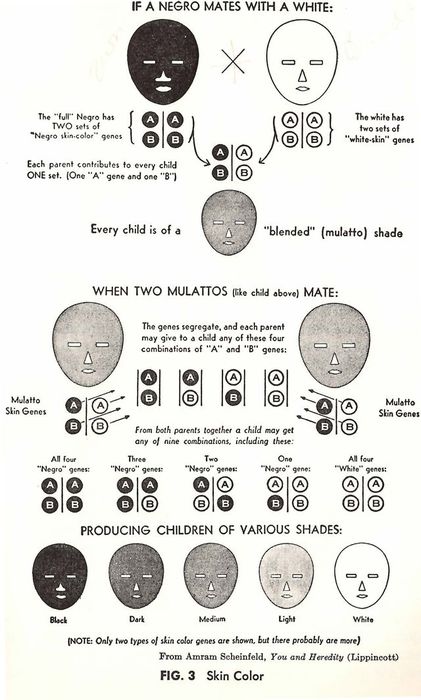
San Jose Mercury Evening News, November 30, 1887. Here’s the “tragic mulatto” principle taken to extremes by cruel Nature. Or then again, maybe circus life would have offered more to this kid than whatever hardscrabble misery awaited him in post-Redemption Florida. If only we had a name other than “it” for the child in question, I might be able to find out what happened to him.

Ebony & Ivory2

reblogged from The Hope Chest

art by Kaadaa

re: willing to accept

Here’s another article that references the perils of placing biracial babies in adoptive homes.  Is adoptive a word?  Anyway, this just reinforces my strong desire to adopt a brood of biracial kids.  I guess it’s not going to be that difficult once I’m ready.  Getting ready is the difficult part.
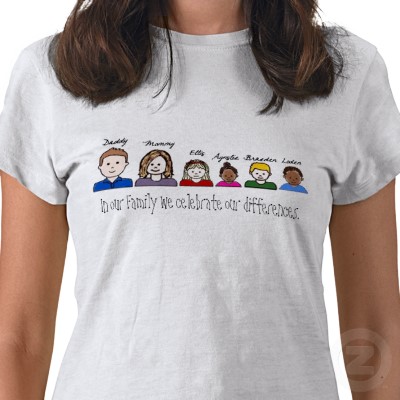
Adoption fulfills dream of blended family for Erie County couple

By DANA MASSING

A chatty little social butterfly, 5-year-old Grace Ann May can be sassy and likes to show off a little.

That’s how Annette May describes the daughter who is most like May was as a child.

“Other than she’s brown and I’m white,” May said.

Grace is one of two girls and two boys who became part of the May family, of Greene Township, through adoption.

Gracie, as she’s called, and two of the others are biracial. The children, who range in age from 5 to 12, were joined by Annette and Scott May’s first biological child, a daughter born on Mother’s Day.

“White, black, purple with pink polka dots, it really doesn’t matter to us,” Annette May said. “Everybody deserves a family that loves them.”

…The Mays’ four adoptions were done through Catholic Charities, even though the family is Presbyterian. The agency works with families of all faiths. It had more adoption options and lower fees than other agencies, Annette May said.

Heather Hough, adoption counselor for the agency, said cute babies with blonde hair and blue eyes are the easiest to find families for.  “Everybody wants those,” she said.

Some children up for adoption have physical, mental or behavioral issues, said Ellen Miller, Catholic Charities’ special-needs adoption coordinator. She worked with the Mays on their adoptions.

The Web site for the Statewide Adoption and Permanency Network, or S.W.A.N., states that “special needs” refers to “children waiting to be adopted who are older, of minority heritage, part of a sibling group or have a disability” or “for whom finding an adoptive family may be more challenging.”

“A lot of our kids, their need is they need a family more than (they) have special requirements,” Miller said.

Annette May said one of the most difficult parts of adopting was answering questions about what she and her husband would accept in a child.

“You can’t make those decisions when you have a child naturally, so I felt very awkward feeling like I could make those decisions in this circumstance…  We had fertility issues,” Annette May said. “We’re kind of traditional folk. We never really financially could afford in-vitro (fertilization) or things like that, and I’m just not that type of person, not interested in going through all that. It sounds very cliché, but as a kid, I always thought it would be very neat to have a blended family.”

That family started with Grace Ann. She was 10 days old when the Mays took her home. They were early in the adoption process and hadn’t expected results so soon, but no other family wanted a biracial baby at the time, Annette May said.
“We’ve always been open to pretty much any age and any race,” she said.

When Gracie was 6 months old, the couple heard from Miller at Catholic Charities again.

“She called and said, ‘We have a biracial little boy, born at Hamot yesterday, needs somebody to pick him up tomorrow. Are you willing?'” Annette May recalled.

“At the time, we just kind of thought, ‘This is so unusual.’ We had those thoughts of, ‘People say it takes forever. It’s a boy and a girl. Are we ever going to have the opportunity if we turn it down?  And so we said yes, and I thought, ‘Hey, people have twins all the time. What’s the big deal? We’ll just get it all out of the way at once — diapers, bottles, the whole thing.'”


Read the rest of the Mays’ story HERE

parenting biracial children

I think this sounds like one of the most fascinating books on the subject.  I’m really looking forward to reading the different experiences of black mothers and white mothers and women of various generations.  Wow!

Race and identity: Do parents of biracial kids face special challenges?

by Lylah M. Alphonse

When social scientist Marion Kilson’s children were born, in the 1960s, she assumed that they would identify as African American, like their father, not European American like herself. “I was still in graduate school,” she remembers. “I wrote my term paper on slave revolts. I assumed my children would be identified as African American, and I wanted them to know that not all African Americans had been gospel about their slave status.”

Her friend and fellow social scientist Florence Ladd, on the other hand, says that she didn’t have expectations about her child’s race in his early years; it was her stepson, who is white, who “made me think about his future and racial identification in infancy.”

In their book, Is That Your Child? Mothers Talk About Rearing Biracial Children, Kilson and Ladd discuss the challenges facing parents in a multicultural world….

Kilson, who is European American, and Ladd, who is African American, had known each other for 40 years but had never really talked about their experiences parenting biracial children before, Kilson says. They talked to about 25 Boston-area parents while working on Is That Your Child?, and they kicked off their research by interviewing each other.

Kilson and Ladd focused on mothers rather than fathers (“We just felt that was really that a man would do better than we could,” Kilson says) and decided not to touch on racial issues faced by adoptive parents. The parents they spoke with were from different generations, but most were upper middle class and all were from the United States. “Growing up in this society, we have a different take on race,” Kilson says.

“Americans have a hard time seeing relationships when their skin color is different,” she continues, talking about the times when her daughter, whose husband is Scottish, has been asked if she’s the nanny of her lighter-skinned child. (I can’t even count the number of times people have asked, “So, what are you?” or asked if my kids all have the same father.)

Older generations tend to be more focused on the racial differences between a parent and a child, Kilson points out, even if they don’t intend to be negative. She doesn’t think it’s possible to raise a truly color-blind child in American society…but younger people, who are more comfortable with race and diversity, navigate this multicultural world with ease. It’s all they’ve ever known.

“I perceive that, for our children, they didn’t have a public choice about racial identity, whereas for our children’s generation, their children have a choice about affirming all of their identities,” Kilson points out.

And the possibilities are endless. “When children see themselves in public figures as well as teachers — that hope flows through them as well,” Frohlich says. “We do expect children to value one another as individuals, regardless of ethnicity.”- source


If Heidi Klum wasn’t Heidi Klum, I bet she’d hear “Is that your child?” a lot.


have you noticed…

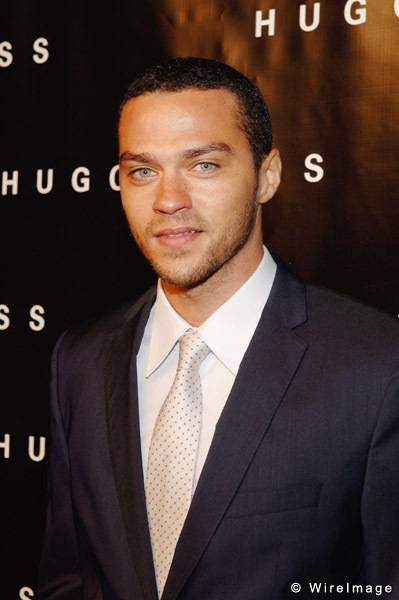
The new (biracial) guy on Grey’s Anatomy?  As soon as he first hit the screen I was like, “I think he’s one of us!”  But I wasn’t 100% sure until I saw Jesse Williams on the Bonnie Hunt Show.  He showed pictures of himself as a child with his (Black) dad.  So cute!  Then and now!!  My friend google led me to some more info about him….

Williams is the son of an African American father and a Swedish mother, and as a teenager, he moved from urban Chicago to ‘lily-white’ suburban Massachusetts.  His interest in acting was sparked, in part, when a film he was writing about this uneasy transition was chosen as a finalist in the Sundance Screenwriter’s Lab.  “It was a big part of my life.  I really rejected that move.  It was a complete cultural shock.”  Williams recalls, “It wasn’t good.  My friends were sh***y, the people were sh***y, the parents were sh***y.  A lot of parents closed the door in my face, so I was like, I don’t need to be here.  I’m not going to try and change you, which, I guess I did try for a while.”- via

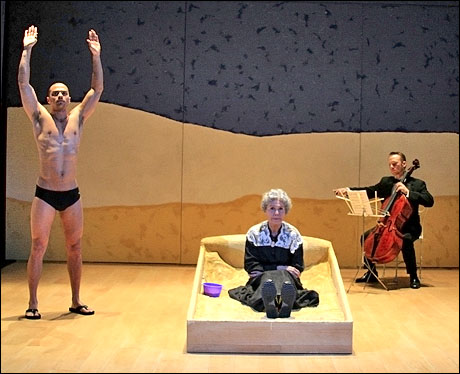
This is from an off-broadway play that Williams did last year.  So wish I had seen it.

Jesse Williams isn’t embarrassed to admit he wasn’t fully aware of who Edward Albee was when he auditioned for him to play the scantily-clad Angel of Death in the revival of The Sandbox that the 80-year-old playwright is now directing (in tandem with The American Dream) at The Cherry Lane. “Actually, I think it helped me, not being so intimidated,” says Williams. “He was so funny, cracking jokes with me even from the beginning. And I didn’t even fully process that he had offered me the job. But it’s all been an amazing experience, getting this immediate response from the audience, and working with this cast. And honestly, I don’t even really know what I look like on stage. I said I was going to go to the gym more often, but I end up just doing push-ups in the basement of the theater and trying to keep quiet.”

Williams’ enthusiasm is understandable, since he has only been acting professionally for a couple of years. While studying filmmaking at Philadelphia’s Temple University, he did some commercial and modeling work, with the occasional acting audition — even turning down a prime soap opera role. “I am a biracial man, and I was supposed to play this tragic mulatto character lusting after a white girl, and I didn’t want to leave school to do that kind of part.” Instead, after graduation, he took a job as a public school teacher in Philadelphia, and then a high-level law firm job in New York — “I was supervising 60 attorneys, even though I’m not a lawyer” — before deciding to focus on acting.- via

Oh, Jesse Williams.  I can’t wait to interview you!

keith bardwell, please read this article

Just to catch you up to speed.  By the way, don’t worry about us.  We are doing just fine.  Thank you for your grave concern.  That you would go to such lengths as interfering with God’s blessing of love and devotion (I know, I know- only to certain couples) just to spare us a lifetime of confusion and exclusion is sweet.  But no thank you.  Times have changed, my friend.  I mean, you do seem to think of yourself as a kind of a friend of the mulattos.  A really ignorant and misinformed friend.  I see how it could happen.  For years (white)people were taught that race-mixing was wrong.  And if those people were desperate not to feel really racist, that belief was justified with feigned concern for the “spurious issue” which would result from interracial couplings.  That coupled with the “tragic mulatto” propaganda that has been bandied about the country since way back in the day… Well, I can see how you may have been lead astray.  I hope you can open your mind now.  After the couple of weeks I imagine you’ve been having, you really have no excuse.

w onesie

Are Mixed-Race Children Better Adjusted?

By JOHN CLOUD Saturday, Feb. 21, 2009

That Americans like answers in black and white, a cultural trait we confirmed last year when the biracial man running for President was routinely called “black”.

The flattening of Barack Obama’s complex racial background shouldn’t have been surprising. Many multiracial historical figures in the U.S. have been reduced (or have reduced themselves) to a single aspect of their racial identities: Booker T. Washington, Tina Turner, and Greg Louganis are three examples. This phenomenon isn’t entirely pernicious; it is at least partly rooted in our concern that growing up with a fractured identity is hard on kids. The psychologist J.D. Teicher summarized this view in a 1968 paper: “Although the burden of the Negro child is recognized as a heavy one, that of the Negro-White child is seen to be even heavier.”

But new research says this old, problematized view of multiracial identity is outdated. In fact, a new paper in the Journal of Social Issues shows that multiracial adolescents who identify proudly as multiracial fare as well as — and, in many cases, better than — kids who identify with a single group, even if that group is considered high-status (like, say, Asians or whites). This finding was surprising because psychologists have argued for years that mixed-race kids will be better adjusted if they pick a single race as their own.

The population of multiracial kids in the U.S. has soared from approximately 500,000 in 1970 to more than 6.8 million in 2000, according to Census data quoted in this pdf. In the early years, research on these kids highlighted their difficulties: the disapproval they faced from neighbors and members of their extended families; the sense that they weren’t “full” members in any racial community; the insecurity and self-loathing that often resulted from feeling marginalized on all sides. That simple but harsh playground question — “What are you?” — torments many multiracial kids. Psychologists call this a “forced-choice dilemma” that compels children to claim some kind of identity — even if only a half-identity — in return for social acceptance.

But the new Journal of Social Issues paper suggests this dilemma has become less burdensome in the age of Tiger Woods and Barack Obama. The paper’s authors, a team led by Kevin Binning of the Stanford Graduate School of Business and Miguel Unzueta of the UCLA Anderson School of Management, studied 182 multiracial high schoolers in Long Beach, Calif. Binning, Unzueta and their colleagues write that those kids who identified with multiple racial groups reported significantly less psychological stress than those who identified with a single group, whether a “low-status” group like African-Americans or a “high-status” group like whites. The multiracial identifiers were less alienated from peers than monoracial identifiers, and they were no more likely to report having engaged in problem behaviors, such as substance use or persistent school absence.

The writers theorize that multiracial kids who choose to associate with a single race are troubled by their attempts to “pass,” whereas those who choose to give voice to their own uniqueness find pride in that act. “Rather than being ‘caught’ between two worlds,” the authors write, “it might be that individuals who identify with multiple groups are better able to navigate both racially homogeneous and heterogeneous environments than individuals who primarily identify with one racial group.” The multiracial kids are able to “place one foot in the majority and one in the minority group, and in this way might be buffered against the negative consequences of feeling tokenized.”

In short, multiracial kids seem to create their own definitions for fitting in, and they show more psychological flexibility than those mixed-race kids who feel bound to one choice or another.

Fortunately, all these questions of racial identity are becoming less important, as we inch ever closer to the day when the U.S. has no racial majority. One of these days, after all, we will all be celebrating our multiracial pride.
Read more: http://www.time.com/time/health/article/0,8599,1880467,00.html#ixzz0W2BxqzTZ

conditioned to the method of white superiority

I’d love to see the show that this article details.  All whites are racist!?  I have a hard time buying that.  Prejudiced or biased, maybe.  I think all people are no matter the color.  Anyway, it upsets me greatly that the black father of the mixed-race girl doesn’t want to expose her “secret.”  Um…. how is she supposed to form a positive, all-encompassing identity if her black father is hiding from her white friends?  I wonder if this will be on BBC America.

racism-fist-large.gif

TEACHER: ‘ALL WHITES ARE RACIST’

29th October 2009 by Peter Dyke

DailyStarUK

A Bombshell new television show will tonight claim that all white people are racist.

An American schoolteacher and anti-race campaigner will conduct an experiment for Channel 4 to prove how prejudiced Britain is.

Jane Elliott, 76, whose nickname is The Bitch, travelled to the UK for the test.

Part of the show features former Prime Minister Margaret Thatcher made up as a black person and US President Barack Obama as a Chinese.

Elliott is given a group of 30 volunteers, of mixed age and race, and splits them into two teams based on their eye colour.

Those with brown eyes are treated well, but those with blue eyes are ridiculed, humiliated and insulted.

Her aim is to create a mock “apartheid regime” to make the blue eyed people experience prejudice, discrimination and racism.

However at the end of the experiment, set in an old warehouse and lasting several hours, the white and black volunteers end up in a bitter row.

Some even walk out. Many of the white volunteers claim that black people do not have the monopoly on discrimination.

A middle aged white woman says: “They think racism is just for black people. I’ve had comments made about me because I’m blonde and white.”

However one dad, who is black, reveals how he never picks his daughter up from school because her mum is white and he doesn’t want anyone to know she is mixed race in case she is taunted.

At the end of the experiment, Elliott claims the white volunteers have shown their true colours.

She tells the C4 documentary tonight at 10pm: “White people should feel guilty about their behaviour.

“You don’t do things because you’re white, you do things because you’re ignorant.

“We are conditioned to the method of white superiority from the moment of birth.”

stop-racism

sophie okonedo- that can’t possibly be your mum

Jewish Actress Sophie Okonedo Explores Biracial Identity

BY NAOMI PFEFFERMAN

“I’m a North London, working-class, black, Jewish girl,” actress Sophie Okonedo said. “I love my upbringing because it had so many different colors; it’s given me the equipment to play lots of diverse roles.”

In 2005, the tall, striking actress burst into the international spotlight when she was nominated for an Oscar for her harrowing turn as the wife of a hotel manager who hid more than 1,200 refugees from genocidal militias in “Hotel Rwanda.” As the unexpected new toast of Hollywood — Newsweek described her performance as a “revelation” — she went on to portray an emotionally disturbed young woman in civil rights-era South Carolina in “The Secret Life of Bees.”

Now she has tackled her first leading role in “Skin,” based on the true story of Sandra Laing, a biracial girl born to white parents — unaware of a black ancestor in their family tree — in 1950s South Africa. The film chronicles the parents’ battle for Sandra to be classified as “white,” her rebellion and marriage to a black man and subsequent struggle to be reclassified as “colored” to keep her children. At one point in the film, Laing’s parents learn the 10-year-old Sandra cannot continue to live in their home unless she is documented as a household servant.

Sophie-Okonedo_Skin

The script stunned Okonedo when it arrived at her North London home not long after her Oscar nomination. “The story was so extraordinary I almost couldn’t believe it was true,” she said from the flat she shares with her 12-year-old daughter.

And then there was the personal connection for Okonedo, 40, who was raised by her Ashkenazi mother and Yiddish-speaking grandparents after her father, a Nigerian civil servant, abandoned the family when Sophie was 5.

“I could relate to being black and brought up in a white family,” she said. “Of course being raised in North London in the 1970s was much kinder than South Africa in the ’50s. But it was helpful to understand what it is like to have a family that is a different color than you — and to question your heritage when people say, ‘That can’t possibly be your mum.’”

…Okonedo was the only black congregant at the liberal synagogue she attended with her grandparents, although she refuses to discuss previous remarks she reportedly made about encountering discrimination from both blacks and Jews.

…“My grandparents kept a fairly Jewish household,” Okonedo said. “They celebrated all the holidays, and they spoke Yiddish when they didn’t want me to understand the conversation. I feel sad I didn’t learn Yiddish as a child,” she added. “It’s such a fantastic language, so expressive. And now my grandparents are too old to teach me.”

Now that her grandparents are in their 90s, the family holiday celebrations have ceased. “But culturally I’m still very Jewish,” Okonedo said. “It’s all in my blood.”

Over the years, her mother has remained Okonedo’s staunchest champion — encouraging her to attend the Royal Academy of Dramatic Art after she dropped out of school at 16, and later traveling with her to theater and movie sets to attend to her hair. “I’m not very good at the whole dressing-up thing,” Okonedo said.

Premiere+Secret+Life+Bees+Arrivals+TIFF+2008+5dLjEN-0oOwl

Read the entire article here.

i was like, ‘are you serious!?’

Yet another disheartening story of hatred in the form of racism.  Maybe instead of naivety it’s because of who and what I am that I find it shocking that so-called “racial purity” is an obsession for some.  A crusade.  A cause to kill and die for.

Harrowing Story of Racism

Staff
Charleston

http://www.wvmetronews.com/index.cfm?func=displayfullstory&storyid=32733

Meredith Harris is white.  Her husband is black.  She has white friends and black friends.  She says the color of their skin has never really mattered to her, but she says it does to some… Harris, 22, has what some may call an unbelievable story about racism. But it is true,  and it happened in Charleston, WV. The story ended with a man named Darrell Fierce pleading guilty to violating Harris’ civil rights.  Fierce was never sentenced because he died after shooting himself on the day of  his sentencing hearing.

It began in late June 2007 when Harris found a house to rent. Next door was Fierce and his partner, both older white men.  After signing a lease with Fierce’s partner, it was move in day for Meredith. Her white friends were there to help.

“That was actually the first day I met Darrell. I was carryin’ stuff in and out of the house.  He came up and walked over in the yard and introduced himself. He actually gave me a bottle of champagne with like a red ribbon and everything. (He) told me ‘welcome to the neighborhood’ (and) if there was anything I need to let him know…  He was just really friendly to me the first day….he was very friendly. Ben had always been friendly. Darrel was friendly. So, I thought everything was going to be fine.”

But everything wasn’t fine.  Two days after moving in Meredtih Harris brought a young mixed-race girl to the house along with who is now her father-in-law, a black man.

“My goddaughter…she’s mixed.  And she was over there and as soon as they saw her the next chance they got they confronted me in the front yard.  (They) called my goddaughter some very inappropriate things.  (They) said that they weren’t having a day care for ‘mixed monkeys.’  (They) said they didn’t like my kind and that I was going to have to leave. (They) pretty much called me white trash. At that point, that was when they tried to evict me. ”

Harris says that after a wonderful initial reception things had changed suddenly.

“When they first said it I didn’t believe them. I was like ‘are you serious?’  But once it like clicked to me that they were being serious -that they were really that racist and this wasn’t like a joke- that’s when I called my dad. He came over and he confronted them. Once he got there they pretty much said the same thing to him. ‘We know why you don’t want her. She’s white trash. We know you’re probably ashamed of her. I’d be ashamed of her too.’  (They) just said things like that that were really inapproriate.  At this point i didn’t want to live there anymore.”

usa-00567

Having been given an eviction notice by the men for what they called “incapability” Meredith began looking for a new place to live. Then came the night of July 15th, 2007. As she often did, Meredith went to bed late. Her wake up call on July 16th was scary.

“It was about five o’clock in the morning when I woke up and my dog woke me up. By the time she did, the smoke was so thick in my room I could hardly see,” Harris said. “I usually sleep with my door closed, but it was actually open that night. As soon as I woke up I knew it was him (Fierce) that did it.”

“He made like a little brush pile with trash and flammable stuff,” she remembered. “They started the fire right outside my bedroom and at the front and backdoor, I guess, to try and trap me in there.”

Harris would later find her and her boyfriend’s cars had slashed tires and sugar-filled gasoline tanks.

That was her last night in the house, but she kept her belongings there as she looked for a new place to live. She says within a week the house was empty and when she returned she says Fierce reminded her what he had said before that he was going to evict her.

“I walked inside the house and everything that I owned was gone. Everything from by shower curtain, to my toothbrush, to my hairdryer, everything was gone,” Harris said.

“After he said those things about me and my goddaughter I knew he was crazy, but I never thought my life would be in danger for staying there until I found another place,” Harris recently said in an exclusive interview with MetroNews.

Harris was waiting for Fierce to go to trial and she admits today she was surprised when he agreed to plead guilty to the charges. He did so earlier this year, although when the plea hearing began before a federal judge he made up a story about why he set the house on fire. Before the hearing was over, Harris says Fierce told the truth, but she could tell he wasn’t sorry.

“Even after the fact he felt no remorse,” Harris said. “He didn’t think there was anything wrong with what he did.”

The 69-year-old Fierce was scheduled to be sentenced in late July, but he didn’t show up for his hearing. Federal marshals soon discovered he had shot himself in the stomach in a Kanawha City motel room. Fierce was hospitalized for several days, before passing away.

“I didn’t want him to die. I would have much rather seen him go to jail to be honest,” Harris said. “I guess everybody else thought I would feel safer. I just felt bad and it made me feel worse.”

01_Hands12-748063


marriage license refused

I guess it’s not really a big deal seeing as he’s let a black person use his bathroom and all.  Of course I do not mean that at all and I am appalled by this.  Especially because his reason is to prevent the creation of miserable people like me.  Good God!  I think when this man sees and interracial couple he sees (in his mind) something like this:

white woman black horse

rather than this:

2100800164_a84aecde84

No Marriage License for Interracial Couple

By MARY FOSTER, AP

HAMMOND, La. (Oct. 15) – A white Louisiana justice of the peace said he refused to issue a marriage license to an interracial couple out of concern for any children the couple might have.

Keith Bardwell, justice of the peace in Tangipahoa Parish, says it is his experience that most interracial marriages do not last long.

“I’m not a racist. I just don’t believe in mixing the races that way,” Bardwell told the Associated Press on Thursday. “I have piles and piles of black friends. They come to my home, I marry them, they use my bathroom. I treat them just like everyone else.”

Bardwell said he asks everyone who calls about marriage if they are a mixed race couple. If they are, he does not marry them, he said.

Bardwell said he has discussed the topic with blacks and whites, along with witnessing some interracial marriages. He came to the conclusion that most of black society does not readily accept offspring of such relationships, and neither does white society, he said.

“There is a problem with both groups accepting a child from such a marriage,” Bardwell said. “I think those children suffer and I won’t help put them through it.”

If he did an interracial marriage for one couple, he must do the same for all, he said.

“I try to treat everyone equally,” he said.

Bardwell estimates that he has refused to marry about four couples during his career, all in the past 2 1/2 years.

Beth Humphrey, 30, and 32-year-old Terence McKay, both of Hammond, say they will consult the U.S. Justice Department about filing a discrimination complaint.

Humphrey, an account manager for a marketing firm, said she and McKay, a welder, just returned to Louisiana. She is white and he is black. She plans to enroll in the University of New Orleans to pursue a masters degree in minority politics.

“That was one thing that made this so unbelievable,” she said. “It’s not something you expect in this day and age.”

…”It is really astonishing and disappointing to see this come up in 2009,” said American Civil Liberties Union of Louisiana attorney Katie Schwartzmann. She said the Supreme Court ruled in 1967 “that the government cannot tell people who they can and cannot marry.”

The ACLU sent a letter to the Louisiana Judiciary Committee, which oversees the state justices of the peace, asking them to investigate Bardwell and recommending “the most severe sanctions available, because such blatant bigotry poses a substantial threat of serious harm to the administration of justice.”

“He knew he was breaking the law, but continued to do it,” Schwartzmann said.

…”I’ve been a justice of the peace for 34 years and I don’t think I’ve mistreated anybody,” Bardwell said. “I’ve made some mistakes, but you have too. I didn’t tell this couple they couldn’t get married. I just told them I wouldn’t do it.”