i am who i am that is that

It’s been a good long while since someone has asked me outright, “What are you?”  This dawned on me as I read the article below.  At first I figured it’s just because I’m not that ethnically ambiguous, visually speaking.  I have never thought of myself that way, though, and regardless of my self-perception I have been What are you-ed many times.  When I got to the point in the article about nationality vs. ethnicity my confusion was cleared up.  I have this conversation on a weekly basis.  Unless I literally do not engage with any “new” people.  It goes like this:

  • new person:  So, where are you from?
  • me:  Michigan.
  • new person: (usually awkward giggle goes here) I mean what’s your nationality?
  • me:  American.
  • new person: (usually frustrated sigh goes here) Okaaaayyyy, well where are your parents from?
  • me:  Kentucky and West Virginia.
  • new person: either a) gives up or b) says, Well, what’s their background?

I usually give in here saying something like, “My mom is black and my dad is white, if that’s what you’re trying to get at.” Believe me my smart ass retorts could go on forever, but who has time for this kind of bullshit conversation?  It’s true: I am not a puzzle to solve. In the past I have allowed these questions to make me feel less than the whole being that I am.  Now, they irk me. Please don’t confuse my discontent with the content of these chats with me preferring that there be no discussion.  As I said in the last post, we have to talk about it.  But with the intent to understand and connect, not to separate, stereotype or pigeonhole.  The difference is palpable.  I can feel the intent behind the inquisitions and the stares.  I no longer take it personally either way, but the pigeonholers lead me to a place of righteous indignation inside of myself that is not an optimal space from which to raise the vibration of love on the planet. So help a sister out here.  Ask yourself why it is that you want to know so badly?  Why, why, why, why, why?  I beg you to get real with yourself on that one.  I believe this will lead you to questions that are actually worth asking.  And if you’re brave enough to truthfully answer them, those answers may begin to remove the blinders that keep us immersed in the illusions of society.  The “right” questions and the honest answers will lead you out of the false self into your truth, the truth of the universe.  I’m all for asking questions.  But quality questions, people.  Progressive questions.  Unifying questions.  Not bullshit ones. And if you really must ask because you couldn’t possibly go on living without knowing which box somebody “belongs” in, please follow the advice in this article.  Especially that thing about accept the answer you receive.  Sat Nam.

i am who i am

I’m Not a Puzzle to Solve: How to Speak to Ethnically Ambiguous People

September 9, 2013 | by Kat Lazo My father is Peruvian, and my mother is Colombian, which I guess makes me ethnically ambiguous. I say “I guess” because in my eyes, this seems to be a pretty boring combination. Yet, to many people, I seem to be a hard puzzle to solve. But unfortunately for them, I’m not a puzzle. I’m a human being. And that’s the problem when approaching ethnically (or racially) ambiguous people with questions about their backgrounds: Many of the approaches are dehumanizing. I’ve had complete strangers act nice to me only to find out they were trying to win a bet as to guessing what ethnicity I was. I’ve had people stop in their tracks and shout “What are you?” as if I were an alien. I’ve had men refer to me as an “exotic animal.” I’ve had people question how American I am. All of which made me feel less than the whole being that I am. I understand where the questions come from. I have almond-shaped eyes, light olive skin, Inca facial features, and straight black hair, a combination that is curious to some people. I understand how my appearance can be foreign and interesting to many people. But that doesn’t mean that my appearance is up for public discussion. Questioning someone about his or her appearance is rude, especially if you haven’t established a relationship with that individual to begin with. But if can’t control your curiosity and you really want to know that badly, here are a few things to keep in mind when approaching people about their ethnic background.

It’s How You Ask

Stopping a complete stranger on the street to interrogate them –whether it’s about the tattoos on their body or their ethnic background – isn’t always the best approach. Why? Because you’re a stranger. People don’t owe anyone an explanation for why they look the way they look,especially someone that they don’t know. That being said, if you still feel the need to ask, don’t bombard us with a thousand questions. It’s overwhelming and insensitive. There’s also something offensive about thinking that you are entitled to ask so many questions. It’s bothersome precisely because you’re not entitled to it. Please stop asking “What are you?” It’s not the right way to ask about someone’s ethnicity, and it’s rude. Though it may be a result of ignorance as to how to ask, it makes the other person feel like an object or less than whole. It’s as if you are insinuating that we are something less than human. i don't feel like a personThe best way to ask is to be genuinely interested in getting to know a person and not just a slice of information about them. If you have a genuine conversation, it’s even possible that the person will disclose information about their ethnicity before you even ask. And if they don’t – or if they decline to answer your questions – remember thatthat’s okay. They have every right not to divulge that information.

Accept the Answer That You Receive

If you’re going to be so bold as to interrupt someone to ask such a complicated question, than be prepared for a complicated answer. Not everyone’s response is going to be as simple as you may have assumed. Remember that ethnicity is complicated in itself. It’s pretty rare that anyone in the Western hemisphere is 100% anything these days. And once you get an answer, please don’t continue pushing for more information if the response didn’t suffice your curiosity. Continuing to question someone after they’ve given you an answer is disrespectful. The answer belongs to them and them alone. The answer is not validated on whether or not it pleases you. Also keep in mind that for some individuals, perhaps those that don’t know their biological parents, ethnic background may be something deeply personal for them. In my case, I’m a mestizo (a person of both indigenous and European descent). So my dearest apologizes that when I disclose my parents’ nationalities, it does not necessarily appease your curiosity as to from where my almond-shaped eyes derive. But deal with it. Once answered, don’t keep pushing.

Expectations

If you’re going to ask such a personal question, leave your biases and stereotypes at the door. Stereotypes are bad, even the positive ones. Making generalization about an entire group of people is problematic because it limits them to exactly that – a generalization. A stereotype not only limits an individual’s personal growth, but it limits you from genuinely getting to know them. If you want to really get to know someone, leave the stereotypes at the door. “I’m Mexican.” “Oh, wow. I thought Mexicans were all really short.” Or… “I’m Filipina.” “You’re a lot prettier than most Filipinas.” These types of remarks are rude. The people being questioned have opened themselves up to answer your question, and you respond by insulting the very people he or she is associated with? How could that be construed as not offensive?

Case-By-Case Basis

No two people are the same, and therefore, no two people will respond in the same manner. Some will welcome questions and curiosity, whereas others may not. Personally, I find that I respond to people differently depending on how they approach me and depending on the mood I’m in. Sometimes I’ll play dumb. “What am I? Oh, I’m a human.” Sometimes I’ll take the opportunity as a way to teach others about my background. “I’m not exactly sure where my eyes come from because my mother has naturally almond eyes and my father’s country, Peru, has had a history of an influx of Japanese immigrants.” Or sometimes I won’t answer back because—well—I just don’t feel like it. And that’s okay. It’s my body, and I have the right to answer in any manner that I feel comfortable with – not necessarily an answer that makes you comfortable. And one of my choices is not answering at all. Remember: No matter how someone answers the question, it’s always appropriate.

Learn the Difference Between Nationality and Ethnicity

Other than “What are you?” the most commonly asked and irritating question I get is “What nationality are you?” To which, I give the proper answer: American. One’s nationality is the nation in which a person was born or is a citizen of. Another way to think of it is: It’s what’s on your passport. Ethnicity, on the other hand, isn’t as easily defined, but for the most part, it’s determined by a couple of factors, including country of origin, shared language, and ancestry. Hispanic, for example, is an ethnicity, not a race. One can be a Black Hispanic, White Hispanic, or Asian Hispanic. Ethnicity may be a little complicated, but one thing we know is this: It’s not the same as nationality. Precision of language matters. i am not-rumi I don’t owe anyone an explanation as to why I look the way I look. And it’s my choice whether or not to disclose – and not yours to force it out of me. Understand that if you are curious about a person’s ethnic background, chances are that you aren’t the only one. There have likely been plenty before you who have asked the same questions. Having to answer the same questions over and over again can get tiresome – for anyone. And having so many people question your appearance can make one feel less-than. So ask yourself why you care so much. Revaluate how important it is to attain this information rather than caring about the person themselves. The truth is, it shouldn’t matter. Because just knowing someone’s background won’t tell you who they are. But a genuine interest might.

weekend update 9/29

panda wtf

This is a weekend in which I really would have loved to have been spared further aggravation, indignation, etc.  But enough about me.

Here are three news items that ruffled my feathers, and apparently I think you should know about them.  What these stories say to me is that there is something to be said for opening up the dialogue.  I know I’m always posting pictures with words on them.  I’m certain that if I went thru these archives of “inspirational” images I would find that I do not actually believe the message in a large percentage of them.  Here’s one I recently came across that sent up a red flag:

freeman stop racism

Mr. Morgan Freeman, I love and respect you.  Robin Hood Prince of Thieves, The Shawshank Redemption, whatever that movie that you played God in was called… I freaking love that shit.  And to top it all off you funded the first racially integrated prom in Charleston, Mississippi.  Major Mahalo!

But, Mr. Freeman, do you really think that if we stop talking about it, it will stop?  Maybe you meant to say stop identifying and categorizing by race.  Which would mean me not calling myself a black girl or a biracial girl, and you not calling yourself a black man, and George Bush (either one) not calling himself a white man.  An inside-out kind of shift.  But if we just stop talking about it, Sikhs will continue to be perceived as terrorists, black folks as criminal/dangerous/depraved, and white people will be perceived as… perfectly normal.  I think we have to talk about it.  But from a place of seeking to understand the unity, not defend the separation.

For the record:  Tiffany Jones, do you really believe that Morgan Freeman actually said that just because you saw his face above those words on some random Facebook page?

All of THAT being said, on to this news.

I’m not at all surprised by Mississippi and the need for a civil rights lesson there… FOR the judge!  I am a bit surprised to come across another instance of Sikh-abuse so soon.  I suppose I’m tuned in to that community now.  Perhaps I wouldn’t have clicked on that story three months ago.  Not proud of that, but it’s the truth.  When you have experience unity and fellowship with an “other,” there remains no such thing as “other.”  How will we ever get to that place if we stay silent?

Omg, the middle one….my heart was racing and I started to sweat at the part in the story when the cop put gloves on…

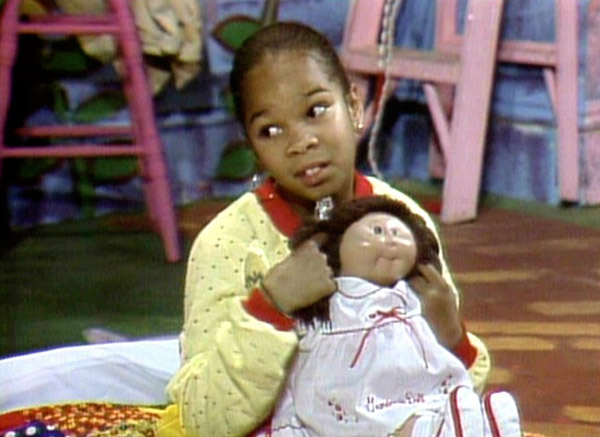
Punky Brewster was a hero of mine.  By proxy Cherie also has a big piece of my heart!  SO, how dare they!?  Of course not because she’s Punky’s bestie, but because she’s a human being.   A human being who is conscious enough to approach her heritage openly and with reverence.  It truly makes my blood boil.

punky-brewster-photo

I did take a nugget of love and hope from Dennis White’s narrative of the incident though.  The love and respect with which he speaks of and treats his partner struck me as truly beautiful.  The way he handled the situation…I’d wager to say this guy meditates or something fantastically woo woo like that.  Most do not expect that of a black man.  On a bad day I include myself in that group.  So, just in case it seems otherwise, everything I post on this blog is a note to self.  That makes the title “diary” a little more digestible to me.

So,the third one here is an improvement of a situation.  If that wrong is righted, there will be clear-cut, undeniable manifestation of something positive coming out of something tragic.  The positive will be an acquittal for Marissa Alexander.  The tragic is literally the verdict in the George Zimmerman case.  Figuratively, I suppose it’s the death of Trayvon Martin.  What a huge universal purpose that youngster served.  Sat Nam.

Mississippi County Gets Civil Rights Lesson From A Harassed Sikh Truck Driver

AUTHOR:  SEPTEMBER 28, 2013

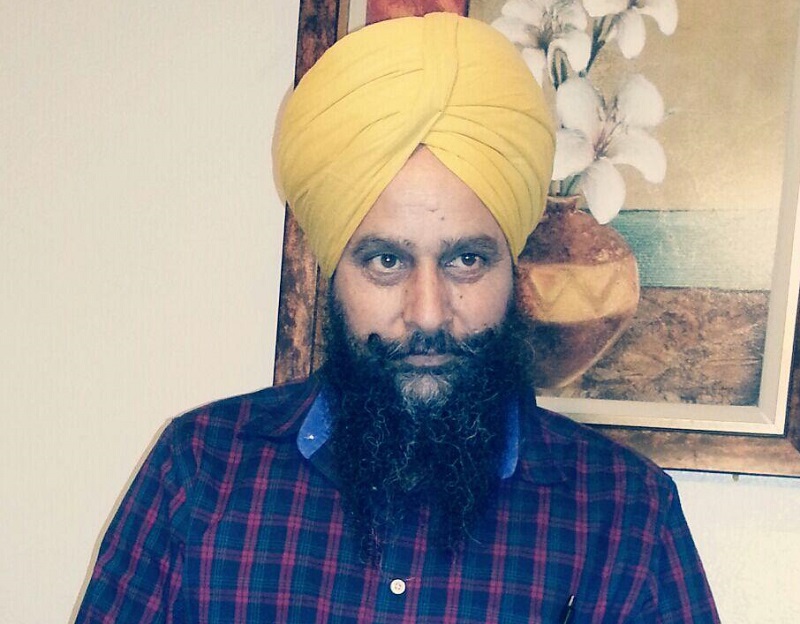
In a move that Mississippi might be regretting, a Sikh man was arrested and humiliated in the state over refusing to remove religious attire. The incident happened last January when Jagjeel Singh, a long-distance truck driver, was stopped by state police officers for driving with a flat tire. During the stop, they harassed and mocked him for wearing a turban, while one officer stated that all Sikhs are ‘depraved’ and ‘terrorists’.

JagjeetSingh_MissisipiCase-trimmed

 Jagjeel Singh

Finally, the officers told Singh that the small, sheathed ceremonial sword, called a kirpan, that he was wearing was illegal. This isn’t true, but they ordered him to remove it. The kirpan is sewn into the waistband of a Sikh man’s trousers and is a sacred religious object, which Singh tried to explain. He declined to remove it and asked that he not be forced to do so. The result of this request was that he was arrested for refusing to obey a police command.

Matters got worse from here. The rest of the nation has long been accustomed to hearing about the abuses of Mississippi police officers when it comes to members of minority groups. Usually, the justice system isn’t much better — and that’s certainly the situation in this case. In March, Singh showed up for his hearing before the Pike County Court. As he sat in the courtroom waiting for his case to be called, four policemen approached to eject him from the room — at the judge’s behest.

Judge Aubrey Rimes ordered the removal because he didn’t like the turban Mr. Singh was wearing, which is also of religious significance. In chambers, the judge confirmed to the defendant’s lawyer that not only did he order the removal, but if Singh didn’t take off the turban, he would wait until all the cases were heard before calling up that one. And that’s precisely what happened. Singh spent the day waiting for his ‘turn’.

However, unlike many who have been targeted for discrimination in the state, Mr. Singh was not all on his own to face the Mississippi ‘justice’ system. First, the United Sikhs organization got involved, providing him with legal representation. Local lawyer LeeAnn Slipher not only stood up for her client in court, negotiating for charges to be dropped and her client released, but was a vital witness to the abuse that took place at the hands of the judge.

With irrefutable evidence available, the U.S. Department of Justice (DOJ) Civil Rights Division opened an investigation and the results have been relatively immediate. Pike County agreed to institute sensitivity training and to revise their nondiscrimination policy in return for an end to the investigation. The county’s policy now specifically says that religious discrimination includes:

 … requiring an individual to remove a head covering or denying that individual access to a County office, building, program or activity because they are wearing a head covering, if that head covering is worn for religious reasons.

Although Mississippi has been notoriously bad at dealing with civil rights issues, there is hope that the good news doesn’t stop there — especially since federal intervention has already taken place at the county level. On Wednesday, the American Civil Liberties Union (ACLU) sent a letter to the Mississippi Department of Transportation, asking for an investigation of its officers on harassment charges. The ACLU also announced plans to file a complaint with the Mississippi Judicial Commission, in cooperation with United Sikhs, asking for an investigation of Judge Rimes and for the imposition of consequences for his actions.

The outcome, of course, will depend on watchful eyes from elsewhere in the nation.


Two Hollywood Actors Get Stopped, But Not For An Autograph

by: Krystol Diggs  Posted September 28, 2013

Being violated is something that many haven’t had a chance to go through. Although we never want it to happen at all, it does and it happened to actors Cherie Johnson and Dennis White. Cherie Johnson, who is known for her roles in Punky Brewster, Family Matters, etc and Dennis White who was in the film Notorious, a story about the late Christopher Wallace also known as “ Biggie Smalls” never imagined their vacation to be an experience they would never forget. As an African American myself I must say that this situation is has saddened me. Racism should cease to exist. Ms. Johnson and Mr. White should never have been violated to the fullest extent that it entailed. I hope that this article will show that we as people should be united as one and not divided.  Dennis White explained to me the terrible ordeal, here is his story.

CherieNDennisjpg-2604403_p9

On September 22nd, 2013 at approximately 3:40pm, I was reminded that at the end of the day I can be harassed by the police at their will. Regardless of how many movies or TV shows I have been in. Regardless of my education at WSSU. Regardless of how much money or accolades I have garnered. Regardless of my journeys across the globe. I will be forever at the white officer’s mercy.

My lady and I have had a long trip teaching our Acting workshops in NYC and in Fayetteville, NC, my hometown. We have been out of L.A. for about 10 days and we needed some R&R. I suggested Myrtle Beach because she has never been there before and it can be romantic in nature. Myrtle Beach was the place in which I acted in my very first film, “Swimming”, so there is a special place in my heart for that town. Well, we decided to leave Sunday afternoon between football games and to avoid heavy traffic and to make it to Myrtle before the Steelers(her favorite team) played. We laughed, kissed, held hands, talked and had a pleasant time traveling from NC to SC. We had no idea that our trip would turn into a horrible nightmare.

We entered South Carolina and within 20 minutes or so we were pulled over by 2 police cars. They stated that I was driving 40 miles per hour in a 25 miles per hour zone. I disagreed but there was nothing I could do. He presented me with a citation that I planned on fighting. So, the Officer began to warn us that we should be careful because there are other officers on the prowl. We heeded his advice and continued on our “romantic” getaway. Once we entered the highway to reach Myrtle beach, We began to see cotton fields. I was cognitive of my speed limit. Didn’t want to attract any other police interactions. Well, there was a cotton field that was on the right side of the road and my lady was intrigued by it. The history of our ancestors picking cotton and being enslaved tugged at her heartstrings. Being a man who desires to accommodate his woman, I decided to pull over and let her experience the connection with the angst of our ancestry.

There was a paved driveway that led to a small cotton field. The oil change light came on so it was the perfect reason to pull over. I pulled over and we both exited the rental vehicle (Ford Fusion, great car! I need one of these in my life) and we took in the history and the oppression that those little white balls created decades ago. Tears welled up and the vindication of being free and willing to pursue our dreams unabashed gave us power. We took several pictures just to document the experience. I grew up in North Carolina so this is nothing new to me but to experience this with the woman I love was monumental. As we walked back to the car we noticed a cop car with it’s lights on making a u-turn and parked right behind us. My lady, proceeded to walk towards his car and state, “I just wanted to take a picture!” The Officer, S. Barfield, grabbed his gun and told her to sit in the car.

While in the car, we chuckled and connected on the thought that this is just the icing to our trip. The officer approached my side of the car and asked for license and registration. I complied and he went back to his vehicle to run my identity. Everything came back clean. He began to ask me a plethora of questions. I showed him the flyer from the Acting workshop we just held in Fayetteville the previous day. I informed him of our credentials and what we do for a living. He told me to exit the vehicle. I complied. He brought me to the back of the car and asked me more questions. He asked me my woman’s name and I answered, “Cherie Johnson”. He left me and questioned her. I assumed to validate my answers. He returned to his car and approached me and told me that there was a warrant for her arrest. I told him he had to be mistaken. He presented that info to her and she disputed that. He returned to his vehicle and within 5 minutes he approached her and admitted that she didn’t have a warrant. By this time I am hot, confused and annoyed. He asked me several more questions and then asked if he could search the car. I am not a lawyer but I know some of my rights. I refused. He walked over to Cherie and asked her several more questions. He left her and entered his car and put gloves on.

Cherie-Johnson-Child

Officer Barfield approached me and told me to turn around. I asked him if I was being arrested. He said, “No”. He proceeded to put handcuffs on me rather tight and aggressively. I inquired why was I being cuffed. He had no specific reasoning. He then proceeded to approach my lady and tell her to get out of the car and he handcuffed her. At this time I became distraught. I have been racially profiled several times in my lifetime but it touched my core when my woman was included. The officer put us both behind the car and chided us. Another cop car arrived and he was very nice. He asked me my name. He immediately recognized my lady.

The first officer began to ask us about drugs. He continuously made reference to the fact that if we had marijuana he would just write us up for a citation and let us go. We refuted the claim of us possessing anything illegal. He told Cherie that we could be hiding a dead body in the trunk. He threatened to arrest us for trespassing and petty larceny. At that point, I decided that I should let him search the car. The bugs were eating me up and I felt guilty for having my Woman in handcuffs.

He searched the inside of the car ,went through her purse and found several hundred dollars. He questioned the possession of that money. He then searched my bag and found a stack of money, which he questioned as well. As he looked into the front pocket of my bag he told me to come closer. “Look what I found”, he stated. “Is this marijuana? “ I looked and told him, “No, that’s a tea bag”. He had to agree. He then told me he has a tester to see if it was marijuana. I told him to do as he wishes. He finished searching the whole car and found nothing. He un-cuffed us and let us go. No apology, no nothing.

At no point in history is this justified, especially not in this day and age. The equality that our forefathers fought so hard to obtained does not stretched across the board. South Carolina has been known to treat African-American as second-class citizens. It’s not right and it’s not fair. I will not stop until this incident is made public and that racist cop, Barfield, is reprimanded and punished. That was one of the worse days of my life and I plan on making it one of his as well. If you are reading this, please share, please discuss, please inform your family, friends, co-workers and associates that “Officer S. Barfield” in Marion County, SC is a racist cop and his punishment is imminent. We will not stand for this injustice anymore!!!

Marissa Alexander, Woman Sentenced To 20 Years For Firing Warning Shot, Gets New Trial

By GARY FINEOUT 09/26/13

TALLAHASSEE, Fla. — A Florida woman serving 20 years in prison for firing a shot at her estranged husband during an argument will get a new trial, though she will not be able to invoke a “stand your ground” defense, an appeals court ruled Thursday.

The case of Marissa Alexander, a Jacksonville mother of three, has been used by critics of Florida’s “stand your ground” law and mandatory minimum sentences to argue that the state’s justice system is skewed against defendants who are black.

The 1st District Court of Appeal ruled that Alexander deserves a new trial because the trial judge handling her case did not properly instruct the jury regarding what is needed to prove self-defense.

The ruling, written by Judge Robert Benton, said the instructions constituted a “fundamental error” and required Alexander to prove self-defense “beyond a reasonable doubt.”

But the court also made it clear in its ruling that the judge was right to block Alexander from using the state’s “stand your ground” law as a way to defend her actions. That law generally removes people’s duty to retreat in the face of possible danger and allows them to use of deadly force if they believe their lives are in danger.

Faith Gay, one of the attorneys representing the 33-year-old Alexander, said she was grateful for the “thorough consideration” provided by the appeals court.

“We are looking forward to taking the case back to trial,” Gay said.

Alexander had never been arrested before she fired a bullet at a wall one day in 2010 to scare off her husband when she felt he was threatening her. Nobody was hurt, but the judge in the case said he was bound by state law to sentence her to 20 years in prison after she was convicted of aggravated assault with a deadly weapon. Alexander has maintained that the shot fired was a warning shot.

The sentencing sparked criticism from the local NAACP chapter and the district’s African-American congresswoman, who said blacks more often are incarcerated for long periods because of overzealous prosecutors and judges bound by mandatory minimum sentences.

State Attorney Angela Corey, who oversaw the prosecution of George Zimmerman in the shooting death of Trayvon Martin, has stood by the handling of Alexander’s case. Corey said she believes that Alexander aimed the gun at the man and his two sons, and that the bullet she fired could have ricocheted and hit any of them.

Jackelyn Barnard, a spokeswoman for Corey, said that the conviction was reversed on a legal technicality and that the office was gratified that the “stand your ground” ruling was upheld.

Benjamin Jealous, president and CEO of the NAACP, called the ruling a “welcome development in a case that represents the double standards in our justice system.”

“From the streets to the courthouse, race continues to influence the judicial process, and it certainly seemed to have played a role here,” Jealous said in a statement issued by the civil rights organization.

The state’s “10-20-life” law was implemented in 1999 and credited with helping to lower the violent crime rate. Anyone who shows a gun in the commission of certain felonies gets an automatic 10 years in prison. Fire the gun, and it’s an automatic 20 years. Shoot and wound someone, and it’s 25 years to life.

On Aug. 1, 2010, Alexander was working for a payroll software company. She was estranged from her husband, Rico Gray, and had a restraining order against him, even though they’d had a baby together just nine days earlier. Thinking he was gone, she went to their former home to retrieve the rest of her clothes, family members said.

An argument ensued, and Alexander said she feared for her life when she went out to her vehicle to get the gun she legally owned. She came back inside and ended up firing a shot into the wall, which ricocheted into the ceiling.

Gray testified that he saw Alexander point the gun at him and looked away before she fired the shot. He claimed that she was the aggressor, and that he had begged her to put away the weapon.

The judge threw out Alexander’s “stand your ground” self-defense claim, noting that she could have run out of the house to escape her husband but instead got the gun and went back inside. Alexander rejected a plea deal that would have resulted in a three-year prison sentence and chose to go to trial. A jury deliberated 12 minutes before convicting her.

Alexander was also charged with domestic battery four months after the shooting in another assault on Gray. She pleaded no contest and was sentenced to time served.

Supporters of Alexander have asked Gov. Rick Scott to pardon Alexander, but her case has not yet been taken by the state’s clemency board.

Mandatory Minimums Marissa Alexander, seen here purchasing cosmetics in Tampa, Fla. Alexander had never been arrested before she fired a bullet at a wall one day in 2010 to scare off her husband when she felt he was threatening her. Nobody got hurt, but this month a northeast Florida judge was bound by state law to sentence her to 20 years in prion. (AP photo/Lincoln B. Alexander)

get him

beard force

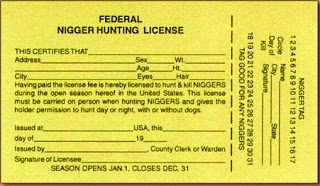
The news story below is profoundly upsetting to me.  Not only because I become indignant in the face of injustice and cruelty, but also because a major and beautiful element of my super-special summer was a Sikh.  A Sikh taught me how to free my mind and body (through kundalini yoga and mantra) thereby connecting me back into my heavily guarded heart.  Her name is Nirinjan Kaur Khalsa, and I obvi think the world of her.  So, I read this news item and I think of Nirinjan and her family and my heart becomes heavy.  And then I think of all of the black people who experience(d) the constant threat of this type of… terrorism incident.  Back when there was no such thing as a hate crime, but there such a thing as nigger hunting.  I don’t mean to be rude or abrasive.  I mean to be truthful.

ATF 1995 nigger hunting liscense


via

How many black men, young and old heard “get him” as they were walking down a street?… or in their nightmares?  What kind of armor does that compel a person to take up?  In 2013, when a man is aquitted for shooting a black teenager armed only with a bag of skittles, what message does that send to a community about the value of it’s lives in this society? I think we can look around and see the answer to that.  Heavy armor,  is all I know to call it. And a message of meritlessness.

I hope you will take the 6-7 minutes it takes to watch the video interview with Professor Singh.  Here are a few things that stood out as insightful and relevant to this discussion at large:

  1. (In) the Sikh community, having a turban and a beard is…a trigger for fear in the mind of a large fraction of Americans who may not know that it’s an integral component of the sikh tradition. (That) is part of the problem.
  2. ….reach out to people so they don’t feel afraid to ask, “What’s that turban? What’s that beard all about? Who are you? Are you American or not? …Learn to invite people to ask those basic questions.  People have to not be afraid to ask those basic questions.

My thought on item number one is that there are stereotype-upholding attributes (physical and/or behavioral) of “african-american” people that trigger fear in the mind of a large fraction of Americans.  And that must be a really large number because this fear response thing has been so deeply ingrained our collective subconscious that even “african americans” can be fearful of other “african americans” for no reason other than that they “are” “african american”.  (I know that that was a lot of quotation marks.  Every one of them deliberate, btw.)  That is indeed a part of the problem.  A solution may be a conscious effort on everyone’s part to understand the roots of those particular attributes and to hold the intention of healing the historical trauma.  That may mean, if you’re white, consistently seeking to understand even after you are met with the discomfort of knowing that it is truly a privilege not to be laden with such a heavy historic burden and that, while you have every right to that freedom, you are no more entitled to it than any other living creature.  If you are black it may mean seeking to understand the suffering, overcoming,  nobility, and grace that come along with this history, but not ignoring the dysfunction and self destructive ways born out of a system designed to maintain a certain heirarchy.  A system that is so well implemented that we take it for granted.  We take it for truth and we create our reality on it’s baseless foundation.  We form our identities around it and we become another fragment of the illusion unwittingly yet obediently holding it in place.

The second quote struck me as wise and necessary.  It also took me back to Maui.  The moment I met Nirinjan.  Backstory- I was in Maui for The Daily Love: Enter the Heart retreat led by Daily Love founder Mastin Kipp.  Mastin Kipp = major catalyst for my growth, so I obvi think the world of him as well- Anyway, we all gathered for the first time and Mastin introduced Nirinjan and immediately asked her to explain Sikhism and her turban and to assure us that she was not a terrorist.  Point Blank.  Just like that.  He made it safe to ask, to be curious.  He acknowledged the stereotypes and the triggers that may surface in the presence of a turban.  There was nervous laughter amongst the group.  Some expressed shock.  But Mastin was like, “we see turban, we think terrorist.”  Just like that.  Point blank.  With no judgement about any of it.  Just focusing on the truth and then… the Truth.  We all need to do that.

1236682_10151556034060756_1074345682_n

17796_10201880606883030_1526597336_n

But the responsibility does not fall completely on the shoulders of the one perceived as different.  The one with the questions has a duty here, too.  The way I see it that duty is to ask the questions in a way that acknowledge your ignorance and does not impose a sense of “otherness/strangeness/weird” on the person who has piqued your curiosity.  Also be genuinely interested and curious.  Seek to understand and see it from a fresh perspective.  More simply, be respectful.  So much of this has been born out of a lack of respect.  All around.  It’s really all just one big misunderstanding.

Sikh Professor Attacked in Potential Hate Crime

VIA

On Saturday night Dr. Prabhjot Singh was brutally attacked in his neighborhood by a large group of young men, who yelled the words “Osama,” “terrorist,” and “get him.” He says they grabbed his beard, punched him, and dragged him to the ground where they continued to beat him. He was rushed to the hospital with a fractured jaw and several missing teeth. Singh is Sikh and wears a turban and beard, and says he’s been profiled as a Muslim and attacked in the past, although never so violently.

Singh is a professor at Columbia University, and is also a practicing physician. In addition he has also been an advocate for addressing historic discrimination against Sikhs in the U.S., which he says goes beyond mistaking this ethnic group for Muslims. The suspects have not yet been detained.

Video Interview with Professor Singh

Click here to Meet a Sikh Family

http://https://www.youtube.com/watch?feature=player_embedded&v=Jy0TOw1sBkU

throwback (and forth) thursday

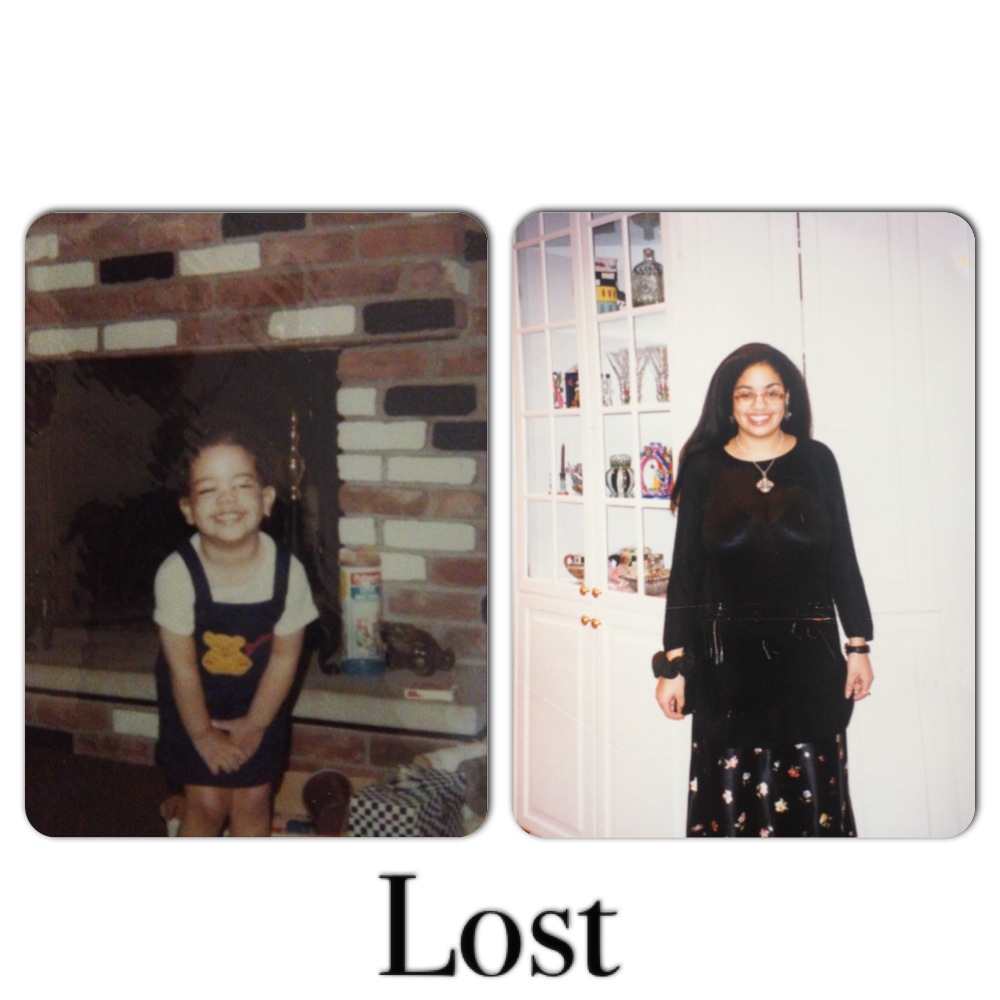
I don’t even know where to begin with this.  It is my first official throwback.  I’m fairly certain it isn’t meant to follow a now vs. then format, but it looks like that is what I have created.  A couple of days ago i alluded to having had the best summer ever.  I did.  But it wasn’t all conventional summertime fun.  It was stuff that grew me out of the places in which i was stuck.  Believe me digging up the roots that were planted in infertile soil is likely to be uncomfortable to say the least.  It’s also likely to be the most loving and wonderful thing you could ever do for yourself – and for every one else for that matter.  Basically, I got a roadmap out of the illusion of my self and this world that I was lost in.  Does that make sense?  I’m trying to get into the habit of checking for understanding in all areas of my life.  Might as well include the blog.

Here goes:

lost


found

Let me be clear that these are not literal before and after pictures.  I did not start the summer off significantly larger than i am now, wearing glasses and hair that is… just… poorly straightened and….well, i could go on and on but i don’t want to be mean to me…

What these do represent however is that by the end of this summer I had completely lost the sad feeling that I had not grown up to be the person I was once on track to becoming.  The highest manifestation of myself, in other words.  I had lost my way.  Lost my way inside of myself.   It happens to everyone to some degree.  I am proud to report that after a little trauma and drama plus a truly magical trip to Maui, I am back in congruence with my true self.  Most of the time.  There are occasional flare ups of the old paradigm.  i sit quietly with them until they pass.  they always do.  i spend most of the rest of my time in absolute awe of everything.  For example, I was totally in awe when a friend on Facebook who has known me since I was a very little girl sent me a message that ended with, “When I watch you on FB, I’m always so happy to see that you’ve become the amazing woman that I expected you to become.”  I cried.  I had always thought how disheartening it may have been to some people who had known me to be such a bright, sparkly little girl, grow progressively more dull as time went on.  I don’t mean dull as in boring personality.  I mean it in terms of energy, twinkle, confidence, promise, conviction, and potential.  This is not about living up to other people’s expectations.  These expectations are the ones I set first.

I have so much more to tell you, blog.  So much.  Thank you for your patience.  You may have noticed that this blog is going through some changes.  It’s about time, I’d say.  The outer reflects the inner.  I’m trying to take this thing in a direction that is aligned with my vision for my life and humanity in general.  So, please bear with me while I sort this format out, and if you have any suggestions I’d love to hear them!  And by suggestions I mean, “It would be nice to have a playlist embedded here.”  Not, “Stop wishing you were white and denying your blackness” or any of that low level nonsense.  Please. Satnam.

save self from other self


re: carol channing or, more rumors of blackness

One of the most popular posts on this blog is the one that includes direct quotes from Carol Channing “admitting” to her blackness.  Actually, “part negro” is the way they put it back then.  Sign of the times, I’m sure.  What hasn’t changed is that people by and large are ignorant of Channing’s “blackness”.  I think maybe Carol’s a little ignorant about it herself after viewing this Wendy Williams interview in which Channing denies “it”, yet ultimately says she hopes “it’s” true.  Oh, the conflict.  I dug around for a little more info.  I came up with this gem.  Total rumor, but…

Via Some Random Thread


Carol Channing and Diana Ross were secretly COUSINS

channing

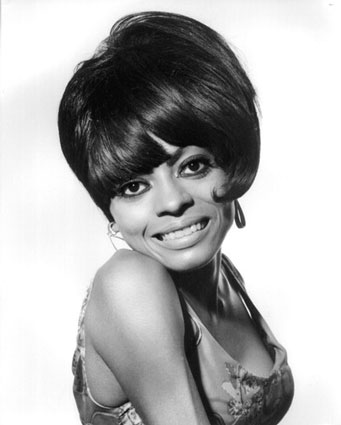
diana_ross

Carol Channing and Diana Ross were secretly COUSINS

My elderly neighbor, who lived in LA since childhood and spent decades working in entertainment has told me some scrazy stories, but the craziest is that Carol Channing and Diana Ross were actually cousins, and that Carol’s machinations were a big part of Diana’s ascension to lead status in the Supremes.

by: Anonymous reply 3 07/11/2012 @ 05:51PM

Carol Channing had a black grandfather so it could be true.

by: Anonymous reply 4 07/11/2012 @ 05:53PM

Channing’s from San Francisco and San Francisco lead the way with mixed marriages. They were all the same race marriages, just some white people marrying people not so white.

by: Anonymous reply 5 07/11/2012 @ 06:02PM

The legs, the smile…they do look a alike.

by: Anonymous reply 6 07/11/2012 @ 06:11PM

Channing with her parents:

 ChanningFamily

by: Anonymous reply 7 07/11/2012 @ 06:26PM

Channing’s only child, Channing Lowe:

carol and son, channing, 1965 house and garden september issue phot by john rawlings

by: Anonymous reply 9 07/11/2012 @ 08:41PM

They both have the same smile, teeth, and large eyes.

evidence piling up:

Carol Channing Soul Sister

by: Anonymous reply 12 07/11/2012 @ 08:46PM

Carol

Carol+Channing+png
by: Anonymous reply 13 07/11/2012 @ 08:47PM

Diana

diana-ross


by: Anonymous reply 14 07/11/2012 @ 08:48PM

On the “Diana Ross and The Supremes Greatest Hits” album, there is a liner note from Carol Channing commenting on her love for The Supremes.

autumn

In the first grade I knew a girl named Autumn.  I thought the name was weird and wonderful.  Now i just think it’s wonderful.  As is the season for which she was named.  I think I have been living in a perpetual state of spiritual fall if there is such a thing. I suppose there is now that I named it.  Anyway, translation= I feel as though consistently working on balancing light and dark, gracefully letting go (or simply letting go period- gracefully is pushing it), and accepting and acknowledging impermanence have been my inner-life’s work.  At this point all I know for “sure” is that it’s when i resist those things that I experience the most discomfort.

In honor of my fav season, here’s some stuff to ponder as fall takes over…

fall gold and red waterfall

Autumn: Reflections on the Season

By Frederic and Mary Ann Brussat

The autumn equinox marks the arrival of the season of fall, traditionally seen as a period of changes leading to the dark of winter. In Holidays and Holy Nights, Christopher Hill points out that for Christians who observe the liturgical year, autumn is actually the beginning of the cycle. In an excerpt, he suggests that “the dynamics of the fall of the year have the sweep of a great symphony or an epic poem.”

That may explain why so many poets have reflected on this season. The Heart of Autumn contains 38 examples selected by Robert Atwan from such poets as Robert Bly, May Sarton, Carl Sandburg, Robert Penn Warren, Archibald MacLeish, and others. The excerpt from this book is “Leaves” by William Virgil Davis, a poem that conveys the mysterious qualities of fall.

What spiritual lessons and practices are suggested by the coming of autumn? Here are three areas for your meditations.

1. BALANCING DARKNESS WITH LIGHT

On the autumn equinox, day and night are of equal length. This signals the need to balance light and darkness within us. Far too often, we fear the dark and adore only the light. Joyce Rupp, a Catholic writer and poet who is one of our Living Spiritual Teachers, challenges us in Little Pieces of Light to befriend our inner darkness: “I gratefully acknowledge how darkness has become less of an enemy for me and more of a place of silent nurturance, where the slow, steady gestation needed for my soul’s growth can occur. Not only is light a welcomed part of my life, but I am also developing a greater understanding of how much I need to befriend my inner darkness.”

…”Sometimes there is no remedy for our situation than to begin from a point of absolute darkness. Turning off a television set and extinguishing a lantern have certain similarities; they are both abrupt and transition making, and can leave us in a different world. In darkness, we are always on our own.”

2. LETTING GO

As we watch leaves fluttering to the ground in the fall, we are reminded that nature’s cycles are mirrored in our lives. Autumn is a time for letting go and releasing things that have been a burden. All the religious traditions pay tribute to such acts of relinquishment. Fall is the right time to practice getting out of the way and letting Spirit take charge of our lives.

sometimes let go

…Buddhist teacher Sharon Saltzberg, another of our Living Spiritual Teachers, writes in Lovingkindness about one of the offshoots of letting go: “Generosity has such power because it is characterized by the inner quality of letting go or relinquishing. Being able to let go, to give up, to renounce, to give generously — these capacities spring from the same source within us. When we practice generosity, we open to all of these liberating qualities simultaneously. They carry us to a profound knowing of freedom, and they also are the loving expression of that same state of freedom.” Fall, then, is the perfect season to give generously of your time and talents to others.

3. ACKNOWLEDGING IMPERMANENCE

Autumn reminds us of the impermanence of everything. We have experienced the budding of life in spring and the flowerings and profusions of summer. Now the leaves fall and bare branches remind us of the fleeting nature of all things. Jewish rabbi and writer Harold Kushner in The Lord Is My Shepherd suggests that when we contemplate fall’s changes, we grow more appreciative of all the beauties that surround us:

“The poet Wallace Stevens once wrote, ‘Death is the mother of beauty.’ What those words say to me is that we cherish the beauty of a sunrise, of a New England autumn, of a relationship, of a child’s hug, precisely because those things will not be around forever and neither will we be around to enjoy them.”

Fall also brings home to our consciousness death and the challenge to live every day to the fullest. Susan Jeffers in Embracing Uncertainty gives us a spiritual practice to facilitate this twofold movement:

“I was once told that certain spiritual masters in Tibet used to set their teacups upside down before they went to bed each night as a reminder that all life was impermament. And then, when they awoke each morning, they turned their teacups right side up again with the happy thought, ‘I’m still here!’ This simple gesture was a wonderful reminder to celebrate every moment of the day.”

Finally, Cynthia Kneen, in Awake Mind, Open Heartshares an open heart practice to carry with you into the fall.

“When you are brave and have an open heart, you have affection for this world — this sunlight, this other human being, this experience. You experience it nakedly, and when it touches your heart, you realize this world is very fleeting. So it is perfect to say ‘Hello means good-bye.’ And also, ‘My hope, hello again.’ ”

autumn heart tree fall

by the way…

…you’re free.  Have been for two and a half years, but who’s counting?

I mean, can you even imagine!?  Finding out you’d just slaved away for, well, nothing.  I suppose that’s an oxymoron or something.  It’s also what happened in Texas back in 1865.  Somehow it took 2.5  years for news of the end of the war and emancipation of the slaves to reach Texas.  Word finally arrived on June 19th, 1865.  We call it Juneteenth.  It’s a national holiday.  Nobody wished me a Happy Juneteenth though.  I don’t think it’s common knowledge.  And I do think it should be.

Be free!

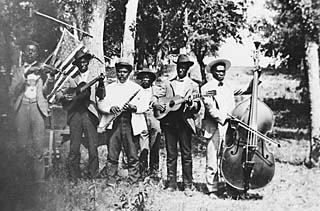
JuneteenthA

Juneteenth celebration in Eastwoods Park, Austin, 1900 (Austin History Center)

Today in Texas History: Juneteenth

Hillary Sorin

On this date in 1865, Union General Gordon Granger (November 6, 1822 – January 10, 1876) read the Emancipation Proclamation in Galveston, thus officially ordering the freeing of 250,000 slaves in Texas. Since then, many African Americans celebrate Juneteenth as a distinct Independence Day, marking freedom from bondage.

Most Americans assume that President Abraham Lincoln’s issuance of the Emancipation Proclamation, on January 1, 1863, abolished slavery. In truth, the majority of African Americans remained enslaved after that date. The Emancipation Proclamation applied only to Confederate States. The Proclamation did not free black slaves in Border States like Maryland, Kentucky, West Virginia and Delaware, where slavery was practiced. The Proclamation targeted the Confederacy, precisely where American law held no emotional or political authority.

Juneteenth marks the abolition of slavery in Texas. The news of freedom inspired celebrations by African Americans across the state, as well as reflections on and strategies regarding the future of the Texan black community as freed people. Historian Palomo Acosta writes, “The first broader celebrations of Juneteenth were used as political rallies to teach freed African Americans about their voting rights.”

The Freedmen’s Bureau organized the first official Texas Juneteenth celebration in Austin in 1867. Since 1872, Juneteenth has remained a part of the calendar of public events. Juneteenth often includes a host of events and activities which people of all ages can enjoy. The day is often marked by dance, theater and musical performances, as well as by sport activities and barbecues. “Lift Every Voice” remains a popular and traditional song performed at most Juneteenth celebrations held across the country.

Juneteenth declined in popularity in the 1960s as the Civil Rights movement was gaining momentum. Calls for integration lessened the importance of black only events as African Americans tried to end de jure and de facto segregation. The rise of the Black Power Movement in the 1970s renewed interest in Juneteenth as many African Americans advocated for recognition of the uniqueness of the African American experience while also advocating for integration and equality in the country’s political, economic and educational spheres.

In 1979, state Rep. Al Edwards, a Houston Democrat, introduced a bill into the Texas legislature calling for the recognition of Juneteenth as a public holiday in the state of Texas. A state-supported Juneteenth celebration took place a year later.

Juneteenth illustrates two challenges facing the black community in the post civil rights era — fighting racism and the ideology of race while, at the same time, communicating the fact that, although the concept of race has no scientific basis, the color of one’s skin in America continues to inform the American experience on both a personal and community level. Simply stated, race may not be real, but it is lived. Juneteenth reflects this dual reality for the African American community.

Today, Texas and 29 other states recognize Juneteenth as an official public holiday. Last year, Representative Sheila Lee Jackson spoke in support of a resolution commemorating the historical significance of Juneteenth, which marks the end of slavery in the United States.

Today, Sen. Kay Bailey Hutchison introduced legislation honoring Juneteenth Independence Day as a federal holiday. In a statement released by the senator, she stated, “By commemorating this day, the U.S. Senate will honor the role that Juneteenth has played in African-American culture in Texas and throughout the Southwest, and it will remind us that, in America, we are all blessed to live in freedom.”