
Reply





Here’s what the creator of the pamphlet had to say about back in 2005:
hey,
since you are curious let me chime in:
i’ve (obviously) been paying attention to the spread of this pamphlet since sunday went i put it up and it has proven to be very popular. on the one hand it’s meant to be humorous, and people are certainly taking it in that spirit, but on the other hand i think the strong reaction does point to some fairly large grains of truth nestled within.
i know that i have felt a lot of the “symptoms” i put into the pamphlet. i created it durring a bout of dissatisfaction in point of fact. i’ve also seen many other bloggers complain, mope, moan, and eventually close up shop. so i think, joke though it may be, it struck a nerve.
blogging is fascinating in that (professional / goods and services sites aside) it has no practical purpose. it is truly an art if looked at in those terms. it is such a new form, and such a public form, that the growing pains are uncommonly visible.
i often feel the form is mutating right beneath our fingertips.
-jmorrison
blogspot.com. I find it quite amusing, albeit a sardonic, wry, witty kind of humor. Here are a few of my favorites. You can browse through all of them HERE.


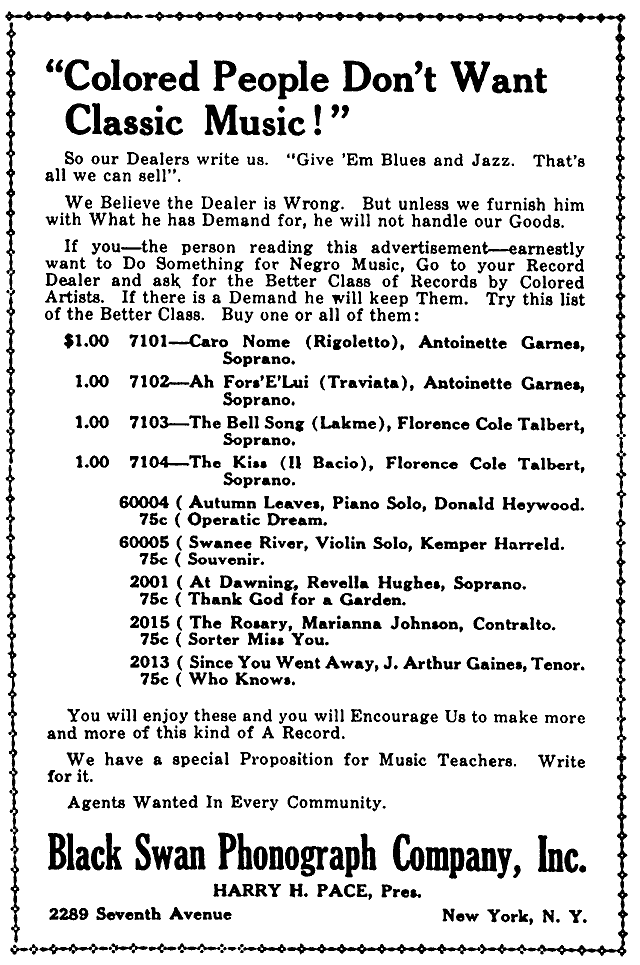
I’ve been meaning to post these things that have some correlation to a few of the week’s previous posts. So now I’m doing it.


Rita Dove has done us a great service by painstakingly digging up this forgotten history. Like most people, I had never heard of Bridgetower before Sonata Mulattica popped up in a random google search. What a fascinating story! I imagine it was not only challenging, but exciting to imaginatively fill in the blanks of this discarded musicians unique experience. I would like to know more about his parents. How they met, how an interracial relationship was received in Poland circa 1780, if he considered himself a mulatto or if there was a one-drop kind of mentality. I guess I’ll have to read the book to find out what insight Dove’s years of research led her to deduce about those race issues.
More than her standing as former US Poet Laureate, Pulitzer Prize winner, and Possibility Poet it is Dove’s own family that (in my opinion) makes her a perfect and trustworthy candidate to bring us this story:

By: Teresa Wiltz
Via: The Root
Way, way back in the day, there was an Afro-Polish violinist, a biracial child prodigy of such virtuosity that even Beethoven felt compelled to dedicate a sonata to him. There were honors and accolades and patronage from a prince.
But fortunes changed, as poet laureate Rita Dove describes in her novel-sized book of poems, Sonata Mulattica: A Life in Five Movements and a Short Play. The violinist, George Augustus Polgreen Bridgetower, and his composer, Ludwig van Beethoven, performed the sonata together to thunderous acclaim.

The goodwill between them evaporated as the two quarreled over a woman. Beethoven furiously erased Bridgetower’s name and scribbled the name of another violinist when he dedicated the sonata.
That is how the “Sonata Mulattica” became the “Kreutzer Sonata,” one of Beethoven’s most famous works. Through that one fit of jealous retribution, Beethoven wrote Bridgetower out of history.
The Polish black virtuoso, once famous, now forgotten.
This bright-skinned papa’s boy
could have sailed his 15-minute fame
straight into the record books.
Dove first heard about Bridgetower years ago, when she was a musician studying the cello, and later, opera. It wasn’t until she saw Immortal Beloved, a film about Beethoven, that it triggered her memory. Fascinated with the thought of a mixed- race musician in 19th century Europe—“I thought there was more to it than this exotic creature who played the violin”—Dove set out to find out more about him. For five years, she researched and wrote, digging up little nuggets along the way, tucked in letters and diaries, like that of court lady Charlotte Papendiek, and in what little historical accounts she could find.
“It was like tracking the coordinates of some meteor,” Dove says. “ ‘Oh, he went there; he appeared here,’ mapping the trajectory of his life. Other than that, he was a blank slate.”
A blank slate onto which she poured all her imagination and musings about race and class and sexual competition. Bridgetower, the son of a self-proclaimed “African prince” and a Polish-German woman, was born in Poland in 1780. As it happened, his father, who was a bit of an operator, was working in the castle of the Hungarian Prince Esterházy, where Joseph Haydn worked as a musical director.
Even as a very young child, Bridgetower dazzled on the violin; Haydn took him under his wing. Later, Bridgetower traveled from Vienna to London, where he attracted the attention of the Prince of Wales, who would later become Kind George IV. His was a life of comfort, adulation and high achievement. (He eventually received a degree from Cambridge University.)
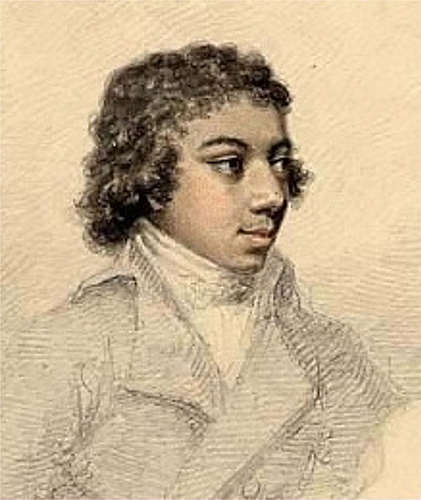 Bridgetower, George Augustus Polgreen, 1780-1860. His passport, obtained in Dresden, 27 July 1803, portrayed him as being of average height, beardless with dark brown hair and eyes, with a broad nose and swarthy complexion. Friends added that he was melancholic and discontent.
At the time, there were a good number of free blacks living in London, says Dove, who won the Pulitzer Prize in 1987. Some were Africans who’d never been enslaved; some were slaves who’d been freed. Class, rather than race, circumscribed one’s lot. So for a black boy with a knack for playing the violin, a child prodigy with a powerful patron, life was considerably sweeter than that of, say, Black Pearl, the young black servant in Dove’s book.
Pathological hit of the day: n****r on a golden chain.
Metaphorically, that is. The African
valet, the maidservant black
as aces in a hole….
Sonata Mulattica is a gorgeously engaging read, utilizing a mix of poetic styles, from nursery rhymes to free verse, until the narrative arc sweeps into the big confrontation between Bridgetower and Beethoven. At that point, the action shifts from poem to play, a play with a distinctly vaudevillian sensibility, complete with baudy references to Othello. Bridgetower becomes a rapping, preening braggadocio:
But I’m a natural man, born under a magical caul,
I’m that last plump raisin in the cereal bowl;
I’m the gravy you lick from your mashed potatoes,
I’m creamier than chocolate, juicier than ripe tomatoes!
But Beethoven soon brings him down to size:
Now you will taste the high price
Of my affection—“Mulatto Sonata,” indeed!
I would sooner dedicate my music
To a barnyard mule
If the two men had not quarreled, two egos run amok, would musical history have been different? Would, we find, as Dove writes, “rafts of black kids scratching out scales on their matchbox violins so that some day/they might play the impossible:/ Beethoven’s Sonata No. 9 in A Major, Op. 47/Also known as The Bridgetower”?
We will, of course, never know. Still, it’s nice to imagine the possibilities of what could have and should have been.
Teresa Wiltz is The Root’s senior culture writer.
Ok, maybe these aren’t that funny, but I figure they warrant a big grin at least. Some were found at awkwardfamilyphotos.com.

I wish I were witty enough to come up with a caption.
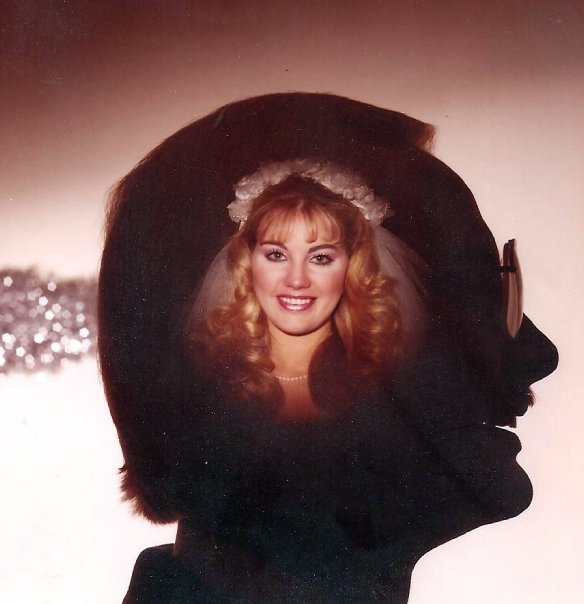
I think those two could be giraffe-girl’s parents.
Or this one’s:




That child is too young to have insisted upon the costumes himself, so…. wow!



So here’s what came from my search for more on Isabella Fowler. In these paragraphs excerpted from Black Slaveowners: free Black slave masters in South Carolina, 1790-1860 by Larry Koger we see where the intraracial divide between mulattoes and “negroes”started. I must admit that I am disappointed (to say the least) in the behavior of these privileged “biracials.” I cannot defend the behavior. Don’t want to. On the other hand, it’s easy for me to sit in judgement in the year 2010 when my freedom and my opportunity for advancement are not on the line. I would love to believe that back then, were I given the choice I would free my people. That I would not see myself as separate from or better than, and that the only privilege I would take advantage of would be the one by which I could exercise my right to right some wrongs and provide an opportunity for others to be liberated and elevated alongside me. I would love to believe that… but circumstances were different and I can’t possibly know how I would have behaved. I do know that none of those attitudes/ideals have taken root in me, yet the accusations continue to be hurled and conclusions jumped to. All of that being said, it’s 2010 and the time for ridding ourselves of these old paradigms of house slaves vs. field hands is long overdue. Maybe by 2012… according to Willie Lynch (perhaps a mythical “legend”) that’s when the stronghold of slave conditioning will lose it’s grip.

The mulatto children of slave masters, who were accepted as legitimate heirs, held a position in the household of their fathers which placed them in a superior status over the other slaves. These children were accustomed to the master-slave relationship; however, they conceived of themselves not as slaves but slave masters. In spite of the fact that they were of African descent, the white blood that ran through their veins separated them from their fellow black slaves on the estates of their fathers. For example, the children of Michael Fowler, a white planter of Christ Church Parish, and his black companion named Sibb were raised in an environment which condoned slavery. According to Calvin D. Wilson, in 1912, “there was a rich planter in Charleston named Fowler who took a woman of African descent and established her in his home…. There was a daughter born, who was called Isabella; the planter insisted that she should be known as Miss Fowler.” Clearly Michael Fowler expected his slaves to serve and regard his mulatto children as thought they were white. So the offspring of Fowler were treated as little masters and mistresses by the slaves of their father.
In fact, the process of cultural assimilation was so complete that the children of Michael Fowler, once reaching maturity and inheriting their father’s plantation and slaves, chose to align themselves with the values of white slaveowners rather than embracing the spirit of freedom and liberty espoused by the abolitionists. In 1810, the estate of the deceased Michael Fowler was divided among his mulatto children…. When the descendants of Michael Fowler received their slaves, manumission was still the privilege of the slaveowners; however, none of the heirs chose to emancipate their slaves… Undoubtedly, the children of Michael Fowler considered slavery a viable labor system and chose to hold their slaves in bondage.
Mulatto children were not always acknowledged as the offspring of white slaveholders. However, upon the death of their owners, they occasionally were manumitted and provided for once freed. These children probably were unaware of the bond of kinship to their owners. Yet that bond allowed them to receive preferential treatment from their slave masters. The unknowing mulatto offspring of white slaveowners often were trained as house servants or artisans. Although they were not acknowledged as the children of slave masters, their encounter with the culture of their masters influenced them to become slaveowners.
In fact, the slaves of both mixed and unmixed racial heritage who served as house servants or artisans accepted certain aspects of the culture of white slaveowners. Regrettably, the close interaction with the Southern culture influenced many slaves to identify with their owners. For the house slaves, the contact with their masters and mistresses perpetuated the difference between themselves and the majority of the slaves who tilled the soil. The house servants were taught to consider themselves superior to the common field hands. Furthermore, the house slaves’ conception of superiority was reinforced by their dress, food, and housing, which was slightly better than that given to the field hands. So it was that they separated themselves from the field slaves and occasionally accepted the values of their slaveowners and looked upon slavery as a justified institution. As a consequence, they envied the life of splendor that their owners enjoyed and viewed slavery as a means of obtaining the luxuries possessed by their masters.
FURIOUS BLACK campaigners in France have protested after filmmakers used a white actor to play legendary mixed race French writer and national hero, Alexandre Dumas.
In a film called L’Autre Dumas, Gerard Depardieu, who is blond and blue-eyed, was given darker skin and curly hair to play Dumas.


Dumas, the grandson of a Haitian slave and the son of a Napoleonic general, was mocked for his African features even as he created well-loved books such as the Count of Monte Cristo and the Three Musketeers. They are also high grossing hit films.
Patrick Lozès, the president of the Council of Black Associations of France (CRAN) told the Times: “In 150 years time could the role of Barack Obama be played in a film by a white actor with a fuzzy wig? Can Martin Luther King be played by a white?”The filmmakers also reportedly credited a fictional white assistant with creating some of Dumas’ well-loved books, The Times newspaper reported.
The campaigners said they are furious because the film not only uses a white actor, but seems to attempt to discredit Dumas’ genius, further bury his black origins and keep black actors off the screen.
“Possibly for commercial reasons they are whitewashing Dumas in order to blacken him further,” the Council said on its website.

 mulatto diaries