slash

I didn’t know that Slash was biracial until HBO’s The Black List.  There was a brief period in middle school when I really tried to like Guns N’ Roses.  I guess I’m just not that white.  That’s meant to be a joke, btw.  Anyway, I was pleasantly surprised to find out about his mixedness, and thought to myself, “I should have known.  Look at that hair.”  But back then I didn’t even know that I had that hair, so of course I was clueless.
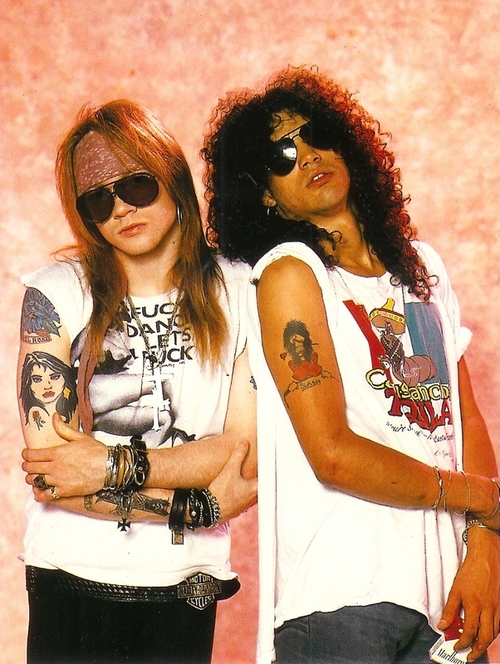
slash and axl

In Rip It Up: The Black Experience in Rock ‘N’ Roll edited by Kandia Crazy Horse Slash is asked if he defines himself as a black musician to which he replies that he defines himself as a rock musician if he defines himself as anything. He says he is very proud of his black heritage and sees this as being very cool. One thing he clears up is that he is NOT a Jewish musician. He says that is because his first name is Saul, but he is not Jewish. He talks about his racial background (biracial)…and how it was dealing with a white midwesterner in GNR.
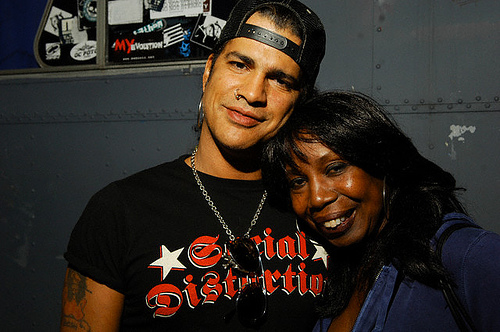
1455469299_f894e3adcd

A recent article on the passing of Slash’s mother:

Rock guitarist Slash, the bi-racial son of a black mother and white father, is mourning the passing of his mother Ola Hudson, a woman he referred to recently as a “cool rock and roll mom.”

Hudson, a former costume designer for such musicians as Ringo Starr, John Lennon and Diana Ross died on the morning of May 6 after a battle with lung cancer. She was 62.

“This is a difficult time, but I have to share with you that she was the sweetest, warmest, most loving human being I’ve ever known (next to my grandmother on her side), as well as one of the most creative and talented,” Slash wrote on his MySpace page.

“She was also the coolest rock and roll mom, a rock junkie like myself could ever possibly want to have,” Slash continued. “She was responsible for exposing me to a lot of the music that would influence me as a musician growing up, as well as introducing me to ‘the life’ and priming me to survive this crazy business that I’m now in.

“But more importantly, she turned me on to all different forms of art and the importance of artistic self expression and creative communication thru music and dance from as early on as I can remember. She really was all things artistic and creative personified and the world is a lesser place without her.”

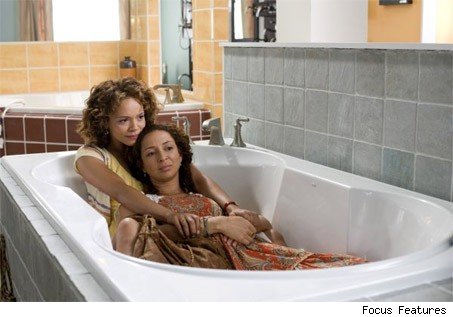
away we go

awaywego-maya-rudolph-johnkrasinski-500x331

I just saw “Away We Go.”  I totally loved it! So much!  It’s so real, and they handle “the biracial” perfectly.  Outsiders bring it up, but the couple never does.  The way Verona is patronized by LN (Maggie Gyllenhaal) really hit home for me.  And I loved Catherine O’Hara as the mother-in-law asking, “How black is she gonna be?” in reference to the new baby.  And the golliwog slippers!  Here’s an excerpt from a Huffington Post interview with Maya Rudolph that Karen of reelartsy.com hipped me to.

W&H: What are your thoughts on why we don’t see more films with African American women leads.

MR: It’s certainly not for me to answer because I have nothing to do with why the world is as f***ed up as it is. It has less to do with TV and movies and more to do with race and history and culture. It’s obviously a reflection of the world we live in. Although I still can’t believe we have a president who is mixed like me. It’s one thing that we have a black president but for me it’s even crazier because he’s mixed. I feel like I come from a smaller off shoot of black people because I am mixed. People say I’m African American but that doesn’t include the other half of me.

I can’t believe I’m living in a time where I feel proud of my president where I feel like things are actually positive and people feel good about where our country can be.

I don’t know the answer to your question and I don’t know if there is one. I plan to keep doing what I’m doing because race is just not a part of the way I look at the world and the way I live my life. I think that was a minor, key thing in the way that Dave and Vendela wrote the script. Verona is mixed and Burt is white but nobody talks about it. That felt realistic to me in my day to day life. People expect race to be an issue and I was raised in a house where it was never as issue. My parents were interested in having us feel like we were normal whatever that is.

via huffingtonpost.com

maya-rudolph-3

yay, hawthorne

hawthorne_l

hannah-hodson-1

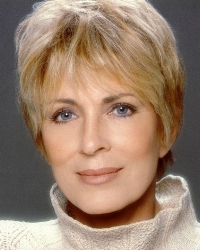
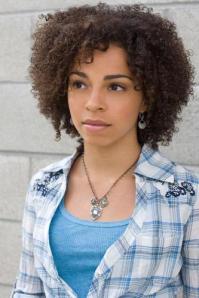
Last night TNT premiered “HawthoRNe” starring Jada Pinkett Smith.  I especially like the show because they’re portraying biracial!  Smith plays a recently widowed nurse who’s raising her biracial teenage daughter (Hannah Hodson).  The (white)dead husband’s mother plays an antagonistic role.  I don’t care what she does as long as she’s there and she’s white.  Thank you TNT for this “unconventional” casting.  I love seeing Joanna Cassidy as Hannah Hodson’s granny!

Joanna_Cassidyhannah-hodson

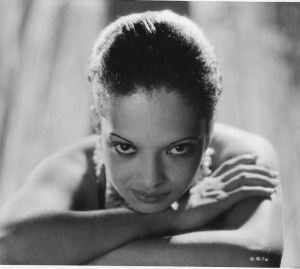
nina mae mckinney

Nina_age_16

nina1


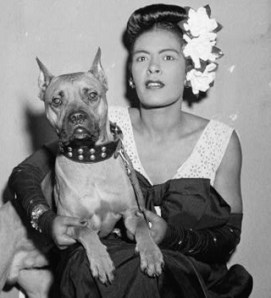
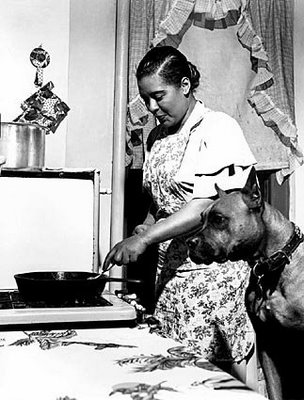
Nina Mae McKinney (June 13, 1913 – May 3, 1967) was an American actress. Dubbed “The Black Garbo”, she was one of the first African-American film stars and was one of the first African-Americans to appear on British television, featuring in the demonstration film broadcast each morning for the benefit of installers and engineers. 


nina

Career

Born Nannie Mayme McKinney in Lancaster, South Carolina, Nina Mae was indeed “The First Black Movie Star,” the first black actress in starring roles who appeared in over 30 films (more than Horne or Dandridge), some films are considered lost, some are not as available to the public. McKinney moved to New York when she was a teenager and began her career performing as a dancer. She was spotted dancing in Blackbirds of 1928 by the director King Vidor and cast in the lead role of Hallelujah!, one of the first all-black films by a major studio and Vidor’s first sound film, for which he was nominated for the best director Oscar in 1930. In the film, McKinney dances the “Swanee Shuffle”, a seductive dance which became a minor fashion. After Hallelujah! McKinney signed a five year contract with MGM, however, the studio seemed reluctant to star her in feature films. Her most notable roles during this period were in films for other studios, including a leading role in Sanders of the River (1935), made in the UK, where she appears with Paul Robeson. After MGM cut almost all her scenes in Reckless (1935) she left Hollywood for Europe where she acted and danced, appearing mostly in theatrical shows and cabaret. She returned to the United States at the start of World War II where she married Jimmy Monroe, a jazz musician. After the war she moved to Athens, Greece and lived there until she returned to New York in 1960.


876134126_0b1ac07a10

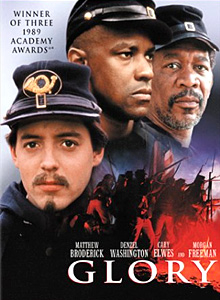
the movie glory

I just finished watching Glory for the 5th time.  It might be my favorite movie.  This movie was actually the catalyst for my whole “biracial” revelatory aha moment.  While watching Glory for the 4th time, I realized that, seeing as this was the history of our country, it is a miracle that I (a black and white person) even exist.  Truly.  And then I realized that I didn’t really exist.  There was no recognition of the miracle.  Not even an internal, personal one.  I realized that the history depicted in the film was the truth and that I had fallen victim to it’s legacy and failed to know myself fully.  

15341747-15341751-large

Watching the movie tonight, I was again blown away by Denzel Washington.  “The tear” is one of the most memorable moments I have witnessed on screen.  I also kept searching for the moment that might have triggered the big realization. My guess is the part where Matthew Broderick (as Robert Shaw) takes the 54th out with the other “negro regiment.”  The other leader is an ass to say the least.  He not only refers to the black soldiers as “little monkey children,” but he is extremely immoral in every sense of the word.  He treats his soldiers like animals, they act like animals.  Robert Shaw treats his soldiers with respect, like men.  In turn they are respectful and respectable men.  

The most poignant moment for me this viewing though was when Broderick and Denzel Washington’s character (whose name escapes me), were discussing the predicament that was life in America at that time.  And arguably still is to a certain extent.  Denzel says “It stinks real bad.  And all of us are in it.  Ain’t no one clean.”  Broderick asks, “How do we get clean?”  There wasn’t a definitive answer, but if I had to glean one from the film it’s that we become clean when we decide to die fighting for what we now know to be right, no matter how many wrongs we may have committed in the past.  

Thank you Edward Zwick, for the movie Glory.  I think it should be required viewing for every American.

a new biracial children’s book

BiracialSweetie_gif

Though the Newsday reviewer doubts that mixed race kids wonder about the racial features of their soon-to-arrive siblings, I don’t.  Since my “Heidi and Seal” post, I’ve wondered how little Leni will react to her new sister who will likely be brown like her brothers.  I imagine that right now she might think that boys look like the dad and girls look like the mom.  Since their new baby is said to be a girl, that theory (should it really exist in her mind and not just mine) could be blown out of the water.  

Regardless of any of that, I’m so glad to know that this book exists and hope more like it will follow.

review taken from http://www.newsday.com/features/booksmags/ny-bkend0712810377jun01,0,2983687.story

I’M YOUR PEANUT BUTTER BIG BROTHER, by Selina Alko. Knopf, $16.99. Ages 4-8. 

Books that address issues in an obvious way can be a bore, but since books are a useful way to address issues, parents, teachers and librarians are constantly on the lookout for good ones. In Selina Alko’s “I’m Your Peanut Butter Big Brother,” a child in a biracial family wonders what the new baby will look like. The whimsical elaboration of possibilities makes this the rare “issues-book” you’d want to snuggle up and read with your kids. 

“Baby, will your hair look like mine?” the boy asks. He considers the range of hair in his family: “Noel’s string beans locked this way and that, or Akira’s puffy broccoli florets? Maybe, like Auntie Angela, your mushroom bob will wave neatly in half-moon curls. Feathers might hang from a round coconut face. Or, like Grandma Helen, will sharp blades of grass stick straight up?” 

Certainly no two parents, of the same race or not, look precisely alike, and I doubt that children are considering racial features when they wonder: “Baby brother or sister, will you look like me?” But in a world where skin tone, hair texture and eye shape carry social complexity, this book offers a welcome alternative vocabulary.

By Sonja Bolle

first lady love

I didn’t think it was possible for my Michelle Obama love to increase.  I was wrong.  I know it’s silly, because it is a known fact, but the fact that she said “biracial” made me really happy.  I love the the sentiment of the whole speech….

if you are going to doubt something doubt limits

First Lady Michelle Obama told Washington Math Science Technical (WMST) High School’s graduating class that they are “more than ready” for the challenges ahead and to ignore “the doubters.”

…Mrs. Obama spoke about her own upbringing and her struggle to get to – and then through – the Ivy League amidst “voices of people sowing doubts in my head.”   She said that although she was always confident, “there was a part of me that started to believe the doubters.”

…Mrs. Obama talked about other figures who have overcome hardship, including her own husband.  “This biracial kid with a funny name from hawaii, of all places,” she laughed, “who was taught that anything is possible.”

http://www.newsday.com/features/booksmags/ny-bkend0712810377jun01,0,2983687.story

michelle-obama