parenting biracial children

I think this sounds like one of the most fascinating books on the subject.  I’m really looking forward to reading the different experiences of black mothers and white mothers and women of various generations.  Wow!

Race and identity: Do parents of biracial kids face special challenges?

by Lylah M. Alphonse

When social scientist Marion Kilson’s children were born, in the 1960s, she assumed that they would identify as African American, like their father, not European American like herself. “I was still in graduate school,” she remembers. “I wrote my term paper on slave revolts. I assumed my children would be identified as African American, and I wanted them to know that not all African Americans had been gospel about their slave status.”

Her friend and fellow social scientist Florence Ladd, on the other hand, says that she didn’t have expectations about her child’s race in his early years; it was her stepson, who is white, who “made me think about his future and racial identification in infancy.”

In their book, Is That Your Child? Mothers Talk About Rearing Biracial Children, Kilson and Ladd discuss the challenges facing parents in a multicultural world….

Kilson, who is European American, and Ladd, who is African American, had known each other for 40 years but had never really talked about their experiences parenting biracial children before, Kilson says. They talked to about 25 Boston-area parents while working on Is That Your Child?, and they kicked off their research by interviewing each other.

Kilson and Ladd focused on mothers rather than fathers (“We just felt that was really that a man would do better than we could,” Kilson says) and decided not to touch on racial issues faced by adoptive parents. The parents they spoke with were from different generations, but most were upper middle class and all were from the United States. “Growing up in this society, we have a different take on race,” Kilson says.

“Americans have a hard time seeing relationships when their skin color is different,” she continues, talking about the times when her daughter, whose husband is Scottish, has been asked if she’s the nanny of her lighter-skinned child. (I can’t even count the number of times people have asked, “So, what are you?” or asked if my kids all have the same father.)

Older generations tend to be more focused on the racial differences between a parent and a child, Kilson points out, even if they don’t intend to be negative. She doesn’t think it’s possible to raise a truly color-blind child in American society…but younger people, who are more comfortable with race and diversity, navigate this multicultural world with ease. It’s all they’ve ever known.

“I perceive that, for our children, they didn’t have a public choice about racial identity, whereas for our children’s generation, their children have a choice about affirming all of their identities,” Kilson points out.

And the possibilities are endless. “When children see themselves in public figures as well as teachers — that hope flows through them as well,” Frohlich says. “We do expect children to value one another as individuals, regardless of ethnicity.”- source


If Heidi Klum wasn’t Heidi Klum, I bet she’d hear “Is that your child?” a lot.
 

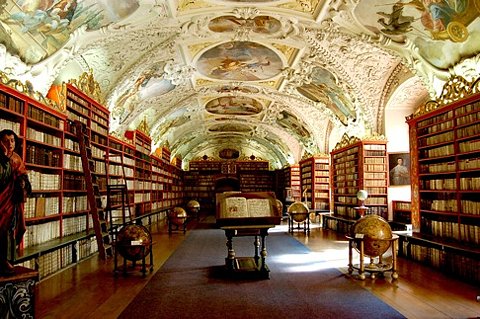
libraries

library these are not books, but minds

librarian climbing

library 3

library 4

library cool

library with great ceiling paintings

library with spiral stair

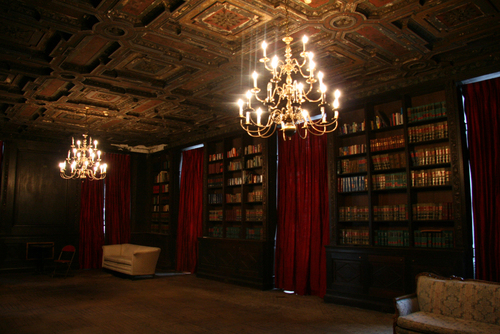
library at Alder Manor NY

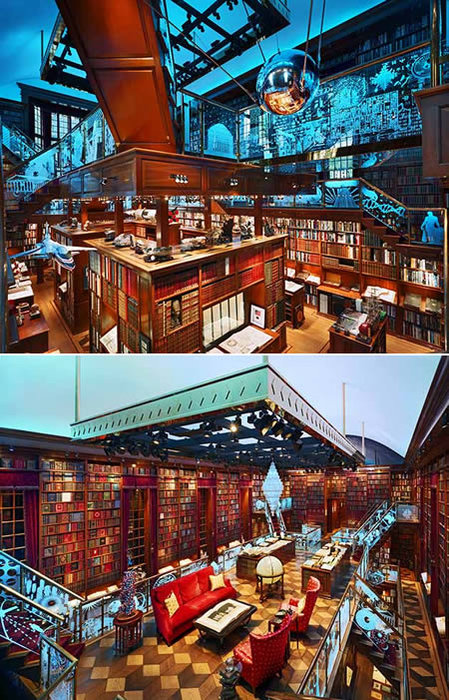
In my opinion, the following is the coolest one.  It’s in a private home.  Specifically, the home of Jay Walker.  Funny name.  Awesome library!

jay walker's libraryNothing quite prepares you for the culture shock of Jay Walker’s library. You exit the austere parlor of his New England home and pass through a hallway into the bibliographic equivalent of a Disney ride. Stuffed with landmark tomes and eye-grabbing historical objects—on the walls, on tables, standing on the floor—the room occupies about 3,600 square feet on three mazelike levels. Is that a Sputnik? (Yes.) Hey, those books appear to be bound in rubies. (They are.) Gee, that chandelier looks like the one in the James Bond flick Die Another Day. (Because it is.) No matter where you turn in this ziggurat, another treasure beckons you—a 1665 Bills of Mortality chronicle of London (you can track plague fatalities by week), the instruction manual for the Saturn V rocket (which launched the Apollo 11 capsule to the moon), a framed napkin from 1943 on which Franklin D. Roosevelt outlined his plan to win World War II. In no time, your mind is stretched like hot taffy.
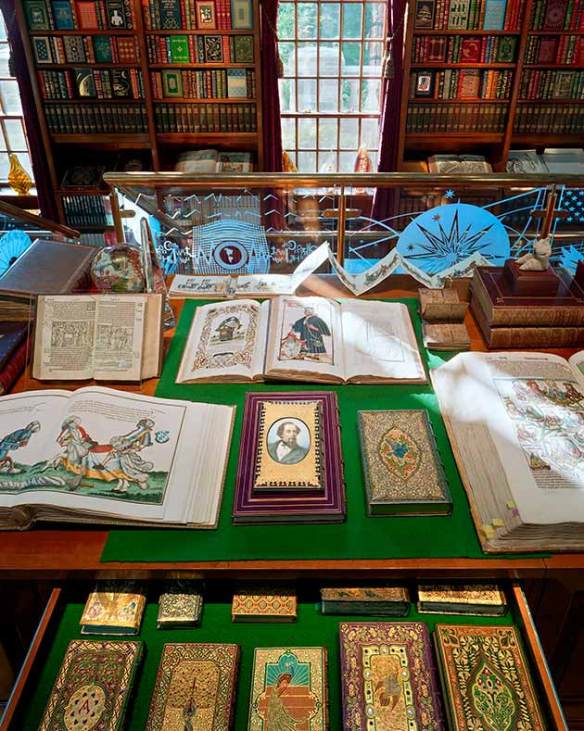
ff_walker5_fReading Room In the foreground are several early-20th-century volumes with jeweled bindings—gold, rubies, and diamonds—crafted by the legendary firm Sangorski & Sutcliffe. On the table (first row, from left) is a 16th-century book of jousting, a Dickens novel decorated with the author’s portrait, and (open, with Post-it flags) an original copy of the 1493 Nuremberg Chronicle, the first illustrated history book. Second row: the 1535 Coverdale Bible (the first completely translated into modern English), a medieval tome with intricate illustrations of dwarfs, a collection of portraits commissioned at a 17th-century German festival (“Facebook in 1610!”), a tree-bark Indonesian guide to cannibalism, and a Middle Eastern mother goddess icon from around 5000 BC.
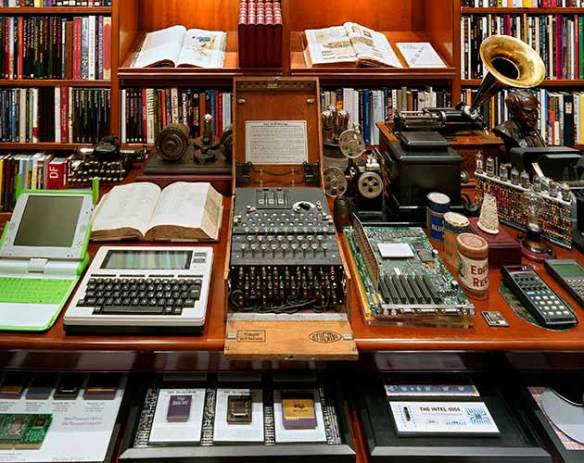
ff_walker6_fGadget Lab A brand-new One Laptop per Child XO, far left, sits next to a relatively ancient RadioShack TRS-80 Model 100. In back, a 1911 typewriting machine and a 1909 Kent radio. The large contraption at center is the Nazis’ supposedly unbreakable Enigma code machine. The book to its left is a copy of Johannes Trithemius’ 1518 Polygraphiae, a cryptographic landmark. On the right is an Apple II motherboard signed by Woz. An Edison kinetoscope sits beside an 1890 Edison phonograph (along with three of the wax cylinders it uses for recording). Nearby is a faithful copy of Edison’s lightbulb. The gadget with the tubes is an IBM processor circa 1960. In front of it stands a truly ancient storage device, a Sumerian clay cone used to record surplus grain.

See more of Walker’s library here.

barack like me

BarackLikeMe.small

David Alan Grier: Is beige the new black?

Comedian writes about how Obama has made being multiracial cool

excerpt from chapter 2

Every pundit from Larry King to Atlantic magazine agrees: black is in. All shades of black. Which is good for most people, because so many of us are of mixed race. Myself included. It’s mind-boggling that we have ended up here, at this point in our history. There was a time, only a few generations ago, that being of mixed race was not so cool. In fact, it was illegal to try to pass yourself off as a different race. If the authorities found out, you lost everything — your position, your home, and all your possessions. You’d be separated from your family and often lynched.

President Barack Obama has changed all that. People now want to be mixed. Bi-racial, tri- racial, quad- and quinti-racial, how many you got? The more the better. Multiracial is the hot new facial, the best look in the book. Mixed race is the new superrace. If you look too black, people seem disappointed. They look at you and say, “You’re just black. Oh. That’s too bad. Are you sure? Anything else in there?”

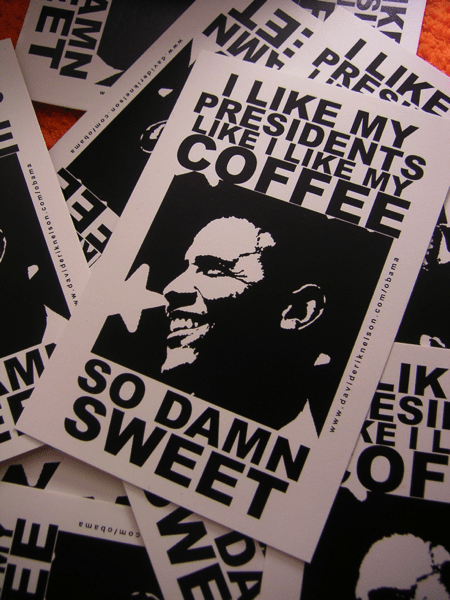
They’re looking for the Obama mix. It’s like a new kind of coffee. “We just came up with it. Try this. The new Obama roast. It’s the perfect blend. Strong, but not sharp. Seductive. Bold. Sweet. Smooth. And not too dark. Not like that Dikembe Mutombo roast they’re brewing across the street.”

And why not be black like Barack? He’s the coolest guy on the planet right now. He’s bigger than any rapper, more popular than any rock star. He’s huge. We admire him and kids aspire to be like him.

…It’s still hard to get my head around this, though, the idea of acceptance that comes with the Barack Obama presidency. There is a part of me that acknowledges — and remembers, historically — that people of color who tried to deny any part of themselves were suspect. They would have to make a decision and stick with it. If it was found out that they were denying a part of themselves, they would be accused of running away from themselves and be rejected by their own. We’re looking at a whole new playing field as of right now. You can embrace all the parts of you. You can say, forthrightly, “I am who I am. I am all my parts,” or even, “I am all my parts, but I am embracing this particular one. This is who I am.” And we, as a people, will embrace it as well.

Excerpted from “Barack Like Me” by David Alan Grier with Alan Eisenstock. Copyright (c) by David Alan Grier.

i like my coffee like my presidents'

speaking of dr. seuss

dr suess books chromatically arranged

10 Stories Behind Dr. Seuss Stories

3. If I Ran the Zoo, published in 1950, is the first recorded instance of the word “nerd.”

5. Green Eggs and Ham. Bennett Cerf, Dr. Seuss’ editor, bet him that he couldn’t write a book using 50 words or less. The Cat in the Hat was pretty simple, after all, and it used 225 words. Not one to back down from a challenge, Mr. Geisel started writing and came up with Green Eggs and Ham – which uses exactly 50 words. The 50 words, by the way, are: a, am, and, anywhere, are, be, boat, box, car, could, dark, do, eat, eggs, fox, goat, good, green, ham, here, house, I, if, in, let, like, may, me, mouse, not, on, or, rain, Sam, say, see, so, thank, that, the, them, there, they, train, tree, try, will, with, would, you.

green_eggs_ham_house

the house at the end of the road

Although I am reading two books similar to this right now, I am so eager to jump into this one.  My “mulatto” google alert alerted me to this review.  I found myself fascinated by the first two paragraphs…

The Family That Rejected Jim Crow

By Martha A. Sandweiss

The Story of Three Generations of An Interracial Family in the American South

By W. Ralph Eubanks

Smithsonian. 206 pp. $26.99

W. Ralph Eubanks’s family memoir tells a double story, one about the past and the other about the author’s efforts to uncover it. This has become a familiar kind of literature, the search for family roots that becomes a search for one’s own identity. But Eubanks has an unusual story to tell. His maternal grandparents, Jim and Edna Richardson, lived on a remote rural road in a black community in the now deserted town of Prestwick, Ala. According to family stories, they married in 1914 and by 1929 had seven children. Jim was a white man, a “boisterous adventurer” and bootlegger who ran a logging business. Edna’s racial heritage was mixed, but she thought of herself as black. In Jim Crow Alabama, where the courts had repeatedly upheld the state constitution’s ban on interracial marriages, the Richardsons constituted an unusual sort of family, and they defied the social rules that governed the segregated South. After Edna died in 1937, Jim remained in Prestwick with his light-skinned children. They could have moved away to start life anew as a “white” family. After all, Eubanks says, the children were so fair that a federal census agent once categorized them as “white.” But the family “made a conscious choice to identify as black people, in spite of skin color and features that would have allowed them to move seamlessly into the white world.”

Eubanks sees this act as both radical and heroic. As a black man married to a white woman, he finds in his grandparents’ lives valuable lessons for his own. “Sometimes it even felt as if they had forged a path for the life my wife and I shared, occasionally guiding us on our way.” He thus crafts a progressive tale of social improvement, with his grandparents’ and parents’ lives in the Jim Crow South paving the way for his own youth during the civil rights era and eventually leading to his 11-year-old daughter’s vision of a world “where race matters less and justice and our common humanity matter more.”

PH2009071502246

speaking of children’s books

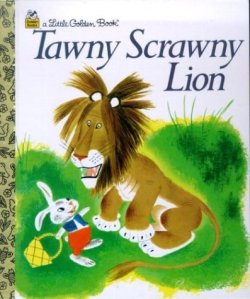
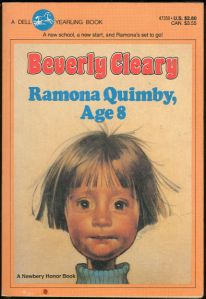
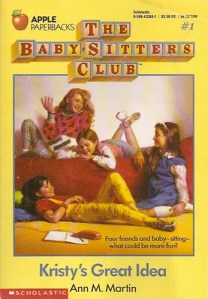
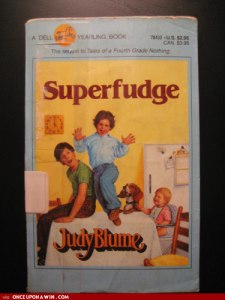
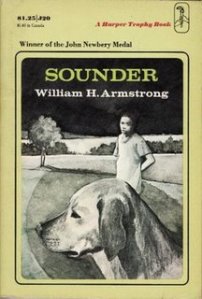
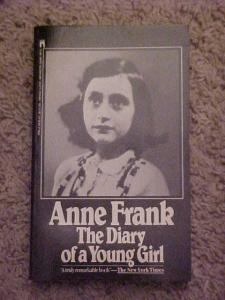
Of course there were no biracial characters for me, and though that would have been GREAT, I could relate to the black or white hero or heroine, so it’s all good. Is that a biracial thing, I wonder?  Anyway, here are some of my personal favorites.  Books I loved from the time I could read til the 8th grade.  I found the covers that I owned or borrowed from the library.  I loved these books so much!  Books were my friends.  I have vivid memories of my dad reading Ramona the Pest to me, and me staying up really late to finish Mrs. Piggle Wiggle in one day, and the moment I first met my (step)sister Shannon and she was sitting on the couch reading Ramona Forever and I knew we’d get along. My heart began pounding every time I came across the book cover that looked like mine. I think I can smell them.  Now I  want to read them again.  I’m sure I’ve forgetten some and will end up doing another post.  Shannon, can you think of anything I forgot?

Ibt2iy3YenghgdnnGUkhUzXjo1_400

tawny scrawny lion

where-the-sidewalk-ends

ramona quimby age 8
babysitters-club

2003219087083795277_rs

win-pics-superfudge

mrs_piggle_wiggle

famt-b

15254378.JPG

6a00d8341c5ac253ef00e55056e6ff8833-640wi

017592wrinkle_in_time_cover

9780060734015-crop-325x325

Dicey's song

picture for book

9780061120077

0456_2.JPG

207897452_o

518GC5YM4ML._SL500_AA240_