
it’s hard to hold on to who you are when the world at large doesn’t seem to know you exist… just sayin’ re: black/white biracial
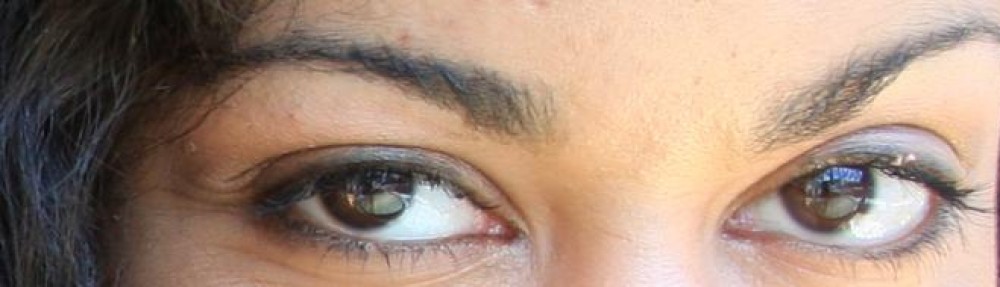
it’s hard to hold on to who you are when the world at large doesn’t seem to know you exist… just sayin’ re: black/white biracial
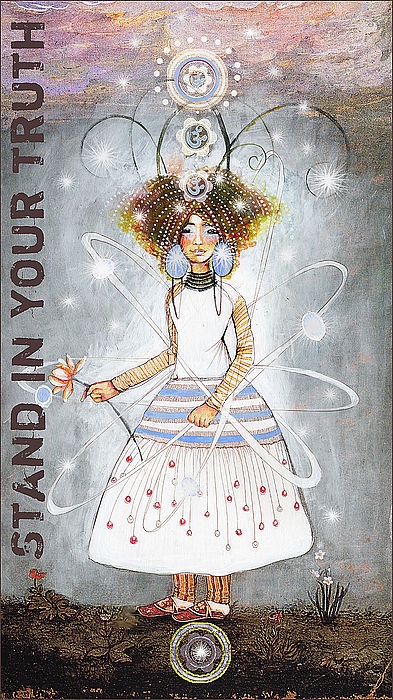
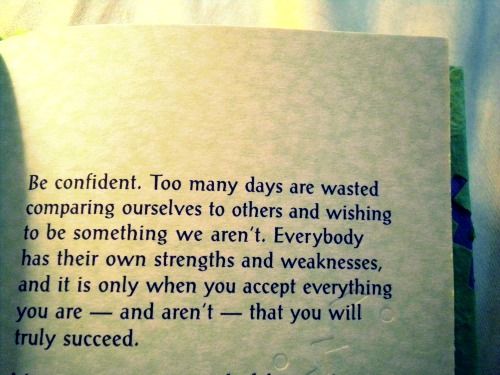
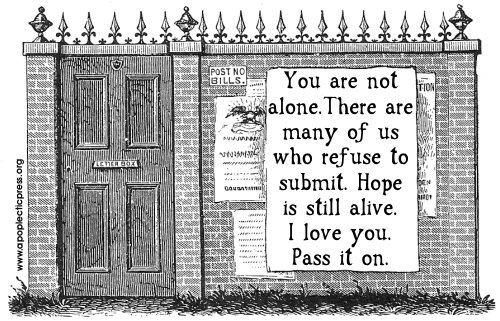 i’m breaking my tradition of just posting an inspirational quote with no title, no commentary because yesterday someone found their way to this blog by doing an internet search for “how can 11 yr.old girl accept being biracial.” i’ve been mildly haunted by this. i don’t have advice to offer from personal experience because when i was eleven, i didn’t think of myself as biracial exactly. so, though i was dealing with it and certainly many of my issues stemmed from it, i wasn’t pondering my life through that lens. i couldn’t have verbalized my angst in those terms. and, even if i could have, who knows how vastly different my situation was from that of the child who prompted the search. anyway, i just thought i’d post a few of these inspirational thingies i’m so very fond of in hopes that one or two of them might be just the perspective shifter or the advice needed to help in this situation….






oh my jesus… yes, i had to go there. i keep searching for an indication that this piece was written forty years ago, and only recently re-published just for… fun… or something. i do think that there are, like, two valid, worthwhile points contained herein… but… um… oriental!?!? that, of course, is not my main concern here, but it does point to the antiquated lens through which our dear (he does look kind of sweet and it says he volunteers a lot) mr. raiford views the world around him. i don’t mean to come down on him. i thank him for the unique opportunity to analyze the old “what about the children?” plea which i rarely see argued under the guise of modern day quandry.
maybe you should take a moment to skip down to the article and then come back to my stuff… i’m never sure if it’s best for me to put my thoughts at the beginning or not… you’ve been warned… here they come…
first off, i’d wager to say that parents of mixed race children have long questioned the validity of discrete racial categories that require a child to choose. i’d also wager to say that the white parents have probably had more questions than the black or ‘minority’ ones. if this article was indeed written in the 21st century, i think it would be more accurate to say that (some fraction of) the rest of the country is finally beginning to question the validity of discrete racial categories.
most off… i cannot even believe that this man, who uses the term oriental multiple times, has the nerve to caution human beings who love each other and dream of starting a family to grow through life with… not to do so because race “matters” and (in his opinion) the children will be confused and unsupported outside of said family. how about cautioning the rest of the country, those who haven’t caught up with the times, not to be so rigid in their notions of “us” in opposition to “them,” or who belongs with whom and why? how about saying something to move us toward the idea that we are all fundamentally the same? we are people. who seek love and joy and connection. and any time people are lucky enough to stumble upon those things we should encourage them to leap right in and build something beautiful from there. which will encourage the rest of us to do the same. which will cause this society in which race matters more than who a person really is to change because the lines are blurred, have been crossed, eventually forgotten. there you have a solution for the problem of the 6 year old that mr. raiford proposes will be confused and hurt by not belonging to any group outside of the immediate family.
and another thing… hasn’t the recent census informed us that there actually is a viable mixed-race reference group? the only satisfaction that brings me personally is that it appears to be a necessary step toward the ultimate realization of the human-race reference group. only one box to check.
to be fair… parts i liked… which really means agree with:
again, i do not mean to bring down a reign of fury on mr. raiford. i’m truly grateful for the opportunity to blast these notions. he seems like a nice guy with misguided concerns. actually with misguided solutions to concerns that are unfortunately still mildly valid as we seem to be in an in between (united)state(s). in between where we were and where we’re going.
 awesome photo unrelated, source/subject unknown
 Written by GILBERT L. RAIFORD
In the pursuit of accuracy and personal pride, interracial parents are beginning to question the validity of discrete racial categories that require their children to designate single-race identification.
On the surface, this is a laudable pursuit and certainly a legitimate one. After all, we do define people as black or white. So, when a black and white couple produces a child, the child, by logical extension of definition, is black and white or neither black nor white. However, this satisfies only the biological, and perhaps anthropological, approach to understanding race.
There is a more compelling reality: Race in the United States is a very discrete category. It is not based on any kind of scientific definition. It is based on a draconian sociological one and a divisive political one. People here are defined as black or white or Oriental. This takes precedence over being defined as Jewish, Jamaican, Cuban, Haitian, Russian, Chinese, French, Catholic, Protestant, etc. The United States has carefully and systematically created a society where race is a tremendously more important determinant of who we are than ethnicity, religion, national origin or personal achievements. Witness the confusion of black Cubans or black Puerto Ricans or the Eurasians.
In the United States, an African-American parent, no matter how fair-skinned, cannot procreate a “white” child. The system does not make exceptions for an African American whose child is the product of interracial coupling. Of course, the reverse is not true for Anglo-Americans. They can have any race of child they want – black, white or oriental. That is the reality of this society.
I write this not at all to chide or even inform interracial parents. They are adults who most likely know a great deal about the race issues and are intellectually and emotionally strong enough to ignore the stupidity that is generated out of personal and institutionalized racism. Their lives together attest to this fact.
But what about the children?
It is not easy growing up black in this society. It becomes considerably more difficult for one who does not know that he or she is black, but is confronted by this sociological fact everyday and in so many ways, some of them hurtful and insidious. No amount of parental love can shield a 6-year-old from the confusion and hurt of not belonging to any group outside of the immediate family. Adolescents are particularly fragile, having to live with this confusion at the very crossroads of their lives when they are struggling to overcome self-doubt and needing to feel good about themselves, needing self-validation – things that one gets from people other than the immediate family, from a reference group. Presently, there is no viable mixed-race reference group. One is forced to choose. Mental health directs one towards choosing a reference group which minimizes our degree of race-mixing and provides us with full membership.
Superimposed on race is ethnicity. Ethnicity is a reference group. For African Americans, it provides for a very sustaining sense of identity. It is no wonder that people like Lena Horne, Cab Calloway, W.E.B. DuBois, Walter White and Adam Clayton Power, even though white-looking, affirmed their blackness. It was not race that they were affirming, it was ethnicity, the sustaining sentiment which makes being non-white in America palpable and even enjoyable.
Hopefully, the day will arrive when we are no longer a racial society, a society where race does not matter. That day has not yet come. In the meanwhile, I caution interracial parents to consider the consequences of making their child a cause célèbre in search of a miscegenation reference group. Of course, it is important that a child knows the reality of his or her family genealogy and to even embrace it. It is at least equally important that a child is prepared to negotiate life based on the social context of society. Sadly, race matters.
Gilbert L. Raiford is semi-retired after a career in teaching and working for the U.S. Department of State. He lives in Miami where he volunteers at homeless facilities, the Opera House in Miami and after-care school programs as a fund-raiser. He may be reached at graiford@hotmail.com
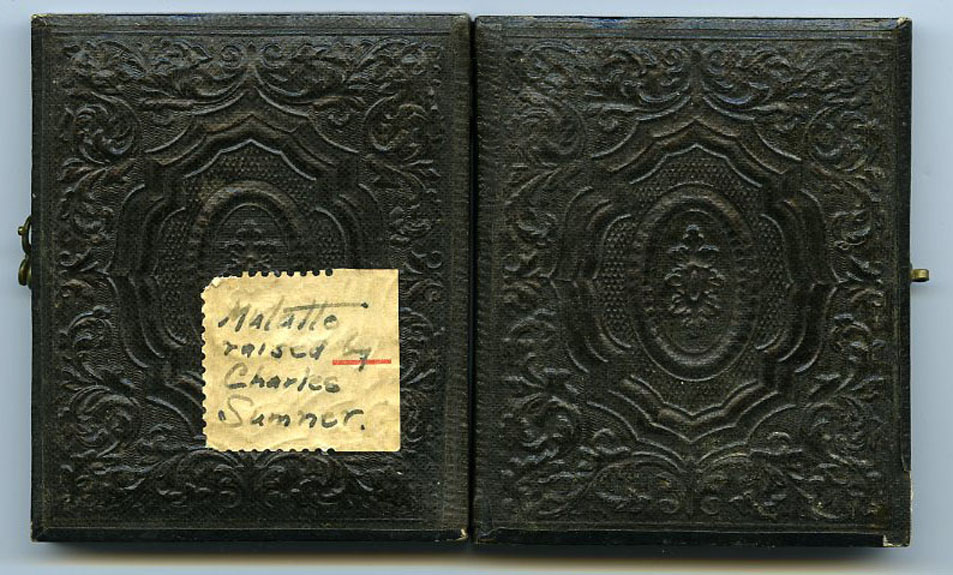
in my search for vintage images of mulatto folks i recently stumbled upon a gem!! Joan P. Gage is a journalist and a collector of photographs. on her blog A Rolling Crone she shares one of her collectibles and the fascinating (and still unfolding) story behind it. i feel all kinds of ways about this piece of our history (and by “our” i do mean mulatto, i do mean american, i do mean human seeing as everything is everything and all.) anyway, i feel sad for the little girl. i feel pride for the little girl. i feel a sense of satisfaction that i can point to this child and to the efforts charles sumner as evidence that, even way back when, a white man and a white-looking black child attempted to change people’s minds (way back)when it would have been much easier (not to mention safer!) to relish in the societal refuge that their phenotype offered. i am not implying that the attempt was perfect, nor that there is nothing offensive or off-color about the sentiment behind the message. but, if you consider the general consensus of the times on this matter, i think it safe to view sumner’s cause as a benevolent one. i wonder how little mary felt. i wonder if she understood. i wonder what her parents looked like. and her siblings. i assume there’s a reason that they were not photographed or ‘exhibited’ together. and i wonder how they felt about that, about all of it. and what became of all of them…
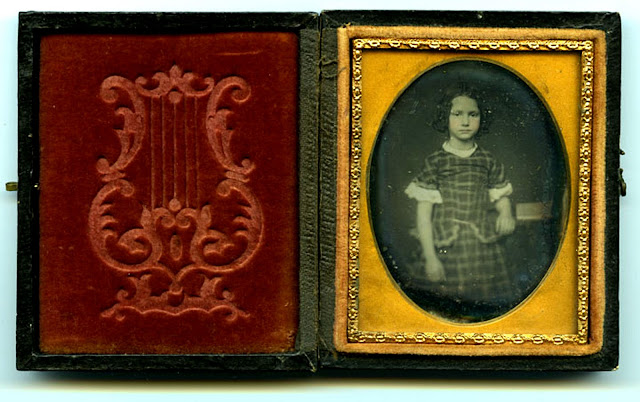
From “Raising Freedom’s Child—Black Children and Visions of the Future after Slavery,” written by a University of New Orleans professor, Mary Niall Mitchell:
 “Topsy”
 From joanpgage, the blogger (and current owner of the daguerrotype) from which I am re-blogging this piece:
…Prof. Mitchell is currently working on a book about Mary Botts that will tell more about this former slave’s life, including the drama of how Sumner purchased her and spirited her out of Virginia, how he introduced her to the media and society as a living advocate for the abolitionist cause, and how her family settled in the free black community in Boston.
i’ve no idea where i found this. it’s been waiting to be posted since last july…
in light of the current posting trend over here, i found the last line to be somewhat relevant…”document(s) white recognition of beauty and attraction in their slaves.” not quite so “flattering” as the modern recognition.
Her light skin color was itself evidence of miscegenation. Interracial sexual exploitation, along with brutal punishment and separation of families, was a terrible aspect of slavery. The practice was far from unknown throughout the antebellum South and existed with special visibility in New Orleans. If the daguerreotype of this woman could for a moment be interpreted in such a fashion, then commissioned by her escort, it would document white recognition of beauty and attraction in their slaves. |
these depictions are what inspired me to blog about the beauty standard thing in the first place. i don’t know how that post became so personal, but i suppose it’s fitting after my long absence that i should lead off with a bit more of myself. anyhow, i wonder what the subjects of these renderings and/or the artists who created the images would have made of this ‘epitome of beauty’ stuff.
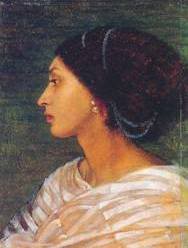
Head of a Mulatto Woman by Joanna Mary Boyce

Portrait of a Mulatto Girl – 1935 by Aaron Douglas

Mulatto with Bowler Hat by Jules Pascin

Study of the Head of a Young Mulatto Woman, Full Face – by Anthony Frederick Sandys
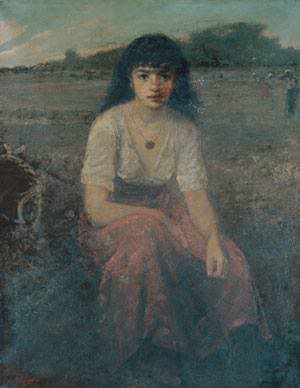
The Quadroon-1880 by George Fuller
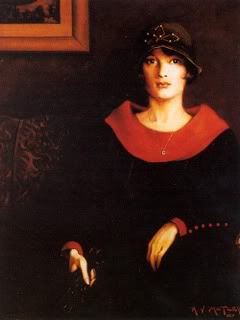
The Octoroon
so, while i was “away” one of the big community newsflashes was that mixed-race is the new standard of beauty. um…ok, cool…i guess…or, whatever!…i’m not really sure where i stand on this one, because, just like race, a standard of beauty really has no basis in reality. that’s merely an opinion. however, the fact 64% of the people polled in the Allure magazine survey that delivered us this “good” news are of the opinion that they generally find mixed-race women to be the epitome of beauty, leads me to ponder a couple of things:
1. we’re not so invisible anymore. they didn’t choose light-skinned black people with “good hair,” or asians who may also be perceived as a little hispanic too as the exemplification of beauty. they chose mixed-race. it was on list. that’s progress, no?
2. i firmly believe that there is no such thing as race, not in terms of the universal reality which i perceive to be very different from the mainstream worldly reality. yet within the confines of the discussion of the topic at hand (funny (and frustrating) how this ‘non-existent’ thing is so confining) i would say that we are all mixed race. so who amongst us is not full of beauty?
3. i also think about all the previous generations of mixed people who may have felt invisible and/or less than and/or all that jazz… i think about me… i wish i could have told this girl that if she could just wait 10-20 years or so, some of the things she felt uncomfortable with and perhaps even unloveable because of would come to be perceived as beautiful… so she should just rest assured in herself and wait for the world to catch up…
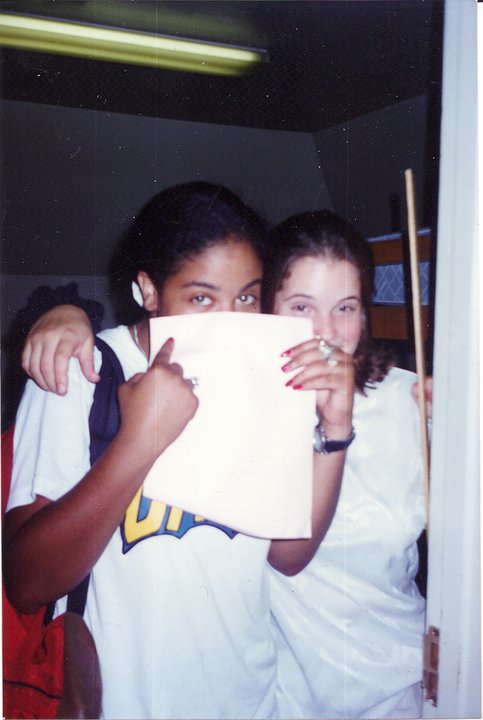
wow! these pictures make me so uncomfortable. just like i was back then.
now…not that i’m all caught up in thinking of myself as some biracial beauty…but…i gotta say…progress, no?

if i had to identify something beautiful about this picture, i would say it’s that i seem unapologetically present and, dare i say, confident even. i’d like to see phrases like that enter the equation when calculating the standard of beauty… confident, present, compassionate, passionate, gracious, generous… how ’bout those undisputably beautiful things?
This is so right on! Thank you, Karen Finney. I’m so glad my (white)grandparents allowed me in to their lives. And so are they! It’s the “little” things…
On another note, this sentence, “the very existence of antimiscegenation laws had been enacted for the purpose of perpetuating the idea of white supremacy,” speaks to the very reason I fell down this rabbit hole I’ll now call the mulatto trail. I realized one day that anti-miscegenation and the one-drop rule perpetuate the idea of white supremacy, and that by subscribing to that antiquated rule I was upholding that ridiculous notion. The anti-miscegenation thing has legally been eradicated, but ask any interracial couple who has walked down a street together, and I’m sure they’ll tell you that on more than one occasion they’ve been given the evil-eye or gawked as if they were freaks of nature. Or both. And as for the one-drop rule, head on over to my youtube channel, scroll through the comments, and you’ll see that it looms large in the consciousness. And many people don’t seem to be willing to let it go.
By KAREN FINNEY
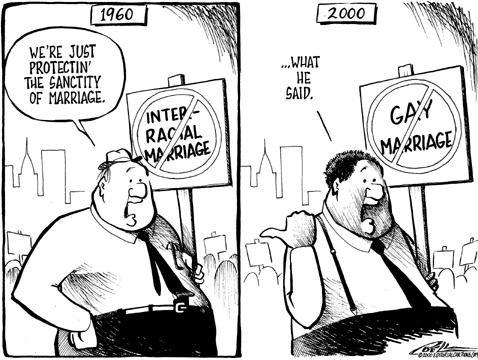
Yesterday’s ruling that California’s Proposition 8 is unconstitutional reaffirms a long-held American value that no matter how you try to spin it, separate is not equal. While some may not agree with same-sex marriage, history should remind us that our Constitution calls us to recognize that the laws in it apply equally, not to be picked apart to support a political agenda or bias. The arguments being used against same sex marriage are frighteningly similar and equally offensive as those once used against interracial marriage. While a Gallup poll in 1967 found that 74 percent of Americans disapproved of interracial marriage, it’s almost hard to remember just how far we’ve come.
I was 16 years old before I was allowed in my grandfather’s home in Greensboro, North Carolina. That’s how long it took for him to even begin to re-think his shame over having a mixed-race granddaughter. He believed, as did many at the time, miscegenation was wrong on moral and legal grounds. Thankfully for me, my parents disagreed. They were married in New York City and had me despite the fact that it was illegal in their home states of Virginia and North Carolina to do so. Thankfully for our country, in the case of Loving v. Virginia, the Supreme Court saw beyond the fear and bigotry of the moment and ruled that antimiscegenation laws violated fundamental American values of Due Process and Equal Protection Under the Law as guaranteed to every American by our constitution.
Just as some used to say that marriage is only valid between a white man and white woman, some now argue that marriage can only be between a man and a woman. Arguments have also been made that same-sex marriage dilutes the institution of marriage, just as similar arguments suggested that interracial marriage diluted the white race. My personal favorite absurd justification says that (despite the idea that we are all God’s children and loved equally) gay marriage is against the laws of God and nature. That argument was used by Leon M. Bazile, the judge in the initial case against the Lovings, who said:
Almighty God created the races white, black, yellow, malay and red, and he placed them on separate continents. And but for the interference with his arrangement there would be no cause for such marriages. The fact that he separated the races shows that he did not intend for the races to mix.
The Supreme Court’s ruling in the Loving case also recognized that the very existence of antimiscegenation laws had been enacted for the purpose of perpetuating the idea of white supremacy:
There is patently no legitimate overriding purpose independent of invidious racial discrimination which justifies this classification. The fact that Virginia prohibits only interracial marriages involving white persons demonstrates that the racial classifications must stand on their own justification, as measures designed to maintain White Supremacy.
Similarly, as Judge Vaughn Walker today affirmed, denying gay couples the right to marry, not only denies basic civil rights, liberty, and freedom, but also codifies bigotry.
 Karen Finney is a political analyst for MSNBC and an independent consultant working with political and corporate clients in the areas of political and communications strategy. She brings over 16 years of experience in national politics and campaigns ranging from the Clinton administration to New York State to the Democratic National Committee.
By Pema Chödrön

There is a key moment, says Pema Chödrön, when we make the choice between peace and conflict. In this new teaching from her program Practicing Peace in Times of War, she describes the practice we can do at that very moment to bring peace for ourselves, for others, and for the world.
If we want to make peace, with ourselves and with the world at large, we have to look closely at the source of all of our wars. So often, it seems, we want to “settle the score,” which means getting our revenge, our payback. We want others to feel what we have felt. It means getting even, but it really doesn’t have anything to do with evenness at all. It is, in fact, a highly charged emotional reaction.
Underlying all of these thoughts and emotions is our basic intelligence, our basic wisdom. We all have it and we can all uncover it. It can grow and expand and become more accessible to us as a tool of peacemaking and a tool of happiness for ourselves and for others. But this intelligence is obscured by emotional reactivity when our experience becomes more about us than about them, more about self than about other. That is war.
I have often spoken of shenpa, the Tibetan term for the hook in our mind that snags us and prevents us from being open and receptive. When we try to settle the score, we cover over our innate wisdom, our innate intelligence, with rapidly escalating, highly charged, shenpa-oozing emotionality. We produce one hook after another.
What are we to do about that? We could say that this emotionality is bad and we have to get rid of it. But that brings problems, because it’s really the same approach as getting even with other people. In this case we’re basically saying that we have to settle the score with ourselves, get even with ourselves, as it were, by ridding ourselves of our emotionality.
Since this approach will not work, what we need to do is to neither reject nor indulge in our own emotional energy, but instead come to know it. Then, as Chögyam Trungpa Rinpoche taught, we can transmute the confusion of emotions into wisdom. In simple terms, we must gain the capacity to slowly, over time, become one with our own energy instead of splitting off. We must learn to use the tools we have available to transform this moment of splitting in two. *Splitting in two* is the moment when peace turns into war, and it is a very common experience.
***Especially if you’re “biracial”***
Not like this:
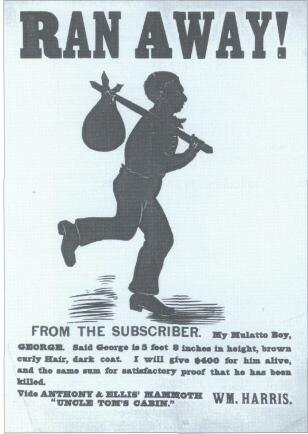
But like this:
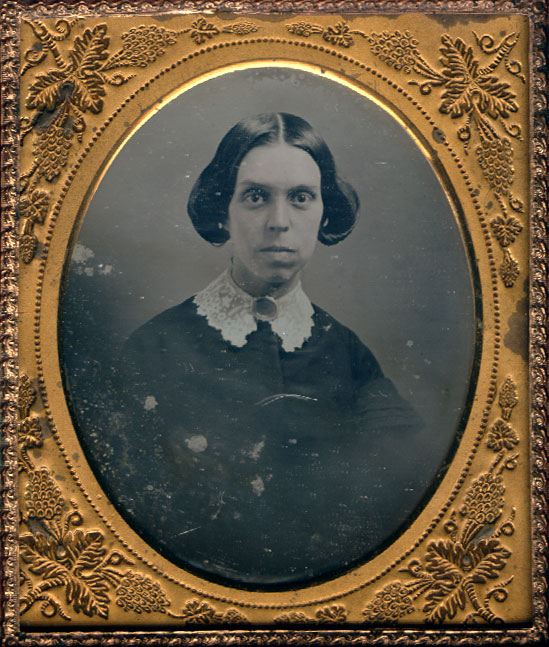 1850 portrait of a mulatto woman
 J.P. Ball quarter plate daguerreotype of mulattoes
 A fine daguerreotype portrait of a young, well-dressed mulatto woman, with the letters W and MB etched on plate’s verse

*Quarter Plate Daguerreotype of Two White Children & Their Mulatto Servants*

Cased Ninth Plate Daguerreotype of a Mulatto, fine half-length portrait of a 20-something young, mixed race gentleman, Negroid and Caucasian, in typical merchant sailors outfit of the period.
The Daguerreotype was the first successful photographic process, the discovery being announced on 7 January 1839. The process consisted of
I absolutely love these! I fully intend to collect them one day when I can afford it. There seems to me to be so much more to a daguerreotype than a photograph. They seem haunted to me. Like the image and the moment was so thoroughly captured that I’m really looking at something/someone frozen in time. Haunted.
On another note, I get some sort of satisfaction from looking at these and reading the descriptions. Proof that “we” exist and were once recognized.
*or brothers….(re: white children & their mulatto servants above)*




 mulatto diaries