sometimes the apple does fall far from the tree

Thank God!  This is such an amazing story.  I’m so fascinated.  Not only by the bravery of a little white girl who crossed KKK, but also the shades of “mulatto” history sprinkled throughout.  Coon-hunting based on the supposed threat that black males posed to white women.  The “black” member of the Klan.  Passing.  Male chauvinism.  Homophobia. This is our sordid past.  And it is still haunting us.

Taking on the Klan

One summer night in 1965, 12-year-old Carolyn Wagner watched as Klansmen bound a young black man to a tree in her father’s field, accused him of violating the “sundown” rules in nearby Booneville, Ark., that forbade blacks from staying in town after dark, and lashed him a few times with a bullwhip as he cried out in pain and fear.

It was no different from beatings at other Klan gatherings her father had attended, but what happened next remains vivid in her memory: the Klansmen decided to tie the man to the railroad tracks below the pasture. When they were done, they ambled back to the field to discuss crops and politics. Wagner, a reluctant witness to her father’s Klan meetings, couldn’t stand it anymore. She stole down to the tracks, used a knife she kept in her boot to slash the rope that bound the man, and told him he could follow the tracks to Fort Smith, the nearest large town.

“That was a turning point,” recalled Wagner, now 56 and living in Tulsa, Okla. “I felt like I had made a difference when I was able to cut that man free. I realized I can make a choice to be a passive observer or I can become involved to diminish the harm that they’re doing. And that’s what I did from that night on, and that’s what I’m still doing.”

After years working for civil rights and children’s organizations, Wagner co-founded Families United Against Hate, a nonprofit group that helps people affected by bias incidents. Her experience growing up with a father in the Klan made her determined and fearless in her fight against hate. “That image of my dad and those men, and even the smells, are still with me, and they’ll always be with me. And it was very important that my children never know the world I knew when I was growing up.”

It was a world where Wagner’s father, Edward Greenwood, and his acquaintances gathered at least once a month at each other’s farms for Klan meetings, often bringing their children and grandkids. Because her father, then in his late 50s, couldn’t see well enough to drive at night, Wagner ferried him to meetings in a 1951 Chevy pickup. (Back then in rural Arkansas, it wasn’t unusual for children as young as 12 to drive on country roads.) The men — including lawyers, judges, cops and pastors — would begin their gatherings with a prayer and eschew alcohol. “They felt like they were doing God’s work,” Wagner said.

Sometimes, the gatherings would feature a beating like the one Wagner witnessed at her family’s farm. The victims were usually young men who’d been picked up on a pretext, such as paying too much attention to a white woman. “We would hear terms like ‘coon’ hunting,” she said. “My father would say, ‘I’m going ‘coon’ hunting.'”

But more often, the men would talk big, complaining about Presidents John F. Kennedy or Lyndon B. Johnson or even threatening to blow up the Supreme Court building. They’d eat bologna sandwiches that Wagner had prepared. Campfire smoke would mingle with the sweet-sour odor of Brylcreem, sweat and Old Spice. It was the one place where her father seemed happy. “I don’t remember seeing him smile or laugh unless he was with those goons,” she said.

…But her father probably would not have found a home in the Klan if his comrades had known about his heritage. “We knew there was this dirty secret in the family,” Wagner said.

In fact, her father’s great-great-great grandmother, Elizabeth Greenwood, was part Cherokee and part black, a former slave who’d settled in Arkansas when it was still part of France’s Louisiana Territory, according to family lore. Her father had cousins who identified as black, though he would have nothing to do with them. Wagner believes part of his racism stemmed from shame about his origins.

Wagner’s mother didn’t share her husband’s views about race, but she felt powerless to oppose him. Divorce was taboo in her family; resources for victims of domestic abuse were nearly nonexistent. “Mother never asked what he did [at Klan meetings],” Wagner said. “It was like she couldn’t bear to know.”

Wagner did receive support from her maternal grandparents, who passionately disliked her father. After Wagner secretly untied the black man from the railroad tracks, her maternal grandfather taught her how to use a 12-gauge double-barrel shotgun. She cut away the springs in the seat of the pickup to create a compartment where she hid the weapon, loaded and wrapped in a blanket. Though she never used it, she says she would have done so to defend herself or to help a potential Klan victim.

It wasn’t the last time she would defy all that her father represented. In April 1968, Wagner drove him to Memphis to take part in a Klan protest during the sanitation workers strike made famous by the appearance of Martin Luther King Jr. She was there when the civil rights leader was assassinated. In a Memphis newspaper, she read that the Department of Justice was planning a crackdown on the perpetrators of civil-rights era violence. After the assassination of Robert Kennedy two months later, Wagner, then 15, wrote a letter to the FBI accompanied by a list of names and addresses she’d copied from her father’s Klan directory. She wanted to get them all arrested. “I included my dad on that list,” she said.

Wagner, who used her maternal grandparents’ home as the return address, never heard back from the FBI.

She left home the day she finished high school and at 19 eloped with Bill Wagner, now her husband of 37 years. Her father died in 1980 when she was pregnant with her younger child, William. “I am so grateful that my children will have no memory of him or his politics,” she said.

But her own memories of her father came back strongly on William’s 14th birthday, the day he told his parents that he was gay. That day she and her husband’s biggest concern was for their son’s safety. “I had a very clear understanding of who the hatemongers were,” she said. They decided to move from their farm in tiny Booneville, a conservative town where homosexuality was widely condemned, to the more liberal university town of Fayetteville, some 120 miles away.

Still, they couldn’t protect their son from hate. Harassment at school culminated in a brutal assault in 1996. William, then 16, left school with friends to get lunch at a nearby convenience store when six teenagers shouted anti-gay slurs. They knocked him off his feet, then kicked him as he lay bleeding on the ground. “I thought about how easily that could have been my father’s group,” Wagner recalled. “And I wasn’t there.”

Two of the attackers were convicted of assault. After the Wagners filed a complaint on behalf of their son under Title IX, the federal anti-discrimination law, Fayetteville became the first public school district in the nation to enter into an agreement with the Department of Education’s Office of Civil Rights that required it to protect all students, including gays and lesbians, from harassment. The Wagners continue to advocate for young people who are targeted because of their actual or perceived sexual orientation.

Looking back on her childhood, Wagner remembers reading novels by Pearl S. Buck and biographies about women such as Harriet Tubman and Florence Nightingale. She wanted to learn about people who had survived difficult circumstances to help others, because she was determined to do the same.

“I found ways to survive,” she said. “I found ways to more than survive — to endure, to become stronger and to make our little corner of the world in the South a little better.”
abilene

I came across this article on the birthplace of Dwight Eisenhower, Abilene, KS.  This isn’t much of a news story, but it’s proof that we existed and were acknowledged once.  The Hispanic=White is interesting to me too.

KS0105001

via The Abilene Reflector-Chronicle

Dave Bergmeier
Editor and Publisher
Tuesday, Jun 30, 2009

Cindy Harris, who has done extensive research on 19th and early 20th century Abilene gave an overview of civic, business, social and cultural life at the turn of the 20th century. She was among the speakers for the latest installment of Ike’s Abilene Saturday at the Eisenhower Visitors Center. Saturday’s edition was entitled “Life in the City, 1900: Political, Business and Social History.” The focus on the series is about Abilene during Dwight D. Eisenhower’s youth and when he grew to a young man who would later become the nation’s 34th president.

…Her studies indicated that Abilene had a diversified community. Census forms indicated only three races were available to check — white, black and mulatto (someone with a black parent and white parent). As a result, Hispanics, who worked in the railroad industry were listed as white.

David and Ida Eisenhower lived in the south part of Abilene, considered south of the tracks, where people of mixed races also lived, Harris said. However, there were other mixed race neighborhoods in other parts of Abilene.

Harris said Dwight Eisenhower was proud of his Abilene roots and what the people and community meant to him.

the movie glory

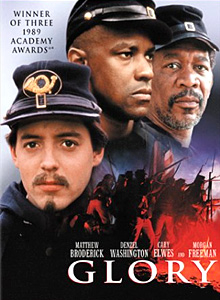
I just finished watching Glory for the 5th time.  It might be my favorite movie.  This movie was actually the catalyst for my whole “biracial” revelatory aha moment.  While watching Glory for the 4th time, I realized that, seeing as this was the history of our country, it is a miracle that I (a black and white person) even exist.  Truly.  And then I realized that I didn’t really exist.  There was no recognition of the miracle.  Not even an internal, personal one.  I realized that the history depicted in the film was the truth and that I had fallen victim to it’s legacy and failed to know myself fully.  

15341747-15341751-large

Watching the movie tonight, I was again blown away by Denzel Washington.  “The tear” is one of the most memorable moments I have witnessed on screen.  I also kept searching for the moment that might have triggered the big realization. My guess is the part where Matthew Broderick (as Robert Shaw) takes the 54th out with the other “negro regiment.”  The other leader is an ass to say the least.  He not only refers to the black soldiers as “little monkey children,” but he is extremely immoral in every sense of the word.  He treats his soldiers like animals, they act like animals.  Robert Shaw treats his soldiers with respect, like men.  In turn they are respectful and respectable men.  

The most poignant moment for me this viewing though was when Broderick and Denzel Washington’s character (whose name escapes me), were discussing the predicament that was life in America at that time.  And arguably still is to a certain extent.  Denzel says “It stinks real bad.  And all of us are in it.  Ain’t no one clean.”  Broderick asks, “How do we get clean?”  There wasn’t a definitive answer, but if I had to glean one from the film it’s that we become clean when we decide to die fighting for what we now know to be right, no matter how many wrongs we may have committed in the past.  

Thank you Edward Zwick, for the movie Glory.  I think it should be required viewing for every American.

speaking of angelina weld grimke

agrimke

Angelina Weld Grimké (February 27, 1880 – June 10, 1958) was an African-American journalist, teacher, playwright and poet who was part of the Harlem Renaissance and was one of the first African-American women to have a play performed. Born in Boston, the daughter of Archibald Grimke, a prominent journalist who served as Vice-President of the NAACP. The Grimkes were a prominent biracial family whose members included both slaveowners and abolitionists. Two of her great aunts, Angelina and Sarah, were prominent abolitionists in the North. Angelina Weld Grimke was named after her aunt who had died the year before.Her paternal grandfather was their brother Henry Grimké, of their large, slaveholding family based in Charleston, South Carolina. Their paternal grandmother was Nancy Weston, an enslaved woman of European and African descent, with whom Henry became involved after becoming a widower.  Grimke’s mother, Sarah Stanley Grimke, a white woman, left her husband under the influence of her parents who never approved of her interracial marriage, and took her three-year old daughter with her. However, at the age of seven, Angelina was returned to her father, and although she and her mother corresponded, they never saw one another again. Sarah Stanley died of suicide several years later.

Grimké wrote essays, short stories and poems which were published in The CrisisOpportunityThe New NegroCaroling Dusk, and Negro Poets and Their Poems. Some of her more famous poems include, “The Eyes of My Regret”, “At April”, and “Trees”. She was an active writer and activist included among the figures of the Harlem Renaissance. Her poetry dealt with more conventional romantic themes, often marked with frequent images of frustration and isolation. Recent scholarship has revealed Grimke’s unpublished lesbian poems and letters; she did not feel free to live openly as a gay woman during her lifetime. 

Grimké also wrote a play called Rachel, one of the first plays to protest lynching and racial violence. She wrote the three-act drama for the National Association for the Advancement of Colored People (NAACP) to rally public support against the recently released film The Birth of a Nation. The play was produced in 1916 in Washington, D.C., performed by an all-black cast. It was published in 1920.

After her father died, Grimké left Washington, DC, for New York, where she lived a reclusive life in Brooklyn. She died in 1958 after a long illness.

http://www.aaregistry.com/detail.php?id=1123

http://en.wikipedia.org/wiki/Angelina_Weld_Grimké

http://www.scils.rutgers.edu/~cybers/grimke2.html

nancy weston

with friends like these….

Nancy Weston

3397121950_a831785417


She lived in Charleston, South Carolina, in the 1850s as a free woman. However, in order to satisfy the laws of the state, she was a ‘nominal slave’ legally owned by a white friend. She was also the grandmother of writer Angelina Weld Grimke.

‘The Face of Our Past: Images of Black Women from Colonial America to the Present’ edited by Kathleen Thompson and Hilary Mac Austin 

http://www.flickr.com/photos/22067139@N05/3397121950/

I would love to write a book or a screenplay based on this one sentence: she was a ‘nominal slave’ legally owned by a white friend.   That has really got my imagination going.  I’ve actually never heard of nominal slaves before.  I read a bit about them today.  Interesting stuff.  Most of what I read was connected to writings pertaining to black slave owners, and the Weston name in S. Carolina came up frequently.  But Nancy was ‘owned’ by a white friend.  I am fascinated.

From http://www.straightdope.com/columns/read/2821/before-the-civil-war-were-some-slave-owners-black

Between 1800 and 1830 slave states began restricting manumission, seeing free blacks as potential fomenters of slave rebellion. Now you could buy your friends, but you couldn’t free them unless they left the state — which for the freed slave could mean leaving behind family still in bondage. So more free blacks took to owning slaves benevolently. Being a nominal slave was risky — among other things, you could be seized as payment for your nominal owner’s debts. But at least one state, South Carolina, granted nominal slaves certain rights, including the right to buy slaves of their own….

We do, however, need to acknowledge a less common form of black slaveholding. Whites in Louisiana and South Carolina fostered a class of rich people of mixed race — typically they were known as “mulattoes,” although gradations such as “quadroon” and “octoroon” were sometimes used — as a buffer between themselves and slaves. Often the descendants and heirs of well-off whites, these citizens were encouraged to own slaves, tended to side with whites in racial disputes, and generally identified more with their white forebears than black. Nationwide maybe 10 percent of the mixed-race population (about 1 percent of all those identified as African-American) fell into this category.

disturbing headline


Arkansas Democrat-Gazette

Five plead innocent to plotting to burn cross

They conspired to intimidate mother of 3 biracial children, U.S. indictment says

by Amy Upshaw

TEXARKANA – Five men pleaded innocent Friday to federal charges accusing them of plotting to burn a cross last summer in the yard of a white woman who had three biracial children.

A federal indictment unsealed Friday says the men built the cross and attempted to set it on fire to scare then-23-year-old Loretta Marie Slaughter-Shirah into moving out of the Donaldson community.

On June 15, Jacob Wingo, Dustin Nix, Darren McKim, Richard Robins and Clayton Morrison, “did knowingly and willfully combine, conspire and agree to injure, oppress, threaten and intimidate [Slaughter-Shirah] and her children in the free exercise and enjoyment of a right secured by the Constitution … because of race and color,” a portion of the indictment reads.

The indictment also says that while four of the men were at McKim’s house that day, they talked about forcing the family out of the neighborhood because there were “‘niggers’ at the residence.”

Wingo’s mother, Yvette Briggs, said Friday afternoon that her son and his friends were joking when they came up with the idea for the cross.

“It wasn’t meant as racist,” Briggs said. “He made a very fool- ish mistake. He didn’t mean it as a threat at all.”

Slaughter-Shirah could not be reached for comment, but she previously told the Arkansas Democrat-Gazette that she moved away from Donaldson because she no longer felt safe there.

When the events took place last year, she had lived in the mostly white community of about 300 people for only a few weeks. Donaldson is about 15 miles northeast of Arkadelphia…..

burning-cross-and-dukes-of-hazzard

Such a great non-racist joke they were playing!  You can read the rest of the article at http://www.nwanews.com/adg/national/258569/

pandas don’t exist

Irrational thought(s) for the day:

BzNc0oSKdlo787s6v0sIDnioo1_500

hqftcfr3ph96dpl1utwinkpno1_500

6a010535647bf3970b01127973640728a4-800wi

panda bears do not exist.  they are black bears masquerading as “panda” bears. do not be fooled by these photographs. panda bears are exactly the same as black bears.  all bears are slightly mixed in color.  can’t you see the tan snout of the black bear?  he is obviously mixed with something.  i really see no difference between those bears.  however, panda bears bear no resemblance to polar bears.  none at all.

re: jennifer beals

chaiken-beals-l-word-times-talks2-420x500


Last night I went to hear Jennifer Beals speak at the NY Times Center.  Um….amazing!! I was mere feet away from her.  She was beautiful, radiant, kind, eloquent.  Everything I thought she’d be.  But better.  I got a little emotional when she first walked out.  Jennifer Beals is to me what I seem to have become for a few people.  When I realized I was biracial and that that actually meant something to me and means a lot in this country, I was left feeling a little lost.  I mean here I’d been thinking I knew myself quite well, knew what I wanted, knew where I wanted to go, and all of sudden this paradigm shift had me questioning everything.  I was all fired-up about my discovery, but I didn’t know what to do with it.  Someone suggested I watch The L Word because Jennifer Beals’ character, Bette Porter, was biracial and it was actually a part of the story line.  I watched it and I knew I wasn’t crazy.  I knew that it was ok to embark on this journey.  I knew that who I had an inkling that I really was, well, I really was, and I was not alone.  I saw myself reflected in the world and I had a sense of my right to be.  I learned to say that I’m not “exclusively black” and that phrase has become invaluable.  For these reasons Jennifer Beals is my biracial hero.  Last night put all of that in perspective.  So, if I’ve helped anyone stand firmly in their biracial truth, J.B. is to thank for that.  So grateful!!


img_0406-500x375


Googling “why blacks hate mulattos” also led someone to this blog today.  I would love to hear Jennifer Beals’ opinion on that one.  And I’m a little curious as to what instigated that particular search.

little hans

I love this story! I did a google search hoping to find big Hans, but came up empty handed.  I wonder how the rest of his school years went….

Little Hans

In Munich one morning last week, a little boy named Hans Koegel appeared at the doorway of the Schule in der Blu-menstrasse and nervously entered. Like other children arriving for the first day of school, he clung tightly to his mother, and it was not for several awkward moments that he finally relaxed enough to smile tentatively at his classmates. But even after he did so, his mother and teacher continued to watch him closely.

For several months, parents and teachers all over West Germany have been worried about children like Hans. He is a mulatto, one of some 3,000 who are starting to school for the first time. Almost all are the children of Negro G.I.s, and most are illegitimate. In a nation that still remembers the preachments of Hitler’s Master Race, they were expected to present something of a problem.

Last week, school principals waited worriedly for reports of discrimination or childish cruelty. But as the first days passed, there was only silence. Not one child was singled out for teasing because of his color; not one teacher refused to work in mixed classes; not one Nordic mother took her own child out of school in protest.

As for little Hans, he had become something of a tease himself. His victim: a young towhead by the name of Tűrauf, which Hans thinks is howlingly funny. Tűrauf means “Open the door.”


2w9xxxqfflp94zxzp23xiuxro1_500


haters

aunizvpxmm6y1kglcz75ysrho1_400 I’ve gotten some new haters on youtube in the last few days.  I feel two ways about this: 1) irritated, 2) pleased.  There I go being a constant contradiction again, which I’m beginning to think just goes along with being black and white in America.  The general notion is that the two are so different and don’t mix, and here I (we) am (are) going around being both simultaneously.  I’m bound to contradict myself a lot while holding two things equally relevant, valid, important, impactful, etc.  Anyway, I was feeling kind of neglected by the haters.  They challenge me, they teach me, they send me new viewers.  Some of these haters call me a tragic mulatto. Others say that “biracial” doesn’t exist.  Some say I’m ugly and stupid.  I never even contemplate letting them get under my skin.  They certainly can ruffle my feathers, I’m only human after all, but that’s surface stuff.  Mostly they strengthen my passionate desire to answer the call to:
 

aunizvpxmlzcu465qp11g54qo1_500


to let others know that


aunizvpxmm2ctztnix6kl40no1_500


and that


uu8sftjmcix27dm3rnscjawlo1_400


but ultimately, haters (who are probably not reading this)


kf9vbxisylbhmt35qrhdrceko1_400


7cltfb6lthu4zcf4rw3k7pvfo1_400