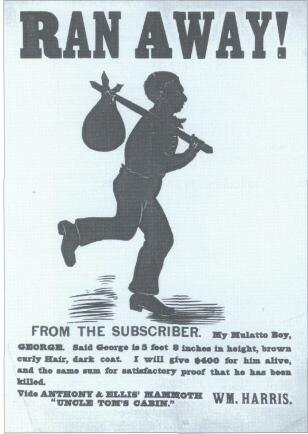
mulattoes captured

Not like this:

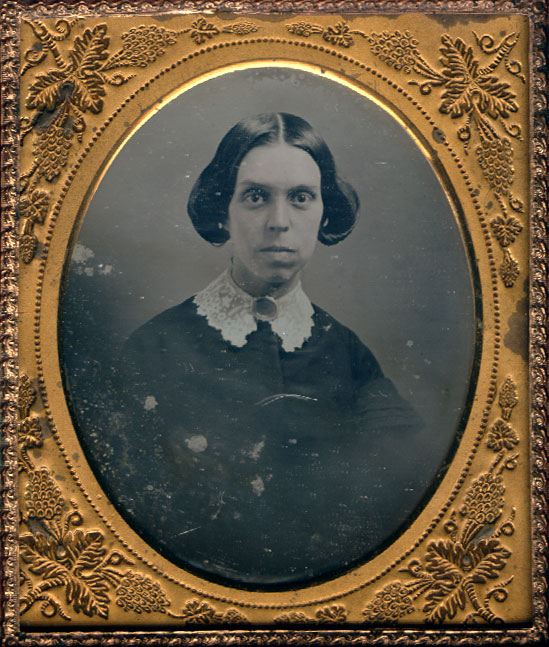
But like this:

1850 portrait of a mulatto woman

J.P. Ball quarter plate daguerreotype of mulattoes

Sixth Plate Daguerreotype Portrait of A Young Mulatto WomanA fine daguerreotype portrait of a young, well-dressed mulatto woman, with the letters W and MB etched on plate’s verse

Quarter Plate Daguerreotype of Two White Children & Their Mulatto Servants,

*Quarter Plate Daguerreotype of Two White Children & Their Mulatto Servants*

Cased Ninth Plate Daguerreotype of a Mulatto, fine half-length portrait of a 20-something young, mixed race gentleman, Negroid and Caucasian, in typical merchant sailors outfit of the period.

The Daguerreotype was the first successful photographic process, the discovery being announced on 7 January 1839. The process consisted of

  • exposing copper plates to iodine, the fumes forming light-sensitive silver iodide. The plate would have to be used within an hour.
  • exposing to light – between 10 and 20 minutes, depending upon the light available.
  • developing the plate over mercury heated to 75 degrees Centigrade. This caused the mercury to amalgamate with the silver.
  • fixing the image in a warm solution of common salt (later sodium sulphite was used.)
  • rinsing the plate in hot distilled water.

I absolutely love these!  I fully intend to collect them one day when I can afford it.  There seems to me to be so much more to a daguerreotype than a photograph.  They seem haunted to me.  Like the image and the moment was so thoroughly captured that I’m really looking at something/someone frozen in time.  Haunted.

On another note, I get some sort of satisfaction from looking at these and reading the descriptions.  Proof that “we” exist and were once recognized.

*or brothers….(re: white children & their mulatto servants above)*


recently on the interweb

I’ve come across some interesting stories, commentary, and subsequent comments all dealing with… Biracialness! Big shocker, right?  I love reading the comments.  So many different opinions, which simply reinforce my will to stay with my self and stand confident in my personal ideology.

The Seattle Times

Via

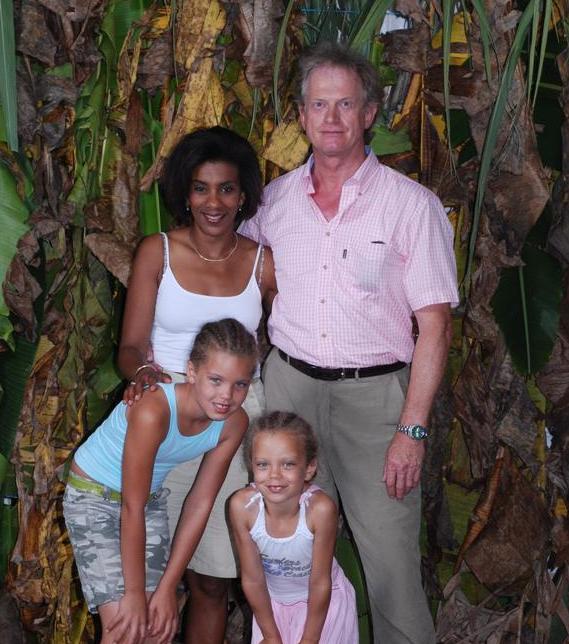
Rant and Rave Rant to the women on the bus who, when asked to quell their use of expletives around my young children, disparaged me for having a biracial family and insulted my daughters’ hair. Rave to the man who told them my request concerning their language was valid and that they had no reason to insult me and my family. Thank you, sir.

Answer.com

JUST ASK AND LET THE OTHER TO ANSWER IT FOR YOU

Via

Pregnancy & Parenting

How do I tell my mum I’m having a mixed race baby?

the baby is going to be half black but i don’t think my mum or my family would be too happy about it.. I want my family to accept the baby but what can do I to make them accept my unborn baby…

5 Responses to “How do I tell my mum im having a mixed race baby?”

blessed says:

all you can really do is explain to them as much as you can to get them to understand, but even at that it might not change their minds, but if it doesn’t then just say it’s my baby and no matter what it is going to be family and they’ll just have to get over it.

Charles J says:

You don’t. I would recommend getting an abortion. No one likes a half-breed.

VincentL says:

just tell them straight up…they probably be very mad at first but sooner or later they will adjust to i

Due 12.3.10 says:

just tell her its ur child..

R.I.P Michael Jackson says:

u don’t have to they will c it when u have it………….

Run, Racists, Run! Biracials Are Everywhere!

By Sam Watson

Via

Gone are the days where the majority of people will shout racist remarks at those of color on the streets. It still happens, but nowhere near as much as in the past. Racists are kind of afraid to spew their hatred in public, and I feel us biracials are to blame. We represent an abomination to racists. An old, white guy- a complete stranger- once saw my mom (white, Ukrainian) with my sister and I, when we were very young children, and he shouted, “Slut!” at her. We’re mixed – half white and half black. We represent an absolute breakdown of a racist’s hateful beliefs.

…Racists don’t know whether or not the “white” person next to them is either mixed or married to someone of a different race. Racists better up their paranoia levels, and warn the town sheriff in Bigotville.  During the World Cup, I turned to my seemingly white co-worker, and started ragging on the Mexican team. She instantly scowled at me in return. I forgot! She’s half white and half Mexican! Even I- a biracial- was fooled! We’re everywhere, now, and this is a racist’s worst nightmare.

Comments

-You are right. When it comes to black people, they now hate themselves much more. All of us are mixed up with something. We are one human race. Our race is different from that of the animals, not each other.
-A study I heard cited recently encouraged parents to discuss race and racism with their kids. Several families dropped out because they were so uncomfortable with this requirement of the study.

The study discovered that racism is not discussed at all in many progressive, liberal households. The idea is that if we’re all supposed to be colorblind, discussing race, or any difference for that matter, is taboo. Of course, that’s the best way to make it a dark, secretive thing- precisely the problem. People who desperately want their kids to be not just tolerant, but accepting, are practically guaranteeing their kids get no exposure to the subject by pretending it’s not there.

Racism and bigotry is a vampire- it can’t stand the light. If we want it to die out, we have to do the uncomfortable, inconvenient thing and talk about it even when it’s not a major in-your-face problem.

-I am half German (white) and Puerto Rican (brown) and I always baffle people. I think it’s interesting that we assume that racism is disappearing when I feel like it is only growing. In an all colorful nation I still feel like I need to watch what I say when I am naming a race ~ whether it’s politically “correct” or not because I never know who is going to be offended.

-You better believe we are everywhere. Though I know I’m not the only unique biracial person out there, I do admit that people are surprise when they hear that my mom is from Dominican Republic and my father is from Afghanistan. Talk about fusing two totally different cultures.

I also understand when you talk about racism being a private thing. My step mother is racist, even though she’s married to my father. It makes me mad when she makes stupid comments regaurding race. She also tries to inplant her ideas on my half brother. I try my best to counter these thoughts though… my diverse background has raised me to be open to new ideas, cultures, and people. The more people who are biracial, the more tolerance we have of one another.

-Racism is still alive but it’s a endangered species. I say this because the current generation doesn’t hold race as important as the previous ones. Most of my friends (I, myself included) have bi-racial children. At times I wonder when these kids grow up will that look at their peers and ask in shock “You’re not mixed?” I think it’s a great thing, however as parents we still need to pour our cultures into the children, letting them know they have and even more extended set of roots and the beauty contained within both.

-Racism is part of human nature. Embrace it!

-I’m old enough to have seen overt racism, as well as the more prevalent covert racism. Sometimes I feel that the only hope we have to eradicate racism is the gradual blending of all races into an “everyman.”

-I was recently showing off pictures of my friends in New York to some people here. They nodded politely at all of them, but paused at a picture of two my best friends.

“What race are they?” I was asked.

I couldn’t believe it mattered. A lot of my previous pictures had been of people who were black or Asian or of some non-white race, but these two mixed-race girls came into question?

“Er, she’s Romanian and Jamaican, and she’s Indian, Portuguese and Italian.”

“Oh, okay.” The guy replied. “I just couldn’t figure it out.”

Why should you have to?

startling

Perhaps “startling” would be a bit of an exaggeration today, but a production like this would still be considered mildly innovative indicating that we haven’t evolved much out of our old traditions…

March 1970: Student teachers, Dereck Tapper and Scilla Nicholls in a rehearsal for a production of ‘Romeo and Juliet’ at St Luke’s Teacher Training College in Exeter. The mixed-race casting was considered a startling innovation at the time. (Photo by Keystone/Getty Images)

exception

…to the “race doesn’t matter” mantra.  It seems to be relevant when physical health is the issue.  Actually, mental health as well, but that’s a different story.  Anywho, I’m happy to read of this research and find it interesting that supremacists are happy to hear of it too.

Genetic screening may redefine medical treatments

by Carolyn Johnson

SOURCE

SAN FRANCISCO (KGO) — New research out of UCSF shows that tracking a patient’s genetic ancestry can improve the diagnosis of asthma and other lung diseases. The results could have broader implications for other diseases that also rely on standard benchmarks such as race, gender and age.

Doctor’s office visits are the norm for 9-year-old Shamatay Hayes. She was diagnosed with asthma at age 2, something she and her mom have struggled to keep under control.

“It is challenging,” her mother says.

At San Francisco General Hospital and at asthma clinic across the country, Shamatay’s lung function is tracked using standard benchmarks such as age, gender and race. But, researchers say there is now a better way.

“So, what we can now do with modern techniques is estimate what a person’s ancestry is or what their heritage is using a series of genetic markers,” says UCSF researcher Dr. Melinda Aldrich.

The genetic markers more accurately determine lung function rather than a patient’s self-identification as simply white, black or Hispanic.

“With increasing African ancestry, we saw a decrement in lung function,” says UCSF associate professor Dr. Esteban Burchar.

Burchard is director of UCSF’s Center for Genes, Environment and Health, and senior author of a paper just published in the New England Journal of Medicine.

“We said forget what you think you are, what people think you are, and we looked at your genetic ancestry. We were able to reclassify patients more accurately than just using self-identified criteria,” explains.

That is increasingly important because race is used to establish normal reference values for everything from diagnosing disease to establishing disability payments. For instance, a mixed-race firefighter who suffers smoke inhalation might not meet the standards for disability of what is considered normal lung function since that is based on just three racial categories right now.

“What we showed is when you use these race-based standards, you could have as much as a 10 percent error rate depending upon what your true ancestry,” Burchard says.

Burchard believes this research brings us closer to truly-personalized medicine, but he is also aware of the potential controversy.

“We’ve had people contact us who were supremacists that said you know what you’re doing is validating what we believe,” he says.

But, the research actually tells a different story.

“Most of us, all of us in fact, are racially mixed,” he says. “We have a very rich heritage and what we’re doing is acknowledging that mixture and incorporating it into our clinical assessments.”

Scientists believe their results on lung function are just the beginning.

Aldrich says, “Wherever potentially we use race now for making medical decisions, it may have an impact with other diseases.”

This would ultimately make medicine more effective for everyone. The genetic tests used by researchers at UCSF cost about $10 per patient. Scientists see it as a small price to pay for a more accurate assessment of disease, which could lead to more effective treatments for patients.

(Copyright ©2010 KGO-TV/DT. All Rights Reserved.)

conspicuously negroid features

Really, Frontline?  Really!?  Negroid?  Whatever, PBS.  Not sure why that caused me intense irritation, but it did.  Moving on…  This strikes me as something that should be common knowledge.

Was This Britain’s First Black Queen?

by Mario de Valdes y Cocom

“The suggestion that Queen Charlotte was black implies that her granddaughter (Queen Victoria) and her great-great-great-great-granddaughter (Queen Elizabeth II) had African forebears. Perhaps, instead of just being a boring bunch of semi-inbred white stiffs, our royal family becomes much more interesting.” (The Guardian, March 12, 2009)

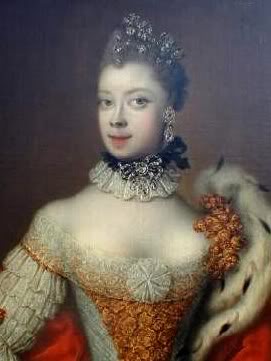
With features as conspicuously Negroid as they were reputed to be by her contemporaries, it is no wonder that the black community, both in the U.S. and throughout the British Commonwealth, have rallied around pictures of Queen Charlotte for generations. They have pointed out the physiological traits that so obviously identify the ethnic strain of the young woman who, at first glance, looks almost anomalous, portrayed as she usually is, in the sumptuous splendour of her coronation robes.

Queen Charlotte, wife of the English King George III (1738-1820), was directly descended from Margarita de Castro y Sousa, a black branch of the Portuguese Royal House…  Six different lines can be traced from English Queen Charlotte back to Margarita de Castro y Sousa, in a gene pool which because of royal inbreeding was already minuscule, thus explaining the Queen’s unmistakable African appearance.

Queen Charlotte’s Portrait:
The Royal FamilyThe Negroid characteristics of the Queen’s portraits certainly had political significance since artists of that period were expected to play down, soften or even obliterate undesirable features in a subjects’s face. Sir Allan Ramsay was the artist responsible for the majority of the paintings of the Queen and his representations of her were the most decidedly African of all her portraits. Ramsey was an anti-slavery intellectual of his day. He also married the niece of Lord Mansfield, the English judge whose 1772 decision was the first in a series of rulings that finally ended slavery in the British Empire. It should be noted too that by the time Sir Ramsay was commissioned to do his first portrait of the Queen, he was already , by marriage, uncle to Dido Elizabeth Lindsay, the black grand niece of Lord Mansfield.

Thus, from just a cursory look at the social awareness and political activism at that level of English society, it would be surprising if the Queen’s negroid physiogomy was of no significance to the Abolitionist movement.

Ramsay painted this one, with her two children, in 1765

Mulatto Queen: Black Grandmother of Queen Victoria

by Gary Lloyd

History reveals two curious details about Queen Charlotte Consort to George III: First, her official coronation portrait shows a woman with distinct mulatto features. Second, the Royal Physician to her granddaughter, Queen Victoria, wrote about her in his memoir: “She had a true mulatto face.”

But if Queen Charlotte was a mulatto, who was the black man who fathered her? And if Queen Victoria became the “Grandmother of Europe” would not her black African great-grandfather be the great-grandfather of virtually every Royal house in Europe?

Mulatto Queen unravels this mystery. Along the way we meet Voltaire, Samuel Johnson, Czar Peter the Great, Liebniz, and finally, the black African rumored to be Queen Charlotte’s biological father.

No stodgy historical drama, Mulatto Queen is a hypnotic, farcical romp through King George III’s England. Think: The Da Vinci Code meets Roots …

The characters are heroic, cowardly, desperately funny, disturbingly neurotic. What with their wedding-cake high wigs, court gowns, rampant alcoholism, bloodlust for public executions, addiction to snuff, penchant for gluttony, the appearance of a 17-year old mulatto girl and King George’s instant attraction to her caused a scandal and a cover-up that persists to this day.

Buy the book HERE

doubles

Although “mulatto” is not the “double” on which this article focuses, the perils of navigating a biracial identity that remains disrespected by, unsupported by, unacknowledged by, and unacceptable to the mainstream society surrounding the individual are so accurately communicated that I just had to post this.  Crux of the issue: “feeling of being an incomplete person has sometimes led to deep depression.”  I think that the only way around this is to eradicate the illusion of separation by infusing into our collective consciousness the truth of oneness.  No halves.  No sides.  No divide.

Also touched upon here is the aspect of chaos that the Americans have injected into the Okinawan landscape that is worth analyzing.


Okinawa-born Japanese-American musician Caroline Lufkin (unrelated to article)

In Japan but surrounded by U.S. influence, Okinawa struggles with split identity

By Chico Harlan

VIA

CHATAN, JAPAN — These days, when Melissa Tomlinson describes her fraught relationship with the United States, she speaks in English, the language she once rejected.

She grew up here on the island of Okinawa. Her mother was Japanese, and her father was an American who served in the U.S. Army, came to Okinawa, fell in love, fell out of love, then fell out of touch.

“I had plans to track him down, find him and punch him in the face,” said Tomlinson, 22. “I just wanted to figure out my identity.”

Tomlinson’s family tensions illustrate the complex cultural clashes that dominate the politics of Okinawa and, lately, relations between what have been the world’s two largest economies as they cope with a rising China and a belligerent North Korea.

For the more than 60 years since the end of World War II, native Okinawans and U.S. troops stationed on nearby bases have developed deep, passionate and generation-spanning ties that complicate political and diplomatic debates about the future of the U.S. military here.

Those passions have recently claimed the head of one Japanese prime minister, Yukio Hatoyama, who had called for the Americans to be booted off Okinawa, and caused his successor to sharply tone down his party’s assertive stance toward the United States.

A vocal majority of Okinawans still demand closing the Futenma Marine Corps Air Station. American officials, citing proximity to North Korea, China and Southeast Asia, insist it remain in Okinawa. Japan, in its attempt to mediate, has only frustrated both sides.

The current resolution, which Prime Minister Naoto Kan says his government will honor, calls for Futenma’s eventual relocation to a less populated region in the north of the island. Kan apologized last week for the “heavy burden” facing Okinawans.

Many locals on this Pacific island hosting more than half of the 47,000 U.S. troops stationed in Japan complain most commonly about the noise, congestion and crime. But emotional blood ties and cultural confusion amplify those concerns. Tormented by her identity, Tomlinson said she has tried to kill herself “a couple times” in the past two years.

Tomlinson said she struggles to convince herself — and others — that she is truly Japanese and Okinawan. She called her identity “ambiguous” and said her feeling of being an incomplete person has sometimes led to deep depression.

A generation of biracial Okinawans know about intercultural relationships, writ small. They know about romance and separations, child-support battles and reunions. They know that Japanese children refer to their biracial peers as “halfs,” and nowadays, they know of the local American-Asian school, for biracial children, where those kids are taught to call themselves “doubles.”

Okinawa’s demographics separate it from mainland Japan. Here, the rates of single-parent households and divorce are twice the national average. At the American-Asian school, 70 percent of the 80 students come from single-parent households, Principal Midori Thayer said.

“Unfortunately, some kids never live with their father, but they cannot lose their DNA,” she said. “Their body shows that they are not 100 percent Japanese.”

Denny Tamaki, 50, the local representative to the Japanese parliament, knows only that his father, an American serviceman whom he has never met, was named William.

When William returned to the States and Tamaki’s mother decided not to follow, she burned his photos and letters. When they moved to a new home, she didn’t give him their new address. When Tamaki turned 10, his mother took him to a government office, where they officially changed his first name to Yasuhiro.

Tamaki knows little English and wants Futenma moved off Okinawa because “it feels like we’re living under occupation.” But he has a passion for American music — Aerosmith, for instance — and American television shows.

A decade ago he tried to track down his father, with no luck. When his kids ask about their grandfather, he tells them that it would take the detectives from “CSI: Miami” to find him.
Search for a father

Tomlinson’s mother and father were married on Okinawa, and then moved together to Georgia after his tour on the island ended in 1975. Tomlinson was born in Hinesville, Ga., while her father was stationed at Fort Stewart.

Tomlinson’s parents separated when she was 3; she returned to Okinawa in 1990 with her mother. Her father retained custody of their two older children, who stayed in the United States with him.

Growing up, Tomlinson said, she remembered nothing about the separation, and never spoke to her father or siblings. “I’ve had to live with some tough decisions,” said Melissa’s father, who requested that his name not be used.

Tomlinson said her conflicted feelings were often fueled by her mother, who told her she looked “like an American” and tried to hide her from her co-workers. She said they fought frequently, and she told her mother: “Why did you have me? I want to be a Japanese, but I don’t get to choose.”

In school, her dual identities battled. Sometimes she was an American who didn’t speak proper English. Sometimes she was a Japanese who didn’t look Japanese. For several years, she tried to forget every English word she knew.

During high school, she said, a teacher encouraged her to learn English because she would need it if one day she wanted to track down her father. “Maybe you can hear the truth,” the teacher told her. “You should know both sides.”

At the University of the Ryukyus, Tomlinson tried to find English-speaking friends. She watched American television without the subtitles. Still, she confided to friends that she felt depressed.

From her mother, Tomlinson had heard only nasty tales about her father, who was once stationed at the Army’s Torii base. After her junior year in college, in spring 2009, she decided to try to find him and left school for a time.

In March, her U.S. military ID card, a privilege from a relationship she never had, was expiring. The Army passed along her father’s address. She e-mailed him, asking for him to sign the required forms for a new ID.

Weeks later, she heard back from the father who had not seen her since she was 3.

“Hi Melissa, Hearing from you, to say the least, came as quite a shock,” he wrote. “I was not aware that you could speak English let alone read or write it. The last time we had contact, and I am sure you do not remember it, you could only speak Japanese. Trying to bridge the gap with words after all this time would be futile. In life sometimes we have to make decisions that we don’t know if they are right or not, but we have to live with them.”

Tomlinson read and reread the e-mail. She discussed it with friends, and together they parsed the words. Their relationship continued, e-mail by e-mail, and she learned that he liked fishing, and that he missed Okinawa, and that he says he has thought about her every day.

For all these years, he wrote, he avoided contact because he didn’t want her to be torn between parents.

“It would have made your life miserable,” he wrote.

another social taboo

The first taboo being openly discussing biraciality without adhering to the one-drop rule.  Of course I find this blog post to be interesting, or I wouldn’t put it up here.  I appreciate the bit about biracial identity as well as the outline of the overall struggle and the shame that go along with the labels of mental illness in this country.  Especially in the black community.

Coming out of an entirely different closet… the one of mental illness

by Eliza Barnett

VIA

Unfortunately as prevalent as mental health disorders are the nation (50+ million diagnosed in the US alone) and world wide, it still tops the ranks as the most difficult to admit.

Higher than revealing to be a victim of domestic abuse, sexual assault, or molestation, harder than confessing a drinking problem or previous bankruptcy; surveys have even shown it to more difficult than admitting ones gender identity or homosexuality. Sufferers face significant social taboos. And it doesn’t affect just one type of person. Mental illness knows nothing of age, race, gender, or economic background.

You don’t have to personally admit it yourself to believe the notion the reality that people are more likely to break off, or not even start, a relationship with someone with mental issues -which I for one find particularly interesting because members of society are more likely to stay with someone with a physical disability. People with mental disorders tend to prefer to hide their illness like major depression and anxiety, because unlike people with physical illnesses, people with mental disorders must also fear being rejected by family & friends, harassed, fired or not hired, or denied child custody—just for starters.

(Please check out this personal blog discussing the Price of being Bipolar in Public)

Last week I had an entire conversation with a friend about them being practically afraid to admit their Christian faith at their workplace because of the negative assumptions his non-same faith based peers might think about his character or behavior.

Once you know someone’s religious preference it changes your whole personality to people who don’t agree with you. Sometimes it’s like every negative image or thought they have about it becomes who I am as a person- even though I haven’t changed. It’s their behavior towards me that has.

I’ve read more than a few articles of a biracial person attempting, or enjoying the ability to pass for one race over another—not because they have a problem with it necessarily themselves, but because other people do.

Sometimes it’s like every negative stereotype or prejudice they have against a race I share membership of encompasses who I am as a person. Granted racism is an ongoing issue for those of one race, but it is just as prevalent towards those of plural heritage.

Sexual orientation discrimination —don’t even get me started.

(great message board discussion here coming coming out as gay with coming out as bipolar)

Mental illness sufferers are also victims of discrimination and the issue continually needs to be recognized.

“I’m Asian, I’m gay, and I have faced discrimination – but not for the reasons most people think; it was actually when I got depression that I faced most discrimination.”

(Quote from an article in the Guardian)

Attempts to end this discrimination are being lead by strong individuals, in the public eye, and by everyday people. Changed perception comes through increased knowledge and visibility.

People need to be taught that mental disorders don’t come from places of personal weakness, and don’t make everyone violent or unpredictable. They need to be made comfortable in seeking help. (Two thirds of sufferers in need of treatment do not seek it. ) Even more importantly open, honest visibility helps others with the illnesses themselves to stand up without shame.

Negative stigma’s of this variety aren’t just external, they’re internal. Who wants to think of themselves as crazy…? When feelings of guilt, shame, or a notion that you’re somehow weakened for needing help are thrown in the mix, it only reinforces the negative feelings.

Isn’t it always the case that telling the ones you love is the hardest thing to do? This isn’t any different. And ignorance towards the idea of mental disorders can to be hard to deal with; some people may not even believe mental illnesses exist. Americans particularly have vast misconception that all mental disorders can be simply be self-corrected with enough work.

Similar to the first step in admitting you have an addiction; your own acceptance is where it all begins. Examine your own feeling first and foremost. You have control over who you tell, so it’s okay to be cautious about it.

“There is no rule for who needs to know about your mental illness diagnosis, but sharing it with someone is a great way to get support.

The silence helps maintain the ignorance about mental illness.”

(http://www.webmd.com/mental-health/features/coming-out-about-mental-illness?page=2)

That being said,

“It doesn’t mean that it is always beneficial to open up indiscriminately about mental health, to your detriment. It would be wonderful if everybody came out.

But it is a very subjective decision and consequences should be considered. Society isn’t at the place of acceptance that it needs to be. Not everyone in the world needs to know if you struggle with diabetes or hypertension or some other illness. The same is true for mental illness. Those with the disorder, are the ones in charge, and should think about what the payoff is to share information about their mental health. For example, if you need to miss work to see a psychiatrist, you might want to tell your employer about what you are going through.”

When someone does react negatively, agree to disagree or try to educate that person. Share educational materials. Share your own experience. And to those on the receiving end of the information, think before you speak.

“Try to react the same way you would if you were told about a physical health problem that you don’t know much about. Avoid trying to be the hero or savior. Being empathic and understanding is one thing, but trying rescue someone is a completely different. You shouldn’t try to fix them. This is something that is way beyond your capacity.”

Treatment and support from others goes a long way; the mental illness journey is a rough one for everyone involved. Help is required, it’s critical down the path of recovery, management of ones condition, and ability to lead constructive and healthy lives. Support can and does come from strangers as well, who share in this unity of diagnosis. As corny as it sounds, sharing is caring.

–Posted By Eliza Barnett

black mother, white children

I accidentally happened upon a fascinating thread discussing the photograph below.  It’s definitely worth checking out if you’re interested in this sort of thing.  Apparently, Mary categorized herself as “white” on the 1880 Census.  I wonder how that was possible.  Whatever the case, the point that there are approximately 3000 descendants of this family who, I have little doubt, consider themselves to be exclusively white brings me back to the novel idea that we are all mixed, we are simply American, and the veil of otherness is a detrimental illusion from which we desperately need to wake up. K?

James William Evans (1814-1883), his wife Mary Eliza Hoggard, and their children William, John and Mary Evans. Mary Eliza Hoggard was a descendant of the free African American Cobb and Bazemore families of  Bertie County, North Carolina. James William Evans was from Dorchester County, Maryland.

JAMES W. EVANS,

Mr. Evans married Mary Eliza Hoggard, of North Carolina, February 8, 1844. They have three children: Mary Frances, (who married Mr. Frank Collins, a son of J. W. Collins, Register of Clay County, Missouri, and they live with Mr. Evans on the farm);  John Henry, (was married August n, 1877, at Hainesville);  and William James, (who was born August 29, 1848, and married Caroline Gow, a daughter of Arthur Gow, of Clay County, in November, 1875).

We learn… that the North Carolina counties involved are Clinton County and Clay Counties Missouri. The children grew-up, married and lived in these two counties. The daughter married a Collins.

Apparently, James Evans brought (not bought!) Mary Hoggard from North Carolina and married her in Missouri where they raised their family. This makes sense, since this part of Missouri would have been “Free.”

This indicates to me that whites named Evans and Collins living in these two counties today, have a good chance of being a descendant of the black woman in the photo.

This photo speaks volumes of the kind of dilemma a black mother married to a white man found herself in during the 19th century.  This couple were married in Clinton County, Missouri, went by the surname Evans, and would have approximately 3000 descendants today.

  • The children are mulatto but 100% passable. The time, right around the Civil War. The choice the children had was really no choice. Quite simply, either they turned their backs on the mother and leave the state or be classified as Negro and endure Jim Crow for the rest of the lives.

    The mother is clearly not thrilled with the photograph. I think she was forced to sit for it by her husband. She appears to be thinking it’s not a very good idea, that the photo could prove an embarrassment  to her children. Indeed, it could prove an embarrassment to all her descendants 200 years into the future.

    I think this is what she was thinking.

    Let’s say the tall young man in the rear passed for white, married a white woman and had a family. This photo would not be considered a precious family heirloom but instead an indictment of Negro heritage.

    Does this explains why the mother is not smiling…?

  • The husband was born in 1818. The photo — judging by the clothing — was taken a few years before the Civil War. Location Virginia, a slave state. Things were starting to heat up. All around them slave owners were getting pissed a the North, Lincoln, and most especially those sympathetic to Negroes. You think interracial dating is tough today, imagine how hard it was then.

    All kinds of scary things were going on in the Slave states. People were stock-piling weapons. People were talking about succession. The young man standing was  about military age. Free blacks were being snatched-up and sold back into slavery. If the woman had local relatives she had surely cut herself off from them. No way should could afford to have her kin be part of her new family.

    At school the children were probably catching hell because of their black mother. If the mother wasn’t on the verge of a nervous breakdown she would be around the time her eldest started talking about joining a local regiment to fight the yankees and preserve slavery.

    Her husband’s family surely would have disowned him by then and no white family would have anything to do with them. Of course if they lived on a farm their contact would be minimal, but if they lived on a farm they had slaves and that must  have made her a mess too.

    But the main thing is sitting for the portrait must have seemed insane to her. Her kids look white. Each one could easily pass. Why do something that would doom them forever to second-class citizenship? She had to be thinking that. The sit had to be the last thing she wanted for her children — proof they were black.

    Had the kids looked like mulattoes, it would have been a different story. But these kids look completely white. They could pass with no problem at all — so why do something that could get them lynched?

    And that photo would do that had her eldest married a local white girl.

    That’s my theory why the mother doesn’t look happy.

  • So, Mary Hoggard Evans (the black woman in the photo) has three children who pass for white. They each get married around 1875.

    That’s six generations. Let’s figure each of her descendants in each of these generations had three children who went on to have three children up until today.

    1875 3 times 3 = 9

    1900 3 times 9 = 36

    1925                   108

    1950                   324

    1975                   974

    2000                   2916

    That’s almost 3000 “whites” descended from black Mary Hoggard.

    See how nonsensical this white-black thing is?

speaking of drake…

I’m super-curious about this guy and am itching to know more about the experiential intricacies of his Black/Jewish upbringing, and how he reflects on all of that from where he sits currently as the “New Jew in Hip-Hop.”  I don’t think this is a direct quote from Drake, but it rings true:  “Finally, his outsider background has become an asset.”  That’s exactly how I feel about my own self and I wouldn’t be surprised if a multitude of biracials are emerging into the same space of appreciation for the experience and are cultivating ways to make use of it in a world that was not ready to handle our truth before.  Some still aren’t ready.  Look out, some!

The New Face of Hip-Hop

By JON CARAMANICA

New York Times

For most of his teenage years Drake, tall, broad and handsome, was still known as Aubrey Graham (Drake is his middle name) and played the basketball star Jimmy Brooks on the popular Canadian teenage drama “Degrassi: The Next Generation.” In the last 18 months, though, he’s become the most important and innovative new figure in hip-hop, and an unlikely one at that. Biracial Jewish-Canadian former child actors don’t have a track record of success in the American rap industry.

But when “Thank Me Later” (Aspire/Young Money/Cash Money) is released this week, it will cement Drake’s place among hip-hop’s elite. It’s a moody, entrancing and emotionally articulate album that shows off Drake’s depth as a rapper, a singer and a songwriter, without sacrificing accessibility. That he does all those things well marks him as an adept student of the last 15 years: there’s Jay-Z’s attention to detail, Kanye West’s gift for melody, Lil Wayne’s street-wise pop savvy.

In rapid fashion Drake has become part of hip-hop’s DNA, leapfrogging any number of more established rappers. “I’m where I truly deserve to be,” Drake said over quesadillas at the hotel’s lobby bar. “I believe in myself, in my presence, enough that I don’t feel small in Jay’s presence. I don’t feel small in Wayne’s presence.”

But “Thank Me Later” is fluent enough in hip-hop’s traditions deftly to abandon them altogether in places. Finally his outsider background has become an asset. As a rapper, Drake manages to balance vulnerability and arrogance in equal measure, a rare feat. He also sings — not with technological assistance, as other rappers do, but expertly.

Then there’s his subject matter: not violence or drugs or street-corner bravado. Instead emotions are what fuel Drake, 23, who has an almost pathological gift for connection. Great eye contact. Easy smile. Evident intelligence. Quick to ask questions. “He’s a kid that can really work the room, whatever the room,” said his mother, Sandi Graham. “Thank Me Later” has its share of bluster, but is more notable for its regret, its ache.

As for Ms. Berry’s cousin, Drake’s interested, of course, but wary. “I think I have to live this life for a little bit longer before I even know what love is in this atmosphere,” he said. More fame only means less feeling, he knows.

Dodging vulnerability has been a fact of Drake’s life since childhood. His parents split when he was 3. An only child, he lived with his mother, who soon began battling rheumatoid arthritis, a condition that eventually prevented her from working, forcing Drake to become responsible at a young age. “We would have this little drill where, Lord forbid something happened, if there was a fire or an emergency, he would have to run outside and get a neighbor and call 911,” Ms. Graham said. His father, Dennis, who is black, was an intermittent presence — sometimes struggling with drugs, sometimes in jail.

“One thing I wasn’t was sheltered from the pains of adulthood,” Drake said. When something upset him as a teenager, he often told himself: “That’s just the right now. I can change that. I can change anything. The hand that was dealt doesn’t exist to me.’ ”

From an early age he’d been interested in performing, whether rewriting the lyrics to “Mary Had a Little Lamb” or spending time as a child model. By then, he and his mother were living in Forest Hill, a well-to-do, heavily Jewish neighborhood on the north side of Toronto, where he attended local schools, often the only black student in sight. His mother is white and Jewish, and Drake had a bar mitzvah. At school he struggled academically and socially. “Character-building moments, but not great memories,” he recalled. In eighth grade he got an agent and was soon sent off to audition for “Degrassi: The Next Generation,” an updated version of the popular 1980s Canadian drama.

He auditioned after school, on the same day, he said, that he first smoked pot from a bong. Nevertheless he landed the role of the wealthy, well-liked basketball star Jimmy Brooks, who was originally conceived as a white football player.

“Part of his journey is trying to figure where he does fit in in the world, having a white Jewish mom and a black, often absentee father,” said Linda Schuyler, a creator of the show. “It’s almost a comfort factor with Jimmy Brooks. That was the antithesis of his life at the time. It was probably reassuring and a bit escapist for him to play that role.”

Sometimes he was hiding even when the cameras were off, sleeping on the show’s set. “When I woke up in the morning, I was still the guy that could act and laugh,” he said. “It’s just that home was overwhelming.” Along with “Degrassi” came a new, more diverse school closer to the set, where he first tried rapping in public. As he got older, he also tried out his verses on one of his father’s jailhouse friends, who listened over the phone…

READ MORE