threat to america’s essential character

I’m loving the ideas raised in this piece reflecting on the Pew Research Center’s report on interracial marriage which I blogged about earlier this week.  Was that this week?  Anyway, I think it’s healthy for white identity to be “threatened”.  I’ve been under the impression that white identity is without definition beyond the color and the perks that come with it.  Perhaps the perceived “threat” will bring about a deepened awareness of the struggle to maintain personal identity in the face of adversity, stereotypes, and societal expectations.  For thoughtful “minorities” this endeavor is par for the course, however it seems to me that the majority of the “majority” do not expend energy grappling with such issues.  By being called upon to do so, a new common ground may be created.  A ground upon which we collectively come together to redefine  “America’s essential character”. Other than that, all I have to say is that I was shocked by the stat that  less than 5% of whites marry outside of their race.  Not because I was under the impression that the number would be large, but because in the last couple of years I’ve witnessed (and am thrilled to be a part of) the blossoming of a community of biracial people who are proud and happy to be such.  Where did we all come from if the numbers are so low!?  I suppose that in the grand scheme of things there still aren’t all that many of us.  I simply went from 0-60 in a flash, so to speak.

U.S. far from an interracial melting pot

By Daniel T. Lichter, Special to CNN

Ithaca, New York (CNN) — According to a recent report by the Pew Research Center, one of every seven new marriages in 2008 was interracial or interethnic — the highest percentage in U.S. history. The media and blogosphere have been atwitter.

Finally, it seems, we have tangible evidence of America’s entry into a new post-racial society, proof of growing racial tolerance. Intermarriage trends are being celebrated as a positive sign that we have come to think of all Americans as, well, Americans.

But others have an entirely different take — a more ominous one. They see increasing interracial marriage rates as proof that the country is amalgamating racially.

To them, intermarriage is a putative threat to whites and America’s essential character. Their concerns are heightened by recent Census Bureau projections that the U.S. will become a majority-minority society by the middle of the century.

My research with Ken Johnson, a demographer at the University of New Hampshire, indicates that for American’s youngest residents, that future is now. Nearly half of U.S.births today are to minority women.

It’s time for everyone — on all sides of this issue — to relax and take a deep breath. The reality is that racial boundaries remain firmly entrenched in American society. They are not likely to go away anytime soon.

We are still far from a melting pot where distinct racial and ethnic groups blend into a multi-ethnic stew.

Indeed, seemingly overlooked in the Pew Report is the finding that less than 5 percent of all married whites have a spouse of a different race or ethnicity. The vast majority of whites today — as in the past — marry other whites.

What is changing are marriage patterns among America’s minorities, but in ways that are not easy to understand or summarize in short news releases. (Pew used the categories of non-Hispanic whites, blacks, Asians, American Indians and Hispanics.)

For example, Pew reports that the share of newly married blacks with spouses of a different race increased threefold between 1980 and 2008. Media accounts have variously trumpeted this as good or bad news for America’s future, depending on the presumptive beliefs and attitudes of their audiences about racial matters.

It is easy to forget the U.S. Supreme Court waited until 1967, in Loving v. Virginia, to outlaw state prohibitions against interracial marriage. Increases in black-white marriages, at least on a percentage basis, are large because baseline numbers are very small.

Romantics like to believe that love is blind. We embrace the idea that falling in love is a product of our emotions rather than rational deliberation. Of course, the empirical evidence suggests otherwise. Love may be blind, but it clearly is not color-blind.

Indeed, for all the hyperventilation, the demographic reality is that only about 15 percent of newly married blacks today became married to whites or other minorities. This is hardly a basis for celebrating a new racial tolerance in America or, if you prefer, for now believing that white identity is rapidly being lost to interracial intimacy and childbearing.

Unfortunately, most of the nation’s headlines ignored Pew’s observation that intermarriage rates with whites actually have declined among Asians and Hispanics since 1980. This is something new.

My research with Julie Carmalt and Zhenchao Qian, to be published in Sociological Forum, documents recent declines in intermarriage rates among U.S.-born Hispanics and Asians after decades-long increases. Declines in intermarriage have been largest among the second generation, the U.S.-born children of immigrant parents.

Among second-generation Hispanics, for example, intermarriages with whites declined by more than one-third between 1995 and 2008. Over the same period, they became more likely to marry Hispanic immigrants.

Since 1980, there has been a fivefold increase in the number of native-born Asian women marrying Asian immigrants.

One explanation is that substantial new immigration has simply expanded the marriage opportunities for native-born Hispanics and Asians. But it is also likely that the extraordinary recent growth of the immigrant population has reinforced a new sense of identity rooted in shared ethnicity and culture. This seems to have encouraged more in-marriage with co-ethnics at the expense of more out-marriage with whites.

Demographers sometimes consider intermarriage to be the final step in the assimilation process, or an indicator of racial boundaries or lack of them. The current retreat from intermarriage among America’s non-black minorities raises new questions about racial and ethnic balkanization in America.

Issues of race and immigration are an important part of the public dialogue.

In today’s highly charged political environment, it is easy to latch onto information that buttresses our own point of view and preconceptions.

Unfortunately, short headlines and easy-to-digest narratives about rising intermarriage rates tend to oversimplify or even distort a complicated statistical story that is still unfolding.

The opinions expressed in this commentary are solely those of Daniel T. Lichter.

yay, shakespeare in the park

I’m thrilled to know that The Public Theater is once again “putting this mosaic out into the world.”  And that Ruben Santiago-Hudson has biracial kids.  And that he speaks openly about it.  Actually that’s not extraordinary, but I didn’t know that about him before.  I love The Winter’s Tale.  My favorite monologue is in it.  If I weren’t too persnickety to wait in line for hours for tickets, I would be sure to see this.  However, it’s not gonna happen.  My loss, I’m sure.  Just for clarification, the “yay” is for depicting a “non-traditional” marriage/family.  Not for Hudson marrying a Swede and having mixed kids.  Although I like that a lot too.

santiagohudson

Actor Ruben Santiago-Hudson and his twins Trey and Lily attended the “Magic & Bird: A Courtship of Rivals” film premiere on February 17, 2010 in Westwood, California.

Ruben Santiago-Hudson Tells the Tale

The actor discusses starring in the Shakespeare in the Park production of The Winter’s Tale.

By: Brian Scott Lipton

VIA

Ruben Santiago-Hudson has been the epitome of excellence for over 30 years; winning a Tony Award for Seven Guitars, numerous honors for the HBO adaptation of his acclaimed solo play Lackawanna Blues, and plaudits for his direction of several shows including Things of Dry Hours and The First Breeze of Summer. This summer, he’s starring in the Public Theater’s Shakespeare in the Park production of The Winter’s Tale, and in the fall, he’ll be back co-starring on ABC’s hit crime drama Castle. TheaterMania recently spoke with Santiago-Hudson about these projects.

THEATERMANIA: What made you want to do The Winter’s Tale this summer rather than just take a nice breather between shooting Castle?
RUBEN SANTIAGO-HUDSON: I just love the challenge of doing Shakespeare. I am part of the Public Theater family and I got a call to look at the play, and before I could even finish it, I said I’d love to do it.

TM: Your character, Leontes, is considered one of the most difficult in the canon, since you accuse your wife and best friend of infidelity without any seeming cause. How do you justify that?
RSH: It is a challenge to make that action comprehensible to the audience. But I look at the text. Polixenses may be my friend, but he’s stayed with my family for nine months — and I think if anyone stayed that long at my house, I’d find fault with them. And I am sure over that time, Leontes has seen some glimpses of unusual behavior — perhaps wearing less clothing around each other or laughing too loud.

TM: Still, you cause your wife to kill herself and banish your infant daughter. How is the audience supposed to sympathize with that?
RSH: I hope the audience sees that I balance my cruelty with much love and that my actions came from defending my honor and that my rage is from jealousy and madness. It’s important that I am not just being the stereotypical angry black man. And when it all comes clear, I’m the most penitent person — I’m almost a saint by the end of the play.

TM: As is typical of many productions at the Public, the cast is completely multi-racial. For example, your wife, Hermoine, is being played by Linda Emond, who is white. What are your thoughts about this?
RSH: I think it reflects the mirror of modern society. When you look in the newspaper, you see Sandra Bullock with a black child. And this play reflects what my real family looks like — my wife is Swedish and our children are biracial — so it’s great to put out this mosaic to the world. And I think we should put the best artists we can on stage, and what I love about the Public Theater’s audience is they feel the same way. They don’t care if the king is black and the queen is white; they’re out there to see this play done well.

Linda Emond and Ruben Santiago-Hudson<br>in rehearsal for <I>The Winter's Tale</i><br> (© Nella Vera)

Linda Emond and Ruben Santiago-Hudson
in rehearsal for The Winter’s Tale
(© Nella Vera)

for loving day

Home

It’s Loving Day!  Interracial Marriage has been legal nationwide for an entire 43 years!  Imagine that.  A few days agao CNN.com ran this piece giving us an idea of what people really think about interracial marriage today.  I think it an appropriate post for the occasion.

Your views on interracial marriages

SOURCE

(CNN) — “Interracial/interethnic marriage is a great way of fighting war, hatred and prejudice. Think about it. If we all are mixed, who can we hate?” wrote a reader about a CNN.com story on race and marriage.

That comment was one of the thousands of responses to the story about a new study from the Pew Research Center that found interracial and interethnic marriages are at a record high of about one in seven.

About 14.6 percent of newly married couples reported in 2008 that they married outside their race or ethnicity, according to the Pew report released Friday. In 1980, about 6.8 percent of newlywed couples surveyed said their spouse was of another race or ethnicity.

Overall, reader reactions voiced support for mixed relationships, with many commenters proudly identifying themselves as being in an interracial or interethnic relationship.

“I’ve been happily married in a mixed race marriage for seven years. To anyone who would like to oppose mixed race marriage: What gives you the right? I pay taxes, served in the U.S. military (where I was disabled) and watched all kinds of races die in service to the pledge to protect every American’s freedom. So as far as I’m concerned, blood only has one color: RED, and there’s only one race: the human one,” wrote BeerMan5000.

Reader RippedJeans, a black woman, talked about marrying her white boyfriend of three years. She wrote, “I could not be happier! I love him for the MAN that he is, and I’m truly grateful for having him in my life. Love is colorblind. …”

Danchar821 was also in support of interracial marriages. Reflecting on her personal experience, Danchar821 wrote. “We met online through mutual friends. I went to Mexico every month last year and we were married. I could not be happier. There are cultural differences, but if anything, they have helped me to grow as a person. She is wonderful and so loving and I feel truly blessed and happy. The racism that some people show on here is truly sad. We are expecting our first child — a boy — in September.”

Another couple talked about their wedding ceremony, which celebrated their cultural differences. Reader cellblock131 wrote, “I am Hispanic and married a white woman. … When it came to our wedding, we had a mixture of both cultural practices. For example, my dad read passages in Spanish, then her dad read them in English. The reception had traditional white American dances, plus Mexican in the mix. It was a wonderful wedding.”

One reader identified only as Guest said he won’t date outside his race.

“I care what race the women I date are. I am a white male. I date only white females. Sure there are attractive women in other races but I stick with my own. It’s America land of the free,” wrote Guest.

AntigoneR ignores people’s objections.”I can only speak for myself, but I really don’t care how many people accept or do not accept my interracial relationship. I don’t recall asking their opinion. Having said that, I’m glad to see that the trend in society is more accepting, and that racial barriers are crumbling. I wish it were faster.”

(fwiw: i’m realizing at this very moment that none of these people are American by birth)

One commenter echoed a common view among the Millennial Generation, found in an earlier study this year from the Pew Center that reported 85 percent of 19- to 28-year-olds accept interracial and interethnic relationships. SIR10LY wrote: “It’s 2010. I can’t even believe this is still an issue! If two people love each other, let them be. … If you’re opposed to it, get with the times already!”

Children of mixed marriages also shared their views.

Reader Anex wrote, “Product of an Interracial marriage and darn proud of it! I’m a happy mutt!”

Other readers pointed to the challenges of marrying someone outside their race.

“But one thing the article does not mention is divorce among interracial couples is much higher than same-race couples. Challenges in understanding, family relations and pressures overall are higher. People should know what they’re getting into,” warned a reader.

WHATRU wrote, “I’m an Arab, my husband is white. It gets more complicated after you have kids. The cultures and beliefs are just too different. It is easier to marry your own kind.”

Reader Toadlife wrote that racial discrimination can also be difficult. “Race matters because racial discrimination continues to happen all around us to this day. If you think otherwise, you are naive and probably white and have all white relatives. Thankfully, we’ve come to a point in our society where race is not a determining factor in one’s fate, but it can still be an obstacle from time to time,” Toadlife wrote.

Reader nal4america said her decision about whom to date is influenced by what race she grew up with. “I’m of West Indian decent and I grew up in a small town in Utah. I am so used to dating outside of my race that I don’t even date men of my race simply because I am not attracted to them. I think the environment you grow up in plays a huge factor in the mate you select. I am 95 percent certain my husband will be of a race other than my own and that’s fine because I believe in the American Race.”

Native Americans had yet another take on the situation.

“… [T]here can never truly be justice and real harmony on stolen land … just like there can never be peace and harmony in a house that’s been burglarized and its inhabitants marginalized and oppressed … ask an Apache or Navaho or black American if they are happy to live in a society dominated by white people. The indigenous were here for many thousands of years before the Europeans destroyed the culture and lands of the indigenous almost worldwide,” wrote hotepk. “…What must happen is either they go back to Europe or pay restitution — like any other convict guilty of a crime — otherwise there will continue to be struggle.”

Ndngirl2010 responded: @hotepk–I am full blooded Navajo and I’m fine with living alongside whites and get this –*gasp*– I married one! A majority of my family doesn’t harbor any animosity toward any other race. Let bygones be bygones and, instead, focus on the future.”

The readers who responded to CNN’s coverage on the Pew Research Center study seemed to acknowledge the growing blurring of races and ethnicities.

Reader HalfBaked shared: “My wife’s biological mother is Filipino/Mexican and her biological father is Scottish. She was adopted at birth into a German-Jewish family. My mother’s side is Italian/Turkish and my father was Hungarian. Our kids are about as ‘mixed’ as you can get.”

decreasingly on the rise

This article raises more questions for me than it imparts information.  That may be it’s purpose.  I want to know why there is a decrease in the rate of increase of interracial marriages.  Ever since my “a-ha” moment surrounding my biracialness, I’ve been super-interested in the greater number of white women/black men couplings as opposed to black women/white men.  I realized on that day that having a black mom/white dad made me a “minority” within a “minority” within a “minority” (and a majority?).  What!?  I don’t even like the word minority.  Let’s use anomaly.  I perceive myself to be an anomaly within an anomaly.  That’s better.  Anyway, I would love to conduct a study on why exactly the trend in gender and race of black/white couples is as it is.  Lastly, what really stands out to me in the information below is that U.S. born Hispanics and U.S. born Asians are marrying (I assume) U.S. born whites.  What does this mean?  Americans are marrying Americans.  That should be the paradigm that we as a nation collectively shift toward.  Race doesn’t exist. Nationality does.

Interracial Marriage: Who is More Likely to Wed Outside Their Race?

by Lynnette Khalfani-Cox

Interracial marriages are on the rise in the U.S., although they’ve slowed somewhat over the past decade. The latest census figures show that interracial marriages in America now account for 8 percent of all marriages, up from 7 percent in 2000. During the decade from 1990 until 2000, there was a sharp increase in mixed-race marriages, with such couplings growing by 65 percent. Since the year 2000, however, mixed-raced marriages have grown by just 20 percent to about 4.5 million couples.

Looking at the data over the past three decades, which groups are more likely to marry outside their race? According to federal statistics, African Americans are three times more likely to marry whites than they were back in 1980. Some attribute this to an increase in African American educational attainment and more professional interaction among blacks and whites.

Other findings from the census data include:

*14.5 percent of black men and 6.5 percent of black women now marry whites

*38 percent of U.S.-born Hispanics marry whites, compared with 30 percent in 1980

*40 percent of U.S.-born Asians marry whites, a number unchanged since 1980

It would have been interesting to see other data that looked at interracial couples of all kinds, not just a look at which “minority” groups marry whites. In this sense, this data is skewed and rather limited when talking about the full scope of interracial marriages.

We all know that the world is fast becoming multicultural, global in nature and interdependent in numerous ways. From the adventurous traveler who meets and marries someone of a different race and culture in another country to the investor who buys stocks and bonds from companies all around the globe, the world is at once becoming smaller, yet bigger and with more possibilities.

The challenge going forward will be how do we deal with the social, economic and political realities of living in an increasingly multiethnic, interracial society? And will we ever get to a point where race will simply cease to matter — all matters personal, professional and otherwise?

SOURCE

black polish virtuoso

Rita Dove has done us a great service by painstakingly digging up this forgotten history.  Like most people, I had never heard of Bridgetower before Sonata Mulattica popped up in a random google search.  What a fascinating story!  I imagine it was not only challenging, but exciting to imaginatively fill in the blanks of this discarded musicians unique experience.  I would like to know more about his parents.  How they met, how an interracial relationship was received in Poland circa 1780, if he considered himself a mulatto or if there was a one-drop kind of mentality.  I guess I’ll have to read the book to find out what insight Dove’s years of research led her to deduce about those race issues.

More than her standing as former US Poet Laureate, Pulitzer Prize winner, and Possibility Poet it is Dove’s own family that (in my opinion) makes her a perfect and trustworthy candidate to bring us this story:

Rita Dove and her husband Fred Viebahn, with their newborn daughter, Aviva, in Tempe, Arizona, January, 1983.

Rita Dove and her husband Fred Viebahn, with their newborn daughter, Aviva, in Tempe, Arizona, January, 1983.(© Fred Viebahn)

Rita Dove’s gorgeously engaging ‘Sonata Mulattica’ weaves the narrative of a black virtuoso all but erased from musical history.

By: Teresa Wiltz

Via: The Root

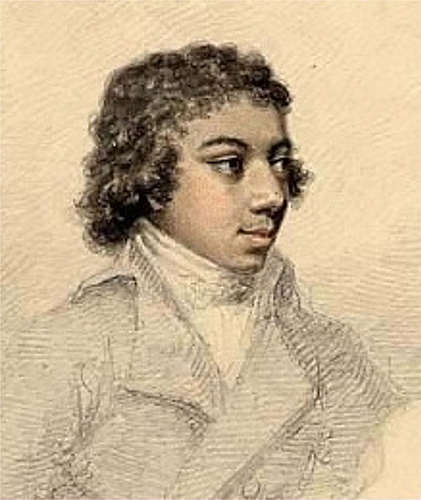
Way, way back in the day, there was an Afro-Polish violinist, a biracial child prodigy of such virtuosity that even Beethoven felt compelled to dedicate a sonata to him. There were honors and accolades and patronage from a prince.

But fortunes changed, as poet laureate Rita Dove describes in her novel-sized book of poems, Sonata Mulattica: A Life in Five Movements and a Short Play. The violinist, George Augustus Polgreen Bridgetower, and his composer, Ludwig van Beethoven,  performed the sonata together to thunderous acclaim.

The goodwill between them evaporated as the two quarreled over a woman. Beethoven furiously erased Bridgetower’s name and scribbled the name of another violinist when he dedicated the sonata.

That is how the “Sonata Mulattica” became the “Kreutzer Sonata,” one of Beethoven’s most famous works. Through that one fit of jealous retribution, Beethoven wrote Bridgetower out of history.

The Polish black virtuoso, once famous, now forgotten.

This bright-skinned papa’s boy

could have sailed his 15-minute fame

straight into the record books.

Dove first heard about Bridgetower years ago, when she was a musician studying the cello, and later, opera. It wasn’t until she saw Immortal Beloved, a film about Beethoven, that it triggered her memory. Fascinated with the thought of a mixed- race musician in 19th century Europe—“I thought there was more to it than this exotic creature who played the violin”—Dove set out to find out more about him. For five years, she researched and wrote, digging up little nuggets along the way, tucked in letters and diaries, like that of court lady Charlotte Papendiek, and in what little historical accounts she could find.

“It was like tracking the coordinates of some meteor,” Dove says. “ ‘Oh, he went there; he appeared here,’ mapping the trajectory of his life. Other than that, he was a blank slate.”

A blank slate onto which she poured all her imagination and musings about race and class and sexual competition. Bridgetower, the son of a self-proclaimed “African prince” and a Polish-German woman, was born in Poland in 1780. As it happened, his father, who was a bit of an operator, was working in the castle of the Hungarian Prince Esterházy, where Joseph Haydn worked as a musical director.

Even as a very young child, Bridgetower dazzled on the violin; Haydn took him under his wing. Later, Bridgetower traveled from Vienna to London, where he attracted the attention of the Prince of Wales, who would later become Kind George IV.  His was a life of comfort, adulation and high achievement. (He eventually received a degree from Cambridge University.)

Bridgetower, George Augustus Polgreen, 1780-1860.  His passport, obtained in Dresden, 27 July 1803, portrayed him as being of average height, beardless with dark brown hair and eyes, with a broad nose and swarthy complexion. Friends added that he was melancholic and discontent.

At the time, there were a good number of free blacks living in London, says Dove, who won the Pulitzer Prize in 1987. Some were Africans who’d never been enslaved; some were slaves who’d been freed. Class, rather than race, circumscribed one’s lot. So for a black boy with a knack for playing the violin, a child prodigy with a powerful patron, life was considerably sweeter than that of, say, Black Pearl, the young black servant in Dove’s book.

Pathological hit of the day: n****r on a golden chain.

Metaphorically, that is. The African

valet, the maidservant black

as aces in a hole….

Sonata Mulattica is a gorgeously engaging read, utilizing a mix of poetic styles, from nursery rhymes to free verse, until the narrative arc sweeps into the big confrontation between Bridgetower and Beethoven. At that point, the action shifts from poem to play, a play with a distinctly vaudevillian sensibility, complete with baudy references to Othello. Bridgetower becomes a rapping, preening braggadocio:

But I’m a natural man, born under a magical caul,

I’m that last plump raisin in the cereal bowl;

I’m the gravy you lick from your mashed potatoes,

I’m creamier than chocolate, juicier than ripe tomatoes!

But Beethoven soon brings him down to size:

Now you will taste the high price

Of my affection—“Mulatto Sonata,” indeed!

I would sooner dedicate my music

To a barnyard mule

If the two men had not quarreled, two egos run amok, would musical history have been different? Would, we find, as Dove writes, “rafts of black kids scratching out scales on their matchbox violins so that some day/they might play the impossible:/ Beethoven’s Sonata No. 9 in A Major, Op. 47/Also known as The Bridgetower”?

We will, of course, never know.  Still, it’s nice to imagine the possibilities of what could have and should have been.

Teresa Wiltz is The Root’s senior culture writer.

we want to look related

..but sometimes we don’t.  Or we do, but people can’t see it because of that skin color, hair color, eye color thing.  I don’t think looking alike means being the same shade.  Shapes are involved too.  That we toss all of our kindergarten training aside to rely solely on hue when it comes to this kind of thing is a symptom of this disease I’ll call colorism.  A descendant of our old friend racism.  Needless to say, I like this piece because it points all of that out.

Who does your baby look like?

BY AISHA SULTAN

ST. LOUIS POST-DISPATCH

I remember glancing into a bathroom vanity a few years back and doing a double take.

In the dim light, I could have sworn I saw my mother’s face staring back at me. It was her slightly curved nose, her oval face and heavy eyelids. What could have been an unwelcome reminder of aging instead took me back to my childhood. I remember watching intently, enamored by her face, as my mother applied her makeup for parties.

A homely sort of child, no one ever told me I looked like her when I was young.

Nonetheless, I was still stunned when the doctor handed me my newborn daughter. She looked nothing like me.

Perhaps we expect to replicate ourselves, at least to some degree. Her hair was much lighter than my black locks. Her skin was considerably paler. She looks so much like her paternal grandmother, Georgia Kelley, a Midwestern woman of European descent.

This baby girl looked just like her father, a product of a biracial marriage himself.

One visitor tried to tell me that all newborns resemble their fathers initially. It’s an evolutionary adaptation to reassure dad that he’s actually the daddy.

Dr. Alan Templeton, professor of genetics at Washington University School of Medicine, says he hasn’t ever seen any scientific research supporting that theory.

“I’m actually very skeptical of it,” he said. But, there is plenty of research on organisms, including humans, showing that they rely on resemblances as part of kin recognition. And, we treat those we recognize as kin differently than nonkin, he said.

“This is evolutionarily quite old, and not unique to humans,” he said.

It made me wonder if we subconsciously favor a child who looks more like us?

My sisters joke that I look like my daughter’s Mexican nanny when we are out in public.

Like any biased parent, I think she’s beautiful. But I was tickled when our second child arrived with the exact same almond-shaped eyes as my entire family. He looks like a miniature version of my younger brothers. It’s a public display of genetic prowess: We won round two.

There must be a biological imperative involved. We are hardwired to want to pass along our own very special DNA. The crooked smile and hazel eyes are genetic affirmation.

Almost immediately after a child is born, speculation begins on who the child looks like. It’s one of the most popular topics of discussion as babies’ faces change so rapidly in those early years. And when we tell someone their child looks like them, the typical response is usually a big smile.

But in this age of increasingly biracial and multiracial families, cross-cultural adoption and fertility treatments with donor eggs or sperm, there will be more children who look strikingly different from their parents.

I’ve known a few white women who have married Pakistani men and subtly changed their appearance once their children were born. Typically, blond hair gets dyed a shade or two darker. They get tired of answering the question: “Is she really yours?”
We want to look related. We want outsiders to know we are on the same team, a family.

Parents who adopt children from another ethnicity deal with intrusive (and sometimes obnoxious) questions fairly regularly. Questions such as “How much did they cost? and “Why didn’t you adopt a white baby?” make the old jokes about the milkman seem downright charming.

One mom delights in telling the story of taking her adopted son, who shares her blue eyes and blond hair, to restaurants. She’s been told by bystanders: “Oh, there’s no mistaking he’s your son.”

She smiles and says: “You’re right.”

I’ve heard my share of awkwardly phrased questions when people see pictures of my children. Sometimes, they’ll ask: What is their father? I’m always tempted to answer by species rather than race. But, I know the subtext. Skin color, hair color, eye color — those primitive markers signify if you’re one of us or one of them.

That shorthand just doesn’t work as well in today’s world.

When people tell me my daughter looks just like me, I am secretly delighted even though I don’t buy it. But, there is a reason she frequently makes me want to pull my hair out: her stubborn personality, her passionately held opinions, the smart remarks and proclivity to collect mounds of clutter. Looks notwithstanding, she is a 7-year-old reflection of myself.

people don’t know how to treat you

This article is from 2005.  I wonder if the family has noticed a shift in attitudes over the last five years.  And of course I’d love to hear from little Toni.  The bridge between them.  I like that part a lot.

HOW DARE THEY TREAT US LIKE THIS?

by DIANA APPLEYARD

JAN LLOYD, 45, has been married to Tony, 48, for ten years. The couple have a four-year-old daughter, Toni. They run a successful martial arts business, Fighting Fit, with gyms around South London, where they live.

photo by Jenny Goodall

Jan says:

PEOPLE have spat at me in the street, stared at me, jostled me and shouted at me — all because I fell in love with a black man. But unless you have experienced it, you are unlikely to have any idea of the racism in British society.

It’s terrifying, but it’s something I am aware of every day of my life. We were taking our daughter Toni to see the GP when she was only two years old, when I was spat at in the street. It was completely random — a white man in his 40s looked us up and down and then spat at me.

It was so disgusting — I couldn’t believe it was happening. I looked for support, but everyone looked away. They were embarrassed and probably disgusted too, but no one wanted to get involved. I was shaking and tearful, but angry as well — how could someone behave like that in a civilised society?

As I walk down the street, go to the pictures, eat out in restaurants or go to the theatre, I am frequently aware of a kind of coldness and embarrassment around me. The only way I can describe it is that it’s like being disabled — people don’t know how to treat you.

They don’t know what to say to me. You can see the thought running through people’s minds: ‘Why is she with a black man?’
When I got together with Tony, a lot of my friends melted away. They’d invite me to a party with my new boyfriend, but then, mysteriously, they’d never invite us again. Once, early in our relationship, I’d booked a table at a nice restaurant. When we arrived, there were lots of empty tables — but they put us at the back, next to the toilets. I was going to complain, but Tony told me just to leave it. He’s used to it. Our backgrounds could not be more different. I was brought up in a well-off family in Sussex and was privately educated. I met Tony when I took up aerobics and he was my instructor.  I thought he was nice, but our relationship didn’t progress until I was in a horrid road-rage incident, when a man hit my car and then bashed on my window. It made me realise I ought to learn self-defence and Tony also taught martial arts. Before I fell for him, I’d been out with City types, public-school educated white men, so Tony was a real change. I thought he was intelligent and interesting — I was fascinated by the fact that his life was so different from mine.

He was born in Yorkshire, but his family moved to London when he was three. He had traditional values and an old-fashioned approach to relationships. There was also a lovely warmth about him. He was successful and welloff through his business and he was a real self-made man.

We started going out and six months later I met his family. He’s one of six and it was so different from my middle-class home — they were so loud, so welcoming, pressing food on me and firing questions at me.

Tony told me he’d been badly beaten up as a child by racist bullies and that nearly every day he faced some kind of prejudice or abuse — it hurt him so much.

But it wasn’t long before I started to experience the kind of hostility he’d faced most of his life. Suddenly, being with him, I was made to feel like a freak, a secondclass citizen. It was bizarre. There was so much disapproval in people’s glances. There seems to be this attitude like ‘Aren’t white men good enough?’ when all I had done was fall in love.

We had been together only six months when we decided to get married and it came as a shock to my parents, who asked me if I was sure it was going to work given our cultural backgrounds. But they have since mellowed and little Toni is the bridge between us.

My parents are very traditional, and all they could see were problems in a mixed marriage.

We married on a beach in St Lucia. Both sets of parents came and it made such a difference being there — we were surrounded by welcoming black people, and my parents felt less uneasy.  Now they are very supportive of Tony and can see what a good man he is. Before, they — like so many others — had only seen the stereotypes.

After our wedding I joined Tony in his business, and Fighting Fit is now very successful. We live in a lovely four-bedroom house, we enjoy great holidays, scuba dive, ride horses and have a happy, middle-class life. Now when I get the looks, I ignore them and carry on. They can’t harm our life or family.

I did worry a little about our daughter and whether she’d face any prejudice at school being mixed race, but she’s totally accepted — she’s just Toni, with a big personality for a little girl, so sunny and confident. Everyone loves her.

SOURCE

oh… but… jill…

I was pained by this headline, but upon reading the article wasn’t as offended as I’d prepared myself to be.  There’s a lot of history behind this pain, and I won’t ask anyone not to feel it or to ignore it.  That would be detrimental to our progress.  I’m glad Jill Scott has put this out there in this way.  I wonder, though, if her soul burns when she sees a not-so-successful black man with a white woman.  The history is the same and the choice sends the same message wealthy man or not, right?  Anyhow, I think we need to dialogue about this so that we’re clear on where these pains and hurts originate, so that eventually the love a person lives will speak to his soul’s credibility.  Not the color of the love a person lives.

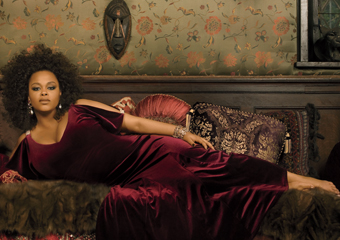
Jill Scott ‘pained by mixed-race couples’

By Marcell Minaya

Jill Scott has reportedly said that her “soul burns” every time she see a “successful black man with a white woman”.

In an interview with Essence magazine, the R&B-soul singer-songwriter said that she wished that a male, African-American friend was married to a black, rather than a Caucasian, woman.

Scott wrote: “My new friend is handsome, African-American, intelligent and seemingly wealthy. He is an athlete, loves his momma, and is happily married to a white woman. I admit when I saw his wedding ring, I privately hoped. But something in me just knew he didn’t marry a sister. Although my guess hit the mark, when my friend told me his wife was indeed Caucasian, I felt my spirit wince. I didn’t immediately understand it. My face read happy for you. My body showed no reaction to my inner pinch, but the sting was there, quiet like a mosquito under a summer dress.”

She continued: “Was I jealous? Did the reality of his relationship somehow diminish his soul’s credibility? The answer is not simple. One could easily dispel the wince as racist or separatist, but that’s not how I was brought up. I was reared in a Jehovah’s Witness household. I was taught that every man should be judged by his deeds and not his colour and I firmly stand where my grandmother left me. African people worldwide are known to be welcoming and open-minded. We share our culture sometimes to our own peril and most of us love the very notion of love. My position is that for women of colour, this very common “wince” has solely to do with the African story in America.”

Scott added: “Our minds do understand that people of all races find genuine love in many places. We dig that the world is full of amazing options. But underneath, there is a bite, no matter the ointment, that has yet to stop burning. Some may find these thoughts to be hurtful. That is not my intent. I’m just sayin’.”

SOURCE

no difference between them

Here’s a new book full of beautiful black and white portraits of interracial couples!  The foreward is written by one of my favorite mixed chicks, Heidi Durrow.  The photos are stunning.  Thank you, Robert Kalman, for this wonderful book that will no doubt help us break our subconscious instinct to assume that these people do not belong together.  You can purchase your copy here.