literally


literally
I didn’t know that Slash was biracial until HBO’s The Black List. There was a brief period in middle school when I really tried to like Guns N’ Roses. I guess I’m just not that white. That’s meant to be a joke, btw. Anyway, I was pleasantly surprised to find out about his mixedness, and thought to myself, “I should have known. Look at that hair.” But back then I didn’t even know that I had that hair, so of course I was clueless.
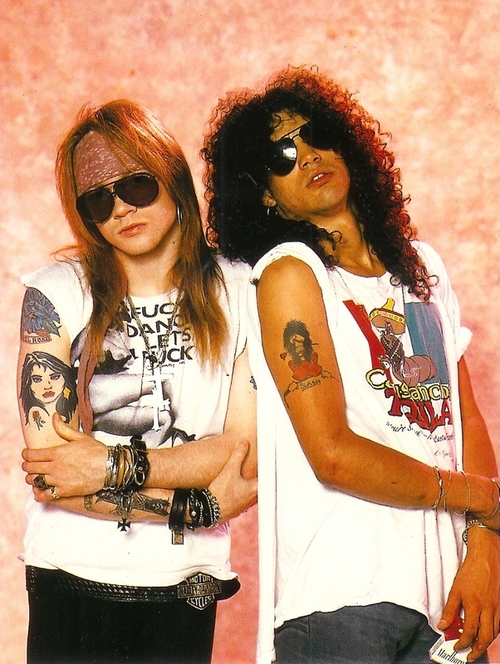
In Rip It Up: The Black Experience in Rock ‘N’ Roll edited by Kandia Crazy Horse Slash is asked if he defines himself as a black musician to which he replies that he defines himself as a rock musician if he defines himself as anything. He says he is very proud of his black heritage and sees this as being very cool. One thing he clears up is that he is NOT a Jewish musician. He says that is because his first name is Saul, but he is not Jewish. He talks about his racial background (biracial)…and how it was dealing with a white midwesterner in GNR.
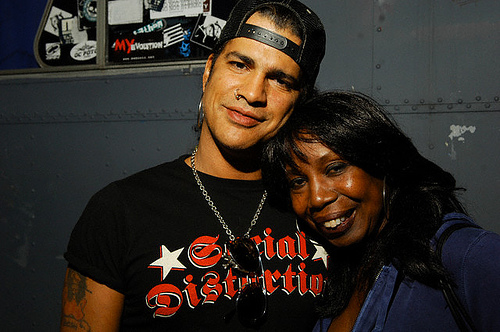
A recent article on the passing of Slash’s mother:
Rock guitarist Slash, the bi-racial son of a black mother and white father, is mourning the passing of his mother Ola Hudson, a woman he referred to recently as a “cool rock and roll mom.”
Hudson, a former costume designer for such musicians as Ringo Starr, John Lennon and Diana Ross died on the morning of May 6 after a battle with lung cancer. She was 62.
“This is a difficult time, but I have to share with you that she was the sweetest, warmest, most loving human being I’ve ever known (next to my grandmother on her side), as well as one of the most creative and talented,” Slash wrote on his MySpace page.
“She was also the coolest rock and roll mom, a rock junkie like myself could ever possibly want to have,” Slash continued. “She was responsible for exposing me to a lot of the music that would influence me as a musician growing up, as well as introducing me to ‘the life’ and priming me to survive this crazy business that I’m now in.
“But more importantly, she turned me on to all different forms of art and the importance of artistic self expression and creative communication thru music and dance from as early on as I can remember. She really was all things artistic and creative personified and the world is a lesser place without her.”

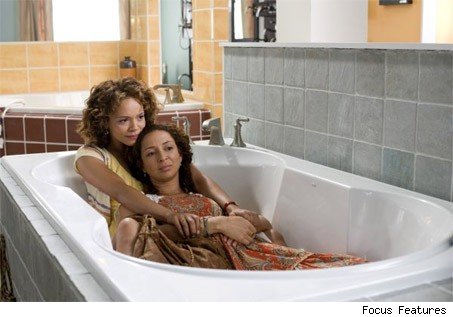
I just saw “Away We Go.” I totally loved it! So much! It’s so real, and they handle “the biracial” perfectly. Outsiders bring it up, but the couple never does. The way Verona is patronized by LN (Maggie Gyllenhaal) really hit home for me. And I loved Catherine O’Hara as the mother-in-law asking, “How black is she gonna be?” in reference to the new baby. And the golliwog slippers! Here’s an excerpt from a Huffington Post interview with Maya Rudolph that Karen of reelartsy.com hipped me to.
W&H: What are your thoughts on why we don’t see more films with African American women leads.
MR: It’s certainly not for me to answer because I have nothing to do with why the world is as f***ed up as it is. It has less to do with TV and movies and more to do with race and history and culture. It’s obviously a reflection of the world we live in. Although I still can’t believe we have a president who is mixed like me. It’s one thing that we have a black president but for me it’s even crazier because he’s mixed. I feel like I come from a smaller off shoot of black people because I am mixed. People say I’m African American but that doesn’t include the other half of me.
I can’t believe I’m living in a time where I feel proud of my president where I feel like things are actually positive and people feel good about where our country can be.
I don’t know the answer to your question and I don’t know if there is one. I plan to keep doing what I’m doing because race is just not a part of the way I look at the world and the way I live my life. I think that was a minor, key thing in the way that Dave and Vendela wrote the script. Verona is mixed and Burt is white but nobody talks about it. That felt realistic to me in my day to day life. People expect race to be an issue and I was raised in a house where it was never as issue. My parents were interested in having us feel like we were normal whatever that is.
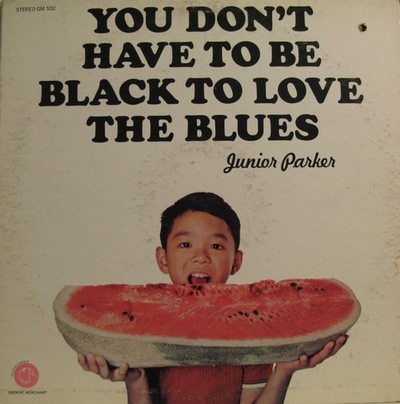
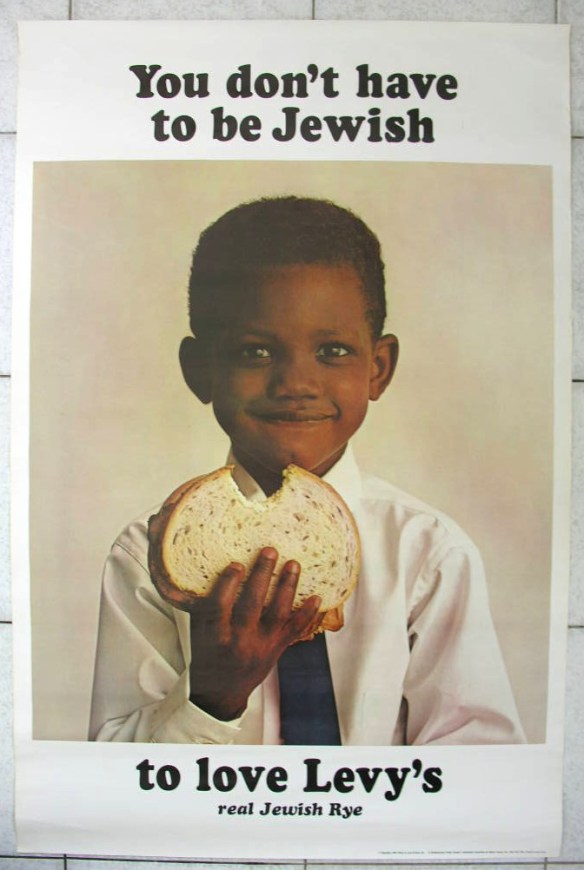
 Howard Zieff still remembers how he found the people to photograph in 1967 for his most famous advertisement, which had the tag line, “You don’t have to be Jewish to love Levy’s.”
“We wanted normal-looking people, not blond, perfectly proportioned models,” Zieff recalled. The advertisements, for Levy’s rye bread, featured an American Indian, a Chinese man and a black child.
“I saw the Indian on the street; he was an engineer for the New York Central,” Zieff said. “The Chinese guy worked in a restaurant near my Midtown Manhattan office. And the kid we found in Harlem. They all had great faces, interesting faces, expressive faces.”
…Surprisingly, many in Hollywood are unaware that the reticent and modest Zieff was perhaps the most significant advertising photographer in New York in the 1960s. His work still resonates today.
“Howard was a truly special talent,” said Roy Grace, a former chairman of the advertising agency Doyle Dane Bernbach, now part of DDB Worldwide. “There was Howard Zieff and everyone else.” Grace was the agency’s art director in the 1960s, when he began working with Zieff.
“Howard was the primary force in a certain kind of advertising,” Grace said. “His photographs were a dialogue with humor, a dialogue with what we call real people, which is now commonplace.”
“Then everybody in advertisements was white,” he added. “Every kid was tow-haired and freckled with perfect little buck teeth. Myself and my compatriots were a bunch of guys from the Bronx and Brooklyn. That was not our background. And neither was it Howard’s.”
via http://www.jewishjournal.com/travel/article/from_ordinary_faces_extraordinary_ads_20020301/

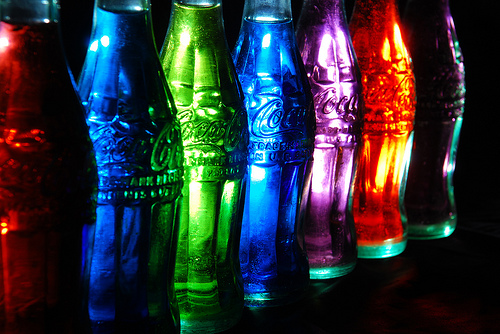
Research reveals people make a subconscious judgment about a person, environment, or product within 90 seconds of initial viewing and that between 62% and 90% of that assessment is based on color alone.


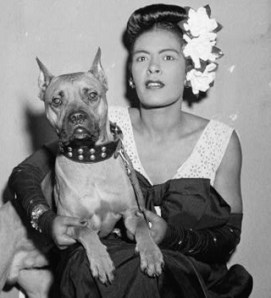
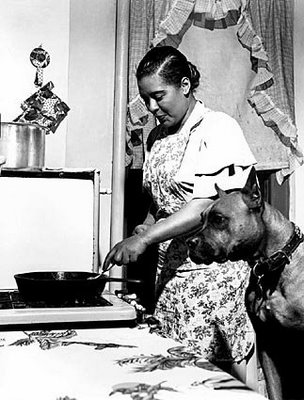
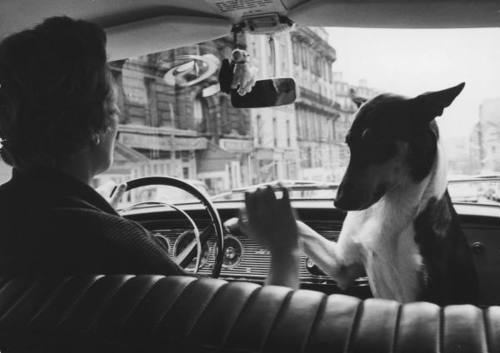
billie holiday and her dog mister downbeat aka mister


I was happy to come across this article (http://www.politicalarticles.net/blog/2009/06/17/are-you-black-black-enough-and-who-decides/) on the notion of “black enough.” I’m wondering today why, when I call attention to the absurd and potentially damaging rigid notions of blackness and whiteness, people feel the need to challenge me instead of challenging these notions. And the one that says that black and white cannot co-exist without the degradation of one, maybe even both, of them. I do not agree with Taylor’s assertion that “it may be too late in history as well as potentially dangerous to be tampering with the socio-cultural definition of blackness even though the definition is a product of slavery.” I think it dangerous not to tamper with it. I think the American consciousness is infected with racism (colorism at best). We trace the disease back to slavery. I don’t think we will heal and prosper and achieve the greatness intended for the nation until we rectify this situation. These definitions. I certainly do agree with his last statement though.
By Robert Taylor
In the wake of the claims of Tiger Woods and the election of a mixed race but Black President, a question has been raised in black internet chat rooms around the country as to whether there is a legal or biological definition of who is black.
Actually, there is no law operable today which defines what percentage of “black blood” makes one black. The oft-repeated notion that one drop of black blood makes one black is a cultural definition which has neither a legal nor biological foundation…It is basically a socio-cultural attitude based in major measure on how a person looks.
…Simply put, in America, if you “look” in anyway black, you “are” black. That is not law. That is not science. It just is – a practical reality. Thus Tiger Woods’ mother may be from Thailand and Tiger may object to being called black. But it does not make a practical difference.
Further, it may be too late in history as well as potentially dangerous to be tampering with the socio-cultural definition of blackness even though the definition is a product of slavery. When the Census Bureau decided a few years ago to include a category called “mixed race” in the census, many people rightfully saw it as potentially divisive, asking what practical good does the “mixed race” category serve, but to further divide people along largely artificial lines.
Finally, if one just has to ask the question, the real question should not be “who is black” but instead “who is white.” The scientific theories of Evolution and “Out of Africa” are very clear: There is only one “race” on the planet Earth and it had its origin in East Africa (around present-day Ethiopia) and then spread to all other parts of the world. Adapting to environmental conditions such as the degree of sunlight and developing in relative isolation, some groups evolved lighter skins and others evolved darker skins…Thus technically every person on the planet – from the darkest skinned person in the Congo to the lightest skinned person in Sweden – is of African ancestry.
Therefore the answer to the question above is YOU decide if you are Black enough and whether you realize it or not that gives you tremendous power.
via Politicalarticles.net