re: a mammy tale

I want to yell so loud that Baby Girl can hear me that dirty ain’t a color, disease ain’t the Negro side a town.  I want to stop that moment from coming-and it come in ever white child’s life- when they start to think that colored folks ain’t as good as whites.- The Help

old photo of baby Ralph in an elaborate lace christening dress held proudly by a large black woman

"Black man with white child and dog." http://www.flickr.com/photos/george_eastman_house/2720789660/

“Black man with white child and dog.” via a “Manny”

"White-capped nurse holding infant." http://www.flickr.com/photos/floridamemory/3248110220/

“White-capped nurse holding infant.” via
"Negro domestic servant, Atlanta, GA, May 1939." http://www.flickr.com/photos/nypl/3110575890/“Negro domestic servant, Atlanta, GA, May 1939.” via

"Child and nurse." http://www.flickr.com/photos/george_eastman_house/2678243048/

“Child and nurse.” via

…the dichotomy of love and disdain living side-by-side is what surprises me- The Help

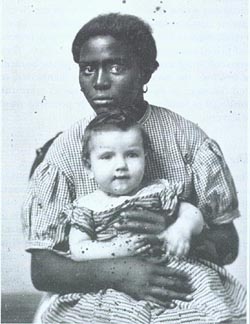
Mammy & Child-1850

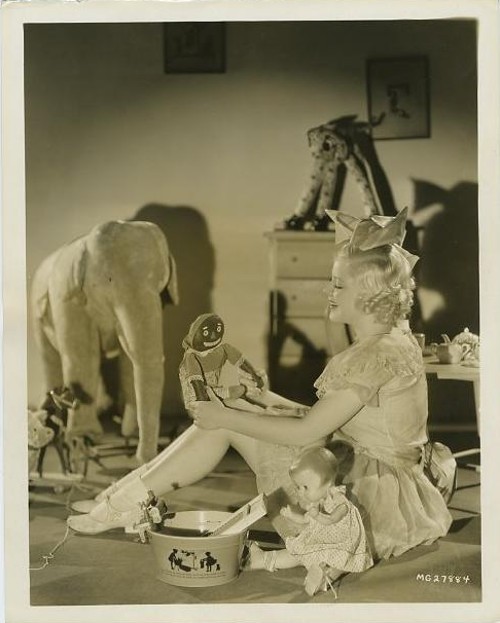
some photos found @ postpostracial

a mammy tale

The following essay is reblogged from Southern-Style.  A real life modern-ish mammy story!  I’ve long been interested in the dynamic between black women and other people’s white children.  When I was in college studying African-American history for the first time, I stumbled upon the thought that Mammies had raised our nation and yet black women generally are not revered (to say the least).  When I was a nanny myself, I thought a lot about mammy.  And, back in January, when I devoured The Help I pondered her some more.  If you haven’t read it yet, please do yourself a favor and put Kathryn Stockett’s The Help on your summer reading list.  It’s one of the greatest books I’ve ever read.  Right up there with The Girl Who Fell From the Sky, Caucasia, The Curious Incident of the Dog in the Nighttime, Memoirs of a Geisha, and Life of Pi.  i.e. the rest of your summer reading list.

I Remember Mammy:
Mattie Lee Martin (“Mammy”)
By one who loved her, Sharman Burson Ramsey

Thirteen year old Mattie Lee Martin took her mentally challenged older sister by the hand and led her down the rutted, red clay country road. Neither looked back. Mattie was determined her sister would not be abused again in their grandparent’s home. She’d finally accepted that her parents would never come back to get them. The road led to the town of Dothan, Alabama, and a life, Mattie Lee hoped, that would be better than the one they’d known on that god-forsaken farm.

Mrs. Bender stood at the door of her variety store, broom in hand, and watched the two girls walk toward her down the sidewalk. Mattie, the spokesperson for the two, stepped forward and boldly asked, “I need work and a place where me and my sister can stay. Do you know of anything?” She looked up at Mrs. Bender quite seriously.  Her black eyes were wide.  Anxiety was written all over her round black face that now dripped in sweat in the hot summer day after her long walk. Mrs. Bender read in that expression that she’d gotten this far, but now the little girl was in a quandary as to what should she do now? She looked at the tight grip she had on her much larger, but obviously more dependent, sister.

Mrs. Bender sized them up and in her gentle voice said, “I hear they are hiring maids across the street at the Wadlington Hotel, but come in here and let me help you with something to wear to your interview. Your sister can rest here while you go and inquire. Tell them I sent you.”

Mattie stood straight and said, “I don’t take no charity. I’ll pay you back.” Mrs. Bender nodded.

That Jewish lady remained a dear friend to Mattie the rest of her life.

Mattie Lee Martin later became highly regarded for her cooking skills. She cooked at the restaurant of the Houston Hotel for awhile and then took a job as the private cook for Dr. Moody, founder of Moody Hospital in Dothan. When the Moodys moved into their big house on Main Street from the house across from the hospital, Mattie for some reason was not going with them. Dr. Moody recommended Mattie to Dr. E. G. Burson, my father. The Moodys gave her a house as a parting gift.

When Mattie Lee Martin interviewed with my mother, she told my mother, “I don’t work with children.”

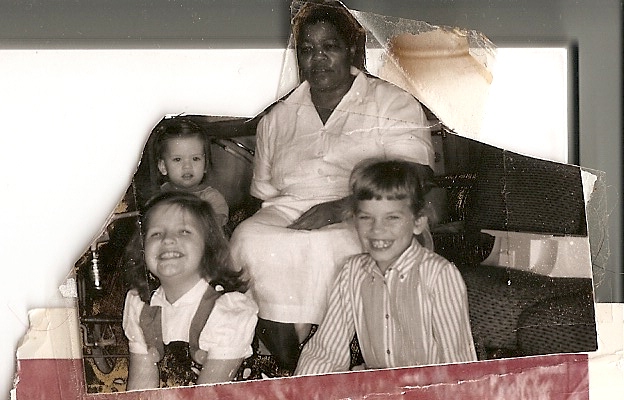
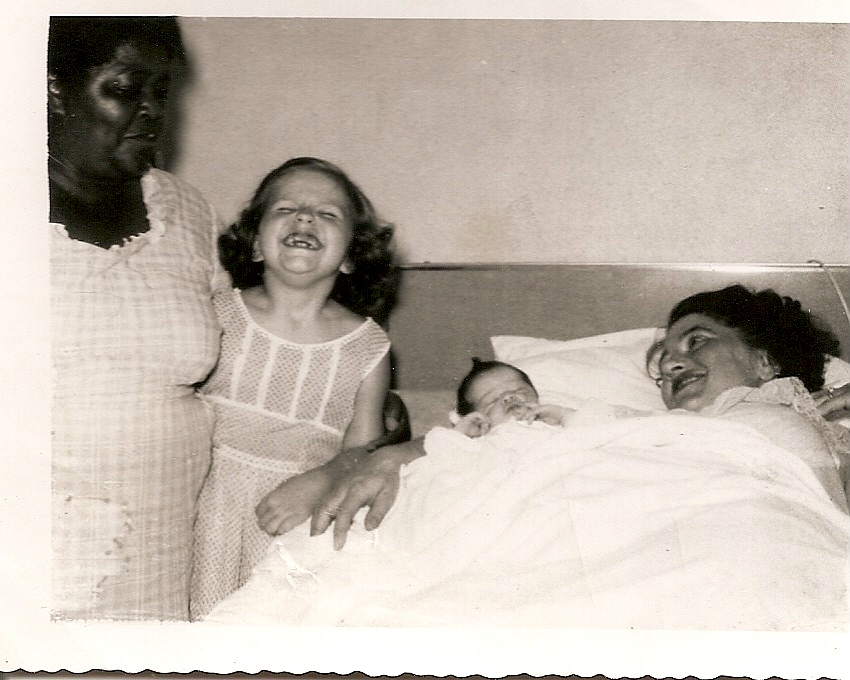
Yet as the pictures reveal, Mattie Lee Martin became as dear to us as our grandmothers and so she deserved just as endearing a name. Thus she came to be called “Mammy.”

Mammy came to work every morning before seven, except Sunday, either by bus or by taxi and stayed until after five.  Even after our overweight dog, Sir Bow Wow, went blind, he would meet Mammy at the bottom of the hill where she got off the bus every morning and together they would plod their way to the house.  She cooked, cleaned, and loved us. I remember seeing one of her paychecks in the amount of $27.00. I also remember the days we’d take Mammy home and she’d ask Mother to stop by the grocery store several blocks away. Then she’d put some money in my hand and I’d run into the grocery store and plunk the money down saying, “Bit o Dental Snuff, please.”

Mammy ordered the groceries to cook for lunch from Murphy’s Market downtown first thing in the morning and a boy on a bicycle delivered them in time for her to cook. Dinner was served at exactly 12:00 noon. (In the South we eat breakfast, dinner and supper.) The meat went on a platter before “the doctor”. The table was set precisely with forks on the left of the plate (with the napkin) and the knife (facing inward) on the right. The glass was placed above the knife. She trained us well.

…Mammy had worked for the aristocracy of the town, Dr. and Mrs. Earl Moody. While she often locked horns with my mother (whose own father had been killed when logs rolled off a log truck when she was 13 leaving her mother to struggle raising five children) she refused to give up on us. “Yo mama, she be mean. But I be mean too, so we get along.” Mother had been awarded campaign ribbon for service in World War II as a nurse at the Battle of the Bulge. She could curse a blue streak and did so on occasion when things did not go to suit her. Sometimes those disagreements would get so heated that Mother would fire Mammy, but we’d cry and carry on so, she’d have to go and ask her to come back. My father was a doctor and his father was a doctor and that made us worth Mammy’s time and effort. My mother might not know what was “proper” but Mammy did, and she was determined to turn us out well.

…Mammy did have her own family…a daughter Lucy Mae Dixon who was my Mother’s age. Mammy had very little education herself and the lists she made could barely be read, so she valued a good education. Mammy skrimped and saved and sent her to college in the North. It must have been a Catholic college because Lucy Mae converted to Catholicism. Mammy was a dedicated member of the Cherry Street AME Church. Lucy earned her Masters and came home to teach. Mammy bought her items of silver “on time” as birthday gifts. The mahogany furniture in their living areas was always covered in plastic to “save” it.

…I guess Mammy told my brother and sister the same thing she drilled into me. “Yo daddy be somebody. You gotta be somebody.” My sister is a cardiologist in New Orleans (Dr. Sylvia Burson Rushing) and my brother (Elkanah George Burson III ) has just started a pharmaceutical company (Burel Pharmaceuticals). Me? After you’ve got a man it’s all right “to rune yo hands” with Ajax, I learned. I wash a mean bathtub and have stayed married to the same man, an attorney of whom she approved (whose family once owned the Houston Hotel where she had worked) for forty years doing a little teaching and writing. This humble generous woman whom I never saw wear a single piece of jewelry gave me a pearl and gold bracelet for graduation from high school.  She who worked from can to can’t all of her life gave me a silver goblet when I got married.  I wonder if she ever knew how much they mean to me and that I realize the sacrifice and love those gifts demonstrated.

…Mammy was a proud person who made the most of her situation and, selflessly, with hard work and determination earned respect and made a good life for herself and her family. She raised us, her white family, to believe we could do whatever we chose to do and that we should make our parents proud. She drilled into us values of honesty, integrity, and a sense of responsibility.  Because we had been given so much; much was expected.  Because we loved her, it was Mammy we wanted to make proud.

Read more HERE

black mother, white children

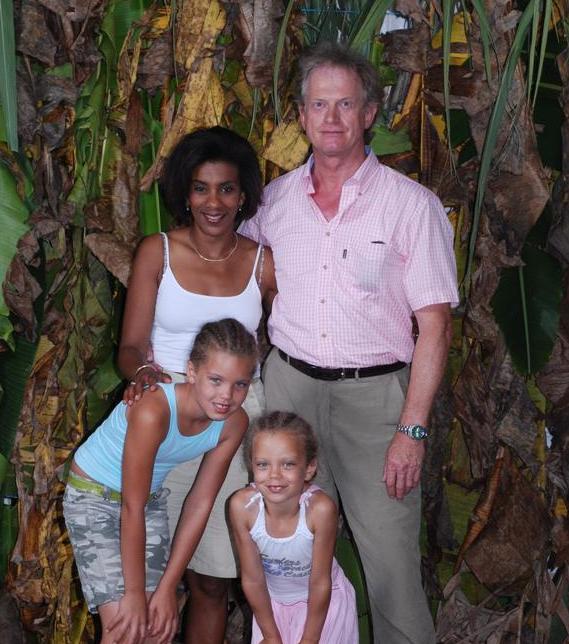
I accidentally happened upon a fascinating thread discussing the photograph below.  It’s definitely worth checking out if you’re interested in this sort of thing.  Apparently, Mary categorized herself as “white” on the 1880 Census.  I wonder how that was possible.  Whatever the case, the point that there are approximately 3000 descendants of this family who, I have little doubt, consider themselves to be exclusively white brings me back to the novel idea that we are all mixed, we are simply American, and the veil of otherness is a detrimental illusion from which we desperately need to wake up. K?

James William Evans (1814-1883), his wife Mary Eliza Hoggard, and their children William, John and Mary Evans. Mary Eliza Hoggard was a descendant of the free African American Cobb and Bazemore families of  Bertie County, North Carolina. James William Evans was from Dorchester County, Maryland.

JAMES W. EVANS,

Mr. Evans married Mary Eliza Hoggard, of North Carolina, February 8, 1844. They have three children: Mary Frances, (who married Mr. Frank Collins, a son of J. W. Collins, Register of Clay County, Missouri, and they live with Mr. Evans on the farm);  John Henry, (was married August n, 1877, at Hainesville);  and William James, (who was born August 29, 1848, and married Caroline Gow, a daughter of Arthur Gow, of Clay County, in November, 1875).

We learn… that the North Carolina counties involved are Clinton County and Clay Counties Missouri. The children grew-up, married and lived in these two counties. The daughter married a Collins.

Apparently, James Evans brought (not bought!) Mary Hoggard from North Carolina and married her in Missouri where they raised their family. This makes sense, since this part of Missouri would have been “Free.”

This indicates to me that whites named Evans and Collins living in these two counties today, have a good chance of being a descendant of the black woman in the photo.

This photo speaks volumes of the kind of dilemma a black mother married to a white man found herself in during the 19th century.  This couple were married in Clinton County, Missouri, went by the surname Evans, and would have approximately 3000 descendants today.

  • The children are mulatto but 100% passable. The time, right around the Civil War. The choice the children had was really no choice. Quite simply, either they turned their backs on the mother and leave the state or be classified as Negro and endure Jim Crow for the rest of the lives.

    The mother is clearly not thrilled with the photograph. I think she was forced to sit for it by her husband. She appears to be thinking it’s not a very good idea, that the photo could prove an embarrassment  to her children. Indeed, it could prove an embarrassment to all her descendants 200 years into the future.

    I think this is what she was thinking.

    Let’s say the tall young man in the rear passed for white, married a white woman and had a family. This photo would not be considered a precious family heirloom but instead an indictment of Negro heritage.

    Does this explains why the mother is not smiling…?

  • The husband was born in 1818. The photo — judging by the clothing — was taken a few years before the Civil War. Location Virginia, a slave state. Things were starting to heat up. All around them slave owners were getting pissed a the North, Lincoln, and most especially those sympathetic to Negroes. You think interracial dating is tough today, imagine how hard it was then.

    All kinds of scary things were going on in the Slave states. People were stock-piling weapons. People were talking about succession. The young man standing was  about military age. Free blacks were being snatched-up and sold back into slavery. If the woman had local relatives she had surely cut herself off from them. No way should could afford to have her kin be part of her new family.

    At school the children were probably catching hell because of their black mother. If the mother wasn’t on the verge of a nervous breakdown she would be around the time her eldest started talking about joining a local regiment to fight the yankees and preserve slavery.

    Her husband’s family surely would have disowned him by then and no white family would have anything to do with them. Of course if they lived on a farm their contact would be minimal, but if they lived on a farm they had slaves and that must  have made her a mess too.

    But the main thing is sitting for the portrait must have seemed insane to her. Her kids look white. Each one could easily pass. Why do something that would doom them forever to second-class citizenship? She had to be thinking that. The sit had to be the last thing she wanted for her children — proof they were black.

    Had the kids looked like mulattoes, it would have been a different story. But these kids look completely white. They could pass with no problem at all — so why do something that could get them lynched?

    And that photo would do that had her eldest married a local white girl.

    That’s my theory why the mother doesn’t look happy.

  • So, Mary Hoggard Evans (the black woman in the photo) has three children who pass for white. They each get married around 1875.

    That’s six generations. Let’s figure each of her descendants in each of these generations had three children who went on to have three children up until today.

    1875 3 times 3 = 9

    1900 3 times 9 = 36

    1925                   108

    1950                   324

    1975                   974

    2000                   2916

    That’s almost 3000 “whites” descended from black Mary Hoggard.

    See how nonsensical this white-black thing is?

threat to america’s essential character

I’m loving the ideas raised in this piece reflecting on the Pew Research Center’s report on interracial marriage which I blogged about earlier this week.  Was that this week?  Anyway, I think it’s healthy for white identity to be “threatened”.  I’ve been under the impression that white identity is without definition beyond the color and the perks that come with it.  Perhaps the perceived “threat” will bring about a deepened awareness of the struggle to maintain personal identity in the face of adversity, stereotypes, and societal expectations.  For thoughtful “minorities” this endeavor is par for the course, however it seems to me that the majority of the “majority” do not expend energy grappling with such issues.  By being called upon to do so, a new common ground may be created.  A ground upon which we collectively come together to redefine  “America’s essential character”. Other than that, all I have to say is that I was shocked by the stat that  less than 5% of whites marry outside of their race.  Not because I was under the impression that the number would be large, but because in the last couple of years I’ve witnessed (and am thrilled to be a part of) the blossoming of a community of biracial people who are proud and happy to be such.  Where did we all come from if the numbers are so low!?  I suppose that in the grand scheme of things there still aren’t all that many of us.  I simply went from 0-60 in a flash, so to speak.

U.S. far from an interracial melting pot

By Daniel T. Lichter, Special to CNN

Ithaca, New York (CNN) — According to a recent report by the Pew Research Center, one of every seven new marriages in 2008 was interracial or interethnic — the highest percentage in U.S. history. The media and blogosphere have been atwitter.

Finally, it seems, we have tangible evidence of America’s entry into a new post-racial society, proof of growing racial tolerance. Intermarriage trends are being celebrated as a positive sign that we have come to think of all Americans as, well, Americans.

But others have an entirely different take — a more ominous one. They see increasing interracial marriage rates as proof that the country is amalgamating racially.

To them, intermarriage is a putative threat to whites and America’s essential character. Their concerns are heightened by recent Census Bureau projections that the U.S. will become a majority-minority society by the middle of the century.

My research with Ken Johnson, a demographer at the University of New Hampshire, indicates that for American’s youngest residents, that future is now. Nearly half of U.S.births today are to minority women.

It’s time for everyone — on all sides of this issue — to relax and take a deep breath. The reality is that racial boundaries remain firmly entrenched in American society. They are not likely to go away anytime soon.

We are still far from a melting pot where distinct racial and ethnic groups blend into a multi-ethnic stew.

Indeed, seemingly overlooked in the Pew Report is the finding that less than 5 percent of all married whites have a spouse of a different race or ethnicity. The vast majority of whites today — as in the past — marry other whites.

What is changing are marriage patterns among America’s minorities, but in ways that are not easy to understand or summarize in short news releases. (Pew used the categories of non-Hispanic whites, blacks, Asians, American Indians and Hispanics.)

For example, Pew reports that the share of newly married blacks with spouses of a different race increased threefold between 1980 and 2008. Media accounts have variously trumpeted this as good or bad news for America’s future, depending on the presumptive beliefs and attitudes of their audiences about racial matters.

It is easy to forget the U.S. Supreme Court waited until 1967, in Loving v. Virginia, to outlaw state prohibitions against interracial marriage. Increases in black-white marriages, at least on a percentage basis, are large because baseline numbers are very small.

Romantics like to believe that love is blind. We embrace the idea that falling in love is a product of our emotions rather than rational deliberation. Of course, the empirical evidence suggests otherwise. Love may be blind, but it clearly is not color-blind.

Indeed, for all the hyperventilation, the demographic reality is that only about 15 percent of newly married blacks today became married to whites or other minorities. This is hardly a basis for celebrating a new racial tolerance in America or, if you prefer, for now believing that white identity is rapidly being lost to interracial intimacy and childbearing.

Unfortunately, most of the nation’s headlines ignored Pew’s observation that intermarriage rates with whites actually have declined among Asians and Hispanics since 1980. This is something new.

My research with Julie Carmalt and Zhenchao Qian, to be published in Sociological Forum, documents recent declines in intermarriage rates among U.S.-born Hispanics and Asians after decades-long increases. Declines in intermarriage have been largest among the second generation, the U.S.-born children of immigrant parents.

Among second-generation Hispanics, for example, intermarriages with whites declined by more than one-third between 1995 and 2008. Over the same period, they became more likely to marry Hispanic immigrants.

Since 1980, there has been a fivefold increase in the number of native-born Asian women marrying Asian immigrants.

One explanation is that substantial new immigration has simply expanded the marriage opportunities for native-born Hispanics and Asians. But it is also likely that the extraordinary recent growth of the immigrant population has reinforced a new sense of identity rooted in shared ethnicity and culture. This seems to have encouraged more in-marriage with co-ethnics at the expense of more out-marriage with whites.

Demographers sometimes consider intermarriage to be the final step in the assimilation process, or an indicator of racial boundaries or lack of them. The current retreat from intermarriage among America’s non-black minorities raises new questions about racial and ethnic balkanization in America.

Issues of race and immigration are an important part of the public dialogue.

In today’s highly charged political environment, it is easy to latch onto information that buttresses our own point of view and preconceptions.

Unfortunately, short headlines and easy-to-digest narratives about rising intermarriage rates tend to oversimplify or even distort a complicated statistical story that is still unfolding.

The opinions expressed in this commentary are solely those of Daniel T. Lichter.


for loving day

Home

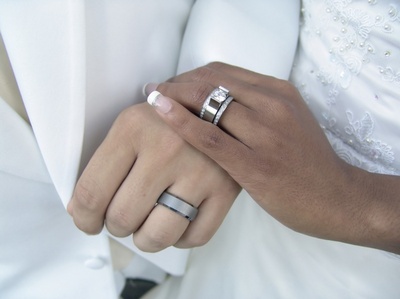
It’s Loving Day!  Interracial Marriage has been legal nationwide for an entire 43 years!  Imagine that.  A few days agao CNN.com ran this piece giving us an idea of what people really think about interracial marriage today.  I think it an appropriate post for the occasion.

Your views on interracial marriages

SOURCE

(CNN) — “Interracial/interethnic marriage is a great way of fighting war, hatred and prejudice. Think about it. If we all are mixed, who can we hate?” wrote a reader about a CNN.com story on race and marriage.

That comment was one of the thousands of responses to the story about a new study from the Pew Research Center that found interracial and interethnic marriages are at a record high of about one in seven.

About 14.6 percent of newly married couples reported in 2008 that they married outside their race or ethnicity, according to the Pew report released Friday. In 1980, about 6.8 percent of newlywed couples surveyed said their spouse was of another race or ethnicity.

Overall, reader reactions voiced support for mixed relationships, with many commenters proudly identifying themselves as being in an interracial or interethnic relationship.

“I’ve been happily married in a mixed race marriage for seven years. To anyone who would like to oppose mixed race marriage: What gives you the right? I pay taxes, served in the U.S. military (where I was disabled) and watched all kinds of races die in service to the pledge to protect every American’s freedom. So as far as I’m concerned, blood only has one color: RED, and there’s only one race: the human one,” wrote BeerMan5000.

Reader RippedJeans, a black woman, talked about marrying her white boyfriend of three years. She wrote, “I could not be happier! I love him for the MAN that he is, and I’m truly grateful for having him in my life. Love is colorblind. …”

Danchar821 was also in support of interracial marriages. Reflecting on her personal experience, Danchar821 wrote. “We met online through mutual friends. I went to Mexico every month last year and we were married. I could not be happier. There are cultural differences, but if anything, they have helped me to grow as a person. She is wonderful and so loving and I feel truly blessed and happy. The racism that some people show on here is truly sad. We are expecting our first child — a boy — in September.”

Another couple talked about their wedding ceremony, which celebrated their cultural differences. Reader cellblock131 wrote, “I am Hispanic and married a white woman. … When it came to our wedding, we had a mixture of both cultural practices. For example, my dad read passages in Spanish, then her dad read them in English. The reception had traditional white American dances, plus Mexican in the mix. It was a wonderful wedding.”

One reader identified only as Guest said he won’t date outside his race.

“I care what race the women I date are. I am a white male. I date only white females. Sure there are attractive women in other races but I stick with my own. It’s America land of the free,” wrote Guest.

AntigoneR ignores people’s objections.”I can only speak for myself, but I really don’t care how many people accept or do not accept my interracial relationship. I don’t recall asking their opinion. Having said that, I’m glad to see that the trend in society is more accepting, and that racial barriers are crumbling. I wish it were faster.”

(fwiw: i’m realizing at this very moment that none of these people are American by birth)

One commenter echoed a common view among the Millennial Generation, found in an earlier study this year from the Pew Center that reported 85 percent of 19- to 28-year-olds accept interracial and interethnic relationships. SIR10LY wrote: “It’s 2010. I can’t even believe this is still an issue! If two people love each other, let them be. … If you’re opposed to it, get with the times already!”

Children of mixed marriages also shared their views.

Reader Anex wrote, “Product of an Interracial marriage and darn proud of it! I’m a happy mutt!”

Other readers pointed to the challenges of marrying someone outside their race.

“But one thing the article does not mention is divorce among interracial couples is much higher than same-race couples. Challenges in understanding, family relations and pressures overall are higher. People should know what they’re getting into,” warned a reader.

WHATRU wrote, “I’m an Arab, my husband is white. It gets more complicated after you have kids. The cultures and beliefs are just too different. It is easier to marry your own kind.”

Reader Toadlife wrote that racial discrimination can also be difficult. “Race matters because racial discrimination continues to happen all around us to this day. If you think otherwise, you are naive and probably white and have all white relatives. Thankfully, we’ve come to a point in our society where race is not a determining factor in one’s fate, but it can still be an obstacle from time to time,” Toadlife wrote.

Reader nal4america said her decision about whom to date is influenced by what race she grew up with. “I’m of West Indian decent and I grew up in a small town in Utah. I am so used to dating outside of my race that I don’t even date men of my race simply because I am not attracted to them. I think the environment you grow up in plays a huge factor in the mate you select. I am 95 percent certain my husband will be of a race other than my own and that’s fine because I believe in the American Race.”

Native Americans had yet another take on the situation.

“… [T]here can never truly be justice and real harmony on stolen land … just like there can never be peace and harmony in a house that’s been burglarized and its inhabitants marginalized and oppressed … ask an Apache or Navaho or black American if they are happy to live in a society dominated by white people. The indigenous were here for many thousands of years before the Europeans destroyed the culture and lands of the indigenous almost worldwide,” wrote hotepk. “…What must happen is either they go back to Europe or pay restitution — like any other convict guilty of a crime — otherwise there will continue to be struggle.”

Ndngirl2010 responded: @hotepk–I am full blooded Navajo and I’m fine with living alongside whites and get this –*gasp*– I married one! A majority of my family doesn’t harbor any animosity toward any other race. Let bygones be bygones and, instead, focus on the future.”

The readers who responded to CNN’s coverage on the Pew Research Center study seemed to acknowledge the growing blurring of races and ethnicities.

Reader HalfBaked shared: “My wife’s biological mother is Filipino/Mexican and her biological father is Scottish. She was adopted at birth into a German-Jewish family. My mother’s side is Italian/Turkish and my father was Hungarian. Our kids are about as ‘mixed’ as you can get.”

offensive or no?

Upon reading the headline of the article my mom emailed me, I was all set to be very offended by these photos.  After reading it and seeing the pics, I am not offended.  Is that bad?  When I read “blackface” I think poorly applied shoe polish and outrageously red lipstick.  When I saw these pictures and read Schiffer’s statement that they were playing with different men’s fantasies, I thought it made sense.  Lagerfeld and Dom Perignon hired one super Supermodel to play two characters (for lack of a better analogy).  To me this is not offensive.  I don’t think Schiffer kept a black model from working that day.  What if Naomi Campbell had done the ad in “whiteface”?  Would that be offensive?  I also wonder if Heidi Klum would have agreed to participate in this.  I would love to get her take on it.

Claudia Schiffer strikes controversial pose in ‘blackface’ for German magazine

BY MEENA HARTENSTEIN
DAILY NEWS STAFF WRITER

Claudia Schiffer is drawing criticism for her controversial photo on a German magazine cover.

Claudia Schiffer is one of the world’s best-loved supermodels, but she’s drawing a firestorm of criticism for her latest magazine cover.

The blond stunner is at the center of a racially-charged controversy after a photo of her in “blackface” hit the Internet this month.

In the photo, which was shot by Karl Lagerfeld two years ago as part of an ad campaign for Dom Perignon, Schiffer is disguised in an Afro wig and dark face paint, prompting accusations of insensitivity.

“It shows poor taste and it’s offensive,” Shevelle Rhule, fashion editor at black lifestyle magazine Pride, told U.K.’s Daily Mail. “There are not enough women of color featured in mainstream magazines. This just suggests you can counteract the problem by using white models.”

The photo resurfaced when German magazine Stern Fotografie repurposed the image as one of six hardback covers for its 60th anniversary issue.

The other covers also feature Schiffer in various costumed looks shot by Lagerfeld – as a sexy secretary, a leather-clad cop, Marie Antoinette, and even an Asian woman in a kimono.

Schiffer’s rep defended the series, saying, “The pictures have been taken out of context. The images were designed to reflect different men’s fantasies. The pictures were not intended to offend.

The sexy shots of Schiffer are drawing serious criticism from those who think the makeup choice was offensive.

Read more HERE

oblivious to racial overtones

I am pained by this story.  I remember being this little girl.  I remember being singled out at times, usually not having anything to do with my hair unless it was mandatory school-wide lice check day.  No one wanted to deal with me then.  And that was fine with me.  But it wasn’t really.  I can only imagine the consequences this incident will have for this little girl.  Her parents really have their work cut out for them now.  I hope they sue and win big!  The damage is done.  Let’s hope it can be undone.  Oh, and I’d like to send the Mudede family a copy of Teri LaFlesh’s Curly Like Me.  All you need is conditioner people.  All you need is conditioner…

Biracial Girl Removed From Classroom Because Of Her Hair

by Amelia Thomson-DeVeaux

VIA

This story is an example of the sad fact that within schools, sensitivity training can only go so far – sometimes, there are unpredictable situations where teachers just have to intuitively react, and often they’re not prepared to do so.  And often, these issues are much larger than they appear on the surface.  Such is the case with the 8-year-old biracial student who was removed from her advanced-placement class because the teacher claimed that she was allergic to the girl’s hair moisturizer.  The teacher first put the girl in the hallway, and then moved her to a different classroom where she found herself in a lower-level class with predominately African-American students.

This behavior seems bizarre enough – but add the fact that the girl was the only student of color  in her school’s accelerated program, and the concerns of her angry parents, who may now sue the school (the NAACP, along with the Department of Education, have already filed a complaint), seem justified.  The girl’s father, Charles Mudede, is black, and says that he had talked to his daughter about resisting pressures to straighten her hair so that she would look more like her white classmates.  The product that so irritated the teacher was a compromise, Mudede said, “something light that kept her hair in its natural state.”

The girl’s parents have a host of questions to which there seem to be no adequate answers: “Why did the teacher think the problem was his daughter’s hair? Why hadn’t the school called the parents? What investigation was being done to pinpoint the source of the problem? And, finally, why did the school seem oblivious to the racial overtones of a white teacher singling out her only black student?”

Mudede says that the situation escalated because no one at the school seemed prepared to answer these basic questions.  He wrote on his blog,

“When we, her parents, were later informed of this incident, we also learned that once my daughter was removed from the class, the teacher felt much better. We were also told that the teacher had experienced something like a fainting spell because of our daughter’s hair. Feeling the seriousness of this situation, we decided not to send our daughter to school until the teacher had medical proof that our daughter’s hair or something in her hair was to blame for the nausea. (The last thing you want to happen to your daughter is for a teacher to faint or vomit at the mere sight of her.)

Days passed and the school took no action. This unresponsiveness left us with no other choice than to turn to a lawyer. The whole thing is a mess. Getting entangled in a racial dilemma is something most black parents do not want for their children. It’s just not worth the trouble. Then again, like I said, if not checked and confronted, the incident will have permanent consequences for my child.”

And although the school is now making limited comments because of the threat of a lawsuit, it definitely seems as though this situation was horrifically mismanaged; without communicating privately with the student and involving the parents, of course this would turn into a humiliating ordeal for a little girl who clearly was already suffering from self-esteem issues.  If the teacher had allergies, that’s something that she couldn’t help.  But to target the student in such a dismissive embarrassing way shows a level of insensitivity that no teacher should have.

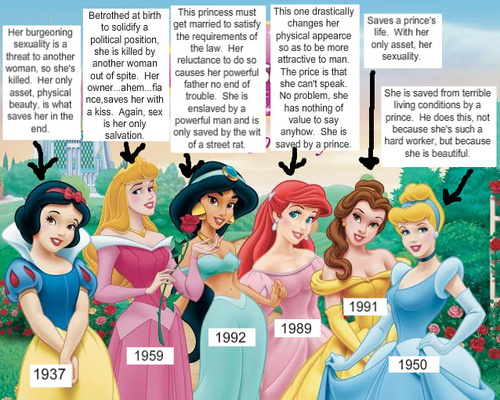
disney hasn’t helped

These gender stereotypes, body image issues, and the general superficiality of our culture are even found in our cartoons.  Found in our fairy tales.  They hit us with this stuff right away.  The race stuff too (I’m guessing these charts were created pre-Princess Tiana).  It’s no wonder we’re so far off our center.