mammy two-shoes

Speaking of cartoons…

While researching Jackie Ormes I somehow found my way to the ListVerse 10 Great Female Cartoon Voice Actors.  I was  so pleased to see Lillian Randolph as number one.  I was not aware of Lillian Randolph beforehand. I was honestly just glad to see a woman of color on the list, not to mention at the top of it.  Biracial Cree Summer is also on the list.  Anyway, my pleasure was kind of short-lived when memories of Mammy Two-Shoes resurfaced.  

I loved Tom & Jerry as kid.  I remember watching it in the morning before school. Any racial overtones/offenses were lost on me at the time.  But as an adult watching that cartoon, I have been shocked by the appearance of Mammy Two-Shoes.  In my opinion it looks like Mammy Two-Shoes has paws for hands, but maybe that’s just how they draw hands.

From ListVerse:  http://listverse.com/entertainment/10-great-female-cartoon-voice-actors/

Lillian Randolph

1lilianmammy

Lillian Randolph(December 14 1898-September 12 1980) was an African-American actress and singer, a veteran of film, radio and television. A native of Louisville, Kentucky, she was the younger sister of actress Amanda Randolph. 

She worked in entertainment, from the 1930’s well into the 1970’s, appearing in hundreds of short subjects, radio shows, motion pictures and television shows. Randolph is best known as the maid Birdie Lee Coggins from “The Great Gildersleeve” radio comedy and subsequent films and television series, and as Madame Queen on the “Amos ‘n’ Andy” television series from 1951 to 1953. Her best known film role was that of Annie in “It’s a Wonderful Life.” She appeared in several featured roles on “Sanford and Son” and “The Jeffersons” in the 1970’s.

Her most profilic acting role, hoever was her uncredited voice-over part as Mammy-Two-Shoes in William Hannah and Joesph Barbara’s “Tom and Jerry” theatrical cartoon series for Metro Goldwyn Mayer during the 1940’s and early 1950’s. Randolph made a guest appearance on a 1972 episode of the sitcom “Sanford and Son” as Hazel, a distant relative of the Fred Sanford character.

In the Tom and Jerry shorts of the 1940’s and 50’s, the only human character was an unnamed lady who was always after Tom (originally named Jasper), a cat, to catch Jerry, a mouse. Radio and film veteran Randolph provided the voice. The character is considered to be a racial stereotype known as a “Mammy”, a servant or maid of African descent, often overweight, loud, and heavily accented, and this has lead to some controversy. The shorts though, never stated that she was a maid and it is implied that she was the owner of that huge house with the well-stocked refrigerator. Also, the name “Mammy Two Shoes” was never used in the cartoons; it was given years later by the media, as typically only the character’s feet were shown. The shorts would be edited in the 1960’s. In some, Randolph’s voice was replaced with a plain-sounding one, and in others, she was replaced entirely with a thin white woman (voiced by June Foray.) Recent DVD releases have somewhat restored the original character.

From http://mammytwoshoes.tripod.com/history.html

By the early 50’s, Mammy was a supporting character just as important as Spike or Nibbles. However, in 1954, the Supreme Court declared racisism unconstitutional, which took a great affect on Hollywood movies and cartoons. So Mammy was forced to retire in 1952’s “Push-Button Kitty”. The new law pressured MGM to reissue the cartoons with her in them. The “White Mammy Two-Shoes” versions were created back in the 1960s for CBS when they were airing these cartoons. The work was done by Chuck Jones’s crew when Jones was making new Tom and Jerry theatricals. I recall reading Chuck’s remarks that at the time MGM still had most of its old animation artwork on file, so it was pretty much just a matter of retracing and repainting the original pencil animation and photographing it against recreated backgrounds. This new “White Mammy” material was then cut into dupe negatives of the cartoons in question to replace the original “Black Mammy” footage. Voice actress June Foray was brought in to redub the soundtracks. (Incidentally, that voice is supposed to be Irish.) Instances where the “White Mammy” has a “Black Mammy” voice (or vice versa) is a result of carelessness. Picture and sound elements on film masters are stored separately. What happens is simply that someone isn’t paying attention and matches a newer “White Mammy” picture element to the original “Black Mammy” sound element (or vice versa). 

honkey-two-shoes1


Click here to hear mammy two-shoes   http://mammytwoshoes.tripod.com/sounds/mousecatcher.wav

jackie ormes

jackie ormes 1st black female cartoonist


From http://www.comixology.com/articles/96/Black-and-White-and-Color

Ormes’ story is a fascinating one. Born of a middle-class family in 1911, she went to what appears to have been an integrated high school and was tapped to do art work for her senior yearbook. After graduating in 1930, she worked as a freelance reporter for the Pittsburgh Courier—she appeared to enjoy covering boxing matches—and by 1937 she had begun drawing her first comic strip, which chronicled the journey of a young southern black woman, Torchy Brown, to the big city in the north. Torchy’s story only ran for a year, and it was seven years before Ormes returned to comics, in 1945, with a single-panel comic called Patty-Jo ‘n’ Ginger. Ginger was a stylish and shapely young woman, bearing—one feels—a strong resemblance to Ormes herself; Patty-Jo was her sassy and strong-minded younger sister. Each week, Patty-Jo would let loose some sort of pronouncement to an often oblivious and always silent Ginger. These pronouncements might be as innocuous as your average Family Circus panel, but more often they reflected Ormes’ own concerns and interests, as well as the events of the day.

Ormes was a staunch supporter of the March of Dimes and of the right to vote, and both issues saw plenty of play and support in her weekly cartoon. In the 1948 panel above (click image for full-sized view), which ran about a week before the presidential election, Patty-Jo comments on the hot topic of racial inequality in the year’s political campaigns: Goldstein notes that Harry Truman had been flogging his civil rights cred (he had just integrated the military with Executive Order 9981), Thomas Dewey was running ads in the Courier itself promising “citizenship for all,” and Strom Thurmond and the Dixiecrats were in the vanguard of segregation protection, for the sake of “the integrity of each race,” of course. Ormes pulled no punches, and didn’t shy away from addressing critical events in the African-American experience: the 1955 cartoon below, in which Patty-Jo refers to a white boy whistling at her like a tea-kettle, appeared six weeks after the murder of 14-year-old Emmett Till, beaten to a pulp in Mississippi for whistling at a white woman. Maybe discussing Ormes’ development along with the history of the song “Strange Fruit” isn’t such a stretch after all.

From http://www.flickr.com/photos/22067139@N05/2342110476/

The Patty Jo character went on to become this nation’s first positive image ‘Negro’ character doll that hit the toy stores in time for Christmas (1948). The Patty Jo dolls are now collector’s items. In the late 70s, arthritis limited her artistic work, however Ormes remained a serious artist, painting murals, portraits (specializing in children’s faces) & panels that decorated her home. She was also a passionate doll collector & member of the Chicago Chapter of the United Federation of Doll Clubs. In the 1950’s as her arthritis became worse, doll collecting began.

Retiring from cartooning in the 1960s Ormes had approximately 150 dolls, including a German-made doll, which was the predecessor to the Barbie of today. The oldest in her collection was 50 years old. Ormes was celebrated in Chicago’s black social & fashion circles. She was also on the board of directors of the DuSable Museum of African-American History and Art. Ormes’ strips were syndicated in black newspapers across the country, making her the only nationally syndicated black woman cartoonist until the 1990s. 

Jackie Ormes died in Chicago on January 2, 1986.

Black Women in America An Historical Encyclopedia
Volumes 1 and 2, edited by Darlene Clark Hine
 

September 4, 1937:
Torchy Brown in “Dixie to Harlem” depicted the escapades of a teenage country girl, starry-eyed and slightly wacky, abounding in pluck, optimism, and determination. Dinah Dazzle, her friend’s cousin, visits from New York City, inspiring Torchy with fanciful daydreams. Here she heads North by train to try her luck at the Cotton Club in Harlem, in a setup ripe for week after week of humorous scenes. While presenting a funny, entertaining story, this strip reflected the real struggles of people moving from the South to the North. Ormes mocks the predicament of passing for white as youthful Torchy puzzles in the southern train station whether to go in the direction of the “Colored” arrow or to the more comfortable “White” section. http://www.jackieormes.com/tbdh.php

speaking of angelina weld grimke

agrimke

Angelina Weld Grimké (February 27, 1880 – June 10, 1958) was an African-American journalist, teacher, playwright and poet who was part of the Harlem Renaissance and was one of the first African-American women to have a play performed. Born in Boston, the daughter of Archibald Grimke, a prominent journalist who served as Vice-President of the NAACP. The Grimkes were a prominent biracial family whose members included both slaveowners and abolitionists. Two of her great aunts, Angelina and Sarah, were prominent abolitionists in the North. Angelina Weld Grimke was named after her aunt who had died the year before.Her paternal grandfather was their brother Henry Grimké, of their large, slaveholding family based in Charleston, South Carolina. Their paternal grandmother was Nancy Weston, an enslaved woman of European and African descent, with whom Henry became involved after becoming a widower.  Grimke’s mother, Sarah Stanley Grimke, a white woman, left her husband under the influence of her parents who never approved of her interracial marriage, and took her three-year old daughter with her. However, at the age of seven, Angelina was returned to her father, and although she and her mother corresponded, they never saw one another again. Sarah Stanley died of suicide several years later.

Grimké wrote essays, short stories and poems which were published in The CrisisOpportunityThe New NegroCaroling Dusk, and Negro Poets and Their Poems. Some of her more famous poems include, “The Eyes of My Regret”, “At April”, and “Trees”. She was an active writer and activist included among the figures of the Harlem Renaissance. Her poetry dealt with more conventional romantic themes, often marked with frequent images of frustration and isolation. Recent scholarship has revealed Grimke’s unpublished lesbian poems and letters; she did not feel free to live openly as a gay woman during her lifetime. 

Grimké also wrote a play called Rachel, one of the first plays to protest lynching and racial violence. She wrote the three-act drama for the National Association for the Advancement of Colored People (NAACP) to rally public support against the recently released film The Birth of a Nation. The play was produced in 1916 in Washington, D.C., performed by an all-black cast. It was published in 1920.

After her father died, Grimké left Washington, DC, for New York, where she lived a reclusive life in Brooklyn. She died in 1958 after a long illness.

http://www.aaregistry.com/detail.php?id=1123

http://en.wikipedia.org/wiki/Angelina_Weld_Grimké

http://www.scils.rutgers.edu/~cybers/grimke2.html

nancy weston

with friends like these….

Nancy Weston

3397121950_a831785417


She lived in Charleston, South Carolina, in the 1850s as a free woman. However, in order to satisfy the laws of the state, she was a ‘nominal slave’ legally owned by a white friend. She was also the grandmother of writer Angelina Weld Grimke.

‘The Face of Our Past: Images of Black Women from Colonial America to the Present’ edited by Kathleen Thompson and Hilary Mac Austin 

http://www.flickr.com/photos/22067139@N05/3397121950/

I would love to write a book or a screenplay based on this one sentence: she was a ‘nominal slave’ legally owned by a white friend.   That has really got my imagination going.  I’ve actually never heard of nominal slaves before.  I read a bit about them today.  Interesting stuff.  Most of what I read was connected to writings pertaining to black slave owners, and the Weston name in S. Carolina came up frequently.  But Nancy was ‘owned’ by a white friend.  I am fascinated.

From http://www.straightdope.com/columns/read/2821/before-the-civil-war-were-some-slave-owners-black

Between 1800 and 1830 slave states began restricting manumission, seeing free blacks as potential fomenters of slave rebellion. Now you could buy your friends, but you couldn’t free them unless they left the state — which for the freed slave could mean leaving behind family still in bondage. So more free blacks took to owning slaves benevolently. Being a nominal slave was risky — among other things, you could be seized as payment for your nominal owner’s debts. But at least one state, South Carolina, granted nominal slaves certain rights, including the right to buy slaves of their own….

We do, however, need to acknowledge a less common form of black slaveholding. Whites in Louisiana and South Carolina fostered a class of rich people of mixed race — typically they were known as “mulattoes,” although gradations such as “quadroon” and “octoroon” were sometimes used — as a buffer between themselves and slaves. Often the descendants and heirs of well-off whites, these citizens were encouraged to own slaves, tended to side with whites in racial disputes, and generally identified more with their white forebears than black. Nationwide maybe 10 percent of the mixed-race population (about 1 percent of all those identified as African-American) fell into this category.

dr. charlotte hawkins brown

Here’s another great story.  This woman was amazing.  I can imagine no nobler task than “establishing for Negro youth something superior to Jim Crowism.”  Her influence must have been so great on those she encountered.  I would love to talk with her about today’s “negro youth.”  What she would have imagined and hoped things would be like in 2009 and how that differs from the current reality.  

Dr. Charlotte Hawkins Brown

2642553943_8d452ccd72

Above is a photo from her wedding in 1912.
**********************
[b. 1870 – d. 1961]

Charlotte Hawkins Brown was born in Henderson, North Carolina, but grew up in Massachusetts after her family moved from the South. She was educated in Boston and had planned to finish her college education when two events changed her life.

First, she met Alice Freeman Palmer, a prominent New England woman, who was so impressed by Hawkins’ determination to get an education that she became Brown’s benefactor. Then, in 1901, Brown returned to the South to teach in a country school that was supported by a Northern missionary society in the town of Sedalia, North Carolina.

Quote: “I have devoted my life to establishing for Negro youth something superior to Jim Crowism”

She arrived during the worst years of the Jim Crow era. Blacks had been disfranchised as well as segregated and there was little money available for black schools. When the school’s funding ended after two years, Brown decided to remain in Sedalia to start her own school. She went north to raise money and returned with $100, which she used to open the Palmer Memorial Institute, an academic and industrial school for African Americans, in 1902.

Brown’s life was a balancing act. She passionately hated segregation and continually sought ways around it. When she went to town to visit her doctor or lawyer, she would arrange to enter into their office immediately upon her arrival. Thus, she avoided sitting in the Jim Crow section of the waiting room. When her students went to the movies or other cultural events, she would rent the theater for the day so that they did not have to sit in the “colored” section.

To raise funds for the school, she wrote letters to potential supporters. Her students learned French, Latin, and other academic subjects. Brown prepared her students to be leaders of their race.

In addition to building her school, Charlotte Hawkins Brown was active in the women’s club and suffragist movements. She later became president of the North Carolina Association of Colored Women’s Clubs, and she helped organize voter registration drives for black women and tried to get white club women to back suffrage for black women.

She saw herself as part of the freedom struggle that was taking place in the black community. The Palmer Institute became an educational success and remained open until a decade after her death, in 1961.

Charles W. Wadelington and Richard F. Knapp, ‘Charlotte Hawkins Brown and Palmer Memorial Institute; What One Young African American Woman Could Do.’

http://www.flickr.com/photos/22067139@N05/2642553943/

viola desmond


Here’s one of those Black Women stories.  Maybe Canada’s not as not-racist as they say.


Viola Desmond didn’t set out to make history, but she did (1946)

2562673380_a23de368ca2[b. 1914 – d. 1965]

Viola Desmond was a successful 32-year-old Halifax entrepreneur when her car broke down in New Glasgow, Nova Scotia. She decided to go to a movie at the Roseland Theatre while the car was being serviced.

It was November 8, 1946, and she was about to make history.

Desmond requested a ticket for the main floor of the theatre, paid for it, went in and sat down. Although it was not posted anywhere to see, the theatre’s policy was that persons of colour had to sit in the balcony.

When ordered to move, Desmond replied that she couldn’t see from the balcony, that she had paid to sit on the main floor, and that she would stay there. The manager ran out of the theatre and got a policeman. Together, the two men carried Viola Desmond into the street, injuring her knee and hip in the process.

She spent that night in the town jail. No one informed her of her rights, she was not allowed parole, and she was incarcerated in the same jail block as male prisoners. Determined to maintain her dignity, she sat bolt upright, wearing her white gloves, for the entire night.

In the morning – without representation, without understanding that she could question the witnesses against her, without even having been told that she could have a lawyer – she was tried and found guilty: tax evasion.

She had not paid the extra one cent tax on a ticket for a seat on the main floor of the theatre. She had paid for a less expensive seat in the balcony. That she had requested the floor seat, that she had no way to know that Blacks were restricted to the balcony, that she believed she had paid for the ticket on the first floor, that she offered to pay the difference, that she had been assaulted, injured, held then tried in irregular and perhaps illegal ways – it made no difference.

The sentence: 30 days in jail or a fine of $20, plus $6 to the manager of the theatre – one of the two men who had carried her out so roughly. She paid.

The doctor who treated her injuries recommended that Desmond get a lawyer. After discussing her arrest and trial with friends, she decided to challenge the verdict in the Supreme Court of Nova Scotia. In its decision, although one of the four judges, Justice Hall, referred in passing to the race issue, he agreed with the other three judges that no error in law had occurred in the original trial. The court unanimously upheld the verdict. The conviction stood.

The unspoken, unacknowledged truth: Viola Desmond was found guilty of being a Black person who had stepped out of her assigned place in society.

This resounding defeat in the courts left her discouraged. Her marriage – already strained by her business success – did not survive the trial. Desmond’s husband thought she was making a fuss over a matter that didn’t warrant it.

She did have significant supporters. And her stand had helped to build something much bigger.

The Nova Scotia Association for the Advancement of Coloured People (NSAACP) – aided by Viola’s friends, newspaper publisher Carrie Best and activist Pearleen Oliver campaigned to raise money. After the appeal, her lawyer, Frederick Bissett – a white man from Halifax – donated his fees back to the NSAACP.

With these funds, the fight Viola had started could continue. Vigorous further action by Best, Oliver, community members, and the NSAACP led finally to the repeal of segregation policies in Nova Scotia in 1954 – more than a year before Rosa Parks’s action in Montgomery, Alabama, helped bring the civil rights movement in the U.S. into sharp media focus.

Viola Desmond grew up in a prosperous family in Halifax. She decided early to be a hairdresser, one of the few professions open to an ambitious, independent-minded black woman. Unable to gain admission to a hairdressing school in Nova Scotia, she trained in Montreal, New York and Atlantic City.

Back in Halifax, Viola married and opened her first salon, where she specialized in hair styles and treatments tailored for her community. Beauty shops had become a major social gathering place in the 1930s, soon after salons first appeared. After a few years in business, she founded a school to train other beauticians. Her dream was to open a chain of salons across Canada – salons staffed by people she trained, specializing in Black women’s hair.

After the trial, Viola gave up her salon and her ambition of a chain of salons across the country. She went to Montreal to business school, then moved to New York to set up a new business, this time as an agent for performers. Very shortly after she arrived in New York, Viola Desmond died at the age of fifty.

Viola Desmond Unintentional Revolutionary
by Frances Rooney

 http://www.flickr.com/photos/22067139@N05/2562673380/

vintage black women

black-rose

black-women1


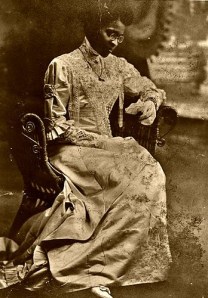
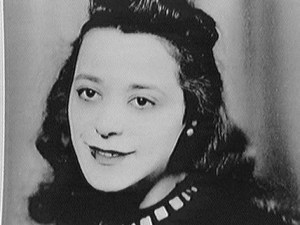
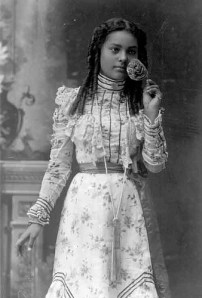
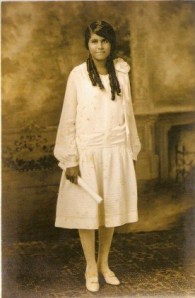
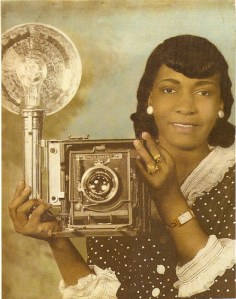
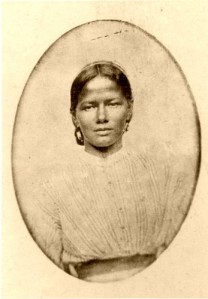
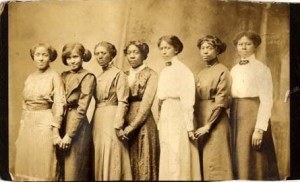
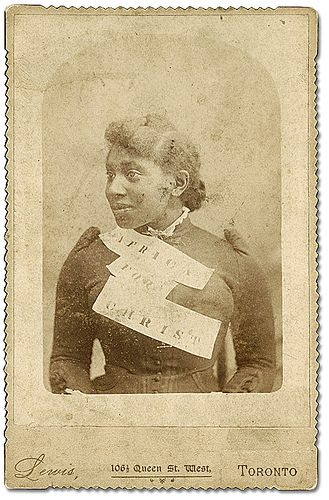
While searching for photos of black women with long, long hair I stumbled upon this great flickr photostream entitled BlackWomen  http://www.flickr.com/photos/22067139@N05/sets/72157603627219253/.  Some of the photos have biographical info.  Maybe I’ll post some from time to time.

vintage-black-women-with-cameranative-and-african-american


group-of-vintage-black-women


africa-for-christ1sash reads “Africa for Christ”

ella and marilyn

I’m kind of freaking out about this.  As much as I love anyone that I’ve said that said that I love on this blog, I LOVE Ella Fitzgerald!  When it comes down to it, I would rate her #1 vocalist of all time.  A constant on the list of (dead) people I’d like to have dinner with/invite to a dinner party is Ella.  I had no idea about Marilyn!  I just found this story at http://donttouchmymoleskine.wordpress.com/2009/02/18/miguxas-3/

ella_fitzgerald_and_marilyn_monroe

marilyn-e-ella

It’s 1955 and Marilyn Monroe is at the height of her fame. Despite this, she wants to be taken seriously as an artist, like the woman she most admires, jazz icon Ella Fitzgerald, who is also at the peak of her career.

Even though she can’t quite believe her own success, Ella wants more too. She wants the kind of fame Marilyn has. She wants to be in the movies. But to break into Hollywood , she needs to meet the ‘right’ people like the producers and money-men who frequent the ‘living-room of the stars’ Mocambo night club.

But Ella stands no chance of singing at the whites-only Mocambo…until Marilyn steps in and pulls strings like nobody else can!

These two iconic women – both outsiders – come together in an evening of raw emotion and great songs. A true but forgotten moment of American showbiz history re-enacted live on stage.