prom night in mississippi

ONE TOWN. TWO PROMS.
UNTIL NOW.

1954
The U.S. Supreme Court orders the integration of all segregated schools in America, including all their events.

1970
The town of Charleston, Mississippi, finally allows black students into their one high school. White parents refuse to integrate the school Graduation Dance, starting a tradition of separate, parent-organized White Proms and Black Proms.

2008

Change happens.

Oh. My. Goodness. Guys did you see this!?  Last night was the premiere of the HBO documentary Prom Night in Mississippi.  It was just so darn good.  One of my favorite documentaries ever!  In case you haven’t heard, the town of Charleston, MS had been holding two separate, segregated proms since the schools integrated in 1970.  Morgan Freeman offered to pay for the prom in 2007 if  they would just hold one for all of the students.  His offer was declined.  He tried again in 2008 and his offer was accepted.  The film exposes the climate of race relations in Mississippi and makes clear that this up and coming generation must make a conscious choice to break the cycle of division.

PNIMbutton230B

I have long been a fan of Morgan Freeman.  Probably since the first time I saw the movie Glory. Then he sealed the deal with Robin Hood and Shawshank.  Anyway, I was inspired by the way he spoke to the students and handled the adults on the school board, but the most poignant Morgan moment for me was when he said “If I go around hating you because you have blond hair and blue eyes, I’m doomed. You’re fine, but I’m doomed.”  I believe that with all my heart.  I’m always saying that this racism thing is a double edged sword.  On the surface it may seem like it’s just those being discriminated against who are being hurt by it, but I’ve always felt that most of the damage is done to the discriminator.  I just loved hearing him say that.

apr2709-promnight

There is a section of the film where the students are so openly talking about the ways they’ve been taught to be racist and pondering why this could be.  Some of the white kids come to the conclusion that it must be that their people don’t want mixed kids in their family.  That’s why the adults are so afraid of an integrated prom.  We’re told that one parent said, “I don’t want no n****r grinding up on my daughter.  I won’t have no mixed kids in this family.”  The fact that people think this way is certainly not news to me.  It’s my history.  I know it well.  And yet, I was so uncomfortable hearing it spoken aloud.  Like kinda squirmy.

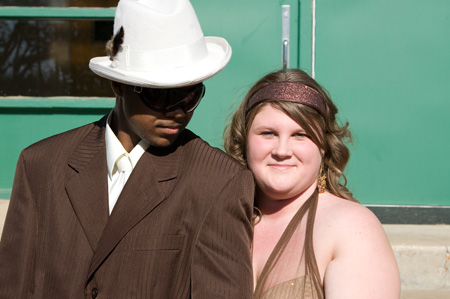
There is one interracial couple in the film.  Heck, there is probably one interracial couple in the whole town, and they happen to be students at the school.  They do not hold hands in public.  They have never been on a date because her father, who insists that he is not racist, will not allow it.  He hasn’t “whooped her or nothin”, but he grounded her and took her phone away.  To his dismay she overcame it all and is still dating Jeremy.  They got the most applause during the senior walk at the prom.
9355pic450

There are so many things I want to relay, but really I think you should just see the film.  Please.

the house at the end of the road

Although I am reading two books similar to this right now, I am so eager to jump into this one.  My “mulatto” google alert alerted me to this review.  I found myself fascinated by the first two paragraphs…

The Family That Rejected Jim Crow

By Martha A. Sandweiss

The Story of Three Generations of An Interracial Family in the American South

By W. Ralph Eubanks

Smithsonian. 206 pp. $26.99

W. Ralph Eubanks’s family memoir tells a double story, one about the past and the other about the author’s efforts to uncover it. This has become a familiar kind of literature, the search for family roots that becomes a search for one’s own identity. But Eubanks has an unusual story to tell. His maternal grandparents, Jim and Edna Richardson, lived on a remote rural road in a black community in the now deserted town of Prestwick, Ala. According to family stories, they married in 1914 and by 1929 had seven children. Jim was a white man, a “boisterous adventurer” and bootlegger who ran a logging business. Edna’s racial heritage was mixed, but she thought of herself as black. In Jim Crow Alabama, where the courts had repeatedly upheld the state constitution’s ban on interracial marriages, the Richardsons constituted an unusual sort of family, and they defied the social rules that governed the segregated South. After Edna died in 1937, Jim remained in Prestwick with his light-skinned children. They could have moved away to start life anew as a “white” family. After all, Eubanks says, the children were so fair that a federal census agent once categorized them as “white.” But the family “made a conscious choice to identify as black people, in spite of skin color and features that would have allowed them to move seamlessly into the white world.”

Eubanks sees this act as both radical and heroic. As a black man married to a white woman, he finds in his grandparents’ lives valuable lessons for his own. “Sometimes it even felt as if they had forged a path for the life my wife and I shared, occasionally guiding us on our way.” He thus crafts a progressive tale of social improvement, with his grandparents’ and parents’ lives in the Jim Crow South paving the way for his own youth during the civil rights era and eventually leading to his 11-year-old daughter’s vision of a world “where race matters less and justice and our common humanity matter more.”

PH2009071502246

rabbis of color

I read an interesting article on the “first” ordained African-American female rabbi here.  I was pleasantly surprised to find a bit about biracials in there….

Alysa Stanton, now 45, recently passed another milestone on her spiritual journey. On June 6 in Cincinnati’s historic Plum Street Temple, she was ordained by Hebrew Union College, the Reform rabbinical school, making her the movement’s first African-American rabbi and the first African-American woman ordained by a mainstream Jewish denomination.

…She converted in 1987. Her mother and siblings quickly accepted her decision, although, she says, “none are running to the mikvah.” But many of her friends and fellow Jews were suspicious. “It was unusual in that I wasn’t converting because of marriage but because of spiritual reasons,” says Stanton. “My Christian friends thought I’d grown horns and some of my African-American friends thought I had sold out. And the Jewish community wasn’t as welcoming as it is today, either. It was a very difficult period.”

Stanton may be a new face in the mainstream rabbinate, but black rabbis have a long history in America. To Gordon, the very notion of a “black rabbi” is a nebulous modern distinction, particularly as a deeper understanding of genetics displaces earlier conceptions of race. There are Jews of all stripes, he says, “who are publicly known as white people but who in older times would have been known as ‘mulattoes’ or in some cases, given today’s term, ‘biracial.’” Thus, there may “already have been some technically African-American Jewish rabbis.”

Black Woman Rabbi

home-going

The memorial is about to start.  I still can’t believe this is happening.  I have been listening to MJ non-stop.  Still watching everything they’re offering on tv.  This video is probably my favorite tribute I’ve come across so far…

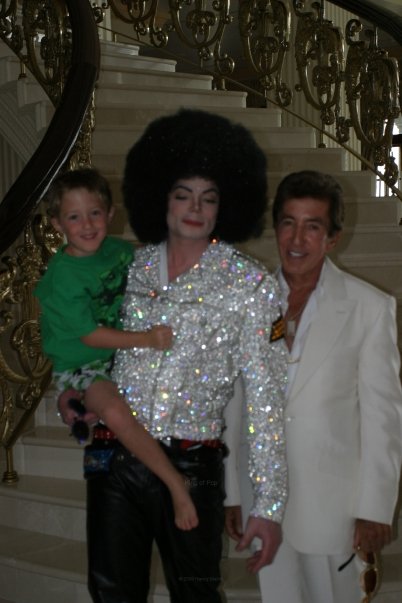
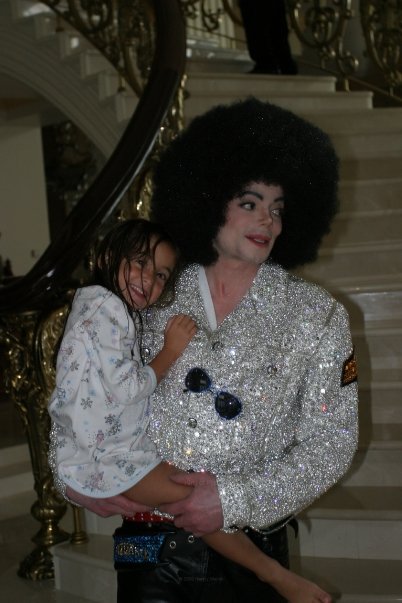
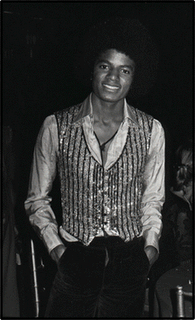
I also came across some of Nancy Malnick’s personal photos of Michael at parties and family gatherings.  These are from a ’70s themed party she and her husband Al threw…

5440_1021133267194_1791068531_43608_7280358_n

5440_1021133227193_1791068531_43607_2192792_n

5440_1021133507200_1791068531_43614_5924976_n

I love those pictures so much for some reason.  It’s the first time I’ve thought “He’s so cute” of the ‘white’ Michael Jackson.

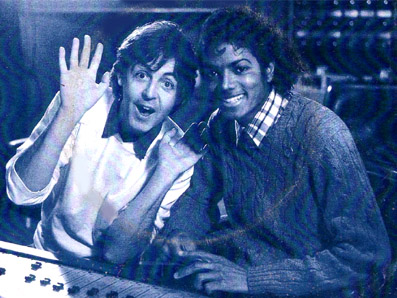
This week “The Girl is Mine” has emerged as one of my top 3 Michael songs.  I keep listening to it over and over.  Maybe because it sounds like it could be a duet in a musical.  Now I want to write a musical with MJ music.  I’m sure someone more qualified than I has almost finished such a project.  I hope so.

paul_mccartney_michael_jackson

Time to watch the big send off. I so wish I could be there. I am in spirit. So is Michael.

obama in moscow

For Russian Blacks, Obama Visit Stirs Special Interest

By Kevin O’Flynn

MOSCOW — The visit to Russia by Barack Obama, the first black man to be elected president of the United States, is significantfor many Russians.


But for Russians of African descent, in particular, the new U.S. leader is a potent symbol of triumph over the same challenges they themselves face in a country where dark-skinned people remain rare and often unwelcome.


Yelena Khanga is one of Russia’s best-known black citizens. The popular host of a top-rated 1990s chat show about sex — “ProEto,” (About That) — she became one of the few black faces regularly seen on Russian television.


Khanga’s grandparents came to the Soviet Union in the 1920s to escape the racism they had endured in the United States as a mixed-race couple.


Today, Khanga says Obama’s election to the American presidency, and his current visit to Moscow, have special meaning for her.


“He did what my grandmother and grandfather dreamed about in their day,” Khanga says. “They couldn’t even have dreamed that, one day, America would have a black president. The only dreams that they had — my grandmother was white, and my grandfather was black — was that Americans would someday allow mixed couples to live in peace, have children, and let the children have decent lives. That is what they dreamed about.”


…Still, Khanga — whose great-grandfather was a slave in Mississippi — says she believes the scourge of racism was far worse in the United States, where there were 4 million African slaves by the time slavery was abolished in 1865 and where it took another century before school segregation and other forms of racial discrimination were formally outlawed.

Khanga notes that there was a very small percentage of mixed-race and black people in the Soviet Union.“I was part of the first generation — now, of course, there are a lot more,” Khanga says. “But…we did not have the history of racism as they did in America. Not everything was easy, and I can be the first to tell you what kinds of problems we had. But, of course, you can’t compare them to the kinds of things that happened in America.”

miscegenation

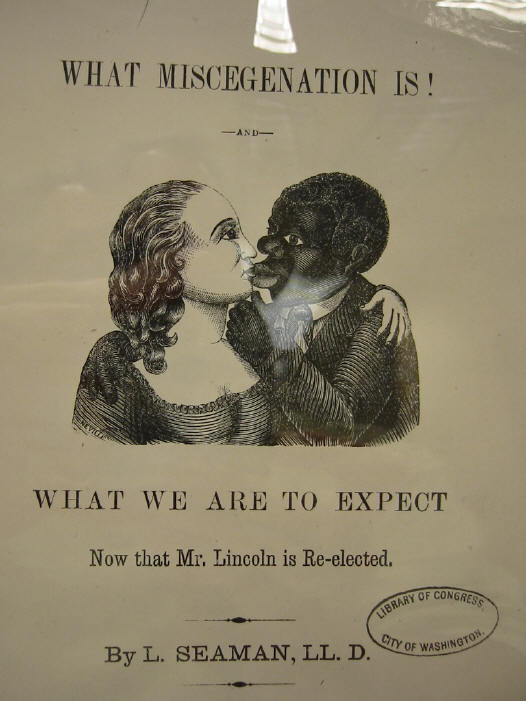
I really enjoyed this article.  You can find the whole thing here where it’s much easier to read.

frederick douglass on this day

On July 5th, 1852 Frederick Douglass was asked to give an Independence Day speech before the Rochester Ladies Anti-Slavery society in Rochester, NY at Cortinthian Hall.  Historian Philip S. Foner has called this excerpt “probably the most moving passage in all of Douglass’ speeches.”  You can find the entire speech here.

What, to the American slave, is your 4th of July? I answer; a day that reveals to him, more than all other days in the year, the gross injustice and cruelty to which he is the constant victim. To him, your celebration is a sham; your boasted liberty, an unholy license; your national greatness, swelling vanity; your sound of rejoicing are empty and heartless; your denunciation of tyrants brass fronted impudence; your shout of liberty and equality, hollow mockery; your prayers and hymns, your sermons and thanks-givings, with all your religious parade and solemnity, are to him, mere bombast, fraud, deception, impiety, and hypocrisy — a thin veil to cover up crimes which would disgrace a nation of savages. There is not a nation on the earth guilty of practices more shocking and bloody than are the people of the United States, at this very hour.

022

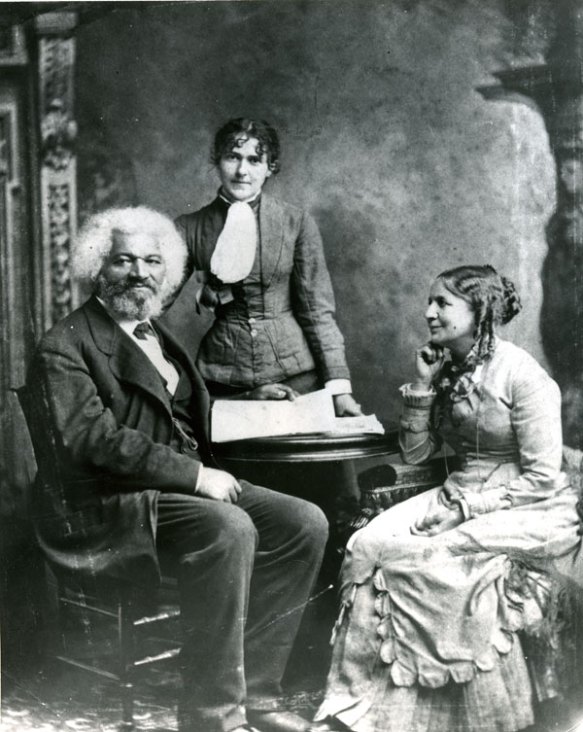
douglass_helen_eva_frederick

Douglass, his second wife Helen, and their niece Eva

douglass

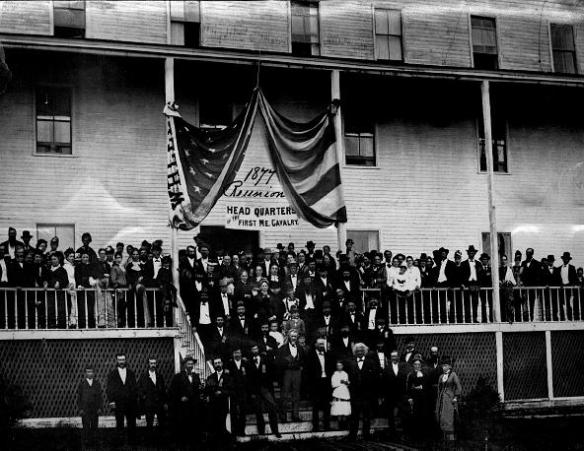
IN 1877, THE GREAT AFRICAN AMERICAN ORATOR AND WRITER FREDERICK DOUGLASS, WHO HAD SPENT MOST OF HIS LIFE FIGHTING FOR THE ABOLITION OF SLAVERY AND FOR THE RIGHTS OF ALL INDIVIDUALS, TRAVELLED THROUGH NEW ENGLAND ON A SPEAKING TOUR. HE WAS INVITED BY VETERANS OF THE FIRST MAINE CAVALRY, A FAMOUS CIVIL WAR UNIT, TO JOIN THEM AT THEIR ANNUAL REUNION IN OLD ORCHARD BEACH. DOUGLASS IS STANDING FOURTH FROM RIGHT IN THE FIRST ROW. HE NOTED THAT IT WAS A SIGN OF GREAT PROGRESS IN RACE RELATIONS THAT HE HAD ENJOYED “A GAME OF CROQUET WITH LADIES AND GENTLEMEN OF A DIFFERENT RACE RIGHT OUT IN FRONT OF THE HOTEL.” via

abilene

I came across this article on the birthplace of Dwight Eisenhower, Abilene, KS.  This isn’t much of a news story, but it’s proof that we existed and were acknowledged once.  The Hispanic=White is interesting to me too.

KS0105001

via The Abilene Reflector-Chronicle

Dave Bergmeier
Editor and Publisher
Tuesday, Jun 30, 2009

Cindy Harris, who has done extensive research on 19th and early 20th century Abilene gave an overview of civic, business, social and cultural life at the turn of the 20th century. She was among the speakers for the latest installment of Ike’s Abilene Saturday at the Eisenhower Visitors Center. Saturday’s edition was entitled “Life in the City, 1900: Political, Business and Social History.” The focus on the series is about Abilene during Dwight D. Eisenhower’s youth and when he grew to a young man who would later become the nation’s 34th president.

…Her studies indicated that Abilene had a diversified community. Census forms indicated only three races were available to check — white, black and mulatto (someone with a black parent and white parent). As a result, Hispanics, who worked in the railroad industry were listed as white.

David and Ida Eisenhower lived in the south part of Abilene, considered south of the tracks, where people of mixed races also lived, Harris said. However, there were other mixed race neighborhoods in other parts of Abilene.

Harris said Dwight Eisenhower was proud of his Abilene roots and what the people and community meant to him.

iron butt

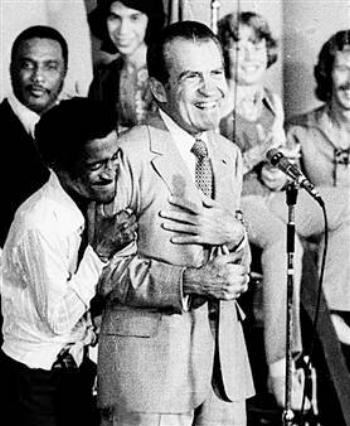
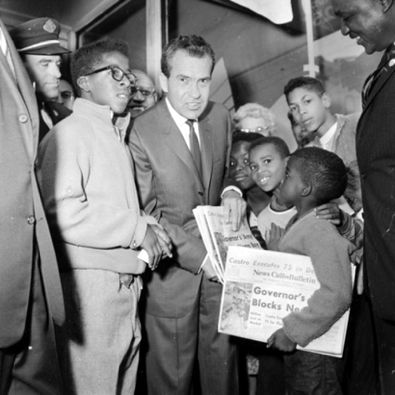
“Tricky Dick” wasn’t his only nickname (list), and since this confirms for me that he was an ass, I prefer to call him by his law school nickname, “Iron Butt.”

Nixon Believed in Aborting Mixed-Race Babies

By Toby Harnden in Washington
Published: 7:49PM BST 24 Jun 2009

via

Commenting privately on the landmark 1973 Supreme Court ruling Roe vs Wade, which decriminalised abortion in the US, the then-president said he worried that access to a legal abortion could lead to “permissiveness” because “it breaks the family” but thought them justified in certain cases.

“There are times when an abortion is necessary,” he told his aide Chuck Colson. “I know that. When you have a black and a white.” Mr Colson offered that rape might also make an abortion legitimate, prompting Mr Nixon to respond: “Or a rape.”

The comments were revealed in more than 150 hours of tape and 30,000 pages of documents made public this week by the Nixon Presidential Library, part of the United State National Archives.

They were recorded by secret microphones in the Oval Office from January and February 1973 and provide fresh insights into Mr Nixon’s tumultuous presidency, which ended with his resignation in August 1974 over the Watergate scandal.

Mr Nixon was widely believed at the time to be privately opposed to abortion rights, though he declined to take a public stance on the issue.

The tapes capture mundane conversations about daily life in the White House but also offer new insight into changes in US society.

During a telephone conversation with George H. W. Bush, then Republican National Committee chairman and later elected president in 1988, Mr Nixon said that a visit to the South Carolina legislature had persuaded him of the value of female political candidates for his party.

“I noticed a couple of very attractive women, both of them Republicans, in the legislature. I want you to be sure to emphasize to our people, God, let’s look for some … Understand, I don’t do it because I’m for women, but I’m doing it because I think maybe a woman might win someplace where a man might not … So have you got that in mind?” Mr Bush replied: “I’ll certainly keep it in mind.”

richard-nixon-sammy-davis-jr-1

Richard Nixon 1962

michael

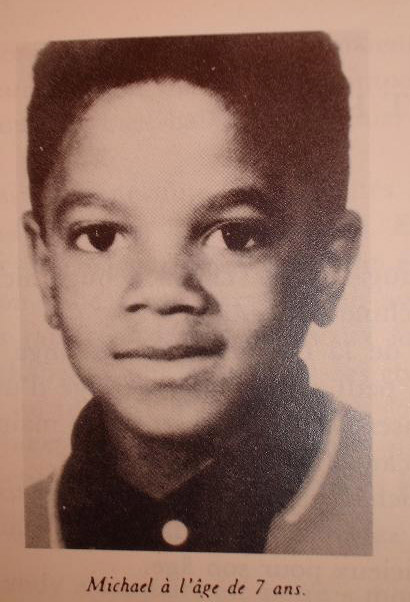
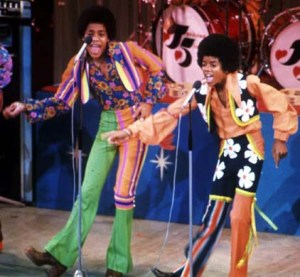
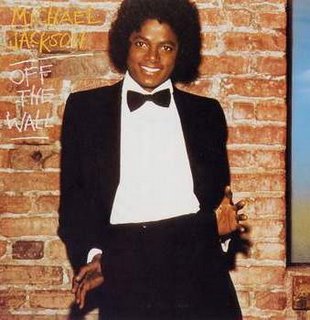
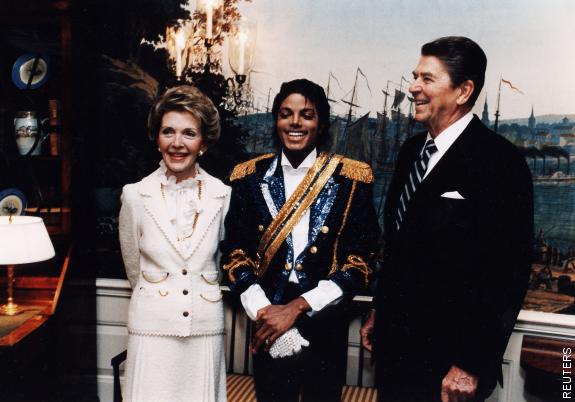
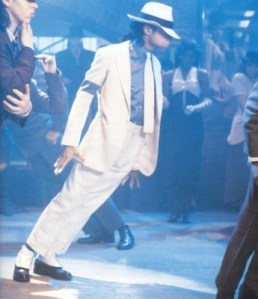
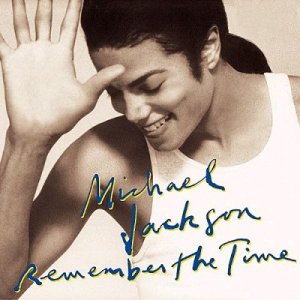
I am speechless.  Still in shock.  I can’t wrap my mind around this.  A world without Michael Jackson!?  As a child of the ’80’s I loved this man.  I had countless stickers, posters, buttons, gloves, socks, a Beat It jacket, records, tapes, cds….  There was a summer during which I watched The Making of Thriller every day.  Sometimes twice a day.  I taught myself the dance.  I took break dancing lessons and our recital number was Thriller, and of course I knew the whole thing already.  This is just so sad.  Right now I don’t have anything else to say about it.

image002

image003

42-17478984

michael_jackson young

42-17367853

image027

436984A

mjteen

MichaelJackson-OffTheWall

Beat_It_Video

motown25

Thriller-Michael-Jackson_l

N4j5NyiqCp5xo2j7h52WSi7eo1_400

photo10

559163B

michael-jackson-smooth-criminal-lean

Michael-Jackson-Remember-The-Time-349827

michael_jackson1

PD*6848705