further the cause, fill out the survey

My friend Naehalani is conducting two studies on biracial identity for her Senior Thesis.  Yay!  If you have a moment, and are biracial, you can help her with the project by filling out the survey and emailing it to her.  I did.  Just click on “Biracial Survey” and the document should download to your computer.  Open it and answer away.  Instead of circling the most accurate choice for me, I typed my answers in after the questions.  It really did take 5 minutes.  Maybe less.

Naehalani(far left) and her siblings

From Naehalani:

Hello to all!

I need your help!  My name is Naehalani Breeland and I am biracial,
mixed with Hawaiian and Caucasian.  Having grown up predominantly with
my Hawaiian mother in both Hawaii and on the mainland… (and being
strongly influenced by both my Hawaiian culture and mainstream
American culture) I have come to identify as mixed race/biracial.
More and more we are seeing biracial and multiracial individuals speak
out about our unique identity development, juggling identities and so
forth.  So, for my Senior Thesis in psychology at Eugene Lang College
in New York City, I am conducting two studies on biracial identity and
I am asking you all to participate in these studies by filling out the
surveys below.  While this is helping me to graduate (fingers
crossed), it is also helping all of us to inform others on our
biracial/multiracial experiences.

For confidentiality purposes, you can email your completed survey to
me at breelj73@newschool.com or naehalanibreeland@gmail.com.
• Open the word document below
• Fill out the survey
• Save the completed document as CompletedBISurvey and the time (ex:
CompletedBISurvey10:31am) so that I can differentiate them
• Email it back to me.
The survey will take approximately 5 minutes! So quick and easy!  And
again, all the information will be confidential.

Biracial Survey

Also, if any of you are part of a biracial family in which you and
your siblings vary in skin tones please email me!  As an individual
coming from a family of all different skin variations, I have found
that my siblings and I often have different experiences in our
everyday life, and therefore we have also had a different identity
development. Sooo, my second study is on how society and family affect
the growth and perception of biracial individuals when their siblings
are of different skin tones. Basically it is about how we learn who we
are through others’ influence.  This is a small population, I
know…which is why I need all the help I can get from you!

the twins: Naehalani’s niece and nephew

I really really really appreciate your participation in advance.  It’s
helping me more than you all could imagine!!!

Take Care and have a wonderful day!

Naehalani Breeland

white mothers of mixed-race children

I want to be a part of this research!  I’ve long been fascinated by the “white mom having” vs. “black mom having” biracial experience.  One similarity I can glean from my own “black mom having” experience and what is written in this article about that of the white mothers is the scrutiny.  I vividly remember my mother’s parenting being scrutinized by the mothers of my white classmates and some of the school faculty as well.

Do Racist Attitudes Hinder Mothers Of Mixed-Race Children?

via, Adapted from materials provided by University of Royal Holloway London, via AlphaGalileo.

Professor Ravinder Barn and Dr Vicki Harman from the Centre for Criminology and Sociology at Royal Holloway, University of London are carrying out research into white mothers of mixed-race children. It is part of a wider study of mixed-race children and young people that has spanned more than two decades.

Parenting as an activity has become the focus for much concern at a policy and academic level, and the experiences of white women mothering mixed-race children is also receiving considerable attention.

Globalisation and migration are playing key roles in determining the social and familial landscape of contemporary western societies. Government statistics in the UK, Canada and the USA point to the increasing racial and cultural heterogeneity and the growth of the mixed-race population. Although many of these families lead relatively trouble-free lives, there is evidence of vulnerability and disadvantage for others in a number of areas including education, health, social care and the criminal justice system.

New and ongoing research was presented at a one day inter-disciplinary research conference, organised by Professor Barn and Dr Harman to disseminate the findings to those working with inter-racial families and to determine the research agenda of the future.


“In the academic and popular discourse, there is now a concern that ‘mixed families’ have become problematised. White mothers in these settings are often subjected to a racialised critical social gaze in a way that their parenting is placed under scrutiny,” said Professor Barn.

Dr Harman added, “Although the growing number of mixed relationships have been suggested to be evidence of a more tolerant society, social significance continues to be attached to relationships involving people from different ethnic backgrounds. White mothers of mixed-parentage children can find themselves dealing with racism directed at their children as well as facing social disapproval themselves”.

The six papers presented at the event explored a range of areas including: the mixed-race landscape in the Canadian context, common themes amongst families experiencing social service involvement, the need to understand the social networks utilized by white mothers in mixed families and historical research looking at government archives to understand the ways in which white women’s role in nation building had been marginalized.

racial identity shaped by social experience, or white mulattoes

This entire post is reblogged from Renegade South: histories of unconventional southerners.  I find it to be a fascinating piece of American history.  It’s one of those stories in which “american” history and “african-american” history are so intertwined that a distinction between the two can hardly be made.  That’s just how it always should be, in my opinion.  This country has just one history.  It’s black and white and everything in between.  The story is long and may be hard to follow, but I think it’s worth the effort.

The Family Origins of Vernon Dahmer, Civil Rights Activist

by renegadesouth

Vernon F. Dahmer, a well known Mississippi civil rights worker, was murdered in 1966 by white supremacists connected to the Ku Klux Klan. Before the night of January 10, 1966, when the Dahmer grocery store and home were firebombed, Vernon had been leading voter registration drives in his community. To facilitate that effort, he had recently placed a voter registration book in the grocery store he owned.

Dahmer Grocery Store

Vernon Dahmer’s grocery store, located on Monroe Road, 3.5 miles from the Jones County line. Photo courtesy of Vernon Dahmer, Jr.

Vernon Dahmer, Western Union Telegram

It took many years and five court trials to convict KKK Imperial Wizard Sam Bowers in 1998 of having ordered the murder of Vernon Dahmer. Today, Dahmer is revered for his courageous work on behalf of black civil rights. In honor of his memory, both a street and memorial park in Hattiesburg bear his name.

In the essay that follows, Dahmer’s grandniece, Wilmer Watts Backstrom, and Yvonne Bivins, a member of his extended family, enrich our understanding by telling the story of his family roots in southern Mississippi. Dahmer’s multiracial heritage included white, black, and Indian ancestors. The narrative begins with the story of his grandmother, Laura Barnes.

The Family Origins of Vernon F. Dahmer, Mississippi Civil Rights Activist

By Wilmer Watts Backstrom and Yvonne Bivins

Laura Barnes was born in Jones County, MS in October 1854. According to her daughter, Roxanne Craft, “she was given to a black family to raise because she was born out of wedlock to a white girl.”

The 1870 census for Twp 9 in NE Jones County, Mississippi, shows that fifteen-year-old Laura was living in the household of Ann Barnes, a 55-year-old mulatto woman born in Mississippi whose occupation was housekeeper. A young mulatto boy, Augustus, age 12, also lived in the home.  Living next door to the Barnes family were Andrew and Annice (Brumfield) Dahmer.

Laura Barnes

Laura Barnes, grandmother of Vernon Dahmer, Sr., courtesy of Vernon Dahmer, Jr.

After the Civil War, Andrew Dahmer and his brothers became traveling salesmen who peddled their wares in Wayne, Jones, and Perry Counties in Mississippi. Andrew soon met and married Annice Brumfield, whose mother, Altamarah Knight Brumfield, was the daughter aunt of Newt Knight and Serena Knight.

Andrew and Annice’s neighbor, Laura Barnes, met Andrew’s brother, Peter Dahmer, in the early 1870s. They began a relationship that resulted in the birth of a baby boy in 1872, who Laura named George Washington Dahmer. Peter apparently did not acknowledge his child, and soon moved to Chickasaw County with several brothers, where they farmed and built a mercantile business.

For giving birth out of wedlock, Laura became a “marked woman.” During this period in her life, she operated a boarding house for the railroad and sawmill workers in northeast Covington County and near “Sullivan’s Hollow” in Smith County. The “Hollow” was notorious for its lawlessness and racial bigotry.  Blacks were not welcome there.  Black families that did live there were descendants of Craft and Sullivan slaves.

Laura hired a black man from the hollow named Charlie Craft. Working closely together on her place, they soon fell in love and developed a relationship. This would bring trouble, because although Laura was raised by a mulatto woman and listed as mulatto on census records, whites still considered her off limits to a black man.

Charlie and Laura Barnes Craft

Charlie and Laura Barnes Craft, grandparents of Vernon Dahmer. Photo courtesy of Vernon Dahmer, Jr.

Charlie Craft was born in Smith County, MS, around 1853.  According to family history, he was part Creek Indian and part African, with piercing eyes and coal black straight hair. A former slave of Bryant Craft, Charlie was known as a man who had never run from a fight. Story has it that after a shootout with the infamous Sullivans, he left Smith County, but doubled back to spirit away his siblings. Because newly freed slaves were not welcome in Smith County, they moved to Covington County, where they settled on a ridge south of the Hollow in the Oakohay area. Here, they established a prosperous community called Hopewell.

By 1880, thirty-year-old Charlie and twenty-eight-year old Laura lived in the Oakohay District.  Four children lived with them: George (Laura’s son by Peter Dahmer), age 10; [Roxanne] Viola, age 7; Bettie, age 5; and Elnathan, age 2. All, including Laura and her son George, were listed as “mulattos” on the 1880 federal manuscript census for Covington County.  Living nearby were Charlie Craft’s mother, Melvina, and several siblings.

One night a local white mob filled with home brew surrounded and attacked their home.  Both Laura and Charlie were excellent shots. Laura shot and killed one of attackers as they tried to protect their children from the mob and, in so doing, the couple had to flee “the ridge.” Laura’s son, George Dahmer, helped them escape.  Upon arriving in the Kelly Settlement, they moved off in the swamps on the Leaf River on the old “William Jenkins Place.”

George Washington Dahmer

George Washington Dahmer, father of Vernon Dahmer, son of Laura Barnes Craft and Peter Dahmer, stepson of Charlie Craft. Photo courtesy of Vernon Dahmer, Jr

The area commonly known as Kelly Settlement was settled by John Kelly, a white man born in North Carolina about 1750.  John and his wife, Amelia, left Hancock County, GA, and arrived in Mississippi in late 1819, settling in Perry County.  By 1820, the Kelly household included John, Amelia, sons Green, 16, and Osborne, 18, Osborne’s wife Joene, and nine slaves. Among these slaves were the parents of Sarah, whose descendants later formed Kelly Settlement. Although the 1820 federal manuscript census for Perry County listed no free blacks living in the household of John and Amelia Kelly, descendants claim that Sarah’s folks were not slaves, but free people who accompanied the Kelly family to Mississippi.

After the Civil War, Sarah’s children began to homestead land, marry, and raise children.  Working together as they had down on John Kelly’s place, they cleared the land to raise crops, cut timber, and hauled it to the Leaf River by oxen to float it down to the Gulf Coast.

Laura Barnes Craft’s son, George Dahmer, moved to the Kelly community ahead of the rest of the Crafts. In 1895, George married Ellen Louvenia Kelly, the daughter of Warren Kelly and Henrietta McComb.  Like his own mother, Laura, Ellen’s mother, Henrietta, was a white child born out of wedlock and given to a black family, the McCombs, to raise.  The McCombs were living on the William Jenkins place when the Crafts arrived in Perry County.  Ellen Kelly’s father, Warren Kelly, was the mulatto son of Green H. Kelly and the grandson of John Kelly, the original white settler of the area. Warren Kelly’s mother was Sarah, the daughter of John Kelly’s slaves (or perhaps free black servants).

Warren Kelly

Warren Kelly, son of Green Kelly and Sarah Kelly, father of Ellen Kelly Dahmer, grandfather of Vernon Dahmer. Photo courtesy of Vernon Dahmer, Jr.

It was to this community that Charlie and Laura Barnes Craft fled with the aid of Laura’s son, George Dahmer. According to Wilmer Watts Backstrom (their great granddaughter), Charlie and Laura’s family lived in isolation for many years after being forced out of Covington County; they were prone to violent disagreements and exhibited heated tempers. This family drank heavily with much cursing.  They lived down in the swamps isolated from the community until the children were all grown.  As the children became adults, they gradually moved out of the swamps, married and had families of their own.

Charlie was employed by Green Kelly as a night watchman on the Leaf River. He died before 1910 in Forrest County, MS.  By that year, several of his and Laura’s children were married and living in Kelly Settlement, MS. Although Laura’s name does not appear on the 1910 Census, she was still alive that year. In 1920, she lived with her oldest child, daughter Roxanne Craft Watts, on the Dixie Highway, Forrest County, MS.  Laura died on 5 June 1922.

Ellen Louvenia Kelly

Ellen Louvenia Kelly, wife of George Dahmer, mother of Vernon Dahmer, daughter of Warren and Henrietta McComb Kelly. Photo courtesy of Vernon Dahmer, Jr.

Laura’s son and Charlie’s stepson, George Dahmer, identified as a black man even though his mother and biological father were white, demonstrating how strongly one’s racial identity is shaped by social experience.

George and Ellen Kelly Dahmer were the parents of Vernon Dahmer. George was known as an honest, hardworking man of outstanding integrity, rich in character rather than worldly goods. Like his father, Vernon worked hard and became a successful storekeeper and commercial farmer. Before his tragic death, he served as music director and Sunday school teacher at the Shady Grove Baptist Church, as well as president of the Forrest County Chapter of the NAACP. He and his wife, Ellie Jewell Davis, were the parents of seven sons and one daughter.

Vernon F. Dahmer, Sr.

Vernon F. Dahmer, Sr. Photo courtesy of Vernon Dahmer, Jr.

Vernon and Ellie Dahmer Family

Vernon Dahmer’s wife and children: seated left to right, George Weldon, Ellie J., Alvin; standing, left to right, Vernon Jr., Betty Ellen, Harold. Photo courtesy of Vernon Dahmer, Jr.

you’re not adopted

Wow, what a story!  While I think that Mrs. Brannigan’s choice to feign adoption in order to keep her own son is a sad commentary on black/white race relations, I honestly admire her commitment to her child and think her solution was clever.  This certainly is a unique story of “transracial” “adoption”.

Torment of the child from a mixed- race affair

By Ronan Lang

Tim Brannigan likes to say that he was born on May 10, 1966, and that he died the same day too. Minutes after his birth, Tim was ferried away from his mother Peggy, who subsequently told her own parents, siblings and her three other children that her baby had died in childbirth.

For the next five days in Templemore Hospital in Belfast, Peggy Brannigan had one ashen-faced visitor after another express their deepest condolences for her loss while, just a few doors down, her baby gurgled and cooed away like any healthy newborn.

The reason for the deception was that Peggy was a white woman married to a white man, and her new son was black. During a difficult period in her relationship with her husband Tom, Peggy had met and had a brief affair with a Ghanaian doctor named Michael Euke.

When she became pregnant, Peggy panicked and told her husband that she had been raped.

When the baby was born, Tom went along with the charade. Somehow, Peggy also convinced the hospital staff to assist in her scheme. The plan was for Tim to be smuggled to an orphanage under strict instructions that he was not to be adopted.

Peggy needed time and headspace to figure out what to do, but the plan was eventually to ‘adopt’ her own son. To her credit, by the time of Tim’s first birthday, he was living with his family deep in the heart of the Falls Road.

EastEnders scriptwriters would throw out that idea for being too far-fetched, but it’s all true, and laid out in honest, mind-boggling detail in Tim’s new book, Where Are You Really From?

Speaking to Weekend on a recent visit to Dublin, Tim recalls the night that his mother finally confessed the truth to him.

“I was 19, and I remember it was the night before Live Aid,” he says. “We were at a family function, and we’d both had a few drinks. She was saying how she wanted me to travel and see the world. Then, out of the blue, she said, ‘Timothy love,I’ve something to tell you. I’m your real mum and you are my son. You’re not adopted’.”

It’s a bombshell by anyone’s standards, but Tim, astoundingly, managed to take the news in his stride. He remembers crying, but from happiness.

“Honestly, I found it relatively easy to process,” he explains. “At that stage, my relationship with her was already quite established. I viewed her naturally as my mother. I didn’t call her by her first name, I called her mum, and I was closer to her than most of my other brothers. It all just seemed right to me.”

Having had years to absorb the story, and the chance to revisit his origins through writing the book, Tim says that he understands his mother’s desperate motivations after he was born. “I think she was very proud, and was part of a culture of looking out the net curtains and judging others,” he says.

“Because her family were close to the Catholic Church, and they had a little bit of money, she couldn’t bring herself to tell her parents and it became this massive burden. I think mentally she let this secret get out of all proportions. Even after she told me in 1985, I wasn’t allowed to tell my two eldest brothers the truth. They only found out in the last decade.”

Peggy went on to tell Tim about his real father, who had refused to support Peggy and had only ever seen his son once as a toddler. Nevertheless, Peggy seemed to want Tim to find out more about his father.

“She wanted me to be excited about having this father all of a sudden, but I had no initial desire to meet him,” Tim says.

It would be almost 20 years before Tim finally did meet him. In the meantime, Tim completed a degree in politics at Liverpool Polytechnic, but it was the explosive politics in his native town that were to define his 20s and 30s.

…Surprisingly, Tim reveals that the most sustained racism he ever encountered in his life didn’t come from his neighbours on the Falls Road, schoolmates, Republican comrades or Loyalist foes, but rather from the British Army — even its black members.

“I think I escaped the worst aspects of any racism because Belfast was so conflicted,” he says. “The last thing the British Army were expecting to see was a black kid, so they’d be shouting things like ‘black bastard’, ‘nigger’ and ‘go back to the jungle’. But people on the street would then say, ‘Don’t listen to them Tim, ignore them’, and so I became ‘one of us’ and the soldiers were ‘them’.”

… Sadly, his mum’s health took a turn for the worse in October 2002 and, for the best part of two years, Tim nursed her until she died from a brain tumour in March 2004. With his mother’s wishes in mind, Tim decided to track down his father three years ago as part of a BBC Radio documentary.

“Even after all his messing around, my mum held him in high esteem,” Tim says of his father. “Whereas I was more cynical about him. I was like, ‘Why would I want to track him down? He knows where I am, and he’s never bothered. He’s clearly made his decision.’

“My mum wanted me to do well, and I think she wanted to say to him, ‘Look what I did with our son on my own’. So I started with a view to saying, ‘I’ve been through a lot, but I’m still standing; this is who I am; this is what’s happened to me’.”

It’s a journey that brought Tim as far as Ghana to eventually meet his birth father. Along the way, Tim discovered that he had five brothers and sisters on his father’s side, many of whom live in London. After showing initial enthusiasm towards Tim, they have since cut off contact. They’re likely taking the cue from their father.

“He’s a very successful, quite wealthy guy in Africa,” Tim explains. “Money doesn’t motivate me, but they might think I’m after something.”

Tim met with his father a few times during the documentary trip to Ghana. “It was pretty awkward and stilted,” he recalls. “He’s a man who seems to be able to compartmentalise his life. His wife, as far as I know, to this day doesn’t know about me. We met a few times for a drink, but it was clear he didn’t want me around. He was determined to keep me away from his house and the rest of the family.”

The last time they spoke, or had any contact, was by text and an argumentative phone call over Christmas 2008. Now that his story is out in print, there could be a chance of reconnecting, but Tim isn’t going to hold his breath.

“I think a couple of them are on Facebook so I probably will message them to say, ‘Brace yourselves’,” he says with a smile.

So has Tim dealt with what must be deep disappointment, and made peace with the fact that any kind of relationship with his father and half-siblings looks unlikely?

Tim smiles and pauses before replying: “There are issues … in my quiet moments. I find myself thinking, ‘What if?’, or, ‘Will I try again?’

“It’s still a bit of an emotional maelstrom, but what can I do? Maybe they’ll read this and change their opinions.” He pauses again before continuing: “I guess it comes back to what a social worker warned me when I first started looking for my father. She said, ‘If you don’t want to hurt anyone, then turn around now and don’t do it. Someone always gets hurt’.”

Where Are You Really From? by Tim Brannigan is out now, published by Blackstaff Press, €13

– Ronan Lang

read the rest @ Irish Independent

little. black. sambo.

For someone who has a romanticized view of Japan as a near-perfect country/society, this is quite disappointing.  It’s not the first I’ve heard of Japanese insensitivity to stereotypes of African-Americans, and I hope that’s all it is.  Insensitivity.  Oh, Japan.

Little Black Sambo Comes to A Japanese Kindergarten

By Geoff Dean

The end of the last year of kindergarten and/or nursery school in Japan usually features a school play. My elder daughter played Toto in a very loosely arranged “Wizard of Oz” (there were two other Toto`s and all the boys were flying monkeys, meaning there was no scarecrow or tin man) while my younger one recently took a shot at “Alice in Wonderland” in a form probably unrecognizable to Lewis Carroll.

So when a nursery school in Saitama ran a school play, it was nothing out of the ordinary. There were songs, cute costumes, dancing, and kids who cried when the couldn`t remember their lines. Pretty much par for the course. Except that the school play was “Little Black Sambo”.

The Midori (Green) Nursery School of Tokorozawa, Saitama Prefecture (about an hour northwest of Tokyo) might have escaped notice if one concerned parent of a biracial child who attended the school, had not posted the play`s contents to Facebook. On questioning, a teacher at the school admitted reading the controversial book to the kids in her charge and arranging the school play based on the book. She said the kids “all” loved the book and found it very “cute”. The children even sang a ditty she wrote that was translated as “Little Black Sambo, Sambo, Sambo. His face and hands are completely black. Even his butt is completely black.”

This is not the first time that the racial insenstivity of Japan has gotten them in trouble. A few years back, a toothpaste brand called “Darkey” featured a grotesque picture of a person of color with hugely oversized lips and glowing teeth, the implication apparently being that this toothpaste would make your teeth as shiny as those of a “darkey”. It was ultimately pulled from the shelves but not without much consternation. Many Japanese friends asked me what all the fuss was about.

Another involved the drink Calpis which is sold as Calpico is the states. The carton of the drink featured a “minstrel Al Jolson-style” black faced person with a top hat and the proverbial oversized lips. It was also eventually withdrawn.

I am especially concerned that “Little Black Sambo” was performed in a school where a biracial child was in attendance. How was he/she expected to feel? Did the teacher even consider that? I rather doubt it.

Still, the problem in my view ultimately stems from the lack of exposure and contact (deep, not superficial) that Japanese people have with the outside world. Traveling to and shopping in Guam and Hawaii does not equal “cultural sensitivity.” Especially in rural areas like Saitama, the idea that some might find “Sambo” offensive has never sunk in. But then again, when we have a governor of Tokyo like Shintaro Ishihara who constantly blames the rise of crime on foreigners and especially the Chinese, despite reams of data to the contrary, what can be expected?

Now, as for homphobia, ageism, sexism and glorification of the abuse of women in Japanese media….OK, don`t get me started already!

SOURCE

The facts that the story is read at the school and that this “play” was performed are disheartening, but it gets worse!  The parents of the biracial child complained.  Big time.  And yet the school refuses to remove the book from the classroom, or to stop the children from singing the offensive ditty.  I found this letter detailing the fallout after the performance on BlackTokyo.com.

Dear Black Tokyo,

I would like to bring the following matter to your attention.

A daycare center named Midori Hoikuen (みどり保育園), or Green Daycare Center, in Tokorozawa City in Saitama Prefecture, located just 30 minutes by train from Ikebukuro station in Tokyo, has been teaching hate speech to three-year old children daily, despite the protests of the parents of at least one biracial child in the class.

http://tinyurl.com/yz8ht6m

Although technically a private institution, the parents were originally instructed by the city of Tokorozawa that their child would have attend daycare there.

During the two years that the child has attended the daycare center, the parents had never once voiced a single concern about the operation of the daycare center until much to the their shock, the daycare center based a play / musical to be performed on Saturday, February 27th, 2010, on the book Little Black Sambo:

http://tinyurl.com/2xgvg8

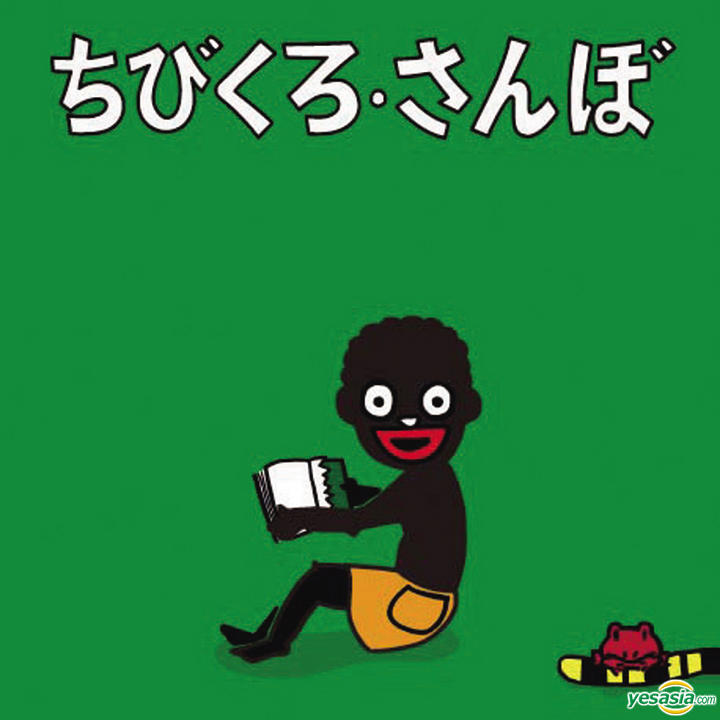
This is the very same book that several Japanese publishing companies had stopped printing due to public outrage in 1988. When the book was reprinted by one rogue publisher in 2005, many residents of Japan–foreign and Japanese–signed a petition encouraging the publishing company to use a different title and illustrations for the book due to their offensive nature:

http://www.debito.org/chibikurosanbo.html

Unfortunately, now that the book Little Black Sambo has been republished and widely distributed in Japan, it is apparent that the book is now being taught at Japanese daycare centers and quite possibly preschools and elementary schools across the country as well. At least two additional volumes of the book have also been printed by the same rogue Japanese publishing company.

…Here is a quick translation of some of the frightening lyrics from the song the children are being taught to enjoy singing daily at the daycare center in Tokorozawa:

“Little Black Sambo, sambo, sambo
His face and hands are completely black
Even his butt is completely black”

Obviously, that kind of speech should never be taught to children by teachers at a daycare center. Those words are more akin to what might be taught by a white supremacist group.

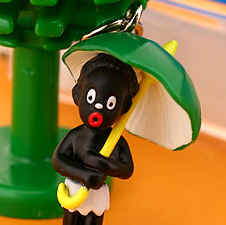
Apparently, the book they daycare center is using even comes complete with demeaning pickaninny images.

Now every time the 3-year old biracial child sees a black person he starts using the racial slur and mentions their black skin. The parents now fear taking their own child out in public or overseas. As the child is of such a young age, it also is not effective for the parents to tell the child not to use those derogatory words outside of daycare, as the child will only use them more.

In an attempt to be as understanding of cultural differences, as it was possible that perhaps the daycare center teachers were just not aware of the problems with the book, the parents of the biracial child both wrote letters in Japanese explaining the history of the book, why the title was discriminatory, and mentioning that they thought that illustrations showing demeaning racial stereotypes were not appropriate for young children.

The parents even showed the teachers that the term “sambo” was offensive and derogatory, both in English and in Japanese.

Beside being used as a disparaging reference to black people, the English dictionary makes it clear that the word is also used to refer to people of “mulatto ancestry,” in other words, the offspring of parents of different racial origin.

After doing a little research, the parents soon found that the term had been in use and deemed derogatory as far back as 1748, 150 years before the book Little Black Sambo was even written. In addition, the derogatory word “sambo” has been prohibited from being broadcasted on TV or radio in Japan, which was also explained to the daycare center.

This fact that the book contains offensive slurs shouldn’t even be considered news to anyone in Japan, when when Little Black Sambo was republished in Japan in 2005, the website of the Asahi News reported that the book was said to “discriminate against black people” and the article can still be found online:

http://book.asahi.com/news/TKY200504190160.html

In an attempt to help the daycare center out of a sticky situation, the parents of the biracial child even had the two following books sent by express mail and took them to the daycare center:

The Japanese translations of “Sam and the Tigers” and “The Story of Little Babaji.”

Both books above are modern, politically-correct retellings of Little Black Sambo that would not cause offense.

However, the daycare center said that they were not only already aware of the politically correct versions of the book, but has also refused to use them.

The daycare center’s excuse is that since all of the children have already learned the title Little Black Sambo, there will be no change in the title whatsoever. The staff have continued to teach the use of the discriminatory word “sambo” and encourage the children to enjoy using it.

In addition, at a meeting with one of the parents of the biracial child, the daycare center said that although they could not make any promises, they would “try” to change the lyrics of the song. However, it seems that additional lyrics were never actually taught and the biracial child and others in the school continue to use the hate speech filled one.

It appears that nothing has been done at all and that the daycare center is just trying to avoid the problem. Despite the parents’ protests, the daycare center still continues to use the racial slur in the presence of their biracial child and encourages the child’s classmates to enjoy singing the song which clearly contains hate speech.

Despite the daycare center’s claims, the fact is that there is no good excuse for racial discrimination.

It is shocking that a daycare center of all places, located just 30 minutes by train from downtown Tokyo, where the population includes a fair number of black people and numerous African Embassies, is teaching hate speech to small children.

As can be imagined, this has caused quite a lot of stress for the family with the biracial child. While understanding that this matter needs to be brought to the attention of the public, one of the parents of the biracial child has expressed concern for their family’s safety, and so wishes that the family not be further identified publicly.

Japanese society is based on shame and often slow to change. As a culture is appears that may Japanese people prefer to try to ignore problems and just hope they go away. Only by shaming organizations that discriminate and drawing the public’s attention to the problem of racial discrimination in Japan, will real change eventually come about.

Please take the time to contact the daycare center yourself, either in English or Japanese, and raise your concerns about the daycare center’s teaching of hate speech to young children. It will only take a minute of your time and contact information is provided below.

Midori Hoikuen (みどり保育園)

Tel: 04-2948-2613 (Monday to Saturday, 9 AM – 5 PM)
Fax: 04-2947-3924
E-mail: qqew85hd@world.ocn.ne.jp

Address:

Sayamagaoka 1-3003-52
Tokorozawa, Saitama 359-1161

Please also make your voice heard, by sending a carbon copy to Tokorozawa City Hall, Department of Daycare Services, which has been informed of this issue:

EMAIL: a9126@city.tokorozawa.saitama.jp

Thank you very much for your time. Your assistance would be greatly appreciated.

Sincerely,

Mark Thompson

This message can be freely copied, distributed or published online. Please help raise awareness of racial discrimination.

re: emancipated slaves

I posted this picture a couple of weeks ago, but just came across an article (found HERE) with details on those in the photograph.  Wow!
One Drop3.jpg

In honor of Confederate History Month, I present a group of emancipated Louisiana slaves. The following letter was written by Colonel George Hanks, who commanded a Union Corps composed entirely of black troops. Hanks was attempting to raise money for the education of freed slaves:

To the Editor of Harper’s Weekly:

The group of emancipated slaves whose portraits I send you were brought by Colonel Hanks and Mr. Phillip Bacon from New Orleans, where they were set free by General Butler. Mr. Bacon went to New Orleans with our army, and was for eighteen months employed as Assistant-Superintendent of Freedmen, under the care of Colonel Hanks. He established the first school in Louisiana for emancipated slaves, and these children were among his pupils. He will soon return to Louisiana to resume his labor.

Rebecca Huger is eleven years old, and was a slave in her father’s house, the special attendant of a girl a little older than herself. To all appearance she is perfectly white. Her complexion, hair, and features show not the slightest trace of negro blood. In the few months during which she has been at school she has learned to read well, and writes as neatly as most children of her age. Her mother and grandmother live in New Orleans, where they support themselves comfortably by their own labor. The grandmother, an intelligent mulatto, told Mr. Bacon that she had “raised” a large family of children, but these are all that are left to her.

Rosina Downs is not quite seven years old. She is a fair child, with blonde complexion and silky hair. Her father is in the rebel army. She has one sister as white as herself, and three brothers who are darker. Her mother, a bright mulatto, lives in New Orleans in a poor hut, and has hard work to support her family.

Charles Taylor is eight years old. His complexion is very fair, his hair light and silky. Three out of five boys in any school in New York are darker than he. Yet this white boy, with his mother, as he declares, has been twice sold as a slave. First by his father and “owner,” Alexander Wethers, of Lewis County, Virginia, to a slave-trader named Harrison, who sold them to Mr. Thornhill of New Orleans. This man fled at the approach of our army, and his slaves were liberated by General Butler.The boy is decidedly intelligent, and though he has been at school less than a year he reads and writes very well. His mother is a mulatto; she had one daughter sold into Texas before she herself left Virginia, and one son who, she supposes, is with his father in Virginia. These three children, to all appearance of unmixed white race, came to Philadelphia last December, and were taken by their protector, Mr. Bacon, to the St. Lawrence Hotel on Chestnut Street. Within a few hours, Mr. Bacon informed me, he was notified by the landlord that they must therefore be colored persons, and he kept a hotel for white people. From this hospitable establishment the children were taken to the “Continental,” where they were received without hesitation.

Wilson Chinn is about 60 years old, he was “raised” by Isaac Howard of Woodford County, Kentucky. When 21 years old he was taken down the river and sold to Volsey B. Marmillion, a sugar planter about 45 miles above New Orleans. This man was accustomed to brand his negroes, and Wilson has on his forehead the letters “V. B. M.” Of the 210 slaves on this plantation 105 left at one time and came into the Union camp. Thirty of them had been branded like cattle with a hot iron, four of them on the forehead, and the others on the breast or arm.

Augusta Boujey is nine years old. Her mother, who is almost white, was owned by her half-brother, named Solamon, who still retains two of her children.

Mary Johnson was cook in her master’s family in New Orleans. On her left arm are scars of three cuts given to her by her mistress with a rawhide. On her back are scars of more than fifty cuts given by her master. The occasion was that one morning she was half an hour behind time in bringing up his five o’clock cup of coffee. As the Union army approached she ran away from her master, and has since been employed by Colonel Hanks as cook.

Isaac White is a black boy of eight years; but none the less intelligent than his whiter companions. He has been in school about seven months, and I venture to say that not one boy in fifty would have made as much improvement in that space of time.

Robert Whitehead–the Reverend Mr. Whitehead perhaps we ought to style him, since he is a regularly-ordained preacher–was born in Baltimore. He was taken to Norfolk, Virginia, by a Dr. A. F. N. Cook, and sold for $1525; from Norfolk he was taken to New Orleans where he was bought for $1775 by a Dr. Leslie, who hired him out as house and ship painter. When he had earned and paid over that sum to his master, he suggested that a small present for himself would be quite appropriate. Dr. Leslie thought the request reasonable, and made him a donation of a whole quarter of a dollar. The reverend gentleman can read and write well, and is a very stirring speaker. Just now he belongs to the church militant, having enlisted in the United States army.

encourage an important social change

I have long held a sneaking suspicion that by honestly exploring the mulatto experience we will encourage important social change.  I am thrilled to hear that way back when, others had the same idea.  But then slavery ended, and the “powers that be” really needed to maintain the color-coded class system that allowed them such control and wealth, and so did our chances (slim though they were) of being counted for what we really are.  This was not a chance, in my opinion, to distance ourselves from blackness, but to disprove the theory that white and black were different species. I do think we’ve moved beyond that antiquated notion, but I’m not so sure there aren’t a great number of people who consciously or unconsciously believe that black and white occupy space at opposite ends of the spectrum of one species.  I think this article says so much and says it very well.

Census reveals history of U.S. racial identity

by Sally Lehrman

Whether or not they can lay claim to a special category, the “Confederate Southern Americans” who want to write themselves into the U.S. census section denoting “race” have a point.

Race, as the social scientists like to say, is “socially constructed.” Since the founding of this country, we have been making it up as we go. Race is a modern idea, historians and anthropologists tell us, a means to categorize and organize ourselves that we constantly adjust.

The U.S. census serves as an archive of this change, a record of classifications that have been “contradictory and confused from the very outset,” says Margo Anderson, a University of Wisconsin, Milwaukee, urban studies historian and expert on U.S. census history. Begun in 1790 as a solution to the problem of how to allocate seats in Congress, the survey didn’t mention “race” originally, but the idea as we understand it today was central. How should slaves be counted? Were they entirely property or were they people? What to do with “civilized” Indians?

Later Congress debated whether to include the word “mulatto,” Anderson says, and finally agreed – but for opposite reasons. Blacks and whites were different species, some argued, so their “unnatural” offspring should be counted. Others felt that documenting the children of black-white relationships would encourage an important social advance.

“Mexicans” were counted as a race in the 1930 questionnaire, but the Mexican government protested and the category disappeared. “Hindu” lasted for three decades. Koreans were written in, pulled out, and added back again.

All along, the “race” category of the census has been a powerful social and political tool wielded both to discriminate and to guard against discrimination. At first, survey categories reflected ideas about the divide between black and white, which immigrants were eligible for citizenship, and how to sort categories of “Indians.” Later, after the Civil Rights Act of 1964, its groupings also made it possible to measure compliance with equal treatment under the law.

The census reveals the process of race, the categories by which Americans construct difference and with difference, special privileges for some. It measures who and what matters, how resources have been allocated, and reflects the political, economic and social interests that prop up race. Race is defined and contested constantly, shaped in both personal and social realms all at once, according to Michael Omi and Howard Winant, sociologists who developed the central paradigm for studying contemporary race in American society.

Today, for instance, many Latinos refuse to conform to the forms of race described in the census. “Hispanic” is separated out as an “ethnicity” on the survey, so members of this group are expected to choose a race, too. About 40 percent in both 1980 and 2000 selected “some other race,” often writing in an identity such as “Venezuelan” instead.

But that’s not to say race is an illusion, a set of categories we can write in or wipe away like chalk on a blackboard. Race arose in America as a means to support and rationalize the slave economy. By the end of the 17th century, writes social anthropologist Audrey Smedley, wealthy planters had carefully woven it into a “rigid and exclusionist” system, a legal and institutional hierarchy built upon skin color.

We continue to shape race through both our institutions and everyday actions, and it powerfully shapes us. Public health statistics reveal the damage. On average, white people can expect to live about five years longer than African Americans. Even middle-class black people are more likely than any other group to live with a chronic health condition or disability. American Indians and Latinos suffer disproportionately from diabetes, Asian Americans bear a heavier burden of tuberculosis and hepatitis B, and the list goes on. While genetic scientists hunt for possible differences in susceptibility, public health experts shine their light on society.

Forces like everyday prejudice, segregated neighborhoods and unequal schools wear out hearts and immune systems, clog up air passages and make us fat. San Francisco is among the cities, in fact, studying the ways in which we build disparate health opportunity right into our streets. Who enjoys neighborhoods with clean, well-lighted sidewalks? Who has to battle congested traffic and diesel fumes to get to work or school? Who can walk to a farmers’ market on Saturday, and who sees only fast-food outlets block after block?

When confronted with race categories neatly printed out on a form, it’s tempting to see them as natural divisions. The inequities that go along with them, it seems to follow, are natural, too. With their proposition to claim themselves as a race, the Southern Confederates challenge all of us to contemplate what we mean by that term and what role we play in making its harms and hierarchies real. And when we learn about racial differences in health, in economic success, in education or any other measure, we should remember the confederates. Race matters, and we are the hands that shape it.

Read more: http://www.sfgate.com/cgi-bin/article.cgi?f=/c/a/2010/04/17/INA41CUC6V.DTL#ixzz0lZT8DJ4W

heterosis

This strikes me as complete and utter bull****.  Excuse me, bologna is more appropriate for this forum.  I just don’t see how you can conduct a scientific study based on personal opinion.  Perceived attractiveness is not a science.  I have a theory that mixed race people have an interesting look, for lack of a better way to put it.  Since we are still a relatively small group, I think there’s something in a mixed race face that may make one take note.  A gaze may linger while a mind tries to process and perhaps dissect what it’s looking at.  And that probably prompts the occasional, “What are you?”  In my opinion, that does not equal more attractive, but I see how it could be misconstrued that way.

I also object to the antiquated notion of heterosis being used in this way- heck, in any way.  Cross-breeding!?  This leads me to believe that Dr. Lewis looks at race as more than a social construct.  I seriously disagree.

Lastly, the notion that because Halle Berry, Lewis Hamilton, and Barack Obama have risen to the top of their respective fields we are to infer that mixed race people are more successful on average makes my skin crawl.  More successful than whom?  Their black counterparts?  That must be what it means because I don’t think anyone can so easily forget the 40+ white presidents, 70+ white actresses, and I don’t know exactly how many (but most likely all) of the former Formula 1 champions that preceded these super-attractive, super-successful mulattoes.  UGH!  So glad I chose not to spend a semester at Cardiff!

Mixed-race people are ‘more attractive’ and more successful, results of a new study suggest.

The Cardiff University study involved rating 1,205 black, white, and mixed-race faces.

Each face was judged on its attractiveness, with mixed-race faces generally perceived as more attractive.

Author of the study, Dr Michael Lewis, also suggested mixed-race people were disproportionately successful in many professions.

The study based its hypothesis on Darwin’s notion of heterosis, the biological phenomenon that predicts that cross-breeding leads to offspring that are genetically fitter than their parents.

Dr Lewis said the phenomenon was mirrored in the results of his study.

“The results appear to confirm that people whose genetic backgrounds are more diverse are, on average, perceived as more attractive,” Dr Lewis said.

Yet there is reason to believe that mixed-race people may not just be more attractive, but more successful.

Dr Lewis said: “There is evidence, albeit anecdotal, that the impact of heterosis goes beyond just attractiveness.

“This comes from the observation that, although mixed-race people make up a small proportion of the population, they are over-represented at the top level of a number of meritocratic professions like acting with Halle Berry, Formula 1 racing with Lewis Hamilton – and, of course, politics with Barack Obama.”

Dr Lewis will present his findings to the British Psychological Society’s annual meeting on Wednesday.

SOURCE

offspring of a foreign race

I have never before thought of mulattoes as victims of the Holocaust.  How ignorant of me.  I now imagine that some of the children fathered by black U.S. servicemen made up the group mentioned in this Delaware memorial.  So much history to uncover.

Interfaith Yom HaShoah service to
remember victims of the Holocaust

The third community interfaith worship service for Yom HaShoah, Holocaust Memorial Day, will be at 4 p.m., Sunday, April 11, at Epworth United Methodist Church, 19285 Holland Glade Road, Rehoboth Beach.

For the past two years, clergy from six faith communities in the Lewes-Rehoboth area have joined to lead a worship service for the community that remembers the tragic events and honors the victims and heroes of the Holocaust.

Shoah is the Hebrew word for “whirlwind.” It is the term used to describe the Nazi firestorm between 1938 and 1945 that swept up 11 million souls – 6 million Jews and 5 million non-Jews including Poles, Rom Gypsies, homosexuals, disabled, mulatto children, clergy and Germans who didn’t believe in the Nazi ideology.

Men and women, young and old alike, were butchered at the hands of the Nazis. Every year, on Yom HaShoah, people remember the martyrs who sanctified the name of God in the camps, ghettos and gas chambers.   Entire article

I looked into the situation further and came across this paragraph on studyofracialism.org:

African German mulatto children were marginalized in German society, isolated socially and economically, and not allowed to attend university. Racial discrimination prohibited them from seeking most jobs, including service in the military. With the Nazi rise to power they became a target of racial and population policy. By 1937, the Gestapo (German secret state police) had secretly rounded up and forcibly sterilized many of them. Some were subjected to medical experiments; others mysteriously “disappeared.”

Here’s insight into Hitler’s had to say about us (found HERE):

MULATTO CHILDREN

Before World War 1 there weren’t very many Black people in Germany. During ww1, France brought Black soldiers in during France’s occupation of Germany. Since there were different colored people living in Germany, the Nazis forcibly sterilized offspring between black men and white women because it held back the campaign for the perfect race. Children that had a black father and a white mother were mulatto children because of their color. Mostly every German despised them and called them ugly names. Hitler wrote,” These mulatto children came through rape or their mother was a whore. In both cases there is not the slightest moral duty regarding these offspring of a foreign race.” This is what happened to children because of the color of their skin.

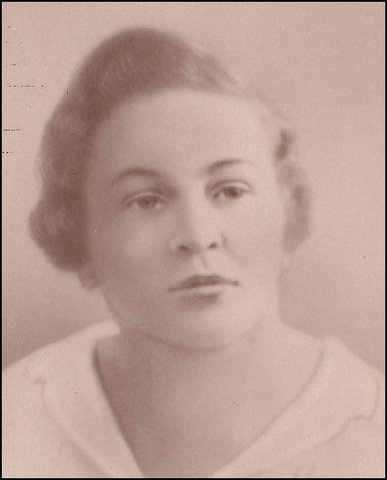
Black German girl 1930

Nazi propaganda photo depicts friendship between an “Aryan” and a black woman. The caption states: “The result! A loss of racial pride.” Germany, prewar.