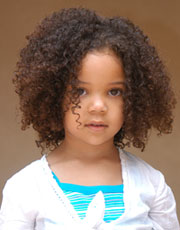
burden of mixed-race?

Raising multi-racial kids in a color-conscious society

by LYLAH M. ALPHONSE

In spite of having a mixed-race president — or, perhaps, because of it — the issue of race is very much alive in modern America.
In 2000, for the first time the U.S. Census offered people the option of identifying themselves by more than one race. About 6.8 million recorded themselves as being multi-racial; more than half of those who consider themselves multi-racial are younger than 20 years old, which seems to indicate a growing acceptance of interracial relationship and a rise in the number of biracial and multiracial kids.
And yet, when it comes to raising these children, some parents are still facing questions and, at times, criticism.
At Babble, Elizabeth G. Hines shares a friend’s reaction to her donor-assisted pregnancy: Why, the friend wondered, would you choose to create a mixed race child? Why wouldn’t you just stick with one race or the other?
She writes:
“… she asked me what my ideal donor would look like. I answered honestly that I had no pre-set “ideal” in mind, but assumed that my partner and I would pick a donor that reflected the racial background of the one of us who was not biologically related to the child. At the time, I was in an interracial relationship — which meant, she quickly deduced, that I was talking about conceiving a bi-racial child. That, and that alone, was enough to make my fair-minded, thoughtful friend shed her liberal cool and call into question my credibility as a potential parent. Not my identity as a gay woman, mind you, which might have been an easy target. This was about race, and the perceived disadvantage I would be burdening a child with by choosing to create him or her from two different racial gene pools.”
The idea that belonging to more than a single racial group could be a disadvantage or a burden is one that I’ve never understood. I’m multiracial. My kids are, too — even my stepkids. My father is of mixed race. As are his parents. And their parents. And their parents. When it comes to mixed marriages, my family’s been doing it for generations.
So, when it comes to defining my race on a form, I check ‘other’ and, if that’s not an option, I don’t check anything at all. Maybe it’s a matter of privilege, but I’ve never been adversely affected by being multi-racial.

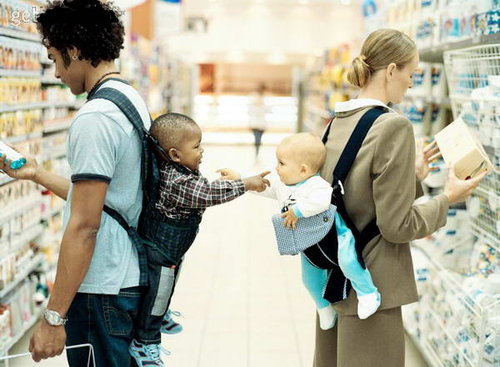
babies on backs in store

dear abby: biracial edition

Dear Abby: Meaning of ‘African-American’ reflects nation’s past, present

by Dear Abby

Posted on Wed, Sep. 30, 2009

DEAR ABBY:: On July 23, “Wondering” asked why President Obama is considered to be African-American and you responded that the term “African-American” is used in this country as a label that describes skin color. However, in the U.S. the term is generally applied to black Americans of slave ancestry.

Before the Civil War we were African-American slaves, not considered fully human by the U.S. Constitution. After the Civil War and the outlawing of slavery, former slaves gained citizenship through amendments to the Constitution but were not able to exercise the full rights of citizenship. Most former slaves wanted to just be “Americans” with all the rights and privileges associated with it – but because of the color of their skin were discriminated against and given second-class citizenship.

The term “African-American” is the result of a search for identity by these new Americans, former slaves and their descendants. We were called by many names – most of them negative, such as “Negro,” “Colored,” “African,” the infamous “N- word,” “Afro-American” and finally, “black.” All of these at one time we considered negative because they didn’t represent self- identification.

The black power movement occurred when Black Americans changed the negative term “black” to the positive term “Black.” The musician James Brown coined the phrase, “Say It Loud, I’m Black and I’m Proud.” Later other black folk began to adopt the term “African-American,” which brings us to the present.

We are a nation that has roots in all nations of the world. Truly, “we ARE the world.” We’re all American, either by birth or naturalization. The labels tend to divide us into groups which separate us rather than bring us together. The saying “United We Stand, Divided We Fall” is true. Let us all come together and all be blessed.

– Rev. Alton E. Paris, American

DEAR REV. PARIS: Thank you for your letter, which is both inspiring and educational. Many readers had comments about my answer, and they were all over the map. Read on:

DEAR ABBY: I am a white female with many African-American friends, and yes, I did vote for Obama. When Obama became president, most of my black friends said: “Finally! We have a black man as president. All this racism will stop. The white man is no longer in charge of things.”

To me, it was like it didn’t matter that his mother was white, he was raised by his grandmother who was white, and he is half-white. What I’m trying to say is, he’s a man of equal parts – not all black. So why do African-Americans make it sound like he is of all black heritage? Isn’t he of white heritage also? A lot of my white friends feel the same way I do.

– Nancy G. in Cleveland

DEAR ABBY: Please inform “Wondering” that according to Webster’s Dictionary, President Obama is mulatto, which is a person who is a first-generation offspring of a black person and a white person.

– William B., Clayton, N.J.

DEAR ABBY: When living in America, I am called an African-American. If I move to Africa, would I be called an American-African?

– Kenneth F., Saraland, Ala.

DEAR ABBY: Many biracial children are considered to be part of the ethnic group they resemble the most. While some may consider it disrespectful to say that someone is of one race when he or she is really biracial, this is the world we live in. We do, truly, “call ’em like we see ’em”!

– Devyn B., Fayetteville, N.C.

Posted on Thu, Oct. 1, 2009

Dear Abby: Is President Obama black, mixed-race or just American?

DEAR ABBY: “Wondering in Goldsboro, N.C.” asked why President Obama is considered to be African-American when he’s biracial.

While your response was accurate, you missed an opportunity to educate your readers by failing to give the historical context as to why most people refer to him as African-American.

There was a time in this country when “blacks”/African-Americans were considered to be only three-fifths of a human being.

Also, if a person had one drop of “black” blood they were considered black.

Although as a society we have progressed intellectually and in our understanding of what a human being is, we continue to hold on to archaic beliefs about skin color that not only pigeonhole an individual, but may force an individual to choose what so-called racial group that he/she identifies with most.

I can clearly see that the conversation regarding “race” and skin color must be continued in this country.

Though we’ve “come a long way, baby,” we still have a long way to go in understanding this country’s deep-rooted responses to skin color.

– Living in America

DEAR LIVING: I think if one digs deep enough, we will come to the realization that there has always been a component of economic exploitation and perceived economic threat that is, and has been, at the root of racial discrimination.

(But that’s just my opinion.)

Read on:

DEAR ABBY: In Obama’s book “Dreams From My Father” he calls himself a black man of mixed descent.

His decision to do that is as much a political decision as it is a personal one.

Most people of color of mixed race in our society have felt we had to choose to be the darker color because we can never be white.

In our society, most people who do or don’t know of Obama’s mixed background would treat him as a black man. (If you saw him walking down the street, would you say, “Hey, that guy’s half-white!”?)

By embracing his political identity he supports and strengthens all black people in the U.S. by standing proudly as one of us.

– Nicole in Marin, Calif.

DEAR ABBY: African-American does not denote skin color, but an ethnic culture, a term that describes those of us who are descendants of captive Africans in America.

It holds the same level of pride as it does for those who pronounce they are Italian-American or Asian-American.

– Michelle in Maryland

DEAR ABBY: You write that the term African-American is used in this country as a label that describes skin color.

I believe you are correct, and that’s the problem.

“African-American” identifies origin or ancestry, not skin color.

Furthermore, if the anthropologists are right, then – going back far enough – we are all African-American.

– African-American Member of the

Human Race in New Jersey

DEAR ABBY: Why can’t we all be called just plain Americans if we grow up in America and are citizens of America?

I think a lot of people have wondered this.

– Sandy B. in Harrisburg, Pa.

DEAR SANDY: That’s a good question and one that I hope will one day be put to rest – if not by our children, then by our children’s children.

– Sincerely, Abby
black mask

diversity in dialogue

I was first intrigued by this article because I once had dreams of going to Amy Grant’s alma mater,  Vanderbilt University.  Then I got to the “biracial factor” at the end and I knew I had to post it.  I’m encouraged that this program has garnered such interested and seems to truly be seeking open and HONEST dialogue.  “Mandatory honesty.”  I like that.  I don’t know an institution can mandate honesty, but it’s a great idea!  And I think it’s also important to remember that once talking about race was considered racist.  I’ve totally been accused.

Race, not immigration is hot topic at Scarritt-Bennett’s Diversity in Dialogue program

By Janell Ross • THE TENNESSEAN • September 28, 2009

Prevailing social wisdom says race, politics and religion don’t make for civil conversation.

But this year, for the first time, the Scarritt-Bennett Center had a waiting list of people who want to participate in its multi-week group dialogues on race in America.

The program, dubbed Diversity in Dialogue, is one of two small local groups that meet over a six-week period to foster discussion and understanding of various hot-button topics.

The conversations are led by group facilitators trained by Scarritt-Bennett. They lay out a series of ground rules that include only one person speaking at a time, mandatory honesty, and what’s said in the circle stays in the circle unless specific permission to share is granted.

“Participation tends to go up and go down,” said Diana Holland, the program’s coordinator. But when race is being discussed “in the media or is part of the general national affairs or even seems to be a big local issue, we do see more interest.”

The 2008 election of Barack Obama, the nation’s first African-American president, has led to many conversations behind closed doors about race, its meaning and its impact, said Tony Brown, a Vanderbilt University sociologist who specializes in social psychology, as well as racial and ethnic relations.

“There was in some circles so much regret that (Obama) was elected and fear about what sort of change this moment represents. Then, there is so much joy,” Brown said.

“I think the fact that both of these emotions were happening in large circles simultaneously just flooded the social system. That conversation couldn’t be held back to private spaces anymore.”

But having honest conversations about race isn’t easy or simple in a country where terms like “post-racial” are being thrown around after a long period in which talking about race was itself considered racist, Brown said.

Jessica Swader is a person who longs for a world where labels — particularly those attached to race — don’t matter. Swader, a biracial 22-year-old Vanderbilt University graduate student with a biracial husband and two children, said she too often finds herself on the receiving end of commentary about how her behavior and choices are “white.”

“I feel really strongly about racism,” she said. “You know my culture, my skin, they don’t define who I am or what I like. I define that.”

Swader says she is hoping to emerge from the six-week, two-hour sessions with a better understanding of the way that people think about biracial individuals — why there is a persistent demand for biracial individuals to identify as one race or another.

Swader says she arrived at the group’s first session last week with the assumption that the group of people who voluntarily came together to discuss race would be almost completely black. Instead she found what she described as a good mix of people younger and older, black and white.

The latest circle formed includes six black participants and eight white.

Diversity In Dialogue logo

meet the de blasios

05_Flatbed_2 - AUGUST

Such an innocent act.  A simple family photo.  I’m so disappointed that anyone even thought to turn this into a “scandal.”  In my opinion, a white man who has a “black” family very likely does “get it” more than one who has not or would not cross that line.  He’s become black by association to a degree, and even if he doesn’t fully understand the experience and the struggles, I’m pretty sure that he cares a lot.  For it affects him.  It affects everyone, but chances are de Blasio cannot and will not ignore it.

New York Post Attack On Bill de Blasio Is Bogus

by Sheryl McCarthy

The New York Post claims that Bill de Blasio’s use of photographs of his interracial family in his campaign mailings for the public advocate’s job amounts to pandering to black voters. Frankly, I was delighted to see the photographs of the Brooklyn City Councilman’s family.

With his wife, Chirlane, an attractive, dark-skinned black woman who wears her hair in natural braids, and his children, Dante and Chiara, who are clearly biracial, the de Blasios are the picture of an attractive and apparently happy family. Leave it to the Post to lend credence to claims by City Councilman Charles Barron that the photographs are designed to pander to black voters, and that they were mailed only to voters in predominantly black sections of the city, while voters in predominantly white areas received mailings with no photos or photos of the candidate only.

DeBlasio’s press secretary’s told me the family photos were sent out citywide and were not intended to appeal to just black voters or other voters of color. They were sent out because, as de Blasio told WNYC interviewer Brian Lehrer, “I’m showing my family, and I’m showing my family to all communities because that is who I am.”

The Post story is a shoddy piece of reporting which quotes only Barron and two anonymous sources who reportedly claim that black women are complaining about the campaign flier in which Chirlane de Blasio says of her husband “He gets it,” because it suggests that de Blasio understands black residents’ concerns simply because he’s married to a black woman.

…It’s customary for politicians to run ads featuring their families. So why shouldn’t de Blasio feature his? They’re certainly attractive, and if the fact that they’re black and bi-racial wins him points in the black community and any other community in the city, so what? When I was a columnist for Newsday I interviewed de Blasio on several occasions, without knowing the race of his wife and children. When I saw the campaign photos, I was frankly delighted. His wife looks adorable, his children attractive, and aware as I am of the dearth of suitable mates for black women in this country, I’m always thrilled to run across a successful man who’s attracted to black women. Since most of the five candidates for the public advocate’s job are more or less qualified for the job, I have to admit this fact makes me think more favorably of de Blasio’s candidacy.

mailer1.JPG

willing to accept

This isn’t the first I’ve heard of biracial children falling under the umbrella of “hard to place” in the adoption world,  but this little article still made me sad.  As if it would be a great sacrifice, or a kind of acquiescence, perhaps an inconvenience to bring one of “those” children into your family.  But hey, they’ll pay you to take one…

Adoption Resourcess, under the umbrella of Jewish Family and Childrens’ Services, is a licensed, nonprofit adoption agency in Massachusetts. They have been in business for 140 years…

“The agency is a conduit for contact”, states the director. They provide counseling, support and education to birthparents before and after the birth. These services are also provided to the adoptive parents, and to adoptees seeking information on their heritage.

For a flat fee, the prospective parent(s) can adopt a healthy, Caucasian infant within one to two years. For those willing to accept biracial or at risk children that wait time can be as little as one year. Betsy notes that the agency is particularly proud of its Lindelli Fund, which provides subsidies to any parent wishing to adopt hard-to-place children.- via

DSCF4909.JPGpj_hair

These children are not up for adoption.  They’re just cute and biracial.

yay, vampire diaries

Usually when I “yay” a show it’s because they are truthfully depicting “biracial.”  This time, though, it’s because CW’s The Vampire Diaries is engaging in some non-traditional casting.  Before Karen of ReelArtsy.com‘s interview with Katerina Graham I had never heard of the actress or this upcoming series.  When I looked into it I was happy to learn that the character Ms. Graham will play is written as white in the The Vampire Diaries books.  Way to be open minded CW!

vampire_diaries_tca

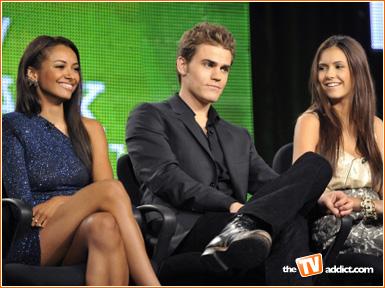
Katerina Graham plays Bonnie on The Vampire Diaries.

As any fan of the L.J. Smith novels on which this show is based is aware of, there are some differences between Elena’s BFF in the books and the character portrayed by Graham.

For starters, the former is blonde.

But, in a new interview, Graham says she’s taking a fresh approach to the role.

“In an interesting way, Bonnie kind of sets the tone of the show. She has a very foreboding texture. It’s a great show. The writing is great and the cast is really great,” Graham said, adding:

“If you’ve read the books you’ll notice there are some differences between Bonnie and me, physically. The best thing I could have done for myself and for the fans, and to do justice to L.J.’s novels, was to forget the physical characteristics of Bonnie and capture her essence. I think L.J. is great. I thank her for giving the world these books.

The Vampire Diaries premieres on September 10 on The CW.

via

katerina graham

ReelArtsy.com has a great interview with biracial actress Katerina Graham.  You can read it in it’s entirety here.

katerina-graham

On being black/biracial in Hollywood:

“Luckily I’ve worked my butt off. I’ve been able to do roles that weren’t necessarily meant for me because of what I look like. I’ve been fortunate enough to surpass certain expectations that anyone might have had of me. Sometimes it’s been hard, sometimes they’re like ‘oh you’re not black enough’ or ‘you’re not white enough’ or ‘we don’t know what to do with you’ or ‘you don’t match up with this person’. And sometimes it’s been a blessing, sometimes I’ve been able to blaze my own way trails and say: you know what I’m biracial, I don’t come from necessarily the background that some other people have but if you give me a chance I’ll promise I’ll do a good job and I know what I’m doing. And I think that color aside, and all of that aside, it’s work that matters. You being a good actor, being a good person, you know, it’s who you are inside that is going to make it either…you succeed or you fail.

And I have great parents. I have great people around me. I have a great cast who doesn’t judge each other on anything physical. It’s a very loving environment and I think that I’m just fortunate enough to break certain stereotypes and hopefully lead the way maybe for other African-American women who would love the same opportunities or who would love to do something different.”

birthers

A couple of days ago I came across a well written letter to the editor of the Philadelphia Daily News addressing “birthers.”  I’ve been trying to ignore the birthers.  Too crazy to waste time on.  But of course I do have an opinion, and Rev. Weathers echoes it.

THERE are many who aren’t going to agree with my assessment of the questions about the citizenship of President Obama.

But the questions say to me as an African-American that whatever President Obama does will not be accepted by a certain faction in this country because of his race.

Hawaii became part of the U.S. in 1959. President Obama was born in Hawaii in 1961. The state of Hawaii has confirmed that Barack Obama was born in the state, which answers the question and places a period at the end of the story. Yet we still have some on the extreme right who continue to perpetuate this propaganda because they have never accepted the fact that America has elected its first African-American president.

If the critics of President Obama don’t believe he was born in the state of Hawaii, they have a right to sue Hawaii for falsifying records and committing fraud. Would they go this far? No, because they know they don’t have a case. The birthers’ story illustrates that they will not accept President Obama because of the color of his skin.

Rev. Dr. Wayne M. Weathers, Philadelphia via

obama buttons

biracial comedienne sued

By her mother-in-law! I sure wouldn’t want to be at their Hanukkah celebration this year.

Comedienne Sunda Croonquist sued by her mother-in-law over mother-in-law jokes

Legal News ExaminerWilliam Pfeifer, Jr.


AP Photo/Matt Sayles

Sunda Croonquist, a comedienne whose comedy routine often includes jokes about her family, has been served with prime new material that she probably won’t  use.

Croonquist has been sued by her mother-in-law over her mother-in-law jokes.

The lawsuit against Croonquist alleges that Croonquist made false, defamatory, and racist jokes about her mother-in-law, Ruth Zafrin.  Zafrin is joined in the lawsuit by her daughter, Shelley Edelman, and Edelman’s husband, Neil.  In the lawsuit, they demand that Croonquist remove the offensive statements from her website, comedy routines, and recordings.

Croonquist, the biracial child of a Swedish father and an African-American mother, married into a Jewish family.  She asserts she is clearly not an anti-semite because she converted to Judaism before even meeting her Jewish husband.

Croonquist states that she will drop the allegedly offensive jokes from her comedy routine, but she flatly refuses to pay any monetary damages.