people don’t know how to treat you

This article is from 2005.  I wonder if the family has noticed a shift in attitudes over the last five years.  And of course I’d love to hear from little Toni.  The bridge between them.  I like that part a lot.

HOW DARE THEY TREAT US LIKE THIS?

by DIANA APPLEYARD

JAN LLOYD, 45, has been married to Tony, 48, for ten years. The couple have a four-year-old daughter, Toni. They run a successful martial arts business, Fighting Fit, with gyms around South London, where they live.

photo by Jenny Goodall

Jan says:

PEOPLE have spat at me in the street, stared at me, jostled me and shouted at me — all because I fell in love with a black man. But unless you have experienced it, you are unlikely to have any idea of the racism in British society.

It’s terrifying, but it’s something I am aware of every day of my life. We were taking our daughter Toni to see the GP when she was only two years old, when I was spat at in the street. It was completely random — a white man in his 40s looked us up and down and then spat at me.

It was so disgusting — I couldn’t believe it was happening. I looked for support, but everyone looked away. They were embarrassed and probably disgusted too, but no one wanted to get involved. I was shaking and tearful, but angry as well — how could someone behave like that in a civilised society?

As I walk down the street, go to the pictures, eat out in restaurants or go to the theatre, I am frequently aware of a kind of coldness and embarrassment around me. The only way I can describe it is that it’s like being disabled — people don’t know how to treat you.

They don’t know what to say to me. You can see the thought running through people’s minds: ‘Why is she with a black man?’
When I got together with Tony, a lot of my friends melted away. They’d invite me to a party with my new boyfriend, but then, mysteriously, they’d never invite us again. Once, early in our relationship, I’d booked a table at a nice restaurant. When we arrived, there were lots of empty tables — but they put us at the back, next to the toilets. I was going to complain, but Tony told me just to leave it. He’s used to it. Our backgrounds could not be more different. I was brought up in a well-off family in Sussex and was privately educated. I met Tony when I took up aerobics and he was my instructor.  I thought he was nice, but our relationship didn’t progress until I was in a horrid road-rage incident, when a man hit my car and then bashed on my window. It made me realise I ought to learn self-defence and Tony also taught martial arts. Before I fell for him, I’d been out with City types, public-school educated white men, so Tony was a real change. I thought he was intelligent and interesting — I was fascinated by the fact that his life was so different from mine.

He was born in Yorkshire, but his family moved to London when he was three. He had traditional values and an old-fashioned approach to relationships. There was also a lovely warmth about him. He was successful and welloff through his business and he was a real self-made man.

We started going out and six months later I met his family. He’s one of six and it was so different from my middle-class home — they were so loud, so welcoming, pressing food on me and firing questions at me.

Tony told me he’d been badly beaten up as a child by racist bullies and that nearly every day he faced some kind of prejudice or abuse — it hurt him so much.

But it wasn’t long before I started to experience the kind of hostility he’d faced most of his life. Suddenly, being with him, I was made to feel like a freak, a secondclass citizen. It was bizarre. There was so much disapproval in people’s glances. There seems to be this attitude like ‘Aren’t white men good enough?’ when all I had done was fall in love.

We had been together only six months when we decided to get married and it came as a shock to my parents, who asked me if I was sure it was going to work given our cultural backgrounds. But they have since mellowed and little Toni is the bridge between us.

My parents are very traditional, and all they could see were problems in a mixed marriage.

We married on a beach in St Lucia. Both sets of parents came and it made such a difference being there — we were surrounded by welcoming black people, and my parents felt less uneasy.  Now they are very supportive of Tony and can see what a good man he is. Before, they — like so many others — had only seen the stereotypes.

After our wedding I joined Tony in his business, and Fighting Fit is now very successful. We live in a lovely four-bedroom house, we enjoy great holidays, scuba dive, ride horses and have a happy, middle-class life. Now when I get the looks, I ignore them and carry on. They can’t harm our life or family.

I did worry a little about our daughter and whether she’d face any prejudice at school being mixed race, but she’s totally accepted — she’s just Toni, with a big personality for a little girl, so sunny and confident. Everyone loves her.

SOURCE

white mothers of mixed-race children

I want to be a part of this research!  I’ve long been fascinated by the “white mom having” vs. “black mom having” biracial experience.  One similarity I can glean from my own “black mom having” experience and what is written in this article about that of the white mothers is the scrutiny.  I vividly remember my mother’s parenting being scrutinized by the mothers of my white classmates and some of the school faculty as well.

Do Racist Attitudes Hinder Mothers Of Mixed-Race Children?

via, Adapted from materials provided by University of Royal Holloway London, via AlphaGalileo.

Professor Ravinder Barn and Dr Vicki Harman from the Centre for Criminology and Sociology at Royal Holloway, University of London are carrying out research into white mothers of mixed-race children. It is part of a wider study of mixed-race children and young people that has spanned more than two decades.

Parenting as an activity has become the focus for much concern at a policy and academic level, and the experiences of white women mothering mixed-race children is also receiving considerable attention.

Globalisation and migration are playing key roles in determining the social and familial landscape of contemporary western societies. Government statistics in the UK, Canada and the USA point to the increasing racial and cultural heterogeneity and the growth of the mixed-race population. Although many of these families lead relatively trouble-free lives, there is evidence of vulnerability and disadvantage for others in a number of areas including education, health, social care and the criminal justice system.

New and ongoing research was presented at a one day inter-disciplinary research conference, organised by Professor Barn and Dr Harman to disseminate the findings to those working with inter-racial families and to determine the research agenda of the future.


“In the academic and popular discourse, there is now a concern that ‘mixed families’ have become problematised. White mothers in these settings are often subjected to a racialised critical social gaze in a way that their parenting is placed under scrutiny,” said Professor Barn.

Dr Harman added, “Although the growing number of mixed relationships have been suggested to be evidence of a more tolerant society, social significance continues to be attached to relationships involving people from different ethnic backgrounds. White mothers of mixed-parentage children can find themselves dealing with racism directed at their children as well as facing social disapproval themselves”.

The six papers presented at the event explored a range of areas including: the mixed-race landscape in the Canadian context, common themes amongst families experiencing social service involvement, the need to understand the social networks utilized by white mothers in mixed families and historical research looking at government archives to understand the ways in which white women’s role in nation building had been marginalized.

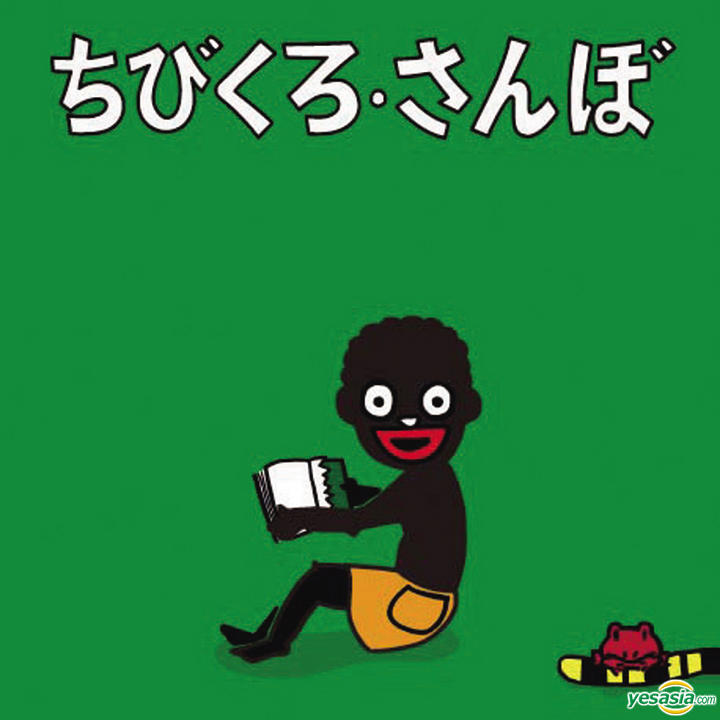
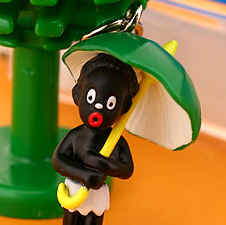
little. black. sambo.

For someone who has a romanticized view of Japan as a near-perfect country/society, this is quite disappointing.  It’s not the first I’ve heard of Japanese insensitivity to stereotypes of African-Americans, and I hope that’s all it is.  Insensitivity.  Oh, Japan.

Little Black Sambo Comes to A Japanese Kindergarten

By Geoff Dean

The end of the last year of kindergarten and/or nursery school in Japan usually features a school play. My elder daughter played Toto in a very loosely arranged “Wizard of Oz” (there were two other Toto`s and all the boys were flying monkeys, meaning there was no scarecrow or tin man) while my younger one recently took a shot at “Alice in Wonderland” in a form probably unrecognizable to Lewis Carroll.

So when a nursery school in Saitama ran a school play, it was nothing out of the ordinary. There were songs, cute costumes, dancing, and kids who cried when the couldn`t remember their lines. Pretty much par for the course. Except that the school play was “Little Black Sambo”.

The Midori (Green) Nursery School of Tokorozawa, Saitama Prefecture (about an hour northwest of Tokyo) might have escaped notice if one concerned parent of a biracial child who attended the school, had not posted the play`s contents to Facebook. On questioning, a teacher at the school admitted reading the controversial book to the kids in her charge and arranging the school play based on the book. She said the kids “all” loved the book and found it very “cute”. The children even sang a ditty she wrote that was translated as “Little Black Sambo, Sambo, Sambo. His face and hands are completely black. Even his butt is completely black.”

This is not the first time that the racial insenstivity of Japan has gotten them in trouble. A few years back, a toothpaste brand called “Darkey” featured a grotesque picture of a person of color with hugely oversized lips and glowing teeth, the implication apparently being that this toothpaste would make your teeth as shiny as those of a “darkey”. It was ultimately pulled from the shelves but not without much consternation. Many Japanese friends asked me what all the fuss was about.

Another involved the drink Calpis which is sold as Calpico is the states. The carton of the drink featured a “minstrel Al Jolson-style” black faced person with a top hat and the proverbial oversized lips. It was also eventually withdrawn.

I am especially concerned that “Little Black Sambo” was performed in a school where a biracial child was in attendance. How was he/she expected to feel? Did the teacher even consider that? I rather doubt it.

Still, the problem in my view ultimately stems from the lack of exposure and contact (deep, not superficial) that Japanese people have with the outside world. Traveling to and shopping in Guam and Hawaii does not equal “cultural sensitivity.” Especially in rural areas like Saitama, the idea that some might find “Sambo” offensive has never sunk in. But then again, when we have a governor of Tokyo like Shintaro Ishihara who constantly blames the rise of crime on foreigners and especially the Chinese, despite reams of data to the contrary, what can be expected?

Now, as for homphobia, ageism, sexism and glorification of the abuse of women in Japanese media….OK, don`t get me started already!

SOURCE

The facts that the story is read at the school and that this “play” was performed are disheartening, but it gets worse!  The parents of the biracial child complained.  Big time.  And yet the school refuses to remove the book from the classroom, or to stop the children from singing the offensive ditty.  I found this letter detailing the fallout after the performance on BlackTokyo.com.

Dear Black Tokyo,

I would like to bring the following matter to your attention.

A daycare center named Midori Hoikuen (みどり保育園), or Green Daycare Center, in Tokorozawa City in Saitama Prefecture, located just 30 minutes by train from Ikebukuro station in Tokyo, has been teaching hate speech to three-year old children daily, despite the protests of the parents of at least one biracial child in the class.

http://tinyurl.com/yz8ht6m

Although technically a private institution, the parents were originally instructed by the city of Tokorozawa that their child would have attend daycare there.

During the two years that the child has attended the daycare center, the parents had never once voiced a single concern about the operation of the daycare center until much to the their shock, the daycare center based a play / musical to be performed on Saturday, February 27th, 2010, on the book Little Black Sambo:

http://tinyurl.com/2xgvg8

This is the very same book that several Japanese publishing companies had stopped printing due to public outrage in 1988. When the book was reprinted by one rogue publisher in 2005, many residents of Japan–foreign and Japanese–signed a petition encouraging the publishing company to use a different title and illustrations for the book due to their offensive nature:

http://www.debito.org/chibikurosanbo.html

Unfortunately, now that the book Little Black Sambo has been republished and widely distributed in Japan, it is apparent that the book is now being taught at Japanese daycare centers and quite possibly preschools and elementary schools across the country as well. At least two additional volumes of the book have also been printed by the same rogue Japanese publishing company.

…Here is a quick translation of some of the frightening lyrics from the song the children are being taught to enjoy singing daily at the daycare center in Tokorozawa:

“Little Black Sambo, sambo, sambo
His face and hands are completely black
Even his butt is completely black”

Obviously, that kind of speech should never be taught to children by teachers at a daycare center. Those words are more akin to what might be taught by a white supremacist group.

Apparently, the book they daycare center is using even comes complete with demeaning pickaninny images.

Now every time the 3-year old biracial child sees a black person he starts using the racial slur and mentions their black skin. The parents now fear taking their own child out in public or overseas. As the child is of such a young age, it also is not effective for the parents to tell the child not to use those derogatory words outside of daycare, as the child will only use them more.

In an attempt to be as understanding of cultural differences, as it was possible that perhaps the daycare center teachers were just not aware of the problems with the book, the parents of the biracial child both wrote letters in Japanese explaining the history of the book, why the title was discriminatory, and mentioning that they thought that illustrations showing demeaning racial stereotypes were not appropriate for young children.

The parents even showed the teachers that the term “sambo” was offensive and derogatory, both in English and in Japanese.

Beside being used as a disparaging reference to black people, the English dictionary makes it clear that the word is also used to refer to people of “mulatto ancestry,” in other words, the offspring of parents of different racial origin.

After doing a little research, the parents soon found that the term had been in use and deemed derogatory as far back as 1748, 150 years before the book Little Black Sambo was even written. In addition, the derogatory word “sambo” has been prohibited from being broadcasted on TV or radio in Japan, which was also explained to the daycare center.

This fact that the book contains offensive slurs shouldn’t even be considered news to anyone in Japan, when when Little Black Sambo was republished in Japan in 2005, the website of the Asahi News reported that the book was said to “discriminate against black people” and the article can still be found online:

http://book.asahi.com/news/TKY200504190160.html

In an attempt to help the daycare center out of a sticky situation, the parents of the biracial child even had the two following books sent by express mail and took them to the daycare center:

The Japanese translations of “Sam and the Tigers” and “The Story of Little Babaji.”

Both books above are modern, politically-correct retellings of Little Black Sambo that would not cause offense.

However, the daycare center said that they were not only already aware of the politically correct versions of the book, but has also refused to use them.

The daycare center’s excuse is that since all of the children have already learned the title Little Black Sambo, there will be no change in the title whatsoever. The staff have continued to teach the use of the discriminatory word “sambo” and encourage the children to enjoy using it.

In addition, at a meeting with one of the parents of the biracial child, the daycare center said that although they could not make any promises, they would “try” to change the lyrics of the song. However, it seems that additional lyrics were never actually taught and the biracial child and others in the school continue to use the hate speech filled one.

It appears that nothing has been done at all and that the daycare center is just trying to avoid the problem. Despite the parents’ protests, the daycare center still continues to use the racial slur in the presence of their biracial child and encourages the child’s classmates to enjoy singing the song which clearly contains hate speech.

Despite the daycare center’s claims, the fact is that there is no good excuse for racial discrimination.

It is shocking that a daycare center of all places, located just 30 minutes by train from downtown Tokyo, where the population includes a fair number of black people and numerous African Embassies, is teaching hate speech to small children.

As can be imagined, this has caused quite a lot of stress for the family with the biracial child. While understanding that this matter needs to be brought to the attention of the public, one of the parents of the biracial child has expressed concern for their family’s safety, and so wishes that the family not be further identified publicly.

Japanese society is based on shame and often slow to change. As a culture is appears that may Japanese people prefer to try to ignore problems and just hope they go away. Only by shaming organizations that discriminate and drawing the public’s attention to the problem of racial discrimination in Japan, will real change eventually come about.

Please take the time to contact the daycare center yourself, either in English or Japanese, and raise your concerns about the daycare center’s teaching of hate speech to young children. It will only take a minute of your time and contact information is provided below.

Midori Hoikuen (みどり保育園)

Tel: 04-2948-2613 (Monday to Saturday, 9 AM – 5 PM)
Fax: 04-2947-3924
E-mail: qqew85hd@world.ocn.ne.jp

Address:

Sayamagaoka 1-3003-52
Tokorozawa, Saitama 359-1161

Please also make your voice heard, by sending a carbon copy to Tokorozawa City Hall, Department of Daycare Services, which has been informed of this issue:

EMAIL: a9126@city.tokorozawa.saitama.jp

Thank you very much for your time. Your assistance would be greatly appreciated.

Sincerely,

Mark Thompson

This message can be freely copied, distributed or published online. Please help raise awareness of racial discrimination.

encourage an important social change

I have long held a sneaking suspicion that by honestly exploring the mulatto experience we will encourage important social change.  I am thrilled to hear that way back when, others had the same idea.  But then slavery ended, and the “powers that be” really needed to maintain the color-coded class system that allowed them such control and wealth, and so did our chances (slim though they were) of being counted for what we really are.  This was not a chance, in my opinion, to distance ourselves from blackness, but to disprove the theory that white and black were different species. I do think we’ve moved beyond that antiquated notion, but I’m not so sure there aren’t a great number of people who consciously or unconsciously believe that black and white occupy space at opposite ends of the spectrum of one species.  I think this article says so much and says it very well.

Census reveals history of U.S. racial identity

by Sally Lehrman

Whether or not they can lay claim to a special category, the “Confederate Southern Americans” who want to write themselves into the U.S. census section denoting “race” have a point.

Race, as the social scientists like to say, is “socially constructed.” Since the founding of this country, we have been making it up as we go. Race is a modern idea, historians and anthropologists tell us, a means to categorize and organize ourselves that we constantly adjust.

The U.S. census serves as an archive of this change, a record of classifications that have been “contradictory and confused from the very outset,” says Margo Anderson, a University of Wisconsin, Milwaukee, urban studies historian and expert on U.S. census history. Begun in 1790 as a solution to the problem of how to allocate seats in Congress, the survey didn’t mention “race” originally, but the idea as we understand it today was central. How should slaves be counted? Were they entirely property or were they people? What to do with “civilized” Indians?

Later Congress debated whether to include the word “mulatto,” Anderson says, and finally agreed – but for opposite reasons. Blacks and whites were different species, some argued, so their “unnatural” offspring should be counted. Others felt that documenting the children of black-white relationships would encourage an important social advance.

“Mexicans” were counted as a race in the 1930 questionnaire, but the Mexican government protested and the category disappeared. “Hindu” lasted for three decades. Koreans were written in, pulled out, and added back again.

All along, the “race” category of the census has been a powerful social and political tool wielded both to discriminate and to guard against discrimination. At first, survey categories reflected ideas about the divide between black and white, which immigrants were eligible for citizenship, and how to sort categories of “Indians.” Later, after the Civil Rights Act of 1964, its groupings also made it possible to measure compliance with equal treatment under the law.

The census reveals the process of race, the categories by which Americans construct difference and with difference, special privileges for some. It measures who and what matters, how resources have been allocated, and reflects the political, economic and social interests that prop up race. Race is defined and contested constantly, shaped in both personal and social realms all at once, according to Michael Omi and Howard Winant, sociologists who developed the central paradigm for studying contemporary race in American society.

Today, for instance, many Latinos refuse to conform to the forms of race described in the census. “Hispanic” is separated out as an “ethnicity” on the survey, so members of this group are expected to choose a race, too. About 40 percent in both 1980 and 2000 selected “some other race,” often writing in an identity such as “Venezuelan” instead.

But that’s not to say race is an illusion, a set of categories we can write in or wipe away like chalk on a blackboard. Race arose in America as a means to support and rationalize the slave economy. By the end of the 17th century, writes social anthropologist Audrey Smedley, wealthy planters had carefully woven it into a “rigid and exclusionist” system, a legal and institutional hierarchy built upon skin color.

We continue to shape race through both our institutions and everyday actions, and it powerfully shapes us. Public health statistics reveal the damage. On average, white people can expect to live about five years longer than African Americans. Even middle-class black people are more likely than any other group to live with a chronic health condition or disability. American Indians and Latinos suffer disproportionately from diabetes, Asian Americans bear a heavier burden of tuberculosis and hepatitis B, and the list goes on. While genetic scientists hunt for possible differences in susceptibility, public health experts shine their light on society.

Forces like everyday prejudice, segregated neighborhoods and unequal schools wear out hearts and immune systems, clog up air passages and make us fat. San Francisco is among the cities, in fact, studying the ways in which we build disparate health opportunity right into our streets. Who enjoys neighborhoods with clean, well-lighted sidewalks? Who has to battle congested traffic and diesel fumes to get to work or school? Who can walk to a farmers’ market on Saturday, and who sees only fast-food outlets block after block?

When confronted with race categories neatly printed out on a form, it’s tempting to see them as natural divisions. The inequities that go along with them, it seems to follow, are natural, too. With their proposition to claim themselves as a race, the Southern Confederates challenge all of us to contemplate what we mean by that term and what role we play in making its harms and hierarchies real. And when we learn about racial differences in health, in economic success, in education or any other measure, we should remember the confederates. Race matters, and we are the hands that shape it.

Read more: http://www.sfgate.com/cgi-bin/article.cgi?f=/c/a/2010/04/17/INA41CUC6V.DTL#ixzz0lZT8DJ4W

improving the nation’s racial pains

This little article means a lot to me.  It brought some things into focus.  Beyond defusing what I perceive to be the invisibility of the “mulatto,” this race work is important to me because I recognize the truth in the statement “We don’t know how to know each other.”  It pains me because I know how to know each other.  I am each other.  And I know that outside of the dogma of race, there ain’t much difference between anybody.  Oh, and of course, I’ve gotta get this book.

Author takes on difficult race issues

By Bradley Schlegel

WHITPAIN — Growing up in a home with racial preconceptions, Lauren Deslonde said she lacked the knowledge to mount a credible challenge.

“We never talked about race,” said Deslonde, a Lansdale resident and psychology major at Montgomery County Community College.

She said Bruce Jacobs’ book can provide the proper tools to help her 5-year-old biracial daughter learn to improve the nation’s racial pains.

Jacobs, the author of “Race Manners for the 21st Century: Navigating the Minefield Between Black and White Americans in an Age of Fear,” explained Tuesday to an audience of students, faculty and staff that issues between races will improve once people begin to relate on a more personal level.

“It’s a big problem,” he said. “We don’t know how to know each other. In this country, that idea is lost. Or we’ve never had the ability to get that gift.”

The book provides strategies to help people better understand each other, according to Jacobs, who appeared during a Presidential Symposium held in the Science Center auditorium.

“Bruce Jacobs tells it like it is,” said Karen A. Stout, the college’s president, in her introduction. “And he helps all us do the same thing with clarity.”

Discussions over race — which evoke feelings of shame, rage and fear in African-American and self-identified white people — are often unproductive, according to Jacobs.

“This is a hard issue,” he said. “We’re working against a headwind.”

Two of the many impediments include our nation’s history and the media’s role in coarsening the discussion to maximize profits, according to Jacobs.

He said many citizens are still in denial about a culture founded on human slavery and genocide of the Native Americans.

“This gets in our way every day,” said Jacobs, a self-described writer, poet and musician. “All I want to know is, ‘Are you down with repairing the damage or not?'”

On the media, he said companies have replaced journalists and commentators with “rage talk radio” that “scares the pants off of anyone” wishing to have a thoughtful discussion over race and politics.

“That has nothing to do with democratic discourse,” Jacobs said. “It’s a false standard.”

He presented five strategies to make conversations more survivable and rewarding: embrace a person’s goodness while challenging bad ideas; be prepared to occasionally speak inappropriately; talk to people as they show themselves to be; don’t wait for a major issue to communicate with people of another race; and don’t shy away from discussing difficult issues.

The symposium helps students learn to relate to people of other races, according to Sam Wallace, a cultural geography professor at the school.

“Many of my students have not had much contact with the outside world,” he said. “Some have never been to Philadelphia.

SOURCE

changing attitudes and understandings about race

I thought I was over the Census, but my interest keeps getting piqued despite my best efforts to ignore the chatter.  What I’m most intrigued by at this moment is the notion that in the next decade or two, if we keep changing our attitudes and understandings for the better, a majority of Americans could come to view themselves as mixed race.  And by that I mean Americans who today consider themselves to be exclusively white or black despite the abstract knowledge that we are all mixed up to some extent.  And if that paradigm shift happens there won’t be much use in classifying ourselves in terms of “race” because we will see ourselves as generally more similar than different regardless of color/phenotype.  Although I respect Obama’s right (and that of every individual) to self-identify any way he chooses, I feel that the checking of just one box is holding us back from reaching that “promised land” where we aren’t so entrenched in these antiquated notions of race and color, but perhaps more interested in heart, spirit, intellect …. Once again I’m a bit speechless because I’m not sure what the world will look like when instinctively and instantly we take people for what the truly are instead of what they truly look like.

Rep. Patrick McHenry claims every census in history has asked for an individual’s race

SOURCE

In an op-ed piece for the conservative Web site Red State on April 1, 2010, Rep. Patrick McHenry, R-NC, the ranking Republican on the Information Policy, Census and National Archives Subcommittee, sought to tamp down some of the misinformation being spread about the census by “otherwise well-meaning conservatives” and warned that failing to fully participate in the census could create a competitive advantage for Democrats.

Specifically, McHenry attempted to allay the fear among some Republicans who distrust the government and view the census as overly prying.

…In his posting on Red State, McHenry said “the most private question on this year’s form asks for an individual’s race and that question has been asked by every census since the 1790 census conducted under then-President George Washington.”

We decided to check that claim out, which was similar to one from Census Bureau Director Robert M. Groves in a March 15, 2010, press release: “It’s one of the shortest forms in our lifetime with just 10 questions very much like the questions James Madison and Thomas Jefferson helped craft on the very first Census.”

Conveniently, the U.S. Census Bureau keeps historical records online of all the questions asked in every census going back to the first one in 1790.

If you follow the census questions asked through U.S. history, you can see how they reflect changing attitudes and understandings about race.

Yes, the 1790 census and others in the early years of the survey addressed race, but it was hardly a matter of checking a box. Rather, the census asked about the number of free white males and females; the number of “all other free persons” and the number of slaves.

By 1850, the Census asked about people’s “color.” According to the Census archives, this column was to be left blank if a person was white, marked “B” if a person was black, and marked “M” if a person was mulatto. A separate form listed slave inhabitants, the last census to do so. By 1870, the “color” options included “W” for white, “B” for black, “M” for mulatto, “C” for Chinese (a category which included all Asians), or “I” for American Indian. The 1890 census added Japanese and more mixed-race categories — mulatto, quadroon and even octoroon, according to amounts of perceived African blood. By 1920 Filipino and Korean sprang up, along with the improbable racial term “Hindu.” New labels emerged after World War II, with Hawaiian, Eskimo and others joining the parade of terms.  The question morphed into “color or race” in the mid-1900s, and then, finally to just “race” in 1970. In 1980, in addition to race, the Census began asking if a person was of Spanish or Hispanic origin or descent.

It’s fair to say that every census has addressed the issue of race in some fashion. But we think it’s a bit of a stretch when McHenry says “this year’s asks for an individual’s race and that question has been asked by every census since the 1790 census.”

In the 1790 Census (and several after it), a respondent was not simply asked their race. Rather, they were asked to list the number of white people, the number of “other free persons” and the number of slaves. In other words, it didn’t ask for the race of non-whites. One could argue this reflects the common attitude about race at the time. But that’s hardly the same as the 2010 version that simply asks a person’s race.

Prior to the Civil War the census was more concerned with whether someone was enslaved or not, than establishing whether someone was white. This is a very different conception from our modern idea of race. Post Civil War, the terminology changed (from “color” to “race,” for example) and the categories expanded over time. Certainly these are different standards when compared to today’s measures. But again, one could argue that the questions comported with attitudes about race at those times, and the census has always asked discriptive questions that corrolate to race. So we rule McHenry’s claim Mostly True.

if you look like one, you could be another

Brilliant!!! I love everything about this!  I’ll admit that I felt what I would have described back then as “weird” about my (mixed)race.  Looking back, I think “shame” fits the bill.  I’m so happy to hear that acknowledged, and even happier that feelings are changing to pride.  Mine included.

Danbury’s multi-racial students to star in film

Eileen FitzGerald

DANBURY — The three boys wore jeans and long-sleeve T-shirts. The two girls each wore a dozen bracelets and necklaces. They looked like typical students in the library media center at Broadview Middle School.

It was their differences, however, that brought them together Monday. They’re subjects in a documentary in which Western Connecticut State University professor Marsha Daria is examining the identity and social relationships of multiracial children.

Daria is interviewing elementary, middle and high school students to help educators and teacher training programs consider multiracial students in the curriculum and school issues.

The sixth-, seventh- and eighth-graders carry the roots of about a dozen ethnic heritages, including African American, Spanish, Italian, Scottish, Irish, Chinese and Portuguese.

“It’s cool to be two races, because you get to experience two different cultures and those countries,” sixth-grader Jonathan Garcia, 11, said.

Jonathan, who is half Chinese and half Puerto Rican, was a little nervous to be interviewed but glad to express his feelings about the issue for the movie.

“This gives me a chance to say that what race you are doesn’t matter. If you look like one, you could be another,” he said. “Sometimes they say I am Asian, but what bothers me is that I’m not all Asian. They say things about Asians that I don’t think are nice.”

Sometimes he points out people’s negative comments, and they acknowledge they were wrong. Other times he ignores what people say.

Eighth-grader Kiani Oliveira, 14, who is Portuguese, African American, Indian and Scottish, wanted people to know that multiracial people are unique.

“Like we look different. Our skin color is different, and our hair and eyes can be different — unique,” she said. “It’s not harder to be multiracial. My friends take me as I am and think I’m cool.”

A Western Connecticut State University Professor, Marsha Daria, is filming a documentary on multiracial children. Daria and the film crew where filming at Broadview Middle School in Danbury on Monday March 29, 2010. From left, cameraman Scott Volpe of WCSU media services, Broadview student Kiani Oliveira, 14, and Professor Marsha Best. Photo: Lisa Weir

Daria is doing this project during her sabbatical as an education professor at WestConn, where she has taught since 1995. Her film crew is from WestConn –Rebecca Woodward, Scott Volpe and Renato Ghio– and she consults Emmy award-winning producer and director Karyl Evans.

“It’s critical to examine the ways in which we talk about race and ethnicity. There is a change in how kids view themselves. They used to be ashamed, but now you see a lot of pride. They want people to know who they are,” Daria said.

“It used to be a marginalizing experience, but not anymore. They feel special.”

Daria will use the results of the 2010 Census in the documentary, which are likely to be more specific about race than the 2000 census, in which seven million people reported they were of mixed race.

“I want to educate. To bring awareness to kids who are mixed race. We do become a better country when we accept each other,” she said. “There are good and bad in every group. We should accept people for who they are.”

Seventh-grader Robert Best, 12, who is Italian, African American, Indian and Irish, hopes the film will help people understand that multiracial kids are just like other kids.

“People think African-American people steal and white people are laid back, and I’m supposed to be like both of them, but I don’t like that,” he said. But he wouldn’t want things to be different for children who are multiracial, because it would put them in a separate group.

Seventh-grader Marissa Segura, 12, who is Costa Rican and Italian, and Nasir Fleming, 13, an eighth-grader who is Puerto Rican, African American, Italian, Native American, and a little Irish were also questioned.

The students, all American born, said they mostly celebrate American holidays and eat all types of food, including traditional food from their dominant cultures. They usually talk about typical teen topics — things like school and music — with friends from all over.

Marissa has friends from all over and wishes people would stop guessing and ask what nationality she is.

“All my friends are from different places,” she said. “My sister said I never have a friend who is actually from America. I just get along with a lot of people and have a lot of friends.”

Nasir said he’s annoyed when people think he is only African American.

“When I was younger it made me feel sad, but now it’s just whatever,” he said. “Some friends aren’t cool about who they are, because society tries to make them feel they are nothing.”

It might be easier to stay quiet when you are classified a certain way, he said, “but if you want to keep your rights you should explain who you are.

“People who are diverse are like a little community, but we’re all different,” Nasir said. “If you had to find a similar thing about us, it’s that we don’t like being titled one thing. It’s not OK to be judgmental, to stereotype.”

SOURCE

alice disrobed

More on the Rhinelander Trial.  I’d like to make a movie about this.

Leonard “Kip” Rhinelander Trial (1925)

The New Rochelle, New York annulment trial of Leonard “Kip” Rhinelander and his wife, Alice Jones Rhinelander, was a much-publicized issue in the 1920s which highlighted white America’s definitions of race, class, and marriage.

Alice Jones was the daughter of working-class English immigrants.  Her mother was known to be white, while her father’s ancestry was “mixed.”   Leonard “Kip” Rhinelander was descended from a wealthy, white New York family.

Rhinelander and Jones met in 1921, fell in love, and married in 1924.  Because of the Rhinelander family prestige, the union soon became public.  In the social atmosphere of the 1920s, it was scandalous that Rhinelander would marry a woman of lower socioeconomic class, or who possessed any “non-white” blood.  Rhinelander’s father pushed the annulment lawsuit brought by his son only weeks after the wedding, in which Rhinelander, Jr. charged Mrs. Rhinelander with deceiving him as to her race.  The prosecution argued that if Leonard had known she was “not white,” he would not have married Alice.  A leading issue in the trial thus became what Alice Rhinelander’s true race was, bringing into sharp focus the arbitrary nature of white America’s obsession with racial classification during that period.

Attorneys on each side attempted to answer this question using Alice Jones Rhinelander’s social network, her father’s ancestry, and even her language as evidence of her racial status.  The Rhinelander attorneys attempted to paint Leonard as a “dupe” victimized by a “vamp,” playing on sexualized stereotypes of African American women, while defense counsel resorted to desperate means to prove that Rhinelander must have known his bride was not “white” when they induced a stricken Alice to disrobe before the jury.

During the trial, the court required Alice to disrobe on the witness stand for examination of her skin. The court wanted the jury to inspect the color of her nipples.

The Rhinelander Trial held the public in its grip for the better part of 1925, with both black and white press weighing in with varying opinions.  Ultimately, on December 6, 1925, the jury ruled in Mrs. Rhinelander’s favor.  Playing on the notion that race can be visually established, the defense attorney successfully “showed” Mrs. Rhinelander to be “colored,”  argued that she could not have deceived her husband, and therefore his claims for annulment were invalid.

LATE IN 1929, Alice agreed to a divorce in exchange for a small monthly pension, and with the stroke of a pen a Nevada judge erased Kip Rhinelander’s social error. According to the terms of the settlement, Kip Jr. paid Jones a lump sum of $32,500 and $3,600 per year for life if she would disown their family name. Ironically, Jones would outlive her ex-husband by 50 years, passing away in 1989. On her gravestone read the name Alice J. Rhinelander.

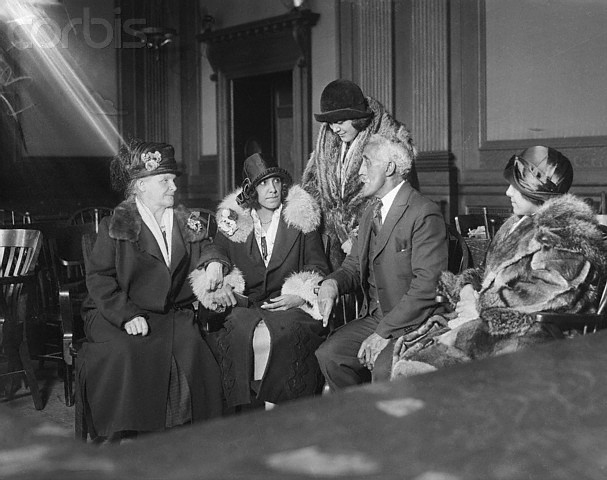
Original caption: Photo shows Mrs. Alice Rhinelander surrounded by relatives as jury decides case…Rhinelander jury locked for night; both sides anxiously await verdict. “Sentiment, passion, and prejudices should not interfere with your honest determination,” Justice Morschauser charged jury deciding Rhinelander case. Having failed to reach a verdict by 5:50 p.m. December 4th, they were ordered locked for the night. Left to right: Mrs. Jones, Alice, Grace, Jones, and Emily awaiting verdict.

SOURCE

passers

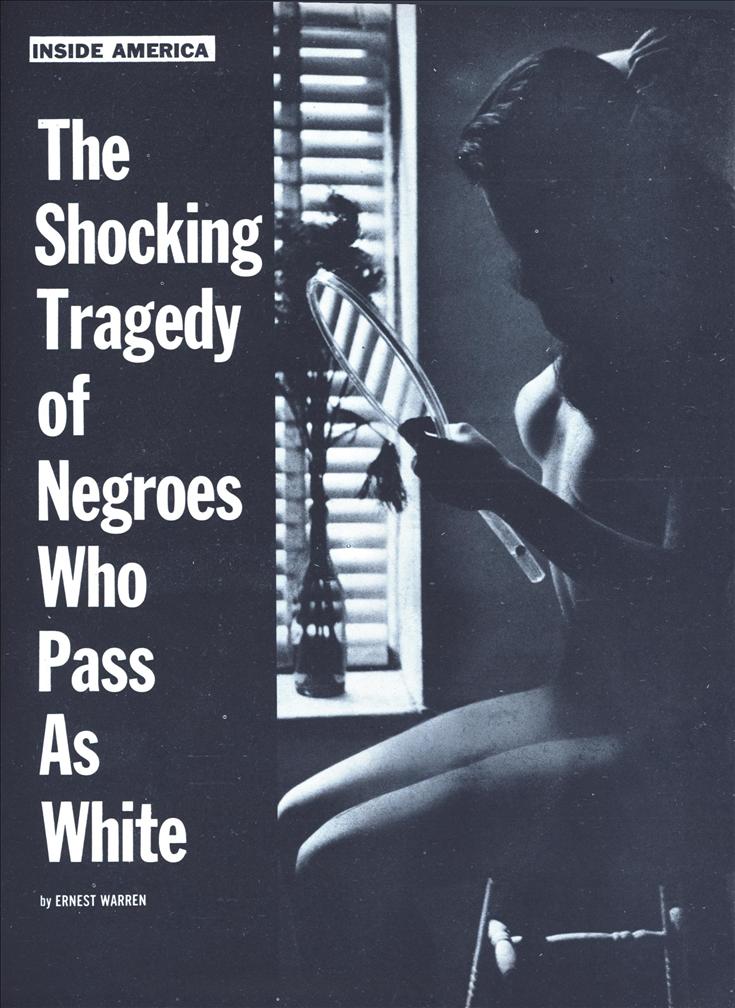
Thank you, Lee, for turning me on to this little “gem.”  Horrifying sums it up well.  I don’t know what content I find most horrifying.  I’m picking up lots of “tragic mulatto” and “jezebel” (the cover page photo!) innuendo though those specific terms aren’t used.  In fact, the passers don’t have to be mulatto at all.  As I’m constantly told, as a nation and a people we’re all mixed and there are plenty of “black” people that are lighter than some mulattoes such as myself.   I do like this notion of “one honest goal: the elimination of the invisible color boundary which for so many years unfairly kept him from his rightful place in the sun.”  We’re still workin’ on it.

ENTIRE ARTICLE

…it seems well-nigh incredible that some five million Negroes have turned their backs on their own race and are passing as white. For almost a quarter of a century, this fantastic lie has been lived by large groups of Negroes with no sign of abatement despite the strong gains that have been made by the champions of anti-segregation.

In the year 1960 alone more than 60,000 negroes are expected to “disappear”, cross the invisible color line into the world of whites. These are not just dreamed up figures. They are actual facts. Just as it is a fact that no one ever reports a Negro to the Missing Persons Bureau unless they are absolutely sure the missing human isn’t passing.

Many shocking incidents were brought to light some years back in a sensational book, ‘Black Metropolis’ by St. Clair Drake and Horace R. Cayton. The authors claim that many “white negroes” as passers are called— hold strong positions in the white world as physicians, scientists, and public administrators—despite the fact that many such jobs are also held by Negroes unashamed of their race.

The late Walter White, himself a Negro, and one of the prime movers in the National Association for the Advancement of Colored People, once attempted to clarify the problem of passing. He said: “Negroes naturally resent the loss of some of the brilliant minds which would be an asset to them in their grim struggle for survival. But if any Negro believes he will be happier living as a white and thereby escape the barbs and handicaps of prejudices, or if he believes he can use his ability and training to greater advantage on the other side of the racial line, most Negroes wish him well.”

When it comes to passing, although most Negroes today refuse to condone it, they will not tell on one another. Most seem to understand the reasoning that prompts lighter-hued members of their race wanting to cross over.

“We know there are stronger anti-discrimination laws than ever before,” they will tell you, “but when a negro has a white skin, he seems to have a compulsion to live the way of the people who have so long opposed him. He doesn’t seem to realize that scientists have proven that the very people who condemn him might not be in a position to do so.”

A scientist like those mentioned above is Dr. Caroline Day, of Atlanta University, who wrote in her famous Harvard African Studies: “The grim joke of the whole matter is that for 150 years and more the Negro has been absorbed and his descendants are constantly rubbing elbows with some of the very ones who are discussing them.”

Even the fact that people, who believe all passers are eventually found out because their children are sure to be black, are merely deluding themselves, hasn’t deterred the practise of passing. Science took the inherited color theory apart a long time ago, with the aid of such eminent savants as Amram Schienfeld, Dr. Ernest A. Hooten and the late Dr. Edward M. East, who theorized thus; “If one of the parents is pure white, the baby cannot he darker than the darker parent. If they both have Negro blood, the baby may be slightly darker than its parents hut the chances are against it.”

With the legalization of racial intermarriage approved in some 22 states, nobody has been able to upset their theory – though, obviously, chances to do so have been many.

Yet the “passers” themselves seldom worry about theories. The “permanent passer”, going over the line, never comes back. He prefers to end his days living a big white lie; and women passers who marry bear children and keep their secret for life.

Only under unusual circumstances, such as the one that befell the wife of a prominent socialite, does a sensational exposure ever occur. This was the Leonard Kip Rhinelander case, which rated lurid headlines when the socialite playboy sought to have his marriage to Alice Jones set aside. Rhinelander claimed his wife was colored and failed to tell him so. In her defense, Alice stripped to the waist and bared her breasts to the jury, thus providing the sensation-seeking New York Graphic with a classic composite-photo of this closed door session for its front page.

Besides the “permanent passer”, the “segmental passer” stands without guilt or censure. The “segmental passers” lead a dual life; whites by day, Negroes by night. You’ll often find them in jobs where opposition to Negroes is strong but secret-Some are telephone operators, receptionist, typists, clerks in large corporations and in department stores, where, though some Negroes are employed the unspoken policy is “Enough is enough.”

On Broadway, particularly, the Negro girl has a tough time getting a chorus or showgirl job. There is a story current of a Negro showgirl, allegedly passing as white, who was recognized by a popular Negro singer, but he refused to reveal her secret. He also reportedly wouldn’t talk to the girl, not because of her “passing” but because of her more than passing interest in a white socialite-playboy who met her nightly.

“Obviously she hasn’t learned yet that mixed marriages are no longer looked on with horror,” a Negro artist told INSIDE STORY, “so she’ll go on living her lie and, in the long run, probably find her heart broken because she feels she can’t reveal her secret to the man should he want to marry her. Life will never be easy for her. She not only sometimes has to listen to blasts against her race, but worry every moment about being exposed.”

While there’s no way of truly gauging the number of passers operating, some estimate is arrived at by studies of census reports, immigration records, vital statistics and information from other sources. Yet this does not take into account the ‘’segmental passer” or the passer who, in the past, was known as an “occasional” a reference to light-hued Negroes who occasionally went downtown to segregated areas and, as a lark, spent their money on white entertainment.

Actually, when it comes to “passing”, the shocked might as well face these facts: Passers not only go through life as white, they have children who look (and are) white. Any anthropologist will tell you that if a person has one-sixteenth or less of Negro blood—it is impossible to determine his or her ancestry.

Yet, the practice of passing still continues, much to the chagrin, not necessarily the shame, of the Negro who believes in living as he was born. To such a Negro, there can be only one honest goal: the elimination of the invisible color boundary which for so many years unfairly kept him from his rightful place in the sun. The passer, working in the movies, working as a white actress or a showgirl, or a model or a clerk, or a receptionist doesn’t think of this. He’s thinking of himself. Or herself. And that, to a good many Negroes, is a “shameful secret!


grateful for the choice

I mailed my Census form yesterday.  I must say that after all the hype, I was totally underwhelmed by the experience.  I checked the two boxes.  I can’t say it brought me any great feelings of validation.  I guess I thought they’d be asking some questions that went beyond race.  I also thought that “Negro” would be the only African American classification term offered since there was so much buzz about the word being used in 2010.  At any rate, I enjoyed this article.

More than black or white

By Annette John-Hall

Inquirer Columnist

SOURCE

For Kathrin P. Ivanovic, racial identity means a whole lot more than just black or white.

Her makeup runs the gamut.

“My mother is German and my birth father is African American with Cuban ancestry,” says Ivanovic, 29, director of development at the Nationalities Service Center, a Philadelphia nonprofit that services immigrants and refugees.

“Plus, my adopted dad is white, and I’m queer. Unfortunately, they don’t have a box for that.

“. . . I call myself a mixed chick.”

But when her 2010 U.S. Census form arrives in the mail this week (the 10-question form is being touted as the shortest in census history), Ivanovic will be satisfied to check black and white – which is really how she sees herself anyway.

Since the 2000 census, for millions of Americans like Ivanovic, “check one or more” will apply.

There is plenty to choose from, with the number of racial and ethnic categories at 63. In the 1990 census, there were only five designations offered.

It can be dizzying. If you’re, say, Asian, you can check any combination of Asian American, Chinese, Japanese, Filipino, Korean, Vietnamese, Hawaiian, Guamanian, or Chamorro, Samoan, as well as write-in categories for Other Asian or Other Pacific Islander.

In addition, you can also note if you’re of Hispanic, Latino, or Spanish origin. That’s because since 1970, Hispanic was no longer recognized as an overarching classification.

Still with me? (And here I thought having Negro on the same line as the black or African American box was confusing.)

But I’m all for it, especially if it paints a more genuine picture of who we are – all 300 million of us. Doesn’t matter if only 2 percent of Americans were identified as more than one race in 2000. Nowadays, we’ve got more multiracial and multiethnic couples and children than ever before, which means the percentage is sure to increase this year.

Which in turn enables the government to allocate funds more equitably. Census data are used in everything from determining the number of congressmen your region gets to the assessing the amount of funding for your town’s bridge project to supporting health centers.

Race data also have driven the nation’s civil rights laws (how many people were denied the right to vote, how many were discriminated against in housing, for example) and are still used to monitor inequalities in health and education.

But it wasn’t always that way.

Truth is, the U.S. Census was historically more of an oppressor than an advocate, especially when it came to African Americans.

Racial count

From the time census data were first collected in 1790, when enumerators listed categories of free men and slaves, whites used the census to diminish African Americans.

“You can see why they had a slave category,” says MIT professor Melissa Nobles, author of Shades of Citizenship: Race and the Census in Modern Politics. “Southern slave owners wanted the least amount of information, thinking it would help abolitionists. And abolitionists wanted the most amount of information [to make their case].”

Throughout the 19th century and until 1930, census counters used categories such as quadroon (one-quarter black), octoroon (one-eighth black), and mulatto (half black) to describe any person who had a discernible amount of African American blood.

Like they could tell just from looking.

Even after 1930, Southern laws imposed the “one-drop rule” to its census enumerating, meaning they were to count as mulattos anyone who even looked remotely black – a mandate loosely applied by census counters nationwide.

“They used it for racial social science,” Nobles says. For example, they used census data to prove skewed theories (arguing, for instance, that biracial people – “the tragic mulatto” – were somehow weaker and suffered from higher death rates), which in turn helped legislators make the case against interracial marriage.

But even as the categories have expanded, some today are pushing for a separate, generic multiracial designation.

Ralina L. Joseph, a professor of communications at the University of Washington, worries that even though the data will show us as more diverse and multihued, they could be misinterpreted once again.

“I don’t want people to read the numbers and think that racism is over, that this is a post-racial moment,” says Joseph, who is biracial. “We should hope that people who are disenfranchised through race, class, and poverty levels should be identified as such.”

Some sociologists even insist that racial designations have no place on a census form, if it is indeed as simple as an objective count.

But in a multiracial, multiethnic society where even the president is a self-described “mutt,” Kathrin Ivanovic is grateful for the choice.

“I am mixed. It’s how I view the world, and in some ways it’s how the world views me,” she says. “To not be able to identify that way is dishonest to me personally.”

“The Census Taker” (1870) Harper’s Weekly