Reply


The little boy wanted to know “if the President’s haircut felt like his own.”
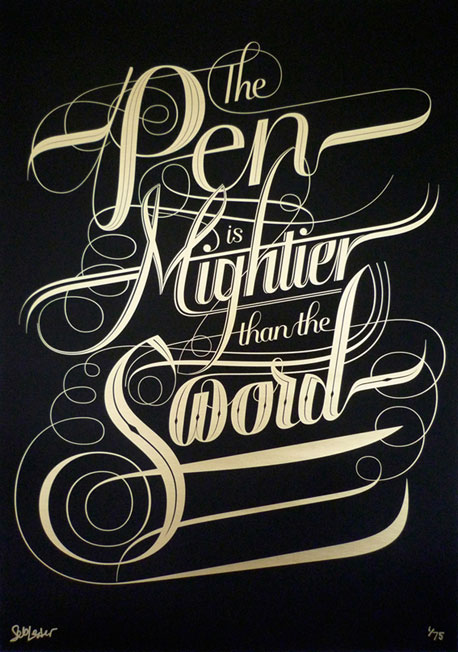
“I have never killed a man, but I have read many obituaries with great pleasure.”
— Clarence Darrow
“He has never been known to use a word that might send a reader to the dictionary.”
— William Faulkner (about Ernest Hemingway)
“Poor Faulkner. Does he really think big emotions come from big words?”
— Ernest Hemingway (about William Faulkner)
“He can compress the most words into the smallest idea of any man I know.”
— Abraham Lincoln
“I’ve had a perfectly wonderful evening. But this wasn’t it.”
— Groucho Marx
“I am enclosing two tickets to the first night of my new play; bring a friend…. if you have one.”
— George Bernard Shaw to Winston Churchill
“Cannot possibly attend first night, will attend second… if there is one.”
— Winston Churchill, in response
“He is a self-made man and worships his creator.”
— John Bright
“I’ve just learned about his illness. Let’s hope it’s nothing trivial.”
— Irvin S. Cobb
“There’s nothing wrong with you that reincarnation won’t cure.”
— Jack E. Leonard
“They never open their mouths without subtracting from the sum of human knowledge.”
— Thomas Brackett Reed
“He loves nature in spite of what it did to him.”
— Forrest Tucker
“His mother should have thrown him away and kept the stork.”
— Mae West
list via http://scumblr.tumblr.com


http://rashidajones.blogspot.com/2009/04/magazines-glamour-scans-2005.html
Big thanks to Karen of Reel Artsy (http://www.reelartsy.com) for bringing this article to my attention! The things discussed in it are some of what I find to be the most fascinating aspects of the biracial experience. As an only child I’m left to imagine what it would have been like to have a biracial sibling. Would he/she have been darker or lighter than me? What would that have been like? I always imagine that no matter the phenotype we’d be really close, but that wasn’t always the case for these Jones girls. Their story reminds me of Danzy Senna’s Caucasia, what with the darker sister living with the black father after the divorce and the lighter sister going with the white mother. Bel-Air to Brentwood is not so drastic a distance though as Boston to Brazil. Anyway, I really enjoyed the interview. It’s so honest, painfully so at times, and I really appreciate that.
My daughters have learned an invaluable lesson from being multiracial: You can’t let an exterior force define you; you have to define yourself. Each did that, in her own way. I’m so proud of them for that.- Quincy Jones

I’m excited for tonight. I love Adam the most, but Kris has been my 2nd fav since he sang an Adele song. Well, an Adele version of a song. Anyway, I will definitely be watching.

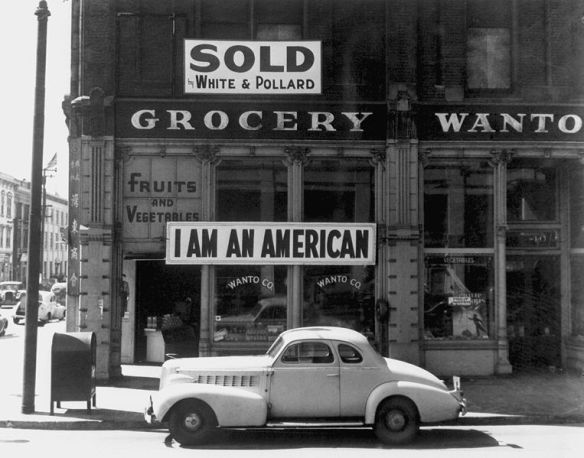
San Francisco, Calif., Mar. 1942.
A large sign reading “I am an American” placed in the window of a store, at 13th and Franklin streets, on December 8, the day after Pearl Harbor. The store was closed following orders to persons of Japanese descent to evacuate from certain West Coast areas. The owner, a University of California graduate, will be housed with hundreds of evacuees in War Relocation Authority centers for the duration of the war. Photo by Dorothea Lange.
http://community.livejournal.com/vintagephoto
On February 19, 1942, President Franklin D. Roosevelt signed Executive Order 9066 relocating 120,000 Japanese Americans from the West Coast into internment camps for the duration of the war. The personal rights, liberties, and freedoms of Japanese Americans were taken away from them by their own country. Since World War II, a Japanese American struggle continues to obtain reparation from the U.S. Government.
August 10, 1988 H.R. 442 is signed into law by President Ronald Reagan. It provides for individual payments of $20,000 to each surviving internee and a $1.25 billion education fund among other provisions.
October 9, 1990 The first nine redress payments are made at a Washington D.C. One hundred seven year-old Rev. Mamoru Eto of Los Angeles is the first to receive his check.
The Civil Liberties Act was an official apology made to Japanese Americans in 1988 by Congress.
I’ve never been one to make much of a case for reparations for African American slavery, but I can’t help feeling like if “they” got it “we” should too. It seems to me that this is further evidence of the dehumanization of black people. Black people don’t deserve reparations? They should be grateful to find themselves in America today instead of in the jungle? They were created to work and don’t need much in return? That’s what the implications of reparations for some, but not for those treated the worst while doing the most to make this country what it is- what it should be, but isn’t right now- today. It’s kind of like the one-drop rule in a way. Only applies to black people. Asians, Hispanics, Indians can mix with whites for a couple of generations and their legacy is then white. There is no one-drop to follow them around and accuse them of denying something or being ashamed or self-hating. Their blood is not tainted. Of course neither is mine, yet these implications remain.


I’m so sick (no pun intended) of this swine flu. I don’t know the level of swine flu hype in your area, but it’s a hot topic in New York City.