
Reply

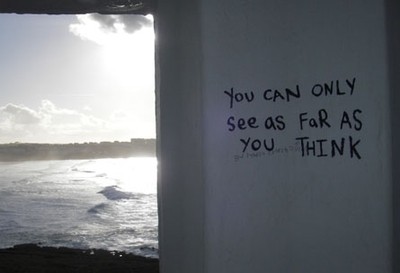

excerpted from a talk entitled “Guidelines for Living Fearlessly”
Pema Chodron Books and Tapes
How to taste the quality of the moment, of the week, without the labels of good and bad, or succeeding and failing. But really just get used to tasting or knowing or experiencing the quality of what you are going through, not as some final thing.
I think Rilke said “no feeling is final”. Its a great line in one of his poems. No feeling is final, but somehow in the moment, we often feel, a sort of – this is how it is – in such a heavy way. And then so much story line goes with that that it drags us down.
So sometimes we like what we are feeling and then we don’t like what we’re feeling. And then we like it again, and then we don’t like it again. And then it just sort of goes like that – it’s actually fine for it to be like that.
Enlightened people, from what I have heard, the moods come and go, the energy shifts come and go. Its not like suddenly you are enlightened and then the rain never comes. It doesn’t mean you don’t wake up with a headache, or a heavy feeling in your heart.
But basically it never goes beyond that, its just the quality of awakened energy as it is manifesting right now. So it is a really profound deep shift of attitude towards our moods and thoughts and our emotions.
The path of liberation depends on not taking everything so personally.
I remember Trungpa Rinpoche saying to a group of students, one of which was complaining about their very very difficult work situation with a very difficult boss, and his answer began with the statement “well the trouble is, we all take everything so personally”. And I remember we all laughed and it seemed like a really funny comment. But I now see exactly what he meant.
Taking it personally means investing so much energy and time as if you are like this, and the situation is like this, and its fixed, instead of realizing that its always shifting and changing.
Sometimes the sun is brightly shining, and sometimes it hasn’t shone for the last three days. And you feel what you feel about that. But of course what we are really talking about is the emotional weather.
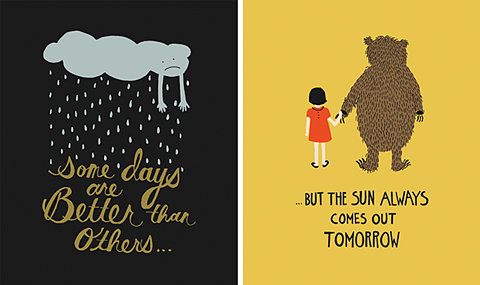
Did something other than “simple ghost cupcakes” immediately come to mind for anyone else?
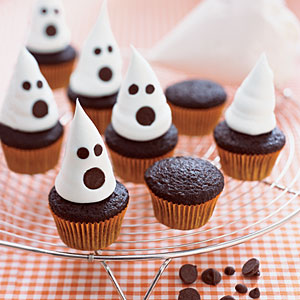






The story of one “lucky” dude:
A U.S. forest ranger in Virginia’s Shenandoah National Park, Roy Cleveland Sullivan (1912-1983) survived being hit by lightning seven different times:
Sullivan shot himself in 1983 … reportedly over a rejected love.

I have never before thought of mulattoes as victims of the Holocaust. How ignorant of me. I now imagine that some of the children fathered by black U.S. servicemen made up the group mentioned in this Delaware memorial. So much history to uncover.
The third community interfaith worship service for Yom HaShoah, Holocaust Memorial Day, will be at 4 p.m., Sunday, April 11, at Epworth United Methodist Church, 19285 Holland Glade Road, Rehoboth Beach.
For the past two years, clergy from six faith communities in the Lewes-Rehoboth area have joined to lead a worship service for the community that remembers the tragic events and honors the victims and heroes of the Holocaust.
Shoah is the Hebrew word for “whirlwind.” It is the term used to describe the Nazi firestorm between 1938 and 1945 that swept up 11 million souls – 6 million Jews and 5 million non-Jews including Poles, Rom Gypsies, homosexuals, disabled, mulatto children, clergy and Germans who didn’t believe in the Nazi ideology.
Men and women, young and old alike, were butchered at the hands of the Nazis. Every year, on Yom HaShoah, people remember the martyrs who sanctified the name of God in the camps, ghettos and gas chambers. Entire article
I looked into the situation further and came across this paragraph on studyofracialism.org:
African German mulatto children were marginalized in German society, isolated socially and economically, and not allowed to attend university. Racial discrimination prohibited them from seeking most jobs, including service in the military. With the Nazi rise to power they became a target of racial and population policy. By 1937, the Gestapo (German secret state police) had secretly rounded up and forcibly sterilized many of them. Some were subjected to medical experiments; others mysteriously “disappeared.”
Here’s insight into Hitler’s had to say about us (found HERE):
MULATTO CHILDREN
Before World War 1 there weren’t very many Black people in Germany. During ww1, France brought Black soldiers in during France’s occupation of Germany. Since there were different colored people living in Germany, the Nazis forcibly sterilized offspring between black men and white women because it held back the campaign for the perfect race. Children that had a black father and a white mother were mulatto children because of their color. Mostly every German despised them and called them ugly names. Hitler wrote,” These mulatto children came through rape or their mother was a whore. In both cases there is not the slightest moral duty regarding these offspring of a foreign race.” This is what happened to children because of the color of their skin.
Black German girl 1930
Nazi propaganda photo depicts friendship between an “Aryan” and a black woman. The caption states: “The result! A loss of racial pride.” Germany, prewar.


 mulatto diaries