doubles

Although “mulatto” is not the “double” on which this article focuses, the perils of navigating a biracial identity that remains disrespected by, unsupported by, unacknowledged by, and unacceptable to the mainstream society surrounding the individual are so accurately communicated that I just had to post this.  Crux of the issue: “feeling of being an incomplete person has sometimes led to deep depression.”  I think that the only way around this is to eradicate the illusion of separation by infusing into our collective consciousness the truth of oneness.  No halves.  No sides.  No divide.

Also touched upon here is the aspect of chaos that the Americans have injected into the Okinawan landscape that is worth analyzing.


Okinawa-born Japanese-American musician Caroline Lufkin (unrelated to article)

In Japan but surrounded by U.S. influence, Okinawa struggles with split identity

By Chico Harlan

VIA

CHATAN, JAPAN — These days, when Melissa Tomlinson describes her fraught relationship with the United States, she speaks in English, the language she once rejected.

She grew up here on the island of Okinawa. Her mother was Japanese, and her father was an American who served in the U.S. Army, came to Okinawa, fell in love, fell out of love, then fell out of touch.

“I had plans to track him down, find him and punch him in the face,” said Tomlinson, 22. “I just wanted to figure out my identity.”

Tomlinson’s family tensions illustrate the complex cultural clashes that dominate the politics of Okinawa and, lately, relations between what have been the world’s two largest economies as they cope with a rising China and a belligerent North Korea.

For the more than 60 years since the end of World War II, native Okinawans and U.S. troops stationed on nearby bases have developed deep, passionate and generation-spanning ties that complicate political and diplomatic debates about the future of the U.S. military here.

Those passions have recently claimed the head of one Japanese prime minister, Yukio Hatoyama, who had called for the Americans to be booted off Okinawa, and caused his successor to sharply tone down his party’s assertive stance toward the United States.

A vocal majority of Okinawans still demand closing the Futenma Marine Corps Air Station. American officials, citing proximity to North Korea, China and Southeast Asia, insist it remain in Okinawa. Japan, in its attempt to mediate, has only frustrated both sides.

The current resolution, which Prime Minister Naoto Kan says his government will honor, calls for Futenma’s eventual relocation to a less populated region in the north of the island. Kan apologized last week for the “heavy burden” facing Okinawans.

Many locals on this Pacific island hosting more than half of the 47,000 U.S. troops stationed in Japan complain most commonly about the noise, congestion and crime. But emotional blood ties and cultural confusion amplify those concerns. Tormented by her identity, Tomlinson said she has tried to kill herself “a couple times” in the past two years.

Tomlinson said she struggles to convince herself — and others — that she is truly Japanese and Okinawan. She called her identity “ambiguous” and said her feeling of being an incomplete person has sometimes led to deep depression.

A generation of biracial Okinawans know about intercultural relationships, writ small. They know about romance and separations, child-support battles and reunions. They know that Japanese children refer to their biracial peers as “halfs,” and nowadays, they know of the local American-Asian school, for biracial children, where those kids are taught to call themselves “doubles.”

Okinawa’s demographics separate it from mainland Japan. Here, the rates of single-parent households and divorce are twice the national average. At the American-Asian school, 70 percent of the 80 students come from single-parent households, Principal Midori Thayer said.

“Unfortunately, some kids never live with their father, but they cannot lose their DNA,” she said. “Their body shows that they are not 100 percent Japanese.”

Denny Tamaki, 50, the local representative to the Japanese parliament, knows only that his father, an American serviceman whom he has never met, was named William.

When William returned to the States and Tamaki’s mother decided not to follow, she burned his photos and letters. When they moved to a new home, she didn’t give him their new address. When Tamaki turned 10, his mother took him to a government office, where they officially changed his first name to Yasuhiro.

Tamaki knows little English and wants Futenma moved off Okinawa because “it feels like we’re living under occupation.” But he has a passion for American music — Aerosmith, for instance — and American television shows.

A decade ago he tried to track down his father, with no luck. When his kids ask about their grandfather, he tells them that it would take the detectives from “CSI: Miami” to find him.

Search for a father

Tomlinson’s mother and father were married on Okinawa, and then moved together to Georgia after his tour on the island ended in 1975. Tomlinson was born in Hinesville, Ga., while her father was stationed at Fort Stewart.

Tomlinson’s parents separated when she was 3; she returned to Okinawa in 1990 with her mother. Her father retained custody of their two older children, who stayed in the United States with him.

Growing up, Tomlinson said, she remembered nothing about the separation, and never spoke to her father or siblings. “I’ve had to live with some tough decisions,” said Melissa’s father, who requested that his name not be used.

Tomlinson said her conflicted feelings were often fueled by her mother, who told her she looked “like an American” and tried to hide her from her co-workers. She said they fought frequently, and she told her mother: “Why did you have me? I want to be a Japanese, but I don’t get to choose.”

In school, her dual identities battled. Sometimes she was an American who didn’t speak proper English. Sometimes she was a Japanese who didn’t look Japanese. For several years, she tried to forget every English word she knew.

During high school, she said, a teacher encouraged her to learn English because she would need it if one day she wanted to track down her father. “Maybe you can hear the truth,” the teacher told her. “You should know both sides.”

At the University of the Ryukyus, Tomlinson tried to find English-speaking friends. She watched American television without the subtitles. Still, she confided to friends that she felt depressed.

From her mother, Tomlinson had heard only nasty tales about her father, who was once stationed at the Army’s Torii base. After her junior year in college, in spring 2009, she decided to try to find him and left school for a time.

In March, her U.S. military ID card, a privilege from a relationship she never had, was expiring. The Army passed along her father’s address. She e-mailed him, asking for him to sign the required forms for a new ID.

Weeks later, she heard back from the father who had not seen her since she was 3.

“Hi Melissa, Hearing from you, to say the least, came as quite a shock,” he wrote. “I was not aware that you could speak English let alone read or write it. The last time we had contact, and I am sure you do not remember it, you could only speak Japanese. Trying to bridge the gap with words after all this time would be futile. In life sometimes we have to make decisions that we don’t know if they are right or not, but we have to live with them.”

Tomlinson read and reread the e-mail. She discussed it with friends, and together they parsed the words. Their relationship continued, e-mail by e-mail, and she learned that he liked fishing, and that he missed Okinawa, and that he says he has thought about her every day.

For all these years, he wrote, he avoided contact because he didn’t want her to be torn between parents.

“It would have made your life miserable,” he wrote.

this just in

I am beyond excited to be participating in the first annual Critical Mixed Race Studies Conference.  Fanshen and Heidi proposed a roundtable entitled “Exploring the Mixed Experience in New Media” moderated by historian/scholar Greg Carter and presented by Mixed Chicks Chat hosts and Mixed Roots Film & Literary Festival founders/producers Fanshen Cox and Heidi  Durrow, Tiffany Jones (Mulatto Diaries) and Steven Riley (mixedracestudies.org).  It was accepted!  Thank you Fanshen and Heidi!  I can’t wait!

Critical Mixed Race Studies Conference

DePaul University Logo

“Emerging Paradigms in Critical Mixed Race Studies,” the first annual Critical Mixed Race Studies Conference, will be held at DePaul University in Chicago on November 5-6, 2010.

The CMRS conference brings together scholars from a variety of disciplines nationwide. Recognizing that the diverse disciplines that have nurtured Mixed Race Studies have reached a watershed moment, the 2010 CMRS conference is devoted to the general theme “Emerging Paradigms in Critical Mixed Race Studies.”

Critical Mixed Race Studies (CMRS) is the transracial, transdisciplinary, and transnational critical analysis of the institutionalization of social, cultural, and political orders based on dominant conceptions of race. CMRS emphasizes the mutability of race and the porosity of racial boundaries in order to critique processes of racialization and social stratification based on race. CMRS addresses local and global systemic injustices rooted in systems of racialization.

Source

speaking of freedom

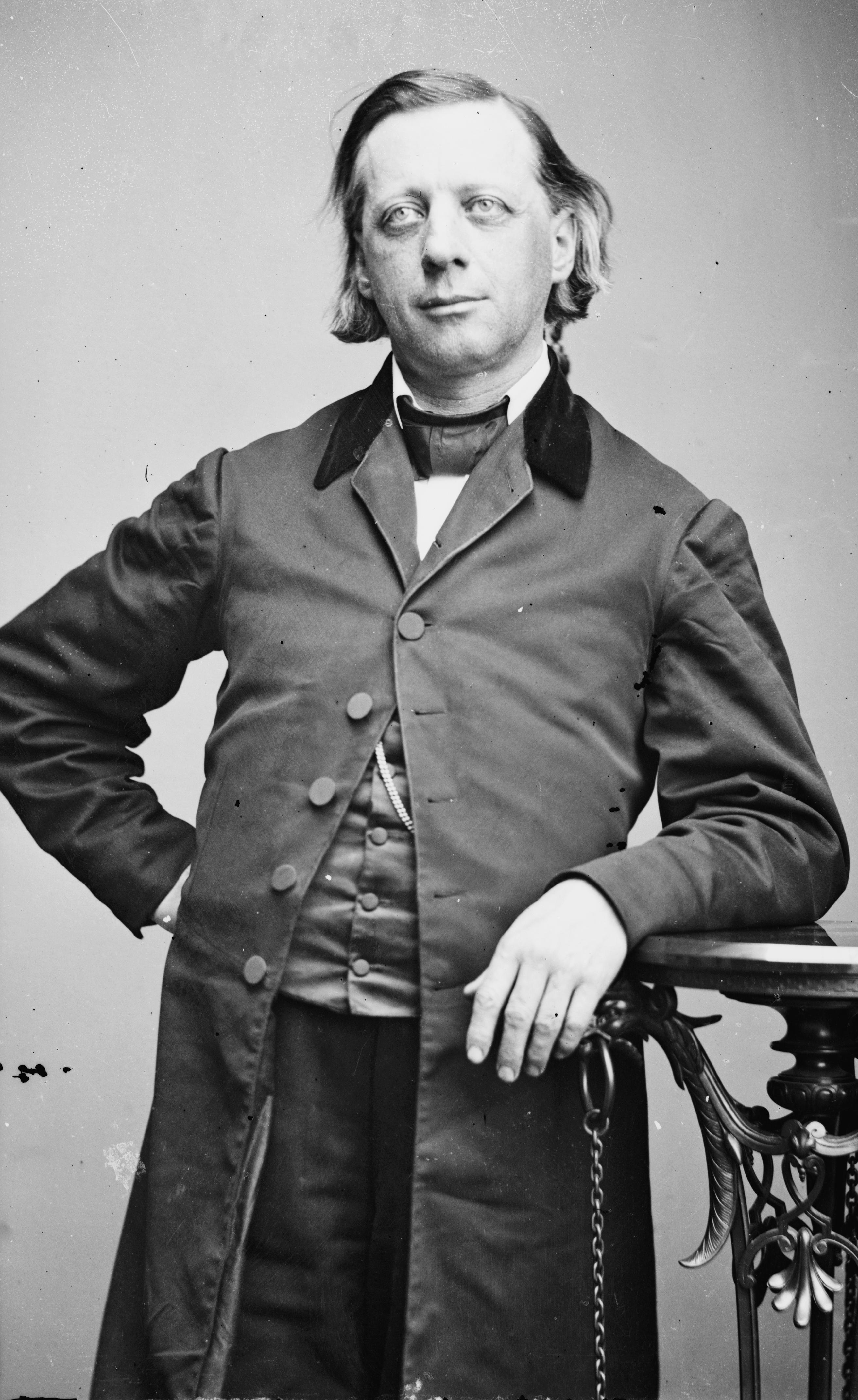
I cannot forget that “liberty and justice for all” wasn’t really for all.  So much for being impeccable with your word, Founding Fathers.  Here’s an interesting snippet of the history of the struggle for freedom in this nation.  The struggle of those who toiled to build it and cultivate it’s wealth, and one man who was dedicated to assisting them.  I’m curious about the early years of Henry Ward Beecher’s life.  I wonder how he came to see the truth, when the illusion was set up to work in his favor.

Underground Railroad

VIA

The road to freedom is one of the great themes of American history. The story of the Underground Railroad exemplifies the profound power of that journey. Following the lead of its famed antislavery preacher Henry Ward Beecher, Plymouth Church played a fundamental part in New York City ‘s underground activity.

From the very beginnings of slavery in America, slaves escaped to freedom. They ran to the wilderness; they went to live with the ever-hospitable Indians; they slipped into cities and made their claim as free Blacks. In the Revolutionary era, Puritan New England and Quaker Pennsylvania passed legislation abolishing slavery. The exodus northward, which came to be known as the Underground Railroad, began. By 1831, the term “Underground Railroad” had been coined to describe the informal, secretive network of ordinary citizens, Black and White, whose safe houses offered refuge.

Although Plymouth Church was not established until 1847, just fourteen years before the start of the Civil War, it later became known as “the Grand Central Depot” of the Underground Railroad. Oral tradition and several published memoirs tell us that slaves seeking passage to Canada may have hidden in the tunnel-like basement beneath the church sanctuary (this space can still be visited during our public and school tours). Beecher’s private stenographer, T.J. Ellinwood, quotes the Minister as claiming, “I opened Plymouth Church”, though you did not know it, to hide fugitives. I took them into my own home and fed them. I piloted them, and sent them toward the North Star, which to them was the Star of Bethlehem.“ The Rev. Charles B. Ray, an African-American living in Manhattan, and the founding editor of the Colored American newspaper, was quoted as saying, “I regularly drop off fugitives at Henry Ward Beecher‘s Plymouth Church in Brooklyn.” Other churches in Brooklyn and Manhattan, especially Black churches, also hid escapees, but most have since moved to newer buildings. Plymouth Church is one of the few active Underground Railroad congregations in New York still housed in its original location.

Henry Ward Beecher

Plymouth’s first minister, the Rev.Henry Ward Beecher , spearheaded and symbolized Plymouth’s antislavery activity, but the founding members of Plymouth selected him as their pastor in no small part because they knew he would do so. He already had a record as an opponent to slavery when he made those beliefs clear in his trial sermon for Plymouth. Beecher and his peers were greatly influenced by the Second Great Awakening, a Protestant religious revival of the early 1800’s, firmly committed to abolishing slavery. As a student at Amherst College, he helped found an abolitionist organization, which was promptly shut down by the faculty. At seminary in Cincinnati, he contributed to an antislavery newspaper which was mobbed and destroyed; he also patrolled the streets of that city, fully armed, when temporary special policemen were called upon to protect free Blacks from threats. When he was a minister in Indianapolis, his limited preaching on the subject caused members to leave his church, but he remained active in the Underground Railroad there, as his widow, Eunice, recalled years later.

Enormous publicity surrounded one of Beecher’s first antislavery acts at Plymouth Church. In 1848, 77 fugitive slaves were sold in Washington after the failure of the largest group escape attempt on the Underground Railroad. In that group were two teenage girls, the Edmondson sisters. Thanks to the fundraising efforts of people like Beecher to regain the girls’ freedom, the Edmondsons galvanized public support for the abolitionist movement – and inspired Beecher’s own sister, Harriet, to write Uncle Tom’s Cabin.

Beecher, with his newly elevated public profile, had to be especially circumspect in harboring escaped slaves. Eventually, in 1872, he was named by The Brooklyn Eagle as an active participant in the Underground Railroad. The article claimed that Plymouth’s minister helped dozens of fugitives in cooperation with a man in New York named “Napoleon.” This Napoleon “had the matter of escape under his charge and whenever a slave was sent on to Mr. Beecher he, Napoleon, would fix things along the Central Railroad and see to it that the officials along the route were got into friendly disposition for the fugitive.” The article does not indicate Napoleon’s race, but he may well have been Black, for Black involvement in the Underground Railroad almost certainly exceeded that of Whites.

There are believed to be many members of the Plymouth congregation who were active in the Underground Railroad. Evidence suggests that escaped slaves were hidden in the homes of several Plymouth members. The Church treasurer, S.V. White, had a small chamber in his house said to have been used to hide runaways, a room that was still in existence in the 1900s. One of the Church’s greatest activists in the Underground Railroad was Lewis Tappan. He is best remembered as a leader in organizing efforts to release the escaped slaves of the Amistad in 1839. Later, he helped fund the creation of Plymouth Church (his daughter, Lucy Tappan Bowen, was one of the original 21 members), but he did not join until 1856. As part of his work helping runaway slaves, he provided refuge in his home to a 15-year-old girl who escaped by pretending to be a male conductor on a New York-bound ferry.

All this was taking place in one of the most pro-slavery states of the North. Not until 1827 was slavery finally abolished in New York. Much of this attitude may be traced to the years when New York was a proprietary colony of the Duke of York, a major shareholder in the slave-trading Royal Africa Company. With his powerful influence, he instructed the governors to do everything possible to sell more slaves. After independence, the close business relations between Southern planters and New York merchants continued to enhance pro-owner sympathy.

Whatever ambivalent feelings about slavery remained in New York, they were greatly tested in 1850. That year, the country began negotiating slavery in the newly acquired territories seized during the Mexican-American War. The designation of new slaveholding states, plus the passage of the Fugitive Slave Act requiring all American citizens to assist in apprehending runaway slaves, incensed many Northerners. The work of the Underground Railroad intensified. These were the years of Plymouth Church’s greatest involvement, and, by 1860, it was certainly the most famous church in America. One year later, the Civil War began, and Plymouth continued to supply material and spiritual support to a devastated country. Five brutal years later, slavery was outlawed, and Plymouth Church’s role in the Underground Railroad could finally, thankfully, come to an end.

The exact statistics of the Underground Railroad – how many slaves escaped, how many free citizens aided them – will never be known. But we do know that this was a time and an undertaking in which Blacks and Whites came together to right a grievous wrong. It should also be said that, for the members of Plymouth Church, and for most if not all of those who took part, they did so to live out their Christian faith.

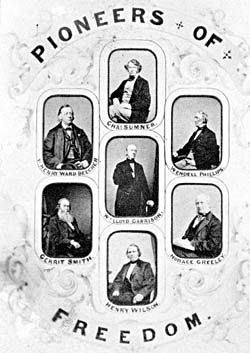
Portraits of abolitionists Charles Sumner, Henry Ward Beecher, Wendell Phillips, William Lloyd Garrison, Gerrit Smith, Horace Greeley and Henry Wilson, c. 1866

another social taboo

The first taboo being openly discussing biraciality without adhering to the one-drop rule.  Of course I find this blog post to be interesting, or I wouldn’t put it up here.  I appreciate the bit about biracial identity as well as the outline of the overall struggle and the shame that go along with the labels of mental illness in this country.  Especially in the black community.

Coming out of an entirely different closet… the one of mental illness

by Eliza Barnett

VIA

Unfortunately as prevalent as mental health disorders are the nation (50+ million diagnosed in the US alone) and world wide, it still tops the ranks as the most difficult to admit.

Higher than revealing to be a victim of domestic abuse, sexual assault, or molestation, harder than confessing a drinking problem or previous bankruptcy; surveys have even shown it to more difficult than admitting ones gender identity or homosexuality. Sufferers face significant social taboos. And it doesn’t affect just one type of person. Mental illness knows nothing of age, race, gender, or economic background.

You don’t have to personally admit it yourself to believe the notion the reality that people are more likely to break off, or not even start, a relationship with someone with mental issues -which I for one find particularly interesting because members of society are more likely to stay with someone with a physical disability. People with mental disorders tend to prefer to hide their illness like major depression and anxiety, because unlike people with physical illnesses, people with mental disorders must also fear being rejected by family & friends, harassed, fired or not hired, or denied child custody—just for starters.

(Please check out this personal blog discussing the Price of being Bipolar in Public)

Last week I had an entire conversation with a friend about them being practically afraid to admit their Christian faith at their workplace because of the negative assumptions his non-same faith based peers might think about his character or behavior.

Once you know someone’s religious preference it changes your whole personality to people who don’t agree with you. Sometimes it’s like every negative image or thought they have about it becomes who I am as a person- even though I haven’t changed. It’s their behavior towards me that has.

I’ve read more than a few articles of a biracial person attempting, or enjoying the ability to pass for one race over another—not because they have a problem with it necessarily themselves, but because other people do.

Sometimes it’s like every negative stereotype or prejudice they have against a race I share membership of encompasses who I am as a person. Granted racism is an ongoing issue for those of one race, but it is just as prevalent towards those of plural heritage.

Sexual orientation discrimination —don’t even get me started.

(great message board discussion here coming coming out as gay with coming out as bipolar)

Mental illness sufferers are also victims of discrimination and the issue continually needs to be recognized.

“I’m Asian, I’m gay, and I have faced discrimination – but not for the reasons most people think; it was actually when I got depression that I faced most discrimination.”

(Quote from an article in the Guardian)

Attempts to end this discrimination are being lead by strong individuals, in the public eye, and by everyday people. Changed perception comes through increased knowledge and visibility.

People need to be taught that mental disorders don’t come from places of personal weakness, and don’t make everyone violent or unpredictable. They need to be made comfortable in seeking help. (Two thirds of sufferers in need of treatment do not seek it. ) Even more importantly open, honest visibility helps others with the illnesses themselves to stand up without shame.

Negative stigma’s of this variety aren’t just external, they’re internal. Who wants to think of themselves as crazy…? When feelings of guilt, shame, or a notion that you’re somehow weakened for needing help are thrown in the mix, it only reinforces the negative feelings.

Isn’t it always the case that telling the ones you love is the hardest thing to do? This isn’t any different. And ignorance towards the idea of mental disorders can to be hard to deal with; some people may not even believe mental illnesses exist. Americans particularly have vast misconception that all mental disorders can be simply be self-corrected with enough work.

Similar to the first step in admitting you have an addiction; your own acceptance is where it all begins. Examine your own feeling first and foremost. You have control over who you tell, so it’s okay to be cautious about it.

“There is no rule for who needs to know about your mental illness diagnosis, but sharing it with someone is a great way to get support.

The silence helps maintain the ignorance about mental illness.”

(http://www.webmd.com/mental-health/features/coming-out-about-mental-illness?page=2)

That being said,

“It doesn’t mean that it is always beneficial to open up indiscriminately about mental health, to your detriment. It would be wonderful if everybody came out.

But it is a very subjective decision and consequences should be considered. Society isn’t at the place of acceptance that it needs to be. Not everyone in the world needs to know if you struggle with diabetes or hypertension or some other illness. The same is true for mental illness. Those with the disorder, are the ones in charge, and should think about what the payoff is to share information about their mental health. For example, if you need to miss work to see a psychiatrist, you might want to tell your employer about what you are going through.”

When someone does react negatively, agree to disagree or try to educate that person. Share educational materials. Share your own experience. And to those on the receiving end of the information, think before you speak.

“Try to react the same way you would if you were told about a physical health problem that you don’t know much about. Avoid trying to be the hero or savior. Being empathic and understanding is one thing, but trying rescue someone is a completely different. You shouldn’t try to fix them. This is something that is way beyond your capacity.”

Treatment and support from others goes a long way; the mental illness journey is a rough one for everyone involved. Help is required, it’s critical down the path of recovery, management of ones condition, and ability to lead constructive and healthy lives. Support can and does come from strangers as well, who share in this unity of diagnosis. As corny as it sounds, sharing is caring.

–Posted By Eliza Barnett

mary ellen pleasant

As I was searching the internets last week for photos of black women with white children, I stumbled upon a historical figure who, once again, I am shocked and dismayed to never before have heard mention of:  Mary Ellen (“Mammy”) Pleasant.  I want to know so much more!  Or at least the truth.  I highly doubt that Mary Ellen needed to conjure the dark forces to leverage social change, however I’m sure that that tale eased the minds of the opposition and provided ammunition for attacking Pleasant’s ideals.  I found quite a few intriguing articles on her life and chose the following two to share.  Honestly, when someone next asks me who (dead or alive) I would most like to have dinner with, Mary Ellen Pleasant will be on the short list.

hdr_index

“American civil rights began in the 1850’s with Mary Ellen Pleasant.”  Racism surprised African Americans like Pleasant who came to the Bay Area because they believed in a better life in San Francisco… The Bay Area, where Pleasant lived, became a “hotbed of civil rights activity” in the 19th century and the activists’ rallying cry was “eradicating slavery.”- Dr. Albert Broussard

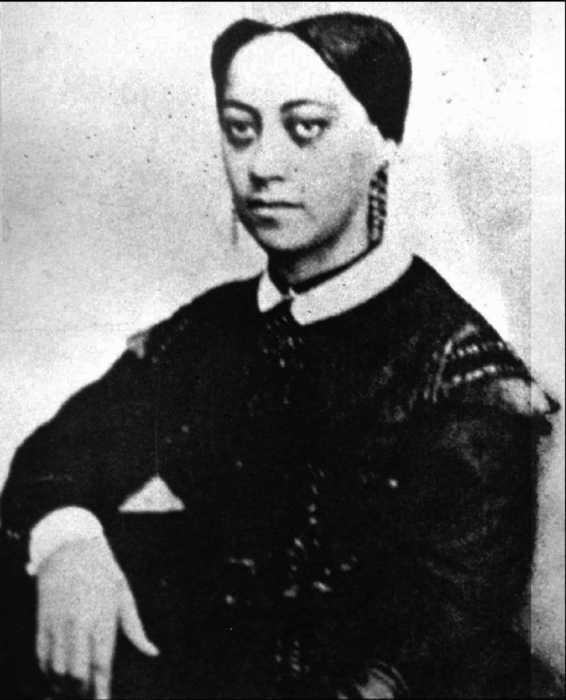
Mary Ellen Pleasant (1814? – 1904)

SSMt7.St.4

VIA

Mary Ellen Pleasant is perhaps better known as “Mammy Pleasant”, but it was a name she detested. She was born a slave in Georgia some time between 1814 and 1817, the illegitimate daughter of an enslaved Vodou priestess from Haiti and a Virginia governor’s son, John Pleasants. She was bought out of slavery by a planter and indentured for nine years as a store clerk with abolitionist Quakers in Massachusetts.

Around 1841 she married a wealthy mulatto merchant/contractor from Ohio and Philadelphia named James Smith, who was also a slave rescuer on the Underground Railroad. The two worked to help slaves flee to safety in Canada and safe states. Smith died in 1844, leaving her a $45,000 fortune and a plantation run by freedmen near Harper’s Ferry, Virginia.

Because of slaver reaction to her own ongoing Underground Railroad activities, she was forced to flee to New Orleans in 1850 where she met the Vodou queen Marie Laveau who trained her in how to “pressure the powerful to help the powerless” —blacks and poor women—gain rights and jobs. She then went to San Francisco, arriving in April 1852. Because she had no “freedom papers” she passed herself off as white, while she worked as a steward and cook in a white boardinghouse and invested in real estate and various business activities.

Pleasant’s training with Marie Laveau proved beneficial. Pleasant became so successful at leveraging social change that many called her San Francisco’s “Black City Hall”. Her activities and her money helped ex-slaves avoid extradition, start businesses and find employment in hotels, homes and on the steamships and railroads of California.

In 1858 she returned to the East, bought land to house escaped slaves, and aided abolitionist John Brown both with money and by riding in advance of his famous raid at Harper’s Ferry encouraging slaves to join him.

She went back to San Francisco where her investments with an influential business partner helped her amass a joint fortune estimated at $30 million. She later led the Franchise League movement in San Francisco that earned blacks the right to testify in court, and to ride the trolleys. Her lawsuit in 1868 in San Francisco against the North Beach and Mission RailRoad was used as a precedent in 1982 to achieve contemporary civil rights. Mary Ellen Pleasant died in San Francisco in 1904. Her body was taken by friends to Napa and buried in Tulocay Cemetery. On her tombstone is inscribed “the mother of civil rights in California.”

For more information, incuding a book on Mary Ellen Pleasant by Susheel Bibbs, see http://hometown.aol.com/mepleasant.

VIA

“Mammy Pleasant: Angel or Arch Fiend in the House of Mystery?”

By p. joseph potocki

Mary Ellen “Mammy” Pleasant’s legacy is an enigma rolled up inside layers of legend, gossip, greed, fantasy, racism and conjecture.

This week’s column title first headlined Sunday’s edition of the San Francisco Call—back on May 7, 1899. That 19th century investigative hit piece featured three unflattering John Clawson illustrations portraying “Mammy Pleasant” as a bonneted evil-eyed crone. The story gobbled up the entire front page of that day’s paper. Its “Angel or Arch Fiend” dualism embodies endless confusion and contradictory assertions surrounding the life of this incredible woman—confusion and contradictions lingering on to this very day.

The “Mammy” tag, clearly meant to be a slam, fits neatly within a cluster of Black stereotypes. While Pleasant’s tall, thin frame, her finely honed features and regal bearing contrast sharply with the rotund happy-to-be-a-slave mammy of plantation lore, the name itself attempts to place her on par with a Samba, an Uncle Tom, Step and Fetchit, or to a licentious Jezebel. The mythology of these “halcyon days” of slavery is what social historian Eric Lott calls “the dialectic flickering of racial insult and racial envy.”

Mary Ellen “Mammy” Pleasant’s legacy is an enigma rolled up inside layers of legend, gossip, greed, fantasy, racism and conjecture. She’s been called “San Francisco’s Powerful And Sinister Ruler”, “The Black City Hall”, but also a “one woman social agency” and “the Mother of Civil Rights in California.” That covers one heck of a lot of reputational territory.

Some claim that Mary Ellen Pleasant was a mixed blood Voodoo Queen who aimed “the black arts” against her enemies, that she sold babies, murdered as many as 49 people, ran brothels, committed fraud, spied through walls on victims she would later blackmail, and that she held unholy powers over a vast network of underlings and protégés. One rival charged that Pleasant murdered the rival’s husband, and having accomplished the dastardly deed Pleasant then “put her fingers in the hole in the top of his head and pulled out the protruding brains.”

Others tout Mary Ellen Pleasant’s work as a philanthropist, her many devoted friends, both black and white, her financial wizardry, undying devotion to women’s and civil rights, and, before that—her commitment to the abolition of slavery. In fact, Mary Ellen Pleasant’s Napa gravestone reads—“SHE WAS A FRIEND OF JOHN BROWN.”

Indeed, upon Brown’s capture following his ill-fated attack on Harper’s Ferry he carried with him a promissory note signed MEP. Had not the authorities misread the letter M for a W its certain Mary Ellen Pleasant’s neck would have been stretched as did John Brown’s.

Everything about Pleasant’s formative years is subject to debate. She was born a slave in Virginia, or Georgia, or perhaps it was Louisiana. She claims to have been born free in Philadelphia on August 19, 1814. Others say she was born in 1817, give or take a year—or two. She was convent educated, or else was entirely self-taught. Her mother may have been a West Indies Voodoo Queen, or not. Her father was a wealthy white slave owner. Then again, perhaps he was a slave. Nobody knows for sure.

What we do know is that sometime between 1848 and 1852 Mary Ellen Pleasant arrived in San Francisco. She may have been accompanied by her second husband, a former slave named James Pleasant, or Pleasants, or perhaps it was Pleasance. Whatever his surname it’s clear that the shrewd, focused and ambitious Mary Ellen was a power unto herself.

James, who died in 1877, seems hardly to have factored into Mary Ellen’s life. His one notable contribution was in the co-creation of Mary Ellen’s one and only child, Elizabeth, whom she called Lizzy. However, Mary Ellen gave their daughter her first husband’s family name, which was Smith. It was only fair, since James Henry Smith had left seed money to Mary Ellen upon his death some years before. Mary Ellen built her financial empire with the help of these funds.

Once in San Francisco, Pleasant set about purchasing boardinghouses, real estate, laundries, restaurants and stock shares in mines, railroads and other business ventures. This was no small accomplishment in an era of near unfettered legal bias against both racial minorities and women. Monies from these investments built her the 30-room mansion dubbed “the House of Mystery,” atop Cathedral Hill in San Francisco.

In her later years Pleasant purchased a large tract of land set against the Mayacamas Mountains. She named it Beltane, either after Thomas Bell, or, as some critics claim, in honor of the ancient pagan celebration of the same name. Beltane lies outside Glen Ellen, in the heart of the Sonoma Valley. The stately New Orleans-style Victorian house she built there (now a B&B) is set amidst an immense flowering garden and hundreds of shady oaks. One fanciful claim is that Pleasant cast Voodoo spells from a cave somewhere on the property.

But with all her accrued wealth, Mary Ellen Pleasant seems always to have performed, or dressed as if she performed, domestic labor. It’s said that she would ride to the markets in her own custom built carriage, accompanied by a driver and a footman, each garbed in impeccable livery. Though always attired in a servant’s black dress and large white apron, she “walked like a duchess.”

Sometime in the mid 1860s Mary Ellen Pleasant hooked up with a stockbroker named Thomas Bell. The “canny Scot” was money savvy, but lacked imagination. Pleasant took him under her wing. Together they created one of the largest financial partnerships in that era of San Francisco. Pleasant and Bell may (or may not) have been lovers.

It’s said that Mary Ellen arranged Thomas’s marriage to the future Teresa Bell, having first instructed Teresa in the “genteel arts” necessary to flourish in elite society. Others say Thomas Bell discovered the beautiful Teresa on a visit to a house of ill repute. No matter which story is true it seems the marriage provided adequate cover from charges of miscegenation, which might otherwise have been leveled at the cohabitation of the white Thomas Bell with the octoroon (or perhaps quadroon) “Mammy” Pleasant.

What’s undeniably true is that Mary Ellen Pleasant was actively involved in the Underground Railroad, and that she placed both former slaves and geographically displaced freemen as domestics in many of San Francisco’s “better” households. She also clearly advocated for and personally rescued unprotected and often attractive young white women, who Mary Ellen then trained to become the wives and mistresses of wealthy men in The City.

These actions led to many of the questionable charges against her, since persons beholden to Pleasant for their livelihoods provided her their eyes and ears within San Francisco’s most prominent households.

Mary Ellen was well into her 80’s when her finances began to unravel. She’d both overextended her business dealings, and had incurred the wrath of her former protege, Teresa Bell. Mary Ellen had exposed Teresa’s young lover to embezzlement charges, landing him a stint in San Quentin prison. As payback, the mentally unhinged Teresa became Pleasant’s eternal foe. She set to pummeling Pleasant’s good name—even long after seeing Mary Ellen to her grave. The sensitive nature of Thomas Bell’s and Mary Ellen Pleasant’s financial partnership allowed Teresa to gain control of their mutual resources following Thomas’ death. As a result Mary Ellen Pleasant was stripped of her wealth and forced into bankruptcy.

Pleasant’s diaries were stolen and lost to posterity, while many of Teresa’s hallucinatory rants made their way into newsprint following Pleasant’s death. Consequently, Teresa Bell’s accounts fundamentally shifted the Mary Ellen Pleasant mythos into the realm of evil phantasma. Fortunately, contemporary scholars have begun setting Mary Ellen Pleasant’s record as straight as a story with such twists, squiggles and gaping holes can be set. As confusing and contradictory as her life story may be, Mary Ellen Pleasant optimistically forecast her own legacy when she wrote:

“… You can’t explain away the truth.”

Mary Ellen Pleasant

SOURCE


re: a mammy tale

I want to yell so loud that Baby Girl can hear me that dirty ain’t a color, disease ain’t the Negro side a town.  I want to stop that moment from coming-and it come in ever white child’s life- when they start to think that colored folks ain’t as good as whites.- The Help

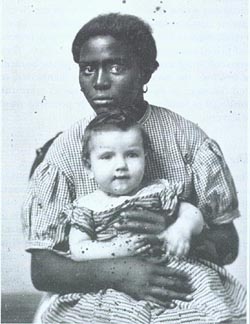
old photo of baby Ralph in an elaborate lace christening dress held proudly by a large black woman

"Black man with white child and dog." http://www.flickr.com/photos/george_eastman_house/2720789660/

“Black man with white child and dog.” via a “Manny”

"White-capped nurse holding infant." http://www.flickr.com/photos/floridamemory/3248110220/

“White-capped nurse holding infant.” via
"Negro domestic servant, Atlanta, GA, May 1939." http://www.flickr.com/photos/nypl/3110575890/“Negro domestic servant, Atlanta, GA, May 1939.” via

"Child and nurse." http://www.flickr.com/photos/george_eastman_house/2678243048/

“Child and nurse.” via

…the dichotomy of love and disdain living side-by-side is what surprises me- The Help

Mammy & Child-1850

some photos found @ postpostracial

a mammy tale

The following essay is reblogged from Southern-Style.  A real life modern-ish mammy story!  I’ve long been interested in the dynamic between black women and other people’s white children.  When I was in college studying African-American history for the first time, I stumbled upon the thought that Mammies had raised our nation and yet black women generally are not revered (to say the least).  When I was a nanny myself, I thought a lot about mammy.  And, back in January, when I devoured The Help I pondered her some more.  If you haven’t read it yet, please do yourself a favor and put Kathryn Stockett’s The Help on your summer reading list.  It’s one of the greatest books I’ve ever read.  Right up there with The Girl Who Fell From the Sky, Caucasia, The Curious Incident of the Dog in the Nighttime, Memoirs of a Geisha, and Life of Pi.  i.e. the rest of your summer reading list.

I Remember Mammy:
Mattie Lee Martin (“Mammy”)
By one who loved her, Sharman Burson Ramsey

Thirteen year old Mattie Lee Martin took her mentally challenged older sister by the hand and led her down the rutted, red clay country road. Neither looked back. Mattie was determined her sister would not be abused again in their grandparent’s home. She’d finally accepted that her parents would never come back to get them. The road led to the town of Dothan, Alabama, and a life, Mattie Lee hoped, that would be better than the one they’d known on that god-forsaken farm.

Mrs. Bender stood at the door of her variety store, broom in hand, and watched the two girls walk toward her down the sidewalk. Mattie, the spokesperson for the two, stepped forward and boldly asked, “I need work and a place where me and my sister can stay. Do you know of anything?” She looked up at Mrs. Bender quite seriously.  Her black eyes were wide.  Anxiety was written all over her round black face that now dripped in sweat in the hot summer day after her long walk. Mrs. Bender read in that expression that she’d gotten this far, but now the little girl was in a quandary as to what should she do now? She looked at the tight grip she had on her much larger, but obviously more dependent, sister.

Mrs. Bender sized them up and in her gentle voice said, “I hear they are hiring maids across the street at the Wadlington Hotel, but come in here and let me help you with something to wear to your interview. Your sister can rest here while you go and inquire. Tell them I sent you.”

Mattie stood straight and said, “I don’t take no charity. I’ll pay you back.” Mrs. Bender nodded.

That Jewish lady remained a dear friend to Mattie the rest of her life.

Mattie Lee Martin later became highly regarded for her cooking skills. She cooked at the restaurant of the Houston Hotel for awhile and then took a job as the private cook for Dr. Moody, founder of Moody Hospital in Dothan. When the Moodys moved into their big house on Main Street from the house across from the hospital, Mattie for some reason was not going with them. Dr. Moody recommended Mattie to Dr. E. G. Burson, my father. The Moodys gave her a house as a parting gift.

When Mattie Lee Martin interviewed with my mother, she told my mother, “I don’t work with children.”

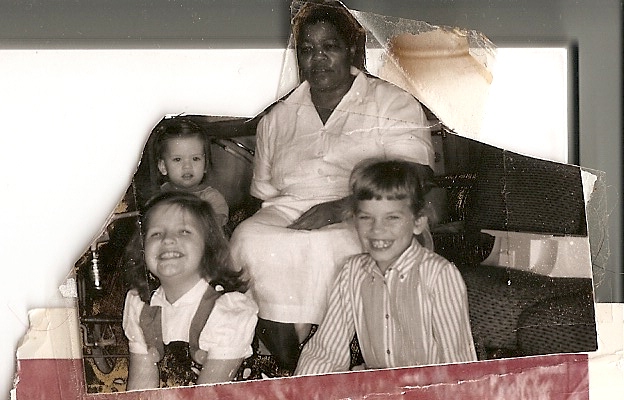
Yet as the pictures reveal, Mattie Lee Martin became as dear to us as our grandmothers and so she deserved just as endearing a name. Thus she came to be called “Mammy.”

Mammy came to work every morning before seven, except Sunday, either by bus or by taxi and stayed until after five.  Even after our overweight dog, Sir Bow Wow, went blind, he would meet Mammy at the bottom of the hill where she got off the bus every morning and together they would plod their way to the house.  She cooked, cleaned, and loved us. I remember seeing one of her paychecks in the amount of $27.00. I also remember the days we’d take Mammy home and she’d ask Mother to stop by the grocery store several blocks away. Then she’d put some money in my hand and I’d run into the grocery store and plunk the money down saying, “Bit o Dental Snuff, please.”

Mammy ordered the groceries to cook for lunch from Murphy’s Market downtown first thing in the morning and a boy on a bicycle delivered them in time for her to cook. Dinner was served at exactly 12:00 noon. (In the South we eat breakfast, dinner and supper.) The meat went on a platter before “the doctor”. The table was set precisely with forks on the left of the plate (with the napkin) and the knife (facing inward) on the right. The glass was placed above the knife. She trained us well.

…Mammy had worked for the aristocracy of the town, Dr. and Mrs. Earl Moody. While she often locked horns with my mother (whose own father had been killed when logs rolled off a log truck when she was 13 leaving her mother to struggle raising five children) she refused to give up on us. “Yo mama, she be mean. But I be mean too, so we get along.” Mother had been awarded campaign ribbon for service in World War II as a nurse at the Battle of the Bulge. She could curse a blue streak and did so on occasion when things did not go to suit her. Sometimes those disagreements would get so heated that Mother would fire Mammy, but we’d cry and carry on so, she’d have to go and ask her to come back. My father was a doctor and his father was a doctor and that made us worth Mammy’s time and effort. My mother might not know what was “proper” but Mammy did, and she was determined to turn us out well.

…Mammy did have her own family…a daughter Lucy Mae Dixon who was my Mother’s age. Mammy had very little education herself and the lists she made could barely be read, so she valued a good education. Mammy skrimped and saved and sent her to college in the North. It must have been a Catholic college because Lucy Mae converted to Catholicism. Mammy was a dedicated member of the Cherry Street AME Church. Lucy earned her Masters and came home to teach. Mammy bought her items of silver “on time” as birthday gifts. The mahogany furniture in their living areas was always covered in plastic to “save” it.

…I guess Mammy told my brother and sister the same thing she drilled into me. “Yo daddy be somebody. You gotta be somebody.” My sister is a cardiologist in New Orleans (Dr. Sylvia Burson Rushing) and my brother (Elkanah George Burson III ) has just started a pharmaceutical company (Burel Pharmaceuticals). Me? After you’ve got a man it’s all right “to rune yo hands” with Ajax, I learned. I wash a mean bathtub and have stayed married to the same man, an attorney of whom she approved (whose family once owned the Houston Hotel where she had worked) for forty years doing a little teaching and writing. This humble generous woman whom I never saw wear a single piece of jewelry gave me a pearl and gold bracelet for graduation from high school.  She who worked from can to can’t all of her life gave me a silver goblet when I got married.  I wonder if she ever knew how much they mean to me and that I realize the sacrifice and love those gifts demonstrated.

…Mammy was a proud person who made the most of her situation and, selflessly, with hard work and determination earned respect and made a good life for herself and her family. She raised us, her white family, to believe we could do whatever we chose to do and that we should make our parents proud. She drilled into us values of honesty, integrity, and a sense of responsibility.  Because we had been given so much; much was expected.  Because we loved her, it was Mammy we wanted to make proud.

Read more HERE

black mother, white children

I accidentally happened upon a fascinating thread discussing the photograph below.  It’s definitely worth checking out if you’re interested in this sort of thing.  Apparently, Mary categorized herself as “white” on the 1880 Census.  I wonder how that was possible.  Whatever the case, the point that there are approximately 3000 descendants of this family who, I have little doubt, consider themselves to be exclusively white brings me back to the novel idea that we are all mixed, we are simply American, and the veil of otherness is a detrimental illusion from which we desperately need to wake up. K?

James William Evans (1814-1883), his wife Mary Eliza Hoggard, and their children William, John and Mary Evans. Mary Eliza Hoggard was a descendant of the free African American Cobb and Bazemore families of  Bertie County, North Carolina. James William Evans was from Dorchester County, Maryland.

JAMES W. EVANS,

Mr. Evans married Mary Eliza Hoggard, of North Carolina, February 8, 1844. They have three children: Mary Frances, (who married Mr. Frank Collins, a son of J. W. Collins, Register of Clay County, Missouri, and they live with Mr. Evans on the farm);  John Henry, (was married August n, 1877, at Hainesville);  and William James, (who was born August 29, 1848, and married Caroline Gow, a daughter of Arthur Gow, of Clay County, in November, 1875).

We learn… that the North Carolina counties involved are Clinton County and Clay Counties Missouri. The children grew-up, married and lived in these two counties. The daughter married a Collins.

Apparently, James Evans brought (not bought!) Mary Hoggard from North Carolina and married her in Missouri where they raised their family. This makes sense, since this part of Missouri would have been “Free.”

This indicates to me that whites named Evans and Collins living in these two counties today, have a good chance of being a descendant of the black woman in the photo.

This photo speaks volumes of the kind of dilemma a black mother married to a white man found herself in during the 19th century.  This couple were married in Clinton County, Missouri, went by the surname Evans, and would have approximately 3000 descendants today.

  • The children are mulatto but 100% passable. The time, right around the Civil War. The choice the children had was really no choice. Quite simply, either they turned their backs on the mother and leave the state or be classified as Negro and endure Jim Crow for the rest of the lives.

    The mother is clearly not thrilled with the photograph. I think she was forced to sit for it by her husband. She appears to be thinking it’s not a very good idea, that the photo could prove an embarrassment  to her children. Indeed, it could prove an embarrassment to all her descendants 200 years into the future.

    I think this is what she was thinking.

    Let’s say the tall young man in the rear passed for white, married a white woman and had a family. This photo would not be considered a precious family heirloom but instead an indictment of Negro heritage.

    Does this explains why the mother is not smiling…?

  • The husband was born in 1818. The photo — judging by the clothing — was taken a few years before the Civil War. Location Virginia, a slave state. Things were starting to heat up. All around them slave owners were getting pissed a the North, Lincoln, and most especially those sympathetic to Negroes. You think interracial dating is tough today, imagine how hard it was then.

    All kinds of scary things were going on in the Slave states. People were stock-piling weapons. People were talking about succession. The young man standing was  about military age. Free blacks were being snatched-up and sold back into slavery. If the woman had local relatives she had surely cut herself off from them. No way should could afford to have her kin be part of her new family.

    At school the children were probably catching hell because of their black mother. If the mother wasn’t on the verge of a nervous breakdown she would be around the time her eldest started talking about joining a local regiment to fight the yankees and preserve slavery.

    Her husband’s family surely would have disowned him by then and no white family would have anything to do with them. Of course if they lived on a farm their contact would be minimal, but if they lived on a farm they had slaves and that must  have made her a mess too.

    But the main thing is sitting for the portrait must have seemed insane to her. Her kids look white. Each one could easily pass. Why do something that would doom them forever to second-class citizenship? She had to be thinking that. The sit had to be the last thing she wanted for her children — proof they were black.

    Had the kids looked like mulattoes, it would have been a different story. But these kids look completely white. They could pass with no problem at all — so why do something that could get them lynched?

    And that photo would do that had her eldest married a local white girl.

    That’s my theory why the mother doesn’t look happy.

  • So, Mary Hoggard Evans (the black woman in the photo) has three children who pass for white. They each get married around 1875.

    That’s six generations. Let’s figure each of her descendants in each of these generations had three children who went on to have three children up until today.

    1875 3 times 3 = 9

    1900 3 times 9 = 36

    1925                   108

    1950                   324

    1975                   974

    2000                   2916

    That’s almost 3000 “whites” descended from black Mary Hoggard.

    See how nonsensical this white-black thing is?