anger is best controlled

It’s amazing to me how this incident has really opened up a dialogue on the race issues in this country.  I feel like I keep posting about Crowley-Gate(s), but at this point it’s not about them anymore.  It’s about institutionalized racism.  Looking at it honestly and hopefully breaking it down til it doesn’t exist anymore.  Hopefully.

Here’s what former Secretary of State Colin Powell had to say about it on Larry King Live…

KING: Were you ever racially profiled?

POWELL: Yes, many times.

KING: And didn’t you ever bring anger to it?

POWELL: Of course. But, you know, anger is best controlled. And sure I got mad.

I got mad when I, as a national security adviser to the president of the United States, I went down to meet somebody at Reagan National Airport and nobody recognized — nobody thought I could possibly be the national security adviser to the president. I was just a black guy at Reagan National Airport.

And it was only when I went up to the counter and said, “Is my guest here who’s waiting for me?” did somebody say, “Oh, you’re General Powell.” It was inconceivable to him that a black guy could be the national security adviser.

KING: How do you deal with things like that?

POWELL: You just suck it up. What are you going to do? It was a teaching point for him. Yes, I’m the national security adviser, I’m black. And watch, I can do the job. So, you have this kind of — there is no African-American in this country who has not been exposed to this kind of situation.

Do you get angry? Yes. Do you manifest that anger? You protest, you try to get things fixed, but it’s kind of a better course of action to take it easy and don’t let your anger make the current situation worse.

via

Greeting Secretary of Defense Donald Rumsfeld at Ft. Campbell, Kentucky in 1976.

i’d call it an interracial service, but it’s cool nonetheless

Biker church and black church hold biracial service seeking healing, forgiveness

Posted by Roy Hoffman, Staff Report August 10, 2009

(Press-Register/Kate Mercer)Patrick Moran prays with Sondra Simmons as they participate in a Sunday, Aug. 9, 2009, worship service between two congregations, Cave Ministries and Fresh Fire on the Mount Ministry, at Plateau Community Center.

PLATEAU, Ala. — Their hands waving in the air, singing and testifying, members of Cave Ministries of Saraland, a predominantly white church of motorcycle riders, joined members of Fresh Fire on the Mount, a mostly black church from Eight Mile, for a 3-hour extravaganza of music and prayer Sunday.

The service, at the Plateau Community Center in north Mobile, was symbolic of the need for racial healing in the nation, said organizer Rod Odom, a religious program host.

Odom, 49, who had introduced Cave Ministries preacher Bryan Jones to Fresh Fire’s pastor, Aaron McKinnis, said he had wanted to bring whites and blacks together for church since his boyhood during the civil rights movement. “Sunday mornings are still the most segregated time in America,” Odom said.

“The Lord can use ‘a wretch like me,'” Odom said of his mission to address that separation, borrowing a line from the spiritual, “Amazing Grace.”

Apart from their racial differences, the two churches had clearly different styles.

Members of Cave, largely adults, were dressed in the garb of their beloved motorcyle riding — bandannas, blue jeans, jackets reading “Soldiers of the Cross” or T-shirts imprinted “My Life, His Way.”

Fresh Fire congregants, a number of whom came in family groups, were decked out in Sunday best — long skirts, coats and ties.

The music, alternating between churches, varied, too. “It’s black and white,” said Jackie Jones, worship leader of the Cave.

Jones stood behind a microphone alongside another singer and belted out a foot-stomping Christian rock song, “I Am Free.”


Gussy Hoeft with Cave Ministries shows 2-year-old McKenzie Williams a motorcycle during a racial reconciliation event Sunday, Aug. 9, 2009, in Plateau, Ala.


back to the beers

Old-ish news, I know, but I wanted to follow up.  At first there didn’t seem to be much to say about President Obama’a beer gathering with Sgt. Crowley and Professor Gates.  And Joe Biden.  But I found a couple of interesting if not insightful commentaries, one from Gates himself…

After Beer, Skip Gates Offers Substance

By MIKE SECCOMBE

…Nuance, that’s what’s been missing. And that was what those who attended his talk on Sunday got from Skip Gates.

He did not come across as an angry black man, but as a wry and funny one. The cop who busted him, Sgt. James Crowley, was no racist redneck either, apparently, but a wry and funny guy too.

“This is not a joke,” Professor Gates told his audience. “I mean, we really hit it off at the White House.

“I said to him: ‘I would have sworn you were six feet eight inches tall.’

“And he said: ‘I used to be. I’ve lost two or three feet in the last two weeks’

“How can you be mad at a guy like that?” he said.

He wants to know Sergeant Crowley better. Maybe a family dinner. Maybe a baseball or basketball game.

It has been a stressful couple of weeks. Professor Gates has not been back to his Cambridge home since the arrest and the university has recommended he move house. He has been forced to shut down his public e-mail because of “crazy, wacko messages like ‘you’re a racist and should die.’ ” He has had to change his phone numbers, which were published in the police report. There have been bomb and death threats.

But did he want to overstate his trauma. He was in jail for four hours, not four weeks, months or years. Unlike so many black and brown victims of racial profiling in this country, he had the best lawyers — Charles Ogletree and Alan Dershowitz.

Beer Summit

Obama’s brew-ha-ha

Clarence Page

Fox News star Glenn Beck said Gates-gate revealed Obama’s “deep-seated hatred for white people or the white culture.” After being reminded that Obama has numerous white staffers, Beck whipped around in a double-reverse. “I’m not saying that he doesn’t like white people,” he explained. “I’m saying he has a problem.”

Then he said, “This guy is, I believe, a racist.”

“Racist,” I have noticed, has become the sort of taboo tag to whites that the N-word traditionally has been to blacks. Black leaders partly brought this on themselves. Overusing the R-word robs it of its power and it is easy to overuse. Beck and his like are saying that whites can play that game too, even against the half-white and scrupulously evenhanded Obama.

Judging by my far-right e-mailers (some of my most faithful readers, thank you very much), Gates is a “racist” for loudly asking police to leave his house after he had established his identity. Having known Gates for about a decade, I think he was simply overly tired from a trip to China.

And I, my conservative critics say, am a racist for writing that Crowley knew all along that his arrest would not stick (which it didn’t) and that he had the power to defuse Gates’ temper simply by leaving Gates’ home. Instead, Crowley apparently chose to teach Gates a lesson for committing an unwritten offense to police etiquette: “contempt of cop.”

Can’t we all get along? Reports of a “post-racial” America after Obama’s election to theWhite House were greatly exaggerated. If anything, we are a transracial country. As Judge Sonia Sotomayor‘s U.S. Supreme Court confirmation hearings illustrated, we Americans suspiciously watch one another across racial, ethnic, gender and cultural lines as we uneasily shed our white male supremacist past.

We alert our cultural antennae and react sharply to any signs of preference shown to any group besides the one to which we happen to belong. That’s nothing new for women or nonwhites. Men and whites are still getting used to it.

thank you, gladys

Gladys Hernblad, 79; advocate for racial understanding

By Sally A. Downey

INQUIRER

Gladys Kinard Hernblad, 79, of Northern Liberties, an educator, author, and advocate for interracial understanding, died of heart failure July 27 at Penn Hospice at Rittenhouse.

Mrs. Hernblad grew up in Saluda, S.C. Encouraged by her mother, Sadie, she walked six miles each way to high school, and after graduation moved to Philadelphia in search of better educational and employment opportunities.

She met Robert Hernblad at a gathering for young adults at a fellowship house in North Philadelphia. He was white, of Swedish and Irish descent. She was African American. They married in 1966, one year before the U.S. Supreme Court struck down bans on interracial marriage in all states.

In 1992, Mrs. Hernblad established the Interracial Families United Network. She told a reporter at the time that she and her husband had experienced discrimination in the early years of their marriage. “We had no support for our situation,” she said. The new network, she said, would support, “all interracial marriages – Asian, Hispanic, and African American.”

Mrs. Hernblad was a major supporter of President Obama, not only for his political views, but because his biracial background mirrored her family’s, which she considered a symbol of improving race relations in America.

o-phern03

recovering racists

By now it’s old news that Harvard Professor Henry Louis Gates, Jr. was arrested in his own home for… well… for being unexpectedly black in his own home I guess.  This is an excerpt from an interview conducted by Gates’ daughter Elizabeth, which can be found in it’s entirety here.  Reading this brought to mind my experience of being barred from a flight after calling a gate agent out on his seemingly racist motives for harrassing me about my carry on luggage.
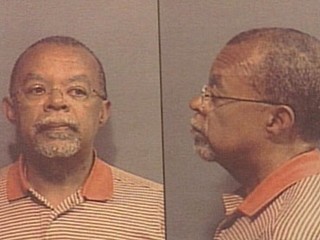
gatesPIX

So you do think this was reduced to race? You do think this was purely racially motivated—that when he came into your home uninvited and didn’t read you your Miranda rights and he didn’t follow procedure?

No, when I was arrested I was not read my Miranda rights. I clearly was arrested as a vindictive act, an act of spite. I think Sgt. Crowley was angry that I didn’t follow his initial orders—his demand—his order—to step outside my house because I was protected as long as I was in the house because he didn’t have a warrant. I think what he really wanted to do was throw me down and put handcuffs on me because he was terrified that I could be dangerous to him and that I was causing violence in my own home—though obviously he didn’t know it was my home.

If I had been white this incident never would have happened. He would have asked at the door, “Excuse me, are you okay? Because there are two black men around here try’na rob you [laughter] and I think he also violated the rules by not giving his name and badge number, and I think he would have given that to one of my white colleagues or one of my white neighbors. So race definitely played a role. Whether he’s an individual racist? I don’t know—I don’t know him. But I think he stereotyped me.

And that’s what racial profiling is all about. I was cast by him in a narrative and he didn’t know how to get out of it, and then when I demanded—which I did—his name and badge number, I think he just got really angry. And he knew that he had to give me that, and his police report lies and says he gave it to me. If he had done that I would have simply taken it down and wrote a report! I was definitely going to file a report, now—just not as big as the one I’m about to file!

So since it’s clear this happens every day to minorities everywhere who don’t have representation, who like yourself previously believed in the justice system, what can we do as a community to make sure that our world starts to place value on all people of color—not only the exception, as you have been referred to so often during this ordeal?

I think its incumbent upon me to not let it drop—not to sweep it under the carpet—but to use this as a teaching event for the Cambridge police and police in general and for black people—don’t step out of your house. Don’t step onto that porch! You’re vulnerable. And second? To teach the police about the history of racism, what racism is. Sgt. Crowley found it outrageous that I was demanding his name? I mean, excuse me? Whose house was he in? Hello?

Yeah.

My house. I mean, he was there investigating? He should have gotten out of there and said, “I’m sorry, sir, good luck. Loved your PBS series—check with you later!” [laughter from both of us] If he would have given me his card I would have sent him a DVD! [more laughter]

But you’ve always taught my sister Maggie and me to stay on the right side of the law. Did this challenge your perception of what side that really is? Or are we always going to have to humble ourselves to this humiliating degree?

No. I believe in the law. I think we have a great system of justice. But I do think that system of justice has been corrupted by racism and classism. I think it’s difficult for “poor people”—poor white people, brown people—to be treated fairly before the law in the same way that upper-class people are. I mean listen, Liza. I was lucky. I could have been in there all night with as few as three other prisoners. What if I had been anonymous and in some other place? It’s scary, man. That’s why we have to fight through organizations such as the NAACP defense fund, on whose board I sit—we have to fight for equal rights for all people. It’s beyond race, it’s class and race! And that’s crucial.

There’s been so much talk about Black America moving into a “Post-Black Era.” What do you think it will take to actually achieve that? I mean, is it possible?

The only people who live in a post-black world are four people who live in a little white house on Pennsylvania Avenue. [laughter] The idea that America is post-racial or post-black because a man I admire, Barack Obama, is president of the United States, is a joke. And I hope no one will even wonder about this crazy fiction again. I am proud of the American people for electing the best candidate who happened to be a black man and that’s a great historical precedent in the United States, but America is just as classist and just as racist as it was the day before the election—and we all, to quote my friend Cornel West, “are recovering racists,” and we all have to fight those tendencies. In America there is institutional racism that we all inherit and participate in, like breathing the air in this room—and we have to become sensitive to it.

crowleyPIX

Arresting officer Sgt. Crowley who teaches a racial profiling class at the Police Academy in Lowell, Mass.  Apparently it is not a “how to” course.
“holler”

This is exciting! Especially on the heels of Prom Night in Mississippi.  As I was watching the documentary, I wondered if there were any biracial students in Charleston, MS.  Actually if there were any biracial people there at all.  It seems as though it would be a miracle.  Anyway, this movie will show us what it might be like if there were a biracial student in that very segregated setting…

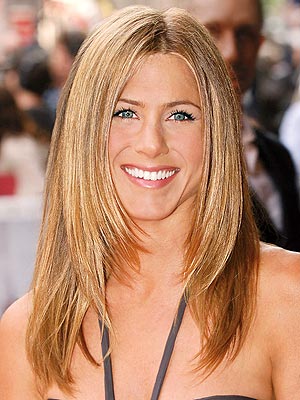
jennifer_aniston300x400

LOS ANGELES (Hollywood Reporter) – Screen Gems and Jennifer Aniston are teaming up to tell a tale of lingering racial tensions in the Deep South.

The company has acquired “Holler” (aka “Mutt”), written by Dana Adam Shapiro, co-director of the Oscar-nominated documentary “Murderball.”

Inspired by true events, the script centers on a biracial high school student who returns with his white mother to her hometown in Mississippi, where he falls for a white girl. When prom season arrives at the high school, he is shocked to discover that she cannot be his date at the segregated prom. He soon finds himself a catalyst for change, not only for the prom but for the school and entire town.

HBO on Monday aired a documentary on the same subject, “Prom Night in Mississippi.”

The film will be produced by Aniston’s partner at Echo Films, Kristin Hahn, along with Tracey Durning. Aniston will executive produce with Jeff Mandel.

(Editing by Sheri Linden at Reuters)