I thought that was such a great experiment and the findings so very revealing. Coincidentally, I came across these new cameras yesterday and i thought to myself, “If these cameras are exactly the same (color aside), why’s the black one gotta be the devil while the white one’s an angel.” I think it borders on modern day racist advertising if you consider it a bit too seriously (perhaps).
When it comes to the policies and politics of Barack Obama, it’s no secret that liberals and conservatives don’t see eye to eye. But according to behavioral sciencist Eugene Caruso of the University of Chicago’s Booth School of Business, these differences in perspective may literally be a difference in perception. In a new study, Caruso and colleagues Emily Balcetis of New York University and Nicole Mead of Tillberg University asked a group of undergraduates which of a series of photographs of Obama–some of them secretly lightened and darkened–best represented who he is as a person. The results were striking: while self-described liberals tended to pick the digitally lightened photos of the president, self-described conservative students more frequently picked the darkened images. The more one agrees with a politician, in other words, the lighter his skin tone seems; the less you agree, the darker it becomes. To discuss how political affinities influence perception–and how politicians and the press could take advantage of these findings–NEWSWEEK’s Andrew Romano spoke to Caruso. Excerpts:
How did the study actually work?
Essentially we were interested in whether political party influences how people literally see the world, and how they may see different depictions of candidates as representative of who they really are. So to test this we gathered up a bunch of photos of Barack Obama and digitally altered them to create a version where his skin tone appeared a bit lighter and a version where his skin tone was a bit darker than it appeared in the original photograph. And then we just showed people several different photos and asked them to rate each one on how much they represented who he really is. What we found was that participants who told us that they had a liberal political orientation rated the lightened photographs as more representative of Obama than the darkened photographs, whereas participants who told us they had a more conservative ideology rated the darkened photographs as more representative of Obama than the lightened ones.
I’m no expert here, but you’re confident that it’s the skin tone that changes “representativeness” in the eyes of the voter, as opposed to something else about the photographs—like pose, or background, or facial expression?
That’s a great question. What we did was essentially take three different photos with three different poses, and created for each photo a lightened and a darkened version. And then we randomly selected the combination of pose and skin tone that we showed each participant.
So your findings about “representativeness” were consistent across poses—the conservative will be twice as likely to say a “darkened” Obama was representative, regardless of which image of Obama was being darkened?
Right. We were experimentally able to isolate the effect of skin tone because some people saw a lightened version of pose #1 and others saw a darkened version of pose #1—and independent of the pose the lightened versions seemed most representative to liberals and the darkened most representative to conservatives.
Were you surprised by the results?
A little bit. Some of my research deals with how people who have different views on a subject are able to try to understand the views of someone on the other side, and the general finding is that people aren’t particularly good at really coming to understand the perspective of someone with whom they disagree. Beyond that, though, I got interested in this notion of whether our beliefs can actually affect the way we see the world—of whether they can actually affect our perception of objects or people in our environment. And it turns out they can.
Ultimately, what does it mean that someone believes a lightened version of Obama is more representative of him than a darkened version, and vice versa? What are the larger implications of these differences in perception?
Partisanship can affect all sorts of beliefs. It’s not surprising that a liberal and a conservative who read the same health care bill would come to very different conclusions about its merits. But I think our work is more akin to having a liberal and conservative look at the exact same physical copy of a bill sitting on the desk in front of them and disagreeing over how thick it is. That is, even something that we feel we should be able to see similarly, like a person’s racial identity or physical characteristics, can be influenced by our desire to see that person favorably or unfavorably.
But isn’t there a chicken or egg relationship here? Do conservatives see Obama as darker and are thus prone to dislike him, or do they dislike him first and then see him as darker because of it?
That’s a great question. One of the things we’re trying to do now is experimentally try to tease those two options apart. Basically, what we have in our current paper, the one that’s out now, is correlational studies of Obama where we don’t really know what comes first or what’s causing what. The first study in the paper tries to address part of what you’re asking. If we get people to think about a novel candidate and simply manipulate whether they agree with a candidate or not, we can show that people who think this novel biracial candidate agrees with them later report that the lightened photos are more representative of him, suggesting that if you agree with someone then you may come to see him as lighter. From that we can speculate, exactly as you have, about the reverse path—and that is, seeing images of someone when his or her skin tone looks darker may cause people to like that person less than seeing images of that person with lighter skin tone.
I think this sounds like one of the most fascinating books on the subject. I’m really looking forward to reading the different experiences of black mothers and white mothers and women of various generations. Wow!
When social scientist Marion Kilson’s children were born, in the 1960s, she assumed that they would identify as African American, like their father, not European American like herself. “I was still in graduate school,” she remembers. “I wrote my term paper on slave revolts. I assumed my children would be identified as African American, and I wanted them to know that not all African Americans had been gospel about their slave status.”
Her friend and fellow social scientist Florence Ladd, on the other hand, says that she didn’t have expectations about her child’s race in his early years; it was her stepson, who is white, who “made me think about his future and racial identification in infancy.”
Kilson, who is European American, and Ladd, who is African American, had known each other for 40 years but had never really talked about their experiences parenting biracial children before, Kilson says. They talked to about 25 Boston-area parents while working on Is That Your Child?, and they kicked off their research by interviewing each other.
Kilson and Ladd focused on mothers rather than fathers (“We just felt that was really that a man would do better than we could,” Kilson says) and decided not to touch on racial issues faced by adoptive parents. The parents they spoke with were from different generations, but most were upper middle class and all were from the United States. “Growing up in this society, we have a different take on race,” Kilson says.
“Americans have a hard time seeing relationships when their skin color is different,” she continues, talking about the times when her daughter, whose husband is Scottish, has been asked if she’s the nanny of her lighter-skinned child. (I can’t even count the number of times people have asked, “So, what are you?” or asked if my kids all have the same father.)
Older generations tend to be more focused on the racial differences between a parent and a child, Kilson points out, even if they don’t intend to be negative. She doesn’t think it’s possible to raise a truly color-blind child in American society…but younger people, who are more comfortable with race and diversity, navigate this multicultural world with ease. It’s all they’ve ever known.
“I perceive that, for our children, they didn’t have a public choice about racial identity, whereas for our children’s generation, their children have a choice about affirming all of their identities,” Kilson points out.
And the possibilities are endless. “When children see themselves in public figures as well as teachers — that hope flows through them as well,” Frohlich says. “We do expect children to value one another as individuals, regardless of ethnicity.”- source
If Heidi Klum wasn’t Heidi Klum, I bet she’d hear “Is that your child?” a lot.
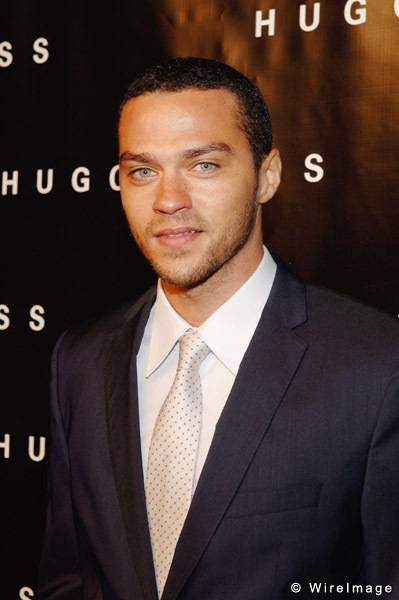
The new (biracial) guy on Grey’s Anatomy? As soon as he first hit the screen I was like, “I think he’s one of us!” But I wasn’t 100% sure until I saw Jesse Williams on the Bonnie Hunt Show. He showed pictures of himself as a child with his (Black) dad. So cute! Then and now!! My friend google led me to some more info about him….
Williams is the son of an African American father and a Swedish mother, and as a teenager, he moved from urban Chicago to ‘lily-white’ suburban Massachusetts. His interest in acting was sparked, in part, when a film he was writing about this uneasy transition was chosen as a finalist in the Sundance Screenwriter’s Lab. “It was a big part of my life. I really rejected that move. It was a complete cultural shock.” Williams recalls, “It wasn’t good. My friends were sh***y, the people were sh***y, the parents were sh***y. A lot of parents closed the door in my face, so I was like, I don’t need to be here. I’m not going to try and change you, which, I guess I did try for a while.”- via
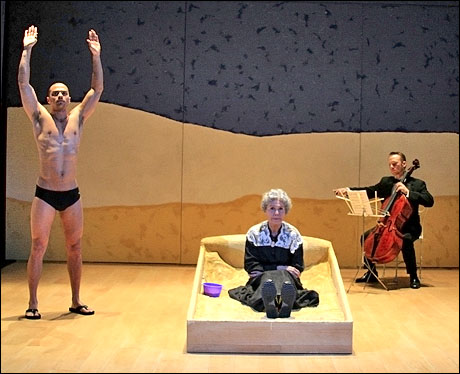
This is from an off-broadway play that Williams did last year. So wish I had seen it.
Jesse Williams isn’t embarrassed to admit he wasn’t fully aware of who Edward Albee was when he auditioned for him to play the scantily-clad Angel of Death in the revival of The Sandbox that the 80-year-old playwright is now directing (in tandem with The American Dream) at The Cherry Lane. “Actually, I think it helped me, not being so intimidated,” says Williams. “He was so funny, cracking jokes with me even from the beginning. And I didn’t even fully process that he had offered me the job. But it’s all been an amazing experience, getting this immediate response from the audience, and working with this cast. And honestly, I don’t even really know what I look like on stage. I said I was going to go to the gym more often, but I end up just doing push-ups in the basement of the theater and trying to keep quiet.”
Williams’ enthusiasm is understandable, since he has only been acting professionally for a couple of years. While studying filmmaking at Philadelphia’s Temple University, he did some commercial and modeling work, with the occasional acting audition — even turning down a prime soap opera role. “I am a biracial man, and I was supposed to play this tragic mulatto character lusting after a white girl, and I didn’t want to leave school to do that kind of part.” Instead, after graduation, he took a job as a public school teacher in Philadelphia, and then a high-level law firm job in New York — “I was supervising 60 attorneys, even though I’m not a lawyer” — before deciding to focus on acting.- via
Oh, Jesse Williams. I can’t wait to interview you!
The products are/were the real problem, I suppose.
Offensive & Politically incorrect advertising and propaganda:
No fuss, to the point racist packaging. What you see here is an old Norwegian brand of tar/varnish used on wood burning ovens. It’s been out of production for a good while now, but boxes like this can still be found tucked away in old dusty closets in Norway.
In the US and the UK, the word nigger featured in branding and packaging consumer products, e.g. “Nigger Hair Tobacco” and “Niggerhead Oysters”, Brazil nuts were called nigger toes, et cetera. As racism became unacceptable in mainstream culture, the tobacco brand became “Bigger Hare” and the canned goods brand became “Negro Head”.
Recruiting at churches, schools, job fairs and community events, the Sacramento branch has nearly tripled from 323 adult members to 845 over the past 14 months, with another 45 youth members, said president Betty Williams.
“They’re white and black, Asian, Hispanic, Jewish, Muslim,” said Williams. “I think people are discovering that civil rights is colorless, whether it’s a gender issue, a religious issue, a same-sex issue.”
Jeanette Flowers Kimmons, who’s recruited more than 100 new members herself, added, “I always say don’t wait until something happens to be part of the solution.”
The Sacramento chapter – formed in 1916 in response to lynchings and kidnappings of mixed-race children who were to be raised as house boys – will mark the NAACP’s100th anniversary Nov. 14 with a fundraiser.
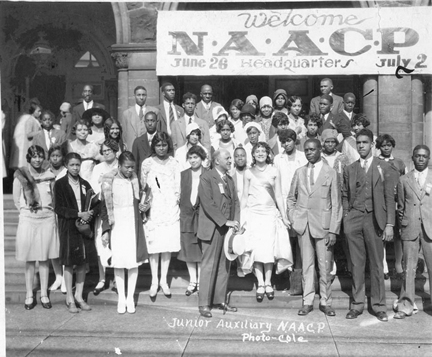
An image from 1929 of W.E.B. Du Bois with a chapter of the NAACP, Image courtesy of Americanrenaissance.com
Just to catch you up to speed. By the way, don’t worry about us. We are doing just fine. Thank you for your grave concern. That you would go to such lengths as interfering with God’s blessing of love and devotion (I know, I know- only to certain couples) just to spare us a lifetime of confusion and exclusion is sweet. But no thank you. Times have changed, my friend. I mean, you do seem to think of yourself as a kind of a friend of the mulattos. A really ignorant and misinformed friend. I see how it could happen. For years (white)people were taught that race-mixing was wrong. And if those people were desperate not to feel really racist, that belief was justified with feigned concern for the “spurious issue” which would result from interracial couplings. That coupled with the “tragic mulatto” propaganda that has been bandied about the country since way back in the day… Well, I can see how you may have been lead astray. I hope you can open your mind now. After the couple of weeks I imagine you’ve been having, you really have no excuse.
That Americans like answers in black and white, a cultural trait we confirmed last year when the biracial man running for President was routinely called “black”.
The flattening of Barack Obama’s complex racial background shouldn’t have been surprising. Many multiracial historical figures in the U.S. have been reduced (or have reduced themselves) to a single aspect of their racial identities: Booker T. Washington, Tina Turner, and Greg Louganis are three examples. This phenomenon isn’t entirely pernicious; it is at least partly rooted in our concern that growing up with a fractured identity is hard on kids. The psychologist J.D. Teicher summarized this view in a 1968 paper: “Although the burden of the Negro child is recognized as a heavy one, that of the Negro-White child is seen to be even heavier.”
But new research says this old, problematized view of multiracial identity is outdated. In fact, a new paper in the Journal of Social Issues shows that multiracial adolescents who identify proudly as multiracial fare as well as — and, in many cases, better than — kids who identify with a single group, even if that group is considered high-status (like, say, Asians or whites). This finding was surprising because psychologists have argued for years that mixed-race kids will be better adjusted if they pick a single race as their own.
The population of multiracial kids in the U.S. has soared from approximately 500,000 in 1970 to more than 6.8 million in 2000, according to Census data quoted in this pdf. In the early years, research on these kids highlighted their difficulties: the disapproval they faced from neighbors and members of their extended families; the sense that they weren’t “full” members in any racial community; the insecurity and self-loathing that often resulted from feeling marginalized on all sides. That simple but harsh playground question — “What are you?” — torments many multiracial kids. Psychologists call this a “forced-choice dilemma” that compels children to claim some kind of identity — even if only a half-identity — in return for social acceptance.
But the new Journal of Social Issues paper suggests this dilemma has become less burdensome in the age of Tiger Woods and Barack Obama. The paper’s authors, a team led by Kevin Binning of the Stanford Graduate School of Business and Miguel Unzueta of the UCLA Anderson School of Management, studied 182 multiracial high schoolers in Long Beach, Calif. Binning, Unzueta and their colleagues write that those kids who identified with multiple racial groups reported significantly less psychological stress than those who identified with a single group, whether a “low-status” group like African-Americans or a “high-status” group like whites. The multiracial identifiers were less alienated from peers than monoracial identifiers, and they were no more likely to report having engaged in problem behaviors, such as substance use or persistent school absence.
The writers theorize that multiracial kids who choose to associate with a single race are troubled by their attempts to “pass,” whereas those who choose to give voice to their own uniqueness find pride in that act. “Rather than being ‘caught’ between two worlds,” the authors write, “it might be that individuals who identify with multiple groups are better able to navigate both racially homogeneous and heterogeneous environments than individuals who primarily identify with one racial group.” The multiracial kids are able to “place one foot in the majority and one in the minority group, and in this way might be buffered against the negative consequences of feeling tokenized.”
In short, multiracial kids seem to create their own definitions for fitting in, and they show more psychological flexibility than those mixed-race kids who feel bound to one choice or another.
Fortunately, all these questions of racial identity are becoming less important, as we inch ever closer to the day when the U.S. has no racial majority. One of these days, after all, we will all be celebrating our multiracial pride.
Read more: http://www.time.com/time/health/article/0,8599,1880467,00.html#ixzz0W2BxqzTZ
I thought this news would make me feel better about the situation. Somehow I’m angrier than before. First of all, the man doesn’t use proper English. This bothers me to no end. But even worse he feels that he is the victim here, being punished for having a conscience. I’m sure he’s just beside himself with regret and worry for all of the confused half-breeds that he can no longer save from…. from…. what!? UGH! The insanity!
Louisiana justice who refused interracial marriage resigns
November 3, 2009
(CNN) — A Louisiana justice of the peace who drew criticism for refusing to marry an interracial couple has resigned, the secretary of state’s office said Tuesday.
Keith Bardwell resigned in person at the Louisiana secretary of state’s office, said spokesman Jacques Berry. The state Supreme Court will appoint an interim justice of the peace to fill Bardwell’s position, Berry said, and a special election will be held next year to fill the position permanently.
Bardwell- resigned because, “They was going to take me to court.”
Bardwell, a justice of the peace for Tangipahoa Parish’s 8th Ward, refused to perform a marriage ceremony for Beth Humphrey, 30, and her boyfriend Terence McKay, 32, both of Hammond, Louisiana, and sign their marriage license. The two were married by another justice of the peace.
The couple filed a federal discrimination lawsuit against Bardwell and his wife, Beth Bardwell, on October 20, claiming the two violated the Equal Protection Clause of the 14th Amendment.
Bardwell, speaking to CNN affiliate WBRZ, said he was advised “that I needed to step down because they was going to take me to court, and I was going to lose.”
“I would probably do the same thing again,” he said. “I found out I can’t be a justice of the peace and have a conscience.”
Sen. Mary L. Landrieu, D-Louisiana, who had called for Bardwell’s dismissal, said Tuesday night that “Bardwell has finally consented to the will of the vast majority of Louisiana citizens and nearly every governmental official in Louisiana. Bardwell’s refusal to issue marriage licenses to interracial couples was out of step with our Louisiana values and reflected terribly on our state. We are better off without him in public service.”
Initial reports were that Bardwell refused to issue a marriage license to the couple, but in the lawsuit Humphrey and McKay say they obtained the license from the parish court clerk’s office and contacted Bardwell to see if he would perform the ceremony and sign the license to legally validate the marriage.
Humphrey wound up speaking by telephone with Beth Bardwell, the lawsuit said, and Beth Bardwell asked Humphrey if they were a “mixed couple.” When told they were an interracial couple, Beth Bardwell said, according to the lawsuit, “We don’t do interracial weddings,” and told her the two would have to go outside the parish to marry.
Humphrey and McKay
Bardwell did not return repeated phone calls from CNN in October, but told CNN affiliate WAFB that he had no regrets about the decision. “It’s kind of hard to apologize for something that you really and truly feel down in your heart you haven’t done wrong,” he said.
In addition, he told the Hammond Daily Star in an October story that he did not marry the couple because he was concerned for the children that might be born of the relationship and that, in his experience, most interracial marriages don’t last.
“I’m not a racist,” he said. “I do ceremonies for black couples right here in my house. My main concern is for the children.”









 An image from 1929 of W.E.B. Du Bois with a chapter of the NAACP, Image courtesy of Americanrenaissance.com


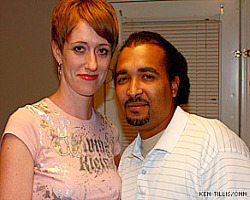 Humphrey and McKay
 mulatto diaries
