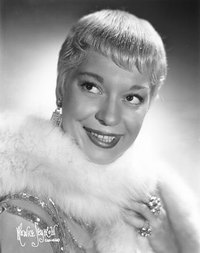
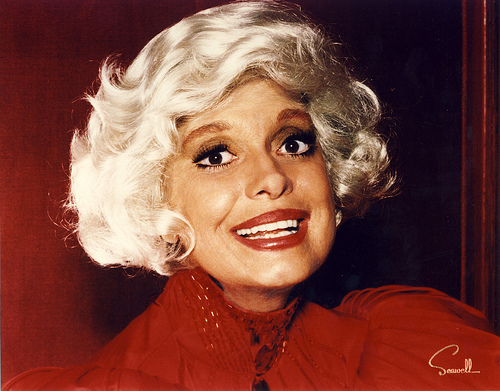
In her autobiography, Just Lucky I Guess, the 81-year-old performer told the story of the day she learned that she is biracial.
She recalled that she was 16 years old and heading to college when her mother told her that she was “part Negro.”
“I’m only telling you this,” Channing recalls her mother, Peggy, saying, “because the Darwinian law shows that you could easily have a Black baby.”
Her mother continued by explaining Carol’s unique look. She told the doe-eyed performer that because of her heritage that was “why my eyes were bigger than hers (I wasn’t aware of this) and why I danced with such elasticity and why I had so many of the qualities that made me me.”
The revelation didn’t bother Channing, who said, “I thought I had the greatest genes in showbiz.”
George Channing, Carol’s father, was the son of a German American father and a Black mother. While still very young, his mother, who worked as a domestic, moved him and his sister from his birthplace of Augusta, GA, to Providence, RI, where she thought people would never recognize his “full features.”
Channing’s paternal grandmother didn’t raise her father and his sister because she “didn’t want anyone to see her around her children” because she was “colored,” the performer surmised.
TRANSCRIPTS
CNN LARRY KING LIVE
Interview With Carol Channing
Aired November 27, 2002 – 21:00 ET
…….
KING: Lets start early in that truth. Your father was black.
CHANNING: No, he was not black. I wish I had his picture. He was — he was a — his skin was the color of mine. I don’t know maybe. Yes, it’s all right. Well any, no. My father — you read the tabloids, don’t you?
KING: No, it says in my notes your beloved father, George Channing, a newspaper editor, renowned Christian Science lecturer listed as colored on his birth certificate.
CHANNING: Yes, and the place burned down, but nobody ever knew that. But I know it. Every time I start to sing or dance, I know it, and I’m proud of it.
KING: So he was black?
CHANNING: No, He had in — there was a picture in our family album and my grandmother said — I never saw them. My grandfather was Nordic German and my grandmother was in the dark. And they said no that was — she was — and I’m so proud of it I can’t tell you. When our champion gave me that last third (UNINTELLIGIBLE) on “Hello Dolly!” Again. No white woman can do it like I did. KING: So you’re proud of your mixed heritage?
CHANNING: Very, when I found out. I was 16-years-old and my mother told me. And you know, only the reaction on me was, Gee, I got the greatest genes in show business.
KING: Some people years ago discovering that might have been disturbed by it?
CHANNING: Yes, years ago because when I found out about it, you don’t want to do that.
KING: You don’t say it.
CHANNING: You don’t say it. There’s a lot of it down South.
KING: People are ashamed of it.
CHANNING: I’d proud of it.
KING: I’m glad to hear it.
CHANNING: I really am. I mean look, what makes you, you? You don’t know. None of us knows our heritage. Not in the United States.
KING: We’re all immigrants.
CHANNING: Exactly, this is the changing face of America. I’m part of it. Isn’t it wonderful?
KING: You damn right.
CHANNING: I’m young again.
………
Tiffany: She’s proud, but she can’t name “it”….






 1922-2009








 mulatto diaries