curly like me

It’s here!  The answer to our curly-headed prayers.  I’ve been referring people to Teri LaFlesh’s website for over a year now, and am thrilled to be able to point my fellow biracials, parents of mixies, and anyone else with a “wild” mane to her book Curly Like Me.  Teri was kind enough to send me an advanced copy so that I could write a blurb.  Here’s what I wrote…

“With Curly Like Me, Teri LaFlesh has provided us curly heads with THE Bible of hair care for our tightly curled manes.  If you thought your (or your child’s) hair was hard to manage, Teri will prove you wrong.  After suffering through relaxers, jheri curls, texturizing, dreadlocks, weaves, and extensions, Teri stopped fighting against her curls and embarked on a journey to embrace them.  The results are stunning!  Teri discovered a simple, easy to follow technique that produces healthy, happy, beautiful curls freeing us from chemicals, heat, and perpetual ponytails.  She’s layed it out step by step, providing us with the do’s, the don’ts, and even the why’s!  A more thorough hair care manual we could not ask for.  Perhaps even more momentous though is the journey toward self acceptance that lies in the pages of the book.  It seems as though Ms. LaFlesh learned that what happens when we try to make our hair into something that it is not, is a mirror of what happens when we try to make our SELF into something that it is not.  Curly Like Me is also about embracing every aspect of one’s authentic self. That beautiful and unique being that the world will not be able to experience if we waste our energy fighting against it in hopes of conforming to that which we’re told every day on television, in magazines, and in the movies is ‘normal’ and ‘good.’  The struggle against the “real” hair becomes symbolic of the inner struggle against the real self.  Teri says, ‘I treated my curls as if they weren’t good enough in their natural state.  Yet after all I had done to them they, couldn’t be crushed.’  The same can be said of the human spirit.  Thank you, Teri!!”

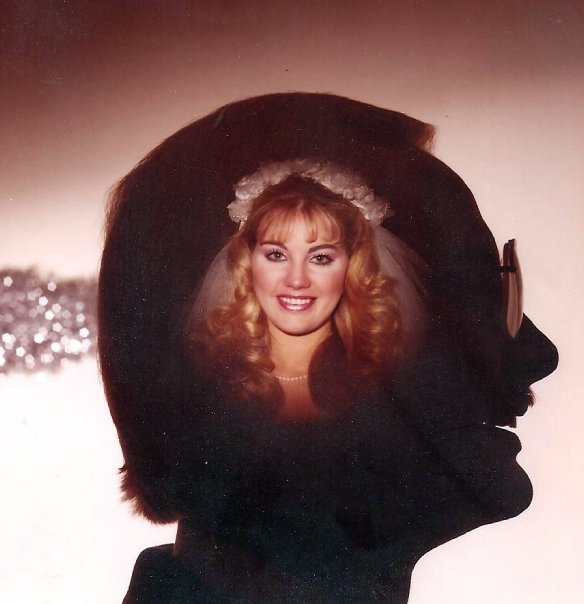
so, if you’d like your (or your child’s) hair to look like this someday….

…go buy this book!!  You can get it HERE.

dancers among us

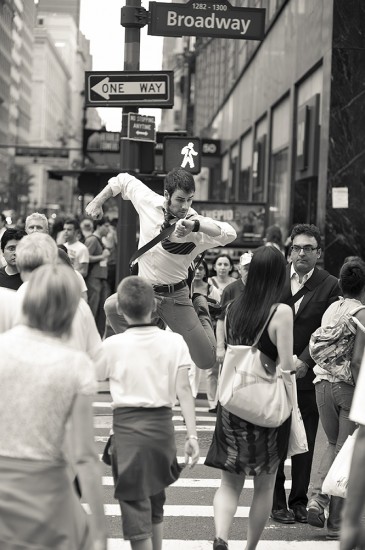
Dancers Among Us is a collection of NYC dance photographs featuring members of the Paul Taylor, Mark Morris and Martha Graham Dance Companies. This is an ongoing project that began in the spring of 2009. There were no trampolines or other devices used for these images, just thousands of hours of training! Photos by Jordan Matter.

best for last

The following will come as no surprise to you if you’ve been keeping up with this blog for the last year.  At least I think all of those Jim Henson posts were done last May… I have a hard time keeping track of this thing.

This is ‘fly in my soup’ guy, right?  Love him!

Circa 1976. A very special year.  Loving the color coordination.

Stahs in the sky!

goodbye, lena

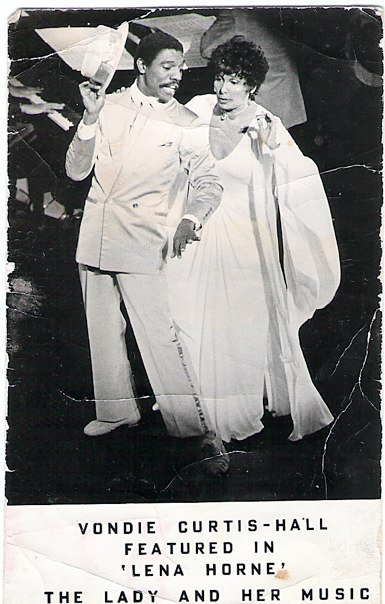
I am deeply saddened by the loss of the legendary Lena Horne.  I don’t think I have much  personal commentary at this moment.  I met Lena Horne once.  I was four or five.  My mom had a friend in Ms. Horne’s Broadway show.

She took me to see it.  We went backstage.  My mom says that with Lena and I it was love at first sight.  From what I can recall, I agree.  On my end anyway.  When I think back on that night the images that come up are all glowy and glittery with a hazy quality.  Almost like a dream.  Lena was truly magical.  She seemed to think I was as well.  Heck, when I was four or five I thought I was magical, too.  Or, should I say that I knew I was. That I hadn’t forgotten.  And nobody had tried to tell me otherwise yet.  I imagine now that Lena sprinkled some kind of fairy dust on me with a whisper never to forget who I am.  Not any part of it.  Especially not the magic.

I digress.

Needless to say I am extremely grateful to my mother and to Vondie and to Lena for that moment.  And also to Lena for breaking down barriers and speaking out against injustices and for paving the way for me to stand here today thinking these thoughts and trying to be a beacon for positive social change.

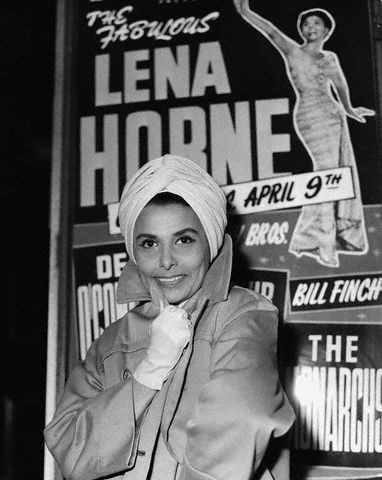
via The Huffington Post

Singer Dies At 92

VERENA DOBNIK

NEW YORK — Lena Horne, the enchanting jazz singer and actress known for her plaintive, signature song “Stormy Weather” and for her triumph over the bigotry that allowed her to entertain white audiences but not socialize with them, has died. She was 92.

Horne died Sunday at NewYork-Presbyterian Hospital, said hospital spokeswoman Gloria Chin, who would not release details.

Quincy Jones, a longtime friend and collaborator, was among those mourning her death Monday. He called her a “pioneering groundbreaker.”

“Our friendship dated back more than 50 years and continued up until the last moment, her inner and outer beauty immediately bonding us forever,” said Jones, who noted that they worked together on the film “The Wiz” and a Grammy-winning live album.

“Lena Horne was a pioneering groundbreaker, making inroads into a world that had never before been explored by African-American women, and she did it on her own terms,” he added. “Our nation and the world has lost one of the great artistic icons of the 20th century. There will never be another like Lena Horne and I will miss her deeply.”

“I knew her from the time I was born, and whenever I needed anything she was there. She was funny, sophisticated and truly one of a kind. We lost an original. Thank you Lena,” Liza Minnelli said Monday. Her father, director Vincente Minnelli, brought Horne to Hollywood to star in “Cabin in the Sky,” in 1943.

Horne, whose striking beauty often overshadowed her talent and artistry, was remarkably candid about the underlying reason for her success: “I was unique in that I was a kind of black that white people could accept,” she once said. “I was their daydream. I had the worst kind of acceptance because it was never for how great I was or what I contributed. It was because of the way I looked.”

In the 1940s, Horne was one of the first black performers hired to sing with a major white band, to play the Copacabana nightclub in New York City and when she signed with MGM, she was among a handful of black actors to have a contract with a major Hollywood studio.

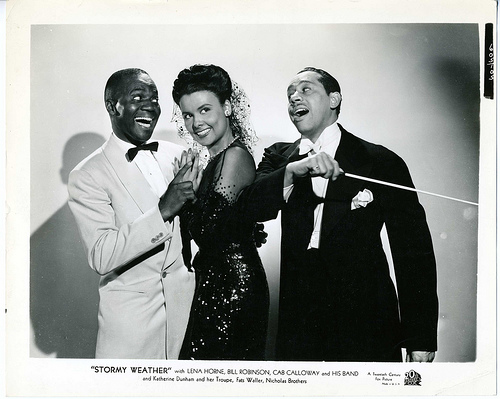
In 1943, MGM Studios loaned her to 20th Century-Fox to play the role of Selina Rogers in the all-black movie musical “Stormy Weather.” Her rendition of the title song became a major hit and her most famous tune.

Horne had an impressive musical range, from blues and jazz to the sophistication of Rodgers and Hart in such songs as “The Lady Is a Tramp” and “Bewitched, Bothered and Bewildered.” In 1942’s “Panama Hattie,” her first movie with MGM, she sang Cole Porter’s “Just One of Those Things,” winning critical acclaim.

In her first big Broadway success, as the star of “Jamaica” in 1957, reviewer Richard Watts Jr. called her “one of the incomparable performers of our time.” Songwriter Buddy de Sylva dubbed her “the best female singer of songs.”

“It’s just a great loss,” said Janet Jackson in an interview on Monday. “She brought much joy into everyone’s lives – even the younger generations, younger than myself. She was such a great talent. She opened up such doors for artists like myself.”

Horne was perpetually frustrated with racism.

“I was always battling the system to try to get to be with my people. Finally, I wouldn’t work for places that kept us out. … It was a damn fight everywhere I was, every place I worked, in New York, in Hollywood, all over the world,” she said in Brian Lanker’s book “I Dream a World: Portraits of Black Women Who Changed America.”

While at MGM, Horne starred in the all-black “Cabin in the Sky,” but in most movies, she appeared only in musical numbers that could be cut when shown in the South and she was denied major roles and speaking parts. Horne, who had appeared in the role of Julie in a “Show Boat” scene in a 1946 movie about Jerome Kern, seemed a logical choice for the 1951 movie, but the part went to a white actress, Ava Gardner, who did not sing.

“Metro’s cowardice deprived the musical (genre) of one of the great singing actresses,” film historian John Kobal wrote.

“She was a very angry woman,” said film critic-author-documentarian Richard Schickel, who worked with Horne on her 1965 autobiography.

“It’s something that shaped her life to a very high degree. She was a woman who had a very powerful desire to lead her own life, to not be cautious and to speak out. And she was a woman, also, who felt in her career that she had been held back by the issue of race. So she had a lot of anger and disappointment about that.”

Early in her career, Horne cultivated an aloof style out of self-preservation. Later, she embraced activism, breaking loose as a voice for civil rights and as an artist. In the last decades of her life, she rode a new wave of popularity as a revered icon of American popular music.

Her 1981 one-woman Broadway show, “Lena Horne: The Lady and Her Music,” won a special Tony Award, and the accompanying album, produced by Jones, earned her two Grammy Awards. (Horne won another Grammy, in 1995 for “An Evening With Lena Horne.”) In it, the 64-year-old singer used two renditions – one straight and the other gut-wrenching – of “Stormy Weather” to give audiences a glimpse of the spiritual odyssey of her five-decade career.
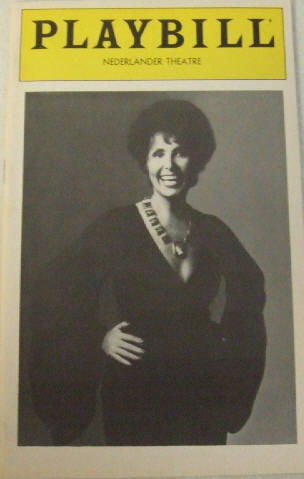
Lena Mary Calhoun Horne was born in Brooklyn on June 30, 1917, to a leading family in black society. Her daughter, Gail Lumet Buckley, wrote in her 1986 book “The Hornes: An American Family” that among their relatives was Frank Horne, an adviser to President Franklin D. Roosevelt.

She was largely raised by her grandparents as her mother, Edna Horne, who pursued a career in show business and father Teddy Horne separated. Lena dropped out of high school at age 16 and joined the chorus line at the Cotton Club, the fabled Harlem night spot where the entertainers were black and the clientele white. She left the club in 1935 to tour with Noble Sissle’s orchestra, billed as Helena Horne, the name she continued using when she joined Charlie Barnet’s white orchestra in 1940.

A movie offer from MGM came when she headlined a show at the Little Troc nightclub with the Katherine Dunham dancers in 1942.

Her success led some blacks to accuse Horne of trying to “pass” in a white world with her light complexion. Max Factor even developed an “Egyptian” makeup shade especially for her. But she refused to go along with the studio’s efforts to portray her as an exotic Latina.

“I don’t have to be an imitation of a white woman that Hollywood sort of hoped I’d become,” Horne once said. “I’m me, and I’m like nobody else.”

Horne was only 2 when her grandmother, a prominent member of the Urban League and the National Association for the Advancement of Colored People, enrolled her in the NAACP. But she avoided activism until 1945 when she was entertaining at an Army base and saw German prisoners of war sitting up front while black American soldiers were consigned to the rear.

That pivotal moment channeled her anger into something useful.

She got involved in various social and political organizations and, partly because of a friendship with singer-actor-activist Paul Robeson, was blacklisted during the red-hunting McCarthy era.

By the 1960s, Horne was one of the most visible celebrities in the civil rights movement, once throwing a lamp at a customer who made a racial slur in a Beverly Hills restaurant and, in 1963, joining 250,000 others in the March on Washington for Jobs and Freedom when Martin Luther King Jr. gave his “I Have a Dream” speech. Horne also spoke at a rally that year with another civil rights leader, Medgar Evers, just days before his assassination.

The next decade brought her first to a low point, then to a fresh burst of artistry. She appeared in her last movie in 1978, playing Glinda the Good in “The Wiz,” directed by her son-in-law, Sidney Lumet.

Horne had married MGM music director Lennie Hayton, a white man, in Paris in 1947 after her first overseas engagements in France and England. An earlier marriage to Louis J. Jones had ended in divorce in 1944 after producing daughter Gail and a son, Teddy.
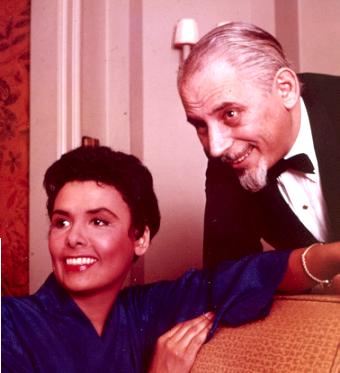
“It was in Hollywood that Horne met her second husband, Lennie Hayton, who was also her musical mentor at MGM. He was also white. When the couple announced their marriage in 1950 — three years after it had actually occurred, they were confronted with angry rejection from the Hollywood community. Despite all the difficulties of a racially mixed marriage, their union flourished, lasting from 1947 until Hayton’s death in 1971.”

Her father, her son and Hayton all died in 1970 and 1971, and the grief-stricken singer secluded herself, refusing to perform or even see anyone but her closest friends. One of them, comedian Alan King, took months persuading her to return to the stage, with results that surprised her.

“I looked out and saw a family of brothers and sisters,” she said. “It was a long time, but when it came I truly began to live.”

And she discovered that time had mellowed her bitterness.

“I wouldn’t trade my life for anything,” she said, “because being black made me understand.”


speaking of golden…

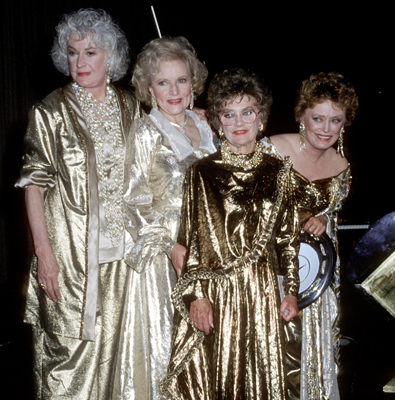
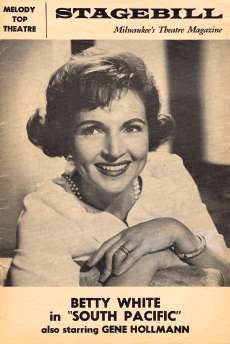
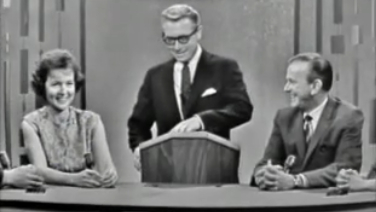
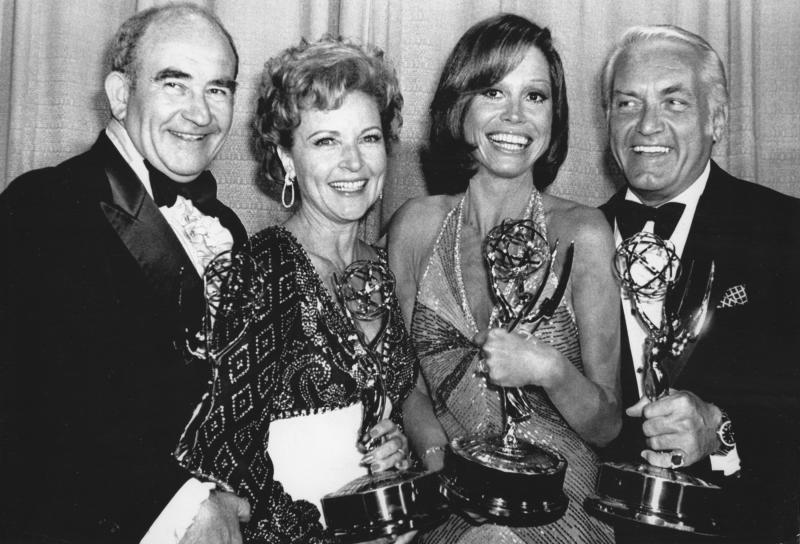
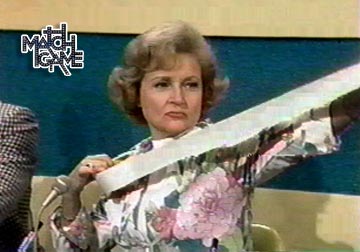
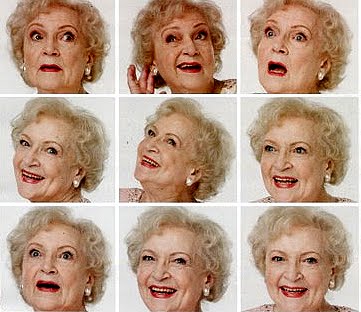
Tonight’s the night!!  Ms. Betty White is hosting SNL and I am so freaking excited!  I joined the facebook group ages ago, so of course I feel personally responsible for this magical night of entertainment.  Actually, long before it was cool to love Betty White, I loved Betty White.  It all started with Rose.  I have such a soft spot for Rose, although I’m pretty sure that the novelty of her naivete would quickly wear off if we ever met face to face.  I think what drew me in was the fact that Betty White reminded me of my Grandma, who didn’t take too kindly to that at first.  I think I probably said that Rose reminded me of her, which my grandmother took to mean that I thought she was kinda dumb.  She isn’t.  And it wasn’t Rose, it was Betty.  So pretty and so funny.  I was too young to know anything about Password, or The Mary Tyler Moore Show, or anything Betty that pre-dated Rose.  All I’m trying to say is that since I was nine years old, I have been a fan of Betty White.  She loves dogs!  She loves games!  She’s really good at the games!  She’s hilarious, and though she plays cute and innocent very well, she has a totally raunchy sense of humor.  About ten years ago I discovered Match Game reruns.  That’s when I was struck by the comedic genius of Betty White.  I could barely believe that that woman would one day morph into my beloved Rose.  Then there’s the animal loving.  It is still one of my greatest desires to not only meet Betty White, but to introduce her to my dog.  I always thought that would be Indy and that she would just melt when she saw him, but that ship has sailed.  Now I think she’d get a kick out of Oscar because he is super-cute and super-funny.  I’m still hanging on to that dream.  I should probably head over to Rockefeller Center with the dog and spend today waiting for Betty White.  I’m not going to though.

who knew!?

Dean Martin Celebrity Roast of Betty White

lucky dogs!!

Mrs. Weezmer aka “Witch Lady” on My Name is Earl

Thank you, Betty White!! xoxo!

brown babies

I’ve been meaning to post more about these AfroGerman children since blogging about  the holocaust memorial last month.  This post is mostly a reblog from MochaJuden.com.  As someone who has a hard time embracing my German heritage (none of which is “afro”), I find myself fascinated by this piece of our history.  I would love to track down some of these “brown babies” and interview them about their experiences in Germany and in the U.S.  The Black German Cultural Society website is definitely worth checking out.  So many resources, so much information.  I have a feeling I’ll be touching on this topic again…. and again.

Germany’s Brown Babies

Many of our constituents are children who were born to German mothers who were abandoned by African American soldiers during the U. S. Occupation following World War II. While some remained in Germany, many were raised in orphanages or with foster families; a few remained with their natural mothers. Many were offered for International Adoption to African American Families and accepted into the US under the Displaced Persons Act of 1948 (amended June 16, 1950) , where it was assumed that they would “more easily assimilate into the culture.”

This result is a generation of culturally displaced persons who remain disconnected and alienated from the mainstream of the societies in which they lived and from both ethnic communities to which they belong.

Adoption is a wonderful concept and is generally accepted as an ideal social mechanism for improving lives and circumstances for abandoned or orphaned children. However, recent psychological and sociological research has determined that these children often suffer significant lifelong emotional and social problems such as identity deficits, separation and attachment disorders, and chronic depression, as well as other problems as a result of separation trauma and what has been identified as “the primal wound.”

The issue is magnified and the outlook becomes ever more complicated when we explore the international adoption and abandonment of interracial children who were created by opposing forces following a major global war. For the most part, there was no professional follow up in terms of the physical, social and emotional well being of these children once they were placed.

Historians in the last decade have begun to study and write publications about the Brown Baby Plan and the cooperative attempt between the two governments to place and provide for these unwanted and displaced children. Autobiographical Interviews and publications have given voice to the trauma and lifelong suffering stemming from the dramatic loss of identity and heritage and the cultural alienation that these children faced, particularly while growing up both in post war Germany and in the US during the Civil Rights era, a period when intense racism and discrimination was under scrutiny and identified as a major problem in both societies.

“We struggled through childhoods filled with confusion, fear, anger, and feelings of inferior self-esteem. Navigated adolescence in extreme conformity to perceived structures of authority, in order to redeem our existence, or in defiance to them in utter rebellion. Adulthood was either accomplished successfully by integrating the powerful nuances of our diversified selves, or postponed until safety could be found in the distanced wisdom of experience. Some of us didn’t make it. Some of us are just now coming of age.” ~ Rebecca, Black German Cultural Society.

American Homes For Germany’s Brown Babies Are Scarce – Jet Mag, May 15, 1952

Tan Tots Attend German Schools – Jet Magazine, July 24, 1952

Brotherly Love – Jet Magazine, December 18, 1952

2607979643_5a07458832_o

German Brown Babies Arrive in US – Jet Magazine, January 29, 1953

Brown Babies Become Americanized – Jet Magazine, May 21, 1953

Brown Babies Find New Homes In America – Jet Mag, Oct 8, 1953

all photos found atVieilles_annonces of Flickr

emotional weather

excerpted from a talk entitled “Guidelines for Living Fearlessly”
Pema Chodron Books and Tapes

How to taste the quality of the moment, of the week, without the labels of good and bad, or succeeding and failing. But really just get used to tasting or knowing or experiencing the quality of what you are going through, not as some final thing.

I think Rilke said “no feeling is final”. Its a great line in one of his poems. No feeling is final, but somehow in the moment, we often feel, a sort of – this is how it is – in such a heavy way. And then so much story line goes with that that it drags us down.

So sometimes we like what we are feeling and then we don’t like what we’re feeling. And then we like it again, and then we don’t like it again. And then it just sort of goes like that – it’s actually fine for it to be like that.

Enlightened people, from what I have heard, the moods come and go, the energy shifts come and go. Its not like suddenly you are enlightened and then the rain never comes. It doesn’t mean you don’t wake up with a headache, or a heavy feeling in your heart.

But basically it never goes beyond that, its just the quality of awakened energy as it is manifesting right now. So it is a really profound deep shift of attitude towards our moods and thoughts and our emotions.

The path of liberation depends on not taking everything so personally.

I remember Trungpa Rinpoche saying to a group of students, one of which was complaining about their very very difficult work situation with a very difficult boss, and his answer began with the statement “well the trouble is, we all take everything so personally”. And I remember we all laughed and it seemed like a really funny comment. But I now see exactly what he meant.

Taking it personally means investing so much energy and time as if you are like this, and the situation is like this, and its fixed, instead of realizing that its always shifting and changing.

Sometimes the sun is brightly shining, and sometimes it hasn’t shone for the last three days. And you feel what you feel about that. But of course what we are really talking about is the emotional weather.


shocked

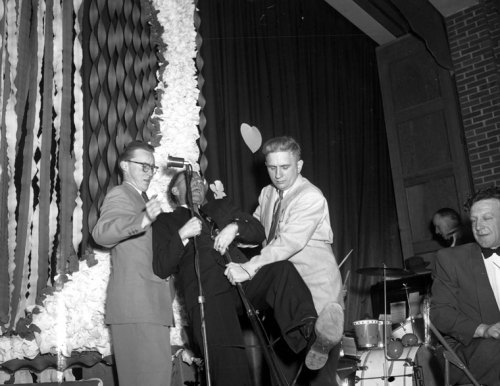
Even though at first hand this picture seems to show that the guy on the right loves holding the middle one’s pole, this is actually  a photograph of Mayor A. W. Shackleford frozen to two microphones by a 50  volt shock caused by improper grounding.  Mayor Shackleford was just about to introduce Teen Queen Donna Glock and  runner-up Shirley Parkinson at a Valentine Dance, 1953, when he grabbed  both microphones. Because the wires were improperly grounded the  current flowed into the Mayor’s body and froze his hands to the  microphones until the power was turned off.  Poor Mayor. source

Photograph of Mayor A. W. Shackleford frozen to two microphones by a 50 volt shock caused by improper grounding. Assisting him is CJOC Announcer Joe McCallum, (left) and City Alderman Cliff Black. Second from the right in the background is Marvin Nelson.

Mayor Shackleford was just about to introduce Teen Queen Donna Glock and runner-up Shirley Parkinson at a Valentine Dance, 1953, when he grabbed both microphones. Because the wires were improperly grounded the current flowed into the Mayor’s body and froze his hands to the microphones until the power was turned off.

The photograph, taken by F. Orville Brunelle of the Lethbridge Herald, appeared in 1300 magazines and newspapers all over the World. Brunell won the Canadian Press Picture Service “Best Picture of the Year” Award for 1953.

source