startling

Perhaps “startling” would be a bit of an exaggeration today, but a production like this would still be considered mildly innovative indicating that we haven’t evolved much out of our old traditions…

March 1970: Student teachers, Dereck Tapper and Scilla Nicholls in a rehearsal for a production of ‘Romeo and Juliet’ at St Luke’s Teacher Training College in Exeter. The mixed-race casting was considered a startling innovation at the time. (Photo by Keystone/Getty Images)

whiteness defined

This one is so good that I don’t have perspective to add or anything witty to say about it.  However that could just be because I’ve only had three hours of sleep and just can’t do any better.  Either way, this excerpt of a transcript of an NPR interview is definitely worth reading and pondering.  You could also listen to it in it’s entirety HERE.

Author Examines ‘The History Of White People’

Once upon a time, notorious laws in this country defined as black anyone with as much as one drop of black blood. Similar laws struggled with the rights of people of mixed race, octoroons, for example. But nowhere can you find a definition of white people, and as a practical matter, that non-definition has changed. Ethnic groups now regarded as white Irish, Jews, Italians – were once very much on the outside.

These points (are) from Nell Irvin Painter’s new book, “The History of White People,” which traces ideas about color and race from antiquity to the Obama administration.

This is TALK OF THE NATION. I’m Neal Conan in Washington. Nell Irvin Painter is our guest…

CONAN: …you conclude at the end of your book, you say the fundamental black-white binary endures even though the category of whiteness or we might say more precisely a category of non-blackness effectively expands. That non-blackness, is that by lack of a definition of whiteness?

Ms. PAINTER: Yeah, that’s about how it goes. There as you noted, there have not been legal definitions of whiteness. It’s kind of what’s leftover from blackness.

CONAN: What isn’t.

Ms. PAINTER: And blackness, there’s the idea of a one-drop rule is an idea. What the states did was say one-fourth, one-eighth, that kind of thing, one grandparent, one great-grandparent. That’s how they decided what one drop was.

I suppose people use the word one drop because actually color disappears very quickly in people. And so you can look functionally white with one black grandparent, which in most places would make you legally black. So what makes you black has been defined and redefined and re-re-redefined. What makes you white is what’s leftover.

CONAN: And in fact, you say that has been, well, ill-defined but redefined and redefined over the years, too.

Ms. PAINTER: Yeah…  The whole point of defining races is mostly to put people down, and so those needs change over time. Who do you want to put down? Well, you want to put down, say, Jews and Italians and Slavs 100 years ago, but 150 years ago, you wanted to put down the Irish.

…We think of race as something physical, biological and permanent, but the way people used race in the 19th and 20th centuries and probably still today is that it has to do with temperament, racial temperament. So how people look on the outside is a key to what they’re like on the inside, their temperament. So that had to do with Protestantism, too.

…CONAN: It’s interesting, Nell Irvin Painter, you describe how, in fact, racial laws made a transition in the late part of the 20th century from being used to exclude persons of color to define injustices against persons of color.

Ms. PAINTER: Not persons of color, Negroes, to be exact. The laws were against Negroes. But you’re absolutely right that before desegregation, before the Civil Rights Act of 1964, all those laws, exclusionary laws, were meant to keep Negroes out. And the counting up was to keep Negroes out.

And after that, particularly after the 1970s, the need to rectify the injustices meant that we had to count people in order to straighten things out. So now we count up racial categories, say, to track mortgage lending, where there’s still a good deal of racial discrimination.

So in the census, the census keeps counting us by race for purposes of undoing racial harm in the past.

Read more (or listen) HERE

established social hierarchies

This project calls to my mind the book The Help.  Looking at these photos, I feel as though I know who are the respective givers and receivers of “help” just about as easily I would the characters in that book of Kathryn Stockett’s that I love so much.

WOMEN AND THEIR MAIDS: A PHOTOGRAPHIC LEVELLING

VIA

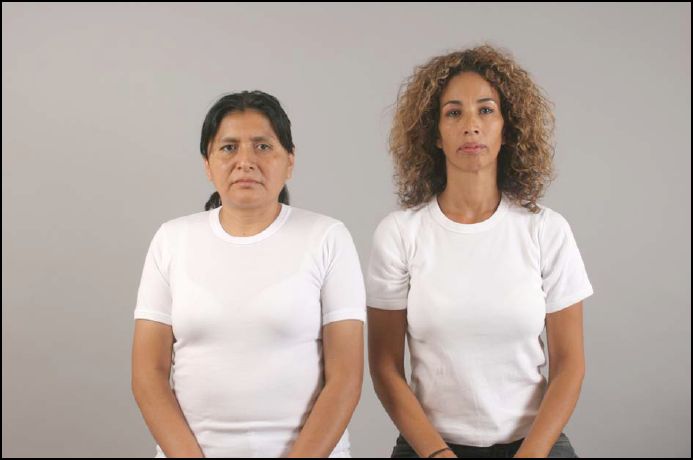
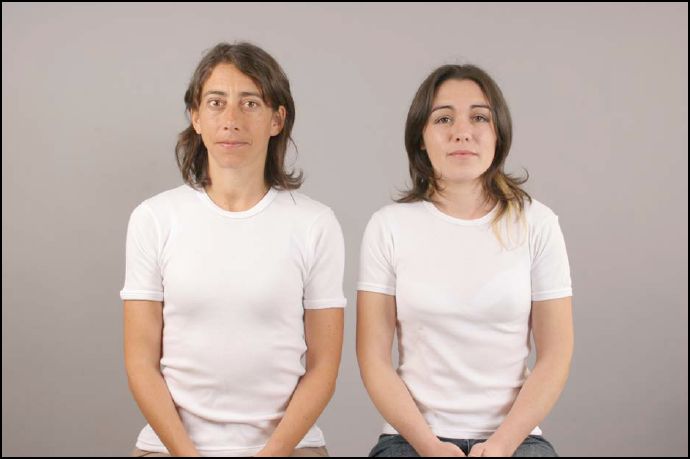
An interesting photo project, called Lugar Común (Common Place), designed to disrupt our acceptance of established social hierarchies. The photographers, Justine Graham and Ruby Rumié, took pictures of 50 pairs of women — maids and their employers — located in Argentina, Chile, and Colombia.To disrupt the hierarchy inherent in their relationship, Graham and Rumié had them dressed alike, without accessories, and sitting in identical poses.   By doing so, they allowed both women to “…look at the camera with the same pride, with the same openness”.  The viewer is not told which woman is which. They also asked each pair to sit across from one another and look in each others’ eyes. Even though some had known each other for 30 years or more, Graham said that all of the pairs had trouble looking at each other in this way. from

An interesting photo project, called Lugar Común (Common Place), designed to disrupt our acceptance of established social hierarchies. The photographers, Justine Graham and Ruby Rumié, took pictures of 50 pairs of women — maids and their employers — located in Argentina, Chile, and Colombia.

To disrupt the hierarchy inherent in their relationship, Graham and Rumié had them dressed alike, without accessories, and sitting in identical poses.   By doing so, they allowed both women to “…look at the camera with the same pride, with the same openness”.  The viewer is not told which woman is which.

They also asked each pair to sit across from one another and look in each others’ eyes. Even though some had known each other for 30 years or more, Graham said that all of the pairs had trouble looking at each other in this way.

profiled

Yes, I believe they were… Disturbing.

Teen With Asperger’s Arrested: Were Callers Racial Profiling?

by Ken Reibel

VIA

Reginald Latson loves to walk.

“He’ll walk five or 10 miles, it’s nothing to him. Sometimes he walks five miles just to grab a bite to eat at Chili’s,” says his mother, Lisa, who lives in Stafford, Virginia. “Walking is his release.”

Neli, as his family calls him, is 18 and has Asperger’s, a mild form of autism. Three Mondays ago, he rose early and left home without telling his mother. “When I entered his room at 6:30 am and didn’t see him, I assumed he had gone for another walk,” she says. It was a school day.

Four hours later Stafford County authorities had ordered a lock down for eight schools, and Neli was in police custody, facing one count of malicious wounding of a law enforcement officer, one count of assault and battery of a law enforcement officer, and one count of knowingly disarming a police officer in performance of his official duties. The cascade of missteps that led to the arrest suggest a combination of public racial profiling and the over reaction of law enforcement officers who are unfamiliar with autistic behavior.

* * *

After Neli left home early that morning he walked two miles to Porter Library on Parkway Blvd. “He goes there frequently. There’s a teen room there, and he enjoys it,” says Lisa. The library was closed, so he sat under a tree, in the grass, at the front of the building. The parking lot at Park Ridge Elementary, about 400 feet to the west, was filling up.

According to officials reports, someone at the school called police at about 8:38 am to report a suspicious person sitting outside the library, “possibly in possession of a gun.” A bulletin went out with Neli’s description, and officials, concerned that a gunman was on the loose, ordered a school lockdown and set up a search perimeter.

When police arrived at the library, Neli was gone. Unaware of the report, and impatient for the library to open, he began walking in the direction of the high school. A forested green belt of trees some 500 feet-wide with a well-worn path separates the school from nearby homes. At about 9 am, a “school resources officer” who is also a Stafford County Sheriff deputy approached Neli. That’s when accounts begin to diverge.

Lisa said her son complied with a search, which failed to find a weapon. Police say Neli “attacked and assaulted the deputy for no apparent reason.”

Neli told his mother that the school officer threatened him, and that Neli said “You’re harassing me. You’re not allowed to do that. I know my rights,” then turned and walked away. According to Neli, the officer grabbed him from behind and choked him. Police reports say a scuffle ensued, during which the officer pepper sprayed Neli. The police version, which you can read here, says Neli then took the spray from the officer and turned it on him.

According to Lisa, Neli said he took the spray and ran into the woods. The deputy, Thomas Calverley, reportedly suffered a cut to the head and a broken ankle, and underwent surgery.

By this time sheriff deputies were combing the area with search dogs, and at least one TV news crew offered a breathless live report of the manhunt. Neli somehow eluded the dragnet for another 45 minutes before being spotted and arrested in the high school parking lot, shortly before 10 am.

No gun was found “and subsequent investigation has indicated that that a gun was not actually seen by the reporting parties,” according to the official report.

Lisa learned of the arrest at 10:30 am, when she called the police to report that her son was missing. “I was told that he was in custody and was currently being questioned but I was not told why,” she said. “They wouldn’t tell me anything, and wouldn’t allow me to visit him. I told the police that Neli has autism, but they didn’t seem to care.”

For the next 11 days, Neli was held without bail, and in isolation at the Rappahannock Regional Jail. Police allowed Neli’s school counselor to visit, and she relayed messages and information to Lisa, who was allowed only one visit. “He wasn’t able to speak or communicate with me. He appeared to be in a catatonic state,” Lisa says.

She is understandably frustrated and angry.

“The actions that were taken by the police that day were excessive in the least and grossly mishandled,” she wrote on a website started to counter inaccurate local media reports. “Someone says ‘I see a suspicious black male’ and he ‘could’ have a gun, while all my son was doing was sitting in the grass at the library. And you shut down six schools and go out on a manhunt for this dangerous black man who was sitting in the grass. Anyone can read between the lines and see that this just doesn’t add up.”

2010-06-13-Neli61310.jpg

Neli is from a military family, and during his 18 years has lived in Florida, Germany, Oklahoma and Georgia. Seven years ago his family moved to Stafford, a sprawling bedroom community about an hour south of Washington, DC. The family struggled to find appropriate school placement, finally settling on a private school. “The public high school was crowded, with about 30 kids to a class. Neli wasn’t getting the attention he needed, and his self esteem was slipping.” But he had never been in serious trouble. Never like this.

Lisa heeded the warning signs. A month earlier, she asked Neli how he would feel about wearing a medical alert bracelet that identified him as a person with Asperger’s. “He said that he didn’t have a problem with that, but I didn’t follow up. I’m just kicking myself for that,” she said.

Lisa, who works as a defense contractor, had also asked for a two month leave of absence to spend more time with Neli. That Monday was her first day off work. Her husband, Neli’s stepfather, retired from the Army and is currently stationed in Iraq as a military contractor.

* * *

As Neli’s time in isolation dragged on, police interrogators found him non-responsive and disturbed, and a judge ordered the young man transferred to a state mental institution for 30-days of treatment and evaluation. If the case is not resolved by then, he will end up back in jail.

The hospital is a two-and-a-half hour trip from Stafford, which Lisa says she has made four times. Horrified, she watched her son’s mental state worsen with each visit. “He is locked away and doesn’t understand why,” says Lisa. “He’s been through an ordeal.”

That ordeal has also changed Lisa, and the way she thinks about race, the police, and her community. She suspects Neli’s arrest was in part racially motivated, but it is not a charge she makes lightly.

“I used to donate money to the police benevolent society. I never imagined something like this could happen,” she says.

“I don’t think in terms of ‘watch out for those kinds of people’ or ‘you need to be scared,'” she says. “I grew up in south Florida. That’s a melting pot of cultures. I know there are good people and bad of every race.” Her life in the military, she says, has brought her friends “of every racial background.”

Has the ordeal changed her views on race and racism?

“It has,” she said, her voice trailing off. “It most definitely has.”

* * *
Cross posted at AutismNewsBeat.com

re: doubles

I’m not a fan of the old “best of both worlds” myth.  Not unless the other side of that coin -worst of both worlds- is given as much weight.  However, I didn’t want to simply tout a “tragic japanese-american” fallacy over here today either.  Here’s what I found to counteract that.

The Hapa Advantage

By Leah Nanako Winkler

via

“Hybrids are better”—Shayne Kao

…In the belated honor of “LOVING DAY,” I’ve asked 10 hapas in NYC and beyond (including myself) the following: what we like about being biracial, and how it has shaped us in this world. So, let’s eat some good food and enjoy the sunshine as this community continues to grow and we find each other and ourselves among the masses!

PERSPECTIVE


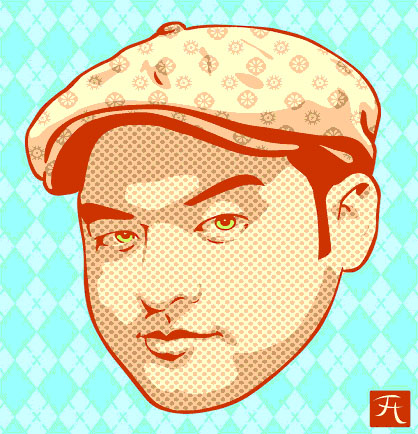
Name: Teddy Hose

OCCUPATION: Illustrator, Animator, Graphic Designer

NATIONALITY: Dad is American (3rd Generation German), Mom is Japanese (straight from Japan).

TEDDY SAYS:
I definitely enjoy being biracial, it gives me perspective culturally, and I usually get a positive response when people ask me about it.  I like the feeling of being unique because I work in the creative field where that is highly valued.  I also believe it makes me more tolerant since the East’s values and tendencies are clearly different than the West.  I can’t help but see things from more than one angle, which can be refreshing. I’m honestly able to communicate better with non-white people in my experience.  Being able to connect with someone based on feeling “different” is always something I look for, as cliché as that sounds.

I think one advantage with being hapa is that we don’t have the typecasting that comes with being one race. Not to say there are those who equate mixed race people to one race (Obama being declared as the first “black” president), but this aspect is great for someone who’s an artist like me.

THE IN-BETWEEN LIFE

NAME: Stephanie Silver

OCCUPATION: Actress

NATIONALITY: Half-Japanese, Half-German/Austrian/Hungarian—aka Germanese, or Double-Jap, or Jap-Squared, or the Axis Powers (minus Italy).

STEPHANIE SAYS:  I grew up with ramen and tempura dishes one week, and pastrami sandwiches and matzo ball soup the next. Which dessert do I like more: mochi or cheesecake? At a frozen yogurt shop, I don’t have to choose anymore. I can have both flavors, a twist, a blend, a hybrid!

Feeling a connection to two distinct cultures. Recognizing my features in an Expressionist painting, and my emotions in a woodblock print. Strangers telling me I should go to Israel, no Berlin, no…Okinawa. Remembering trips to Hawaii during Summer, and New York in the Fall. Learning to surf and going to Temple. Living the in-between life in Los Angeles. Being accepted by most Asian and Jewish groups and looking non-descript enough to pretend I was Latin or Creole to fit in there too. But feeling especially drawn to people with a similar mixed heritage. I had a deeper understanding with them and I was eager to find common ground.

I think seeing how one side of my family would ostracize one or the other of my parents made me embrace different ethnicities more. I’m constantly finding myself attracted to minorities. And I think their families are more accepting of me because of my mixed heritage. It’s as if I’m neutral territory, truly American. I could date Raymond, who is Korean, and his parents wouldn’t mind because I was only half-Japanese. My Japanese grandparents certainly would not feel the same about him. I could be considered as a potential wife for David and Daniel, both Jewish, simply because of my last name.

People are comfortable around me because I blend easily, but they’re curious too. I hear them saying to their friends with pride, “she looks Hawaiian, right, but her father’s Jewish!” I was born into something exciting and somewhat new. We’re a growing group of biracial mixes, foreign yet distinctly native. We’re the physical manifestation of the end of racism.

THE ROAD LESS TRAVELED

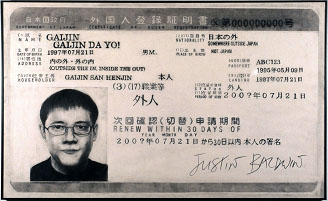
NAME: Justin Baldwin

OCCUPATION: Artist, but an unknown one, so I have a day job working for a Japanese company.

NATIONALITY: I am an American, as is my father. My mother is now a U.S. citizen, but was born in Japan. On my father’s side of the family, there is Irish, German, British, and who knows what else … and, I suspect that on my mother’s side, there may be some Russian (going back a couple hundred years), since my mother has fair skin and green eyes (plus, she’s from Sapporo, and the prefecture of Hokkaido is closer to Russia than anywhere else in Japan).

JUSTIN SAYS:
Although I didn’t study Japanese until I finished college, the biracial factor inspired me to study Japanese and eventually live in Japan. This has subsequently made a profound impact/influence on who I am, and what I do. I suppose, in this sense, it has helped secure jobs (first with the JET Program, and then with the Kurashiki Board of Education, and now with my current corporate incarnation as a Professional Gaijin/Scapegoat). Being biracial in college helped me connect with Roger Shimomura as a student, who remains a close friend and mentor. So in many ways, even though being biracial has not always resulted in the most pleasant experiences, it has led me down avenues that I might not otherwise have taken, meeting new people and places that do end up being very beneficial and positive. Besides, as I mentioned, there’s a certain freedom to being undefined.

DOUBLE NOT HALF

Leah Nanako Winkler

As I scroll through these responses, once again, I am overwhelmed with a simultaneous sense of comfort and disorientation. Entering my mid-20s, I’ve come to accept and embrace the positive effects of my ethnic background, by associating with and learning from the people mentioned in this article. I am learning quickly that my identity crisis/investigation is only a small fraction of a cultural search of where we, as biracial people, stand in this society. The importance of seeing the glass as half-full, as opposed to half-empty, is equal to seeing ourselves as double, rather than “half” of two races. In many ways, we are lucky and unsheltered. I am excited to see how this perspective continues to grow, as I meet more and more of you and hope to strengthen our voice in any and every way possible.

© 2009 Leah Nanako Winkler

speaking of freedom

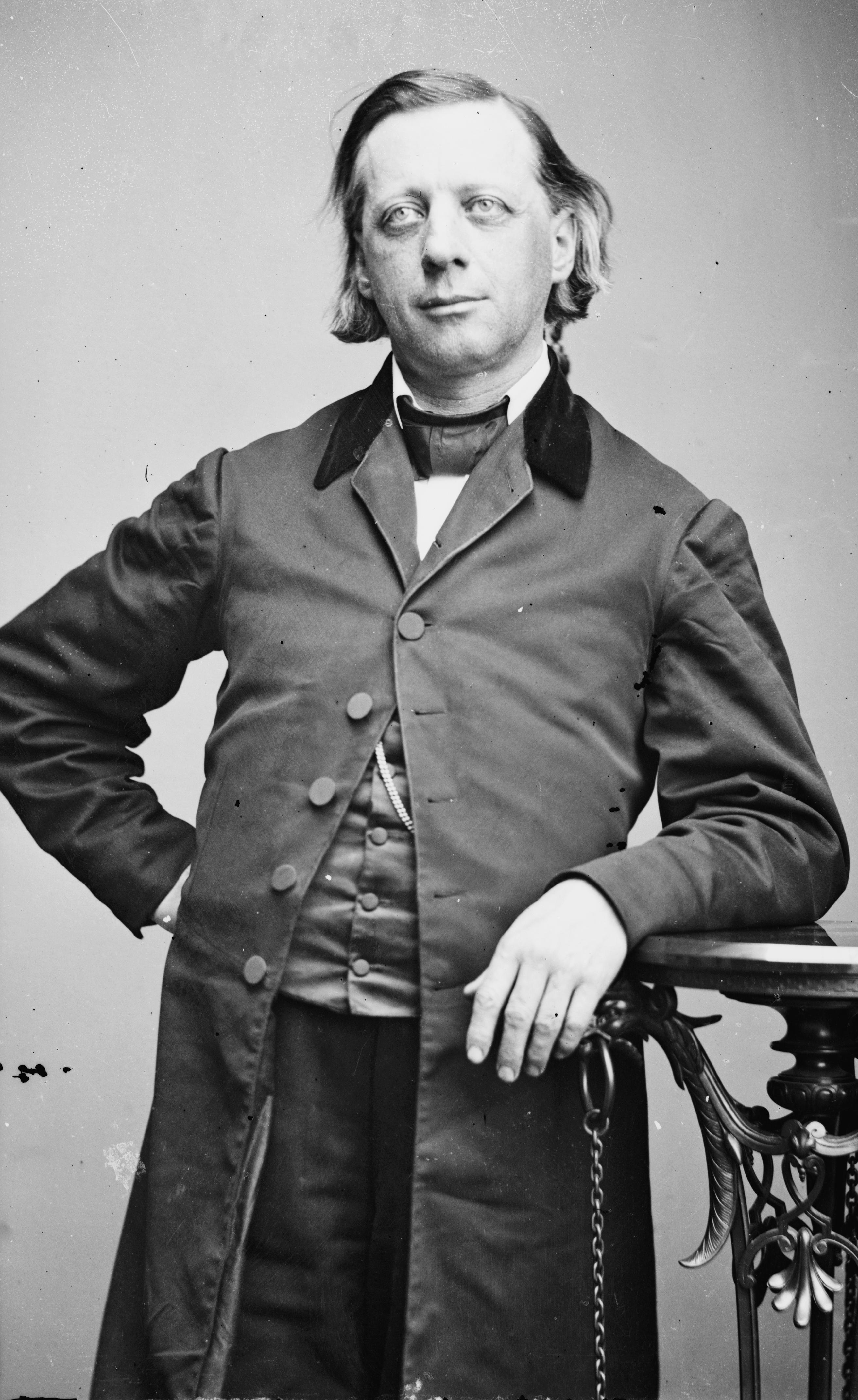
I cannot forget that “liberty and justice for all” wasn’t really for all.  So much for being impeccable with your word, Founding Fathers.  Here’s an interesting snippet of the history of the struggle for freedom in this nation.  The struggle of those who toiled to build it and cultivate it’s wealth, and one man who was dedicated to assisting them.  I’m curious about the early years of Henry Ward Beecher’s life.  I wonder how he came to see the truth, when the illusion was set up to work in his favor.

Underground Railroad

VIA

The road to freedom is one of the great themes of American history. The story of the Underground Railroad exemplifies the profound power of that journey. Following the lead of its famed antislavery preacher Henry Ward Beecher, Plymouth Church played a fundamental part in New York City ‘s underground activity.

From the very beginnings of slavery in America, slaves escaped to freedom. They ran to the wilderness; they went to live with the ever-hospitable Indians; they slipped into cities and made their claim as free Blacks. In the Revolutionary era, Puritan New England and Quaker Pennsylvania passed legislation abolishing slavery. The exodus northward, which came to be known as the Underground Railroad, began. By 1831, the term “Underground Railroad” had been coined to describe the informal, secretive network of ordinary citizens, Black and White, whose safe houses offered refuge.

Although Plymouth Church was not established until 1847, just fourteen years before the start of the Civil War, it later became known as “the Grand Central Depot” of the Underground Railroad. Oral tradition and several published memoirs tell us that slaves seeking passage to Canada may have hidden in the tunnel-like basement beneath the church sanctuary (this space can still be visited during our public and school tours). Beecher’s private stenographer, T.J. Ellinwood, quotes the Minister as claiming, “I opened Plymouth Church”, though you did not know it, to hide fugitives. I took them into my own home and fed them. I piloted them, and sent them toward the North Star, which to them was the Star of Bethlehem.“ The Rev. Charles B. Ray, an African-American living in Manhattan, and the founding editor of the Colored American newspaper, was quoted as saying, “I regularly drop off fugitives at Henry Ward Beecher‘s Plymouth Church in Brooklyn.” Other churches in Brooklyn and Manhattan, especially Black churches, also hid escapees, but most have since moved to newer buildings. Plymouth Church is one of the few active Underground Railroad congregations in New York still housed in its original location.

Henry Ward Beecher

Plymouth’s first minister, the Rev.Henry Ward Beecher , spearheaded and symbolized Plymouth’s antislavery activity, but the founding members of Plymouth selected him as their pastor in no small part because they knew he would do so. He already had a record as an opponent to slavery when he made those beliefs clear in his trial sermon for Plymouth. Beecher and his peers were greatly influenced by the Second Great Awakening, a Protestant religious revival of the early 1800’s, firmly committed to abolishing slavery. As a student at Amherst College, he helped found an abolitionist organization, which was promptly shut down by the faculty. At seminary in Cincinnati, he contributed to an antislavery newspaper which was mobbed and destroyed; he also patrolled the streets of that city, fully armed, when temporary special policemen were called upon to protect free Blacks from threats. When he was a minister in Indianapolis, his limited preaching on the subject caused members to leave his church, but he remained active in the Underground Railroad there, as his widow, Eunice, recalled years later.

Enormous publicity surrounded one of Beecher’s first antislavery acts at Plymouth Church. In 1848, 77 fugitive slaves were sold in Washington after the failure of the largest group escape attempt on the Underground Railroad. In that group were two teenage girls, the Edmondson sisters. Thanks to the fundraising efforts of people like Beecher to regain the girls’ freedom, the Edmondsons galvanized public support for the abolitionist movement – and inspired Beecher’s own sister, Harriet, to write Uncle Tom’s Cabin.

Beecher, with his newly elevated public profile, had to be especially circumspect in harboring escaped slaves. Eventually, in 1872, he was named by The Brooklyn Eagle as an active participant in the Underground Railroad. The article claimed that Plymouth’s minister helped dozens of fugitives in cooperation with a man in New York named “Napoleon.” This Napoleon “had the matter of escape under his charge and whenever a slave was sent on to Mr. Beecher he, Napoleon, would fix things along the Central Railroad and see to it that the officials along the route were got into friendly disposition for the fugitive.” The article does not indicate Napoleon’s race, but he may well have been Black, for Black involvement in the Underground Railroad almost certainly exceeded that of Whites.

There are believed to be many members of the Plymouth congregation who were active in the Underground Railroad. Evidence suggests that escaped slaves were hidden in the homes of several Plymouth members. The Church treasurer, S.V. White, had a small chamber in his house said to have been used to hide runaways, a room that was still in existence in the 1900s. One of the Church’s greatest activists in the Underground Railroad was Lewis Tappan. He is best remembered as a leader in organizing efforts to release the escaped slaves of the Amistad in 1839. Later, he helped fund the creation of Plymouth Church (his daughter, Lucy Tappan Bowen, was one of the original 21 members), but he did not join until 1856. As part of his work helping runaway slaves, he provided refuge in his home to a 15-year-old girl who escaped by pretending to be a male conductor on a New York-bound ferry.

All this was taking place in one of the most pro-slavery states of the North. Not until 1827 was slavery finally abolished in New York. Much of this attitude may be traced to the years when New York was a proprietary colony of the Duke of York, a major shareholder in the slave-trading Royal Africa Company. With his powerful influence, he instructed the governors to do everything possible to sell more slaves. After independence, the close business relations between Southern planters and New York merchants continued to enhance pro-owner sympathy.

Whatever ambivalent feelings about slavery remained in New York, they were greatly tested in 1850. That year, the country began negotiating slavery in the newly acquired territories seized during the Mexican-American War. The designation of new slaveholding states, plus the passage of the Fugitive Slave Act requiring all American citizens to assist in apprehending runaway slaves, incensed many Northerners. The work of the Underground Railroad intensified. These were the years of Plymouth Church’s greatest involvement, and, by 1860, it was certainly the most famous church in America. One year later, the Civil War began, and Plymouth continued to supply material and spiritual support to a devastated country. Five brutal years later, slavery was outlawed, and Plymouth Church’s role in the Underground Railroad could finally, thankfully, come to an end.

The exact statistics of the Underground Railroad – how many slaves escaped, how many free citizens aided them – will never be known. But we do know that this was a time and an undertaking in which Blacks and Whites came together to right a grievous wrong. It should also be said that, for the members of Plymouth Church, and for most if not all of those who took part, they did so to live out their Christian faith.

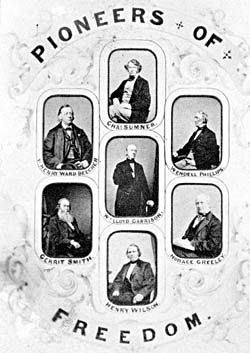
Portraits of abolitionists Charles Sumner, Henry Ward Beecher, Wendell Phillips, William Lloyd Garrison, Gerrit Smith, Horace Greeley and Henry Wilson, c. 1866

mary ellen pleasant

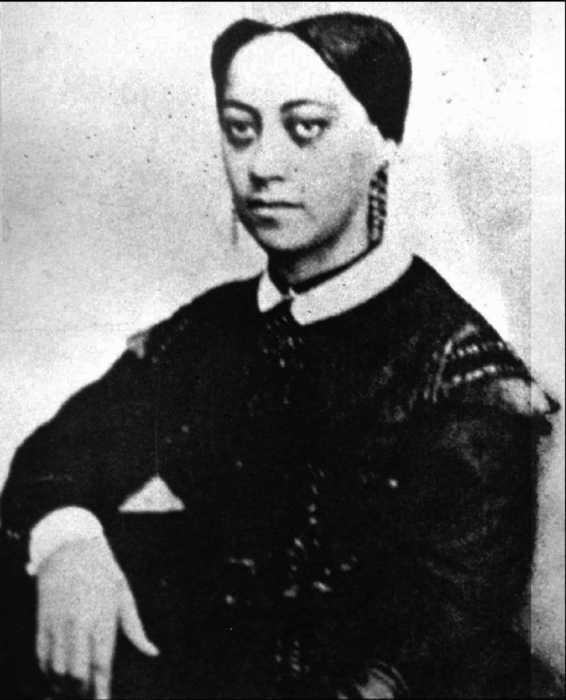
As I was searching the internets last week for photos of black women with white children, I stumbled upon a historical figure who, once again, I am shocked and dismayed to never before have heard mention of:  Mary Ellen (“Mammy”) Pleasant.  I want to know so much more!  Or at least the truth.  I highly doubt that Mary Ellen needed to conjure the dark forces to leverage social change, however I’m sure that that tale eased the minds of the opposition and provided ammunition for attacking Pleasant’s ideals.  I found quite a few intriguing articles on her life and chose the following two to share.  Honestly, when someone next asks me who (dead or alive) I would most like to have dinner with, Mary Ellen Pleasant will be on the short list.

hdr_index

“American civil rights began in the 1850’s with Mary Ellen Pleasant.”  Racism surprised African Americans like Pleasant who came to the Bay Area because they believed in a better life in San Francisco… The Bay Area, where Pleasant lived, became a “hotbed of civil rights activity” in the 19th century and the activists’ rallying cry was “eradicating slavery.”- Dr. Albert Broussard

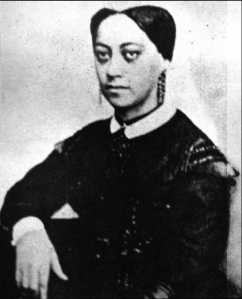
Mary Ellen Pleasant (1814? – 1904)
SSMt7.St.4

VIA

Mary Ellen Pleasant is perhaps better known as “Mammy Pleasant”, but it was a name she detested. She was born a slave in Georgia some time between 1814 and 1817, the illegitimate daughter of an enslaved Vodou priestess from Haiti and a Virginia governor’s son, John Pleasants. She was bought out of slavery by a planter and indentured for nine years as a store clerk with abolitionist Quakers in Massachusetts.

Around 1841 she married a wealthy mulatto merchant/contractor from Ohio and Philadelphia named James Smith, who was also a slave rescuer on the Underground Railroad. The two worked to help slaves flee to safety in Canada and safe states. Smith died in 1844, leaving her a $45,000 fortune and a plantation run by freedmen near Harper’s Ferry, Virginia.

Because of slaver reaction to her own ongoing Underground Railroad activities, she was forced to flee to New Orleans in 1850 where she met the Vodou queen Marie Laveau who trained her in how to “pressure the powerful to help the powerless” —blacks and poor women—gain rights and jobs. She then went to San Francisco, arriving in April 1852. Because she had no “freedom papers” she passed herself off as white, while she worked as a steward and cook in a white boardinghouse and invested in real estate and various business activities.

Pleasant’s training with Marie Laveau proved beneficial. Pleasant became so successful at leveraging social change that many called her San Francisco’s “Black City Hall”. Her activities and her money helped ex-slaves avoid extradition, start businesses and find employment in hotels, homes and on the steamships and railroads of California.

In 1858 she returned to the East, bought land to house escaped slaves, and aided abolitionist John Brown both with money and by riding in advance of his famous raid at Harper’s Ferry encouraging slaves to join him.

She went back to San Francisco where her investments with an influential business partner helped her amass a joint fortune estimated at $30 million. She later led the Franchise League movement in San Francisco that earned blacks the right to testify in court, and to ride the trolleys. Her lawsuit in 1868 in San Francisco against the North Beach and Mission RailRoad was used as a precedent in 1982 to achieve contemporary civil rights. Mary Ellen Pleasant died in San Francisco in 1904. Her body was taken by friends to Napa and buried in Tulocay Cemetery. On her tombstone is inscribed “the mother of civil rights in California.”

For more information, incuding a book on Mary Ellen Pleasant by Susheel Bibbs, see http://hometown.aol.com/mepleasant.

VIA

“Mammy Pleasant: Angel or Arch Fiend in the House of Mystery?”

By p. joseph potocki

Mary Ellen “Mammy” Pleasant’s legacy is an enigma rolled up inside layers of legend, gossip, greed, fantasy, racism and conjecture.

This week’s column title first headlined Sunday’s edition of the San Francisco Call—back on May 7, 1899. That 19th century investigative hit piece featured three unflattering John Clawson illustrations portraying “Mammy Pleasant” as a bonneted evil-eyed crone. The story gobbled up the entire front page of that day’s paper. Its “Angel or Arch Fiend” dualism embodies endless confusion and contradictory assertions surrounding the life of this incredible woman—confusion and contradictions lingering on to this very day.

The “Mammy” tag, clearly meant to be a slam, fits neatly within a cluster of Black stereotypes. While Pleasant’s tall, thin frame, her finely honed features and regal bearing contrast sharply with the rotund happy-to-be-a-slave mammy of plantation lore, the name itself attempts to place her on par with a Samba, an Uncle Tom, Step and Fetchit, or to a licentious Jezebel. The mythology of these “halcyon days” of slavery is what social historian Eric Lott calls “the dialectic flickering of racial insult and racial envy.”

Mary Ellen “Mammy” Pleasant’s legacy is an enigma rolled up inside layers of legend, gossip, greed, fantasy, racism and conjecture. She’s been called “San Francisco’s Powerful And Sinister Ruler”, “The Black City Hall”, but also a “one woman social agency” and “the Mother of Civil Rights in California.” That covers one heck of a lot of reputational territory.

Some claim that Mary Ellen Pleasant was a mixed blood Voodoo Queen who aimed “the black arts” against her enemies, that she sold babies, murdered as many as 49 people, ran brothels, committed fraud, spied through walls on victims she would later blackmail, and that she held unholy powers over a vast network of underlings and protégés. One rival charged that Pleasant murdered the rival’s husband, and having accomplished the dastardly deed Pleasant then “put her fingers in the hole in the top of his head and pulled out the protruding brains.”

Others tout Mary Ellen Pleasant’s work as a philanthropist, her many devoted friends, both black and white, her financial wizardry, undying devotion to women’s and civil rights, and, before that—her commitment to the abolition of slavery. In fact, Mary Ellen Pleasant’s Napa gravestone reads—“SHE WAS A FRIEND OF JOHN BROWN.”

Indeed, upon Brown’s capture following his ill-fated attack on Harper’s Ferry he carried with him a promissory note signed MEP. Had not the authorities misread the letter M for a W its certain Mary Ellen Pleasant’s neck would have been stretched as did John Brown’s.

Everything about Pleasant’s formative years is subject to debate. She was born a slave in Virginia, or Georgia, or perhaps it was Louisiana. She claims to have been born free in Philadelphia on August 19, 1814. Others say she was born in 1817, give or take a year—or two. She was convent educated, or else was entirely self-taught. Her mother may have been a West Indies Voodoo Queen, or not. Her father was a wealthy white slave owner. Then again, perhaps he was a slave. Nobody knows for sure.

What we do know is that sometime between 1848 and 1852 Mary Ellen Pleasant arrived in San Francisco. She may have been accompanied by her second husband, a former slave named James Pleasant, or Pleasants, or perhaps it was Pleasance. Whatever his surname it’s clear that the shrewd, focused and ambitious Mary Ellen was a power unto herself.

James, who died in 1877, seems hardly to have factored into Mary Ellen’s life. His one notable contribution was in the co-creation of Mary Ellen’s one and only child, Elizabeth, whom she called Lizzy. However, Mary Ellen gave their daughter her first husband’s family name, which was Smith. It was only fair, since James Henry Smith had left seed money to Mary Ellen upon his death some years before. Mary Ellen built her financial empire with the help of these funds.

Once in San Francisco, Pleasant set about purchasing boardinghouses, real estate, laundries, restaurants and stock shares in mines, railroads and other business ventures. This was no small accomplishment in an era of near unfettered legal bias against both racial minorities and women. Monies from these investments built her the 30-room mansion dubbed “the House of Mystery,” atop Cathedral Hill in San Francisco.

In her later years Pleasant purchased a large tract of land set against the Mayacamas Mountains. She named it Beltane, either after Thomas Bell, or, as some critics claim, in honor of the ancient pagan celebration of the same name. Beltane lies outside Glen Ellen, in the heart of the Sonoma Valley. The stately New Orleans-style Victorian house she built there (now a B&B) is set amidst an immense flowering garden and hundreds of shady oaks. One fanciful claim is that Pleasant cast Voodoo spells from a cave somewhere on the property.

But with all her accrued wealth, Mary Ellen Pleasant seems always to have performed, or dressed as if she performed, domestic labor. It’s said that she would ride to the markets in her own custom built carriage, accompanied by a driver and a footman, each garbed in impeccable livery. Though always attired in a servant’s black dress and large white apron, she “walked like a duchess.”

Sometime in the mid 1860s Mary Ellen Pleasant hooked up with a stockbroker named Thomas Bell. The “canny Scot” was money savvy, but lacked imagination. Pleasant took him under her wing. Together they created one of the largest financial partnerships in that era of San Francisco. Pleasant and Bell may (or may not) have been lovers.

It’s said that Mary Ellen arranged Thomas’s marriage to the future Teresa Bell, having first instructed Teresa in the “genteel arts” necessary to flourish in elite society. Others say Thomas Bell discovered the beautiful Teresa on a visit to a house of ill repute. No matter which story is true it seems the marriage provided adequate cover from charges of miscegenation, which might otherwise have been leveled at the cohabitation of the white Thomas Bell with the octoroon (or perhaps quadroon) “Mammy” Pleasant.

What’s undeniably true is that Mary Ellen Pleasant was actively involved in the Underground Railroad, and that she placed both former slaves and geographically displaced freemen as domestics in many of San Francisco’s “better” households. She also clearly advocated for and personally rescued unprotected and often attractive young white women, who Mary Ellen then trained to become the wives and mistresses of wealthy men in The City.

These actions led to many of the questionable charges against her, since persons beholden to Pleasant for their livelihoods provided her their eyes and ears within San Francisco’s most prominent households.

Mary Ellen was well into her 80’s when her finances began to unravel. She’d both overextended her business dealings, and had incurred the wrath of her former protege, Teresa Bell. Mary Ellen had exposed Teresa’s young lover to embezzlement charges, landing him a stint in San Quentin prison. As payback, the mentally unhinged Teresa became Pleasant’s eternal foe. She set to pummeling Pleasant’s good name—even long after seeing Mary Ellen to her grave. The sensitive nature of Thomas Bell’s and Mary Ellen Pleasant’s financial partnership allowed Teresa to gain control of their mutual resources following Thomas’ death. As a result Mary Ellen Pleasant was stripped of her wealth and forced into bankruptcy.

Pleasant’s diaries were stolen and lost to posterity, while many of Teresa’s hallucinatory rants made their way into newsprint following Pleasant’s death. Consequently, Teresa Bell’s accounts fundamentally shifted the Mary Ellen Pleasant mythos into the realm of evil phantasma. Fortunately, contemporary scholars have begun setting Mary Ellen Pleasant’s record as straight as a story with such twists, squiggles and gaping holes can be set. As confusing and contradictory as her life story may be, Mary Ellen Pleasant optimistically forecast her own legacy when she wrote:

“… You can’t explain away the truth.”

Mary Ellen Pleasant

SOURCE


re: a mammy tale

I want to yell so loud that Baby Girl can hear me that dirty ain’t a color, disease ain’t the Negro side a town.  I want to stop that moment from coming-and it come in ever white child’s life- when they start to think that colored folks ain’t as good as whites.- The Help

old photo of baby Ralph in an elaborate lace christening dress held proudly by a large black woman

"Black man with white child and dog." http://www.flickr.com/photos/george_eastman_house/2720789660/

“Black man with white child and dog.” via a “Manny”

"White-capped nurse holding infant." http://www.flickr.com/photos/floridamemory/3248110220/

“White-capped nurse holding infant.” via
"Negro domestic servant, Atlanta, GA, May 1939." http://www.flickr.com/photos/nypl/3110575890/“Negro domestic servant, Atlanta, GA, May 1939.” via

"Child and nurse." http://www.flickr.com/photos/george_eastman_house/2678243048/

“Child and nurse.” via

…the dichotomy of love and disdain living side-by-side is what surprises me- The Help

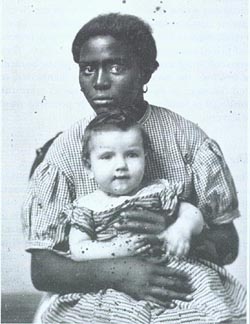
Mammy & Child-1850

some photos found @ postpostracial

a mammy tale

The following essay is reblogged from Southern-Style.  A real life modern-ish mammy story!  I’ve long been interested in the dynamic between black women and other people’s white children.  When I was in college studying African-American history for the first time, I stumbled upon the thought that Mammies had raised our nation and yet black women generally are not revered (to say the least).  When I was a nanny myself, I thought a lot about mammy.  And, back in January, when I devoured The Help I pondered her some more.  If you haven’t read it yet, please do yourself a favor and put Kathryn Stockett’s The Help on your summer reading list.  It’s one of the greatest books I’ve ever read.  Right up there with The Girl Who Fell From the Sky, Caucasia, The Curious Incident of the Dog in the Nighttime, Memoirs of a Geisha, and Life of Pi.  i.e. the rest of your summer reading list.

I Remember Mammy:
Mattie Lee Martin (“Mammy”)
By one who loved her, Sharman Burson Ramsey

Thirteen year old Mattie Lee Martin took her mentally challenged older sister by the hand and led her down the rutted, red clay country road. Neither looked back. Mattie was determined her sister would not be abused again in their grandparent’s home. She’d finally accepted that her parents would never come back to get them. The road led to the town of Dothan, Alabama, and a life, Mattie Lee hoped, that would be better than the one they’d known on that god-forsaken farm.

Mrs. Bender stood at the door of her variety store, broom in hand, and watched the two girls walk toward her down the sidewalk. Mattie, the spokesperson for the two, stepped forward and boldly asked, “I need work and a place where me and my sister can stay. Do you know of anything?” She looked up at Mrs. Bender quite seriously.  Her black eyes were wide.  Anxiety was written all over her round black face that now dripped in sweat in the hot summer day after her long walk. Mrs. Bender read in that expression that she’d gotten this far, but now the little girl was in a quandary as to what should she do now? She looked at the tight grip she had on her much larger, but obviously more dependent, sister.

Mrs. Bender sized them up and in her gentle voice said, “I hear they are hiring maids across the street at the Wadlington Hotel, but come in here and let me help you with something to wear to your interview. Your sister can rest here while you go and inquire. Tell them I sent you.”

Mattie stood straight and said, “I don’t take no charity. I’ll pay you back.” Mrs. Bender nodded.

That Jewish lady remained a dear friend to Mattie the rest of her life.

Mattie Lee Martin later became highly regarded for her cooking skills. She cooked at the restaurant of the Houston Hotel for awhile and then took a job as the private cook for Dr. Moody, founder of Moody Hospital in Dothan. When the Moodys moved into their big house on Main Street from the house across from the hospital, Mattie for some reason was not going with them. Dr. Moody recommended Mattie to Dr. E. G. Burson, my father. The Moodys gave her a house as a parting gift.

When Mattie Lee Martin interviewed with my mother, she told my mother, “I don’t work with children.”

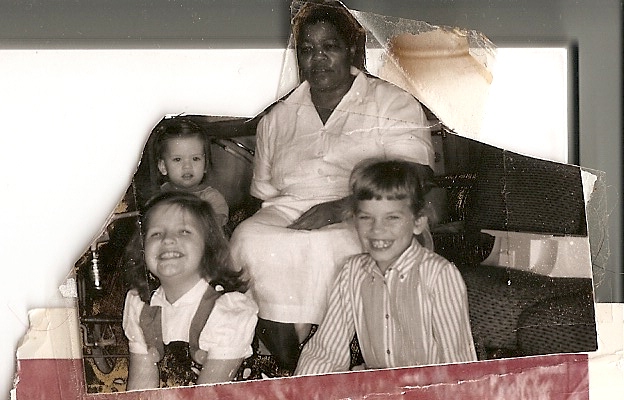
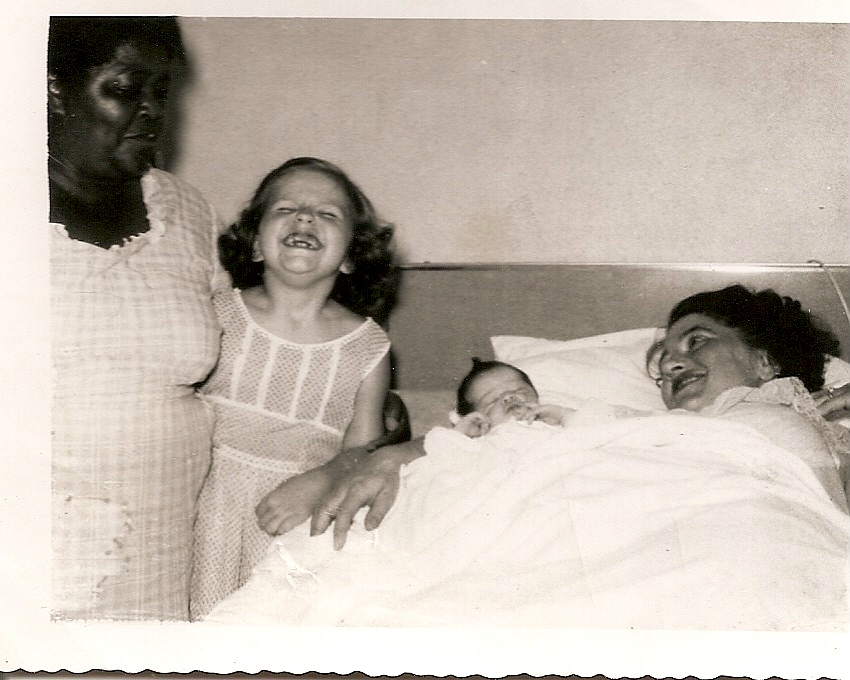
Yet as the pictures reveal, Mattie Lee Martin became as dear to us as our grandmothers and so she deserved just as endearing a name. Thus she came to be called “Mammy.”

Mammy came to work every morning before seven, except Sunday, either by bus or by taxi and stayed until after five.  Even after our overweight dog, Sir Bow Wow, went blind, he would meet Mammy at the bottom of the hill where she got off the bus every morning and together they would plod their way to the house.  She cooked, cleaned, and loved us. I remember seeing one of her paychecks in the amount of $27.00. I also remember the days we’d take Mammy home and she’d ask Mother to stop by the grocery store several blocks away. Then she’d put some money in my hand and I’d run into the grocery store and plunk the money down saying, “Bit o Dental Snuff, please.”

Mammy ordered the groceries to cook for lunch from Murphy’s Market downtown first thing in the morning and a boy on a bicycle delivered them in time for her to cook. Dinner was served at exactly 12:00 noon. (In the South we eat breakfast, dinner and supper.) The meat went on a platter before “the doctor”. The table was set precisely with forks on the left of the plate (with the napkin) and the knife (facing inward) on the right. The glass was placed above the knife. She trained us well.

…Mammy had worked for the aristocracy of the town, Dr. and Mrs. Earl Moody. While she often locked horns with my mother (whose own father had been killed when logs rolled off a log truck when she was 13 leaving her mother to struggle raising five children) she refused to give up on us. “Yo mama, she be mean. But I be mean too, so we get along.” Mother had been awarded campaign ribbon for service in World War II as a nurse at the Battle of the Bulge. She could curse a blue streak and did so on occasion when things did not go to suit her. Sometimes those disagreements would get so heated that Mother would fire Mammy, but we’d cry and carry on so, she’d have to go and ask her to come back. My father was a doctor and his father was a doctor and that made us worth Mammy’s time and effort. My mother might not know what was “proper” but Mammy did, and she was determined to turn us out well.

…Mammy did have her own family…a daughter Lucy Mae Dixon who was my Mother’s age. Mammy had very little education herself and the lists she made could barely be read, so she valued a good education. Mammy skrimped and saved and sent her to college in the North. It must have been a Catholic college because Lucy Mae converted to Catholicism. Mammy was a dedicated member of the Cherry Street AME Church. Lucy earned her Masters and came home to teach. Mammy bought her items of silver “on time” as birthday gifts. The mahogany furniture in their living areas was always covered in plastic to “save” it.

…I guess Mammy told my brother and sister the same thing she drilled into me. “Yo daddy be somebody. You gotta be somebody.” My sister is a cardiologist in New Orleans (Dr. Sylvia Burson Rushing) and my brother (Elkanah George Burson III ) has just started a pharmaceutical company (Burel Pharmaceuticals). Me? After you’ve got a man it’s all right “to rune yo hands” with Ajax, I learned. I wash a mean bathtub and have stayed married to the same man, an attorney of whom she approved (whose family once owned the Houston Hotel where she had worked) for forty years doing a little teaching and writing. This humble generous woman whom I never saw wear a single piece of jewelry gave me a pearl and gold bracelet for graduation from high school.  She who worked from can to can’t all of her life gave me a silver goblet when I got married.  I wonder if she ever knew how much they mean to me and that I realize the sacrifice and love those gifts demonstrated.

…Mammy was a proud person who made the most of her situation and, selflessly, with hard work and determination earned respect and made a good life for herself and her family. She raised us, her white family, to believe we could do whatever we chose to do and that we should make our parents proud. She drilled into us values of honesty, integrity, and a sense of responsibility.  Because we had been given so much; much was expected.  Because we loved her, it was Mammy we wanted to make proud.

Read more HERE