offspring of a foreign race

I have never before thought of mulattoes as victims of the Holocaust.  How ignorant of me.  I now imagine that some of the children fathered by black U.S. servicemen made up the group mentioned in this Delaware memorial.  So much history to uncover.

Interfaith Yom HaShoah service to
remember victims of the Holocaust

The third community interfaith worship service for Yom HaShoah, Holocaust Memorial Day, will be at 4 p.m., Sunday, April 11, at Epworth United Methodist Church, 19285 Holland Glade Road, Rehoboth Beach.

For the past two years, clergy from six faith communities in the Lewes-Rehoboth area have joined to lead a worship service for the community that remembers the tragic events and honors the victims and heroes of the Holocaust.

Shoah is the Hebrew word for “whirlwind.” It is the term used to describe the Nazi firestorm between 1938 and 1945 that swept up 11 million souls – 6 million Jews and 5 million non-Jews including Poles, Rom Gypsies, homosexuals, disabled, mulatto children, clergy and Germans who didn’t believe in the Nazi ideology.

Men and women, young and old alike, were butchered at the hands of the Nazis. Every year, on Yom HaShoah, people remember the martyrs who sanctified the name of God in the camps, ghettos and gas chambers.   Entire article

I looked into the situation further and came across this paragraph on studyofracialism.org:

African German mulatto children were marginalized in German society, isolated socially and economically, and not allowed to attend university. Racial discrimination prohibited them from seeking most jobs, including service in the military. With the Nazi rise to power they became a target of racial and population policy. By 1937, the Gestapo (German secret state police) had secretly rounded up and forcibly sterilized many of them. Some were subjected to medical experiments; others mysteriously “disappeared.”

Here’s insight into Hitler’s had to say about us (found HERE):

MULATTO CHILDREN

Before World War 1 there weren’t very many Black people in Germany. During ww1, France brought Black soldiers in during France’s occupation of Germany. Since there were different colored people living in Germany, the Nazis forcibly sterilized offspring between black men and white women because it held back the campaign for the perfect race. Children that had a black father and a white mother were mulatto children because of their color. Mostly every German despised them and called them ugly names. Hitler wrote,” These mulatto children came through rape or their mother was a whore. In both cases there is not the slightest moral duty regarding these offspring of a foreign race.” This is what happened to children because of the color of their skin.

Black German girl 1930

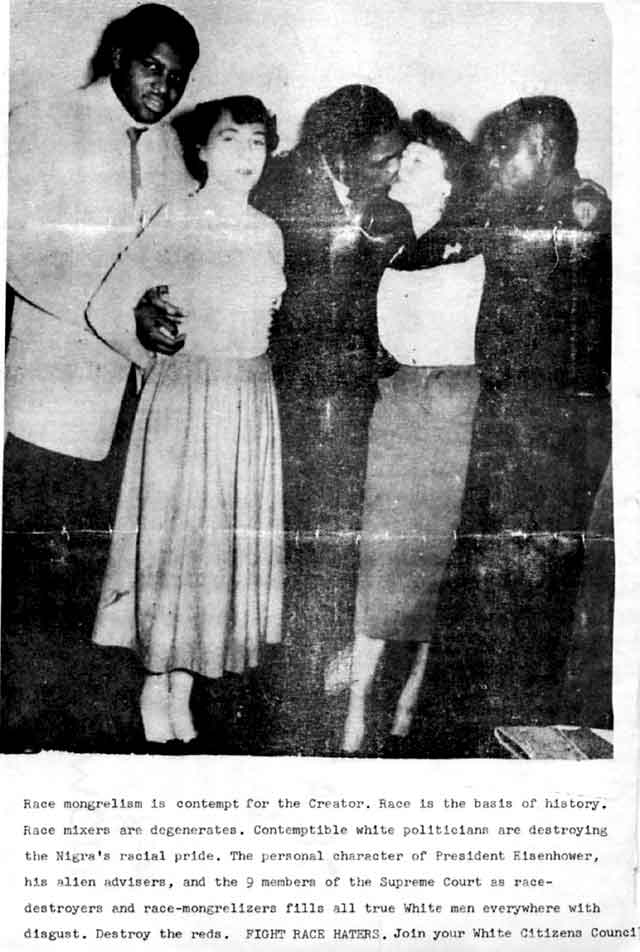
Nazi propaganda photo depicts friendship between an “Aryan” and a black woman. The caption states: “The result! A loss of racial pride.” Germany, prewar.

no fear, no bias

When I first read this I thought it was a joke.  I suppose it had something to do with naming this a disorder when it seems like we should all be striving to attain such open-mindedness when it comes to race and the perception of otherness.  Then I thought we should all be so lucky as to be born with this “disorder.”  What this article doesn’t mention though is that there’s a lot more to Williams syndrome than lack of racial biases.  It is not a joke.  And hopefully there will be a cure someday.  I’m grateful to those who did this study and hope to hear that further studies with racially-mixed families will be done to test this explanation of fear based racial biases.

Individuals with Rare Disorder Have No Racial Biases

Robin Nixon
LiveScience Staff Writer

Never has a human population been found that has no racial stereotypes. Not in other cultures or far-flung countries. Nor among tiny tots or people with various psychological conditions.

Until now.

Children with Williams syndrome, a rare genetic disorder that makes them lack normal social anxiety, have no racial biases. They do, however, traffic in gender stereotypes, said study researcher Andreas Meyer-Lindenberg of the University of Heidelberg in Germany.

illustration by Anne Sibley O’Brien

Normally, children show clear preferences for their own ethnic group by the age of three, if not sooner, other research has shown.

And, indeed, the children in this study without Williams syndrome reliably assigned good traits, such as friendliness, to pictures of people the same race as themselves. When asked something negative, such as “which is the naughty boy,” they overwhelmingly pointed to the other race.

Children with Williams syndrome, however, were equally likely to point to the white or black child as naughty or friendly.

While this study was done with white children, other research has shown that blacks and people of other races also think more highly of their own, Meyer-Lindenberg told LiveScience.

Williams syndrome is caused by a gene deletion known to affect the brain as well as other organs. As a result, people with Williams syndrome are “hypersocial,” Meyer-Lindenberg told . They do not experience the jitters and inhibitions the rest of us feel.

“The whole concept [of social anxiety] would be foreign to them,” he said.

They will put themselves at great peril to help someone and despite their skills at empathy, are unable to process social danger signals. As a result, they are at increased risk for rape and physical attack.

Nature or nurture?

While the first human population to demonstrate race-neutrality is missing critical genes, “we are not saying that this is all biologically-based and you can’t do anything about it,” Meyer-Lindenberg said.

“Just because there is a genetic way to knock the system out, does not mean the system itself is 100 percent genetic,” he said.

The study does show, however, that racism requires social fear. “If social fear was culturally reduced, racial stereotypes could also be reduced,” Meyer-Lindenberg said.

Despite their lack of racial bias, children with Williams syndrome hold gender stereotypes just as strongly as normal children, the study found. That is, 99 percent of the 40 children studied pointed to pictures of girls when asked who played with dolls and chose boys when asked, say, who likes toy cars.

The fact that Williams syndrome kids think of men and women differently, but not blacks and whites, shows that sex stereotypes are not caused by social anxiety, Meyer-Lindenberg said.

This may be because we learn about gender within “safe” home environments, while a different race is usually a sign of someone outside our immediate kin. (Studies to test this explanation, such as with racially-mixed families, have not yet been done.)

Racial biases are likely rooted in a general fear of others, while gender stereotypes may arise from sweeping generalizations, Meyer-Lindenberg said. “You watch mother make the meals, so you generalize this to everyone female.”

In their heads

Due to the present study, we now know that “gender and race are processed by different brain mechanisms,” Meyer-Lindenberg said, although those involved in gender are less understood.

Previous work has shown that in the brains of people with Williams syndrome, the amygdala – the emotional seat of the brain – fails to respond to social threats. While the amygdala itself is functionally normal, it is misguided by the pre-frontal cortex – the executive of the brain – to block all social anxiety.

This system is now thought to underlie racism, but it seems uninvolved in the formation of sex stereotypes.

Meyer-Lindenberg and colleagues are now using brain imaging to get a clearer picture of how racism and sexism are differentiated in the brain. The present study was published in the journal Current Biology.

SOURCE

improving the nation’s racial pains

This little article means a lot to me.  It brought some things into focus.  Beyond defusing what I perceive to be the invisibility of the “mulatto,” this race work is important to me because I recognize the truth in the statement “We don’t know how to know each other.”  It pains me because I know how to know each other.  I am each other.  And I know that outside of the dogma of race, there ain’t much difference between anybody.  Oh, and of course, I’ve gotta get this book.

Author takes on difficult race issues

By Bradley Schlegel

WHITPAIN — Growing up in a home with racial preconceptions, Lauren Deslonde said she lacked the knowledge to mount a credible challenge.

“We never talked about race,” said Deslonde, a Lansdale resident and psychology major at Montgomery County Community College.

She said Bruce Jacobs’ book can provide the proper tools to help her 5-year-old biracial daughter learn to improve the nation’s racial pains.

Jacobs, the author of “Race Manners for the 21st Century: Navigating the Minefield Between Black and White Americans in an Age of Fear,” explained Tuesday to an audience of students, faculty and staff that issues between races will improve once people begin to relate on a more personal level.

“It’s a big problem,” he said. “We don’t know how to know each other. In this country, that idea is lost. Or we’ve never had the ability to get that gift.”

The book provides strategies to help people better understand each other, according to Jacobs, who appeared during a Presidential Symposium held in the Science Center auditorium.

“Bruce Jacobs tells it like it is,” said Karen A. Stout, the college’s president, in her introduction. “And he helps all us do the same thing with clarity.”

Discussions over race — which evoke feelings of shame, rage and fear in African-American and self-identified white people — are often unproductive, according to Jacobs.

“This is a hard issue,” he said. “We’re working against a headwind.”

Two of the many impediments include our nation’s history and the media’s role in coarsening the discussion to maximize profits, according to Jacobs.

He said many citizens are still in denial about a culture founded on human slavery and genocide of the Native Americans.

“This gets in our way every day,” said Jacobs, a self-described writer, poet and musician. “All I want to know is, ‘Are you down with repairing the damage or not?'”

On the media, he said companies have replaced journalists and commentators with “rage talk radio” that “scares the pants off of anyone” wishing to have a thoughtful discussion over race and politics.

“That has nothing to do with democratic discourse,” Jacobs said. “It’s a false standard.”

He presented five strategies to make conversations more survivable and rewarding: embrace a person’s goodness while challenging bad ideas; be prepared to occasionally speak inappropriately; talk to people as they show themselves to be; don’t wait for a major issue to communicate with people of another race; and don’t shy away from discussing difficult issues.

The symposium helps students learn to relate to people of other races, according to Sam Wallace, a cultural geography professor at the school.

“Many of my students have not had much contact with the outside world,” he said. “Some have never been to Philadelphia.

SOURCE

smash the bnp

I suppose this would be the British equivalent of someone registering me as a member of the KKK.

I looked around the internet to see if I could find any more about the following story.  The only other mention of it was found on stormfront.org, a white pride kinda site. So sad.

-What a load of pig droppings!
Most likely she signed up herself and only after a while noticed that there was a member’s list and now she regrets the decision and comes up with a fake “omg hackerz!!”-story

On the bright side: The woman is a prime example of what happens to White Intelligence when interbreeding with inferior breeds of “humans”.

-I reckon she joined the BNP hoping to get a free holiday to Africa.
It amaze me on how face book is taking so seriously with people. with kids killing them selves over been bullied on it and stuff.  Any way shouldn’t she be more traumatized finding out her dads a spear chucker.

Mixed race woman tells of her anger after computer hacker registered her as BNP member

by Matt Hurst, Birkenhead News

Maxine DeenA WOMAN of mixed race has told of her anger and upset after a computer hacker registered her as a BNP member.
Maxine Deen, whose father is African and her mother white British, says she hasn’t been able to eat or sleep since discovering the changes last week.

The 40-year-old told the News: “People have been ringing my family and saying, why has your daughter joined the BNP?”

She says the trauma has been so great that her youngest child, aged just ten, won’t go out anymore and her extended family feels deeply insulted.

Maxine, who has three children and lives in Tranmere, said: “Last week I wasn’t able to get on my email so my sister looked at my profile on Facebook and discovered the hacker has got me to join the BNP and given all my details out to everyone.

“I am not a member of the BNP, I’m from a black family and my children are black.”

To make matters worse, the BNP website lists her as a member, including her address.

The 40-year-old said: “It’s just made me feel really ill, I haven’t slept or eaten.”

A spokesperson for Merseyside Police said: “Merseyside Police is investigating an allegation of harassment made by a woman from Wirral through the social networking website Facebook.

“An officer has visited both parties involved.”

Maxine’s immediate family are committed Rastafarians, and she said: “I can’t put into words how they feel being exposed to the BNP.”


changing attitudes and understandings about race

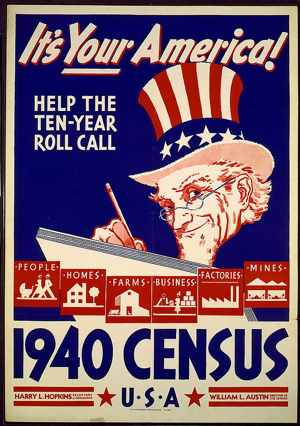
I thought I was over the Census, but my interest keeps getting piqued despite my best efforts to ignore the chatter.  What I’m most intrigued by at this moment is the notion that in the next decade or two, if we keep changing our attitudes and understandings for the better, a majority of Americans could come to view themselves as mixed race.  And by that I mean Americans who today consider themselves to be exclusively white or black despite the abstract knowledge that we are all mixed up to some extent.  And if that paradigm shift happens there won’t be much use in classifying ourselves in terms of “race” because we will see ourselves as generally more similar than different regardless of color/phenotype.  Although I respect Obama’s right (and that of every individual) to self-identify any way he chooses, I feel that the checking of just one box is holding us back from reaching that “promised land” where we aren’t so entrenched in these antiquated notions of race and color, but perhaps more interested in heart, spirit, intellect …. Once again I’m a bit speechless because I’m not sure what the world will look like when instinctively and instantly we take people for what the truly are instead of what they truly look like.

Rep. Patrick McHenry claims every census in history has asked for an individual’s race

SOURCE

In an op-ed piece for the conservative Web site Red State on April 1, 2010, Rep. Patrick McHenry, R-NC, the ranking Republican on the Information Policy, Census and National Archives Subcommittee, sought to tamp down some of the misinformation being spread about the census by “otherwise well-meaning conservatives” and warned that failing to fully participate in the census could create a competitive advantage for Democrats.

Specifically, McHenry attempted to allay the fear among some Republicans who distrust the government and view the census as overly prying.

…In his posting on Red State, McHenry said “the most private question on this year’s form asks for an individual’s race and that question has been asked by every census since the 1790 census conducted under then-President George Washington.”

We decided to check that claim out, which was similar to one from Census Bureau Director Robert M. Groves in a March 15, 2010, press release: “It’s one of the shortest forms in our lifetime with just 10 questions very much like the questions James Madison and Thomas Jefferson helped craft on the very first Census.”

Conveniently, the U.S. Census Bureau keeps historical records online of all the questions asked in every census going back to the first one in 1790.

If you follow the census questions asked through U.S. history, you can see how they reflect changing attitudes and understandings about race.

Yes, the 1790 census and others in the early years of the survey addressed race, but it was hardly a matter of checking a box. Rather, the census asked about the number of free white males and females; the number of “all other free persons” and the number of slaves.

By 1850, the Census asked about people’s “color.” According to the Census archives, this column was to be left blank if a person was white, marked “B” if a person was black, and marked “M” if a person was mulatto. A separate form listed slave inhabitants, the last census to do so. By 1870, the “color” options included “W” for white, “B” for black, “M” for mulatto, “C” for Chinese (a category which included all Asians), or “I” for American Indian. The 1890 census added Japanese and more mixed-race categories — mulatto, quadroon and even octoroon, according to amounts of perceived African blood. By 1920 Filipino and Korean sprang up, along with the improbable racial term “Hindu.” New labels emerged after World War II, with Hawaiian, Eskimo and others joining the parade of terms.  The question morphed into “color or race” in the mid-1900s, and then, finally to just “race” in 1970. In 1980, in addition to race, the Census began asking if a person was of Spanish or Hispanic origin or descent.

It’s fair to say that every census has addressed the issue of race in some fashion. But we think it’s a bit of a stretch when McHenry says “this year’s asks for an individual’s race and that question has been asked by every census since the 1790 census.”

In the 1790 Census (and several after it), a respondent was not simply asked their race. Rather, they were asked to list the number of white people, the number of “other free persons” and the number of slaves. In other words, it didn’t ask for the race of non-whites. One could argue this reflects the common attitude about race at the time. But that’s hardly the same as the 2010 version that simply asks a person’s race.

Prior to the Civil War the census was more concerned with whether someone was enslaved or not, than establishing whether someone was white. This is a very different conception from our modern idea of race. Post Civil War, the terminology changed (from “color” to “race,” for example) and the categories expanded over time. Certainly these are different standards when compared to today’s measures. But again, one could argue that the questions comported with attitudes about race at those times, and the census has always asked discriptive questions that corrolate to race. So we rule McHenry’s claim Mostly True.

denying the rich history of america’s multiracial realities

these are my sentiments exactly, jason haap!  i try so hard not to judge or be offended by anyones’ choice to self-identify as they choose, but…. come on obama!!  how will we ever move forward if the most recognized living ‘mulatto’ doesn’t think it matters that he is one?  how will we eradicate the vestiges of the one-drop rule, which implies that black blood is a pollutant, and that if your drop is visible you better forget about the rest and fall in line at the back with the other tainted ready to fight the good fight?  if we can’t get rid of that idea, then how will we get to the point where we see ourselves in everyone because we are indeed all mixed up and there is no inherent opposition.  i have a feeling that we as a human race could reach untold heights if we redirected the energy that we (perhaps unconsciously) spend on categorizing/demonizing/stereotyping/judging/comparing/othering toward a more inclusive, unified system of brotherly commune. like, no fighting, no distrust, no base-less fear. what!? i don’t even know how to say what i mean. maybe there’s not a word for it. yet.

Unfortunate message to our mixed-race children

by Jason Haap, an educator, citizen media activist, and father of two multiracial children

SOURCE

The “one drop” rule is alive and well for America’s multiracial children! Last week, President Obama gathered fanfare from national media. Despite the obvious existence of his white mother, he checked just one box on his census form regarding his racial identity: “Black, African Am., or Negro.” By ignoring the option of checking multiple boxes (or of writing in a word like “multiracial”), Obama sent an unfortunate message to America’s mixed-race children.

People may have the freedom to pick racial identities individually, but Obama’s public actions as president of the United States deny the rich history of America’s multiracial realities, hearkening back to a racist period that said one drop “black” makes a person “all black.”

I remember, a few months ago, playing with my kids at the Cincinnati Children’s Museum. I heard one boy point at my oldest son and call him “that black kid.” Certainly my children are more brown-skinned than me, but they are also more fair-skinned than their mother. That’s because I have multiracial children, and I think it’s too bad their racial identities are being formed by a backward-thinking American culture before they are even old enough to notice skin color might mean something in the first place.

Despite the mythologies some of us have been raised to believe, there is nothing “stronger” about black blood. It does not “take over” a baby’s genes if one parent is black and the other white. These ideas were promulgated by racists who wanted to scare white people into thinking their genes would be obliterated by the act of intermixing with blacks. But it’s just not true. It’s bunk science and even bunkier sociology.

When the Race exhibit came to the Cincinnati Museum Center, I learned how some cultures have radically different ways of articulating race – such as in Brazil, where dozens of descriptive terms are used instead of polarizing opposites like simply “white” or simply “black.” Instead of helping move our racial understandings into the 21st century, Obama’s public actions have placed us back into the old racist thinking of the one drop rule, and that’s a shame.

the greatest negro?

I immediately thought of Obama while reading this article and am quite, quite certain that most agree that he is indeed a “Negro.”  That there was debate around Douglass’ negrocity ( I like to make up words sometimes) is of interest to me because I’m fascinated by the fact that mulatto was a valid and recognized identity in America before 1920.  Then it wasn’t anymore.  The ranking of Negroes from greatest to least strikes me as ludicrous.  That being said, the question, “Will Obama go down in history as the greatest Negro who ever lived?” popped into my head.  And then I thought that seeing as he isn’t one “in the full sense of the term,”  MLK probably outranks him.  How quickly I went from judging the system of rankings to ordering some myself!

Knoxville’s farewell to a civil-rights icon

By Robert Booker

SOURCE

A large crowd packed into Logan Temple A.M.E. Zion Church to honor the memory of the country’s best known civil-rights advocate. Among them were Knoxville’s black elite.

It was Feb. 25, 1895, and they had come to say farewell to Frederick Douglass, who had been born into slavery and died six days earlier.

Two days before the memorial, The Knoxville Tribune had its say about Douglass and wondered if he was a true Negro: “If we consider Douglass as a Negro, he was the brightest of his race in America. But he was not a Negro in the full sense of the term. Although born a slave, his father was a white man and his mother was a mulatto. Born a bastard and a slave, he rose to distinction and influences, and there were those among a class of white people who delighted to honor him.

“There are those who class him as the greatest Negro. This estimate of him is extravagant and unwarranted. In the first place he was not a Negro, and in the next place he is outranked by other Negroes. The greatest Negro who ever lived was Toussaint L’Ouverture the Haitian general, whose death was and will always be a dishonor to France. No Negro in this country ever approached L’Ouverture in intellect.”

L’Ouverture (1744-1803) was the Haitian independence leader who took part in the slave revolt in that country in 1790. He joined the Spaniards when they attacked the French in 1793, but fought for the French when they agreed to abolish slavery. By 1801 he had virtual control over Hispaniola, but was arrested and died in a French prison.

The blacks who spoke at the Douglass memorial took issue with the Tribunes’s assessment of him.

Attorney Samuel R. Maples said he wanted “to correct a statement in one of the local papers that Douglass boasted of his white blood and denied being a Negro. This was not true. Douglass never denied being a Negro. He was very proud of his race.”

Attorney William F. Yardley, who had introduced Douglass when he spoke here at Staub’s Opera House Nov. 21, 1881, said Douglass “Was the victim of the great American curse – slavery. He slept with dogs and ate the crumbs from his master’s table, but his great mind and energy lifted him to the loftiest heights of fame. He was not a creature of circumstance but of force. He was tireless and had been the greatest blessing to his race.”

Charles W. Cansler spoke of Douglass as “An anti-slavery agitator who represented a great moral principle and not a minister of malice. He was seventy-eight years old when he died and spent his life earnestly in the extension of freedom and in establishing justice among men. He was the Moses of his race, and it is hard to tell what his heath means to us.”

Rev. J.R. Riley, pastor of Shiloh Presbyterian Church, spoke of Douglass as a leader: “He was carved by the hand of deity to be a great leader, though cradled in the most iniquitous institution – American slavery – and schooled in dire adversity, his power of mind and greatness of spirit had surmounted all, and he stood out boldly as the greatest man of his race and the peer of all great men.”

It seems that Riley, who was pastor of Shiloh from 1891 to 1913, knew Douglass personally and they had many experiences together. He said his friend had “great personal magnetism. His quick wit and ability to read men made him irresistible in his influence among men.”

the cover of the sheet music for Frederick Douglass's funeral march

This image shows the front cover of “Frederick Douglass Funeral March.”  At each corner of his portrait are pen and ink drawings in circular frames that depict the slave trade, bondage, auction block, and freedom.

emancipated slaves, white and colored

On January 30, 1864, Harper’s Weekly printed an engraving of a photograph, entitled “Emancipated Slaves, White and Colored,” depicting three adults and five children who had been brought north from Louisiana by Colonel George H. Hanks and set free by Major General Nathaniel P. Banks. The group made a series of public appearances and were photographed as part of a campaign to raise funds for public schools for freed slaves, the first of which was established by Major General Banks in October 1863. The hope was, writes Kathleen Collins in “Portraits of Slave Children,” that “these enigmatic portraits of Caucasian-featured children” would galvanize “Northern benefactors to contribute to the future of a race to which these children found themselves arbitrarily confined” (207). The “white slaves” depicted in the engraving were described by the editor of Harper’s as being “as white, as intelligent, as docile, as most of our own children” (66). “Yet,” he continued, “the ‘chivalry,’ the ‘gentlemen’ of the Slave States, by the awful logic of the system, doom them all to the fate of swine; and, so far as they can, the parents and brothers of these little ones destroy the light of humanity in their souls” (66). In comparing these unfortunate slave children to those of its subscribers, the magazine hoped to stir their emotions against a system so unconscionable that it doomed its own children to a life of unspeakable cruelty.

SOURCE

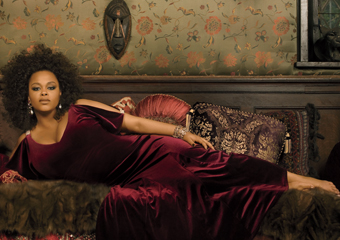
oh… but… jill…

I was pained by this headline, but upon reading the article wasn’t as offended as I’d prepared myself to be.  There’s a lot of history behind this pain, and I won’t ask anyone not to feel it or to ignore it.  That would be detrimental to our progress.  I’m glad Jill Scott has put this out there in this way.  I wonder, though, if her soul burns when she sees a not-so-successful black man with a white woman.  The history is the same and the choice sends the same message wealthy man or not, right?  Anyhow, I think we need to dialogue about this so that we’re clear on where these pains and hurts originate, so that eventually the love a person lives will speak to his soul’s credibility.  Not the color of the love a person lives.

Jill Scott ‘pained by mixed-race couples’

By Marcell Minaya

Jill Scott has reportedly said that her “soul burns” every time she see a “successful black man with a white woman”.

In an interview with Essence magazine, the R&B-soul singer-songwriter said that she wished that a male, African-American friend was married to a black, rather than a Caucasian, woman.

Scott wrote: “My new friend is handsome, African-American, intelligent and seemingly wealthy. He is an athlete, loves his momma, and is happily married to a white woman. I admit when I saw his wedding ring, I privately hoped. But something in me just knew he didn’t marry a sister. Although my guess hit the mark, when my friend told me his wife was indeed Caucasian, I felt my spirit wince. I didn’t immediately understand it. My face read happy for you. My body showed no reaction to my inner pinch, but the sting was there, quiet like a mosquito under a summer dress.”

She continued: “Was I jealous? Did the reality of his relationship somehow diminish his soul’s credibility? The answer is not simple. One could easily dispel the wince as racist or separatist, but that’s not how I was brought up. I was reared in a Jehovah’s Witness household. I was taught that every man should be judged by his deeds and not his colour and I firmly stand where my grandmother left me. African people worldwide are known to be welcoming and open-minded. We share our culture sometimes to our own peril and most of us love the very notion of love. My position is that for women of colour, this very common “wince” has solely to do with the African story in America.”

Scott added: “Our minds do understand that people of all races find genuine love in many places. We dig that the world is full of amazing options. But underneath, there is a bite, no matter the ointment, that has yet to stop burning. Some may find these thoughts to be hurtful. That is not my intent. I’m just sayin’.”

SOURCE