lisa is all

I am reblogging this blog post because the poem is so sweet and the book it was found in sounds like one that should be a school library staple.  I found it HERE.

Poem: “Lisa” by Beverly McLoughland (biracial)

…in a book titled “Through Our Eyes: Poems and Pictures About Growing Up”. I probably picked the book because it had “atypical” (not the usual blonde-haired and blue-eyed) girls on the cover. To see this, I knew it was intentional. I was happy to see children of different races and ethnicities represented on the pages. The book is filled with sweet poems, but we have especially enjoyed this one:

Lisa’s father is

Black

And her mother is

White,

And her skin is a

Cinnamon

Delight,

Her hair is

Dark

And her eyes are

Light,

And Lisa is

Lisa,

Day and

Night.

And Lisa is

Lisa,

Night and

Day,

Though there are

People

Who sometimes

Say–

Well, is Lisa

That,

Or is Lisa

This? –

Lisa is

Everything

She is.

Lisa is

Lisa,

Day and

Night,

And her skin is a

Cinnamon

Delight,

And Lisa is

Sun

And Lisa is

Star,

And Lisa is

All

The dreams that

Are.


improving the nation’s racial pains

This little article means a lot to me.  It brought some things into focus.  Beyond defusing what I perceive to be the invisibility of the “mulatto,” this race work is important to me because I recognize the truth in the statement “We don’t know how to know each other.”  It pains me because I know how to know each other.  I am each other.  And I know that outside of the dogma of race, there ain’t much difference between anybody.  Oh, and of course, I’ve gotta get this book.

Author takes on difficult race issues

By Bradley Schlegel

WHITPAIN — Growing up in a home with racial preconceptions, Lauren Deslonde said she lacked the knowledge to mount a credible challenge.

“We never talked about race,” said Deslonde, a Lansdale resident and psychology major at Montgomery County Community College.

She said Bruce Jacobs’ book can provide the proper tools to help her 5-year-old biracial daughter learn to improve the nation’s racial pains.

Jacobs, the author of “Race Manners for the 21st Century: Navigating the Minefield Between Black and White Americans in an Age of Fear,” explained Tuesday to an audience of students, faculty and staff that issues between races will improve once people begin to relate on a more personal level.

“It’s a big problem,” he said. “We don’t know how to know each other. In this country, that idea is lost. Or we’ve never had the ability to get that gift.”

The book provides strategies to help people better understand each other, according to Jacobs, who appeared during a Presidential Symposium held in the Science Center auditorium.

“Bruce Jacobs tells it like it is,” said Karen A. Stout, the college’s president, in her introduction. “And he helps all us do the same thing with clarity.”

Discussions over race — which evoke feelings of shame, rage and fear in African-American and self-identified white people — are often unproductive, according to Jacobs.

“This is a hard issue,” he said. “We’re working against a headwind.”

Two of the many impediments include our nation’s history and the media’s role in coarsening the discussion to maximize profits, according to Jacobs.

He said many citizens are still in denial about a culture founded on human slavery and genocide of the Native Americans.

“This gets in our way every day,” said Jacobs, a self-described writer, poet and musician. “All I want to know is, ‘Are you down with repairing the damage or not?'”

On the media, he said companies have replaced journalists and commentators with “rage talk radio” that “scares the pants off of anyone” wishing to have a thoughtful discussion over race and politics.

“That has nothing to do with democratic discourse,” Jacobs said. “It’s a false standard.”

He presented five strategies to make conversations more survivable and rewarding: embrace a person’s goodness while challenging bad ideas; be prepared to occasionally speak inappropriately; talk to people as they show themselves to be; don’t wait for a major issue to communicate with people of another race; and don’t shy away from discussing difficult issues.

The symposium helps students learn to relate to people of other races, according to Sam Wallace, a cultural geography professor at the school.

“Many of my students have not had much contact with the outside world,” he said. “Some have never been to Philadelphia.

SOURCE

speaking of isabella fowler…

So here’s what came from my search for more on Isabella Fowler.  In these paragraphs excerpted from Black Slaveowners: free Black slave masters in South Carolina, 1790-1860 by Larry Koger we see where the intraracial divide between mulattoes and “negroes”started.  I must admit that I am disappointed (to say the least) in the behavior of these privileged “biracials.”  I cannot defend the behavior.  Don’t want to.  On the other hand, it’s easy for me to sit in judgement in the year 2010 when my freedom and my opportunity for advancement are not on the line.  I would love to believe that back then, were I given the choice I would free my people.  That I would not see myself as separate from or better than, and that the only privilege I would take advantage of would be the one by which I could exercise my right to right some wrongs and provide an opportunity for others to be liberated and elevated alongside me.  I would love to believe that… but circumstances were different and I can’t possibly know how I would have behaved.  I do know that none of those attitudes/ideals have taken root in me, yet the accusations continue to be hurled and conclusions jumped to.  All of that being said, it’s 2010 and the time for ridding ourselves of these old paradigms of house slaves vs. field hands is long overdue. Maybe by 2012… according to Willie Lynch (perhaps a mythical “legend”) that’s when the stronghold of slave conditioning will lose it’s grip.

The mulatto children of slave masters, who were accepted as legitimate heirs, held a position in the household of their fathers which placed them in a superior status over the other slaves.  These children were accustomed to the master-slave relationship; however, they conceived of themselves not as slaves but slave masters.  In spite of the fact that they were of African descent, the white blood that ran through their veins separated them from their fellow black slaves on the estates of their fathers.  For example, the children of Michael Fowler, a white planter of Christ Church Parish, and his black companion named Sibb were raised in an environment which condoned slavery.  According to Calvin D. Wilson, in 1912, “there was a rich planter in Charleston named Fowler who took a woman of African descent and established her in his home…. There was a daughter born, who was called Isabella; the planter insisted that she should be known as Miss Fowler.”  Clearly Michael Fowler expected his slaves to serve and regard his mulatto children as thought they were white.  So the offspring of Fowler were treated as little masters and mistresses by the slaves of their father.

In fact, the process of cultural assimilation was so complete that the children of Michael Fowler, once reaching maturity and inheriting their father’s plantation and slaves, chose to align themselves with the values of white slaveowners rather than embracing the spirit of freedom and liberty espoused by the abolitionists.  In 1810, the estate of the deceased Michael Fowler was divided among his mulatto children….  When the descendants of Michael Fowler received their slaves, manumission was still the privilege of the slaveowners; however, none of the heirs chose to emancipate their slaves… Undoubtedly, the children of Michael Fowler considered slavery a viable labor system and chose to hold their slaves in bondage.

Mulatto children were not always acknowledged as the offspring of white slaveholders.  However, upon the death of their owners, they occasionally were manumitted and provided for once freed.  These children  probably were unaware of the bond of kinship to their owners.  Yet that bond allowed them to receive preferential treatment from their slave masters.  The unknowing mulatto offspring of white slaveowners often were trained as house servants or artisans.  Although they were not acknowledged as the children of slave masters, their encounter with the culture of their masters influenced them to become slaveowners.

In fact, the slaves of both mixed and unmixed racial heritage who served as house servants or artisans accepted certain aspects of the culture of white slaveowners.  Regrettably, the close interaction with the Southern culture influenced many slaves to identify with their owners.  For the house slaves, the contact with their masters and mistresses perpetuated the difference between themselves and the majority of the slaves who tilled the soil.  The house servants were taught to consider themselves superior to the common field hands.  Furthermore, the house slaves’ conception of superiority was reinforced by their dress, food, and housing, which was slightly better than that given to the field hands.  So it was that they separated themselves from the field slaves and occasionally accepted the values of their slaveowners and looked upon slavery as a justified institution.  As a consequence, they envied the life of splendor that their owners enjoyed and viewed slavery as a means of obtaining the luxuries possessed by their masters.

SOURCE

breath in, breath out

The following is excerpted from the chapter “Unlimited Friendliness” in a new book “Taking The Leap: Freeing Ourselves from Old Habits and Fears” by Pema Chodron.


A question that has intrigued me for years is this: how can we start exactly where we are, with all our entanglements, and still develop unconditional acceptance of ourselves instead of guilt and depression?

One of the most helpful methods I’ve found is the practice of compassionate abiding. This is a way of bringing warmth to unwanted feelings. It is a direct method of embracing our experience rather than rejecting it. So the next time you realize that you’re hooked, you could experiment with this approach.

Contacting the experience of being hooked you breath in, allowing the feeling completely and opening to it. The in-breath can be deep and relaxed – anything that helps you to let the feeling be there, anything that helps you not to push it away. Then still abiding with the urge and edginess of feelings such as craving or aggression, as you breath out you relax and give the feeling space. The out-breathe is not a way of sending the discomfort away but of ventilating it, or loosening the tension around it, of becoming aware of the space in which the discomfort is occurring.

The practice helps us to develop maitri because we willingly touch the parts of ourselves that we are not proud of [maitri is defined previously as “unconditional friendliness towards oneself”]. We touch feelings we think we shouldn’t be having – feelings of failure, of shame, of murderous rage, all those politically incorrect feelings like racial prejudice, disdain we feel for people we consider ugly or inferior, sexual addictions and phobias. We contact whatever we are experiencing and go beyond liking or disliking by breathing in and opening. Then we breathe out and relax. We continue for a few moments, or as long as we wish, synchronizing it with the breath. This process has a leaning-in quality. Breathing in and leaning in are very much the same. We touch the experience, feeling it in the body if that helps, and we breathe it in.

In the process of doing this, we are transmuting hard, reactive, rejecting energy into basic warmth and openness. It sounds dramatic, but really it is very simple and direct. All we are doing is breathing in and experiencing what’s happening, then breathing out as we continue to experience what’s happening. It’s a way of working with our negativity that appreciates that the negative energy per se is not the problem. Confusion only begins when we can’t abide with the intensity of the energy and therefore spin off. Staying present with our own energy allows it to keep flowing and move on. Abiding with our own energy is the ultimate non-aggression, the ultimate maitri.

long awaited unfinished second novel

I remember reading Invisible Man at the University of Michigan and being uncomfortable wanting to discuss the biracial aspect in my African American studies class.  I did it anyway and of course came up against some opposition.  But I held my ground.  That was probably my first clue that this topic and the ensuing debate would become a passion of mine.

‘Important day for American literature’

CU prof helps publish Ralph Ellison’s unfinished novel

The Associated Press

BOULDER — Adam Bradley was a freshman in college and taking an African-American literature course when he first read “Invisible Man,” a novel that vivified America’s racial divide.

The book changed his life.

Ralph Ellison’s classic novel helped Bradley explore the complexity of his own biracial identity.

Adam Bradley is an associate professor of English at the University of Colorado in Boulder.

It also shaped the direction of his career, as Bradley became a writer and scholar — spending 15 years conducting the literary detective workneeded to bring Ellison’s second novel to fruition.

Ellison’s incomplete, posthumous piece “Three Days Before the Shooting … : The Unfinished Second Novel” goes on sale Tuesday (2/2/20).

Bradley, a University of Colorado associate professor, is one of two editors who made the book’s release possible.

In the book, a racist, “white” U.S. senator is assassinated by a black man who, it turns out, is the senator’s son. The senator’s surrogate father, who is black, tries in vain to save the senator.

“I’m feeling this tremendous degree of excitement at the prospect of sharing this book with Ellison’s readers,” Bradley said.

Bradley said he’s received e-mails from people who read “Invisible Man” in the 1950s and have since been waiting for a second book from Ellison.

“It’s an important day for American literature,” Bradley said.

He said that because the novel is incomplete, it prompts readers to become co-creators of the fiction.

“It’s a natural response — when presented with an incomplete story — to complete the story yourselves,” Bradley said. “

At the same time, it presents another opportunity to come to terms with indeterminacy.”

Later this year, Bradley will teach a CU graduate seminar on Ellison, and Yale University Press will publish “Ralph Ellison in Progress,” his critical exploration of Ellison’s fiction.

Ellison died in 1994, leaving behind 27 boxes of manuscript for his second novel that included handwritten notes, typewritten pages and 460-some computer files.

Just two months before his death, Ellison told The New Yorker Magazine that he was working on the second novel and that “there will be something very soon.”

As an undergraduate at Lewis & Clark College in Portland, Ore., Bradley became intrigued with Ellison, whose father died when he was a child.

A character in “Invisible Man” tells the protagonist: “Be your own father, young man.”

The rich theme of father-son relationships struck Bradley, who was raised by his white mother and met his black father for the first time in his 20s.

“Ellison was a clarifying voice for me during that part of my life,” Bradley said.

His professor at Lewis & Clark — John Callahan — happened to be a friend of Ellison’s and executor of Ellison’s estate.

Callahan, impressed with Bradley, asked him to co-edit the second novel.

At age 19, Bradley began cataloging Ellison’s writings. He earned his Ph.D. in English and American literature and language from Harvard University before fully devoting himself to the project.

In 1999, Callahan released a small portion of Ellison’s second novel in a work titled “Juneteenth.”

Today’s release of “Three Days Before the Shooting …” will give readers their first view of the most complete and cohesive version of Ellison’s magnum opus.

SOURCE

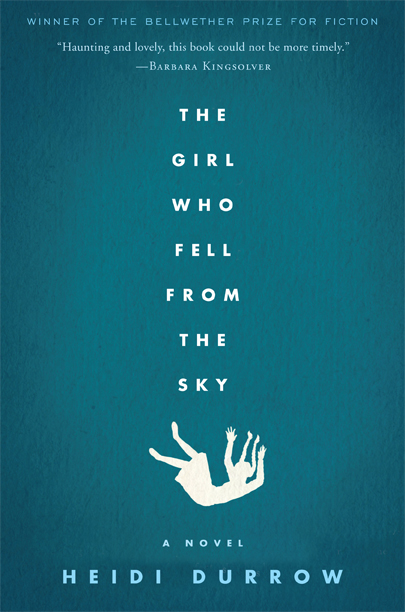
the girl who fell from the sky, or one of the best books ever!

This is exactly how I felt while reading Heidi Durrow’s debut novel The Girl Who Fell From the Sky (available today yesterday wherever books are sold).  Except that I do know her, and I thank God that she’s not dead because I need more from this author/friend of mine.  Heidi has written one of the best books I have ever had the pleasure of reading, biracial subject matter or not.  Truly beautiful, profound, poignant.  All that good stuff and more!  I read (more like devoured) TGWFFTS during an extremely difficult time in my life.  I felt as though the book was saving me.  And reminding me of all the good things I have to offer.  And that no matter what hardships and tragedies we may go through in life, the story goes on- there’s another chapter to be lived.

Though the book is not entirely about being black and white, there are many beautiful passages that honestly touch upon the heart of that matter.  I often find myself lamenting the fact that this biracial identity is so misunderstood out in the world at large.  The Girl Who Fell From the Sky offers much insight.  I sincerely hope that it is widely read.  We all need this book.  Whether we know it or not.

A few of my favorite “themes” of the novel:

Loss of self, becoming the “new girl”, becoming “black”, forsaking white.  Making deals with the self.  Deals which become layers covering over the authentic self.  The self that the biracial kid loses when they feel pressured to be just one thing.  Then eventually you long to be just one thing because no matter how hard you pretend to be whatever it is they want you to be, you can never totally convince yourself that you are exclusively that one thing.  Because you aren’t.  But most people seem completely incapable of understanding that, of allowing that.  So we find ourselves feeling alone and lonely in groups of people.

One of my favorite quotes from the book is, “I think what a family is shouldn’t be so hard to see.  It should be the one thing people know just by looking at you.”  Unfortunately, we’ve been trained to recognize families as homogeneous groups.  Seeing interracial couples is still jarring for many.  Mentally pairing a mother with a child that “does not look like” her can be a major stretch of the imagination.  But it is not an imagined thing for many.  It is a reality.  And for whatever reason that people who don’t have to deal with this don’t seem to understand, we need our families to be recognized.

I could go on and on.  I have pages of notes.  But I hope this is enough to pique your interest and motivate you to buy (and read!) The Girl Who Fell From the Sky.  I’d love to hear what you think!

a “half black” rockwell

I think this is so cool.  Just one thing though…. If his father was mixed-race himself, how is it possible for Mr. Claiborne to be half black? Don’t get me wrong, I am not questioning his personal identity.  I would love to have a conversation with him about it.  About how he came to that conclusion.  I used to think that if I could make “half black” kids.  Then one day I realized that… I can’t.

A Rockwell Illustrating a Street-Lit World

By COREY KILGANNON

Jason Claiborne

When Jason Claiborne was a third grader at Public School 187 in Washington Heights, the teacher scolded him for drawing a picture of a naked woman.

“Jason stood up and told the teacher, ‘I come from a family of artists and we have nude paintings on the wall,’ ” recalled his mother, Jane Jaffe, 65, whose father was Richard Rockwell, an artist and a nephew of the famous illustrator Norman Rockwell.

That would make Norman Rockwell — who was born 116 years ago on Feb. 3 — a great-great-uncle to Jason Claiborne, a 33-year-old artist living in Inwood, Manhattan.

If one were to have preconceptions about what a relative of Norman Rockwell would be like, Mr. Claiborne might not match them.

First of all, he is, as he calls it, “half black,” being the product of Ms. Jaffe’s second marriage, to a mixed-race man named Mario Claiborne. Jason Claiborne did not grow up in middle America, but rather in Washington Heights.

Like Rockwell, who died in 1978, Mr. Claiborne makes his living illustrating book and magazine covers. But Mr. Claiborne does not sit at a spindly easel painting sentimental portraits of white-bread middle Americana. He uses a computer to illustrate the covers publications that fall into the so-called street lit genre of publishing: urban tales of city dwellers who deal in guns, drugs, gangs and vice. The characters (and readers, largely) tend to be people of color.

“Norman documented middle America, and I’m documenting the ’hood,” said Mr. Claiborne, president and creative director for Augustus Publishing, which puts out books with titles such as “Ghetto Girls” and “Streets of New York.”

Authors include former prison inmates and gang members, and Mr. Claiborne provides the brash cover art that is more hustlers and hip-hop than the hobos and homespun scenes of “Saturday Evening Post” covers.

“A lot of Norman Rockwell illustrations can be seen as Polaroid images of the American dream,” Mr. Claiborne said. “I’m showing an American dream that’s not as pretty.”

…“Norman drew life as he experienced it, and like him, Jason draws from his personal life experience,” Ms. Jaffe said. “Norman would not be averse to the way Jason’s doing, because Norman was always ahead of his time as well.”

Richard Rockwell — whose father was Jarvis Rockwell, brother of Norman Rockwell — became a notable illustrator for comics and a courtroom illustrator, before dying in 2006. Richard’s daughter Jane Rockwell (later, Jane Jaffe) became a noted dancer and actor and Radio City Rockette, before becoming a lawyer and eventually taking her current position as an administrative law judge for New York State, in Brooklyn.

Mr. Claiborne has been painting on canvas since childhood. His mother raised him as a single parent, and he developed a close bond with Richard Rockwell and spent much time in Richard’s house surrounded by Norman Rockwell’s art and watching Richard Rockwell sketch. Richard Rockwell drew for many comic strips, including the Steve Canyon series for more than 30 years. He was also a prominent courtroom sketch artist, and several of his sketches hang on Mr. Claiborne’s walls.

Ms. Jaffe noted the significance of having an interracial descendant carrying on the Rockwell artistic mantle.

“When my father was on his deathbed, Jason whispered in his ear that he would keep the Rockwell creative juices flowing,” she said.

DESCRIPTION

Read more HERE

people will recode you

I think Professor Daniel hit the nail on the head with this statement from the article below: “There’s really no understanding when a person says, ‘I’m biracial, I’m multiracial,’ ” he said. “People don’t know where to locate you.”  This is exactly why this work, this topic is so important to me.  My sincerest hope is that one day a person can say “I’m biracial/mixed,” and that the majority of Americans will have a basic understanding of what that means to said person.  Right now it’s very vague.  Right now, said person is likely to get a blank stare, a condescending smirk, an accusation of self-hatred and/or denial, and then be “coded” into the category that phenotype makes most logical.  Right now, the majority of people do not understand that the fact that said person comes from two different races and cultures is important to them and informs their identity.  We can’t separate the two things.  Hopefully wouldn’t want to.

Framing mixed race: The face of America is changing

By Jennifer Modenessi
Contra Costa Times

There’s no end to the number of ways people label one another, but what happens when visual cues such as skin color and hair texture don’t fit into categories? Mike Tauber and Pamela Singh interviewed and photographed more than 100 individuals and families (in the recent book “Blended Nation: Portraits of Mixed-Race America,”), capturing the faces and stories of what the authors describe as a group of people dealing with disparity, and living within the gap between how society views them and how they self-identify.

“Some people think I’m just tan and not half-black,” said 10-year-old Isabella Carr. Several years have passed since Isabella, her siblings and her parents, Janine and Evan, who are now divorced, were interviewed and photographed for “Blended Nation.”

In the book, the family talked about the rewards and challenges of their heritage. Being married to an African-American man had allowed Mozée to “see the world through a multicolored lens, and not just the white one I was born with.”

Still, there have been cloudy spots.

“I have people that don’t think they’re my kids or they ask if they have the same father,” Mozée said. She responds that, yes, they are her children and, yes, they have the same father. The conversation might be different with a stranger but Mozée “doesn’t get into those situations much.”

When asked a few years ago by the authors how he self-identified, Mozée’s eldest son, Austin, said that half the time he felt black, the other half of the time he felt white. Now 16, Austin said not much has changed.

“I identify with both ways, white and black,” he said. “I might talk to somebody and nearly make friends and that’s one of the questions they ask: ‘Are you mixed? Are you black and white?’ — partly because of how I look and my personality. I just tell them who I am. I have no problem with that.”
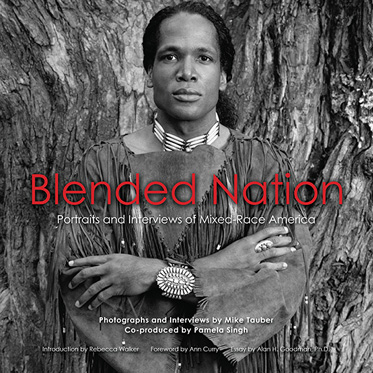
For some, the question never comes. Moses, 29, an Oakland resident, said she’s rarely asked about her ethnicity or background. With her pale skin, long red hair and freckles, not many people guess that her late father was black, Native American and white.

“People don’t see me as mixed” she said. “(They) don’t ask.”

Getting older, Moses said, has tempered her response to being multiracial. Living in the Bay Area, with its rich diversity, has also helped.

“On the East Coast, it was ‘No way.’ It was shock and disbelief,” Moses said. “Here, it ranges from ‘Uh-huh,’ like it’s not a real surprise, to ‘Interesting.’ It doesn’t blow people’s minds.”

Daniel, who for more than two decades has taught “Betwixt and Between,” a UC Santa Barbara course dealing with multiracial identity, has struggled with people’s perception of his mixed-race background.

“There’s really no understanding when a person says, ‘I’m biracial, I’m multiracial,’ ” he said. “People don’t know where to locate you. They know where to locate blacks. They know where to locate whites. They know where to locate Native Americans, Latinos. When you say, ‘I’m biracial, multiracial,’ they say, ‘Who are your people? What does that mean?’ Inevitably people will recode you into whatever they want you to be.”

That’s why self-identification is so important, Daniel said. It’s changing the way people talk about race and where mixed-race people fit in the fabric of American society. “If people really identified with the complexity of their million ancestors, we’d have a really different world,” he said.

Read more HERE

no difference between them

Here’s a new book full of beautiful black and white portraits of interracial couples!  The foreward is written by one of my favorite mixed chicks, Heidi Durrow.  The photos are stunning.  Thank you, Robert Kalman, for this wonderful book that will no doubt help us break our subconscious instinct to assume that these people do not belong together.  You can purchase your copy here.


illustrated children’s books

A new book, Illustrated Children’s Books, explores the design and influence of some of the best-loved children’s books which have inspired and enchanted generations worldwide.

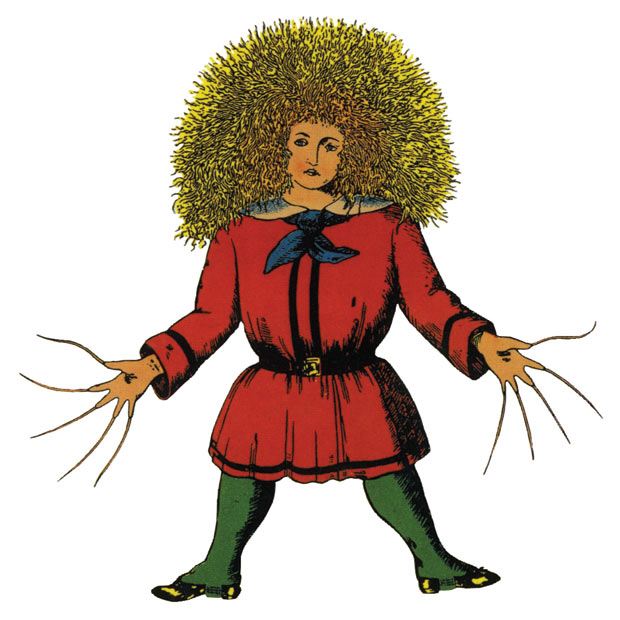
The English Struwwelpeter or Pretty Stories and Funny Pictures by Heinrich Hoffman

Looking at work from as early as the 1600s through to the golden age of illustration in the nineteenth century, Illustrated Children’s Books examines the history and development of children’s books.

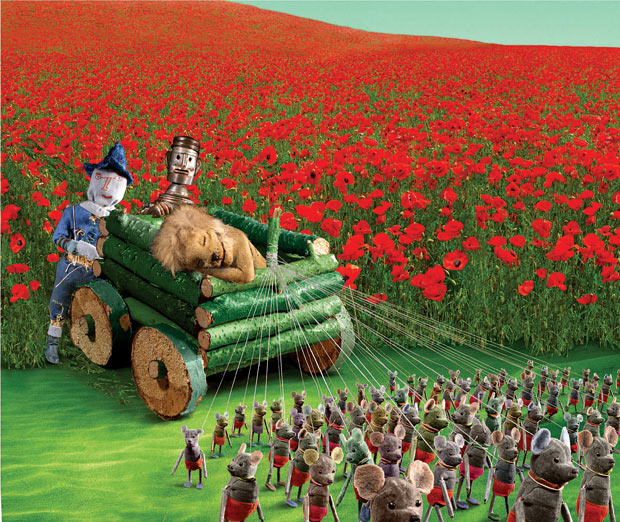
The Wizard of Oz © 2008 by Graham Rawle

The book also contains an analysis of more contentious material such as Noddy and Little Black Sambo, explored here in a socio-historical context.

The Adventures of Two Dutch Dolls, illustrated by Florence K Upton

Here’s my personal favorite.  It sort of makes up for my personal “not-favorite” (see above).

Miffy’s Dream by Dick Bruna

source