race manners

Since I’ve been back on the blog, I have said very little about the so-called biracial experience.  It amazes me that it’s still easier, even for me with all of my good “mixed” intentions, to talk about black and white.  I forgive myself for this because without the black and white there is no mixed.  Without the baggage of white vs. black stuff, there is no need for the mixed discussion.  So, I suppose it’s only natural.  It is little disappointing personally that the middle ground isn’t where the conversation begins for me.  It’s on the ends of the spectrum.  But I also suppose that this is natural.  I suppose this has been the disappointment of my life.  And I suppose that this is how we get to the middle ground.  By exploring the ends and inching toward the middle.

A couple of things in Jenee Harris’ article jumped out at me:

1. “My white mother has developed an acute sensitivity to the subtle ways prejudice and bigotry pop up in daily life.”- 

I wonder if my father would say he has developed the same.  I think so…I think that happened when he entered into a relationship with my (black) mother and grew deeper as he witnessed my experience… but we never talk about it…

82920031

me with my parents:)

2. “Well-intended”– re: “adults loved to tell me that people paid “good money” for hair like mine (think 1980s-era perms on white women)” and “A friend got the biscuit analogy…: God burned black people and undercooked white people, but removed her from the heavenly oven at the perfect moment.”

Well…if the intention of the (white) person who said this is to make the biracial person feel better about the perceived plight of their kind…well…i guess one could count that as a good or harmless intention. But I think that summation signifies complacence.  I, however, have to challenge this notion.  You see, giver of said “compliment,” in your quest to make me feel better about being my invisible, displaced, misunderstood, marginalized and tragic self you put me on the receiving end of your pity, your assumptions and judgements.  I do believe this is usually unconscious.  I also must acknowledge that it is an assumption I’m making. Yet there’s a reason that I assume that this is the intention behind the compliments.  The assumption is based on experience, but even those are dangerous to make. It’s the tone with which these comments are usually, subtly uttered.  If you’ve been the biracial person in this kind of conversation, I think you know what I mean.

When I engage in this kind of innocent interaction I can be left feeling frustrated, upset, and worst of all unseen.  It is depressing.  It is literally a depression of my spirit.  Of my freedom.  A depression of my freedom to just be and simply experience this life without being saddled with the weight of the stigma of a couple hundred years of prejudice, condemnation, fear, greed, inferiority, superiority, discrimination, and antagonism.  My take on it is that some people assuage a fleeting feeling of guilt over the fact that this is the biracial’s lot in life by reminding us (and/or reminding themselves) that I should be happy because I have good hair and tan skin which, I infer from your comments, should make up for the fact that on the whole the society we live in cannot acknowledge or understand how I exist.  I thought there was more to that sentence, but I think that’s it.  Our nation’s identity continues to be wrapped up in race and all the baggage that comes with it.  For that to remain intact, biracial just can’t really be.  I don’t think that needs to remain intact.  I think things are shifting.  So slowly.  But they are shifting and I hope I stay awake enough to the shift to feel when my assumptions based on past experience are truly no longer valid.

On the other hand, I’m fairly certain that most of my response falls into the category of  “Oh, come on, stop being so sensitive.

Or am I just being truthful?  That’s the stuff that this brought up for me.

Biracial Children: Racism Advice for White Parents

Race Manners: Comments about the superior beauty of your biracial child aren’t just weird — they’re troubling.

By Jenée Desmond-Harris

Updated Monday April 8, 2013

The Root —

“I’m a Caucasian woman with a biracial child (her father is black). I live in a predominantly white community. Why is it that whenever people discover that I have a ‘mixed’ child, they always say things like, ‘Oh, he/she must be so cute/gorgeous/adorable, those kids are always the best looking. You are so lucky.’ 

I know they mean well, but it seems off to me, and maybe racist. Do they mean compared to ‘real’ black children? When a German and Italian or an Asian and Jewish person have a child, black people don’t say, ‘Mixed children like yours are always the best looking.’ (Plus, it’s not true — not all black-white biracial kids are the ‘best looking.’)

Am I being overly sensitive by feeling there’s something off about these comments? If not, what’s the best way to respond?”

I chose this question for the first installment of Race Manners, The Root‘s new advice column on racial etiquette and ethics, because it hits close to home. Like your daughter, I’m biracial. Like you, my white mother has developed an acute sensitivity to the subtle ways prejudice and bigotry pop up in daily life. I should know. She calls me to file what I’ve deemed her “racism reports.”

And let’s be clear. Americans of all races say bizarre things to and about mixed people, who can inspire some of the most revealing remarks about our black-white baggage. Just think of the public debates about how MSNBC’s Karen Finney, and even President Obama, should be allowed to identify.

But the comments in your question often come from a good place, and they’re often said with a smile. When I was a child, adults loved to tell me that people paid “good money” for hair like mine (think 1980s-era perms on white women) and for tanning beds (again, it was the ’80s and ’90s) to achieve my skin color. Thus, the grown-up argument went, I should be happy (even if these trends didn’t stop people from petting my curls as if I were an exotic poodle, nor did they give me the straight blond hair I envied, and it’s not as if I was on the receiving end of the beauty-shop payments).

A friend got the biscuit analogy. Wait for it: God burned black people and undercooked white people, but removed her from the heavenly oven at the perfect moment, she was told.

Awkward. Well-intended. Poorly thought-through. A window into our shared cultural stuff about identity. These statements are all these things at once.

That’s another reason I selected your question. When it comes to remarks that are so obviously dead-wrong to some of us, and so clearly innocuous to others, there’s often little energy for or interest in breaking down the explanation that lies between “Ugh, so ignorant!” and “Oh, come on, stop being so sensitive.”

I’ll try it out here.

You’re right to be bothered by the remarks from the Biracial Babies Fan Club. Here’s why: These people aren’t pulling an arbitrary appreciation for almond-colored skin and curls from the ether. Instead — even if they are not aware of this — they’re both reflecting and perpetuating troubling beliefs that are bigger than their individual tastes. Specifically, while “mixed kids are the cutest” is evenhanded on its face, treating both black and white (and all other ethnic groups) as inferior to your daughter, I hear it as anti-black.

As Marcia Dawkins, the author of Clearly Invisible: Racial Passing and the Color of Cultural Identity, told me, “The myth that mixed-race offspring are somehow better than nonmixed offspring is an example of ‘hybrid vigor,’ an evolutionary theory which states that the progeny of diverse varieties within a species tend to exhibit better physical and psychological characteristics than either one or both of the parents.”
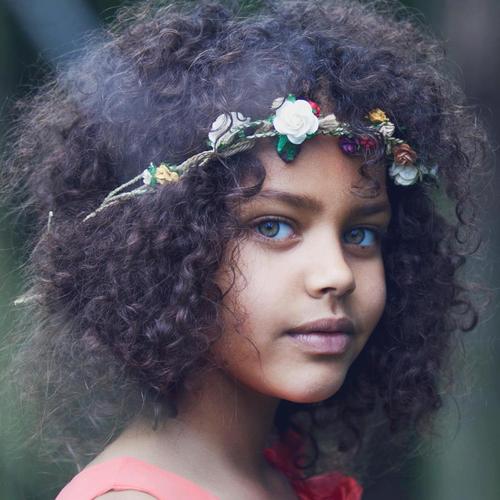
mixie girl

And just take a wild guess how this idea has popped up for black people. You got it: In order to demean and oppress African Americans, thought leaders throughout history, including the likes of Thomas Jefferson, have said that black-white mixed offspring are better, more attractive, smarter, etc., than “real” blacks and not as good or attractive or smart as “real” whites, Dawkins explains.

So alleging that mixed kids are the best of anything sounds different when you consider that we’ve long put a wholesale premium on all that’s whiter and brighter.

Nowhere is that premium more stubbornly applied today than when it comes to the topic at the center of your question — beauty and attractiveness. In recent memory, we had to re-litigate the harms of colorism when Zoe Saldana was cast to play the lead in a Nina Simone biopic. Tamar Braxton and India.Arie have both been accused of bleaching skin — as if that would be a reasonable thing to do.

A writer lamented in a personal essay for xoJane that she was sick and tired of being complimented for what black men viewed as her “mixed” or “exotic” (read: nonblack) physical features. (As far as I know, “you look a little black” is not a common line of praise among other groups.) Black girls still pick the white dolls in recreated Kenneth Clark experiments. Harlem moms can’t get Barbie birthday decorations in the color of their little princesses. We treated rapper Kendrick Lamar like the department store that featured a wheelchair-bound model in an ad campaign when he cast a dark-skinned woman as a music-video love interest.

Against this backdrop of painful beliefs that people of all colors buy into, yes, “Mixed kids are the cutest” should sound “off.”

As the mom of a mixed kid, you signed up for more than just the task of venturing into the “ethnic” aisle of the drugstore and learning about leave-in conditioner. You took on the work of hearing things like this through the ears of your daughter, and you agreed to have a stake in addressing racism. The fact that these comments bothered you means you’re on the job.

So if it’s at all possible, you should explain everything I’ve said above to people who announce that your daughter is gorgeous based on racial pedigree alone. If you’re shorter on time or familiarity, you could try a reminder that there’s really no such thing as genetic purity in the first place (“Great news, if that’s true, since most of us — including you — are mixed”). As an alternative, the old cocked-head, confused look, combined with “What makes you say that?” always puts the onus back on the speaker to think about what he or she is really saying.

Finally, just a simple, “Thanks, I think she’s beautiful, but I don’t like the implication that it’s because of her ethnic makeup,” could open up an important introductory conversation about why comments about superior biracial beauty aren’t true and aren’t flattering, and why the beliefs they reflect aren’t at all “cute.”

before this hurts too much

Need race-related advice? Send your questions to racemanners@theroot.com.

The Root‘s staff writer, Jenée Desmond-Harris, covers the intersection of race with news, politics and culture. She wants to talk about the complicated ways in which ethnicity, color and identity arise in your personal life — and provide perspective on the ethics and etiquette surrounding race in a changing America.

joneses

Disclaimer: I’m having one of those crazy stressful work weeks which during which i can only steal about five minutes to blog, so things are pretty sparse around here.

Luckily for me people have been finding there way to the blog by searching the web for Rashida Jones and/or Quincy Jones and Peggy Lipton.  I’ve been sitting on this photo for a few days, and figure all signs point to “it’s time to post it” even though I don’t have much to go with it.

I simply love the photograph.

The article below is brief, yet relevant.

The article below that I have posted before, but think the interview is brilliant enough to repost

kenya, rahida, kidada, q

Kenya, Quincy, Rashida, and Kidada Jones

Rashida Jones on Being Biracial: “I Have No Issues With My Identity”

The actress talks about the challenges of finding her place in Hollywood.

By Evelyn Diaz
Posted: 07/10/2012
The actress and screenwriter, whose film Celeste and Jesse Forever is due in theaters next month, opens up to EurWeb.com about being biracial in Hollywood (she’s Black and Jewish).

“It’s more of a challenge for other people than it is for me,” she says. “I have no issues with my identity.”

The daughter of media mogul Quincy Jones and actress Peggy Lipton does admit that her Hollywood handlers had trouble categorizing her at first. “Other people think I should be settling into one thing or another, but I don’t want to be limited,” she says.

“I spent so much time when I was younger being limited,” she goes on. “I wasn’t dark enough for some parts, or I was too light, or I wasn’t quirky enough.”

Now, the 36-year-old Harvard grad is one of the most promising talents in Hollywood, both in front of and behind the camera. After a breakthrough role in I Love You, Man, she landed a part in the NBC sitcom Parks and Recreation and created the comic book series Frenemy of the State, which is currently being adapted for the big screen with her as the star.

Jones was also nominated for a 2011 NAACP Image Award for Influential Multiracial Public Figure.

Rashida Jones’ Sister Kidada Agrees “She Passed For White” But Did The Mean Girls At Harvard Scare Her Away From Dating Black Men Forever?

jones-sisters

RASHIDA: I wouldn’t trade my family for anything. My mother shocked her Jewish parents by marrying out of her religion and race. And my father: growing up poor and black, buckling the odds and becoming so successful, having the attitude of “I love this woman! We’re going to have babies and to hell with anyone who doesn’t like it!”

KIDADA: We had a sweet, encapsulated family. We were our own little world. But there’s the warmth of love inside a family, and then there’s the outside world. When I was born in 1974, there were almost no other biracial families–or black families–in our neighborhood. I was brown-skinned with short, curly hair. Mommy would take me out in my stroller and people would say, “What a beautiful baby…whose is it?” Rashida came along in 1976. She had straight hair and lighter skin. My eyes were brown; hers were green. IN preschool, our mother enrolled us in the Buckley School, an exclusive private school. It was almost all white.

RASHIDA: In reaction to all that differentess, Kidada tried hard to define herself as a unique person by becoming a real tomboy.

KIDADA: While Rashida wore girly dresses, I loved my Mr. T dolls and my Jaws T-shirt. But seeing the straight hair like the other girls had, like my sister had…I felt: “It’s not fair! I want that hair!”

PEGGY: I was the besotted mother of two beautiful daughters I’d had with the man I loved–I saw Kidada through those eyes. I thought she had the most gorgeous hair–those curly, curly ringlets. I still think so!

KIDADA: One day a little blond classmate just out and called me “Chocolate bar.” I shot back: “Vanilla!”

QUINCY: I felt deeply for Kidada; I thought racism would be over by the eighties. My role was to put things in perspective for her, project optimism, imply that things were better than they’d been for me growing up on the south side of Chicago in the 1930s.

KIDADA: I had another hurdle as a kid: I was dyslexic. I was held back in second grade. I flunked algebra three times. The hair, the skin, the frustration with schoolwork: It was all part of the shake. I was a strong-willed, quirky child–mischievous.

RASHIDA: Kidada was cool. I was a dork. I had a serious case of worship for my big sister. She was so strong, so popular, so rebellious. Here’s the difference in our charisma: When I was 8 and Kidada was 10, we tried to get invited into the audience of our favorite TV shows. Mine was Not Necessarily the News, a mock news show, and hers was Punky Brewster, about a spunky orphan. I went by the book, writing a fan letter–and I got back a form letter. Kidada called the show, used her charm, wouldn’t take no for an answer. Within a week she was invited to the set!

KIDADA: I was kicked out of Buckley in second grade for behavior problems. I didn’t want my mother to come to my new school. If kids saw her, it would be: “your mom’s white!” I told Mom she couldn’t pick me up; she had to wait down the street in her car. Did Rashida have that problem? No! She passed for white.

RASHIDA: “Passed”?! I had no control over how I looked. This is my natural hair, these are my natural eyes! I’ve never tried to be anything that I’m not. Today I feel guilty, knowing that because of the way our genes tumbled out, Kidada had to go through pain I didn’t have to endure. Loving her so much, I’m sad that I’ll never share that experience with her.

KIDADA: Let me make this clear: My feelings about my looks were never “in comparison to” Rashida. It was the white girls in class that I compared myself to. Racial issues didn’t exist at home. Our parents weren’t black and white; they were Mommy and Daddy.

RASHIDA: But it was different with our grandparents. Our dad’s father died before we were born. We didn’t see our dad’s mother often. I felt comfortable with Mommy’s parents, who’d come to love my dad like a son. Kidada wasn’t so comfortable with them. I felt Jewish; Kidada didn’t.

KIDADA: I knew Mommy’s parents were upset at first when she married a black man, and though they did the best they could, I picked up on what I thought was their subtle disapproval of me. Mommy says they loved me, but I felt estranged from them.

While Rashida stayed and excelled at Buckley, Kidada bumped from school to school; she got expelled from 10 in all because of behavior problems, which turned out to be related to her dyslexia.

KIDADA: We had a nanny, Anna, from El Salvador. I couldn’t get away with stuff with her. Mommy knew Anna could give her the backup she needed in the discipline department because she was my color. Anna was my “ethnic mama.”

PEGGY: Kidada never wanted to be white. She spoke with a little…twist in her language. She had ‘tude. Rashida spoke more primly, and her identity touched all bases. She’d announce, “I’m going to be the first female, black, Jewish president of the U.S.!”

KIDADA: When I was 11, a white girlfriend and I were going to meet up with these boys she knew. I’d told her, because I wanted to be accepted, “Tell them I’m tan.” When we met them, the one she was setting me up with said, “You didn’t tell me she was black.” That’s When I started defining myself as black, period. Why fight it? Everyone wanted to put me in a box. On passports, at doctor’s offices, when I changed schools, there were boxes to check: Caucasian, Black, Hispanic, Asian. I don’t mean any dishonor to my mother–who is the most wonderful mother in the world, and we are so alike–but: I am black. Rashida answers questions about “what” she is differently. She uses all the adjectives: black, white, Jewish.

RASHIDA: Yes, I do. And I get: “But you look so white!” “You’re not black!” I want to say: “Do you know how hurtful that is to somebody who identifies so strongly with half of who she is?” Still, that’s not as bad as when people don’t know. A year ago a taxi driver said to me, That Jennifer Lopez is a beautiful woman. Thank God she left that disgusting black man, Puffy.” I said, “I’m black.” He tried to smooth it over. IF you’re obviously black, white people watch their tongues, but with me they think they can say anything. When people don’t know “what” you are, you get your heart broken daily.

KIDADA: Rashida has it harder than I do: She can feel rejection from both parties.

RASHIDA: When I audition for white roles, I’m told I’m “too exotic.” When I go up for black roles, I’m told I’m “too light.” I’ve lost a lot of jobs, looking the way I do.

PEGGY: As Kidada grew older, it became clear that she wouldn’t be comfortable unless she was around kids who looked more like her. So I searched for a private school that had a good proportion of black students, and when she was 12, I found one.

KIDADA: That changed everything. I’d go to my black girlfriends’ houses and–I wanted their life! I lived in a gated house in a gated neighborhood, where playdates were: “My security will call your security.” Going to my black friends’ houses, I saw a world that was warm and real, where families sat down for dinner together. At our house, Rashida and I often ate dinner on trays, watching TV in Anna’s room, because our dada was composing and performing at night and Mom sat in on his sessions.

RASHIDA: But any family, from any background, can have that coziness too.

KIDADA: I’m sure that’s true, but I experienced all that heart and soul in black families. I started putting pressure on Mommy to let me go to a mostly black public school. I was on her and on her and on her. I wouldn’t let up until she said yes.

PEGGY: So one day when Kidada was 14, we drove to Fairfax High, where I gave a fake address and enrolled her.

KIDADA: All those kids! A deejay in the quad at lunch! Bus passes! All those cute black boys; no offense, but I thought white boys were boring. I fit in right away; the kids had my outgoing vibe. My skin and hair had been inconveniences at my other schools–I could never get those Madonna spiked bangs that all the white girls were wearing–but my girlfriends at Fairfax thought my skin was beautiful, and they loved to put their hands in my hair and braid it. The kids knew who my dad was an my stock went up. I felt secure. I was home.

RASHIDA: Our parents divorced when I was 10; Kidada went to live with Dad in his new house in Bel Air, and I moved with Mom to a house in Brentwood. Mom was very depressed after the divorce, and I made it my business to keep her company.

KIDADA: I wanted to live with Dad not because he was the black parent, but because he traveled. I could get away with more.

RASHIDA: At this time, anyone looking at Kidada and me would have seen two very different girls. I wore my navy blue jumper and crisp white blouse; K wore baggy Adidas sweatsuits and door-knocker earrings. My life was school, school, school. I’m with Bill Cosby: It’s every bit as black as it is white to be a nerd with a book in your hand.

KIDADA: The fact that Rashida was good at school while I was dyslexic intimidated me and pushed me more into my defiant role. I was ditching classes and going to clubs.

RASHIDA: About this time, Kidada was replacing me with younger girls from Fairfax who she could lead and be friends with.

KIDADA: They were my little sisters, as far as I was concerned.

RASHIDA: When I’d go to our dad’s house on weekends, eager to see Kidada, the new “little sisters” would be there. She’d be dressing them up like dolls. It hurt! I was jealous!

KIDADA: You felt that? I always thought you’d rejected me.

RASHIDA: Still, our love for the same music–Prince, Bobby Brown, Bell Biv DeVoe–would bring us together on weekends.
Read more at http://bossip.com/623483/rashida-jones-sister-kidada-agrees-she-passed-for-white-but-did-the-mean-girls-at-harvard-scare-her-away-from-dating-black-men-forever/#tGvOXe6QHreb2M0W.99


The message is simple: Don’t give up

I really love everything about this story.  Except the part where Maurice was taken from his family.  But, then again, without that part there wouldn’t be a heartwarming story of perseverance and triumph and love and connection to inspire and reinforce the message: Don’t give up.

I was especially moved by this: “I didn’t let anybody get close to me again…I hurt a lot of people…”  I think we’ve all encountered painful experiences that have left us tempted, or perhaps determined, not to let anyone get close enough to hurt us again.  And then we consciously or unconsciously start a cycle of hurting ourselves and each other out of fear of being hurt.  Seems silly when you look at it like that.  Seems serious if you’re stuck in it.

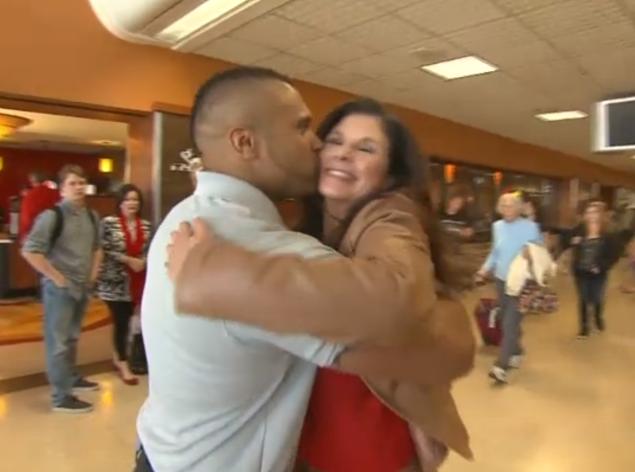
After years of separation from foster mom, 32-year-old man finally adopted

From Paul Vercammen and Michael MartinezCNN

San Diego, California (CNN) — A boyhood wish finally came true. But Maurice Griffin had to wait until he was a man for it to happen.

At age 32, the California man was adopted Friday.

adoption18n-2-web

“It was the best day in my life,” Griffin said after the proceeding in San Diego Juvenile Court. “I fought for 10 years and finally the day came.”

Adopting the burly, muscular, mohawk-sporting man is Lisa Godbold, his one-time foster mother.

“I was just overwhelmed with emotion,” Godbold added.

With a few pen strokes by Griffin, Godbold and Judge Richard Monroy, the adoption became official.

“This is going to be quite quick,” the judge told mom and son, all seated at a table. “If you blink, you miss it.”

Then son hugged mom. Mom cried.

“Congratulations to you both,” the judge declared.

Then a deputy took a photograph of three of them, a tradition that the judge noted is always done with small children and their adoptive parents.

Good time

The story dates to the early 1980s, when Godbold and her husband saw Griffin at an orphanage near their Sacramento home.

The smiling child seemed to fit perfectly with their family: Godbold is white. Her late previous husband was black, and the couple had two children who were, like Griffin, biracial.

The couple took Griffin in as a foster child. He quickly bonded with their sons, Gideon and Spencer.

“We were best friends,” Griffin said. “We’d run around, we did mischievous things and fun things. It was a good time.”

He lived with the family as a foster child for four years, until he was 13. Then, just two months shy of being adopted by them, it all fell apart.

Griffin said he wanted to be treated like a “real” son: He wanted to be disciplined like the couple’s other sons. He wanted to be spanked, he said.

So he innocently told a social worker that was what was going to happen.

The social worker then told her superiors, and soon Griffin was about to be removed from the household, he said.

Family ripped apart

One day, foster care officials took Griffin away, saying he could not live with Godbold’s family anymore.

“You can’t spank foster children. Maurice very much wanted that,” Godbold said. “We wanted him to feel like the rest of our kids. And there was a difference of opinion with some of the (child welfare) supervisors.”

Godbold said she fought to keep Griffin and was told she could lose her biological children, too.

CNN contacted the state agency responsible for the case, but its officials would not comment because it’s still considered a juvenile matter.

So Godbold had to let go. And as time moved on, Griffin says, he lost touch with what he felt was his only family.

“It was just an emptiness,” he said. “I couldn’t talk to anybody about it because nobody was there. I couldn’t call somebody; there was just a void in me.”

Griffin said that he acted out every chance he got in hopes the state would reunite him with the people he considered to be family.

He bounced from one foster home to another, never finding what he lost.

“I didn’t let anybody get close to me again,” Griffin said, holding back tears. “I hurt a lot of people. It was a rough road.”

Searching for each other

Despite several obstacles, Griffin and Godbold never stopped searching for one another.

Godbold’s husband died in 1998. She remarried and changed her last name, and moved.

But six years ago, Godbold found Griffin on social media. They communicated online and then one day she called him.

“She said, ‘hey baby,’ and I said I got to call you back,” Griffin said, trying to explain how overwhelmed he was by the reunion.

As she entered the courtroom Friday, Godbold harbored fear that a surprise would halt the proceeding.

“I was actually really nervous before walking in, even though signing on the line was a formality,” Godbold said. “I thought something might happen to keep it from becoming official today.”

Griffin is an example of triumph in foster care.

“I’m a living example of it, that I have been through it,” Griffin said. “I just never stopped. It will all work out.”

Godbold says the message is simple: don’t give up.

“Don’t give up – persevere. Keep looking for that love, that family connection, whether it’s with an infant or your 32-year-old child,” she added.

Griffin lives in San Diego and Godbold lives in San Jose, Calif., but now that they’re mother and son, they’ll be getting together often.

5712_10151405696355000_1657057176_n

“She’s my mother,” said Griffin. “She has always been my mother.”

The Race Project continued

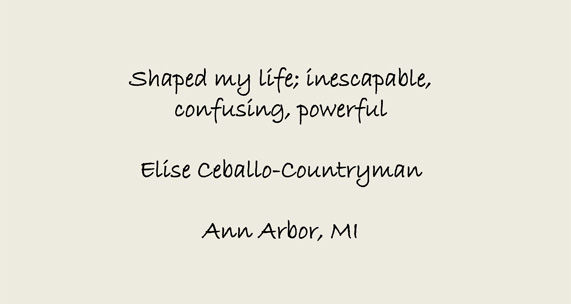
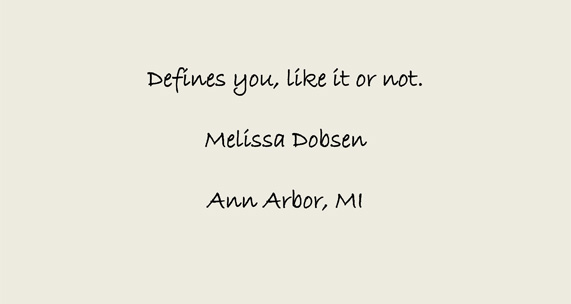
When I said mildly obsessed I wasn’t exaggerating.  I find these Race Cards to be moving and powerful and unsettling and inspiring.  Michael Bolton (not that Michael Bolton) and Bill Rowe, you really got to me. What a genius project.  It is a brilliant way of taking the racial temperature of an America with a huge population of “Millennials” who think in 160 character blurbs and who we hope are the “raceless” generation.  Of course we Gen X-ers and the Boomers, and even the Builders have Millennial tendencies, so no one should feel excluded from this.  This isn’t for Generation Y, but when you’re taking the racial pulse at The University of Michigan, you will get a sense of how to close to “raceless” our youngest adults are.

 
make-your-race-card2

Click HERE to submit your own Race Card.  I’d love to hear which 6 words you chose, so please leave it in the comment section below if you feel inclined to share.  I’m crafting one myself.  Right now I’ve got:

  • Believing in race ensures potential’s waste
  • Race is a mask, lie, excuse
  • Race brings judgement made in haste
  • Race causes unnecessary confusion of spirit

I think I like the last one best.  I think the ones the rhyme are cheesy.  I think the word race probably doesn’t have to be in it, so I need to start thinking outside of the box I’m currently stuck in on this one.

Here are a few of the ones that intrigued me most.  Of course, I was drawn to the “interracial” ones for obvi reasons.  There are so many intriguing entries to dig through on the Race Card Project website.

We are treated how we look.

image-1


Kimberly Dorsey

Detroit, MI

I am bi-racial and have been raised in a white family inside Detroit. I have suffered many racially motivated injustices in my travels and it makes me angry when people pretend race doesn’t matter. It matters when you are the one being discriminated against.

Yes, they are my REAL kids

Paul David Binkley
Delaware, OH

My wife of twenty two years and I are interracially married, she black and myself white.

Over our years together we have dealt with countless thoughtless comments and questions.

Here is one such event recalled here to explain my six word story.

A few years back, when our youngest still fit in a grocery cart, I was shopping alone with the three of them, engrossed in a price comparison, when an older woman approached and asked bluntly, “are those your kids?”

Wincing, I glanced over at them. My oldest daughter was tracing the colorful letters of a cereal box with her finger. My son was standing with his binkly in his mouth and fingers of one hand gripping the cart. And my baby girl was just sitting there quiet, not even remotely misbehaving.

Reconsidering her question. “Are those your kids,” I realized its true nature. Thinking myself clever, I answered, “Would I bring them to the grocery store if they weren’t?”

To which she humorlessly rejoindered, “No. I mean are they your REAL kids?”

Too desensitized to be deeply offended, I gritted my teeth and answered plainly, “Yes, they are my REAL kids.”

How to protect my black son?

41496_100000657735231_6635_n

Michael Bolton
Scottsdale, AZ
Understanding Race Project- University of Michigan

Dad Caucasian. lived life in black neighborhood mostly. studied black history–college+leisure. love black culture esp music, classic jazz. slave narratives. am black myself but cannot pass as such. other dad, my partner, black, died. am now single dad, not planned. bringing up son in white priviledged neighborhood. not me, not him, we’re poor, but we’re here. avoiding ‘young black males’=main cause of death for ‘young black males’. life so cheap for ‘young black males’. not *my* son. i miss diversity.

Slide2

With blacks come crime and decay.

Bunny Vee
Philadelphia, PA

Called my friend nigger. Ashamed forever.

Bill Rowe
Bucks County, PA

It was 1971 and I was ashamed the moment I said it. Jeff was a friend and to impress the wrong person I said something terrible. What impresses me to this day is the way that he responded. He just said “you don’t mean that” and never said another word. If I read the situation correctly, Jeff forgave the unforgivable. I have never been able to forgive my behavior and I am ashamed to this day of what I did. I moved to another school the following year and we lost contact. I never apologized and wish that I could.
Jeff, wherever you are, I have two 6 word sentences for you. You are the epitome of grace. I’m sorry beyond power of words.

Slide7

joys, complicated

Joys should be simple.  Didn’t Pippin teach us that?  Sorry, my musical theatre nerd wanted to speak.  But anyway, joys should be simple not complicated.  While I’ve been away examining my life, living my life, changing my life I’ve noticed that I have a tendency to shy away from things that bring me joy.  I have a sneaking suspicion that it’s the experience of feeling that my joys are complicated that informs my reticence.  But the joys actually are not complicated.  Not to me.  Only from the outside looking in.  Only within the parameters of a paradigm in which black and white are mutually exclusive.  Only when clinging to a dogma that rigidly defines an “us” and a “them” and prescribes clearly definable attributes to each.  I’m gonna be a rebel here and doubt those antiquated notions.  That’s not new for me though.  Actually I’m going to be a rebel here just for myself and let go of my discomfort with the complexity others may still perceive in the things that bring me joy, in the things that are me, and I’m just gonna be and enjoy them.  That is new for me.  That is a challenge. But, hey, why not go ahead

As for this article, I love that Mr. McCollum’s mother mandated that his Irish pride run fierce.  I love that he takes pride in facilitating the paradigm shift.  I love that someone wrote this article.

St. Patrick’s Day holds mixed emotions for some

By Martine Powers

Ryan McCollum knows that on St. Patrick’s Day, he cuts an unusual figure.

All in green, a traditional Irish Claddagh ring on his finger and a houndstooth flat cap on his head, everything about his attire screams “Irish and proud.’’

But McCollum, 33, is also black. His father, a Navy man from Springfield, married an Irish-American girl from Downeast Maine.

He knows his appearance does not fit the bill of a stereotypical Irishman – most assume he’s black, or maybe Latino – but since childhood, his mother mandated that his Irish pride run fierce.

“Growing up, I knew I was Irish,’’ said McCollum, of Springfield, “even if the rest of the world didn’t know I was Irish.’’

As the American population has grown increasingly mixed-race in recent decades, some descendants of Irish immigrants are claiming a multiracial heritage, though they may differ in appearance from their red-haired, freckled ancestors. For them, the joys of embracing Irish roots are complicated by the challenges of being multiracial.

“I always feel this deep kinship with Irish people in Boston,’’ said Kelly Bates, a mixed-race Irish-American who lives in Roslindale. “But I don’t always feel like they have this kinship with me.’’

Between 2000 and 2010, the number of Americans who checked two or more races on the US Census increased from 6.8 million to 9 million.

Paul J. McNamara, president of the 275-year-old Charitable Irish Society, said he does not believe that any of the organization’s 400 current members are multiracial, but the group welcomes membership applications from anyone interested in promoting Irish history and culture.

“Most people in our group want to appreciate and retain their Irish roots,’’ McNamara said. “There is a strong element that you want to participate and preserve aspects of the culture.’’

But for Bates, it’s not quite so simple.

Her mother, a black woman from Harlem, married an Irish-American man from Massachusetts. Bates loves to visit her huge, boisterous Irish-Catholic family in Lynn. She grew up reading Irish poetry with her father. She calls him every March 17 to hear the legend of Saint Patrick and the snakes.

In a ritual that is all too familiar for many mixed-race people, new acquaintances try to guess Bates’s heritage. Usually, they pick Puerto Rican or Colombian. Maybe Middle Eastern or Italian.

But Irish? Never.

17mixedirish3[1].r

Kelly Bates, executive director at Access Strategies Fund, is also part Irish.

“You could look at my cousins and me, and you could see the resemblance,’’ said Bates, executive director of the philanthropic foundation Access Strategies Fund. “But they would be accepted [as Irish] right away, and it would be very different for me.’’

Part of that divide may come from Boston’s racially fraught past, she said.

“I’m aware of the fact that my cultural communities have not always been able to build a bridge toward each other, especially in this city,’’ said Bates.

While Irish and African-American communities worked and lived in close proximity in the decades after America’s founding – both groups were stigmatized by English landowners – they grew antagonistic toward one another at the end of the 19th century, said Marie E. Daly, library director at the New England Historic Genealogical Society. In the last century, the communities have butted heads over labor rights, housing, and public school desegregation.

Bates said she is just as proud to be African-American as she is proud to be Irish. After all, she said, the sound of bagpipes and African drums both give her chills. But she sometimes worries about expressing pride in her Irish roots. As much as Irish is a national origin, she said, it also identifies her as white. She does not want others to think she has distanced herself from her black identity.

“I think my black friends and black colleagues don’t know what to make of it when I talk about my Irish heritage,’’ Bates said.

Mari Tanaka, a junior at Harvard, knows that most people think they immediately have her pegged.

“I guess I look Asian, but I don’t feel comfortable with people just assuming that’s all I am,’’ said Tanaka, 21. “Growing up, being Irish has been such a big part of my life.’’

Most of Tanaka’s ancestors hailed from Japan, but her mother’s father is Irish-American. During her childhood in Hawaii, he ensured that she listened to traditional Irish music, watched “Riverdance,’’ and ate corned beef and cabbage on St. Patrick’s Day.

College has offered her an opportunity to further explore her Irish roots. She has connected with Irish-American relatives in Cambridge who show her genealogical charts and tell stories about her ancestors. While she felt pressure to take a class in East Asian Studies, Tanaka, a biology major, instead chose to enroll in a class on Celtic history and culture where she was one of two nonwhite people.

“I felt like, yeah, being Asian, that’s a part of me,’’ Tanaka said. “But there’s another part of me that is much less explored.’’

McCollum, a political consultant, hopes to travel to Ireland, and he knows he will arrive in the land of his ancestors and find that no one looks like him. But that doesn’t bother him.

A history buff, McCollum spends much of his time reading about Irish history and culture, learning about his family’s genealogy, and watching Irish sports.

“For people who are proud of being Irish and knowing their Irish roots, it’s almost like a game – like, ‘How Irish are you? What county are you from? How many times have you been? Is your family still there?’’’ said McCollum, who is board member for the Irish Immigration Center. “If I’m in a room with Irish folks and have to re-prove my Irishness, I can talk to them about facts and history of Ireland.’’

McCollum’s surname adds further confusion: People often assume it represents his Irish side, but it’s a Scottish name probably adopted by his father’s African slave ancestors from their owners.

His African-American heritage is just as important as his Irish roots, he said; his passion for history extends to antislavery politics and the Black Power movement. But because of his skin color, he has no trouble relating to other black people. Being Irish, he said, is a less obvious part of his identity.

“A lot of times, I am that reminder that every Irish person doesn’t look like a stereotypical Irish person,’’ McCollum said. “And I don’t mind being that reminder. Sometimes, I take pride in that.’’

wee bottles of leprechaun gold st. patrick's necklace 8

speaking of halle berry

i tumbled upon this interesting thread today at black hair media.com.  i personally feel that, of course, they “should be able to” call themselves black women.  i am all about self-identifying as one sees fit.  i wonder what kind of run-ins the questioner has had with biracial women with white mothers that would instigate such an inquiry.  in my opinion, many (certainly not all, or even most) biracial women that i know who have white mothers (into which category fall most of the biracial people i know) not only identify themselves as black, but seem more steeped in black culture than… well… than… me.  i have some theories as to why that is… i’m reluctant to share them… i’m going to sleep on it and hopefully grow a pair overnight, then come back and update this post adding my speculations tomorrow or sometime this weekend.

Topic: biracial women with white mothers
Posted: Today at 11:21am
-Do you think that biracial women with white mothers and black fathers should be able to call themselves black women? I get frustrated with this because how can they be a black woman when they didn’t even come from one and really don’t know much about us. I don’t think they should get that title. I hate hearing Halle Berry (who has a white mother) be called “The most beautiful black woman). To me, that just seems unfair. Who else feels this way?
-I don’t think anyone who’s biracial (that is, black and white) regardless of which one of their parents is black or white should be calling themselves black. If the mother’s white and the father’s black, you are mulatto. If the mother’s black and the father’s white you are a mulatto. Case closed.
 -i use to feel this way..but honestly it all about how they are raise..if they want to identify themselves as white or black they have the right to..what would you say if it were you? AlSO, i rather someone tell me their either black or white.. rather than running around screamin “im mixed” all the time.
 -You know what I just realized??…why do people think of mutliracial people like they are slices of pizza???

Genetics dont work like that.
 -I think white people call every bi racial person black just because they are darker.
Ive only see people sometimes calling biracial white in Africa.
Plus, for me its hard to see biracial peeps with white mothers who raised them feeling they are black just because they have white culture. When you have a black mother and live with her, you feel black just because of what your mother taught you.
But some biracial with white moms, who know they are rejected by their white part, take advantage on the black community since they like them. I guess OP thats the Hally berry case.
-um it depends. i think mixed girls with white moms tend to be more whitewashed. i dont view some of them as true black people because they identified with their white mom more so of course they are gonna have that white influence.  vs. a mixed person with a black mom who was the main influence a lot of times u can just tell a difference. plus some of them like hauts said feel better than regular blacks and take advantage of the praise and attention. NOT ALL MIXED PEOPLE, BUT SOME
also if you are half nonblack and half black, you cannot be the prettiest black anything. how that work when half your genes come from a white woman? halle may be the prettiest mixed woman but her beauty cannot represent black women b/c she is not fully black.

oh… baby nahla…

sorry for the sporadic posting.  i’ve been working out of town and it’s harder than i’d anticipated to keep up with the blog.

anywho, i figured i’d get around to acknowledging this mess….

some readers and viewers and friends have asked me how i feel about this, and all i can say is that it makes me sad.  i just do not understand the impetus to uphold the one drop rule.  i’m baffled.  it’s so illogical to me.  it clearly only applies to racially mixed with black people.  i’d go so far as to say that it only applies to racially mixed black and white people.  i am quite sure that other mixes do not have such strict identification restrictions.  if you are anything other than black + white, you are not so harshly criticized for claiming the whole of yourself (not that i believe that racial categories constitute the whole of a human self.) i totally understand allegiance to the black community.  i understand that society’s gonna view you one way if you look one way (however, i think the jury’s still out on nahla’s phenotype.)  regardless of that though, i think we’re coming to a time in the collective consciousness of humanity, where it’s most important to be what you are.  regardless of history or politics.  the best we can do is be who we are.  and once we each accept and embrace our authentic selves, it’ll be so much easier to accept and embrace our fellow man as his/her authentic self. whoever they say they are.  whatever they show us they are.  and it’s by defying these antiquated “rules” that we free ourselves and each other to… be ourselves… and each other…

but back to nahla, i’m confident that she’ll find her way, find herself. but, goodness gracious i think her parents are going to make it much more difficult than necessary with this “she’s black because there’s a one drop rule” vs. “don’t you call my child black” (see below) nonsense that we’ve read about… ay yai yai

via TMZ

Sources connected with the former couple tell TMZ … whenever Gabriel would read a story about Nahla that referred to her as “black,” he would go off, insisting his baby was white.  We’re told Gabriel would tell Halle and others they should demand a “retraction” when such references were made regarding his daughter.

As TMZ previously reported, sources tell us Gabriel has called Halle the “N” word  — and one woman previously involved with him referred to him as a “borderline racist.”

Halle Berry on her daughter’s race and interracial romance

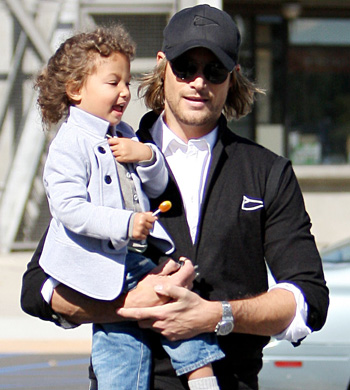
As her custody battle with ex Gabriel Aubry turns ugly, Halle Berry is speaking out to the March issue of Ebony magazine about their daughter Nahla and the role that race plays in her own relationships.

The Oscar winner, whose mother is white and father is black, tells Ebony that she identifies herself as a black woman but plans to let 2 1/2-year-old Nahla — whose dad is white and French Canadian — make her own decision about her race when she’s old enough.

“I’m not going to put a label on it,” she says. “I had to decide for myself, and that’s what she’s going to have to decide — how she identifies herself in the world. And I think, largely, that will be based on how the world identifies her. That’s how I identified myself.”

But, Berry adds, “I feel like she’s black. I’m black and I’m her mother, and I believe in the one-drop theory.”

Regardless, the actress acknowledges that being biracial isn’t easy.

“If you’re of multiple races, you have a different challenge, a unique challenge of embracing all of who you are but still finding a way to identify yourself, and I think that’s often hard for us to do,” she explains. “I identify as a black woman, but I’ve always had to embrace my mother and the white side of who I am, too. By choosing, I’ve often [wondered], ‘Well, would that make her feel like I’m invalidating her by choosing to identify more with the black side of myself?'”

Like Aubry, Berry’s current boyfriend, actor Olivier Martinez, is white, but she tells Ebony love has nothing to do with skin color.

“I’m very connected to my community, and I want black people to know that I haven’t abandoned them because I’ve had a child with a man outside of my race and I’m dating someone now outside of my race who is Spanish and French,” says Berry, who has romanced men from a variety of ethnic groups.

“I have never been more clear about who I am as a black woman…the people I have dated sort of hold up a mirror to me and help me realize more of who I really am,” she said. “And who I really am is a black woman who is struggling to make my race proud of me, who is struggling to move black women forward in the profession I’ve chosen, and those relationships have actually helped me identify myself more clearly. Not to say that I wasn’t able to do that when I was married to two black men, but it certainly hasn’t detracted from feeling very connected to my community, and who I really am at my core.”

Berry goes on to say that “the truth is that it’s taken me a long time to learn how to love myself, and color isn’t really a part of what I look at when I’m deciding who I want to spend time with. I look for the soul, the person, the evolution, what he believes in, who [he is as a person] and how does it affect me in a positive way.”

Divorced from athlete David Justice and singer Eric Benet, Berry has vowed to never marry again, but now says she might make an exception.

“The only reason I would is if I found somebody who proved to be on-another-level special to me,” she says. “And if for some reason I felt like it would be important for Nahla and her sense of family unit. I’ve been married twice, and [the marriages] didn’t work out. They were painful divorces, and I’m not so sure I ever want to subject myself to that kind of pain and heartbreak again. I don’t know if I can.”

speaking of the confederate flag

ok, so, i like kid rock a little bit.  for three reasons: 1. he’s from detroit (well, Michigan anyway) 2. i think his song Amen is brilliant and beautiful 3. he has a biracial son (is that, like, racist of me…or some kind of positive prejudice…or just silly?)

anywho, i do not like his use of the confederate flag.  to be fair, i don’t like anyone’s use of it.  especially if the user has a child of some significant color.  i understand that to some people the flag is simply a symbol of “southern pride.”  i really do believe that said people do not view the flag as a pro-slavery emblem… they don’t go around looking at black people wishing they were allowed to own them.  that’s too easy, too “obvious racist bad-guy.”  but, i think it is from a vantage point of either white privilege or ignorance (or both) that one can insistently be so insensitive as to say (or infer) “i know that this flag is hurtful to many, it reminds them of a time when they were considered less than human and were treated no better than cattle, it may make them feel unsafe…they may get the idea that i think back on those days as the good old days and wish we could revert back to them.”  i’m sorry, but the flag is just  not THAT cool, not worth all of that.  nothing is.  i would like to believe that it would be an easy “sacrifice” to put that flag away (as in not on your car, belt buckle, t-shirt…but whatever you want in your own home…) so as not to bring up all of that hateful, hurtful stuff to the people who are still negatively affected by the history of the flag, the implications of it.  how about a little more love, compassion, sensitivity… amen.

i mean, this is really not that much cooler than this….

not enough to warrant offending people to their core… even if it’s only 14 people, even one… especially if the one might be your kid, Kid.

Kid Rock’s NAACP Award Protested Over Use Of Confederate Flag

via HuffPost Entertainment

Some people don’t think Kid Rock is meeting their great expectations.

The rocker is set to accept the NAACP’s Detroit chapter’s Great Expectations Award at their annual Freedom Fund dinner in May, and some members of the historic black rights organization are so unhappy about it, they’re boycotting the 10,000 person affair.

It’s the singer’s use of the Confederate flag in his stage shows that has them so upset, according to the Detroit News.

“It’s a slap in the face for anyone who fought for civil rights in this country,” Adolph Mongo, head of Detroiters for Progress and a boycotting NAACP member told the paper last week. “It’s a symbol of hatred and bigotry.”

For his part, Rock defended the use of the flag in a 2008 interview with the Guardian. “Why should someone be able to own any image and say what it is?” he said. “Sure, it’s definitely got some scars, but I’ve never had an issue with it. To me it just represents pride in southern rock’n’roll music, plus it just looks cool.”

He also spoke about touring with a famed rapper and how it impacted his audience.

“I’ve got Rev Run [from Run DMC] on tour with me right now – we have fun trying to count the number of black people every night. We’re like, ‘There’s 14 tonight, yeah!'”

Though he was a staunch defender of President George W. Bush, the singer went to back for Barack Obama after his election, in the process defending America against accusations of racism.

“It’s good the U.S. has proved it’s not as racist as it’s sometimes portrayed,” he told Metro UK (via Spin Magazine).

He also spoke about his own experience growing up with black people in the interview, saying, “Black people were kind to me growing up and taught me hip-hop and the blues.”

For more on the NAACP controversy, click over to the Detroit News.

W. T. F!

I mean… I just don’t have words… which is weird for me… a little sick to my stomach over this, actually… talk about a different fourth grade experience…

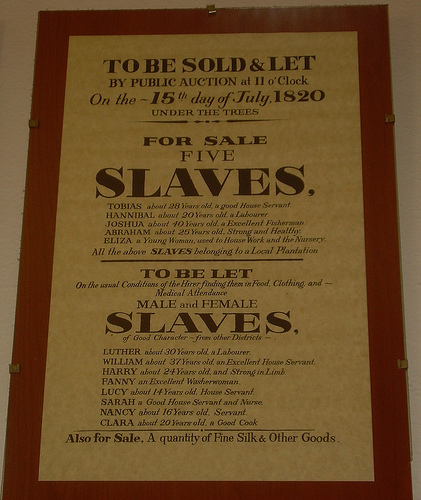
I’d love to believe that were I subjected to this horror show I would have been able to poke fun at the situation.  That maybe I would have been able to choose one male white friend and taken the ‘performance’ to a whole ‘nother level by crying, “Oh please don’t sell me away, father…” However, being nine or ten and shy, I probably would at best have refused to participate, but, more likely, gone along, swallowing my anger, humiliation, and shame until I got in the car after school and told my mother who would promptly have taken care of it.  I assure you of that.

My mother would have gone to school and ripped the teacher, and anyone else who was walking by, a new a**hole had this happened to me.  She did that when she didn’t like the way they taught about the Mayflower and the Indians in first grade.  We did it together in the fifth grade when Sr. Mary Ann said some offensive b.s. about MLK and used me, the only student of color, as a reference.  She got fired.

As a “black” student who nearly always served as a speck of pepper in a sea of salt, I can tell you that it is uncomfortable enough to go through the history lessons on the Civil War when the class is simply reading straight from the textbook, but to actually be used to physically demonstrate the atrocity….  It feels bad enough when you’re in geography and your friend accidentally reads the “river Niger” aloud as the river nigger and a hush falls over a crowd and everyone is looking at you in your desk at the back of the room even though their eyes are facing forward… but THIS.  I just can’t… Jessica Boyle, imho, you officially suck as a teacher and a human being.  Hopefully this will open your eyes to all that you have had the privilege of being blind to, and you’ll come out of this a better person.  Good f***ing luck!

Norfolk principal apologizes for mock auction of black students

By Steven G. Vegh The Virginian-Pilot © April 9, 2011

NORFOLK

The principal of Sewells Point Elementary School has apologized to parents for a teacher’s classroom exercise last week that cast her black and mixed-race fourth-graders as available for sale.

The apology came after the teacher separated the students from their white classmates and auctioned them, division spokeswoman Elizabeth Thiel Mather said. The exercise was part of an April 1 class on the Civil War.

In an April 6 letter sent to parents of students in the class, Principal Mary B. Wrushen wrote: “I recently became aware of a history lesson that was presented to the students in Ms. Jessica Boyle’s fourth grade class. Although her actions were well intended to meet the instructional objectives, the activity presented was inappropriate for the students.

Image

“The lesson could have been thought through more carefully, as to not offend her students or put them in an uncomfortable situation,” Wrushen wrote.

Wrushen said the exercise was not supported by the school or division. “I will follow up with the classroom teacher to ensure nothing like this ever occurs again,” the letter said. “In addition, the guidance counselor is available to discuss any concerns your child may still have concerning this classroom lesson.”

Wrushen declined to comment Friday. Boyle, who has been with the division since 2005, did not return a call to the school. She has taught at Sewells Point for three years, and before that was at Dreamkeepers Academy, according to the division website.

Mather said the division was responding to the incident with “appropriate personnel action.” She did not give details.

Wrushen became aware of the auction exercise after receiving complaints from two parents, and spoke to the class about the incident, Mather said.

“This lesson was not part of the approved curriculum,” Mather said.

Chris Lee, whose daughter is in Boyle’s class, was among parents picking up their children Friday at the school on Hampton Boulevard near Norfolk Naval Station. He said he’d heard no details about the exercise, though he received Wrushen’s letter.

“My wife and I were trying to figure out what the letter was about, because we heard nothing about it, we just saw the letter,” he said.

Letter: Principal Mary Wrushen wrote to the parents of students at Sewells Point Elementary to apologise for the controversial history lesson

Told by a reporter about the auction, Lee said, “That sounds inappropriate to me. Wow. That’s interesting – that’s something I have to digest.” He said he would ask his daughter to tell him about the incident.

The school has 590 students.

Contacted Friday by The Virginian-Pilot, School Board Chairman Kirk Houston said he had not known about the auction.

“That’s very disturbing to me, extremely disturbing to me,” he said. “Mock slave auctions involving children are absolutely unacceptable in a classroom. At this point this is a personnel matter, and the School Board will monitor its outcome.”

Peggy Scott, treasurer of the Norfolk Council PTA, also first heard about the incident from The Pilot.

“I’m sitting here with my mouth hanging open,” Scott said. “There are some things you don’t do.”

In a statement Friday, Superintendent Richard Bentley said: “The school district does not condone this type of lesson in any way. It was wrong. It was outside the boundaries of the curriculum and appropriate instructional practices.”

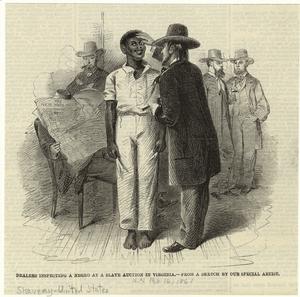
London Illustrated News, February 16, 1861, depicting a slave auction in Virginia. The sign on the podium reads “Negroes for sale at auction this day at 1 o’clock.”

Dealers inspecting a negro at a slave auction in Virginia.

Dealers inspecting a negro at a slave auction in Virginia.  [The Inspection]

Slave Auction, Virginia

by Lefevre James Cranstone Image rights owned by the Virginia Historical Society

Silvia Federici’s Slave auction, United States

social differences/systematic consequences

I’ve just spent the last two hours transfixed by this website.  Definitely worth perusing!

A few personal asides:

I must say that I’m sure my (white) dad would have gotten on the bus and had some words with folks if that thing had happened to me (you’ll read it)…

biracial people can be as insensitive as everybody else and aren’t always the “victims” of ignorant words…

the “you’re gay be with that gay guy” one reminds me of the times someone has wanted to fix me up with someone they’re sure I’m perfect for and it turns out it’s just the other “black” person they know….

ABOUT THIS PROJECT

this project is a response to “it’s not a big deal” – “it” is a big deal.  ”it” is in the everyday.  ”it” is shoved in your face when you are least expecting it.  ”it” happens when you expect it the most.  ”it” is a reminder of your difference.  ”it” enforces difference.  ”it” can be painful.  ”it” can be laughed off.  ”it” can slide unnoticed by either the speaker, listener or both.  ”it” can silence people.  ”it” reminds us of the ways in which we and people like us continue to be excluded and oppressed.  ”it” matters because these relate to a bigger “it”: a society where social difference has systematic consequences for the “others.”

but “it” can create or force moments of dialogue.

~~~~~~~~~

This blog seeks to provide a visual representation of the everyday of “microaggressions.” Each event, observation and experience posted is not necessarily particularly striking in and of themselves.  Often, they are never meant to hurt – acts done with little conscious awareness of their meanings and effects.  Instead, their slow accumulation during a childhood and over a lifetime is in part what defines a marginalized experience, making explanation and communication with someone who does not share this identity particularly difficult.  Social others are microaggressed hourly, daily, weekly, monthly.

The term “microaggressions” was originally coined to speak particularly to racialized experiences.

“Racial microaggressions are brief and commonplace daily verbal, behavioral, or environmental indignities, whether intentional or unintentional, that communicate hostile, derogatory, or negative racial slights and insults toward people of color.”  – “Racial Microaggressions in Everyday Life”

This blog, however, is a space to extend this concept to different socially constructed identities that embody privilege in different ways – sexuality, class, religion, education level, to name a few – in hopes of making visible the ways in which social difference is produced and policed in everyday lives through comments of people around you.

  • Me, a light-skinned biracial girl at a party last weekend:: Okay, a Jack means categories.
  • White guy:: How about minorities you would sleep with?
  • Me:: As a minority, I find that offensive, like sleeping with us is a sacrifice.
  • He looks at me like he hadn’t realized he was in “mixed” company and back-pedals (“I didn’t mean it THAT way”); kisses my ass for the rest of the night, but never apologizes. Made me feel frustrated and invisible.
  • Teacher :: Black men are naturally more aggressive and strong than white men.
  • Me:: No, it has to depend on the man, surely.
  • Teacher :: Not really, no white man could…
  • Me:: Your husband is 6ft tall well built and my dad is 5’7ft and very lean, your husband could wipe the floor with him.
  • Teacher :: There are odd exceptions but, in general.
  • I was 15, Secondary School, England 2001. Made me feel gobsmacked, worried that I would be graded unfairly.
  • I was at the mall earlier today with a group of friends. Another guy from school joins us.
  • New guy:: So, what are you?
  • Me:: My ethnic background?
  • Him:: Yeah
  • Me:: Well, I’m French, Spanish, Irish, Italian, Black American, Mexican, Puerto Rican, American Indian–
  • Him:: No you’re not
  • Me:: Pardon?
  • Him:: You can’t be American Indian. They’re all extinct.
  • I am a 17 year old girl, at a shopping mall. Made me feel frustrated, invisible, patronized.

    They probably just had a crush on you.”

    -What my white father said when I told him two white students called me the n-word on the bus.

    “I would never, ever hire someone with a “black” name on their resume. I wouldn’t even interview them.

    -An African American co-worker at a team dinner.

    • Girl at country themed bar:: Hey, you’re black…
    • Me, a 23-year old male::
    • Girl:: I’m not racist or anything…but WTF are you doing here? There are Confederate rebel flags and sh*t here.
    • Me:: ….
    • Girl:: Oh, I know. You’re here for the white girls.
    • Me:: -_-
    • Girl:: Buy me a drink.
    • Made me a bit uncomfortable.
    • Customer:: If more black people were like you the world would be a better place.
    • Black me:: Have a nice day.
    • What I wanted to say:: If fewer people were as ignorant as you, people who look like me would have better lives. I was 18. (He was in his 40s or 50s.) when: spring 1998, working at Barnes & Noble in Louisiana. 

    You know, it’s so amazing. I was just looking at your hands and feet- they’re so dark on the top, but then at the palms they look just like ours! Hahaha.”

    -My gymnastics coach in front of my suburban, entirely-white team, in which I am the only black person.

    • Workfriend:: Hey that new guy at work is gay; you should totally be with him.
    • Me:: No I don’t find him attractive.
    • Workfriend:: But… he’s gay! You’re gay, he’s gay, what’s stopping you??
    • Me:: Just because he’s gay doesn’t mean-
    • Workfriend:: Ummmmm, he’s gay. He likes having sex with guys like you. You’re just afraid. Duhhh.

    I was 21, at work. Made me feel annoyed, hurt and trivialized. Gay people don’t have sex with anyone just because they are both gay.


    He was pretty dark, so he’s probably not paying rent because he’s an illegal and doesn’t know English.”

    -My (white) stepfather regarding one of his renters. Made me ashamed because I’m Hispanic, too.

    I’m a black woman. My black female friend once told me that a white guy once said to her, “You’re really pretty for a black girl.” And her response was, “I know.”

    Made me realize her and my own unrecognized self hate. Made me feel sad and guilty.

    You could pass for Dominican; some of them are really dark and have bad hair like you. Luckily, I got the GOOD hair”.”

    -Said to me by the black Dominican-American boyfriend of my biracial (black/white) friend visiting us during Spring Break. I am a 20 year old black American woman with naturally kinky-curly hair. Made me feel shocked, ugly, unimportant.

    This 1895 charicature is an unkind parody of a woman seeking to smooth out her hair. The comic strip suggests that her hair stood out on end because of a hair-raising novel.
    • My black/white biracial friend looks at the Facebook profile of a black man she’s crushing on.
    • Her:: Ugh, his [mono-racial and black] girlfriend is so ugly. They’d have kids with huge nasty noses. He needs to get with me and my good mixed nose. *giggles*

    I am a black 20 year old American woman. We were studying together at another friend’s apartment. Made me feel insulted, ugly, disfigured, and defective.

    You know why Vermont is so safe, don’t you? There’s hardly any minorities in it!”

    I was in NY yesterday, meeting my future in-laws for the first time when my fiance’s father said this. He is a white man in his 70s. I am a 22 year old biracial black cis woman …who lives in Vermont. It made me feel furious, invisible, helpless, rejected.