jalopies

I’ve never heard this one before…..

Half Black Geese

Monday, Jun. 28, 1937

Sirs:

Relative your article TIME, June 7 on the word “jalopy” and Webster R. Kent’s comments (TIME, June 21), I think you are both in error. Approximately ten years ago while in a Los Angeles café with the late Herbert Somborn, ex-husband of Gloria Swanson, approximately eight mulatto dancing girls appeared. Mr. Somborn exclaimed: “What beautiful jalopies!” Pressing him for information, he stated that a jalopy was anything half black and that the word originated in a certain part of Africa, where plurals are unknown, and a jalopy is a African half black geese.

weheartit.com

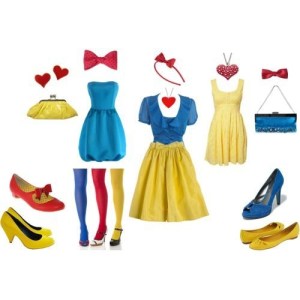
In case you hadn’t noticed, I spend a lot of time surfing the internets and I easily become addicted to entertaining websites. Thank goodness the addictions are usually short-lived.  Here’s the latest: http://weheartit.com/.  I’m still not exactly sure how it works just yet, but there are SO many fun things to look at.  This is the first picture I saw on there…

snow white wardrobeIt was love at first sight! I have a little confession to make…. I LOVE Snow White!! She’s my favorite Disney character. It’s always felt a little “wrong” for me as a (formerly) one-dropped biracial girl to love someone named Snow White. Identity issues much? I don’t think so, but I assumed everyone else would.

Halle Berry 17 years ago

It’s hard to believe that Halle Berry’s been on my radar screen for about 20 years now.  I have lots of respect for her, so I am in no way picking on her (or her mother) by questioning some of the things she said in this article from Ebony magazine in 1992. I wonder if she still feels the same way today. I wonder if Nahla has had an impact on Halle’s concept of black, white, and biracial. I wonder if I’ll ever get to have a conversation with her about it!

Norment, Lynn. “Halle Barry: strictly business about show business.” Ebony. 1992

Confronting life’s obstacles is nothing new for Berry, who overcame the potentially damaging problem of being born to a Black father and White mother in a racist society.

Berry’s father left when Halle was 4, and she and her sister, Heidi, were raised by her mother, Judith. Race was never a problem, Berry says, growing up in Cleveland’s inner-city neighborhoods. All that changed when they moved to a racially mixed suburb and young Halle began hearing the taunts–“half-breed,” “mulatto” and “Oreo cookie”–and wondered what it all meant.

Judith Berry didn’t mince words.

“I’m White, and you are Black,” was her mother’s explanation. “Sure I can say that I’m biracial and technically I am,” says Halle, “but, as my mother said to me: ‘What do you see when you look in the mirror? You see what everyone else sees. They don’t know who your mother is, and they aren’t going to care.””

Since that conversation, Berry has called herself Black and now sees benefits from both of her heritages. She has little sympathy, she says, for individuals who use their biracial backgrounds as excuses for their troubles.

“I think the problems are made worse when people get on talk shows and make statements like, ‘I had a hard time because I was caught in the middle,” she says. “It doesn’t have to be that way. I think being biracial is one of the best things in the world.”

Norment, Lynn. “Halle Barry: strictly business about show business.” Ebony. 1992

I don’t really appreciate the “potentially damaging problem of being born to a Black father and White mother” statement. To me it seems like Norment had “tragic mulatto” on her mind when she wrote this.  When I look at that picture of Halle Berry and her mother, I can see the resemblance. I wonder if what other people see and care about still matters more to people than what they as an individual see and care about in terms of their own sense of self. I mean, my retort would be “when I look in the mirror I see you somewhere in my reflection, and why should I not care who my mother is because ‘they’ won’t?”

the dark tenth

27slaves1
Here’s another gem from my highbeamresearch.com excursion.  An excerpt from a Time Magazine article published in 1931.  My favorite parts of this one are:  “practically from the beginning acquired white blood”- like it just magically happened, “conditions imposed by their maternity”- now it would most frequently be imposed by their paternity, and the 80% thing. People often say (or throw in my face) that “we’re all mixed, we’re all biracial- get over it.” I completely understand that we’re all mixed, but before reading this article I imagined that all blacks are mixed because of the aforementioned “acquiring” of white blood. And when I imagined that I thought of it coming directly from a white person. But this old article points out that the white blood often comes from “Negroes and mulattoes…marrying mainly among their own color and so distributing the primary blood mixtures more and more evenly throughout the new race.” It seems obvious (it is obvious), I just never thought of it in that way. 

Browns

“biracial”

I’ve noticed in my latest research that in the ’50s and ’60s “biracial” described committees, boards, commissions, councils, governments, mediation teams, towns, schools, and groups. Not people. People were “mulatto” and things were biracial. Actually groups of black and white people were biracial. Now we’d say interracial, I guess. It is interesting to notice the shift in the language. I think the definitions are ever-changing. That’s why I have a love-hate relationship with words. I love them, but they can be fickle and misleading.

Kinda like, I know that when I say “monoracial” all the time that the proper term is “uniracial.” But to me uniracial is the big prize. It’s the word we get to use when the illusion of race has been globally recognized for the fallacy that it is and we’re uniracial. Belonging to the human race. We have various cultures and all, but basically we’re people and there’s only one race of us. So I’m saving uniracial. We don’t get to use it yet.

I totally did not intend to bring that up in this post.

Anyway, the first instance I found of a person being labeled biracial was in The New York Times on March 1, 1987- “LIVING IN TWO WORLDS. By Maxine B. Rosenberg. Photographs by George Ancona. A low-key and affecting photo essay about the fewer than two percent of children in the United States who are biracial.”

Biracial shows up thrice more in 1987 in reference to foster/adopted children. Through the early ’90s “biracial” is used mostly for the aforementioned groups with a noted increase in the use of the word as a racial categorization as the articles become more recent. 

This brings me back to my defense of my use of the word “mulatto.” Most of my childhood was spent in the 1980’s when people were still referred to as mulatto and “things” as biracial. But “mulatto” was a bad word not to be spoken, so I was either nothing, “other”, or black.  Everyone like me was. As I see it, this validated and perpetuated the one-drop rule. And threw shadows of shame onto my true identity. It gave me no chance and no choice to form an identity from a foundation of wholeness. I think this word “mulatto” is a larger piece of this race puzzle than most people think.

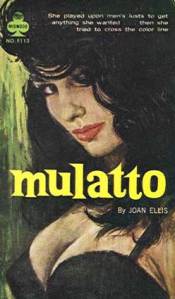
mulatto book coverI mean, I definitely don’t want to be associated with that and if that‘s what people think of as “mulatto” I’d rather deny my whole self and be black which is exactly what “they” wanted when “they” created the system because the system will crash if too many people come to know that there is no great divide between the two races and that a person can actually be both black and white simultaneously.

The system is crashing.

mulatto in history

Lately I’ve been perusing articles tagged ‘biracial’ and ‘mulatto’ on a research website.  I’ve found some interesting stuff (not this particular photo tho). Most interesting to me in this story is the white woman/black man combo, the fact that Rose has no last name, and the description of mulattoes as “children of such unnatural and inordinate copulation.” I think we’re still combating this notion, just as blacks are still combating the “soulless, less than human” one.  

petition1

On the petition of Rose the Mullato Daughter of Mary Davis of ye Province of Maryland against Mr. Henry Darnall about her Freedom Consideration.

Rose Davis is a mulatto woman, born to indentured servant Mary Davis from London and a former slave, Dominggoe, who were married at the time of Rose’s birth.

Rose Davis has been bound-out until the age of 31. On Aug. 11, 1715, Rose turned 31 and was not given her freedom as prescribed by the Laws of Assembly in the Province of Maryland.

The law states that “Issues of such or children of such unnatural and inordinate copulation, shall be servants till they arrive at the age of Thirty One Years.” Her owner Henry Darnall, of this County, has determined that he will not release her from servitude and will keep her as a slave for life.

With so many interracial relationships in the Province between whites and African Americans, the laws were especially harsh against white women and African-American men, in order to keep a larger free African-American population from rising in the Province of Maryland.There are numerous stories and court cases in all counties of Maryland where free people were unjustly held as slaves because of their color and inability to fight against wealthy planters. There also were lawsuits brought against owners because parents felt servitude was harsh, or that their children were being abused. In the case of these children of two races, the females suffered as they could be used as courtesans not unlike the quadroons and octaroons of New Orleans and the mulattoes of Africa.

Maryland manumission records for the Darnells and their cousins / in-laws the Carrolls, show that providing freedom to slaves or mulattoes, regardless of their status, was rare.

What evidence could Rose bring to the courts that would help her win her freedom? Would the family who loved her be there to support her claim?

Only one could make this claim to her birthright and loved her more than anyone: her mother, Mary Davis. Mary a former indentured servant, provided Rose with the family Bible to use as evidence for the upcoming trial.

On 13 March 1716, the Court proceeded with Rose’s petition and her counsel provided the following opening statement:

“The petition hereby showeth that your petitioner being a baptized Mulatto descended by the mother of Christian Race as appears from the evidence of her said mother is ready to provide as well as other testimony’s if need be to confirm the same, and being arrived to the age of thirty one years the 11 day of August 1715, at the time she supposes the servitude imposed in such unhappy issue, expires. They humbly pray the benefit by Law allowed to those in her unhappy circumstances and that she may accordingly receive a free manumission from the said servitude which hand-scribed evidence mentioned in ye petition follows, in the words of her mother.”

“I Mary Davis of Richard Davis, of Mark Lane in the City of London in England where I was born do give this Bible unto my son Thomas, begotten in wedlock on my body by a Negroe called Dominggoe, once a servant to Joseph Tilley of Hunting Creek in Calvert County where I was married to him…. that you may know she my said daughter came of a Christian race by her mother, a true copy take out of the aforesaid Bible.”

What Mary really said was she had come to love and marry a former slave, entered into holy wedlock because of their love for one another and gave birth to two free children. Or so they thought.

On the 8th day of November, in the year of our Lord, 1716, the decision of the Court was read:

“Mature deliberation It is thereupon considered by the Justices that the said Rose the Mulatto and the petitioner aforesaid, serve during LIFE as a slave and that her master, Mr. Henry Darnall pay court fees.”

Rose Davis was one of many family members who could not be rescued from slavery, even in accordance with the laws.

Janice Hayes-Williams. “Our legacy: Mulatto children often kept as slaves despite laws at time.”Maryland Gazette. 2006.

yippee

newlogoIt’s official! Mulatto Diaries: The Movie will be screened this summer at the Mixed Roots Film & Literary Festival! I’m so excited! It’ll be shown Saturday June 13th at the Japanese American National Museum in Los Angeles. Go to  www.mxroots.org for more details!  If you can, make a tax deductible donation while you’re there. Then book a flight and come to L.A. to see my movie. Please.

symmetry

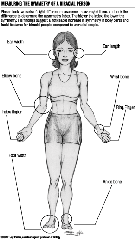
I came across this article a while ago and have been thinking about it a lot since that “Plight of Mixed-Race Children” post a few days ago. I am generally still offended by that Freakonomics blog article, but maybe it’s a harsh reality that I don’t want to acknowledge. The study Levitt spoke of did have just over 90,000 participants. The “more attractive” thing really stuck out to me as being inappropriate.  Then I remembered reading about this UCLA study…
scbiracialgfxsmall_t135


11-05-2002

(Daily Bruin) (U-WIRE) LOS ANGELES — A recent study by University of California — Los Angeles Assistant Adjunct Professor of Biology Jay Phelan concluded that biracial people are perceived as more attractive than “uniracial” people because they have more symmetric features. 

Symmetry, according to Phelan, reflects an organism’s developmental stability and is strongly associated with longevity, health and fitness….

Symmetry, he found, was greater in heterozygous organisms. In other words, organisms are more symmetrical – and therefore potentially more “fit” – when their genes have two different alleles (for instance, one dominant allele and one recessive allele rather than two dominant or two recessive alleles). 

Crossing organisms from different populations, he believed, would result in “hybrid vigor.” The theory was that their heterozygosity was making them stronger and healthier. 

Genes produce enzymes that assist in bodily processes. When two slightly different enzymes are produced by heterozygous genes, the organism is “covered under a wider range of conditions,” he said. 

Most humans are heterozygous in about 20 percent of their genes. 

Assuming that biracial people are more heterozygous since they come from different populations (despite the debate surrounding the relative amounts of genetic variation within and among populations), Phelan started by measuring the symmetry of 99 UCLA student volunteers who were either biracial or uniracial. 

Biracial people were defined as those whose mother and father were of different races, but each of their parents were uniracial. Both parents of the uniracial subjects were of the same race. 

Phelan’s study concluded that biracial people were significantly more symmetrical than “uniracial” people. All 25 of the least symmetrical subjects were from uniracial groups, which were either Asian, black, Hispanic or white. Seven of the eight most symmetrical subjects were from biracial groups (Hispanic-white, Asian-white, black-white or Asian-Hispanic). 

In addition, Phelan found that symmetry was about the same for all uniracial people no matter which group they were in, and about the same foall biracial people, regardless of racial background. 

Phelan, however, did not want to stop merely with symmetry. He hypothesized that those who were more symmetrical would also be perceived as more attractive. 

To determine attractiveness, 30 people then rated photos of the subjects who had been measured for symmetry on attractiveness, ranking them from one to seven (seven being the highest). 

The results: Biracial people were perceived as significantly more attractive than “uniracial” people. 

Emily Shin, a third-year psychology student and president of the UCLA Hapa Club, appreciates Phelan’s work. 

“I think that it’s really great that people are doing research on hapa people, generally a group that’s marginalized,” Shin said. 

She added, however, that there is some dissent in the hapa community about research like Phelan’s, which perpetuates the stereotype that hapas are on average, more attractive people. 

“It makes hapa people, especially hapa girls, feel very objectified,” Shin added…..

David Zisser. “Study indicates mixed race, physical symmetry correlate.” University Wire. 2002.

I don’t know what I think of all this just yet. Right now I’m thinking, “If a majority of mixed-race children are struggling as Levitt’s article (which i initially brushed off as ridiculous mostly because of the attractiveness issue) suggests, then we need to help them because it doesn’t have to be that way.”

plight?

ny_times_chi_fire_mhsThanks to The Topaz Club this offensive NYTimes Freakonomics blog post (dated 8/12/08) was brought to my attention…
The Plight of Mixed-Race Children

What’s it like to grow up with one parent who is black and another who is white?

In a recent paper I co-authored with Roland FryerLisa Kahn, and Jorg Spenkuch, we look at data to try to answer that question. Here is what we find:

1) Mixed-race kids grow up in households that are similar along many dimensions to those in which black children grow up: similar incomes, the father is much less likely to be around than in white households, etc.

2) In terms of academic performance, mixed-race kids fall in between blacks and whites.

3) Mixed-race kids do have one advantage over white and black kids: the mixed-race kids are much more attractive on average.

The really interesting result, though, is the next one.

4) There are some bad adolescent behaviors that whites do more than blacks (like drinking and smoking), and there are other bad adolescent behaviors that blacks do more than whites (watching TV, fighting, getting sexually transmitted diseases). Mixed-race kids manage to be as bad as whites on the white behaviors and as bad as blacks on the black behaviors. Mixed-race kids act out in almost every way measured in the data set.

We try to use economic theory to explain this set of facts. I can’t say we are entirely successful. If we had to pick an explanation that best fits the facts, it would be the old sociology model of mixed-race individuals as the “marginal man”: not part of either racial group and therefore torn by inner conflict. One reason this model is largely consistent with our facts is because it makes so few strong predictions that it is hard to falsify, which isn’t really fair to the competing models.

http://freakonomics.blogs.nytimes.com/2008/08/12/the-plight-of-mixed-race-children/


My jaw dropped.

Then I wrote this…

Mr. Levitt,

I was deeply offended by your “Plight of Mixed-Race Children” blog post. Clearly the “tragic mulatto” was already a joke to you when you set out to determine how the young ones are doing.  First of all, the “more attractive” stereotype is becoming as irritating to me as the blacks and fried chicken thing.  If you took this seriously you would look beyond that to find out if those “attractive” children perceived themselves that way.  Or did they feel physically flawed somehow because they did not fit in easily with either their black or white counterparts. Did their peers regard them as attractive? I believe that this more attractive thing comes in to play after adolescence and should have had no place in your “study”.

You also seem to believe that all of these young black and white people have white mothers and black fathers.  Black fathers being absent and poor, generally leaving white mothers on their own to care for their children in lower class surroundings. That’s what I infer from this crappy post.  Come the f*** on! Many biracials have a white father and a black mother. Did the possibility of that even cross your mind? I am left to assume that this white man, Steven D. Levitt, wouldn’t dream of procreating with a black woman and that you judge the white men who would as somewhat less than yourself.

Where on Earth did you get your “data”? What questions exactly were you trying to answer? Why not interview biracial adults about their adolescent experience?  Why do you even care what it’s like to grow up black and white?  Clearly you do not.

I am 32. I have a black mother and a white father. I grew up in the wealthy suburbs of Detroit.  I excelled academically and artistically. I earned a full-ride to the University of Michigan without trying very hard.  During my adolescent years I did not have sex, a cigarette, a sip of alcohol, or get into a fight.  I did not come away from my adolescent experience thinking “That was kind of rough, but as least I am more attractive than all those ‘monoracial’ kids.” I have a vlog on youtube called “mulatto diaries”.  Should you someday find that you truly care to know what it is like to grow up in America with a black and a white parent, watch it. You will find the stories of many other biracial people there. You don’t have to take only my word for it.

fyi: I’ll be posting this on my blog mulattodiaries.wordpress.com.

Sincerely,
Tiffany Jones

belated

o'bamaoh, yeah! i have a blog….

I know it’s 2 days late and I made a video about it, but i’m not through with St. Patrick’s Day yet. That day I watched Good Morning America as usual. Diane Sawyer brought up the fact that Obama is Irish. As if she could hear chuckling across the country, she said something like, “No really. Through his mother’s lineage…” That’s kinda how I always felt as a kid. Like, I know everyone’s a little Irish today, but I’m REALLY Irish everyday. You just don’t see it.


Also, I really love St. Patrick’s prayer. I used to say it every morning. Not when I was a kid, but like 4 or 5 years ago. Here it is…


I arise today
Through God’s strength to pilot me;
God’s might to uphold me,
God’s wisdom to guide me,
God’s eye to look before me,
God’s ear to hear me,
God’s word to speak for me,
God’s hand to guard me,
God’s way to lie before me,
God’s shield to protect me,
God’s hosts to save me
Afar and anear,
Alone or in a mulitude.

Christ shield me today
Against wounding
Christ with me, Christ before me, Christ behind me,
Christ in me, Christ beneath me, Christ above me,
Christ on my right, Christ on my left,
Christ when I lie down, Christ when I sit down,
Christ in the heart of everyone who thinks of me,
Christ in the mouth of everyone who speaks of me,
Christ in the eye that sees me,
Christ in the ear that hears me.

I arise today
Through the mighty strength
Of the Lord of creation.


That’s the part I used to say anyway. There’s more depending on the version you’re reading.