congrats, maya rudolph

Maya Rudolph Welcomes a Girl

by Sarah Michaud

After playing pregnant in this summer’s Away We Go, Maya Rudolph has welcomed a real-life bundle of joy: her second child with director Paul Thomas Anderson.

Maya Rudolph Welcomes a Girl

Maya Rudolph and Paul T. Anderson

The couple’s daughter, Lucille, was born Nov. 6 in Los Angeles, the Saturday Night Live alum’s rep tells PEOPLE exclusively.

Lucille joins big sister Pearl, 4. As with their first child, Rudolph and Anderson, 39, chose not to find out the sex of the baby prior to delivery.

“We didn’t find out with [Pearl], which was kind of fun,” Rudolph, 37, told David Letterman.

“Because when you’re ready to throw in the towel and you’ve got nothing positive to think about or feel, because you’re so heavy and you want to float in a pool of salt water to be buoyant, it was nice to have something to look forward to.”-SOURCE

-I thought this was a cute interview, too.  Not nearly as cute as little Pearl though!-

Actress Maya Rudolph, who is currently pregnant with her second child, sat down recently withBlackBookmag to talk about her daughter Pearl,3. Read below as Maya answers a few questions about being a mother to her first-born.

Q: Did you set out thinking that you’d be a specific type of mother to Pearl?

A:  There’s definitely this fantasy that’s like, “I’m not going to be a mother, I’m going to be Mother-f#$%^*&-Theresa.” And then you realize that you’re still the same person, the same things still bother you, you’re not perfect, but you can still be someone’s parent, someone’s mother, and it can still be okay. There’s no question that you want to give them everything and you want their lives to be perfect. Has any human achieved that? No, probably not.

Q: Once Pearl was born, was she just as you imagined she’d be?

A: We didn’t know if she was going to be a boy or a girl, and, when she finally came out, there was a really quick snip and suddenly, she was resting on my chest, staring at me. And her eyes were super-black. She looked like Marlon Brando in The Island of Doctor Moreau, because she was covered in all of these white blankets staring at me. I remember, in that moment, thinking, Yes, this is my baby. I’d always tried to picture what my baby would look like, and in that second, I was like, Yes, this is the baby I’ve been expecting. And then the doctor said, “Oops, we forgot to see what it was.” I didn’t know if it was a boy or a girl, but I knew it was my baby—you spend so much time being pregnant, not knowing who the hell is coming.

Q: how has it been for you to watch a person forming her own world, using you as her mothership and then going off on her own.

A: There’s no question: you get that proud mom grin sometimes, when it’s like, Check it out. That’s my kid. But, yeah, she is who I thought she’d be in a lot of ways. Let’s put it this way: If she had come out as a total wallflower, and said stuff like, “I hate reading and I don’t like to perform,” then I’d be like, That’s not my kid. So it doesn’t really surprise me that she’s like, “Hey, I’m funny and I like to hang out.”

fair and good features….on the dark half

Good Lord!!

Ebony & Ivory

San Jose Mercury Evening News, November 30, 1887. Here’s the “tragic mulatto” principle taken to extremes by cruel Nature. Or then again, maybe circus life would have offered more to this kid than whatever hardscrabble misery awaited him in post-Redemption Florida. If only we had a name other than “it” for the child in question, I might be able to find out what happened to him.

Ebony & Ivory2

reblogged from The Hope Chest

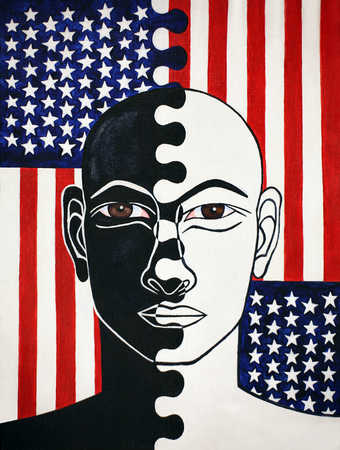
art by Kaadaa

re: willing to accept

Here’s another article that references the perils of placing biracial babies in adoptive homes.  Is adoptive a word?  Anyway, this just reinforces my strong desire to adopt a brood of biracial kids.  I guess it’s not going to be that difficult once I’m ready.  Getting ready is the difficult part.

Adoption fulfills dream of blended family for Erie County couple

By DANA MASSING

A chatty little social butterfly, 5-year-old Grace Ann May can be sassy and likes to show off a little.

That’s how Annette May describes the daughter who is most like May was as a child.

“Other than she’s brown and I’m white,” May said.

Grace is one of two girls and two boys who became part of the May family, of Greene Township, through adoption.

Gracie, as she’s called, and two of the others are biracial. The children, who range in age from 5 to 12, were joined by Annette and Scott May’s first biological child, a daughter born on Mother’s Day.

“White, black, purple with pink polka dots, it really doesn’t matter to us,” Annette May said. “Everybody deserves a family that loves them.”

…The Mays’ four adoptions were done through Catholic Charities, even though the family is Presbyterian. The agency works with families of all faiths. It had more adoption options and lower fees than other agencies, Annette May said.

Heather Hough, adoption counselor for the agency, said cute babies with blonde hair and blue eyes are the easiest to find families for.  “Everybody wants those,” she said.

Some children up for adoption have physical, mental or behavioral issues, said Ellen Miller, Catholic Charities’ special-needs adoption coordinator. She worked with the Mays on their adoptions.

The Web site for the Statewide Adoption and Permanency Network, or S.W.A.N., states that “special needs” refers to “children waiting to be adopted who are older, of minority heritage, part of a sibling group or have a disability” or “for whom finding an adoptive family may be more challenging.”

“A lot of our kids, their need is they need a family more than (they) have special requirements,” Miller said.

Annette May said one of the most difficult parts of adopting was answering questions about what she and her husband would accept in a child.

“You can’t make those decisions when you have a child naturally, so I felt very awkward feeling like I could make those decisions in this circumstance…  We had fertility issues,” Annette May said. “We’re kind of traditional folk. We never really financially could afford in-vitro (fertilization) or things like that, and I’m just not that type of person, not interested in going through all that. It sounds very cliché, but as a kid, I always thought it would be very neat to have a blended family.”

That family started with Grace Ann. She was 10 days old when the Mays took her home. They were early in the adoption process and hadn’t expected results so soon, but no other family wanted a biracial baby at the time, Annette May said.
“We’ve always been open to pretty much any age and any race,” she said.

When Gracie was 6 months old, the couple heard from Miller at Catholic Charities again.

“She called and said, ‘We have a biracial little boy, born at Hamot yesterday, needs somebody to pick him up tomorrow. Are you willing?'” Annette May recalled.

“At the time, we just kind of thought, ‘This is so unusual.’ We had those thoughts of, ‘People say it takes forever. It’s a boy and a girl. Are we ever going to have the opportunity if we turn it down?  And so we said yes, and I thought, ‘Hey, people have twins all the time. What’s the big deal? We’ll just get it all out of the way at once — diapers, bottles, the whole thing.'”


Read the rest of the Mays’ story HERE

no difference between them

Here’s a new book full of beautiful black and white portraits of interracial couples!  The foreward is written by one of my favorite mixed chicks, Heidi Durrow.  The photos are stunning.  Thank you, Robert Kalman, for this wonderful book that will no doubt help us break our subconscious instinct to assume that these people do not belong together.  You can purchase your copy here.


heidi & seal & lou & leni & henry & johan

Seal posted photos on his website!  So beautiful!


“It’s difficult to imagine loving another child as much as you love your existing children,” Seal writes. “Anyone who has a family will tell you this. Where will one find that extra love? If you love your existing children with all of your heart, how then can one possibly find more heart with which to love another?”. “On Friday, Oct. 9, 2009, at 7:46 p.m., the answer to this question came in the form of our fourth child and second daughter,” he continues. “Lou Sulola Samuel was born, and from the moment she looked into both of our eyes, it was endless love at first sight. She is beautiful beyond words and we are happy that she chose us to watch her grow over the coming years.”

the effect of skin tone

The Science of How We See Obama’s Skin Color

Andrew Romano

When it comes to the policies and politics of Barack Obama, it’s no secret that liberals and conservatives don’t see eye to eye. But according to behavioral sciencist Eugene Caruso of the University of Chicago’s Booth School of Business, these differences in perspective may literally be a difference in perception. In a new study, Caruso and colleagues Emily Balcetis of New York University and Nicole Mead of Tillberg University asked a group of undergraduates which of a series of photographs of Obama–some of them secretly lightened and darkened–best represented who he is as a person. The results were striking: while self-described liberals tended to pick the digitally lightened photos of the president, self-described conservative students more frequently picked the darkened images. The more one agrees with a politician, in other words, the lighter his skin tone seems; the less you agree, the darker it becomes. To discuss how political affinities influence perception–and how politicians and the press could take advantage of these findings–NEWSWEEK’s Andrew Romano spoke to Caruso. Excerpts:

How did the study actually work?
Essentially we were interested in whether political party influences how people literally see the world, and how they may see different depictions of candidates as representative of who they really are. So to test this we gathered up a bunch of photos of Barack Obama and digitally altered them to create a version where his skin tone appeared a bit lighter and a version where his skin tone was a bit darker than it appeared in the original photograph. And then we just showed people several different photos and asked them to rate each one on how much they represented who he really is. What we found was that participants who told us that they had a liberal political orientation rated the lightened photographs as more representative of Obama than the darkened photographs, whereas participants who told us they had a more conservative ideology rated the darkened photographs as more representative of Obama than the lightened ones. 

I’m no expert here, but you’re confident that it’s the skin tone that changes “representativeness” in the eyes of the voter, as opposed to something else about the photographs—like pose, or background, or facial expression?
That’s a great question. What we did was essentially take three different photos with three different poses, and created for each photo a lightened and a darkened version. And then we randomly selected the combination of pose and skin tone that we showed each participant.

So your findings about “representativeness” were consistent across poses—the conservative will be twice as likely to say a “darkened” Obama was representative, regardless of which image of Obama was being darkened?
Right. We were experimentally able to isolate the effect of skin tone because some people saw a lightened version of pose #1 and others saw a darkened version of pose #1—and independent of the pose the lightened versions seemed most representative to liberals and the darkened most representative to conservatives.

Were you surprised by the results?
A little bit. Some of my research deals with how people who have different views on a subject are able to try to understand the views of someone on the other side, and the general finding is that people aren’t particularly good at really coming to understand the perspective of someone with whom they disagree. Beyond that, though, I got interested in this notion of whether our beliefs can actually affect the way we see the world—of whether they can actually affect our perception of objects or people in our environment. And it turns out they can.

Ultimately, what does it mean that someone believes a lightened version of Obama is more representative of him than a darkened version, and vice versa? What are the larger implications of these differences in perception?
Partisanship can affect all sorts of beliefs. It’s not surprising that a liberal and a conservative who read the same health care bill would come to very different conclusions about its merits. But I think our work is more akin to having a liberal and conservative look at the exact same physical copy of a bill sitting on the desk in front of them and disagreeing over how thick it is. That is, even something that we feel we should be able to see similarly, like a person’s racial identity or physical characteristics, can be influenced by our desire to see that person favorably or unfavorably.

But isn’t there a chicken or egg relationship here? Do conservatives see Obama as darker and are thus prone to dislike him, or do they dislike him first and then see him as darker because of it?
That’s a great question. One of the things we’re trying to do now is experimentally try to tease those two options apart. Basically, what we have in our current paper, the one that’s out now, is correlational studies of Obama where we don’t really know what comes first or what’s causing what. The first study in the paper tries to address part of what you’re asking. If we get people to think about a novel candidate and simply manipulate whether they agree with a candidate or not, we can show that people who think this novel biracial candidate agrees with them later report that the lightened photos are more representative of him, suggesting that if you agree with someone then you may come to see him as lighter. From that we can speculate, exactly as you have, about the reverse path—and that is, seeing images of someone when his or her skin tone looks darker may cause people to like that person less than seeing images of that person with lighter skin tone.

read the entire interview here

parenting biracial children

I think this sounds like one of the most fascinating books on the subject.  I’m really looking forward to reading the different experiences of black mothers and white mothers and women of various generations.  Wow!

Race and identity: Do parents of biracial kids face special challenges?

by Lylah M. Alphonse

When social scientist Marion Kilson’s children were born, in the 1960s, she assumed that they would identify as African American, like their father, not European American like herself. “I was still in graduate school,” she remembers. “I wrote my term paper on slave revolts. I assumed my children would be identified as African American, and I wanted them to know that not all African Americans had been gospel about their slave status.”

Her friend and fellow social scientist Florence Ladd, on the other hand, says that she didn’t have expectations about her child’s race in his early years; it was her stepson, who is white, who “made me think about his future and racial identification in infancy.”

In their book, Is That Your Child? Mothers Talk About Rearing Biracial Children, Kilson and Ladd discuss the challenges facing parents in a multicultural world….

Kilson, who is European American, and Ladd, who is African American, had known each other for 40 years but had never really talked about their experiences parenting biracial children before, Kilson says. They talked to about 25 Boston-area parents while working on Is That Your Child?, and they kicked off their research by interviewing each other.

Kilson and Ladd focused on mothers rather than fathers (“We just felt that was really that a man would do better than we could,” Kilson says) and decided not to touch on racial issues faced by adoptive parents. The parents they spoke with were from different generations, but most were upper middle class and all were from the United States. “Growing up in this society, we have a different take on race,” Kilson says.

“Americans have a hard time seeing relationships when their skin color is different,” she continues, talking about the times when her daughter, whose husband is Scottish, has been asked if she’s the nanny of her lighter-skinned child. (I can’t even count the number of times people have asked, “So, what are you?” or asked if my kids all have the same father.)

Older generations tend to be more focused on the racial differences between a parent and a child, Kilson points out, even if they don’t intend to be negative. She doesn’t think it’s possible to raise a truly color-blind child in American society…but younger people, who are more comfortable with race and diversity, navigate this multicultural world with ease. It’s all they’ve ever known.

“I perceive that, for our children, they didn’t have a public choice about racial identity, whereas for our children’s generation, their children have a choice about affirming all of their identities,” Kilson points out.

And the possibilities are endless. “When children see themselves in public figures as well as teachers — that hope flows through them as well,” Frohlich says. “We do expect children to value one another as individuals, regardless of ethnicity.”- source


If Heidi Klum wasn’t Heidi Klum, I bet she’d hear “Is that your child?” a lot.


have you noticed…

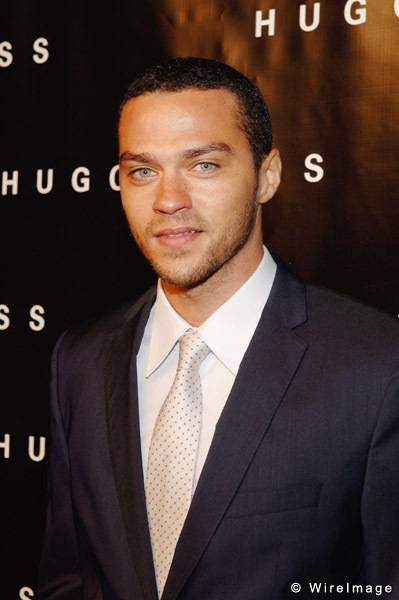
The new (biracial) guy on Grey’s Anatomy?  As soon as he first hit the screen I was like, “I think he’s one of us!”  But I wasn’t 100% sure until I saw Jesse Williams on the Bonnie Hunt Show.  He showed pictures of himself as a child with his (Black) dad.  So cute!  Then and now!!  My friend google led me to some more info about him….

Williams is the son of an African American father and a Swedish mother, and as a teenager, he moved from urban Chicago to ‘lily-white’ suburban Massachusetts.  His interest in acting was sparked, in part, when a film he was writing about this uneasy transition was chosen as a finalist in the Sundance Screenwriter’s Lab.  “It was a big part of my life.  I really rejected that move.  It was a complete cultural shock.”  Williams recalls, “It wasn’t good.  My friends were sh***y, the people were sh***y, the parents were sh***y.  A lot of parents closed the door in my face, so I was like, I don’t need to be here.  I’m not going to try and change you, which, I guess I did try for a while.”- via

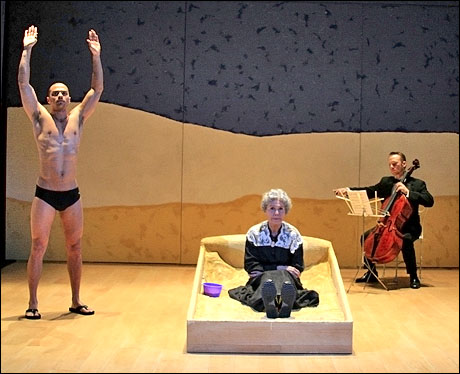
This is from an off-broadway play that Williams did last year.  So wish I had seen it.

Jesse Williams isn’t embarrassed to admit he wasn’t fully aware of who Edward Albee was when he auditioned for him to play the scantily-clad Angel of Death in the revival of The Sandbox that the 80-year-old playwright is now directing (in tandem with The American Dream) at The Cherry Lane. “Actually, I think it helped me, not being so intimidated,” says Williams. “He was so funny, cracking jokes with me even from the beginning. And I didn’t even fully process that he had offered me the job. But it’s all been an amazing experience, getting this immediate response from the audience, and working with this cast. And honestly, I don’t even really know what I look like on stage. I said I was going to go to the gym more often, but I end up just doing push-ups in the basement of the theater and trying to keep quiet.”

Williams’ enthusiasm is understandable, since he has only been acting professionally for a couple of years. While studying filmmaking at Philadelphia’s Temple University, he did some commercial and modeling work, with the occasional acting audition — even turning down a prime soap opera role. “I am a biracial man, and I was supposed to play this tragic mulatto character lusting after a white girl, and I didn’t want to leave school to do that kind of part.” Instead, after graduation, he took a job as a public school teacher in Philadelphia, and then a high-level law firm job in New York — “I was supervising 60 attorneys, even though I’m not a lawyer” — before deciding to focus on acting.- via

Oh, Jesse Williams.  I can’t wait to interview you!