gum springs

Gum Springs: A Slave’s Legacy

By Michael K. Bohn

This is an excerpt from a four-part series on the history and future of Gum Springs, a historically African-American community in the Mount Vernon area.

The founder of Gum Springs, a mixed race man named West Ford, began his life as a slave. His path to freedom started when his owner, George Washington’s younger brother, John Augustine, died in 1787.

West Ford, shown here in an 1858 drawing, founded the African-American community of Gum Springs in 1833. Fairfax County Public Library, Virginia Room.

John’s will left a third of his slaves to his wife Hannah, including a couple named Billy and Jenny, their daughter Venus, and her son West. Upon Hannah’s death in 1801, her will stipulated that young West be freed when he reached the age of 21. She also asked her heirs to inoculate West for small pox and bind him to a “good tradesman.”

Hannah’s son Bushrod assumed ownership of West, then 16 or 17. Also, Bushrod inherited Mount Vernon when Martha Washington died in 1802, and he moved there and took West with him. Following Hannah’s will, Bushrod freed West in about 1805. According to oral family history, West adopted the surname Ford upon gaining his freedom.

Ford remained at Mount Vernon, working as a wheelwright and carpenter. He could read and write, and ultimately became foreman of the house servants and a guardian of Washington’s tomb. In 1812, he married Priscilla Bell, a free black woman from Alexandria. Because of her status, their four children — William, Daniel, Jane and Julia — were also free.
Virginia required freed slaves to register, and the 1831 entry for West Ford described him as “a yellow man about forty-seven years of age, five feet eight and a half inches high, pleasant countenance, a wrinkle resembling a scar on the left cheek ….” Ford was a mulatto, a term of the time that was used to describe a person of one African and one European parent.

Bushrod Washington died in 1829. An associate justice of the U.S. Supreme Court for 30 years, Washington left West Ford 119 acres of land on the south side of Little Hunting Creek.

Ford sold his inherited land and used the proceeds in 1833 to purchase Samuel Collard’s Gum Spring Farm, a 214-acre tract on the north side of Little Hunting Creek. Collard sold the property to Ford for $500 and five annual installments of $84.80.

In 1857, Ford deeded his Gum Springs land to his four children, dividing the tract into equal parts of 52 3⁄4 acres. The property lines of those parcels coincide exactly with many of today’s lot lines, as well as the main north-south roads in Gum Springs — Holland, Andrus, and Fordson.


The present limits of Gum Springs correspond with the 214-acre parcel bought by West Ford in 1833.

By 1860, Ford and his daughter Jane’s husband, Porter Smith, were growing cash crops of corn, oats, and potatoes. The total tract was assessed at $1,800 in 1860, making West Ford the second-most wealthy freedman in Fairfax County.

Ford was near death in the summer of 1863 when staff members at Mount Vernon brought the weakened man back to the estate for his final days. He died on July 30 and The Alexandria Gazette marked his passing: “He was, we hear, in the 79th year of his age. He was well known to most of our older citizens.”

WEST FORD’S FATHER

“George Washington is my fifth great-grandfather,” Linda Allen Bryant declared on the CBS News TV show, “Sunday Morning” in February 2004. Her assertion, which she first made in 1996, created a stir on two fronts — historians regard George as childless, and Ms. Bryant is African-American.

Bryant, a descendent of Gum Springs founder West Ford, maintains that General Washington was Ford’s father. A health writer and pharmaceutical representative in Aurora, Colo., Bryant seemed to take advantage of the publicity surrounding the Thomas Jefferson-Sally Hemings revelations in 1998 to draw attention to her claim.

The issue of southern plantation masters having their way with female slaves has simmered for years, largely among historians. But the controversy boiled over into the larger public consciousness following disclosures of Jefferson’s relationship with Hemings. Mulatto slaves were a common sight on Virginia’s plantations in the 1700s. They were the product of what some men then considered sport, and the slaves viewed as a loathsome manifestation of their plight.

THE FORD FAMILY ARGUMENT

Linda Bryant has written that John Washington sent Venus to comfort his brother George as a “sleep partner” during a visit by George to his brother’s home. The two surviving portraits of Ford show a resemblance to Washington men, and Ford’s freedom and inheritance reflected special status. Bryant expands her version of the family’s allegations in her novel, “I Cannot Tell a Lie.” She called it a “narrative history,” but the dialogue she injects into the subject is all hers.

Knowing that DNA testing resolved the Hemings’s family claims, the Ford descendents have pressed Mount Vernon for hair samples from the General. The Ladies Association has refused the request.

THE LADIES ASSOCIATION’S POSITION

The Mount Vernon Ladies Association has adamantly denied that General Washington fathered West Ford. “The Ford family contention is based on a family tradition,” said Dennis Pogue, Mount Vernon’s associate director of preservation in 2000. “We respect that, but if this is true, there should be other evidence to support it.” Pogue’s polite approach took a sharper edge in 2004, when he said, “there’s not a shred of evidence” to support the Ford family allegation. In late 2009, Pogue again reiterated Mount Vernon’s position.

Linda Allen Bryant continues to press her case in the court of public opinion, but her views are creating less and less interest.

SOURCE

long awaited unfinished second novel

I remember reading Invisible Man at the University of Michigan and being uncomfortable wanting to discuss the biracial aspect in my African American studies class.  I did it anyway and of course came up against some opposition.  But I held my ground.  That was probably my first clue that this topic and the ensuing debate would become a passion of mine.

‘Important day for American literature’

CU prof helps publish Ralph Ellison’s unfinished novel

The Associated Press

BOULDER — Adam Bradley was a freshman in college and taking an African-American literature course when he first read “Invisible Man,” a novel that vivified America’s racial divide.

The book changed his life.

Ralph Ellison’s classic novel helped Bradley explore the complexity of his own biracial identity.

Adam Bradley is an associate professor of English at the University of Colorado in Boulder.

It also shaped the direction of his career, as Bradley became a writer and scholar — spending 15 years conducting the literary detective workneeded to bring Ellison’s second novel to fruition.

Ellison’s incomplete, posthumous piece “Three Days Before the Shooting … : The Unfinished Second Novel” goes on sale Tuesday (2/2/20).

Bradley, a University of Colorado associate professor, is one of two editors who made the book’s release possible.

In the book, a racist, “white” U.S. senator is assassinated by a black man who, it turns out, is the senator’s son. The senator’s surrogate father, who is black, tries in vain to save the senator.

“I’m feeling this tremendous degree of excitement at the prospect of sharing this book with Ellison’s readers,” Bradley said.

Bradley said he’s received e-mails from people who read “Invisible Man” in the 1950s and have since been waiting for a second book from Ellison.

“It’s an important day for American literature,” Bradley said.

He said that because the novel is incomplete, it prompts readers to become co-creators of the fiction.

“It’s a natural response — when presented with an incomplete story — to complete the story yourselves,” Bradley said. “

At the same time, it presents another opportunity to come to terms with indeterminacy.”

Later this year, Bradley will teach a CU graduate seminar on Ellison, and Yale University Press will publish “Ralph Ellison in Progress,” his critical exploration of Ellison’s fiction.

Ellison died in 1994, leaving behind 27 boxes of manuscript for his second novel that included handwritten notes, typewritten pages and 460-some computer files.

Just two months before his death, Ellison told The New Yorker Magazine that he was working on the second novel and that “there will be something very soon.”

As an undergraduate at Lewis & Clark College in Portland, Ore., Bradley became intrigued with Ellison, whose father died when he was a child.

A character in “Invisible Man” tells the protagonist: “Be your own father, young man.”

The rich theme of father-son relationships struck Bradley, who was raised by his white mother and met his black father for the first time in his 20s.

“Ellison was a clarifying voice for me during that part of my life,” Bradley said.

His professor at Lewis & Clark — John Callahan — happened to be a friend of Ellison’s and executor of Ellison’s estate.

Callahan, impressed with Bradley, asked him to co-edit the second novel.

At age 19, Bradley began cataloging Ellison’s writings. He earned his Ph.D. in English and American literature and language from Harvard University before fully devoting himself to the project.

In 1999, Callahan released a small portion of Ellison’s second novel in a work titled “Juneteenth.”

Today’s release of “Three Days Before the Shooting …” will give readers their first view of the most complete and cohesive version of Ellison’s magnum opus.

SOURCE

dumas disappointment

FRANCE: Race row in France after white actor used to play mixed race French national hero

SOURCE

FURIOUS BLACK campaigners in France have protested after filmmakers used a white actor to play legendary mixed race French writer and national hero, Alexandre Dumas.

In a film called L’Autre Dumas, Gerard Depardieu, who is blond and blue-eyed, was given darker skin and curly hair to play Dumas.

FRANCE: Race row in France after white actor used to play mixed race French national hero

Dumas, the grandson of a Haitian slave and the son of a Napoleonic general, was mocked for his African features even as he created well-loved books such as the Count of Monte Cristo and the Three Musketeers. They are also high grossing hit films.

Patrick Lozès, the president of the Council of Black Associations of France (CRAN) told the Times: “In 150 years time could the role of Barack Obama be played in a film by a white actor with a fuzzy wig? Can Martin Luther King be played by a white?”The filmmakers also reportedly credited a fictional white assistant with creating some of Dumas’ well-loved books, The Times newspaper reported.

The campaigners said they are furious because the film not only uses a white actor, but seems to attempt to discredit Dumas’ genius, further bury his black origins and keep black actors off the screen.

“Possibly for commercial reasons they are whitewashing Dumas in order to blacken him further,” the Council said on its website.

hmmm

Initially upon reading this article I thought, “This is great!  Mixed kids today are fairing better.”  By the third time I read it though, I found it laughable.  As if it’s some great revelation that for these individuals to actually embrace who they quite literally are will yield positive results.  Not just for them, but maybe for everyone! Woweee!! Sounds like common sense to me.  Common enough that I came to that conclusion without doing any studies at all.  Well, I guess in all fairness I studied myself.  Anyway, though I realize that because we have historically not been encouraged to do all of this embracing  the notion may be considered “progressive,” I suppose it’s the assertion that this is merely ‘preliminary evidence’ that’s rubbing me the wrong way.  As if the jury’s still out and maybe we’re better off with the twisted way we’ve been approaching this subject for centuries.  On the other hand, maybe I should just be glad that the studies are being conducted at all.  After all, I still come up against vehement opposition to my choice to identify as biracial daily.  On youtube of course.  Which doesn’t have much affect on me personally, but just goes to show that there’s more embracing to be done and that we’re definitely living in a society that needs some positive results as far as shifting the racial paradigm goes.

Multiracial identity associated with better social and personal well-being

SOURCE

Many people assume that individuals who identify with one race should be better off than multiracial individuals who identify with a mixed race heritage. However, a new study in the Journal of Social Issues found that students who reported they were from multiple ethnic/racial groups were more engaged at school and felt better in general than those who reported they were from a single group. Kevin Binning, Ph.D., Miguel Unzueta, Ph.D., Yuen Huo, Ph.D., and Ludwin Molina, Ph.D., surveyed roughly 180 high school students to see how they were doing in school and how they felt in general: were they experiencing stress, isolation, etc.? The study compared multiracial students who reported being from a single racial or ethnic group (i.e. Black, Mexican, White) with multiracial students who reported they were from various racial and ethnic groups (i.e. multiracial, Black and White, etc.).

On several indicators (i.e. happiness, stress, citizenship behavior, and school alienation), students who reported they were from multiple groups were more engaged in school and felt better than those who reported they were from a single group.

Results suggest there may be a positive link between the tendency to embrace a multiracial identity and social and personal well-being.

“The population of multiracial individuals is currently large and is likely to grow over time,” the authors note. “Our study provides preliminary evidence that encouraging such individuals to embrace their multiracial identity may yield positive results not only for them, but possibly for society more generally.”

even more on adoption

This one isn’t so much about the fact that Biracial and African American children are “hard to place”, but about what they need once they’ve been placed. They need help finding their place.  Relationships are key.  Artifacts, not so much.

New research on multiracial adoption questions current practices

While many people who are adopted by members of another race still identify as black or mixed race, many lack the community and cultural connections with others who share those same identities. New research in the journal Family Process suggests that adopted children of mixed race need early and ongoing experiences within the cultural communities of their origin, and with other multiracial adopted persons, to help them to build healthy cultural identities. The labels black, biracial, multiracial, imply that the transracial adopted child has a healthy sense of that identity and all that it encompasses. Dr. Gina Miranda Samuels, author of a study and a multiracial, transracial adoptee herself, remarks, “we must question the meaning and cultural experiences (or lack thereof) beneath these labels. Furthermore, the idea of ‘colorblindness’ is now challenged as an effective approach in transracial parenting.”

Prior research on transracial adoptees often focused on self-esteem and school achievement in comparison to their non-adopted peers, but not in terms of their cultural sense of belonging. This study explores how transracial adoptees with mixed black-white heritage develop a sense of belonging and connection to their black heritage. Samuels also pays heed to how different racial-ethnic communities, and white adoptive parents, can support the identity development of their child by developing relationships in their child’s racial-ethnic communities.

The author asserts that diverse experiences (not confined to events, books, or dolls) can cause a family to become a truly multicultural as well as multiracial, family, and not a family of white parents with children of color.

Most adoptees interviewed for the study told of their search for their biological black fathers and extended black family in order to feel more deeply connected to their black heritage. This finding emphasizes the importance of culturally grounded relationships over cultural artifacts in identity development. Samuels found that there is often a stigma associated with transracial adoption in communities of color which can in turn diminish the “acceptance” of transracially adopted persons in those communities.

Samuels recommends that social workers and child welfare practitioners raise awareness of the importance of these experiences for transracial adoptees and adoptive families, and recognize both the strengths and challenges embedded in transracial adoption and mixed race identities.

SOURCE

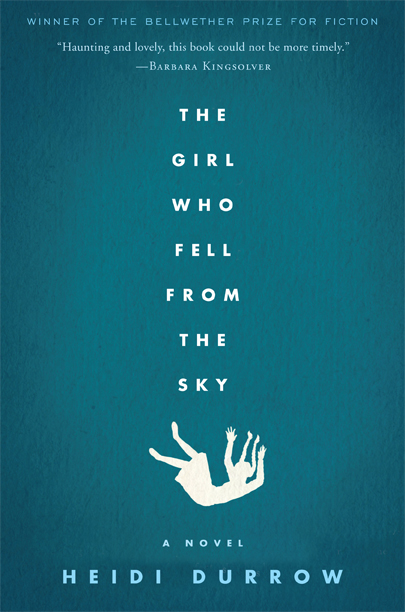
the girl who fell from the sky, or one of the best books ever!

This is exactly how I felt while reading Heidi Durrow’s debut novel The Girl Who Fell From the Sky (available today yesterday wherever books are sold).  Except that I do know her, and I thank God that she’s not dead because I need more from this author/friend of mine.  Heidi has written one of the best books I have ever had the pleasure of reading, biracial subject matter or not.  Truly beautiful, profound, poignant.  All that good stuff and more!  I read (more like devoured) TGWFFTS during an extremely difficult time in my life.  I felt as though the book was saving me.  And reminding me of all the good things I have to offer.  And that no matter what hardships and tragedies we may go through in life, the story goes on- there’s another chapter to be lived.

Though the book is not entirely about being black and white, there are many beautiful passages that honestly touch upon the heart of that matter.  I often find myself lamenting the fact that this biracial identity is so misunderstood out in the world at large.  The Girl Who Fell From the Sky offers much insight.  I sincerely hope that it is widely read.  We all need this book.  Whether we know it or not.

A few of my favorite “themes” of the novel:

Loss of self, becoming the “new girl”, becoming “black”, forsaking white.  Making deals with the self.  Deals which become layers covering over the authentic self.  The self that the biracial kid loses when they feel pressured to be just one thing.  Then eventually you long to be just one thing because no matter how hard you pretend to be whatever it is they want you to be, you can never totally convince yourself that you are exclusively that one thing.  Because you aren’t.  But most people seem completely incapable of understanding that, of allowing that.  So we find ourselves feeling alone and lonely in groups of people.

One of my favorite quotes from the book is, “I think what a family is shouldn’t be so hard to see.  It should be the one thing people know just by looking at you.”  Unfortunately, we’ve been trained to recognize families as homogeneous groups.  Seeing interracial couples is still jarring for many.  Mentally pairing a mother with a child that “does not look like” her can be a major stretch of the imagination.  But it is not an imagined thing for many.  It is a reality.  And for whatever reason that people who don’t have to deal with this don’t seem to understand, we need our families to be recognized.

I could go on and on.  I have pages of notes.  But I hope this is enough to pique your interest and motivate you to buy (and read!) The Girl Who Fell From the Sky.  I’d love to hear what you think!

even if others think differently

This is the first thing I’ve read/heard that makes me want to see Avatar.  Not that that’s the point of the article or anything.  I’m just sayin’.

Supa sista!

Richard Barnett

SOURCE

Philly hip-hop poet Ursula Rucker celebrates black history at Montreal’s Festival Voix d’Amériques

Famed poet and Philadelphia native Ursula Desiré Rucker cannot believe she has never been invited to perform at an event during Black History Month. Ever.

Until now.

“It’s the weirdest thing,” says Rucker, who headlines Montreal’s internationally renowned Festival Voix d’Amériques next week. “Growing up, my family joked it was the shortest month of the year. But today, for me, [Black History Month] is all year long.”

Rucker shot to fame in 1994 after she nervously stood before an audience on open-mic night at Zanzibar Blue in Philly, the City of Brotherly Love most folks these days call “Killadelphia.”

…In many ways, Rucker has become the hip-hop nation’s Maya Angelou – if Angelou’s words were stamped “Explicit lyrics.”

But Rucker isn’t R-rated so much as she is brutally frank about issues ranging from womanhood and slavery to love and politics. For instance, right now many blacks are deeply insulted by John Cameron’s movie Avatar, basically a racist piece of s*** white folks have made the top-grossing film of all time.

Avatar is yet another “white messiah” fable – much like the films A Man Called Horse,Dances With Wolves and At Play in the Fields of the Lord – and Rucker is having none of it.

“The most important thing I try to impress upon my children each and every day is to be who you are even if others think differently,” says Rucker, a married mother with four sons aged 5 to 15. “We went to see Avatar and it was the same old story as Pocahontas: The oppressor comes in and makes everything better. I don’t Facebook much, but I had to post something! My 11-year-old son was like, ‘Must you always be ranting about something!’ But if I don’t speak my mind, then that’s not me!”

…For many white folks, that clenched fist basically means black power. But Rucker is for everybody. In fact, she grew up in a mixed-race family in Philly.

“My mom is Italian and my dad is black from Virginia,” Rucker says. “Growing up was pretty cool except when I was really young. I had issues with it. When I found out everyone else’s mom wasn’t white, I started feeling strange. Sometimes when I was little I’d be embarrassed to go out [with my mom]. Then when I hung out with my mom’s family, one of my aunts would use the term ‘coloured.’ They were old-school.”

“But then in college I got revolutionary. Being light-skinned in the 1980s was interesting in America.” Those years helped shape Rucker and her sweet “song-speak” on her landmark 2001 album Supa Sista before she wowed audiences at the 2005 Amnesty International Australia Freedom Festival. Still, after all these years, Ursula Desiré Rucker has yet to headline a Black History Month event back home in America.

Which is why she is so looking forward to being the guest of honour at the Festival Voix d’Amériques here in February.

“Being a person of mixed race isn’t an issue for me [anymore] – I’m so comfortable with who I am now. I’m proud of both [my racial heritages] but,” Rucker says with typical fire, “I lean [more] to being black in America because that’s where I’m needed most.”

a “half black” rockwell

I think this is so cool.  Just one thing though…. If his father was mixed-race himself, how is it possible for Mr. Claiborne to be half black? Don’t get me wrong, I am not questioning his personal identity.  I would love to have a conversation with him about it.  About how he came to that conclusion.  I used to think that if I could make “half black” kids.  Then one day I realized that… I can’t.

A Rockwell Illustrating a Street-Lit World

By COREY KILGANNON

Jason Claiborne

When Jason Claiborne was a third grader at Public School 187 in Washington Heights, the teacher scolded him for drawing a picture of a naked woman.

“Jason stood up and told the teacher, ‘I come from a family of artists and we have nude paintings on the wall,’ ” recalled his mother, Jane Jaffe, 65, whose father was Richard Rockwell, an artist and a nephew of the famous illustrator Norman Rockwell.

That would make Norman Rockwell — who was born 116 years ago on Feb. 3 — a great-great-uncle to Jason Claiborne, a 33-year-old artist living in Inwood, Manhattan.

If one were to have preconceptions about what a relative of Norman Rockwell would be like, Mr. Claiborne might not match them.

First of all, he is, as he calls it, “half black,” being the product of Ms. Jaffe’s second marriage, to a mixed-race man named Mario Claiborne. Jason Claiborne did not grow up in middle America, but rather in Washington Heights.

Like Rockwell, who died in 1978, Mr. Claiborne makes his living illustrating book and magazine covers. But Mr. Claiborne does not sit at a spindly easel painting sentimental portraits of white-bread middle Americana. He uses a computer to illustrate the covers publications that fall into the so-called street lit genre of publishing: urban tales of city dwellers who deal in guns, drugs, gangs and vice. The characters (and readers, largely) tend to be people of color.

“Norman documented middle America, and I’m documenting the ’hood,” said Mr. Claiborne, president and creative director for Augustus Publishing, which puts out books with titles such as “Ghetto Girls” and “Streets of New York.”

Authors include former prison inmates and gang members, and Mr. Claiborne provides the brash cover art that is more hustlers and hip-hop than the hobos and homespun scenes of “Saturday Evening Post” covers.

“A lot of Norman Rockwell illustrations can be seen as Polaroid images of the American dream,” Mr. Claiborne said. “I’m showing an American dream that’s not as pretty.”

…“Norman drew life as he experienced it, and like him, Jason draws from his personal life experience,” Ms. Jaffe said. “Norman would not be averse to the way Jason’s doing, because Norman was always ahead of his time as well.”

Richard Rockwell — whose father was Jarvis Rockwell, brother of Norman Rockwell — became a notable illustrator for comics and a courtroom illustrator, before dying in 2006. Richard’s daughter Jane Rockwell (later, Jane Jaffe) became a noted dancer and actor and Radio City Rockette, before becoming a lawyer and eventually taking her current position as an administrative law judge for New York State, in Brooklyn.

Mr. Claiborne has been painting on canvas since childhood. His mother raised him as a single parent, and he developed a close bond with Richard Rockwell and spent much time in Richard’s house surrounded by Norman Rockwell’s art and watching Richard Rockwell sketch. Richard Rockwell drew for many comic strips, including the Steve Canyon series for more than 30 years. He was also a prominent courtroom sketch artist, and several of his sketches hang on Mr. Claiborne’s walls.

Ms. Jaffe noted the significance of having an interracial descendant carrying on the Rockwell artistic mantle.

“When my father was on his deathbed, Jason whispered in his ear that he would keep the Rockwell creative juices flowing,” she said.

DESCRIPTION

Read more HERE

people will recode you

I think Professor Daniel hit the nail on the head with this statement from the article below: “There’s really no understanding when a person says, ‘I’m biracial, I’m multiracial,’ ” he said. “People don’t know where to locate you.”  This is exactly why this work, this topic is so important to me.  My sincerest hope is that one day a person can say “I’m biracial/mixed,” and that the majority of Americans will have a basic understanding of what that means to said person.  Right now it’s very vague.  Right now, said person is likely to get a blank stare, a condescending smirk, an accusation of self-hatred and/or denial, and then be “coded” into the category that phenotype makes most logical.  Right now, the majority of people do not understand that the fact that said person comes from two different races and cultures is important to them and informs their identity.  We can’t separate the two things.  Hopefully wouldn’t want to.

Framing mixed race: The face of America is changing

By Jennifer Modenessi
Contra Costa Times

There’s no end to the number of ways people label one another, but what happens when visual cues such as skin color and hair texture don’t fit into categories? Mike Tauber and Pamela Singh interviewed and photographed more than 100 individuals and families (in the recent book “Blended Nation: Portraits of Mixed-Race America,”), capturing the faces and stories of what the authors describe as a group of people dealing with disparity, and living within the gap between how society views them and how they self-identify.

“Some people think I’m just tan and not half-black,” said 10-year-old Isabella Carr. Several years have passed since Isabella, her siblings and her parents, Janine and Evan, who are now divorced, were interviewed and photographed for “Blended Nation.”

In the book, the family talked about the rewards and challenges of their heritage. Being married to an African-American man had allowed Mozée to “see the world through a multicolored lens, and not just the white one I was born with.”

Still, there have been cloudy spots.

“I have people that don’t think they’re my kids or they ask if they have the same father,” Mozée said. She responds that, yes, they are her children and, yes, they have the same father. The conversation might be different with a stranger but Mozée “doesn’t get into those situations much.”

When asked a few years ago by the authors how he self-identified, Mozée’s eldest son, Austin, said that half the time he felt black, the other half of the time he felt white. Now 16, Austin said not much has changed.

“I identify with both ways, white and black,” he said. “I might talk to somebody and nearly make friends and that’s one of the questions they ask: ‘Are you mixed? Are you black and white?’ — partly because of how I look and my personality. I just tell them who I am. I have no problem with that.”

For some, the question never comes. Moses, 29, an Oakland resident, said she’s rarely asked about her ethnicity or background. With her pale skin, long red hair and freckles, not many people guess that her late father was black, Native American and white.

“People don’t see me as mixed” she said. “(They) don’t ask.”

Getting older, Moses said, has tempered her response to being multiracial. Living in the Bay Area, with its rich diversity, has also helped.

“On the East Coast, it was ‘No way.’ It was shock and disbelief,” Moses said. “Here, it ranges from ‘Uh-huh,’ like it’s not a real surprise, to ‘Interesting.’ It doesn’t blow people’s minds.”

Daniel, who for more than two decades has taught “Betwixt and Between,” a UC Santa Barbara course dealing with multiracial identity, has struggled with people’s perception of his mixed-race background.

“There’s really no understanding when a person says, ‘I’m biracial, I’m multiracial,’ ” he said. “People don’t know where to locate you. They know where to locate blacks. They know where to locate whites. They know where to locate Native Americans, Latinos. When you say, ‘I’m biracial, multiracial,’ they say, ‘Who are your people? What does that mean?’ Inevitably people will recode you into whatever they want you to be.”

That’s why self-identification is so important, Daniel said. It’s changing the way people talk about race and where mixed-race people fit in the fabric of American society. “If people really identified with the complexity of their million ancestors, we’d have a really different world,” he said.

Read more HERE

mixed-race avatar

The many faces of race research

by John Goddard
The technology to turn oneself into a mixed-race avatar might be confined to movies, but Brian Banton plays with racial manipulations of himself online.

As a York University graduate student, he explores questions of racial hybridity as related to corporate design. Much of the work is obscurely theoretical, Banton says. “But I also want to be playful. (Mixed race) is a serious issue but I don’t want to be heavy-handed.”

Image

(York University graduate student Brian Banton, who is half-Scottish and half-Jamaican, used an online tool to manipulate his race. The real Banton is top centre.)

Banton was born in Brampton, the offspring of a Scottish-born mother and Jamaican-born father. When visiting his mother’s family, he feels black, he says. When he’s with his father’s family he feels white. He calls himself “mixed” and “biracial” and “just myself,” but he also admits to a low-level underlying anxiety. People have guessed him to be Italian, Greek, Arab and South American, he says, never half-Scottish half-Jamaican.

“There is comfort in being explicitly part of a community,” Banton says. “I’m in this middle space, not fully committed to one side.

Read more HERE