mariah carey


mariah_carey21

mariah_carey_arden1


i just posted a video on youtube (http://www.youtube.com/user/tiffdjones) in which i say something ignorant about mariah carey. in my attempt to eradicate my ignorance while repenting my judgement i came across this blog post…

http://abagond.wordpress.com/2008/11/21/the-blackness-of-mariah-carey/

here’s an excerpt:

Here is what Carey told JET magazine in 1999:

Ethnically, I’m a person of mixed race. My father’s mother was African-American. His father was from Venezuela. My mother is Irish. I see myself as a person of color who happens to be mixed with a lot of things… No matter what you say, when someone asks you the question ‘What are you?’ and you say ‘Black’ and you look mixed, they’re going to ask what you’re mixed with. That’s what always happens.

She sees this sort of questioning as racist:

What I find racist and unfair is that if someone’s half Chinese and half Italian, that’s two different races, why are they not forced to constantly define what they are? When it comes to a Black and a White thing, people are up in arms.


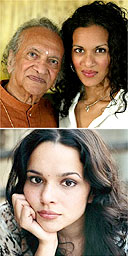
i really enjoyed reading it. i love the last bit of the excerpt. i mean, i doubt that people go around one-dropping norah and lourdes.


shankars3 400_p_06mo_cleonlourdes_080724_kmazur_79614058

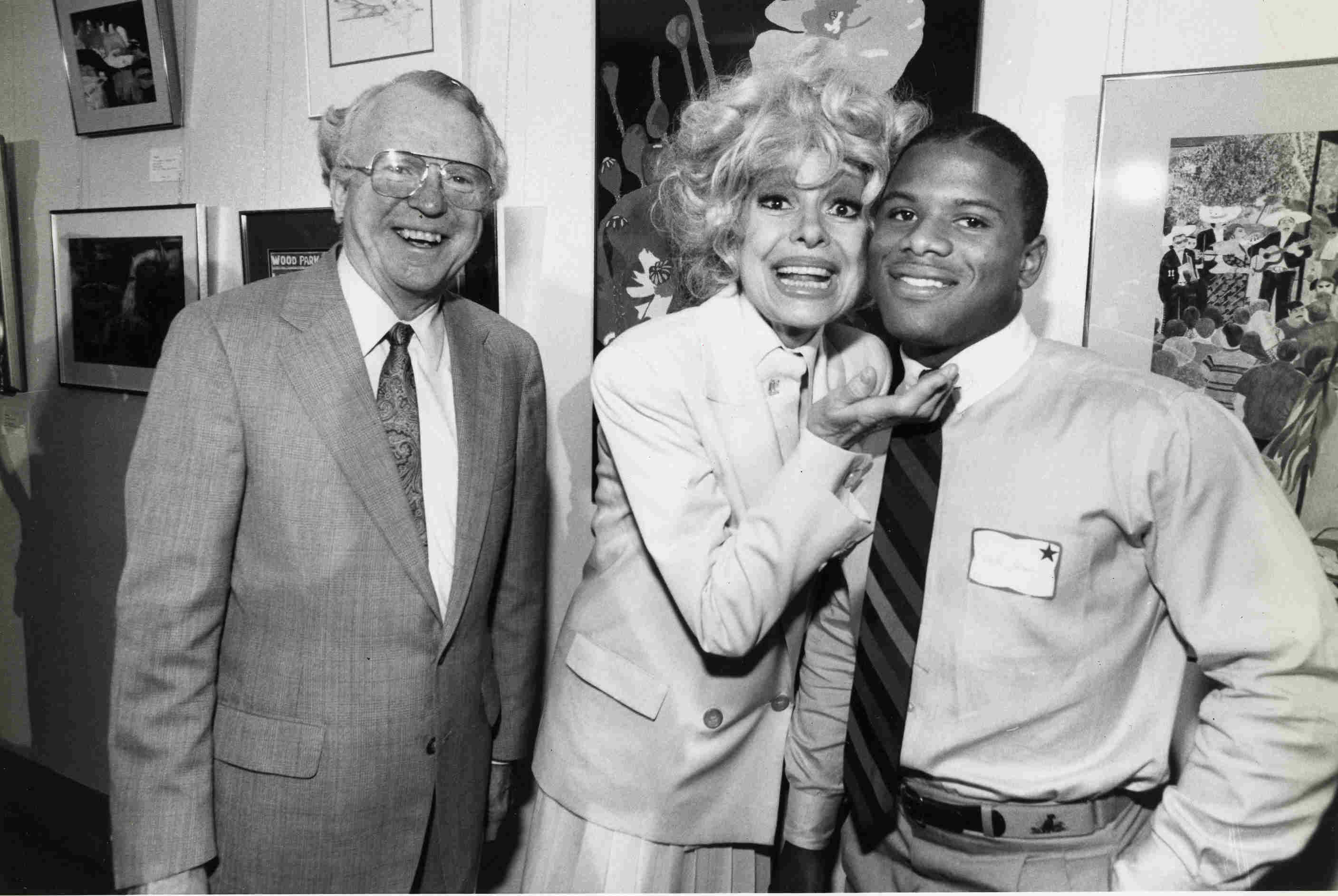
carol channing

channing1


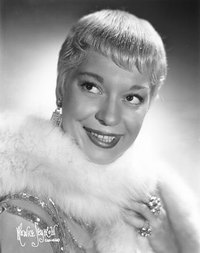
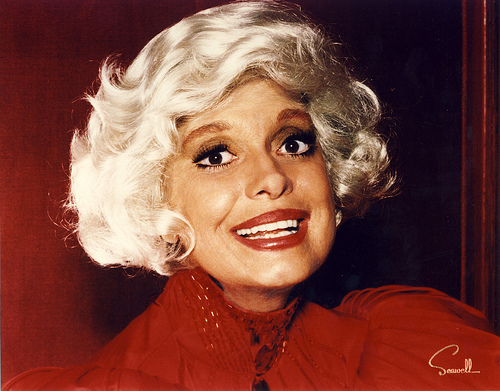
In her autobiography, Just Lucky I Guess, the 81-year-old performer told the story of the day she learned that she is biracial.

She recalled that she was 16 years old and heading to college when her mother told her that she was “part Negro.”

“I’m only telling you this,” Channing recalls her mother, Peggy, saying, “because the Darwinian law shows that you could easily have a Black baby.”

Her mother continued by explaining Carol’s unique look. She told the doe-eyed performer that because of her heritage that was “why my eyes were bigger than hers (I wasn’t aware of this) and why I danced with such elasticity and why I had so many of the qualities that made me me.”

The revelation didn’t bother Channing, who said, “I thought I had the greatest genes in showbiz.”

George Channing, Carol’s father, was the son of a German American father and a Black mother. While still very young, his mother, who worked as a domestic, moved him and his sister from his birthplace of Augusta, GA, to Providence, RI, where she thought people would never recognize his “full features.”

Channing’s paternal grandmother didn’t raise her father and his sister because she “didn’t want anyone to see her around her children” because she was “colored,” the performer surmised.


2878926257_3940b1c6231


TRANSCRIPTS

CNN LARRY KING LIVE

Interview With Carol Channing

Aired November 27, 2002 – 21:00 ET

…….

KING: Lets start early in that truth. Your father was black. 

CHANNING: No, he was not black. I wish I had his picture. He was — he was a — his skin was the color of mine. I don’t know maybe. Yes, it’s all right. Well any, no. My father — you read the tabloids, don’t you? 

KING: No, it says in my notes your beloved father, George Channing, a newspaper editor, renowned Christian Science lecturer listed as colored on his birth certificate.

CHANNING: Yes, and the place burned down, but nobody ever knew that. But I know it. Every time I start to sing or dance, I know it, and I’m proud of it.

KING: So he was black?

CHANNING: No, He had in — there was a picture in our family album and my grandmother said — I never saw them. My grandfather was Nordic German and my grandmother was in the dark. And they said no that was — she was — and I’m so proud of it I can’t tell you. When our champion gave me that last third (UNINTELLIGIBLE) on “Hello Dolly!” Again. No white woman can do it like I did. KING: So you’re proud of your mixed heritage?

CHANNING: Very, when I found out. I was 16-years-old and my mother told me. And you know, only the reaction on me was, Gee, I got the greatest genes in show business.

KING: Some people years ago discovering that might have been disturbed by it?

CHANNING: Yes, years ago because when I found out about it, you don’t want to do that.

KING: You don’t say it.

CHANNING: You don’t say it. There’s a lot of it down South.

KING: People are ashamed of it.

CHANNING: I’d proud of it.

KING: I’m glad to hear it. 

CHANNING: I really am. I mean look, what makes you, you? You don’t know. None of us knows our heritage. Not in the United States. 

KING: We’re all immigrants. 

CHANNING: Exactly, this is the changing face of America. I’m part of it. Isn’t it wonderful? 

KING: You damn right. 

CHANNING: I’m young again.

………

Tiffany: She’s proud, but she can’t name “it”….

a biracial committee in 2009

Remember how I discovered that until the 1990’s biracial described groups of black and white people, not individuals or people of mixed-race?  Well one of those groups still exists.  In fact 6 of them do in Florida.
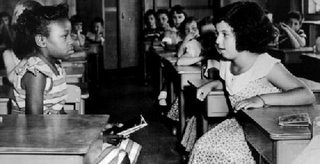
Orange school desegregation: What is biracial committee?

What is it required to do? Its bylaws require members to hold an annual meeting in September and to meet on a regular basis on a schedule that they set themselves. The members are also to meet whenever the committee chairman or superintendent needs them to, such as to review the attendance lines for new schools that open in the fall.

Why are members required to be only black or white? When a group of parents filed a suit against the district, Hispanics were not included in the lawsuit. Blacks were separated from whites, and several black parents sued for their children’s rights to equal access to public schools.

What are the details of the case? A group of Orange parents first sued the district in 1962, spurred by its refusal to let Evelyn R. Ellis attend Boone High. Her father, John P. Ellis, was president of the Orange County NAACP. The lawsuit evolved over the years, with different parties, including the NAACP, signing on. In 1964, a judge declared Orange must desegregate its schools. During that time, Orange often ignored the order and at times deliberately flouted it. In 1971, for example, School Board members voted to go to jail rather than accept busing for racial balance. Later, members agreed to move 900 students around the county. Orange has largely ended that practice for all but about six schools.

http://www.orlandosentinel.com/news/education/orl-asecracebox08040809apr08,0,4849860.story


segregation1

one of the first articles of it’s kind

This article is a little long, but I find it very interesting.  I especially love the statistics on white mom/black dad vs black mom/white dad births.  The very first story told by a mother reminds me of the summer when I was 7 or 8 and my new “best friend” told me she couldn’t play with me anymore because I’m black.  I also like the letter to the editor included at the end.  I think this story often gets told today in a needlessly somber tone.  The picture at the end is just cute (you know I like to include a picture with every post), it isn’t related to the article. I couldn’t resist a munchkin mixie and a cavalier king charles spaniel. The stuff my dreams are made of!

For Mothers of Biracial Children, Prejudice Mars the Pride

Meredith Higgins remembers the first time she crossed the color line for the sake of her daughter, Anna – the child of a black father and a white mother. Higgins asked a neighbor, a white woman like herself, if the woman’s daughter could play with her 5-year-old. The neighbor said it wasn’t possible just then but promised to call to get the two girls together.

She didn’t call, and when Higgins ran into the woman at a supermarket, she was shunned. Higgins later saw the woman’s daughter playing with other children – all of them white.

“I guess I would say this is one of those kinds of experiences that I predicted was possible,” Higgins said. “I did not explain {to my daughter} that it might be racial . . . . It was more like a disappointment.”

On Mother’s Day 1991, an increasing number of women in the Washington area and across the country are mothers to biracial children, and many of them are forced to grapple with discrimination and racism to protect their sons and daughters. These mothers say they suffer stares in shopping malls and restaurants, snide comments, the coolness of relatives who first don’t understand why they would marry outside their race and then reject the children.

And after all of that, they say, they ultimately must face the questions from their children: “Who am I? What am I? Where do I fit?”

The children “do have problems explaining to friends who they are,” said Janice Lorenz, of Prince George’s County, the black mother of two children whose father is white. “I tell them, `You know you are an interracial child, and for some people that may be a problem, but you are who you are.’ The natural instinct is for mothers to protect. The bottom line is we can’t always protect, so we have to equip.”

According to the National Center for Health Statistics, the number of births to interracial couples has increased dramatically since 1968, when such figures were first recorded. Twenty-three years ago, 7,244 babies were born to white mothers and black fathers. By 1988, the latest figures available, that number had jumped to 33,875.

The increase was as sharp for births to black mothers and white fathers. In 1968, there were 2,375 of these babies; by 1988, the number had grown to 17,070. There have been similar increases in the number of births to Asians, Hispanics and American Indians who had children with whites. Most of the interracial children, according to the statistics, are born to black and white couples.

The latest census figures documenting the number of interracial families in the Washington area are not yet available, but officials say the number of interracial families here is rising steadily. Many parents of biracial children say they have moved to this area because of its ethnic diversity and because it seems more tolerant.

During the past few years, several organizations have sprung up across the country to provide support for the swell of interracial families. Many mothers use them so that their children can see there are others like them.

“The mother has a lot of responsibility trying to help the child deal” with being biracial, said Godfrey Franklin, a psychologist at the University of West Florida who counsels interracial couples. “She is the one who usually must deal with all the emotions and the pain and agony from Day One.”

Several mothers of biracial children in the Washington area say they have become bridges between races at a time when race relations seem to be deteriorating. “Under this roof,” says Lorenz, “there is a loving coexistence of two races.”

In interviews, four women talked about their special kind of mothering.

One morning out of the blue, Lori Darden’s 3-year-old daughter announced she wanted her toast black like her daddy. Darden, who is white, was startled but then explained to her daughter her uniqueness.

Darden, 30, took a cup of black coffee and a cup of cream and then poured them together. The liquid became brown like her daughter, Leandra, who could see why she is not exactly the color of her parents.

Darden, who lives in Springfield, says people often stare at her, Leandra and a 10-month-old son, Jay Spenser, and some “ignorant” people tell her how nice it is for her to have adopted black babies.

“It makes me so angry,” she says. “I carried these children for nine months. The point is they are my children.”

Darden, editor of the Fairfax County employees newsletter, says something as simple as buying toys is a challenge.

“I would love to go into a Toys R Us. But you go in those stores and you see black dolls and white dolls,” she says. “My daughter is not really either of those. She is both.” Darden has found catalogues that provide toys for multiracial children. In some cases, parents can send in samples of the color for the toys.

Having biracial children, says Darden, has made her more sensitive to race issues. “As a white woman, I encounter very little prejudice. Every day of my life is easy. You can go through life with blinders on and think the world is hunky-dory. But when you have a biracial child, you see how people react to blacks.”

Sometimes, she says, it hurts.

Carol Anderson, 47, a tiny white woman with cropped hair, has two daughters. One is the color of ivory and has curly brown hair. She has Anderson’s facial features. The other is bronze, the color of caramel. She looks nothing like her mother.

Hilary, 17, and her sister, Caroline, 15, call themselves black. Caroline, the darker daughter, says she likes to shock people. “When I walk in someplace with my mother, I like to say, `Mom,’ and people say, `Huh?’ “

Anderson says it doesn’t matter what her daughters want to be; if they want to be black, she says, that is their choice. Most important, she has tried to teach them to be comfortable with themselves.

A lawyer and development consultant who directs Capitol Hill Group Ministries, Anderson says she has always been a political person, a rebel, a woman who was not “enamored” of her white culture.

“You have a handful of mothers here who have chosen to make a positive statement across race lines,” says Anderson, who lives in Northeast Washington. “As W.E.B. Du Bois said, the issue of the 21st century is the issue of the color line. And I believe that wholeheartedly.”

Over the years, Anderson recalls, there have been a few poignant times when the color line issue was raised between Caroline and Hilary.

Once, she says, she and her daughters were driving across the Mexican border into the United States when a customs official singled out Caroline. As Anderson and Hilary, the fair-skinned daughter, waited in the car, the agent interrogated Caroline about her nationality. Anderson remained silent.

When the family pulled away, Anderson said she discussed what happened and her daughter knew she had been targeted because she was the only visibly black person in the car.

Meredith Higgins has made sure her daughter, Anna, 10, knows the strong roots of both her cultures.

Of the grandmother who came from Germany as an orphan. Of her father’s ancestors, who were slaves and who graduated from universities in the late 1800s, when that was unusual for blacks.

“The challenges are simply to make sure that you are not completely immersed in your own ethnic background to the detriment of the child,” says Higgins, a senior manager of a health association.

Higgins, 48, says she feels blessed to be living in the Washington area because of its diversity. Her family attends All Souls Church in the District, where there are a large number of families with biracial children.

At home, Higgins says, her family doesn’t concentrate on being different. Anna, who is the color of honey, skips across the living room of the Silver Spring home. With both arms, she squeezes her mother. “She’s a wonderful mother,” she announces. She turns to her black father and kisses him on the cheek. “We’re normal. We’re happy,” she says.

“Years ago,” says Higgins, “people would say if you are in an interracial marriage, your children would suffer.”

Anna chimes in: “I don’t see me suffering. We’re normal. We really are.”

Janice Lorenz, 42, sat across from her son recently and tried to get to the bottom of why the 14-year-old said he sometimes feels self-conscious about being in certain public situations with his white father.

He talked of how when he stands in line with his father at McDonald’s the cashier assumes they are not together, and how people stare when he calls to his father across a store.

“I feel proud of who I am, but I have difficulty explaining,” he says to his mother. “You know how you say I should feel proud when people ask if he’s my dad? I feel it’s hard to explain.”

Lorenz, a transportation planner in Northern Virginia, listens patiently and encourages her son to dig deeper into his feelings.

“You are assuming the worst,” she tells him. “That’s not healthy . . . . You don’t have to defend who you and your dad are.”

DeNeen L. Brown. “For Mothers of Biracial Children, Prejudice Mars the Pride.” The Washington Post

This was posted a week later…

– Theresa Stringfellow How About the Upside? When we participated in an interview for your Mother’s Day story on mothers of biracial children {May 12}, we didn’t deny the few negative experiences. But while your story did have some high notes, we thought this would be a Mother’s Day piece about special mothers of dynamic children. Instead, the article perpetuated the misconception that interracial relationships are always fraught with problems. Also, contrary to your headline, mothers of biracial children would never let racism or prejudice lessen their pride. These mothers deserve praise, and they find their rewards in the wonderful children they raise.

cutiemulatta2

symmetry

I came across this article a while ago and have been thinking about it a lot since that “Plight of Mixed-Race Children” post a few days ago. I am generally still offended by that Freakonomics blog article, but maybe it’s a harsh reality that I don’t want to acknowledge. The study Levitt spoke of did have just over 90,000 participants. The “more attractive” thing really stuck out to me as being inappropriate.  Then I remembered reading about this UCLA study…

scbiracialgfxsmall_t135


11-05-2002

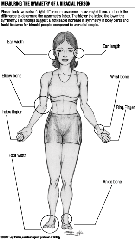
(Daily Bruin) (U-WIRE) LOS ANGELES — A recent study by University of California — Los Angeles Assistant Adjunct Professor of Biology Jay Phelan concluded that biracial people are perceived as more attractive than “uniracial” people because they have more symmetric features. 

Symmetry, according to Phelan, reflects an organism’s developmental stability and is strongly associated with longevity, health and fitness….

Symmetry, he found, was greater in heterozygous organisms. In other words, organisms are more symmetrical – and therefore potentially more “fit” – when their genes have two different alleles (for instance, one dominant allele and one recessive allele rather than two dominant or two recessive alleles). 

Crossing organisms from different populations, he believed, would result in “hybrid vigor.” The theory was that their heterozygosity was making them stronger and healthier. 

Genes produce enzymes that assist in bodily processes. When two slightly different enzymes are produced by heterozygous genes, the organism is “covered under a wider range of conditions,” he said. 

Most humans are heterozygous in about 20 percent of their genes. 

Assuming that biracial people are more heterozygous since they come from different populations (despite the debate surrounding the relative amounts of genetic variation within and among populations), Phelan started by measuring the symmetry of 99 UCLA student volunteers who were either biracial or uniracial. 

Biracial people were defined as those whose mother and father were of different races, but each of their parents were uniracial. Both parents of the uniracial subjects were of the same race. 

Phelan’s study concluded that biracial people were significantly more symmetrical than “uniracial” people. All 25 of the least symmetrical subjects were from uniracial groups, which were either Asian, black, Hispanic or white. Seven of the eight most symmetrical subjects were from biracial groups (Hispanic-white, Asian-white, black-white or Asian-Hispanic). 

In addition, Phelan found that symmetry was about the same for all uniracial people no matter which group they were in, and about the same foall biracial people, regardless of racial background. 

Phelan, however, did not want to stop merely with symmetry. He hypothesized that those who were more symmetrical would also be perceived as more attractive. 

To determine attractiveness, 30 people then rated photos of the subjects who had been measured for symmetry on attractiveness, ranking them from one to seven (seven being the highest). 

The results: Biracial people were perceived as significantly more attractive than “uniracial” people. 

Emily Shin, a third-year psychology student and president of the UCLA Hapa Club, appreciates Phelan’s work. 

“I think that it’s really great that people are doing research on hapa people, generally a group that’s marginalized,” Shin said. 

She added, however, that there is some dissent in the hapa community about research like Phelan’s, which perpetuates the stereotype that hapas are on average, more attractive people. 

“It makes hapa people, especially hapa girls, feel very objectified,” Shin added…..

David Zisser. “Study indicates mixed race, physical symmetry correlate.” University Wire. 2002.

I don’t know what I think of all this just yet. Right now I’m thinking, “If a majority of mixed-race children are struggling as Levitt’s article (which i initially brushed off as ridiculous mostly because of the attractiveness issue) suggests, then we need to help them because it doesn’t have to be that way.”

plight?

ny_times_chi_fire_mhsThanks to The Topaz Club this offensive NYTimes Freakonomics blog post (dated 8/12/08) was brought to my attention…

The Plight of Mixed-Race Children

What’s it like to grow up with one parent who is black and another who is white?

In a recent paper I co-authored with Roland FryerLisa Kahn, and Jorg Spenkuch, we look at data to try to answer that question. Here is what we find:

1) Mixed-race kids grow up in households that are similar along many dimensions to those in which black children grow up: similar incomes, the father is much less likely to be around than in white households, etc.

2) In terms of academic performance, mixed-race kids fall in between blacks and whites.

3) Mixed-race kids do have one advantage over white and black kids: the mixed-race kids are much more attractive on average.

The really interesting result, though, is the next one.

4) There are some bad adolescent behaviors that whites do more than blacks (like drinking and smoking), and there are other bad adolescent behaviors that blacks do more than whites (watching TV, fighting, getting sexually transmitted diseases). Mixed-race kids manage to be as bad as whites on the white behaviors and as bad as blacks on the black behaviors. Mixed-race kids act out in almost every way measured in the data set.

We try to use economic theory to explain this set of facts. I can’t say we are entirely successful. If we had to pick an explanation that best fits the facts, it would be the old sociology model of mixed-race individuals as the “marginal man”: not part of either racial group and therefore torn by inner conflict. One reason this model is largely consistent with our facts is because it makes so few strong predictions that it is hard to falsify, which isn’t really fair to the competing models.

http://freakonomics.blogs.nytimes.com/2008/08/12/the-plight-of-mixed-race-children/


My jaw dropped.

Then I wrote this…

Mr. Levitt,

I was deeply offended by your “Plight of Mixed-Race Children” blog post. Clearly the “tragic mulatto” was already a joke to you when you set out to determine how the young ones are doing.  First of all, the “more attractive” stereotype is becoming as irritating to me as the blacks and fried chicken thing.  If you took this seriously you would look beyond that to find out if those “attractive” children perceived themselves that way.  Or did they feel physically flawed somehow because they did not fit in easily with either their black or white counterparts. Did their peers regard them as attractive? I believe that this more attractive thing comes in to play after adolescence and should have had no place in your “study”.

You also seem to believe that all of these young black and white people have white mothers and black fathers.  Black fathers being absent and poor, generally leaving white mothers on their own to care for their children in lower class surroundings. That’s what I infer from this crappy post.  Come the f*** on! Many biracials have a white father and a black mother. Did the possibility of that even cross your mind? I am left to assume that this white man, Steven D. Levitt, wouldn’t dream of procreating with a black woman and that you judge the white men who would as somewhat less than yourself.

Where on Earth did you get your “data”? What questions exactly were you trying to answer? Why not interview biracial adults about their adolescent experience?  Why do you even care what it’s like to grow up black and white?  Clearly you do not.

I am 32. I have a black mother and a white father. I grew up in the wealthy suburbs of Detroit.  I excelled academically and artistically. I earned a full-ride to the University of Michigan without trying very hard.  During my adolescent years I did not have sex, a cigarette, a sip of alcohol, or get into a fight.  I did not come away from my adolescent experience thinking “That was kind of rough, but as least I am more attractive than all those ‘monoracial’ kids.” I have a vlog on youtube called “mulatto diaries”.  Should you someday find that you truly care to know what it is like to grow up in America with a black and a white parent, watch it. You will find the stories of many other biracial people there. You don’t have to take only my word for it.

fyi: I’ll be posting this on my blog mulattodiaries.wordpress.com.

Sincerely,
Tiffany Jones