improving the nation’s racial pains

This little article means a lot to me.  It brought some things into focus.  Beyond defusing what I perceive to be the invisibility of the “mulatto,” this race work is important to me because I recognize the truth in the statement “We don’t know how to know each other.”  It pains me because I know how to know each other.  I am each other.  And I know that outside of the dogma of race, there ain’t much difference between anybody.  Oh, and of course, I’ve gotta get this book.

Author takes on difficult race issues

By Bradley Schlegel

WHITPAIN — Growing up in a home with racial preconceptions, Lauren Deslonde said she lacked the knowledge to mount a credible challenge.

“We never talked about race,” said Deslonde, a Lansdale resident and psychology major at Montgomery County Community College.

She said Bruce Jacobs’ book can provide the proper tools to help her 5-year-old biracial daughter learn to improve the nation’s racial pains.

Jacobs, the author of “Race Manners for the 21st Century: Navigating the Minefield Between Black and White Americans in an Age of Fear,” explained Tuesday to an audience of students, faculty and staff that issues between races will improve once people begin to relate on a more personal level.

“It’s a big problem,” he said. “We don’t know how to know each other. In this country, that idea is lost. Or we’ve never had the ability to get that gift.”

The book provides strategies to help people better understand each other, according to Jacobs, who appeared during a Presidential Symposium held in the Science Center auditorium.

“Bruce Jacobs tells it like it is,” said Karen A. Stout, the college’s president, in her introduction. “And he helps all us do the same thing with clarity.”

Discussions over race — which evoke feelings of shame, rage and fear in African-American and self-identified white people — are often unproductive, according to Jacobs.

“This is a hard issue,” he said. “We’re working against a headwind.”

Two of the many impediments include our nation’s history and the media’s role in coarsening the discussion to maximize profits, according to Jacobs.

He said many citizens are still in denial about a culture founded on human slavery and genocide of the Native Americans.

“This gets in our way every day,” said Jacobs, a self-described writer, poet and musician. “All I want to know is, ‘Are you down with repairing the damage or not?'”

On the media, he said companies have replaced journalists and commentators with “rage talk radio” that “scares the pants off of anyone” wishing to have a thoughtful discussion over race and politics.

“That has nothing to do with democratic discourse,” Jacobs said. “It’s a false standard.”

He presented five strategies to make conversations more survivable and rewarding: embrace a person’s goodness while challenging bad ideas; be prepared to occasionally speak inappropriately; talk to people as they show themselves to be; don’t wait for a major issue to communicate with people of another race; and don’t shy away from discussing difficult issues.

The symposium helps students learn to relate to people of other races, according to Sam Wallace, a cultural geography professor at the school.

“Many of my students have not had much contact with the outside world,” he said. “Some have never been to Philadelphia.

SOURCE

denying the rich history of america’s multiracial realities

these are my sentiments exactly, jason haap!  i try so hard not to judge or be offended by anyones’ choice to self-identify as they choose, but…. come on obama!!  how will we ever move forward if the most recognized living ‘mulatto’ doesn’t think it matters that he is one?  how will we eradicate the vestiges of the one-drop rule, which implies that black blood is a pollutant, and that if your drop is visible you better forget about the rest and fall in line at the back with the other tainted ready to fight the good fight?  if we can’t get rid of that idea, then how will we get to the point where we see ourselves in everyone because we are indeed all mixed up and there is no inherent opposition.  i have a feeling that we as a human race could reach untold heights if we redirected the energy that we (perhaps unconsciously) spend on categorizing/demonizing/stereotyping/judging/comparing/othering toward a more inclusive, unified system of brotherly commune. like, no fighting, no distrust, no base-less fear. what!? i don’t even know how to say what i mean. maybe there’s not a word for it. yet.

Unfortunate message to our mixed-race children

by Jason Haap, an educator, citizen media activist, and father of two multiracial children

SOURCE

The “one drop” rule is alive and well for America’s multiracial children! Last week, President Obama gathered fanfare from national media. Despite the obvious existence of his white mother, he checked just one box on his census form regarding his racial identity: “Black, African Am., or Negro.” By ignoring the option of checking multiple boxes (or of writing in a word like “multiracial”), Obama sent an unfortunate message to America’s mixed-race children.

People may have the freedom to pick racial identities individually, but Obama’s public actions as president of the United States deny the rich history of America’s multiracial realities, hearkening back to a racist period that said one drop “black” makes a person “all black.”

I remember, a few months ago, playing with my kids at the Cincinnati Children’s Museum. I heard one boy point at my oldest son and call him “that black kid.” Certainly my children are more brown-skinned than me, but they are also more fair-skinned than their mother. That’s because I have multiracial children, and I think it’s too bad their racial identities are being formed by a backward-thinking American culture before they are even old enough to notice skin color might mean something in the first place.

Despite the mythologies some of us have been raised to believe, there is nothing “stronger” about black blood. It does not “take over” a baby’s genes if one parent is black and the other white. These ideas were promulgated by racists who wanted to scare white people into thinking their genes would be obliterated by the act of intermixing with blacks. But it’s just not true. It’s bunk science and even bunkier sociology.

When the Race exhibit came to the Cincinnati Museum Center, I learned how some cultures have radically different ways of articulating race – such as in Brazil, where dozens of descriptive terms are used instead of polarizing opposites like simply “white” or simply “black.” Instead of helping move our racial understandings into the 21st century, Obama’s public actions have placed us back into the old racist thinking of the one drop rule, and that’s a shame.

if you look like one, you could be another

Brilliant!!! I love everything about this!  I’ll admit that I felt what I would have described back then as “weird” about my (mixed)race.  Looking back, I think “shame” fits the bill.  I’m so happy to hear that acknowledged, and even happier that feelings are changing to pride.  Mine included.

Danbury’s multi-racial students to star in film

Eileen FitzGerald

DANBURY — The three boys wore jeans and long-sleeve T-shirts. The two girls each wore a dozen bracelets and necklaces. They looked like typical students in the library media center at Broadview Middle School.

It was their differences, however, that brought them together Monday. They’re subjects in a documentary in which Western Connecticut State University professor Marsha Daria is examining the identity and social relationships of multiracial children.

Daria is interviewing elementary, middle and high school students to help educators and teacher training programs consider multiracial students in the curriculum and school issues.

The sixth-, seventh- and eighth-graders carry the roots of about a dozen ethnic heritages, including African American, Spanish, Italian, Scottish, Irish, Chinese and Portuguese.

“It’s cool to be two races, because you get to experience two different cultures and those countries,” sixth-grader Jonathan Garcia, 11, said.

Jonathan, who is half Chinese and half Puerto Rican, was a little nervous to be interviewed but glad to express his feelings about the issue for the movie.

“This gives me a chance to say that what race you are doesn’t matter. If you look like one, you could be another,” he said. “Sometimes they say I am Asian, but what bothers me is that I’m not all Asian. They say things about Asians that I don’t think are nice.”

Sometimes he points out people’s negative comments, and they acknowledge they were wrong. Other times he ignores what people say.

Eighth-grader Kiani Oliveira, 14, who is Portuguese, African American, Indian and Scottish, wanted people to know that multiracial people are unique.

“Like we look different. Our skin color is different, and our hair and eyes can be different — unique,” she said. “It’s not harder to be multiracial. My friends take me as I am and think I’m cool.”

A Western Connecticut State University Professor, Marsha Daria, is filming a documentary on multiracial children. Daria and the film crew where filming at Broadview Middle School in Danbury on Monday March 29, 2010. From left, cameraman Scott Volpe of WCSU media services, Broadview student Kiani Oliveira, 14, and Professor Marsha Best. Photo: Lisa Weir

Daria is doing this project during her sabbatical as an education professor at WestConn, where she has taught since 1995. Her film crew is from WestConn –Rebecca Woodward, Scott Volpe and Renato Ghio– and she consults Emmy award-winning producer and director Karyl Evans.

“It’s critical to examine the ways in which we talk about race and ethnicity. There is a change in how kids view themselves. They used to be ashamed, but now you see a lot of pride. They want people to know who they are,” Daria said.

“It used to be a marginalizing experience, but not anymore. They feel special.”

Daria will use the results of the 2010 Census in the documentary, which are likely to be more specific about race than the 2000 census, in which seven million people reported they were of mixed race.

“I want to educate. To bring awareness to kids who are mixed race. We do become a better country when we accept each other,” she said. “There are good and bad in every group. We should accept people for who they are.”

Seventh-grader Robert Best, 12, who is Italian, African American, Indian and Irish, hopes the film will help people understand that multiracial kids are just like other kids.

“People think African-American people steal and white people are laid back, and I’m supposed to be like both of them, but I don’t like that,” he said. But he wouldn’t want things to be different for children who are multiracial, because it would put them in a separate group.

Seventh-grader Marissa Segura, 12, who is Costa Rican and Italian, and Nasir Fleming, 13, an eighth-grader who is Puerto Rican, African American, Italian, Native American, and a little Irish were also questioned.

The students, all American born, said they mostly celebrate American holidays and eat all types of food, including traditional food from their dominant cultures. They usually talk about typical teen topics — things like school and music — with friends from all over.

Marissa has friends from all over and wishes people would stop guessing and ask what nationality she is.

“All my friends are from different places,” she said. “My sister said I never have a friend who is actually from America. I just get along with a lot of people and have a lot of friends.”

Nasir said he’s annoyed when people think he is only African American.

“When I was younger it made me feel sad, but now it’s just whatever,” he said. “Some friends aren’t cool about who they are, because society tries to make them feel they are nothing.”

It might be easier to stay quiet when you are classified a certain way, he said, “but if you want to keep your rights you should explain who you are.

“People who are diverse are like a little community, but we’re all different,” Nasir said. “If you had to find a similar thing about us, it’s that we don’t like being titled one thing. It’s not OK to be judgmental, to stereotype.”

SOURCE

the greatest negro?

I immediately thought of Obama while reading this article and am quite, quite certain that most agree that he is indeed a “Negro.”  That there was debate around Douglass’ negrocity ( I like to make up words sometimes) is of interest to me because I’m fascinated by the fact that mulatto was a valid and recognized identity in America before 1920.  Then it wasn’t anymore.  The ranking of Negroes from greatest to least strikes me as ludicrous.  That being said, the question, “Will Obama go down in history as the greatest Negro who ever lived?” popped into my head.  And then I thought that seeing as he isn’t one “in the full sense of the term,”  MLK probably outranks him.  How quickly I went from judging the system of rankings to ordering some myself!

Knoxville’s farewell to a civil-rights icon

By Robert Booker

SOURCE

A large crowd packed into Logan Temple A.M.E. Zion Church to honor the memory of the country’s best known civil-rights advocate. Among them were Knoxville’s black elite.

It was Feb. 25, 1895, and they had come to say farewell to Frederick Douglass, who had been born into slavery and died six days earlier.

Two days before the memorial, The Knoxville Tribune had its say about Douglass and wondered if he was a true Negro: “If we consider Douglass as a Negro, he was the brightest of his race in America. But he was not a Negro in the full sense of the term. Although born a slave, his father was a white man and his mother was a mulatto. Born a bastard and a slave, he rose to distinction and influences, and there were those among a class of white people who delighted to honor him.

“There are those who class him as the greatest Negro. This estimate of him is extravagant and unwarranted. In the first place he was not a Negro, and in the next place he is outranked by other Negroes. The greatest Negro who ever lived was Toussaint L’Ouverture the Haitian general, whose death was and will always be a dishonor to France. No Negro in this country ever approached L’Ouverture in intellect.”

L’Ouverture (1744-1803) was the Haitian independence leader who took part in the slave revolt in that country in 1790. He joined the Spaniards when they attacked the French in 1793, but fought for the French when they agreed to abolish slavery. By 1801 he had virtual control over Hispaniola, but was arrested and died in a French prison.

The blacks who spoke at the Douglass memorial took issue with the Tribunes’s assessment of him.

Attorney Samuel R. Maples said he wanted “to correct a statement in one of the local papers that Douglass boasted of his white blood and denied being a Negro. This was not true. Douglass never denied being a Negro. He was very proud of his race.”

Attorney William F. Yardley, who had introduced Douglass when he spoke here at Staub’s Opera House Nov. 21, 1881, said Douglass “Was the victim of the great American curse – slavery. He slept with dogs and ate the crumbs from his master’s table, but his great mind and energy lifted him to the loftiest heights of fame. He was not a creature of circumstance but of force. He was tireless and had been the greatest blessing to his race.”

Charles W. Cansler spoke of Douglass as “An anti-slavery agitator who represented a great moral principle and not a minister of malice. He was seventy-eight years old when he died and spent his life earnestly in the extension of freedom and in establishing justice among men. He was the Moses of his race, and it is hard to tell what his heath means to us.”

Rev. J.R. Riley, pastor of Shiloh Presbyterian Church, spoke of Douglass as a leader: “He was carved by the hand of deity to be a great leader, though cradled in the most iniquitous institution – American slavery – and schooled in dire adversity, his power of mind and greatness of spirit had surmounted all, and he stood out boldly as the greatest man of his race and the peer of all great men.”

It seems that Riley, who was pastor of Shiloh from 1891 to 1913, knew Douglass personally and they had many experiences together. He said his friend had “great personal magnetism. His quick wit and ability to read men made him irresistible in his influence among men.”

the cover of the sheet music for Frederick Douglass's funeral march

This image shows the front cover of “Frederick Douglass Funeral March.”  At each corner of his portrait are pen and ink drawings in circular frames that depict the slave trade, bondage, auction block, and freedom.

grateful for the choice

I mailed my Census form yesterday.  I must say that after all the hype, I was totally underwhelmed by the experience.  I checked the two boxes.  I can’t say it brought me any great feelings of validation.  I guess I thought they’d be asking some questions that went beyond race.  I also thought that “Negro” would be the only African American classification term offered since there was so much buzz about the word being used in 2010.  At any rate, I enjoyed this article.

More than black or white

By Annette John-Hall

Inquirer Columnist

SOURCE

For Kathrin P. Ivanovic, racial identity means a whole lot more than just black or white.

Her makeup runs the gamut.

“My mother is German and my birth father is African American with Cuban ancestry,” says Ivanovic, 29, director of development at the Nationalities Service Center, a Philadelphia nonprofit that services immigrants and refugees.

“Plus, my adopted dad is white, and I’m queer. Unfortunately, they don’t have a box for that.

“. . . I call myself a mixed chick.”

But when her 2010 U.S. Census form arrives in the mail this week (the 10-question form is being touted as the shortest in census history), Ivanovic will be satisfied to check black and white – which is really how she sees herself anyway.

Since the 2000 census, for millions of Americans like Ivanovic, “check one or more” will apply.

There is plenty to choose from, with the number of racial and ethnic categories at 63. In the 1990 census, there were only five designations offered.

It can be dizzying. If you’re, say, Asian, you can check any combination of Asian American, Chinese, Japanese, Filipino, Korean, Vietnamese, Hawaiian, Guamanian, or Chamorro, Samoan, as well as write-in categories for Other Asian or Other Pacific Islander.

In addition, you can also note if you’re of Hispanic, Latino, or Spanish origin. That’s because since 1970, Hispanic was no longer recognized as an overarching classification.

Still with me? (And here I thought having Negro on the same line as the black or African American box was confusing.)

But I’m all for it, especially if it paints a more genuine picture of who we are – all 300 million of us. Doesn’t matter if only 2 percent of Americans were identified as more than one race in 2000. Nowadays, we’ve got more multiracial and multiethnic couples and children than ever before, which means the percentage is sure to increase this year.

Which in turn enables the government to allocate funds more equitably. Census data are used in everything from determining the number of congressmen your region gets to the assessing the amount of funding for your town’s bridge project to supporting health centers.

Race data also have driven the nation’s civil rights laws (how many people were denied the right to vote, how many were discriminated against in housing, for example) and are still used to monitor inequalities in health and education.

But it wasn’t always that way.

Truth is, the U.S. Census was historically more of an oppressor than an advocate, especially when it came to African Americans.

Racial count

From the time census data were first collected in 1790, when enumerators listed categories of free men and slaves, whites used the census to diminish African Americans.

“You can see why they had a slave category,” says MIT professor Melissa Nobles, author of Shades of Citizenship: Race and the Census in Modern Politics. “Southern slave owners wanted the least amount of information, thinking it would help abolitionists. And abolitionists wanted the most amount of information [to make their case].”

Throughout the 19th century and until 1930, census counters used categories such as quadroon (one-quarter black), octoroon (one-eighth black), and mulatto (half black) to describe any person who had a discernible amount of African American blood.

Like they could tell just from looking.

Even after 1930, Southern laws imposed the “one-drop rule” to its census enumerating, meaning they were to count as mulattos anyone who even looked remotely black – a mandate loosely applied by census counters nationwide.

“They used it for racial social science,” Nobles says. For example, they used census data to prove skewed theories (arguing, for instance, that biracial people – “the tragic mulatto” – were somehow weaker and suffered from higher death rates), which in turn helped legislators make the case against interracial marriage.

But even as the categories have expanded, some today are pushing for a separate, generic multiracial designation.

Ralina L. Joseph, a professor of communications at the University of Washington, worries that even though the data will show us as more diverse and multihued, they could be misinterpreted once again.

“I don’t want people to read the numbers and think that racism is over, that this is a post-racial moment,” says Joseph, who is biracial. “We should hope that people who are disenfranchised through race, class, and poverty levels should be identified as such.”

Some sociologists even insist that racial designations have no place on a census form, if it is indeed as simple as an objective count.

But in a multiracial, multiethnic society where even the president is a self-described “mutt,” Kathrin Ivanovic is grateful for the choice.

“I am mixed. It’s how I view the world, and in some ways it’s how the world views me,” she says. “To not be able to identify that way is dishonest to me personally.”

“The Census Taker” (1870) Harper’s Weekly

a rare testament of harmony

This is a fascinating story of interracial marriage, institutional racism, blended families, and mixed race ideology.  I am inspired by the courage of conviction this woman maintained in the face of so much opposition.  Oh! And… um…. excuse me South Carolina… 1998!?!?  Yes, Michigan!

How one woman overcame the racial barriers that divide us

By DAVID LAUDERDALE

Laura Markovich came to Beaufort County in 1965 because it had one of the few places in the South where whites and blacks could gather.

She came from Michigan to attend a religious “summer school” of her Bahá’í World Faith at Penn Center on St. Helena Island.

What unfolded here became a rare testament of harmony in the messy struggle of race relations in America.

At the secluded Penn Center, on sandy soil where the first school for freed slaves was erected in 1862, the young white widow met a tall and striking black widower.

On the surface, the only thing they had in common were children underfoot. Laura had four children, all white, and Elting B. Smalls Sr. of St. Helena had six children, all black.

Three years later, they were married. They lived in the Tom Fripp community on St. Helena and together had four more children.

Laura and Elting Smalls, center, on St. Helena Island with two of her daughters, one of their sons, and two family friends.

It was a life so odd for that era in the Deep South that it demanded hard-to-reach courage, resolve and unity.

Those characteristics — and Laura Smalls’ devotion to her faith, early childhood education and family — were cited Tuesday when a standing-room-only crowd gathered back at that same Penn Center for her funeral. She died Feb. 27 at age 79.

Her children composed a eulogy that makes it sound like they were raised in the world of Ozzie and Harriet:

“Her greatest loves were arts and crafts, playing and teaching children, talking to everyone and anyone, and dancing. You can see this evidenced through her children’s passions….Can’t you yet see her sweet smile?”

‘WEDDED WIFE’

That smile was a triumph of the spirit over harrowing details.

To set the stage, their marriage took place days after Dr. Martin Luther King Jr. was assassinated and America’s streets erupted into racial violence. King himself had gathered his troops for retreats at the Penn Center for the same reason the Bahá’ís did. They believed in unity, and this was one place they could find it. Just months before he died, King stood at Penn Center to ring home a point to the antsy civil rights activists: “So I say to you tonight that I have taken a vow. I, Martin Luther King, take thee, nonviolence, to be my wedded wife.”

For Elting Smalls to take Laura Markovich to be his wedded wife was not much easier.

Her faith required written permission from her father, and he didn’t want to give it. It took her three years to get it. Her father never did agree to meet Smalls, a Penn School graduate and career civil service worker at Parris Island Marine Corps Recruit Depot.

And then there was the matter of the law. In June 1967, the U.S. Supreme Court overturned state laws, like South Carolina’s, that banned interracial marriage. But it took South Carolina until 1998 to officially amend the state Constitution to remove what had been ruled a violation of the 14th Amendment. The Smalls wedding was a quiet affair in the home of one of the bride’s closest friends — in Michigan.

Thus a family of whites from up North and a family of black Sea Island Gullahs became one. They lived united, years before integration was forced on the local schools, much less accepted in the home.

BLACK AND PROUD

Sometimes Laura Smalls would take her troupe of white, black and mixed-race children into the historically white waiting room at the doctor’s office, and sometimes into the historically black waiting room, and always let the odd stares fall where they may.

Family members say the white community in town had a stand-offish attitude, but the blacks of St. Helena welcomed them all, as family.

“She didn’t do it to make a statement,” said daughter Lynn Markovich Bryant of Lady’s Island. “She fell in love with Elting and she wasn’t going to let anything stand in her way.”

Bryant gives the world a look at race it rarely sees in her 2002 autobiography, ” ‘I’m Black and I’m Proud,’ Wished the White Girl.”

As a child she was stunned by the ingrained racism she saw in her little classmates. She struggled with white attitudes toward blacks because in her world, there was no racial divide. She chose to attend the predominately black St. Helena Elementary School, where she felt welcomed as a fifth-grader. Today, she has taught there for almost 30 years after finishing second in her class at Beaufort High School, earning a full scholarship to Clemson University, graduating with honors and earning a master’s degree with a 4.0 grade point average.

She sounds like a black person, and she married a black man, joking that she would have had to marry a white for it to have been considered an interracial marriage. Her husband, Wilbert Bryant, teaches at Battery Creek High School.

One day as an adolescent, Lynn Bryant blurted out, “Mama, I hate white people.”

In her book, Bryant writes: “Being a mother to such a multitude of children, this was hardly her first or last problematic situation to resolve. … She ever so warmly and calmly responded as only she could, ‘Well, Lynn don’t you love the Bahá’ís? There are white Bahá’ís.”

EMBRACED

…Smalls was embraced on St. Helena because she was not a white who ignored the natives or said, “My way is better than your way — move over.”

She saw racial progress, her daughter said, but not the level of social interaction that’s necessary for people of different races, cultures and beliefs to quit being so judgmental.

“She taught us that we have more commonality than differences,” Bryant said.

Together, Laura Smalls’ 13 surviving children and stepchildren of all colors wrote: “Our mother did not tell us how to sacrifice and serve others; instead she showed us how to walk the walk.”

SOURCE

yay, houston

Adoptive parents Austin and Thomasson love Houston’s open-mindedness….and the Tex-Mex, too

By Ben Austin

Ben Austin and his partner, Bill Thomasson, are adoptive parents to two former foster children, Ava and Elijah. They make their home in Sugar Land, and say they’ve been impressed by the community’s embrace.

Nearly three years ago, we relocated from the Bay Area in California to my hometown of Houston. We worried if an interracial gay couple with two adopted biracial children would be faced with prejudice and intolerance. After all, the South is not known for being a bastion of acceptance. Well the jury is in, and we have come out the other side of our relocation unscathed. Since coming to Texas we have met dozens of gay and lesbian couples, even more than we knew after several years together in California.

In addition to quickly gaining friendships, we were amazed at how accepting strangers were to our family structure. When we would go to Discovery Green, the Children’s Museum, an Astros game, the Zoo, or even the dog park, we were always casting sideways glances to see if people were staring. The beauty of it was that no one seemed to see us as novel, and if they did, we didn’t see any overt behaviors. In fact, my partner was surprised at the overall friendliness of people who would just strike up conversations for no apparent reason. What’s more is that we are big on family outings, and our experience — or non-experience — has been consistent regardless of the setting.

I am so glad to be home so I can enjoy authentic Tex-Mex cuisine. However, doing such in an inhospitable environment would make staying unbearable. Here, we get to have our enchilada and eat it too.

SOURCE

hmmm

Initially upon reading this article I thought, “This is great!  Mixed kids today are fairing better.”  By the third time I read it though, I found it laughable.  As if it’s some great revelation that for these individuals to actually embrace who they quite literally are will yield positive results.  Not just for them, but maybe for everyone! Woweee!! Sounds like common sense to me.  Common enough that I came to that conclusion without doing any studies at all.  Well, I guess in all fairness I studied myself.  Anyway, though I realize that because we have historically not been encouraged to do all of this embracing  the notion may be considered “progressive,” I suppose it’s the assertion that this is merely ‘preliminary evidence’ that’s rubbing me the wrong way.  As if the jury’s still out and maybe we’re better off with the twisted way we’ve been approaching this subject for centuries.  On the other hand, maybe I should just be glad that the studies are being conducted at all.  After all, I still come up against vehement opposition to my choice to identify as biracial daily.  On youtube of course.  Which doesn’t have much affect on me personally, but just goes to show that there’s more embracing to be done and that we’re definitely living in a society that needs some positive results as far as shifting the racial paradigm goes.

Multiracial identity associated with better social and personal well-being

SOURCE

Many people assume that individuals who identify with one race should be better off than multiracial individuals who identify with a mixed race heritage. However, a new study in the Journal of Social Issues found that students who reported they were from multiple ethnic/racial groups were more engaged at school and felt better in general than those who reported they were from a single group. Kevin Binning, Ph.D., Miguel Unzueta, Ph.D., Yuen Huo, Ph.D., and Ludwin Molina, Ph.D., surveyed roughly 180 high school students to see how they were doing in school and how they felt in general: were they experiencing stress, isolation, etc.? The study compared multiracial students who reported being from a single racial or ethnic group (i.e. Black, Mexican, White) with multiracial students who reported they were from various racial and ethnic groups (i.e. multiracial, Black and White, etc.).

On several indicators (i.e. happiness, stress, citizenship behavior, and school alienation), students who reported they were from multiple groups were more engaged in school and felt better than those who reported they were from a single group.

Results suggest there may be a positive link between the tendency to embrace a multiracial identity and social and personal well-being.

“The population of multiracial individuals is currently large and is likely to grow over time,” the authors note. “Our study provides preliminary evidence that encouraging such individuals to embrace their multiracial identity may yield positive results not only for them, but possibly for society more generally.”

even more on adoption

This one isn’t so much about the fact that Biracial and African American children are “hard to place”, but about what they need once they’ve been placed. They need help finding their place.  Relationships are key.  Artifacts, not so much.

New research on multiracial adoption questions current practices

While many people who are adopted by members of another race still identify as black or mixed race, many lack the community and cultural connections with others who share those same identities. New research in the journal Family Process suggests that adopted children of mixed race need early and ongoing experiences within the cultural communities of their origin, and with other multiracial adopted persons, to help them to build healthy cultural identities. The labels black, biracial, multiracial, imply that the transracial adopted child has a healthy sense of that identity and all that it encompasses. Dr. Gina Miranda Samuels, author of a study and a multiracial, transracial adoptee herself, remarks, “we must question the meaning and cultural experiences (or lack thereof) beneath these labels. Furthermore, the idea of ‘colorblindness’ is now challenged as an effective approach in transracial parenting.”

Prior research on transracial adoptees often focused on self-esteem and school achievement in comparison to their non-adopted peers, but not in terms of their cultural sense of belonging. This study explores how transracial adoptees with mixed black-white heritage develop a sense of belonging and connection to their black heritage. Samuels also pays heed to how different racial-ethnic communities, and white adoptive parents, can support the identity development of their child by developing relationships in their child’s racial-ethnic communities.

The author asserts that diverse experiences (not confined to events, books, or dolls) can cause a family to become a truly multicultural as well as multiracial, family, and not a family of white parents with children of color.

Most adoptees interviewed for the study told of their search for their biological black fathers and extended black family in order to feel more deeply connected to their black heritage. This finding emphasizes the importance of culturally grounded relationships over cultural artifacts in identity development. Samuels found that there is often a stigma associated with transracial adoption in communities of color which can in turn diminish the “acceptance” of transracially adopted persons in those communities.

Samuels recommends that social workers and child welfare practitioners raise awareness of the importance of these experiences for transracial adoptees and adoptive families, and recognize both the strengths and challenges embedded in transracial adoption and mixed race identities.

SOURCE

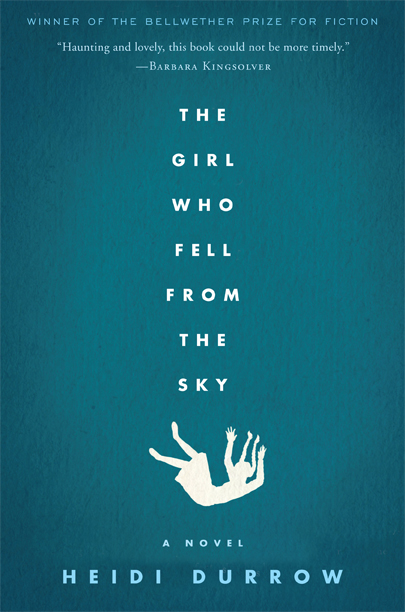
the girl who fell from the sky, or one of the best books ever!

This is exactly how I felt while reading Heidi Durrow’s debut novel The Girl Who Fell From the Sky (available today yesterday wherever books are sold).  Except that I do know her, and I thank God that she’s not dead because I need more from this author/friend of mine.  Heidi has written one of the best books I have ever had the pleasure of reading, biracial subject matter or not.  Truly beautiful, profound, poignant.  All that good stuff and more!  I read (more like devoured) TGWFFTS during an extremely difficult time in my life.  I felt as though the book was saving me.  And reminding me of all the good things I have to offer.  And that no matter what hardships and tragedies we may go through in life, the story goes on- there’s another chapter to be lived.

Though the book is not entirely about being black and white, there are many beautiful passages that honestly touch upon the heart of that matter.  I often find myself lamenting the fact that this biracial identity is so misunderstood out in the world at large.  The Girl Who Fell From the Sky offers much insight.  I sincerely hope that it is widely read.  We all need this book.  Whether we know it or not.

A few of my favorite “themes” of the novel:

Loss of self, becoming the “new girl”, becoming “black”, forsaking white.  Making deals with the self.  Deals which become layers covering over the authentic self.  The self that the biracial kid loses when they feel pressured to be just one thing.  Then eventually you long to be just one thing because no matter how hard you pretend to be whatever it is they want you to be, you can never totally convince yourself that you are exclusively that one thing.  Because you aren’t.  But most people seem completely incapable of understanding that, of allowing that.  So we find ourselves feeling alone and lonely in groups of people.

One of my favorite quotes from the book is, “I think what a family is shouldn’t be so hard to see.  It should be the one thing people know just by looking at you.”  Unfortunately, we’ve been trained to recognize families as homogeneous groups.  Seeing interracial couples is still jarring for many.  Mentally pairing a mother with a child that “does not look like” her can be a major stretch of the imagination.  But it is not an imagined thing for many.  It is a reality.  And for whatever reason that people who don’t have to deal with this don’t seem to understand, we need our families to be recognized.

I could go on and on.  I have pages of notes.  But I hope this is enough to pique your interest and motivate you to buy (and read!) The Girl Who Fell From the Sky.  I’d love to hear what you think!