


I’m thrilled to learn that Mississippi is mandating civil rights instruction for al K-12 students. They’re the first and only state to do so! Maybe this will lead to the eradication of segregated proms there. And maybe even to honest, well- rounded history books/classes throughout the country. Be the change, Mississippi!

JACKSON, Miss. — In Mississippi, where mention of the Civil Rights Movement evokes images of bombings, beatings and the Ku Klux Klan, public schools are preparing to test a program that will ultimately teach students about the subject in every grade from kindergarten through high school.
Many experts believe the effort will make Mississippi the first state to mandate civil rights instruction for all K-12 students.
So far, four school systems have asked to be part of a pilot effort to test the curriculum in high schools. In September, the Mississippi Department of Education will name the systems that have been approved for the pilot. By the 2010-2011 school year, the program should be in place at all grade levels as part of social studies courses.
Advocacy groups such as the William Winter Institute for Racial Reconciliation and Washington-based Teaching for Change are preparing to train Mississippi teachers to tell the “untold story” of the civil rights struggle to the nearly half million students in the state’s public schools.
“Now more than ever we are engaged in national debates about race and so much of those debates are impoverished in their understanding of history,” said Susan Glissen of the Winter Institute. “We want to emphasize the grassroots nature of civil rights and the institution of racism.”
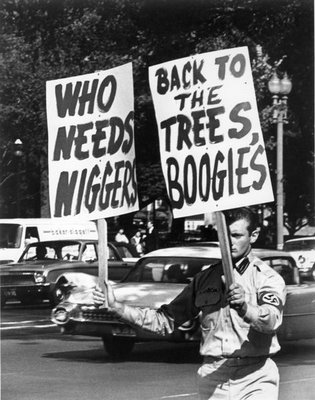
…Education officials looked to other states for a model but couldn’t find one that included anything as comprehensive as what Mississippi has in mind, said Chauncey Spears, who works in the curriculum and instruction office of Mississippi’s education agency.
The Education Commission of the States didn’t know of any other state with a such a program, although it does not specifically track social studies curriculum.
Some states, including Alabama, Georgia and Arkansas, have placed an emphasis on civil rights instruction. New Jersey created an Amistad Commission to ensure the history of slavery is taught in schools. Pennsylvania’s Philadelphia school district requires students to complete an African-American history course before graduation.
“We’re behind time. Students don’t know about what Blacks did. They’re not taught anything about culture, about our history,” said Ollye Shirley, a member of the commission created to research the Mississippi curriculum and a former Jackson Public School board member.
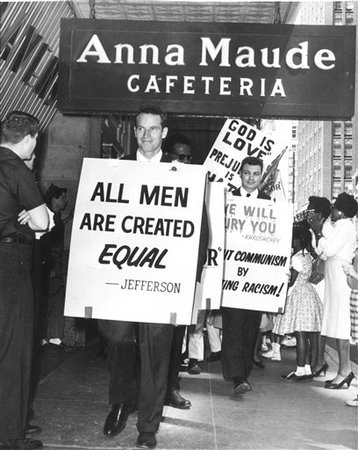
…Deborah Menkart, executive director of Teaching for Change, said it’s important to help students understand that Rosa Parks and Dr. Martin Luther King Jr. weren’t the only important figures in the Civil Rights Movement.
“The traditional version would be that it started in 1954, thereby leaving out the fact that a lot of groundwork had to be done before that,” Menkart said.

 Sea Invasion by Nuno Milheiro
What ever happened to these!?

“Finally someone thought about you!” is one of the best tag lines. If that’s a tag line. So true.

New mom to 2 1/2-month-old baby boy Kenzo Lee Hounsou, Kimora Lee Simmons found the time to write an article for Working Mother. The 34-year-old Baby Phat CEO and Style Network star addresses the racism she faced as a young girl, how her mom always encouraged her to believe in herself and work hard, and how she plans to instill these same values in her three children.
“My friends are surprised to learn that, outgoing as I am today, I was a loner growing up. I was a mixed-race girl with a Korean-Japanese mother and an African-American father, and none of the other kids at my school were like me. I was nearly six feet tall by the time I was 11 years old. And I was an only child being raised by a single mother.
At school in the St. Louis suburb of Florissant, MO, everything about me seemed to be a source of ridicule to other kids: my face, my height, the texture of my hair, my body shape. I was a real fish out of water. And because I had so many growth spurts, it took time for me to grow into my body. The popular kids were into sports, but I was awkward and gawky. I was super clumsy—I still am. Kids can be cruel. They called me “chinky giraffe.” I cried all the time. But my mother wanted me to turn my tears into something else, something positive.
…As my mom did for me, I’m helping my own girls, Ming Lee, 9, and Aoki Lee, 7, learn about tolerance—to respect differences in culture, religion and even the way we look. I also try to set boundaries, let them know what’s expected and give them room to develop and grow. I will do the same with my infant son, Kenzo Lee Hounsou. I recently married his father, Djimon Hounsou. He’s an actor and a model, and he speaks five languages. We learn a lot from him.
Read the rest of the article here




I thought this was a sweet story for Sunday blogging. Yay, biracial couple!


By KATIE ZEZIMA
SOMETIMES the one for whom you’ve been searching your entire life turns out to have been beside you all along or, in the case of Leah Elizabeth Squires and Eric Raymond Traub, in the next crib.
“The memories of her go as far back as I can remember,” Mr. Traub, now 32, said.
In the 1970s, their parents, Helen Gagel and Bob Squires and Linda and Ray Traub, were neighbors in Evanston, Ill., and became close friends, sharing a bond that ran deeper than their camaraderie and commitment to social justice. Ms. Squires’s parents are an interracial couple, while Mr. Traub, of mixed race himself, is an adopted son of white parents. Back then, Linda Traub said, “It wasn’t as accepted.”
Leah Squires and Eric Traub, the most bookish of the children, could always be found, said Catherine Squires, an older sister, “with their heads together” reading mystery and fantasy books. So independent and feisty was Ms. Squires that she even got Mr. Traub to play with her Barbies, her mother said.
After leaving for college they stayed in touch, if only sporadically, leading lives that were quite different yet oddly in sync.
In the winter of 2002, when the Varoom Group, a collective of dancers and choreographers of which Ms. Squires was a member, gave a performance, Mr. Traub and his girlfriend at the time came to New York to see it.
Their next reunion — the funeral of Ms. Squires’s father in October 2004 — was sad, but far more telling about their relationship. Mr. Traub was a pallbearer, which served to remind Ms. Squires of just how deep the bond between the two families remained.
“My dad was one of his first role models of being an African-American man,” she said.


