The question being: Why doesn’t anyone quote these words from Rev. Dr. Martin Luther King, Jr.?
good question
1
The question being: Why doesn’t anyone quote these words from Rev. Dr. Martin Luther King, Jr.?
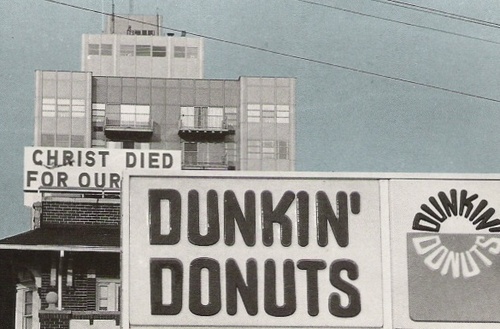
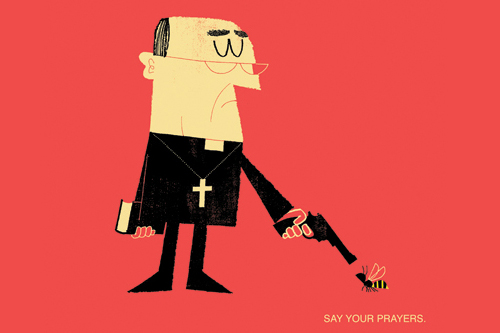
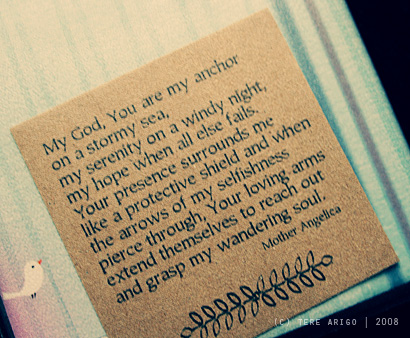
I hope not! Especially in light of today’s inspirational quote. I simply found these things amusing. I’m pretty certain that God has a great sense of humor.


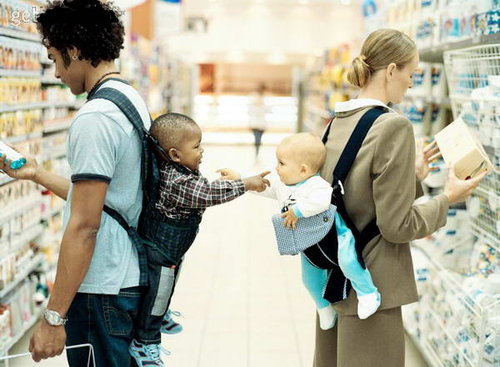
“… she asked me what my ideal donor would look like. I answered honestly that I had no pre-set “ideal” in mind, but assumed that my partner and I would pick a donor that reflected the racial background of the one of us who was not biologically related to the child. At the time, I was in an interracial relationship — which meant, she quickly deduced, that I was talking about conceiving a bi-racial child. That, and that alone, was enough to make my fair-minded, thoughtful friend shed her liberal cool and call into question my credibility as a potential parent. Not my identity as a gay woman, mind you, which might have been an easy target. This was about race, and the perceived disadvantage I would be burdening a child with by choosing to create him or her from two different racial gene pools.”
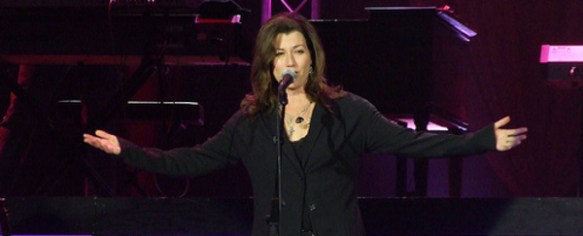
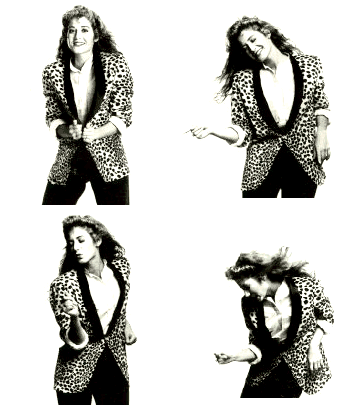
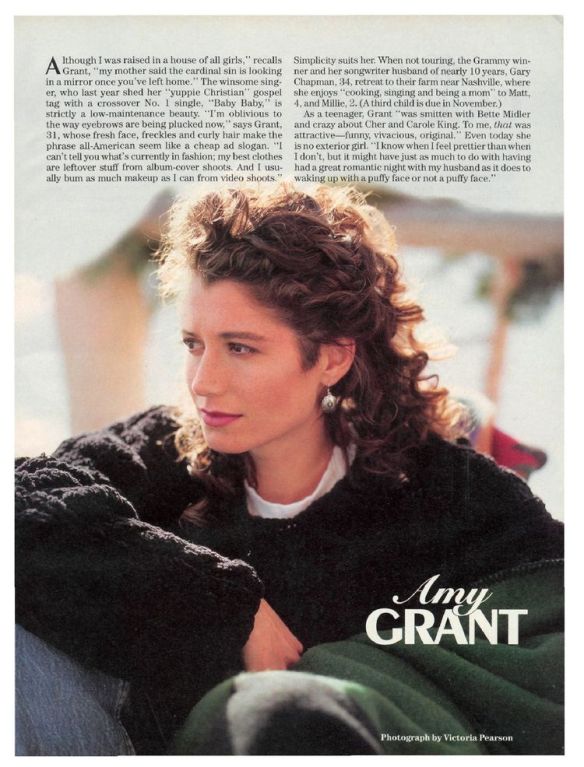
For me, this is long overdue. I’m not sure why I’ve been keeping my love for Amy Grant a secret on this blog. Maybe I thought it unnecessary what with the mulatto diaries vlog #72 thanking God for Amy Grant through tears and laughter. It just doesn’t seem right though. The obsession has faded, the nostalgia and admiration remain. The blog seems incomplete without some sort of acknowledgement. So here it is.

 Finding one’s way, learning to value the truth as a nonnegotiable plumb line, experiencing the consequences of violating the laws of nature or the laws of the Spirit, exercising free will, and realizing one’s own impact on and in the world- these are all included in the sometimes painful lessons of life, and most of these must be learned firsthand.- Amy Grant
This is trust: doing what you believe you are called to do and trusting that God will provide. But here’s where it gets personal: God provides through people. Am I willing to be connected to the people in my world, the people at work, the people in my house, the people I encounter in everyday patterns of living? Am I open to the possibility of my life, my gifts, touching another life? My life touching another, the domino effect of God’s goodness rippling through so many other lives, is a powerful, far-reaching concept.
You can still cut loose and have a great time, but part of you has to say, “I will take life with open eyes and a thinking mind, and not as self-centered as I was as a child”. When you start looking at life that way you realize that issues on every level on every continent do have an effect on your life.

If you went to your closet today, would you pull out the same outfit you wore 10 or 15 years ago? You wear feelings and faith differently as well.

But my experience is that people who have been through painful, difficult times are filled with compassion.

You do your best, you do all this stuff, but the only thing that counts is faith expressing itself through love.
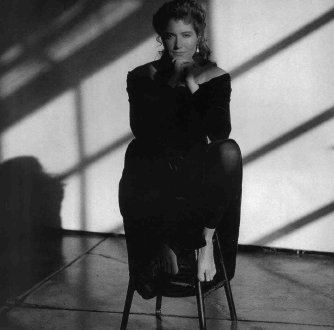
I think that if my kids are completely convinced of God`s unfailing love for them, whether they fail or not, they`ll have confidence to persevere in life.
 (Best Christmas album EVER!)
To me, the human experience does involve a great deal of anguish. It’s joyful, but it’s bittersweet. I just think that’s life.
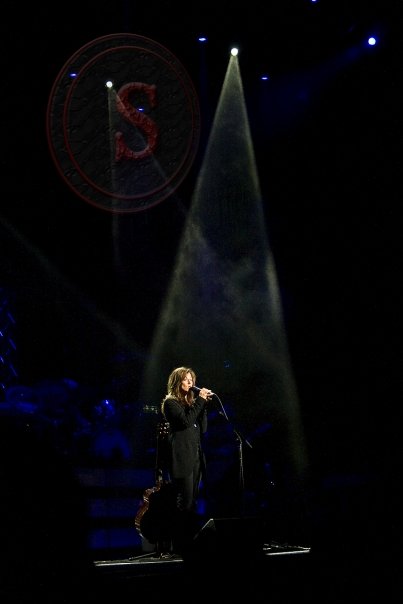
Without black, no color has any depth. But if you mix black with everything, suddenly there`s shadow – no, not just shadow, but fullness. You`ve got to be willing to mix black into your palette if you want to create something that`s real.

There’s a beauty to wisdom and experience that cannot be faked. It`s impossible to be mature without having lived.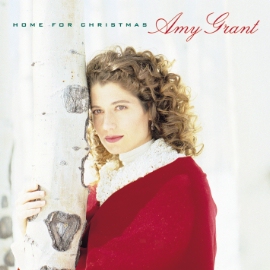 (2nd best Christmas album ever!)






by Dear Abby
DEAR ABBY:: On July 23, “Wondering” asked why President Obama is considered to be African-American and you responded that the term “African-American” is used in this country as a label that describes skin color. However, in the U.S. the term is generally applied to black Americans of slave ancestry.
Before the Civil War we were African-American slaves, not considered fully human by the U.S. Constitution. After the Civil War and the outlawing of slavery, former slaves gained citizenship through amendments to the Constitution but were not able to exercise the full rights of citizenship. Most former slaves wanted to just be “Americans” with all the rights and privileges associated with it – but because of the color of their skin were discriminated against and given second-class citizenship.
The term “African-American” is the result of a search for identity by these new Americans, former slaves and their descendants. We were called by many names – most of them negative, such as “Negro,” “Colored,” “African,” the infamous “N- word,” “Afro-American” and finally, “black.” All of these at one time we considered negative because they didn’t represent self- identification.
The black power movement occurred when Black Americans changed the negative term “black” to the positive term “Black.” The musician James Brown coined the phrase, “Say It Loud, I’m Black and I’m Proud.” Later other black folk began to adopt the term “African-American,” which brings us to the present.
We are a nation that has roots in all nations of the world. Truly, “we ARE the world.” We’re all American, either by birth or naturalization. The labels tend to divide us into groups which separate us rather than bring us together. The saying “United We Stand, Divided We Fall” is true. Let us all come together and all be blessed.
– Rev. Alton E. Paris, American
DEAR REV. PARIS: Thank you for your letter, which is both inspiring and educational. Many readers had comments about my answer, and they were all over the map. Read on:
DEAR ABBY: I am a white female with many African-American friends, and yes, I did vote for Obama. When Obama became president, most of my black friends said: “Finally! We have a black man as president. All this racism will stop. The white man is no longer in charge of things.”
To me, it was like it didn’t matter that his mother was white, he was raised by his grandmother who was white, and he is half-white. What I’m trying to say is, he’s a man of equal parts – not all black. So why do African-Americans make it sound like he is of all black heritage? Isn’t he of white heritage also? A lot of my white friends feel the same way I do.
– Nancy G. in Cleveland
DEAR ABBY: Please inform “Wondering” that according to Webster’s Dictionary, President Obama is mulatto, which is a person who is a first-generation offspring of a black person and a white person.
– William B., Clayton, N.J.
DEAR ABBY: When living in America, I am called an African-American. If I move to Africa, would I be called an American-African?
– Kenneth F., Saraland, Ala.
DEAR ABBY: Many biracial children are considered to be part of the ethnic group they resemble the most. While some may consider it disrespectful to say that someone is of one race when he or she is really biracial, this is the world we live in. We do, truly, “call ’em like we see ’em”!
– Devyn B., Fayetteville, N.C.
DEAR ABBY: “Wondering in Goldsboro, N.C.” asked why President Obama is considered to be African-American when he’s biracial.
While your response was accurate, you missed an opportunity to educate your readers by failing to give the historical context as to why most people refer to him as African-American.
There was a time in this country when “blacks”/African-Americans were considered to be only three-fifths of a human being.
Also, if a person had one drop of “black” blood they were considered black.
Although as a society we have progressed intellectually and in our understanding of what a human being is, we continue to hold on to archaic beliefs about skin color that not only pigeonhole an individual, but may force an individual to choose what so-called racial group that he/she identifies with most.
I can clearly see that the conversation regarding “race” and skin color must be continued in this country.
Though we’ve “come a long way, baby,” we still have a long way to go in understanding this country’s deep-rooted responses to skin color.
– Living in America
DEAR LIVING: I think if one digs deep enough, we will come to the realization that there has always been a component of economic exploitation and perceived economic threat that is, and has been, at the root of racial discrimination.
(But that’s just my opinion.)
Read on:
DEAR ABBY: In Obama’s book “Dreams From My Father” he calls himself a black man of mixed descent.
His decision to do that is as much a political decision as it is a personal one.
Most people of color of mixed race in our society have felt we had to choose to be the darker color because we can never be white.
In our society, most people who do or don’t know of Obama’s mixed background would treat him as a black man. (If you saw him walking down the street, would you say, “Hey, that guy’s half-white!”?)
By embracing his political identity he supports and strengthens all black people in the U.S. by standing proudly as one of us.
– Nicole in Marin, Calif.
DEAR ABBY: African-American does not denote skin color, but an ethnic culture, a term that describes those of us who are descendants of captive Africans in America.
It holds the same level of pride as it does for those who pronounce they are Italian-American or Asian-American.
– Michelle in Maryland
DEAR ABBY: You write that the term African-American is used in this country as a label that describes skin color.
I believe you are correct, and that’s the problem.
“African-American” identifies origin or ancestry, not skin color.
Furthermore, if the anthropologists are right, then – going back far enough – we are all African-American.
– African-American Member of the
Human Race in New Jersey
DEAR ABBY: Why can’t we all be called just plain Americans if we grow up in America and are citizens of America?
I think a lot of people have wondered this.
– Sandy B. in Harrisburg, Pa.
DEAR SANDY: That’s a good question and one that I hope will one day be put to rest – if not by our children, then by our children’s children.
– Sincerely, Abby
 mulatto diaries