Reply
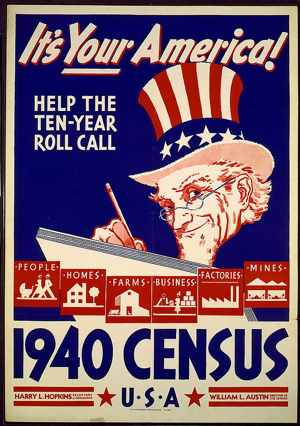
i think this should be the last census post. actually, it’s just something i found amusing. while researching census stuff i came across this ad and it’s one of the silliest things i’ve ever seen… what!?

oh. of course. how did i miss that?
I thought I was over the Census, but my interest keeps getting piqued despite my best efforts to ignore the chatter. What I’m most intrigued by at this moment is the notion that in the next decade or two, if we keep changing our attitudes and understandings for the better, a majority of Americans could come to view themselves as mixed race. And by that I mean Americans who today consider themselves to be exclusively white or black despite the abstract knowledge that we are all mixed up to some extent. And if that paradigm shift happens there won’t be much use in classifying ourselves in terms of “race” because we will see ourselves as generally more similar than different regardless of color/phenotype. Although I respect Obama’s right (and that of every individual) to self-identify any way he chooses, I feel that the checking of just one box is holding us back from reaching that “promised land” where we aren’t so entrenched in these antiquated notions of race and color, but perhaps more interested in heart, spirit, intellect …. Once again I’m a bit speechless because I’m not sure what the world will look like when instinctively and instantly we take people for what the truly are instead of what they truly look like.
In an op-ed piece for the conservative Web site Red State on April 1, 2010, Rep. Patrick McHenry, R-NC, the ranking Republican on the Information Policy, Census and National Archives Subcommittee, sought to tamp down some of the misinformation being spread about the census by “otherwise well-meaning conservatives” and warned that failing to fully participate in the census could create a competitive advantage for Democrats.
Specifically, McHenry attempted to allay the fear among some Republicans who distrust the government and view the census as overly prying.
…In his posting on Red State, McHenry said “the most private question on this year’s form asks for an individual’s race and that question has been asked by every census since the 1790 census conducted under then-President George Washington.”
We decided to check that claim out, which was similar to one from Census Bureau Director Robert M. Groves in a March 15, 2010, press release: “It’s one of the shortest forms in our lifetime with just 10 questions very much like the questions James Madison and Thomas Jefferson helped craft on the very first Census.”
Conveniently, the U.S. Census Bureau keeps historical records online of all the questions asked in every census going back to the first one in 1790.
If you follow the census questions asked through U.S. history, you can see how they reflect changing attitudes and understandings about race.
Yes, the 1790 census and others in the early years of the survey addressed race, but it was hardly a matter of checking a box. Rather, the census asked about the number of free white males and females; the number of “all other free persons” and the number of slaves.
By 1850, the Census asked about people’s “color.” According to the Census archives, this column was to be left blank if a person was white, marked “B” if a person was black, and marked “M” if a person was mulatto. A separate form listed slave inhabitants, the last census to do so. By 1870, the “color” options included “W” for white, “B” for black, “M” for mulatto, “C” for Chinese (a category which included all Asians), or “I” for American Indian. The 1890 census added Japanese and more mixed-race categories — mulatto, quadroon and even octoroon, according to amounts of perceived African blood. By 1920 Filipino and Korean sprang up, along with the improbable racial term “Hindu.” New labels emerged after World War II, with Hawaiian, Eskimo and others joining the parade of terms. The question morphed into “color or race” in the mid-1900s, and then, finally to just “race” in 1970. In 1980, in addition to race, the Census began asking if a person was of Spanish or Hispanic origin or descent.
It’s fair to say that every census has addressed the issue of race in some fashion. But we think it’s a bit of a stretch when McHenry says “this year’s asks for an individual’s race and that question has been asked by every census since the 1790 census.”
In the 1790 Census (and several after it), a respondent was not simply asked their race. Rather, they were asked to list the number of white people, the number of “other free persons” and the number of slaves. In other words, it didn’t ask for the race of non-whites. One could argue this reflects the common attitude about race at the time. But that’s hardly the same as the 2010 version that simply asks a person’s race.
Prior to the Civil War the census was more concerned with whether someone was enslaved or not, than establishing whether someone was white. This is a very different conception from our modern idea of race. Post Civil War, the terminology changed (from “color” to “race,” for example) and the categories expanded over time. Certainly these are different standards when compared to today’s measures. But again, one could argue that the questions comported with attitudes about race at those times, and the census has always asked discriptive questions that corrolate to race. So we rule McHenry’s claim Mostly True.

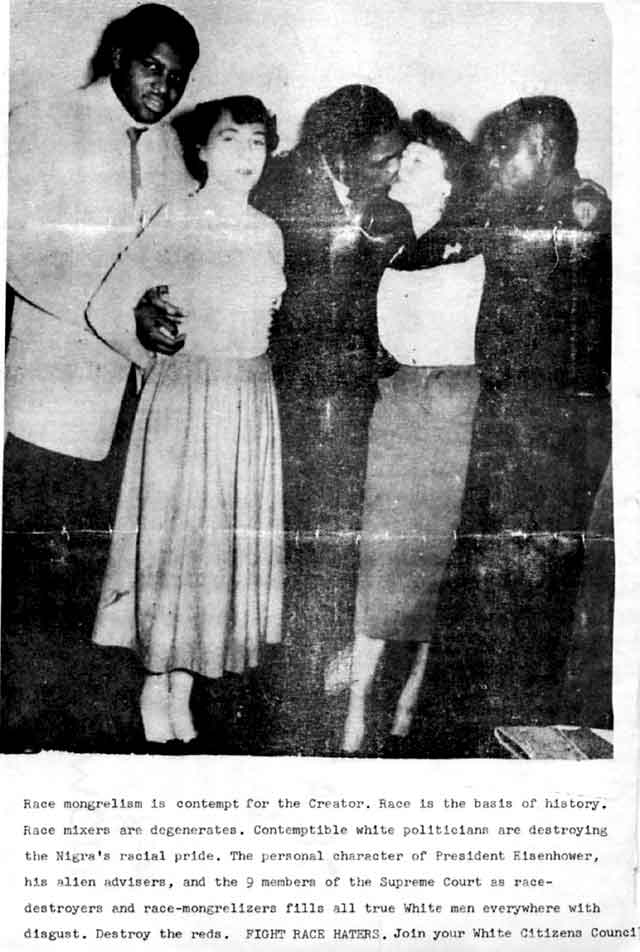
these are my sentiments exactly, jason haap! i try so hard not to judge or be offended by anyones’ choice to self-identify as they choose, but…. come on obama!! how will we ever move forward if the most recognized living ‘mulatto’ doesn’t think it matters that he is one? how will we eradicate the vestiges of the one-drop rule, which implies that black blood is a pollutant, and that if your drop is visible you better forget about the rest and fall in line at the back with the other tainted ready to fight the good fight? if we can’t get rid of that idea, then how will we get to the point where we see ourselves in everyone because we are indeed all mixed up and there is no inherent opposition. i have a feeling that we as a human race could reach untold heights if we redirected the energy that we (perhaps unconsciously) spend on categorizing/demonizing/stereotyping/judging/comparing/othering toward a more inclusive, unified system of brotherly commune. like, no fighting, no distrust, no base-less fear. what!? i don’t even know how to say what i mean. maybe there’s not a word for it. yet.
by Jason Haap, an educator, citizen media activist, and father of two multiracial children
The “one drop” rule is alive and well for America’s multiracial children! Last week, President Obama gathered fanfare from national media. Despite the obvious existence of his white mother, he checked just one box on his census form regarding his racial identity: “Black, African Am., or Negro.” By ignoring the option of checking multiple boxes (or of writing in a word like “multiracial”), Obama sent an unfortunate message to America’s mixed-race children.
People may have the freedom to pick racial identities individually, but Obama’s public actions as president of the United States deny the rich history of America’s multiracial realities, hearkening back to a racist period that said one drop “black” makes a person “all black.”
I remember, a few months ago, playing with my kids at the Cincinnati Children’s Museum. I heard one boy point at my oldest son and call him “that black kid.” Certainly my children are more brown-skinned than me, but they are also more fair-skinned than their mother. That’s because I have multiracial children, and I think it’s too bad their racial identities are being formed by a backward-thinking American culture before they are even old enough to notice skin color might mean something in the first place.
Despite the mythologies some of us have been raised to believe, there is nothing “stronger” about black blood. It does not “take over” a baby’s genes if one parent is black and the other white. These ideas were promulgated by racists who wanted to scare white people into thinking their genes would be obliterated by the act of intermixing with blacks. But it’s just not true. It’s bunk science and even bunkier sociology.
When the Race exhibit came to the Cincinnati Museum Center, I learned how some cultures have radically different ways of articulating race – such as in Brazil, where dozens of descriptive terms are used instead of polarizing opposites like simply “white” or simply “black.” Instead of helping move our racial understandings into the 21st century, Obama’s public actions have placed us back into the old racist thinking of the one drop rule, and that’s a shame.


Brilliant!!! I love everything about this! I’ll admit that I felt what I would have described back then as “weird” about my (mixed)race. Looking back, I think “shame” fits the bill. I’m so happy to hear that acknowledged, and even happier that feelings are changing to pride. Mine included.
DANBURY — The three boys wore jeans and long-sleeve T-shirts. The two girls each wore a dozen bracelets and necklaces. They looked like typical students in the library media center at Broadview Middle School.
It was their differences, however, that brought them together Monday. They’re subjects in a documentary in which Western Connecticut State University professor Marsha Daria is examining the identity and social relationships of multiracial children.
Daria is interviewing elementary, middle and high school students to help educators and teacher training programs consider multiracial students in the curriculum and school issues.
The sixth-, seventh- and eighth-graders carry the roots of about a dozen ethnic heritages, including African American, Spanish, Italian, Scottish, Irish, Chinese and Portuguese.
“It’s cool to be two races, because you get to experience two different cultures and those countries,” sixth-grader Jonathan Garcia, 11, said.
Jonathan, who is half Chinese and half Puerto Rican, was a little nervous to be interviewed but glad to express his feelings about the issue for the movie.
“This gives me a chance to say that what race you are doesn’t matter. If you look like one, you could be another,” he said. “Sometimes they say I am Asian, but what bothers me is that I’m not all Asian. They say things about Asians that I don’t think are nice.”
Sometimes he points out people’s negative comments, and they acknowledge they were wrong. Other times he ignores what people say.
Eighth-grader Kiani Oliveira, 14, who is Portuguese, African American, Indian and Scottish, wanted people to know that multiracial people are unique.
“Like we look different. Our skin color is different, and our hair and eyes can be different — unique,” she said. “It’s not harder to be multiracial. My friends take me as I am and think I’m cool.”
Daria is doing this project during her sabbatical as an education professor at WestConn, where she has taught since 1995. Her film crew is from WestConn –Rebecca Woodward, Scott Volpe and Renato Ghio– and she consults Emmy award-winning producer and director Karyl Evans.
“It’s critical to examine the ways in which we talk about race and ethnicity. There is a change in how kids view themselves. They used to be ashamed, but now you see a lot of pride. They want people to know who they are,” Daria said.
“It used to be a marginalizing experience, but not anymore. They feel special.”
Daria will use the results of the 2010 Census in the documentary, which are likely to be more specific about race than the 2000 census, in which seven million people reported they were of mixed race.
“I want to educate. To bring awareness to kids who are mixed race. We do become a better country when we accept each other,” she said. “There are good and bad in every group. We should accept people for who they are.”
Seventh-grader Robert Best, 12, who is Italian, African American, Indian and Irish, hopes the film will help people understand that multiracial kids are just like other kids.
“People think African-American people steal and white people are laid back, and I’m supposed to be like both of them, but I don’t like that,” he said. But he wouldn’t want things to be different for children who are multiracial, because it would put them in a separate group.
Seventh-grader Marissa Segura, 12, who is Costa Rican and Italian, and Nasir Fleming, 13, an eighth-grader who is Puerto Rican, African American, Italian, Native American, and a little Irish were also questioned.
The students, all American born, said they mostly celebrate American holidays and eat all types of food, including traditional food from their dominant cultures. They usually talk about typical teen topics — things like school and music — with friends from all over.
Marissa has friends from all over and wishes people would stop guessing and ask what nationality she is.
“All my friends are from different places,” she said. “My sister said I never have a friend who is actually from America. I just get along with a lot of people and have a lot of friends.”
Nasir said he’s annoyed when people think he is only African American.
“When I was younger it made me feel sad, but now it’s just whatever,” he said. “Some friends aren’t cool about who they are, because society tries to make them feel they are nothing.”
It might be easier to stay quiet when you are classified a certain way, he said, “but if you want to keep your rights you should explain who you are.
“People who are diverse are like a little community, but we’re all different,” Nasir said. “If you had to find a similar thing about us, it’s that we don’t like being titled one thing. It’s not OK to be judgmental, to stereotype.”

 mulatto diaries