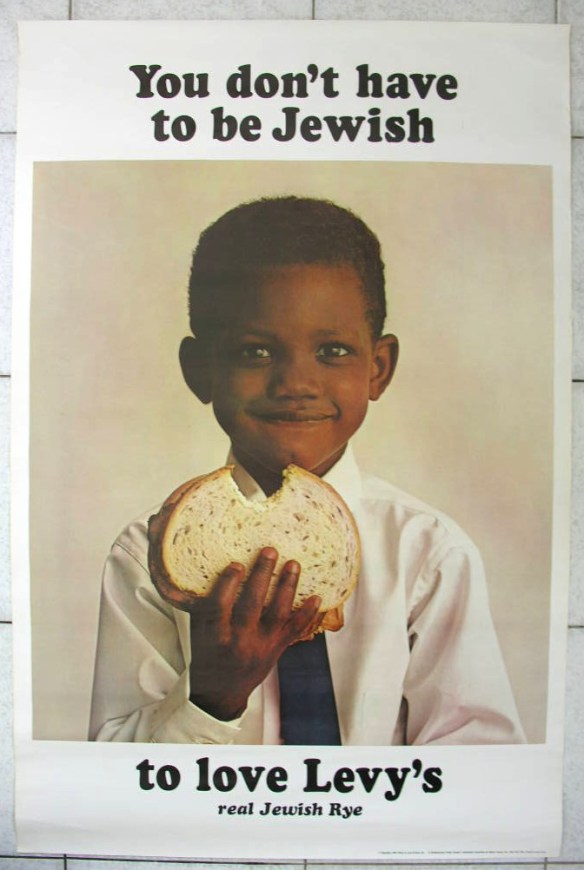
speaking of “black enough”

000000019600_0001

I was happy to come across this article (http://www.politicalarticles.net/blog/2009/06/17/are-you-black-black-enough-and-who-decides/) on the notion of “black enough.”  I’m wondering today why, when I call attention to the absurd and potentially damaging rigid notions of blackness and whiteness, people feel the need to challenge me instead of challenging these notions.  And the one that says that black and white cannot co-exist without the degradation of one, maybe even both, of them.  I do not agree with Taylor’s assertion that “it may be too late in history as well as potentially dangerous to be tampering with the socio-cultural definition of blackness even though the definition is a product of slavery.”  I think it dangerous not to tamper with it.  I think the American consciousness  is infected with racism (colorism at best).  We trace the disease back to slavery.  I don’t think we will heal and prosper and achieve the greatness intended for the nation until we rectify this situation. These definitions. I certainly do agree with his last statement though.

Are You Black; Black Enough; and Who Decides?

By Robert Taylor

In the wake of the claims of Tiger Woods and the election of a mixed race but Black President, a question has been raised in black internet chat rooms around the country as to whether there is a legal or biological definition of who is black.

Actually, there is no law operable today which defines what percentage of “black blood” makes one black. The oft-repeated notion that one drop of black blood makes one black is a cultural definition which has neither a legal nor biological foundation…It is basically a socio-cultural attitude based in major measure on how a person looks.

…Simply put, in America, if you “look” in anyway black, you “are” black. That is not law. That is not science. It just is – a practical reality. Thus Tiger Woods’ mother may be from Thailand and Tiger may object to being called black. But it does not make a practical difference.

Further, it may be too late in history as well as potentially dangerous to be tampering with the socio-cultural definition of blackness even though the definition is a product of slavery. When the Census Bureau decided a few years ago to include a category called “mixed race” in the census, many people rightfully saw it as potentially divisive, asking what practical good does the “mixed race” category serve, but to further divide people along largely artificial lines.

Finally, if one just has to ask the question, the real question should not be “who is black” but instead “who is white.” The scientific theories of Evolution and “Out of Africa” are very clear: There is only one “race” on the planet Earth and it had its origin in East Africa (around present-day Ethiopia) and then spread to all other parts of the world. Adapting to environmental conditions such as the degree of sunlight and developing in relative isolation, some groups evolved lighter skins and others evolved darker skins…Thus technically every person on the planet – from the darkest skinned person in the Congo to the lightest skinned person in Sweden – is of African ancestry.

Therefore the answer to the question above is YOU decide if you are Black enough and whether you realize it or not that gives you tremendous power.

via Politicalarticles.net
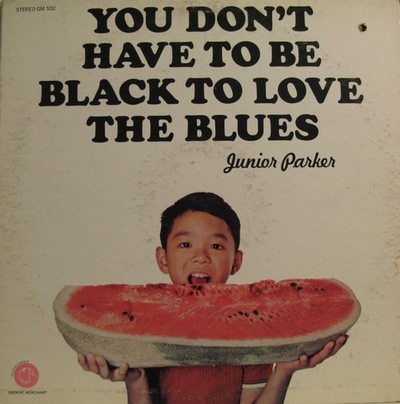
you don't have to black to love the blues

reviewed

I just came across a bad review of Mulatto Diaries: The Movie on a blog http://www.losangelista.com/2009/06/black-biracial-mixed-white-other.html.  Here’s an excerpt…

Her film is called the Mulatto Diaries, and sadly…Tiffany rubbed me the wrong way. She, and a few of the other biracial folks she interviewed in her film, came across like she believes on some level that being black means being ghetto, stupid, uneducated, lazy,uncultured, not being able to speak correct English and not having class or manners.

I am shocked that one could come away from the film with this impression.  Yes, there are clips of me and the interviewees saying that at one time or another a black person/some black people have called us out for not being black enough. What does this mean if not that to some degree, which they find unsatisfactory, we do not ascribe to some stereotypical idea of being black?  I’d really like to know.  There is also a clip of me saying that for me the shame of this biracialness was heightened at the times when I was uncomfortable with my blackness.  That discomfort was shameful.  Not the blackness.

I think my point often is that I know firsthand that blackness indeed is not about donning the stereotypical garb of rap music and ebonics, but embracing the rich and difficult history that led to my being alive.  Here in this country.  Today.  Blessed with so much.  It is only because I am proud of my blackness and secure in my blackness, that I am able to say without shame and in a loud voice that I am also white.  I am proud of who I am and who I am is equal parts both.  It may seem like I go on and on about this.  To an extreme.  Beating a dead horse.  Protesting too much this one drop rule.  But I am trying to make up for hundreds of years of silence.  This silence which I believe has contributed somehow to these negative depictions of blackness and to some illusory idea of the grandeur of whiteness.  I may not always find the way to say exactly what I mean.  I do not know what I am doing.  I only know that I am doing.  I am doing with good intentions.  I am trying to free us all (black, white, mixed, whatever) from the boxes which I believe hold us back from reaching the great heights intended for us.

smashcolorline

nina mae mckinney

Nina_age_16

nina1


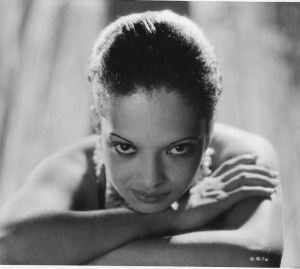
Nina Mae McKinney (June 13, 1913 – May 3, 1967) was an American actress. Dubbed “The Black Garbo”, she was one of the first African-American film stars and was one of the first African-Americans to appear on British television, featuring in the demonstration film broadcast each morning for the benefit of installers and engineers. 


nina

Career

Born Nannie Mayme McKinney in Lancaster, South Carolina, Nina Mae was indeed “The First Black Movie Star,” the first black actress in starring roles who appeared in over 30 films (more than Horne or Dandridge), some films are considered lost, some are not as available to the public. McKinney moved to New York when she was a teenager and began her career performing as a dancer. She was spotted dancing in Blackbirds of 1928 by the director King Vidor and cast in the lead role of Hallelujah!, one of the first all-black films by a major studio and Vidor’s first sound film, for which he was nominated for the best director Oscar in 1930. In the film, McKinney dances the “Swanee Shuffle”, a seductive dance which became a minor fashion. After Hallelujah! McKinney signed a five year contract with MGM, however, the studio seemed reluctant to star her in feature films. Her most notable roles during this period were in films for other studios, including a leading role in Sanders of the River (1935), made in the UK, where she appears with Paul Robeson. After MGM cut almost all her scenes in Reckless (1935) she left Hollywood for Europe where she acted and danced, appearing mostly in theatrical shows and cabaret. She returned to the United States at the start of World War II where she married Jimmy Monroe, a jazz musician. After the war she moved to Athens, Greece and lived there until she returned to New York in 1960.


876134126_0b1ac07a10

smoke and rain

New York is experiencing torrential downpours today.  Early this morning the rain took a break, so I decided to go for a run after hearing that the thunderstorms would return in 45 minutes.  It was sprinkling when I took off, but since my hair is already curly, this didn’t bother me at all.  It was actually kind of nice.  I was surprised though by all of the smokers in the park huddling under trees or umbrellas for an early morning cigarette.  The second hand smoke was much more disturbing than the rain.  I’ll never understand why people under a certain age smoke.  With people over a certain age (I’m unclear on what age I mean exactly), I sort of understand because cigarettes used to be marketed as not only cool, but healthy.  But now we all know the deadly truth, so what gives?

now:

kid putting cigarette out

yay, kid!!

then:

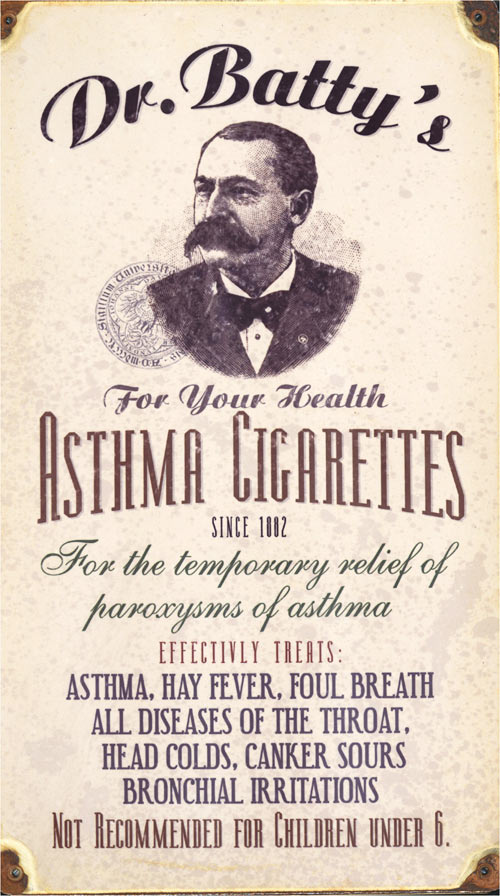
asthma cigarettes

ummm…. not for children under 6!? treats foul breath and diseases of the throat!? omg! a greater pack of lies could not exist.  it makes me wonder what is the “cigarette” of today.  what deadly vice, chemical, food, or beverage are they touting as healthy that in 25-50 years from now we will all recognize as lethal?  high fructose corn syrup maybe…

drs smoke camel


throat cigarettes

By the way, the weather lady was wrong and the storms rolled in early and I got totally drenched, but I must admit that I enjoyed running in the downpour.  I never would have guessed that either.

the movie glory

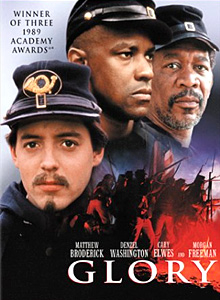
I just finished watching Glory for the 5th time.  It might be my favorite movie.  This movie was actually the catalyst for my whole “biracial” revelatory aha moment.  While watching Glory for the 4th time, I realized that, seeing as this was the history of our country, it is a miracle that I (a black and white person) even exist.  Truly.  And then I realized that I didn’t really exist.  There was no recognition of the miracle.  Not even an internal, personal one.  I realized that the history depicted in the film was the truth and that I had fallen victim to it’s legacy and failed to know myself fully.  

15341747-15341751-large

Watching the movie tonight, I was again blown away by Denzel Washington.  “The tear” is one of the most memorable moments I have witnessed on screen.  I also kept searching for the moment that might have triggered the big realization. My guess is the part where Matthew Broderick (as Robert Shaw) takes the 54th out with the other “negro regiment.”  The other leader is an ass to say the least.  He not only refers to the black soldiers as “little monkey children,” but he is extremely immoral in every sense of the word.  He treats his soldiers like animals, they act like animals.  Robert Shaw treats his soldiers with respect, like men.  In turn they are respectful and respectable men.  

The most poignant moment for me this viewing though was when Broderick and Denzel Washington’s character (whose name escapes me), were discussing the predicament that was life in America at that time.  And arguably still is to a certain extent.  Denzel says “It stinks real bad.  And all of us are in it.  Ain’t no one clean.”  Broderick asks, “How do we get clean?”  There wasn’t a definitive answer, but if I had to glean one from the film it’s that we become clean when we decide to die fighting for what we now know to be right, no matter how many wrongs we may have committed in the past.  

Thank you Edward Zwick, for the movie Glory.  I think it should be required viewing for every American.

re:mixed race people were once banned from memphis

I have been searching and searching for more information on this.  I can’t find anything!  I’ve also been looking for information and photographs of the Mary Loiselle.  Again, nothing.  On MemphisHistory.org I found another account of Marcus Winchester’s life that does not mention the ban on persons of mixed-race and questions the “accusation” that his wife was indeed a Negro. 

He married Mary Loiselle of New Orleans somewhere around 1823.  Mary was said to be a woman of color, but in this context it is hard to say what that meant.  Many slaves by this time looked white.  In any case the idea that she was a Negro hurt Winchester’s reputation and contributed to a number of business reversals that were to follow him to his grave.

Marcus acted as an agent for the proprietors and opened the first store. He was one of the first five members of the Quarterly Court and was elected register in 1820. When Memphis was incorporated in 1826, Winchester became the first mayor. He operated a ferry and served as postmaster until 1849, although his loyalty to the Jacksonians came under question when he supported Davy Crockett for Congress.

Because of his marriage and the deep rifts occurring along race lines leading up to the Civil War, Winchester’s career declined. A whispering campaign by members of the Murrell Clan alienated Winchester from the community.  Ultimately Winchester moved his family to a home a few miles outside the city.  

The idea that she was a Negro… That says a lot.

I searched through the guide to the Winchester family papers on TN.gov.  I find it “interesting” that in all of the correspondence listed for Marcus, there is no mention of a wedding or a wife or children.  One can glean that he was in New Orleans around the time he is said to have married.  There is also a later request for a deed for a “lot south of town of Memphis” which gives credence to the town’s ban of mixed race people.

I am so curious about this.

00_miscegenation_01


mixed race people were once banned from memphis

Marcus WinchesterCity Councilman Bill Boyd began with a genealogy quest, but unearthed a love story worthy of Rhett and Scarlett and an eventual demise worthy of Jimmy Hoffa.
Boyd, 73, knew most of the history of his great-great-grandfather, Marcus Winchester. He was the city’s first mayor, an aristocrat whom one historian calls “the most graceful, courtly, elegant gentleman that ever appeared upon Main Street.”

Several historians have written about Winchester’s colorful past. He grew up on a palatial Middle Tennessee farm near Gallatin, son of Gen. James Winchester, one of the original owners of the land now called Memphis. In fact, it was James Winchester who gave the city its name, likening it to the Egyptian city on the Nile.

… It was Marcus, the eldest, whom Winchester dispatched to West Tennessee in 1818 to inspect a land acquisition by the Winchesters and partners Andrew Jackson and John Overton.

Boyd says Marcus and a surveyor arrived in 1819 “to lay out a subdivision. The owners were anxious to get the town laid out so they could sell lots.”

Boyd, who would become a member of the West Tennessee Historical Society and the Descendants of the Early Settlers of Shelby County, says Winchester quickly rose to prominence.

…Marcus himself was a member of the city’s first Quarterly Court and town register. When the city was incorporated in 1826, he became its first mayor. But the historical accounts indicate the seeds of his undoing were planted in 1823 when he married “a woman of color.”

Attorney Lee Winchester, 85, an indirect descendant of the mayor, says that while many landowners lived with women of mixed race, it was rare, even illegal, for them to marry. Marcus threw caution to the wind. He wed Amirante “Mary” Loiselle in New Orleans, her hometown, where mixed-race marriages were legal.

“She was reputedly one of the most beautiful women ever seen in this part of the country. Her father had her educated in France, and she was brilliant. She was also one-sixteenth black. It was enough for her to be ostracized by what was then a pretty raggedy social society,” says Lee Winchester.

Shelby County historian Ed Williams says the divisiveness of politics and social tensions leading up to the Civil War turned Winchester into a target. Eventually, city aldermen “passed a law that anyone of mixed race could not live within the city limits of Memphis. It made it necessary for Mrs. Winchester to live about a half-block outside the city limits.”

Lee Winchester says Marcus remained with his wife.

“He was a pretty fine man, and the romance that brought him down was probably one of the most perfect romances that there was.”

Mary died in 1840, and Marcus Winchester remarried two years later, but his failing business and a series of lawsuits would impoverish him.

By Michael Lollar

http://www.commercialappeal.com/news/2009/may/26/first-mayor-receives-a-grave-injustice/

tennessee-fielding-1823-b

i am an american

763px-japaneseamericangrocer1942
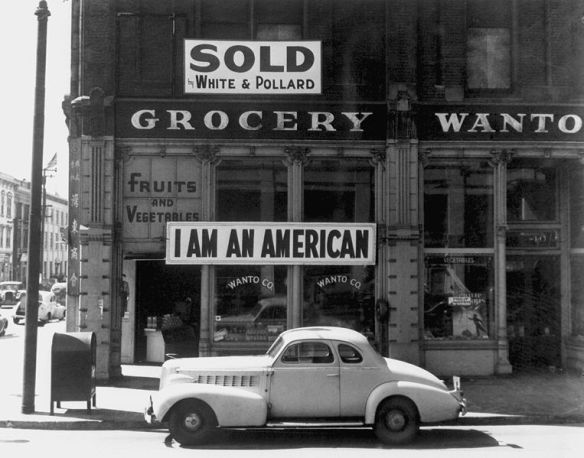
 San Francisco, Calif., Mar. 1942. 
A large sign reading “I am an American” placed in the window of a store, at 13th and Franklin streets, on December 8, the day after Pearl Harbor. The store was closed following orders to persons of Japanese descent to evacuate from certain West Coast areas. The owner, a University of California graduate, will be housed with hundreds of evacuees in War Relocation Authority centers for the duration of the war. Photo by Dorothea Lange.

http://community.livejournal.com/vintagephoto

On February 19, 1942, President Franklin D. Roosevelt signed Executive Order 9066 relocating 120,000 Japanese Americans from the West Coast into internment camps for the duration of the war. The personal rights, liberties, and freedoms of Japanese Americans were taken away from them by their own country. Since World War II, a Japanese American struggle continues to obtain reparation from the U.S. Government.

August 10, 1988 H.R. 442 is signed into law by President Ronald Reagan. It provides for individual payments of $20,000 to each surviving internee and a $1.25 billion education fund among other provisions.

October 9, 1990 The first nine redress payments are made at a Washington D.C. One hundred seven year-old Rev. Mamoru Eto of Los Angeles is the first to receive his check.

The Civil Liberties Act was an official apology made to Japanese Americans in 1988 by Congress.

http://www.sourcewatch.org/index.php?title=Japanese_American_life_under_U.S._policies_after_World_War_II


I’ve never been one to make much of a case for reparations for African American slavery, but I can’t help feeling like if “they” got it “we” should too.  It seems to me that this is further evidence of the dehumanization of black people.  Black people don’t deserve reparations?  They should be grateful to find themselves in America today instead of in the jungle?  They were created to work and don’t need much in return?  That’s what the implications of reparations for some, but not for those treated the worst while doing the most to make this country what it is- what it should be, but isn’t right now- today.  It’s kind of like the one-drop rule in a way.  Only applies to black people.  Asians, Hispanics, Indians can mix with whites for a couple of generations and their legacy is then white.  There is no one-drop to follow them around and accuse them of denying something or being ashamed or self-hating.  Their blood is not tainted.  Of course neither is mine, yet these implications remain.


wtf

christia adair

Christia Adair (1920)

3395503109_2335fcbbc0

In 1920, Christia Adair took some schoolchildren to meet the train when Republican Warren G. Harding was campaigning for the presidency. After seeing him shake hands only with the white children, she became a Democrat.
***************************************
[b.1893 – d.1989]

Christia Adair was a teacher, a community leader, and a tireless activist for the rights of women and African-Americans. Born in Victoria on October 22, 1893, Adair spent her early years in Edna, then moved to Austin with her family in 1910. She attended college first at Samuel Huston (now Huston-Tillotson University) and then at Prairie View Normal and Industrial College (now Prairie View A&M.) After graduation she moved back to Edna, where she taught elementary school.

She married Elbert Adair in 1918, and they moved to Kingsville. There she opened a Sunday school, and also began her community activism. She joined a multiracial group opposed to gambling, and then became involved in the suffrage movement. At that time neither blacks nor women could vote, and anyone who knows her feminist history knows that there was some racism in the suffrage movement. Indeed, after the 19th Amendment was ratified in 1920, blacks were still turned away from the polls because of racist whites’ tactic to deter them: the white primary. Since the South was wholly Democratic at that point, the primary basically decided the election. Thus excluding African-Americans from the primary effectively disenfranchised them. Adair had this to say:

“Back in 1918 Negroes could not vote and women could not vote either. The white women were trying to help get a bill passed in the legislature where women could vote. I said to the Negro women, “I don’t know if we can use it now or not, but if there’s a chance, I want to say we helped make it. 

“We went to the polls at the white primary but could not vote…We kept after them until they finally said ‘You cannot vote because you are a Negro.'”

This was a smart strategy, because that gave them grounds to sue. And sue they did. The Adairs had moved to Houston in 1925, and Christia had become very active in the Houston chapter of the NAACP. As executive secretary, she was a driving force behind the landmark lawsuit, Smith v. Allwright, which overturned the white primary – and helped set the stage for Brown v. Board of Education.

In the Jim Crow South, these activities made Adair and her colleagues targets for racist whites. The chapter received bomb threats with alarming regularity. The Houston police were not helpful. In fact, they were a hindrance. According to Adair’s entry at the Handbook of Texas Online:

In 1957 Houston police attempted for three weeks to locate the chapter’s membership list. While the official charge was battery – the illegal solicitation of clients by attorneys – Adair believed the real purpose was to destroy the organization and its advocacy of civil rights. She testified for five hours in a three-week trial over the attempted seizure of NAACP records. Two years later, on appeal to the Supreme Court, Thurgood Marshall again won a decision for the organization. Adair never admitted having membership lists or having member’s names. In 1959 the chapter disbanded and she resigned as executive secretary, though she later helped rebuild the group’s rolls to 10,000 members.

Now that’s a hardcore sister. And she didn’t stop there. She was a lifelong leader in the Methodist Episcopal Church and a precinct judge for more than 25 years. She also helped to…

* desegregate Houston’s public buildings, city buses, and department stores
* win Blacks the right to serve on juries and be considered for county jobs
* convince newspapers to refer to blacks with the same courtesy titles used for 
whites
* desegregate the Democratic Party in Texas

Any one of her achievements is impressive. Taken together, they’re downright amazing. And folks noticed. Adair was recognized by many for her brave and principled activism. Zeta Phi Beta sorority named her Woman of the Year in 1952. In 1974 Houston NOW honored her for suffrage activism. In 1977 she was selected as one of four participants in the Black Women Oral History Project, sponsored by the Schlesinger Library at Radcliffe College. That same year the city of Houston named a park for her. And in 1984, she was named to the Texas Women’s Hall of Fame. Adair died just a few years later at the age of 96, on New Year’s Eve 1989, leaving behind her an indelible legacy of justice and equality.

Above bio from: NOW National Organization for Women
Photo and paragraph directly below photo from: 
‘The Face of Our Past: Images of Black Women from Colonial America to the Present’ edited by Kathleen Thompson and Hilary Mac Austin 

http://www.flickr.com/photos/22067139@N05/3395503109/

WOW!!!  Such an important woman.  How had I not heard of her before?  Thank you, Omega!


re: miranda july

I love this because I have some of these same thoughts when I stand in line at the school where I vote….

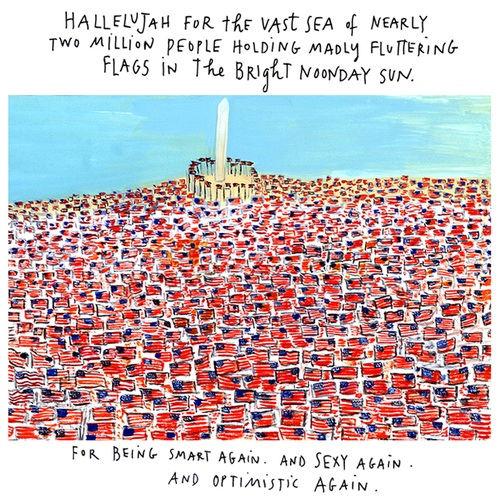
Here’s why you should vote: you are going to really love it, the whole strange procedure. You get to walk right into a building that you would never normally be allowed in, often an elementary school. You can pause in the hallway to look at all the weird school-art and feel the eerie vibe of hundreds of kids living their endless kid lives right nearby. Then you follow the arrows to the voting room and look at the faces of the volunteers – who are these people? There is a hush of secrecy, the voting booth is clunky, the whole thing seems fake somehow. You consider filling in all the bubbles, like you did on the SATs. But you don’t. You vote. You walk back outside feeling like you just gave blood or something, lightheaded from citizenry. You are wearing a sticker that says “I Voted” and you wish you could continue to get stickers like this throughout the day: I Ate Dinner, I Went To Sleep, I Got Out Of Bed, I Went To Work.  But alas, it is just this one thing that we all do together, savor it.- Miranda July 

mairakalman