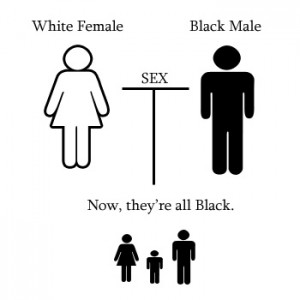
no recognition

i think this is just wrong… so wrong!  come on guinness!  i really don’t have anything else to say about it… except that i would love to have the opportunity to talk with mrs. lanier about all that she’s witnessed.

Slave’s daughter has ‘119th birthday party’ but Guinness won’t verify her as world’s oldest person

Daughter of Slaves Won’t Be Recognized as Oldest Woman. Rebecca Lanier celebrated her 119th birthday this week. Born to  parents who were former slaves, she believes she’s the oldest person in  the world, and her family has documentation to back up the claim, in the  form of a letter from the Social Security Administration. But the U.K.’s Daily Mail reports that because she was born in the  1890s, when it was commonplace for African-American babies not to be  issued birth certificates, she doesn’t have the documentation Guinness  World Records requires to be honored for her record-setting life. So  they refuse to acknowledge her. Lanier has witnessed more than 20 presidents and lived through two  world wars. She’s outlived her husband and daughters. And after all  this, she’s still suffering residual effects of the racial inequality  that existed more than a century ago, when she was born. “It’s quite a rigorous process that you go through because the birth  certificate is a crucial matter,” a Guinness World Records spokesman  told MailOnline, explaining why Lanier’s age won’t be recognized.

Mrs Rebecca Lanier never had birth certificate, required by Guinness World Records, as she was a black girl born to slave parents

By MARK DUELL

This ‘great-great-great-great grandmother’ claims to have lived through three centuries and her family believe she could be the oldest person in the world.

But Rebecca Lanier, 119, whose secret to long life is to ‘keep on living’, will not be recognised by Guinness World Records because she has no birth certificate.

Mrs Lanier, of Warrensville Heights, Ohio, who was born in March 1892, has seventh-generation grandchildren and outlived her husband and their two daughters.

She was born in a small Mississippi community to parents who had been slaves, at a time when many laws were prejudiced against black people in the South.

Because Mrs Lanier is black she was born with no birth certificate in the 1890s, which was normal in the South even though slavery had ended almost thirty years earlier.

This has caused problems as the Guinness Book of World Records needs that certificate to verify her age, which would make her the oldest living person in the world.

‘It’s quite a rigorous process that you go through because the birth certificate is a crucial matter,’ a Guinness World Records spokesman told MailOnline.

Mrs Lanier does however have a letter from the Social Security Administration that states the year of her birth as 1892, her grandson, Jimmie Shambley, 61, said.

But a Social Security spokesman told MailOnline they do not give verification of age and the burden of evidence is on claimants, who must provide official documents.

These can include birth certificates, citizenship certificates or permanent residence cards, with individuals receiving benefits getting an annual letter with their details on.

She spends her time doing the Chinese martial art tai chi every day and does not need to take any medication for illnesses or ailments.

Mrs Lanier, who now lives with Jimmie Shambley and his family, says she is ‘doing alright’ and had her 119th birthday at Warrensville Heights Senior Center on Tuesday.

When asked ‘How old are you today momma?’ by her great grandson Christopher Shambley, she replied: ‘Don’t worry about how old I am’.

Still going: Her grandson, Jimmie Shambley, said: 'She still is in her right mind and has great health. She makes her bed up every morning as she gets dressed'

‘She still is in her right mind and has great health,’ grandson Jimmie Shambley (above) told Scripps Media. ‘She makes her bed up every morning as she gets herself dressed.’

Mrs Lanier uses a ‘walker’ to balance herself as she moves, but often travels with the family on aeroplanes to various events around the country, they said.

‘She had two daughters. My mother had seven kids,’ Jimmie Shambley told Fox 4.

‘She has 15 great-great grand kids, 18 great-great-great grand kids and has two great-great-great-great grand kids.’

During her life Mrs Lanier has witnessed more than 20 presidents and lived through major events such as two world wars, the birth of flying and the right for women to vote.

‘She’s amazing – she’s just amazing to know,’ one family friend told Fox 4. ‘By her being 119, my friends and I – we range from 60 to 75 – we’re just youngsters.’

The claims come after Georgia great-great grandmother Besse Cooper was visited by Guinness World Records this month to certify her as the world’s oldest living person. Surrounded by family, 114-year-old Cooper accepted a plaque during a small ceremony at a Monroe nursing home. 

Record holder: Besse Cooper, 114, of Georgia, was verified as the world's oldest living person this month by Guinness

Record holder: Besse Cooper, 114, of Georgia, was verified as the world’s oldest living person this month by Guinness
WHEN SHE (Mrs. Lanier) WAS BORN…
  • Mrs Lanier was born in Mississippi in 1892, the year Grover Cleveland was elected to his second term as President
  • Wyoming had just been made a state, but Utah still was not and the U.S. population was around 63million
  • Most blacks did not vote as Mississippi had a $2 poll tax most could not afford
  • Only those who voted could serve on juries
  • General Electric was founded in 1892, but the Ford Motor company was still a decade away
  • Much of Mississippi depended on the cotton crops, which began to fail due to boll weevil infestation
  • She was born barely a year after the 1890 Wounded Knee Massacre of Native Americans that saw 150 Indians killed


the child was exhibited yesterday

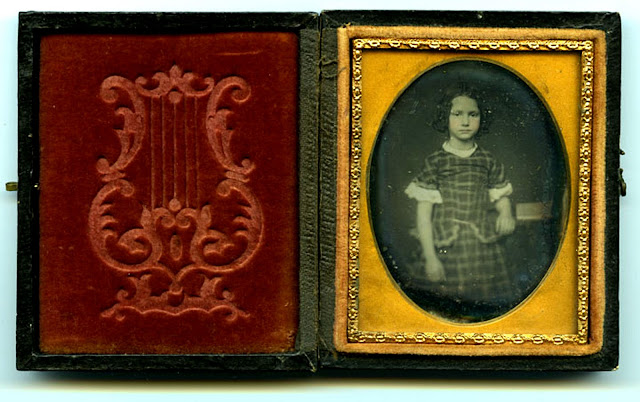
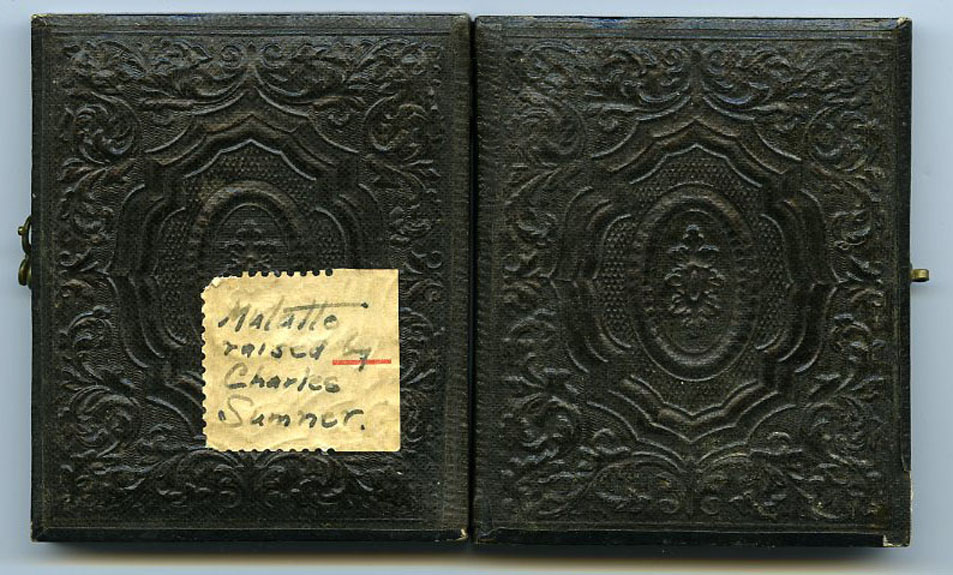
in my search for vintage images of mulatto folks i recently stumbled upon a gem!!   Joan P. Gage is a journalist and a collector of photographs.  on her blog A Rolling Crone she shares one of her collectibles and the fascinating (and still unfolding) story behind it.  i feel all kinds of ways about this piece of our history (and by “our” i do mean mulatto, i do mean american, i do mean human seeing as everything is everything and all.)  anyway, i feel sad for the little girl.  i feel pride for the little girl.  i feel a sense of satisfaction that i can point to this child and to the efforts charles sumner as evidence that, even way back when, a white man and a white-looking black child attempted to change people’s minds (way back)when it would have been much easier (not to mention safer!) to relish in the societal refuge that their phenotype offered.  i am not implying that the attempt was perfect, nor that there is nothing offensive or off-color about the sentiment behind the message.  but, if you consider the general consensus of the times on this matter, i think it safe to view sumner’s cause as a benevolent one.  i wonder how little mary felt.  i wonder if she understood.  i wonder what her parents looked like.  and her siblings.  i assume there’s a reason that they were not photographed or ‘exhibited’ together.  and i wonder how they felt about that, about all of it.  and what became of all of them…

From a New York Times article dated March 9, 1855, which read:
A WHITE SLAVE FROM VIRGINIA. We received a visit yesterday from an interesting little girl, — who, less than a month since, was a slave belonging to Judge NEAL, of Alexandria, Va. Our readers will remember that we lately published a letter, addressed by Hon. CHARLES SUMNER, to some friends in Boston, accompanying a daguerreotype which that gentleman had forwarded to his friends in this city, and which he described as the portrait of a real “Ida May,” — a young female slave, so white as to defy the acutest judge to detect in her features, complexion, hair, or general appearance, the slightest trace of Negro blood. It was this child that visited our office, accompanied by CHARLES H. BRAINARD, in whose care she was placed by Mr. SUMNER, for transmission to Boston. Her history is briefly as follows: Her name is MARY MILDRED BOTTS; her father escaped from the estate of Judge NEAL, Alexandria, six years ago and took refuge in Boston. Two years since he purchased his freedom for $600, his wife and three children being still in bondage. The good feeling of his Boston friends induced them to subscribe for the purchase of his family, and three weeks since, through the agency of Hon. CHARLES SUMNER, the purchase was effected, $800 being paid for the family. They created quite a sensation in Washington, and were provided with a passage in the first class cars in their journey to this city, whence they took their way last evening by the Fall River route to Boston. The child was exhibited yesterday to many prominent individuals in the City, and the general sentiment, in which we fully concur, was one of astonishment that she should ever have been held a slave. She was one of the fairest and most indisputable white children that we have ever seen.

From “Raising Freedom’s Child—Black Children and Visions of the Future after Slavery,” written by a University of New Orleans professor, Mary Niall Mitchell:

By the eve of the Civil War, abolitionists recognized the potential of white-looking children for stirring up antislavery sentiment…Although it was the image of a raggedy, motherless Topsy that viewers might have expected to see in a photograph of a slave girl, it was the “innocent”, “pure,” and “well-loved” white child who appeared, a child who needed the protection of the northern white public.
“Topsy”
George Thomson’s Woodcut Illustrations
1888

The sponsors of seven-year-old Mary Mildred Botts, a freed child from Virginia, may have been the first to capitalize on these ideas, as early as 1855. Her story also marks the beginning of efforts to use photography (in Mary Botts’s case, the daguerreotype, as the carte-de-visite format was not yet available) in the service of raising sentiment and support for the abolitionist cause.”
“…In his own characterization of Mary Botts,” Mitchell continues, “Sumner set a pattern that other abolitionists would follow.  In a letter printed in both the Boston Telegraph and the New York Daily Times, he compared Mary Botts to a fictional white girl who had been kidnapped and enslaved, the protagonist in Mary Hayden Pike’s antislavery novel Ida May:  ‘She is bright and intelligent—another Ida May,’ [Sumner wrote] ‘I think her presence among us (in Boston) will be more effective than any speech I can make.’”

From joanpgage, the blogger (and current owner of the daguerrotype) from which I am re-blogging this piece:

Only a year after parading Mary Botts through New York, Boston and Worcester and dubbing her “The real Ida May”,  Charles Sumner’s devout abolitionist views  led him to a crippling disaster, when, in 1856, he was so badly beaten on the floor of the Senate by South Carolina Representative Preston Brooks,  who broke a cane over his head, that it would take years of therapy before Sumner could return to the Senate.

…Prof. Mitchell is currently working on a book about Mary Botts that will tell more about this former slave’s life, including the drama of how Sumner purchased her and spirited her out of Virginia, how he introduced her to the media and society as a  living advocate for the abolitionist cause, and how her family settled in the free black community in Boston.

I’m eager to learn the rest of the story, but, for now, it’s enough of a thrill just to know that the daguerreotype, taken in 1855, that is part of my collection may represent one of the first efforts EVER to use the modern discovery of photography to touch people’s emotions and change their minds.  This small image of a seven-year-old girl may be an example of the first time photography was used for propaganda, but it was certainly not the last.


unsavory initial recognition

i’ve no idea where i found this.  it’s been waiting to be posted since last july…

in light of the current posting trend over here, i found the last line to be somewhat relevant…”document(s) white recognition of beauty and attraction in their slaves.”  not quite so “flattering” as the modern recognition.

An attractive and well dressed mulatto woman from New Orleans. A sixth plate dagu

Her light skin color was itself evidence of miscegenation.
She was quite possibly a free woman and as such, the photograph would contribute little to a study of slavery. Yet the likelihood remains that she was enslaved. If so, this woman’s attractive looks and fancy dress imply she could have been owned or hired as a slave mistress.

Interracial sexual exploitation, along with brutal punishment and separation of families, was a terrible aspect of slavery. The practice was far from unknown throughout the antebellum South and existed with special visibility in New Orleans. If the daguerreotype of this woman could for a moment be interpreted in such a fashion, then commissioned by her escort, it would document white recognition of beauty and attraction in their slaves.

no h8

This is so right on!  Thank you, Karen Finney.  I’m so glad my (white)grandparents allowed me in to their lives.  And so are they! It’s the “little” things…

On another note, this sentence, “the very existence of antimiscegenation laws had been enacted for the purpose of perpetuating the idea of white supremacy,” speaks to the very reason I fell down this rabbit hole I’ll now call the mulatto trail.  I realized one day that anti-miscegenation and the one-drop rule perpetuate the idea of white supremacy, and that by subscribing to that antiquated rule I was upholding that ridiculous notion.  The anti-miscegenation thing has legally been eradicated, but ask any interracial couple who has walked down a street together, and I’m sure they’ll tell you that on more than one occasion they’ve been given the evil-eye or gawked as if they were freaks of nature.  Or both.  And as for the one-drop rule, head on over to my youtube channel, scroll through the comments, and you’ll see that it looms large in the consciousness.  And many people don’t seem to be willing to let it go.

California Prop 8 Gay Marriage Ruling a Win For American Values

By KAREN FINNEY

SOURCE

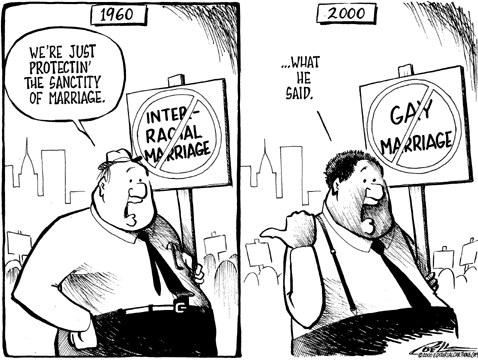
Yesterday’s ruling that California’s Proposition 8 is unconstitutional reaffirms a long-held American value that no matter how you try to spin it, separate is not equal. While some may not agree with same-sex marriage, history should remind us that our Constitution calls us to recognize that the laws in it apply equally, not to be picked apart to support a political agenda or bias. The arguments being used against same sex marriage are frighteningly similar and equally offensive as those once used against interracial marriage. While a Gallup poll in 1967 found that 74 percent of Americans disapproved of interracial marriage, it’s almost hard to remember just how far we’ve come.

I was 16 years old before I was allowed in my grandfather’s home in Greensboro, North Carolina. That’s how long it took for him to even begin to re-think his shame over having a mixed-race granddaughter. He believed, as did many at the time, miscegenation was wrong on moral and legal grounds. Thankfully for me, my parents disagreed. They were married in New York City and had me despite the fact that it was illegal in their home states of Virginia and North Carolina to do so. Thankfully for our country, in the case of Loving v. Virginia, the Supreme Court saw beyond the fear and bigotry of the moment and ruled that antimiscegenation laws violated fundamental American values of Due Process and Equal Protection Under the Law as guaranteed to every American by our constitution.

Just as some used to say that marriage is only valid between a white man and white woman, some now argue that marriage can only be between a man and a woman. Arguments have also been made that same-sex marriage dilutes the institution of marriage, just as similar arguments suggested that interracial marriage diluted the white race. My personal favorite absurd justification says that (despite the idea that we are all God’s children and loved equally) gay marriage is against the laws of God and nature. That argument was used by Leon M. Bazile, the judge in the initial case against the Lovings, who said:

Almighty God created the races white, black, yellow, malay and red, and he placed them on separate continents. And but for the interference with his arrangement there would be no cause for such marriages. The fact that he separated the races shows that he did not intend for the races to mix.

The Supreme Court’s ruling in the Loving case also recognized that the very existence of antimiscegenation laws had been enacted for the purpose of perpetuating the idea of white supremacy:

There is patently no legitimate overriding purpose independent of invidious racial discrimination which justifies this classification. The fact that Virginia prohibits only interracial marriages involving white persons demonstrates that the racial classifications must stand on their own justification, as measures designed to maintain White Supremacy.

Similarly, as Judge Vaughn Walker today affirmed, denying gay couples the right to marry, not only denies basic civil rights, liberty, and freedom, but also codifies bigotry.

Karen FinneyKaren Finney is a political analyst for MSNBC and an independent consultant working with political and corporate clients in the areas of political and communications strategy. She brings over 16 years of experience in national politics and campaigns ranging from the Clinton administration to New York State to the Democratic National Committee.

recently on the interweb

I’ve come across some interesting stories, commentary, and subsequent comments all dealing with… Biracialness! Big shocker, right?  I love reading the comments.  So many different opinions, which simply reinforce my will to stay with my self and stand confident in my personal ideology.

The Seattle Times

Via

Rant and Rave Rant to the women on the bus who, when asked to quell their use of expletives around my young children, disparaged me for having a biracial family and insulted my daughters’ hair. Rave to the man who told them my request concerning their language was valid and that they had no reason to insult me and my family. Thank you, sir.

Answer.com

JUST ASK AND LET THE OTHER TO ANSWER IT FOR YOU

Via

Pregnancy & Parenting

How do I tell my mum I’m having a mixed race baby?

the baby is going to be half black but i don’t think my mum or my family would be too happy about it.. I want my family to accept the baby but what can do I to make them accept my unborn baby…

5 Responses to “How do I tell my mum im having a mixed race baby?”

blessed says:

all you can really do is explain to them as much as you can to get them to understand, but even at that it might not change their minds, but if it doesn’t then just say it’s my baby and no matter what it is going to be family and they’ll just have to get over it.

Charles J says:

You don’t. I would recommend getting an abortion. No one likes a half-breed.

VincentL says:

just tell them straight up…they probably be very mad at first but sooner or later they will adjust to i

Due 12.3.10 says:

just tell her its ur child..

R.I.P Michael Jackson says:

u don’t have to they will c it when u have it………….

Run, Racists, Run! Biracials Are Everywhere!

By Sam Watson

Via

Gone are the days where the majority of people will shout racist remarks at those of color on the streets. It still happens, but nowhere near as much as in the past. Racists are kind of afraid to spew their hatred in public, and I feel us biracials are to blame. We represent an abomination to racists. An old, white guy- a complete stranger- once saw my mom (white, Ukrainian) with my sister and I, when we were very young children, and he shouted, “Slut!” at her. We’re mixed – half white and half black. We represent an absolute breakdown of a racist’s hateful beliefs.

…Racists don’t know whether or not the “white” person next to them is either mixed or married to someone of a different race. Racists better up their paranoia levels, and warn the town sheriff in Bigotville.  During the World Cup, I turned to my seemingly white co-worker, and started ragging on the Mexican team. She instantly scowled at me in return. I forgot! She’s half white and half Mexican! Even I- a biracial- was fooled! We’re everywhere, now, and this is a racist’s worst nightmare.

Comments

-You are right. When it comes to black people, they now hate themselves much more. All of us are mixed up with something. We are one human race. Our race is different from that of the animals, not each other.
-A study I heard cited recently encouraged parents to discuss race and racism with their kids. Several families dropped out because they were so uncomfortable with this requirement of the study.

The study discovered that racism is not discussed at all in many progressive, liberal households. The idea is that if we’re all supposed to be colorblind, discussing race, or any difference for that matter, is taboo. Of course, that’s the best way to make it a dark, secretive thing- precisely the problem. People who desperately want their kids to be not just tolerant, but accepting, are practically guaranteeing their kids get no exposure to the subject by pretending it’s not there.

Racism and bigotry is a vampire- it can’t stand the light. If we want it to die out, we have to do the uncomfortable, inconvenient thing and talk about it even when it’s not a major in-your-face problem.

-I am half German (white) and Puerto Rican (brown) and I always baffle people. I think it’s interesting that we assume that racism is disappearing when I feel like it is only growing. In an all colorful nation I still feel like I need to watch what I say when I am naming a race ~ whether it’s politically “correct” or not because I never know who is going to be offended.

-You better believe we are everywhere. Though I know I’m not the only unique biracial person out there, I do admit that people are surprise when they hear that my mom is from Dominican Republic and my father is from Afghanistan. Talk about fusing two totally different cultures.

I also understand when you talk about racism being a private thing. My step mother is racist, even though she’s married to my father. It makes me mad when she makes stupid comments regaurding race. She also tries to inplant her ideas on my half brother. I try my best to counter these thoughts though… my diverse background has raised me to be open to new ideas, cultures, and people. The more people who are biracial, the more tolerance we have of one another.

-Racism is still alive but it’s a endangered species. I say this because the current generation doesn’t hold race as important as the previous ones. Most of my friends (I, myself included) have bi-racial children. At times I wonder when these kids grow up will that look at their peers and ask in shock “You’re not mixed?” I think it’s a great thing, however as parents we still need to pour our cultures into the children, letting them know they have and even more extended set of roots and the beauty contained within both.

-Racism is part of human nature. Embrace it!

-I’m old enough to have seen overt racism, as well as the more prevalent covert racism. Sometimes I feel that the only hope we have to eradicate racism is the gradual blending of all races into an “everyman.”

-I was recently showing off pictures of my friends in New York to some people here. They nodded politely at all of them, but paused at a picture of two my best friends.

“What race are they?” I was asked.

I couldn’t believe it mattered. A lot of my previous pictures had been of people who were black or Asian or of some non-white race, but these two mixed-race girls came into question?

“Er, she’s Romanian and Jamaican, and she’s Indian, Portuguese and Italian.”

“Oh, okay.” The guy replied. “I just couldn’t figure it out.”

Why should you have to?

startling

Perhaps “startling” would be a bit of an exaggeration today, but a production like this would still be considered mildly innovative indicating that we haven’t evolved much out of our old traditions…

March 1970: Student teachers, Dereck Tapper and Scilla Nicholls in a rehearsal for a production of ‘Romeo and Juliet’ at St Luke’s Teacher Training College in Exeter. The mixed-race casting was considered a startling innovation at the time. (Photo by Keystone/Getty Images)

whiteness defined

This one is so good that I don’t have perspective to add or anything witty to say about it.  However that could just be because I’ve only had three hours of sleep and just can’t do any better.  Either way, this excerpt of a transcript of an NPR interview is definitely worth reading and pondering.  You could also listen to it in it’s entirety HERE.

Author Examines ‘The History Of White People’

Once upon a time, notorious laws in this country defined as black anyone with as much as one drop of black blood. Similar laws struggled with the rights of people of mixed race, octoroons, for example. But nowhere can you find a definition of white people, and as a practical matter, that non-definition has changed. Ethnic groups now regarded as white Irish, Jews, Italians – were once very much on the outside.

These points (are) from Nell Irvin Painter’s new book, “The History of White People,” which traces ideas about color and race from antiquity to the Obama administration.

This is TALK OF THE NATION. I’m Neal Conan in Washington. Nell Irvin Painter is our guest…

CONAN: …you conclude at the end of your book, you say the fundamental black-white binary endures even though the category of whiteness or we might say more precisely a category of non-blackness effectively expands. That non-blackness, is that by lack of a definition of whiteness?

Ms. PAINTER: Yeah, that’s about how it goes. There as you noted, there have not been legal definitions of whiteness. It’s kind of what’s leftover from blackness.

CONAN: What isn’t.

Ms. PAINTER: And blackness, there’s the idea of a one-drop rule is an idea. What the states did was say one-fourth, one-eighth, that kind of thing, one grandparent, one great-grandparent. That’s how they decided what one drop was.

I suppose people use the word one drop because actually color disappears very quickly in people. And so you can look functionally white with one black grandparent, which in most places would make you legally black. So what makes you black has been defined and redefined and re-re-redefined. What makes you white is what’s leftover.

CONAN: And in fact, you say that has been, well, ill-defined but redefined and redefined over the years, too.

Ms. PAINTER: Yeah…  The whole point of defining races is mostly to put people down, and so those needs change over time. Who do you want to put down? Well, you want to put down, say, Jews and Italians and Slavs 100 years ago, but 150 years ago, you wanted to put down the Irish.

…We think of race as something physical, biological and permanent, but the way people used race in the 19th and 20th centuries and probably still today is that it has to do with temperament, racial temperament. So how people look on the outside is a key to what they’re like on the inside, their temperament. So that had to do with Protestantism, too.

…CONAN: It’s interesting, Nell Irvin Painter, you describe how, in fact, racial laws made a transition in the late part of the 20th century from being used to exclude persons of color to define injustices against persons of color.

Ms. PAINTER: Not persons of color, Negroes, to be exact. The laws were against Negroes. But you’re absolutely right that before desegregation, before the Civil Rights Act of 1964, all those laws, exclusionary laws, were meant to keep Negroes out. And the counting up was to keep Negroes out.

And after that, particularly after the 1970s, the need to rectify the injustices meant that we had to count people in order to straighten things out. So now we count up racial categories, say, to track mortgage lending, where there’s still a good deal of racial discrimination.

So in the census, the census keeps counting us by race for purposes of undoing racial harm in the past.

Read more (or listen) HERE

profiled

Yes, I believe they were… Disturbing.

Teen With Asperger’s Arrested: Were Callers Racial Profiling?

by Ken Reibel

VIA

Reginald Latson loves to walk.

“He’ll walk five or 10 miles, it’s nothing to him. Sometimes he walks five miles just to grab a bite to eat at Chili’s,” says his mother, Lisa, who lives in Stafford, Virginia. “Walking is his release.”

Neli, as his family calls him, is 18 and has Asperger’s, a mild form of autism. Three Mondays ago, he rose early and left home without telling his mother. “When I entered his room at 6:30 am and didn’t see him, I assumed he had gone for another walk,” she says. It was a school day.

Four hours later Stafford County authorities had ordered a lock down for eight schools, and Neli was in police custody, facing one count of malicious wounding of a law enforcement officer, one count of assault and battery of a law enforcement officer, and one count of knowingly disarming a police officer in performance of his official duties. The cascade of missteps that led to the arrest suggest a combination of public racial profiling and the over reaction of law enforcement officers who are unfamiliar with autistic behavior.

* * *

After Neli left home early that morning he walked two miles to Porter Library on Parkway Blvd. “He goes there frequently. There’s a teen room there, and he enjoys it,” says Lisa. The library was closed, so he sat under a tree, in the grass, at the front of the building. The parking lot at Park Ridge Elementary, about 400 feet to the west, was filling up.

According to officials reports, someone at the school called police at about 8:38 am to report a suspicious person sitting outside the library, “possibly in possession of a gun.” A bulletin went out with Neli’s description, and officials, concerned that a gunman was on the loose, ordered a school lockdown and set up a search perimeter.

When police arrived at the library, Neli was gone. Unaware of the report, and impatient for the library to open, he began walking in the direction of the high school. A forested green belt of trees some 500 feet-wide with a well-worn path separates the school from nearby homes. At about 9 am, a “school resources officer” who is also a Stafford County Sheriff deputy approached Neli. That’s when accounts begin to diverge.

Lisa said her son complied with a search, which failed to find a weapon. Police say Neli “attacked and assaulted the deputy for no apparent reason.”

Neli told his mother that the school officer threatened him, and that Neli said “You’re harassing me. You’re not allowed to do that. I know my rights,” then turned and walked away. According to Neli, the officer grabbed him from behind and choked him. Police reports say a scuffle ensued, during which the officer pepper sprayed Neli. The police version, which you can read here, says Neli then took the spray from the officer and turned it on him.

According to Lisa, Neli said he took the spray and ran into the woods. The deputy, Thomas Calverley, reportedly suffered a cut to the head and a broken ankle, and underwent surgery.

By this time sheriff deputies were combing the area with search dogs, and at least one TV news crew offered a breathless live report of the manhunt. Neli somehow eluded the dragnet for another 45 minutes before being spotted and arrested in the high school parking lot, shortly before 10 am.

No gun was found “and subsequent investigation has indicated that that a gun was not actually seen by the reporting parties,” according to the official report.

Lisa learned of the arrest at 10:30 am, when she called the police to report that her son was missing. “I was told that he was in custody and was currently being questioned but I was not told why,” she said. “They wouldn’t tell me anything, and wouldn’t allow me to visit him. I told the police that Neli has autism, but they didn’t seem to care.”

For the next 11 days, Neli was held without bail, and in isolation at the Rappahannock Regional Jail. Police allowed Neli’s school counselor to visit, and she relayed messages and information to Lisa, who was allowed only one visit. “He wasn’t able to speak or communicate with me. He appeared to be in a catatonic state,” Lisa says.

She is understandably frustrated and angry.

“The actions that were taken by the police that day were excessive in the least and grossly mishandled,” she wrote on a website started to counter inaccurate local media reports. “Someone says ‘I see a suspicious black male’ and he ‘could’ have a gun, while all my son was doing was sitting in the grass at the library. And you shut down six schools and go out on a manhunt for this dangerous black man who was sitting in the grass. Anyone can read between the lines and see that this just doesn’t add up.”

2010-06-13-Neli61310.jpg

Neli is from a military family, and during his 18 years has lived in Florida, Germany, Oklahoma and Georgia. Seven years ago his family moved to Stafford, a sprawling bedroom community about an hour south of Washington, DC. The family struggled to find appropriate school placement, finally settling on a private school. “The public high school was crowded, with about 30 kids to a class. Neli wasn’t getting the attention he needed, and his self esteem was slipping.” But he had never been in serious trouble. Never like this.

Lisa heeded the warning signs. A month earlier, she asked Neli how he would feel about wearing a medical alert bracelet that identified him as a person with Asperger’s. “He said that he didn’t have a problem with that, but I didn’t follow up. I’m just kicking myself for that,” she said.

Lisa, who works as a defense contractor, had also asked for a two month leave of absence to spend more time with Neli. That Monday was her first day off work. Her husband, Neli’s stepfather, retired from the Army and is currently stationed in Iraq as a military contractor.

* * *

As Neli’s time in isolation dragged on, police interrogators found him non-responsive and disturbed, and a judge ordered the young man transferred to a state mental institution for 30-days of treatment and evaluation. If the case is not resolved by then, he will end up back in jail.

The hospital is a two-and-a-half hour trip from Stafford, which Lisa says she has made four times. Horrified, she watched her son’s mental state worsen with each visit. “He is locked away and doesn’t understand why,” says Lisa. “He’s been through an ordeal.”

That ordeal has also changed Lisa, and the way she thinks about race, the police, and her community. She suspects Neli’s arrest was in part racially motivated, but it is not a charge she makes lightly.

“I used to donate money to the police benevolent society. I never imagined something like this could happen,” she says.

“I don’t think in terms of ‘watch out for those kinds of people’ or ‘you need to be scared,'” she says. “I grew up in south Florida. That’s a melting pot of cultures. I know there are good people and bad of every race.” Her life in the military, she says, has brought her friends “of every racial background.”

Has the ordeal changed her views on race and racism?

“It has,” she said, her voice trailing off. “It most definitely has.”

* * *
Cross posted at AutismNewsBeat.com

speaking of freedom

I cannot forget that “liberty and justice for all” wasn’t really for all.  So much for being impeccable with your word, Founding Fathers.  Here’s an interesting snippet of the history of the struggle for freedom in this nation.  The struggle of those who toiled to build it and cultivate it’s wealth, and one man who was dedicated to assisting them.  I’m curious about the early years of Henry Ward Beecher’s life.  I wonder how he came to see the truth, when the illusion was set up to work in his favor.

Underground Railroad

VIA

The road to freedom is one of the great themes of American history. The story of the Underground Railroad exemplifies the profound power of that journey. Following the lead of its famed antislavery preacher Henry Ward Beecher, Plymouth Church played a fundamental part in New York City ‘s underground activity.

From the very beginnings of slavery in America, slaves escaped to freedom. They ran to the wilderness; they went to live with the ever-hospitable Indians; they slipped into cities and made their claim as free Blacks. In the Revolutionary era, Puritan New England and Quaker Pennsylvania passed legislation abolishing slavery. The exodus northward, which came to be known as the Underground Railroad, began. By 1831, the term “Underground Railroad” had been coined to describe the informal, secretive network of ordinary citizens, Black and White, whose safe houses offered refuge.

Although Plymouth Church was not established until 1847, just fourteen years before the start of the Civil War, it later became known as “the Grand Central Depot” of the Underground Railroad. Oral tradition and several published memoirs tell us that slaves seeking passage to Canada may have hidden in the tunnel-like basement beneath the church sanctuary (this space can still be visited during our public and school tours). Beecher’s private stenographer, T.J. Ellinwood, quotes the Minister as claiming, “I opened Plymouth Church”, though you did not know it, to hide fugitives. I took them into my own home and fed them. I piloted them, and sent them toward the North Star, which to them was the Star of Bethlehem.“ The Rev. Charles B. Ray, an African-American living in Manhattan, and the founding editor of the Colored American newspaper, was quoted as saying, “I regularly drop off fugitives at Henry Ward Beecher‘s Plymouth Church in Brooklyn.” Other churches in Brooklyn and Manhattan, especially Black churches, also hid escapees, but most have since moved to newer buildings. Plymouth Church is one of the few active Underground Railroad congregations in New York still housed in its original location.

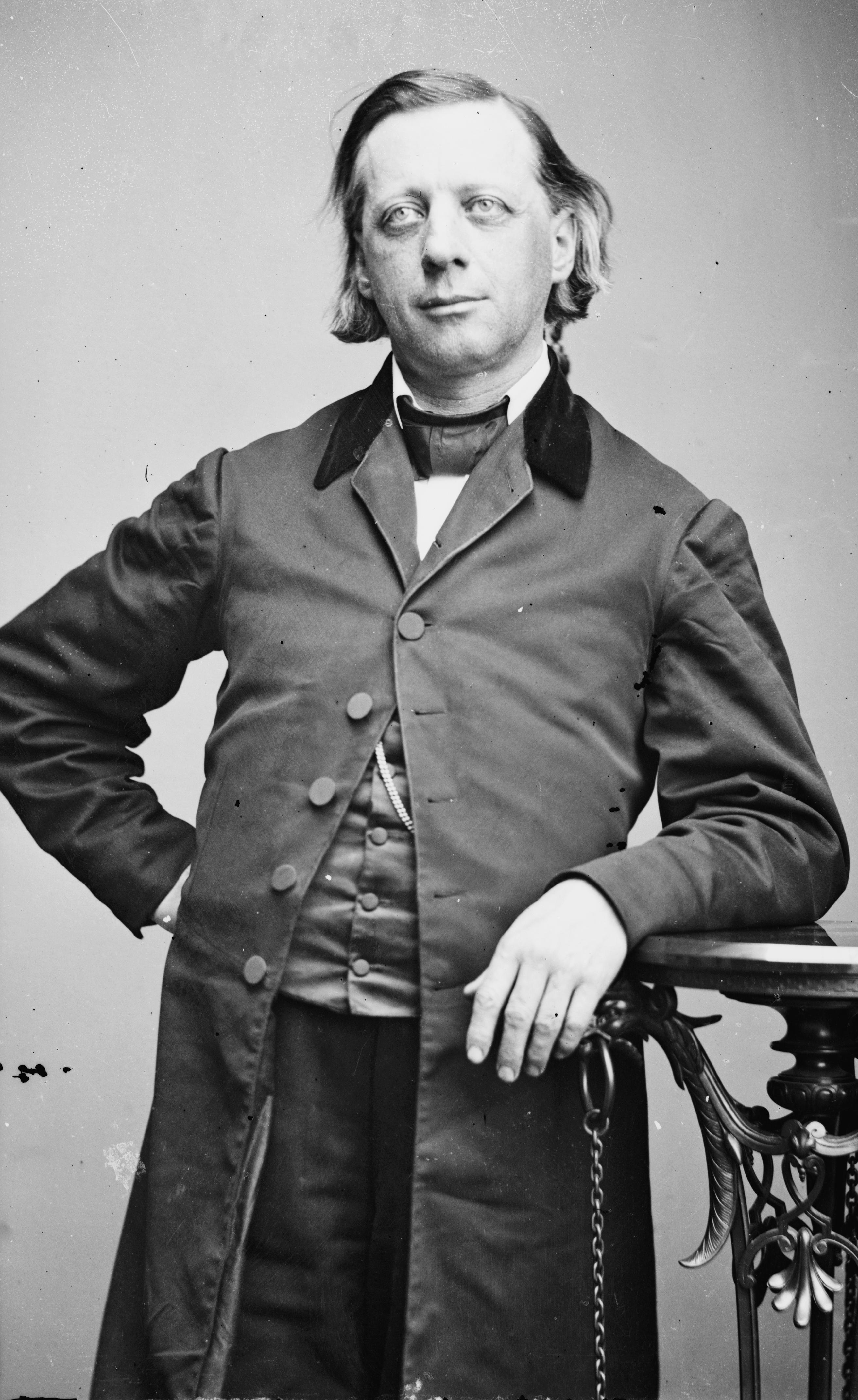
Henry Ward Beecher

Plymouth’s first minister, the Rev.Henry Ward Beecher , spearheaded and symbolized Plymouth’s antislavery activity, but the founding members of Plymouth selected him as their pastor in no small part because they knew he would do so. He already had a record as an opponent to slavery when he made those beliefs clear in his trial sermon for Plymouth. Beecher and his peers were greatly influenced by the Second Great Awakening, a Protestant religious revival of the early 1800’s, firmly committed to abolishing slavery. As a student at Amherst College, he helped found an abolitionist organization, which was promptly shut down by the faculty. At seminary in Cincinnati, he contributed to an antislavery newspaper which was mobbed and destroyed; he also patrolled the streets of that city, fully armed, when temporary special policemen were called upon to protect free Blacks from threats. When he was a minister in Indianapolis, his limited preaching on the subject caused members to leave his church, but he remained active in the Underground Railroad there, as his widow, Eunice, recalled years later.

Enormous publicity surrounded one of Beecher’s first antislavery acts at Plymouth Church. In 1848, 77 fugitive slaves were sold in Washington after the failure of the largest group escape attempt on the Underground Railroad. In that group were two teenage girls, the Edmondson sisters. Thanks to the fundraising efforts of people like Beecher to regain the girls’ freedom, the Edmondsons galvanized public support for the abolitionist movement – and inspired Beecher’s own sister, Harriet, to write Uncle Tom’s Cabin.

Beecher, with his newly elevated public profile, had to be especially circumspect in harboring escaped slaves. Eventually, in 1872, he was named by The Brooklyn Eagle as an active participant in the Underground Railroad. The article claimed that Plymouth’s minister helped dozens of fugitives in cooperation with a man in New York named “Napoleon.” This Napoleon “had the matter of escape under his charge and whenever a slave was sent on to Mr. Beecher he, Napoleon, would fix things along the Central Railroad and see to it that the officials along the route were got into friendly disposition for the fugitive.” The article does not indicate Napoleon’s race, but he may well have been Black, for Black involvement in the Underground Railroad almost certainly exceeded that of Whites.

There are believed to be many members of the Plymouth congregation who were active in the Underground Railroad. Evidence suggests that escaped slaves were hidden in the homes of several Plymouth members. The Church treasurer, S.V. White, had a small chamber in his house said to have been used to hide runaways, a room that was still in existence in the 1900s. One of the Church’s greatest activists in the Underground Railroad was Lewis Tappan. He is best remembered as a leader in organizing efforts to release the escaped slaves of the Amistad in 1839. Later, he helped fund the creation of Plymouth Church (his daughter, Lucy Tappan Bowen, was one of the original 21 members), but he did not join until 1856. As part of his work helping runaway slaves, he provided refuge in his home to a 15-year-old girl who escaped by pretending to be a male conductor on a New York-bound ferry.

All this was taking place in one of the most pro-slavery states of the North. Not until 1827 was slavery finally abolished in New York. Much of this attitude may be traced to the years when New York was a proprietary colony of the Duke of York, a major shareholder in the slave-trading Royal Africa Company. With his powerful influence, he instructed the governors to do everything possible to sell more slaves. After independence, the close business relations between Southern planters and New York merchants continued to enhance pro-owner sympathy.

Whatever ambivalent feelings about slavery remained in New York, they were greatly tested in 1850. That year, the country began negotiating slavery in the newly acquired territories seized during the Mexican-American War. The designation of new slaveholding states, plus the passage of the Fugitive Slave Act requiring all American citizens to assist in apprehending runaway slaves, incensed many Northerners. The work of the Underground Railroad intensified. These were the years of Plymouth Church’s greatest involvement, and, by 1860, it was certainly the most famous church in America. One year later, the Civil War began, and Plymouth continued to supply material and spiritual support to a devastated country. Five brutal years later, slavery was outlawed, and Plymouth Church’s role in the Underground Railroad could finally, thankfully, come to an end.

The exact statistics of the Underground Railroad – how many slaves escaped, how many free citizens aided them – will never be known. But we do know that this was a time and an undertaking in which Blacks and Whites came together to right a grievous wrong. It should also be said that, for the members of Plymouth Church, and for most if not all of those who took part, they did so to live out their Christian faith.

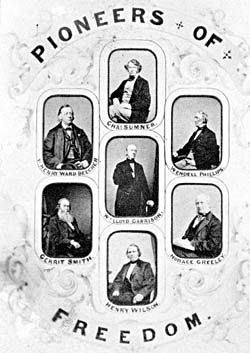
Portraits of abolitionists Charles Sumner, Henry Ward Beecher, Wendell Phillips, William Lloyd Garrison, Gerrit Smith, Horace Greeley and Henry Wilson, c. 1866

mary ellen pleasant

As I was searching the internets last week for photos of black women with white children, I stumbled upon a historical figure who, once again, I am shocked and dismayed to never before have heard mention of:  Mary Ellen (“Mammy”) Pleasant.  I want to know so much more!  Or at least the truth.  I highly doubt that Mary Ellen needed to conjure the dark forces to leverage social change, however I’m sure that that tale eased the minds of the opposition and provided ammunition for attacking Pleasant’s ideals.  I found quite a few intriguing articles on her life and chose the following two to share.  Honestly, when someone next asks me who (dead or alive) I would most like to have dinner with, Mary Ellen Pleasant will be on the short list.

hdr_index

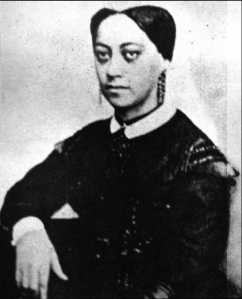
“American civil rights began in the 1850’s with Mary Ellen Pleasant.”  Racism surprised African Americans like Pleasant who came to the Bay Area because they believed in a better life in San Francisco… The Bay Area, where Pleasant lived, became a “hotbed of civil rights activity” in the 19th century and the activists’ rallying cry was “eradicating slavery.”- Dr. Albert Broussard

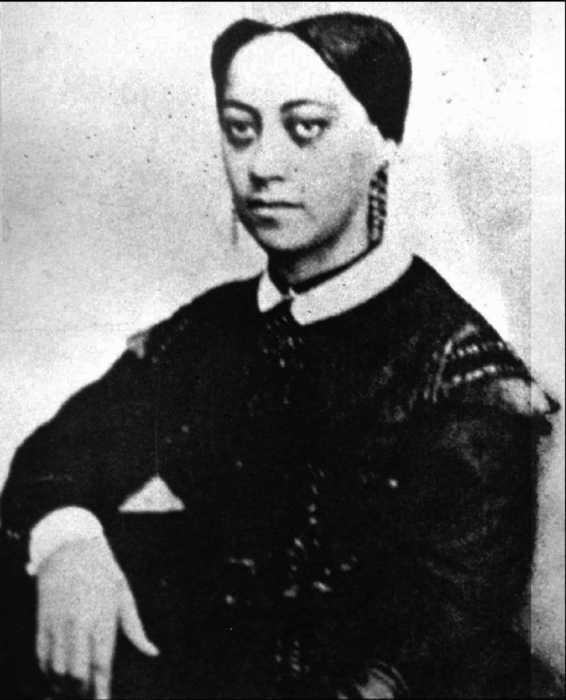
Mary Ellen Pleasant (1814? – 1904)
SSMt7.St.4

VIA

Mary Ellen Pleasant is perhaps better known as “Mammy Pleasant”, but it was a name she detested. She was born a slave in Georgia some time between 1814 and 1817, the illegitimate daughter of an enslaved Vodou priestess from Haiti and a Virginia governor’s son, John Pleasants. She was bought out of slavery by a planter and indentured for nine years as a store clerk with abolitionist Quakers in Massachusetts.

Around 1841 she married a wealthy mulatto merchant/contractor from Ohio and Philadelphia named James Smith, who was also a slave rescuer on the Underground Railroad. The two worked to help slaves flee to safety in Canada and safe states. Smith died in 1844, leaving her a $45,000 fortune and a plantation run by freedmen near Harper’s Ferry, Virginia.

Because of slaver reaction to her own ongoing Underground Railroad activities, she was forced to flee to New Orleans in 1850 where she met the Vodou queen Marie Laveau who trained her in how to “pressure the powerful to help the powerless” —blacks and poor women—gain rights and jobs. She then went to San Francisco, arriving in April 1852. Because she had no “freedom papers” she passed herself off as white, while she worked as a steward and cook in a white boardinghouse and invested in real estate and various business activities.

Pleasant’s training with Marie Laveau proved beneficial. Pleasant became so successful at leveraging social change that many called her San Francisco’s “Black City Hall”. Her activities and her money helped ex-slaves avoid extradition, start businesses and find employment in hotels, homes and on the steamships and railroads of California.

In 1858 she returned to the East, bought land to house escaped slaves, and aided abolitionist John Brown both with money and by riding in advance of his famous raid at Harper’s Ferry encouraging slaves to join him.

She went back to San Francisco where her investments with an influential business partner helped her amass a joint fortune estimated at $30 million. She later led the Franchise League movement in San Francisco that earned blacks the right to testify in court, and to ride the trolleys. Her lawsuit in 1868 in San Francisco against the North Beach and Mission RailRoad was used as a precedent in 1982 to achieve contemporary civil rights. Mary Ellen Pleasant died in San Francisco in 1904. Her body was taken by friends to Napa and buried in Tulocay Cemetery. On her tombstone is inscribed “the mother of civil rights in California.”

For more information, incuding a book on Mary Ellen Pleasant by Susheel Bibbs, see http://hometown.aol.com/mepleasant.

VIA

“Mammy Pleasant: Angel or Arch Fiend in the House of Mystery?”

By p. joseph potocki

Mary Ellen “Mammy” Pleasant’s legacy is an enigma rolled up inside layers of legend, gossip, greed, fantasy, racism and conjecture.

This week’s column title first headlined Sunday’s edition of the San Francisco Call—back on May 7, 1899. That 19th century investigative hit piece featured three unflattering John Clawson illustrations portraying “Mammy Pleasant” as a bonneted evil-eyed crone. The story gobbled up the entire front page of that day’s paper. Its “Angel or Arch Fiend” dualism embodies endless confusion and contradictory assertions surrounding the life of this incredible woman—confusion and contradictions lingering on to this very day.

The “Mammy” tag, clearly meant to be a slam, fits neatly within a cluster of Black stereotypes. While Pleasant’s tall, thin frame, her finely honed features and regal bearing contrast sharply with the rotund happy-to-be-a-slave mammy of plantation lore, the name itself attempts to place her on par with a Samba, an Uncle Tom, Step and Fetchit, or to a licentious Jezebel. The mythology of these “halcyon days” of slavery is what social historian Eric Lott calls “the dialectic flickering of racial insult and racial envy.”

Mary Ellen “Mammy” Pleasant’s legacy is an enigma rolled up inside layers of legend, gossip, greed, fantasy, racism and conjecture. She’s been called “San Francisco’s Powerful And Sinister Ruler”, “The Black City Hall”, but also a “one woman social agency” and “the Mother of Civil Rights in California.” That covers one heck of a lot of reputational territory.

Some claim that Mary Ellen Pleasant was a mixed blood Voodoo Queen who aimed “the black arts” against her enemies, that she sold babies, murdered as many as 49 people, ran brothels, committed fraud, spied through walls on victims she would later blackmail, and that she held unholy powers over a vast network of underlings and protégés. One rival charged that Pleasant murdered the rival’s husband, and having accomplished the dastardly deed Pleasant then “put her fingers in the hole in the top of his head and pulled out the protruding brains.”

Others tout Mary Ellen Pleasant’s work as a philanthropist, her many devoted friends, both black and white, her financial wizardry, undying devotion to women’s and civil rights, and, before that—her commitment to the abolition of slavery. In fact, Mary Ellen Pleasant’s Napa gravestone reads—“SHE WAS A FRIEND OF JOHN BROWN.”

Indeed, upon Brown’s capture following his ill-fated attack on Harper’s Ferry he carried with him a promissory note signed MEP. Had not the authorities misread the letter M for a W its certain Mary Ellen Pleasant’s neck would have been stretched as did John Brown’s.

Everything about Pleasant’s formative years is subject to debate. She was born a slave in Virginia, or Georgia, or perhaps it was Louisiana. She claims to have been born free in Philadelphia on August 19, 1814. Others say she was born in 1817, give or take a year—or two. She was convent educated, or else was entirely self-taught. Her mother may have been a West Indies Voodoo Queen, or not. Her father was a wealthy white slave owner. Then again, perhaps he was a slave. Nobody knows for sure.

What we do know is that sometime between 1848 and 1852 Mary Ellen Pleasant arrived in San Francisco. She may have been accompanied by her second husband, a former slave named James Pleasant, or Pleasants, or perhaps it was Pleasance. Whatever his surname it’s clear that the shrewd, focused and ambitious Mary Ellen was a power unto herself.

James, who died in 1877, seems hardly to have factored into Mary Ellen’s life. His one notable contribution was in the co-creation of Mary Ellen’s one and only child, Elizabeth, whom she called Lizzy. However, Mary Ellen gave their daughter her first husband’s family name, which was Smith. It was only fair, since James Henry Smith had left seed money to Mary Ellen upon his death some years before. Mary Ellen built her financial empire with the help of these funds.

Once in San Francisco, Pleasant set about purchasing boardinghouses, real estate, laundries, restaurants and stock shares in mines, railroads and other business ventures. This was no small accomplishment in an era of near unfettered legal bias against both racial minorities and women. Monies from these investments built her the 30-room mansion dubbed “the House of Mystery,” atop Cathedral Hill in San Francisco.

In her later years Pleasant purchased a large tract of land set against the Mayacamas Mountains. She named it Beltane, either after Thomas Bell, or, as some critics claim, in honor of the ancient pagan celebration of the same name. Beltane lies outside Glen Ellen, in the heart of the Sonoma Valley. The stately New Orleans-style Victorian house she built there (now a B&B) is set amidst an immense flowering garden and hundreds of shady oaks. One fanciful claim is that Pleasant cast Voodoo spells from a cave somewhere on the property.

But with all her accrued wealth, Mary Ellen Pleasant seems always to have performed, or dressed as if she performed, domestic labor. It’s said that she would ride to the markets in her own custom built carriage, accompanied by a driver and a footman, each garbed in impeccable livery. Though always attired in a servant’s black dress and large white apron, she “walked like a duchess.”

Sometime in the mid 1860s Mary Ellen Pleasant hooked up with a stockbroker named Thomas Bell. The “canny Scot” was money savvy, but lacked imagination. Pleasant took him under her wing. Together they created one of the largest financial partnerships in that era of San Francisco. Pleasant and Bell may (or may not) have been lovers.

It’s said that Mary Ellen arranged Thomas’s marriage to the future Teresa Bell, having first instructed Teresa in the “genteel arts” necessary to flourish in elite society. Others say Thomas Bell discovered the beautiful Teresa on a visit to a house of ill repute. No matter which story is true it seems the marriage provided adequate cover from charges of miscegenation, which might otherwise have been leveled at the cohabitation of the white Thomas Bell with the octoroon (or perhaps quadroon) “Mammy” Pleasant.

What’s undeniably true is that Mary Ellen Pleasant was actively involved in the Underground Railroad, and that she placed both former slaves and geographically displaced freemen as domestics in many of San Francisco’s “better” households. She also clearly advocated for and personally rescued unprotected and often attractive young white women, who Mary Ellen then trained to become the wives and mistresses of wealthy men in The City.

These actions led to many of the questionable charges against her, since persons beholden to Pleasant for their livelihoods provided her their eyes and ears within San Francisco’s most prominent households.

Mary Ellen was well into her 80’s when her finances began to unravel. She’d both overextended her business dealings, and had incurred the wrath of her former protege, Teresa Bell. Mary Ellen had exposed Teresa’s young lover to embezzlement charges, landing him a stint in San Quentin prison. As payback, the mentally unhinged Teresa became Pleasant’s eternal foe. She set to pummeling Pleasant’s good name—even long after seeing Mary Ellen to her grave. The sensitive nature of Thomas Bell’s and Mary Ellen Pleasant’s financial partnership allowed Teresa to gain control of their mutual resources following Thomas’ death. As a result Mary Ellen Pleasant was stripped of her wealth and forced into bankruptcy.

Pleasant’s diaries were stolen and lost to posterity, while many of Teresa’s hallucinatory rants made their way into newsprint following Pleasant’s death. Consequently, Teresa Bell’s accounts fundamentally shifted the Mary Ellen Pleasant mythos into the realm of evil phantasma. Fortunately, contemporary scholars have begun setting Mary Ellen Pleasant’s record as straight as a story with such twists, squiggles and gaping holes can be set. As confusing and contradictory as her life story may be, Mary Ellen Pleasant optimistically forecast her own legacy when she wrote:

“… You can’t explain away the truth.”

Mary Ellen Pleasant

SOURCE