what Loving and loving are all about

I don’t feel quite right about focusing more on Cheerios than on the Lovings yesterday.  Perhaps I did it because this is the 4th Loving Day that I’ve had this blog so felt that I’d covered that already. Or, perhaps I did it because I knew I had this one in store for today.  This article, written by the Rev. Jacqueline J. Lewis (Ph.D/black woman married to a white man/woman of color and of God who stands for equal rights for all re:gay marriage) for the Huffington Post Religion blog, is all about liberty and justice for all.  On a good day I’m all about liberty and justice for all!  That there’s a place called “Middle Church” makes my heart swell.  I want to go to there.  I love knowing that Reverend Lewis exists.  I find inspiration in that knowing.  I love knowing what Mildred Loving thought and how she felt about life and love and equality, and am inspired by that too.

Let’s encourage one another to stop saying no to love.  Let’s encourage love in whatever form it arises.  Let us love that.

P.S. I also love that Willy Wonka meme, yet I have no idea what Mr. Wonka has to do with this, if anything.  That was my own find on the world wide web, not part of the Reverend’s article. Just for the record.

P.P.S. It is nearly impossible to be depressed and inspired at the same time, so let us also encourage one another to be inspired.  Or, even better, start living an inspired life yourself and watch the inspiration and the health of your community grow.

Making Love Legal

Senior Minister, Middle Collegiate Church

Posted: 06/07/2013

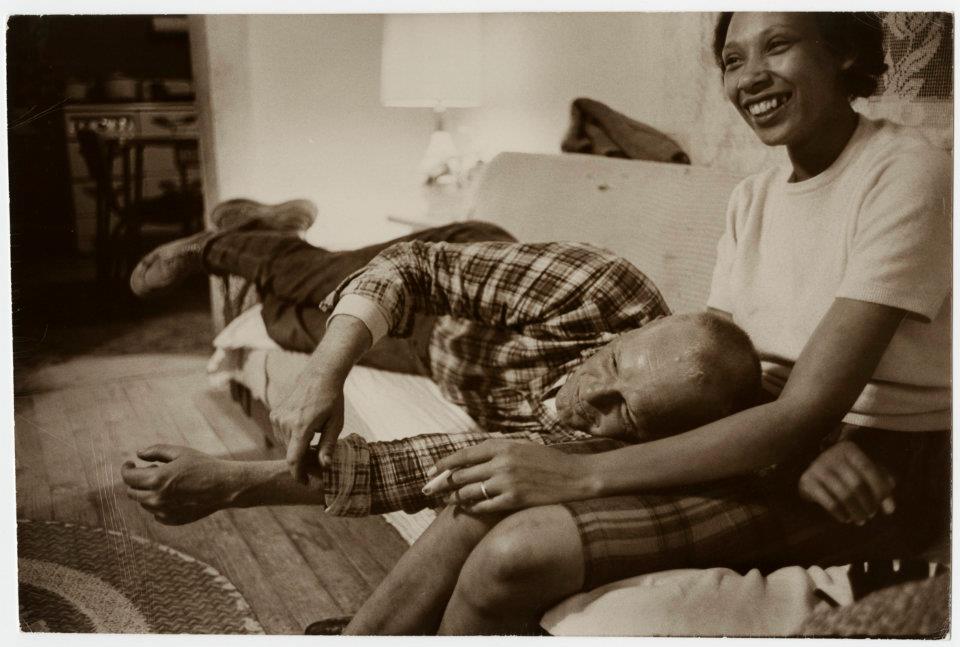
Central Point, Virginia. 1958: Richard and Mildred Loving jailed. Their crime: marriage. He was white. She was black. “We were married on the second day of June. And the police came after us the fourteenth day of July,” Mildred Loving said in the documentary “The Loving Story” (HBO, 2011).

An anonymous tip sent police to their house in the middle of the night. Making love was a crime, too, for people of different races. The police found them sleeping. They were arrested for “cohabitating as man and wife, against the peace and dignity of the Commonwealth.” Their marriage was illegal in 24 states in 1958.

Richard and Mildred pled guilty, and received a one-year prison sentence, which would be suspended if they left Virginia. They moved to Washington, D.C., sneaking home to see family and friends. Mildred wrote a letter to U.S. Attorney General Robert F. Kennedy who referred her to the A.C.L.U. Richard told their lawyer, “Mr. Cohen, tell the court I love my wife, and it is just unfair that I can’t live with her in Virginia.”

Love was not enough to mitigate the racial fear and hatred that resisted their union. It was not enough to unravel the complicated narrative of white supremacy that led to segregation, to Jim Crow and anti-miscegenation laws.

In Loving v. Virginia, the U.S. Supreme Court’s unanimous decision held that the prohibition of biracial marriage was unconstitutional. Chief Justice Earl Warren and the other justices claimed that “Marriage is one of the ‘basic civil rights of man,’ fundamental to our very existence and survival … Under our constitution, the freedom to marry, or not marry a person of another race resides with the individual and cannot be infringed by the State.”

No matter what society asserts about race, no matter what religious institutions teach about race and no matter the ethnicity of the couple, marriage is a basic civil right.

The Supreme Court changed the narrative, changed the story. And it changed the culture. According to Pew Research study of married couples (February 2012), the share of interracial couples reached an all-time high of 8.4 percent. In 1980, that share was just 3.2 percent.

The narrative of homophobia in our nation is also complicated and tragic. The culture has shaped it, religious institutions have often reinforced it, and fear feeds it. I believe that no matter what the culture asserts, adults have the civil right to marry, no matter their sexual orientation.
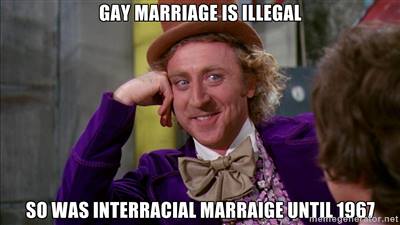
gay marriage is illegal so was interracial wonka

And I believe this is also true: Wherever love is, God is. The writer of 1 John says, “God is love. When we take up permanent residence in a life of love, we live in God and God lives in us.” I think it is important for congregations that teach “God is love” to also affirm the marriage of same-gender loving couples. They should have the civil right to marry and their love should be blessed in our churches.

On Sunday, June 9 at 6 p.m., at Middle Church, my white husband and I will celebrate Loving Day (celebrated nationally on June 12) and the landmark case that gave us the right to marry and live with each other. We will celebrate in hope that the Supreme Court will once again change the story, that it will rule on Prop 8 and DOMA in such a way that all couples have the right to marry in every state in our union.

Original gospel music by Broadway and television actor Tituss Burgess will be performed and there will be a renewal of vows for straight and gay couples. Burgess (Jersey BoysThe Little MermaidGuys and Dolls and 30 Rock), Alyson Palmer (of BETTY, whose music has been heard on The L-WordUgly Betty and Weeds), and Broadway’s Jenny Powers (Grease and Little Women) will solo at the event. Middle Church stands for the freedom of all couples to legally marry. During the commitment ceremony, all couples — no matter their ethnicity, or their gender or sexuality — can renew or make new vows to each other. We will celebrate loving, because we know for sure that love heals. Come and bring someone special with you!

Commenting on the similarities between interracial and same-sex marriage in 2007, Mildred Loving said,

I believe all Americans, no matter their race, no matter their sex, no matter their sexual orientation, should have that same freedom to marry … I am proud that Richard’s and my name is on a court case that can help reinforce the love, the commitment, the fairness and the family that so many people, black or white, young or old, gay or straight, seek in life. I support the freedom to marry for all. That is what Loving and loving are all about.

Amen, and may it be so.

loving

…and then

It happens to be Loving Day which is what prompted me to finally get around to posting about the Cheerios.  Happy Loving Day! Interracial Marriage (black/white) has been legal for a grand total of….46 years!  That’s only ten more years than I have existed!  So in the grand scheme, if there is still a small to medium segment of the population who simply has not taken advantage of any opportunity to grow out of this debilitating mindset, well, that’s only to be expected… and it’s too bad for them… and absolutely ok with me actually.  Love people where they are, right?

4-up on 6-12-13 at 7.32 PM #5 (compiled)

4-up on 6-12-13 at 7.26 PM #5 (compiled)

Here’s a nice article that brings together the Cheerios and the Lovings.

Opinion: The importance of ‘Loving’ in the face of racism

Editor’s note: June 12 is the 46th anniversary of Loving v. Virginia,  which made interracial marriage legal in the United States.  Thousands of people nationwide celebrate that anniversary as “Loving Day’.  Ken Tanabe is the founder and president of Loving Day, an international, annual celebration that aims to build multicultural community and fight racial prejudice through education. He is a speaker on multiracial identity, community organizing and social change through design. 

By Ken Tanabe, Special to CNN

(CNN) – Racism is alive and well in 2013, and what’s striking is the recent notable examples aimed at interracial couples – or one of their children.

Even breakfast cereal commercials aren’t safe. A recent Cheerios ad depicting an interracial couple and their multiracial child got so many racist remarks on YouTube that the company had to disable the comments.

There is nothing out of the ordinary about the commercial, except that the parents happen to be an interracial couple.

But the truth is, racially blended families are becoming more ordinary every day, due to the 1967 Supreme Court decision that declared all laws against interracial marriage unconstitutional. 

Opinion: Two different marriage bans, both wrong.

Today is the 46th anniversary of that decision, and one in seven new marriages in the United States is interracial or interethnic.  Multiracial Americans are the fastest-growing youth demographic.

Number of interracial couples in U.S. reaches all-time high:

While the negative comments about the Cheerios commercial made it newsworthy, there were also many others who showed their support for the Cheerios brand.

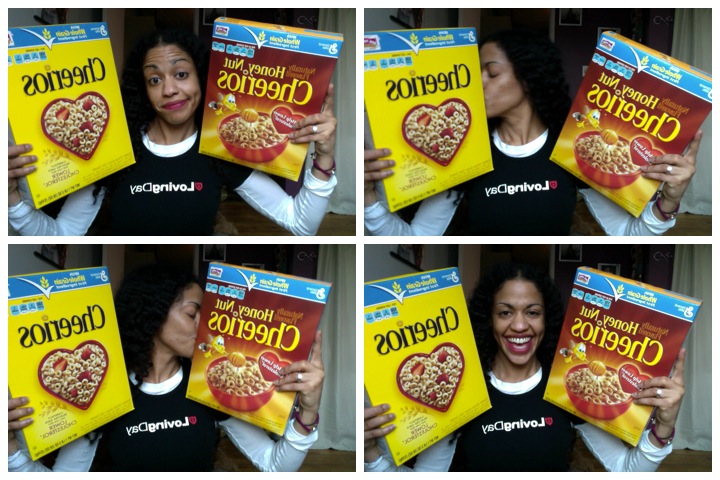
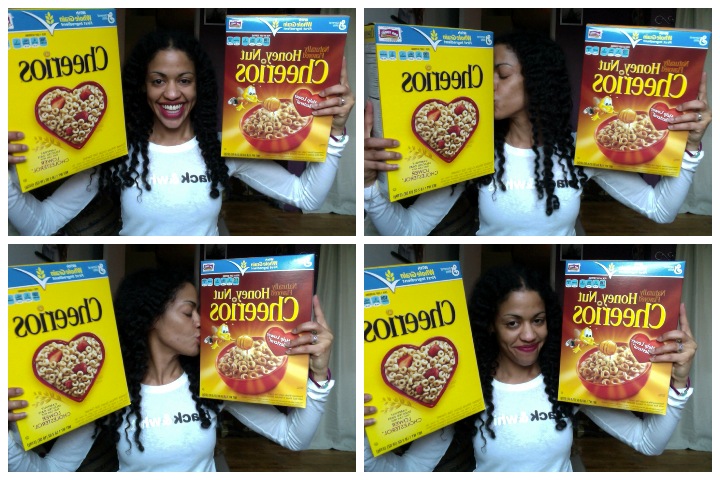
Multiracial Americans of Southern California, a multiethnic community group, started a Facebook album for people to post photos of themselves holding a box of Cheerios. And in articles and in social media, supporters expressed gratitude to General Mills for depicting a multiracial family.

The weddings of two multiracial couples from high-profile families also prompted racist comments online. Lindsay Marie Boehner, daughter of House Speaker John Boehner, married Dominic Lakhan, a black Jamaican man. And Jack McCain, son of Sen. John McCain, married Renee Swift, a woman of color.

The reaction to these marriages is reminiscent of the response to the marriage of Peggy Rusk – the daughter of then-Secretary of State Dean Rusk – and Guy Smith, a black man. In 1967, interracial marriage was a cover story, several months after laws against interracial marriage were struck down.

Things have changed since then, but not enough.

In a 2011 Gallup poll, 86% of Americans approved of “marriage between blacks and whites.”  In 1958, the approval rating was 4%. But it makes me wonder: What do the other 14% of Americans think? Apparently, many of them spend a lot of time leaving comments online.

The election of Barack Obama inspired many of us to hope that widespread racism was a relic of the past.

And while he was elected to a second term, we must not be complacent when it comes to racism in our daily lives. We must seek out opportunities to educate others about the history of our civil rights.

Dr. Martin Luther King Jr. wished that his children would “one day live in a nation where they will not be judged by the color of their skin but by the content of their character.”  I wonder what he would think of our collective progress as the 50th anniversary of his “I Have a Dream” speech approaches.

On June 15th, the 10th annual Loving Day Flagship Celebration in New York City will draw an expected 1,500 guests. And while many participants are multiracial, anyone can host a Loving Day Celebration for friends and family, and make it a part of their annual traditions.

We need to work collectively to fight prejudice through education and build a strong sense of multiethnic community. If we do, one day we might live in a nation where the racial identities of politicians’ children’s spouses are no longer national news, and cereal commercials are more about cereal than race.

The opinions expressed in this commentary are solely those of Ken Tanabe.

972137_587973641223951_425650949_n 390813_299940643381681_919990126_n

Mildred and Richard Loving

Peggy, Sidney, and Donald Loving playing, April, 1965

 Peggy, Sidney, and Donald Loving playing April 1965

now…

cheerios meme

Certainly you’ve heard of this, right?  The barrage of hateful comments left under the commercial featuring a mixed race family on Cheerios’ YouTube channel.  Comments so offensive that General Mills deleted and disabled them.  “It’s 2013!!!” is the gist of the typical response from “normal” people on the internet.  “I want to eat so many Cheerios right now,” was quite literally my response.  And I got a little choked up.  Not about the comment fiasco.  I stopped getting choked up about youtube comments years ago, thank God, and it comes as absolutely no surprise to me that hateful voices rose from the trollers. None.  So all I’m left with is this beautiful commercial, with this adorable child who makes some sincerely delightful faces depicted in a family that almost resembles mine in a way that I cannot recall having seen before.  Ever.  I am 36 years old.  I was in commercials as a kid.  I have never seen a commercial like this.  That is what is shocking.  That in 2013, this near-revolutionary advertising.  People took note, did double takes.  Heads were scratched.  Fears and tempers were flared.  Clearly this is long overdue.  So, thank you Cheerios!! Thank you for looking at your community and your consumers and seeing what is actually in front of you. And being “bold” enough to “endorse” it.  By endorsing reality, you make us face it and give us the opportunity to adjust to it.  Maybe even to like it You reflect me and all the others like me who had never experienced the normalization of our lives in a television commercial. This makes for a healthier society.  That makes for a healthier me.

And then there’s this! Maybe it’s not as bad as it seems after all.

Turns Out Americans Love ‘Controversial’ Cheerios Ad

Perhaps Racist YouTubers Not Representative of Country as a Whole

By: 
June 5, 2013

Last week, a new ad from Cheerios was deemed controversial when media outlets discovered that the racist contingent of the idiocracy known as the YouTube comment section trashed the ad for featuring a mixed-race couple and a biracial child.

But according to data from Ace Metrix, Americans like the ad. In fact, “Good for Your Heart” (called “Just Checking” on YouTube) tested the highest of six new Cheerios ads this year and garnered attention and likeability scores 9% and 11% “above the current 90-day norm for cereals.”

General Mills rightly decided not to be swayed by the rantings of deranged internet comments, telling USA Today that the supposed uproar would not affect future casting decisions.

According to Ace Metrix, the ad — created by Saatchi & Saatchi, New York — “appealed to all age/gender demographics with the exception of males over 50.” While that could be taken as a statement on racial attitudes, Ace Metrix noted that ads with babies tend to perform poorly with this demographic regardless of the race of the child.

The report, which surveyed over 500 consumers, went on to note: “The ad scored best with African-Americans, who collectively scored the ad a 721, followed by Asian Americans and Hispanics. While African Americans and Hispanics generally award advertising higher scores than their ethnic counterparts — the 721 score is 100 higher than average for African-Americans.”

And filtering verbatim commentary from those surveyed, those who specifically mentioned “couple” did so in a positive manner.

“I liked that the couple is mixed race,” wrote one respondent. “Good to see that on TV, but in a subtle manner.”

WordCloudCheerios

word cloud from Ace Metrix survey comments

confessions

1) This one’s a confession of sorts because since the Adam Lambert debacle I have not really watched any reality contestant type t.v.  And by “really” I mean never seen a full episode.  One can’t avoid bits and pieces.  Therefore, I am surprised to find myself sitting here on pins and needles so hopeful that Zendaya will win Dancing with the Stars.  The first time I watched an episode of DWTS was last night.  It happened because my mom told me about this biracial girl Zendaya who is just fantastic and a judge favorite, but may need extra votes because her parents were shown on camera and that could cost her the support of… well… “certain” viewers.  The only sad thing about that statement is that the concern is not invalid.  So I turned the show on and lo and behold… I think that if I had more time in my life I would become slightly obsessed with this girl because I just think she is spectacular and her parents are so adoring and even if it cost her votes I’m so glad that that reality is being televised!  In such a mainstream way.  So awesome! Makes me happy and brings me peace!  I kinda want to be her when I was 16.

7137-zendaya-coleman-dwts-dancing-with-the-stars-video-photos-tango-perfect

zendaya-parents-pic-nov-22

Zendaya-Coleman-Mother

zendaya_coleman_zendaya_and_val_dwts_season_16_cast_first_look_WoVb4RGt.sized

2) As in second confession…. In addition to Mental Health Awareness Month, May is also National Hamburger month.  Apparently I’m not one to discriminate because in the last 2 weeks I have had 3 cheeseburgers.  That’s 1/4 of my yearly burger intake!  In the last 2 weeks!  Clearly I am celebrating National Burger Month as well as MHAM and just thought you should be aware.  If burgers were alive they would probably be depressed because there is really no hope for a burger.  It will be eaten.  That would be beyond sad.

nation burger month may

SadBurger

race manners

Since I’ve been back on the blog, I have said very little about the so-called biracial experience.  It amazes me that it’s still easier, even for me with all of my good “mixed” intentions, to talk about black and white.  I forgive myself for this because without the black and white there is no mixed.  Without the baggage of white vs. black stuff, there is no need for the mixed discussion.  So, I suppose it’s only natural.  It is little disappointing personally that the middle ground isn’t where the conversation begins for me.  It’s on the ends of the spectrum.  But I also suppose that this is natural.  I suppose this has been the disappointment of my life.  And I suppose that this is how we get to the middle ground.  By exploring the ends and inching toward the middle.

A couple of things in Jenee Harris’ article jumped out at me:

1. “My white mother has developed an acute sensitivity to the subtle ways prejudice and bigotry pop up in daily life.”- 

I wonder if my father would say he has developed the same.  I think so…I think that happened when he entered into a relationship with my (black) mother and grew deeper as he witnessed my experience… but we never talk about it…

82920031

me with my parents:)

2. “Well-intended”– re: “adults loved to tell me that people paid “good money” for hair like mine (think 1980s-era perms on white women)” and “A friend got the biscuit analogy…: God burned black people and undercooked white people, but removed her from the heavenly oven at the perfect moment.”

Well…if the intention of the (white) person who said this is to make the biracial person feel better about the perceived plight of their kind…well…i guess one could count that as a good or harmless intention. But I think that summation signifies complacence.  I, however, have to challenge this notion.  You see, giver of said “compliment,” in your quest to make me feel better about being my invisible, displaced, misunderstood, marginalized and tragic self you put me on the receiving end of your pity, your assumptions and judgements.  I do believe this is usually unconscious.  I also must acknowledge that it is an assumption I’m making. Yet there’s a reason that I assume that this is the intention behind the compliments.  The assumption is based on experience, but even those are dangerous to make. It’s the tone with which these comments are usually, subtly uttered.  If you’ve been the biracial person in this kind of conversation, I think you know what I mean.

When I engage in this kind of innocent interaction I can be left feeling frustrated, upset, and worst of all unseen.  It is depressing.  It is literally a depression of my spirit.  Of my freedom.  A depression of my freedom to just be and simply experience this life without being saddled with the weight of the stigma of a couple hundred years of prejudice, condemnation, fear, greed, inferiority, superiority, discrimination, and antagonism.  My take on it is that some people assuage a fleeting feeling of guilt over the fact that this is the biracial’s lot in life by reminding us (and/or reminding themselves) that I should be happy because I have good hair and tan skin which, I infer from your comments, should make up for the fact that on the whole the society we live in cannot acknowledge or understand how I exist.  I thought there was more to that sentence, but I think that’s it.  Our nation’s identity continues to be wrapped up in race and all the baggage that comes with it.  For that to remain intact, biracial just can’t really be.  I don’t think that needs to remain intact.  I think things are shifting.  So slowly.  But they are shifting and I hope I stay awake enough to the shift to feel when my assumptions based on past experience are truly no longer valid.

On the other hand, I’m fairly certain that most of my response falls into the category of  “Oh, come on, stop being so sensitive.

Or am I just being truthful?  That’s the stuff that this brought up for me.

Biracial Children: Racism Advice for White Parents

Race Manners: Comments about the superior beauty of your biracial child aren’t just weird — they’re troubling.

By Jenée Desmond-Harris

Updated Monday April 8, 2013

The Root —

“I’m a Caucasian woman with a biracial child (her father is black). I live in a predominantly white community. Why is it that whenever people discover that I have a ‘mixed’ child, they always say things like, ‘Oh, he/she must be so cute/gorgeous/adorable, those kids are always the best looking. You are so lucky.’ 

I know they mean well, but it seems off to me, and maybe racist. Do they mean compared to ‘real’ black children? When a German and Italian or an Asian and Jewish person have a child, black people don’t say, ‘Mixed children like yours are always the best looking.’ (Plus, it’s not true — not all black-white biracial kids are the ‘best looking.’)

Am I being overly sensitive by feeling there’s something off about these comments? If not, what’s the best way to respond?”

I chose this question for the first installment of Race Manners, The Root‘s new advice column on racial etiquette and ethics, because it hits close to home. Like your daughter, I’m biracial. Like you, my white mother has developed an acute sensitivity to the subtle ways prejudice and bigotry pop up in daily life. I should know. She calls me to file what I’ve deemed her “racism reports.”

And let’s be clear. Americans of all races say bizarre things to and about mixed people, who can inspire some of the most revealing remarks about our black-white baggage. Just think of the public debates about how MSNBC’s Karen Finney, and even President Obama, should be allowed to identify.

But the comments in your question often come from a good place, and they’re often said with a smile. When I was a child, adults loved to tell me that people paid “good money” for hair like mine (think 1980s-era perms on white women) and for tanning beds (again, it was the ’80s and ’90s) to achieve my skin color. Thus, the grown-up argument went, I should be happy (even if these trends didn’t stop people from petting my curls as if I were an exotic poodle, nor did they give me the straight blond hair I envied, and it’s not as if I was on the receiving end of the beauty-shop payments).

A friend got the biscuit analogy. Wait for it: God burned black people and undercooked white people, but removed her from the heavenly oven at the perfect moment, she was told.

Awkward. Well-intended. Poorly thought-through. A window into our shared cultural stuff about identity. These statements are all these things at once.

That’s another reason I selected your question. When it comes to remarks that are so obviously dead-wrong to some of us, and so clearly innocuous to others, there’s often little energy for or interest in breaking down the explanation that lies between “Ugh, so ignorant!” and “Oh, come on, stop being so sensitive.”

I’ll try it out here.

You’re right to be bothered by the remarks from the Biracial Babies Fan Club. Here’s why: These people aren’t pulling an arbitrary appreciation for almond-colored skin and curls from the ether. Instead — even if they are not aware of this — they’re both reflecting and perpetuating troubling beliefs that are bigger than their individual tastes. Specifically, while “mixed kids are the cutest” is evenhanded on its face, treating both black and white (and all other ethnic groups) as inferior to your daughter, I hear it as anti-black.

As Marcia Dawkins, the author of Clearly Invisible: Racial Passing and the Color of Cultural Identity, told me, “The myth that mixed-race offspring are somehow better than nonmixed offspring is an example of ‘hybrid vigor,’ an evolutionary theory which states that the progeny of diverse varieties within a species tend to exhibit better physical and psychological characteristics than either one or both of the parents.”

mixie girl

And just take a wild guess how this idea has popped up for black people. You got it: In order to demean and oppress African Americans, thought leaders throughout history, including the likes of Thomas Jefferson, have said that black-white mixed offspring are better, more attractive, smarter, etc., than “real” blacks and not as good or attractive or smart as “real” whites, Dawkins explains.

So alleging that mixed kids are the best of anything sounds different when you consider that we’ve long put a wholesale premium on all that’s whiter and brighter.

Nowhere is that premium more stubbornly applied today than when it comes to the topic at the center of your question — beauty and attractiveness. In recent memory, we had to re-litigate the harms of colorism when Zoe Saldana was cast to play the lead in a Nina Simone biopic. Tamar Braxton and India.Arie have both been accused of bleaching skin — as if that would be a reasonable thing to do.

A writer lamented in a personal essay for xoJane that she was sick and tired of being complimented for what black men viewed as her “mixed” or “exotic” (read: nonblack) physical features. (As far as I know, “you look a little black” is not a common line of praise among other groups.) Black girls still pick the white dolls in recreated Kenneth Clark experiments. Harlem moms can’t get Barbie birthday decorations in the color of their little princesses. We treated rapper Kendrick Lamar like the department store that featured a wheelchair-bound model in an ad campaign when he cast a dark-skinned woman as a music-video love interest.

Against this backdrop of painful beliefs that people of all colors buy into, yes, “Mixed kids are the cutest” should sound “off.”

As the mom of a mixed kid, you signed up for more than just the task of venturing into the “ethnic” aisle of the drugstore and learning about leave-in conditioner. You took on the work of hearing things like this through the ears of your daughter, and you agreed to have a stake in addressing racism. The fact that these comments bothered you means you’re on the job.

So if it’s at all possible, you should explain everything I’ve said above to people who announce that your daughter is gorgeous based on racial pedigree alone. If you’re shorter on time or familiarity, you could try a reminder that there’s really no such thing as genetic purity in the first place (“Great news, if that’s true, since most of us — including you — are mixed”). As an alternative, the old cocked-head, confused look, combined with “What makes you say that?” always puts the onus back on the speaker to think about what he or she is really saying.

Finally, just a simple, “Thanks, I think she’s beautiful, but I don’t like the implication that it’s because of her ethnic makeup,” could open up an important introductory conversation about why comments about superior biracial beauty aren’t true and aren’t flattering, and why the beliefs they reflect aren’t at all “cute.”

before this hurts too much

Need race-related advice? Send your questions to racemanners@theroot.com.

The Root‘s staff writer, Jenée Desmond-Harris, covers the intersection of race with news, politics and culture. She wants to talk about the complicated ways in which ethnicity, color and identity arise in your personal life — and provide perspective on the ethics and etiquette surrounding race in a changing America.

inter-related

universe of souls

In a real sense all life is inter-related.  All men are caught in an inescapable network of mutuality, tied in a single garment of destiny.  whatever affects one directly affects all indirectly.  I can never be what I ought to be until you are what you ought to be, and you can never be what you ought to be until I am what I ought to be.  This is the inter-related structure of reality.“- Rev. Martin Luther King, Jr.

joneses

Disclaimer: I’m having one of those crazy stressful work weeks which during which i can only steal about five minutes to blog, so things are pretty sparse around here.

Luckily for me people have been finding there way to the blog by searching the web for Rashida Jones and/or Quincy Jones and Peggy Lipton.  I’ve been sitting on this photo for a few days, and figure all signs point to “it’s time to post it” even though I don’t have much to go with it.

I simply love the photograph.

The article below is brief, yet relevant.

The article below that I have posted before, but think the interview is brilliant enough to repost

kenya, rahida, kidada, q

Kenya, Quincy, Rashida, and Kidada Jones

Rashida Jones on Being Biracial: “I Have No Issues With My Identity”

The actress talks about the challenges of finding her place in Hollywood.

By Evelyn Diaz
Posted: 07/10/2012
The actress and screenwriter, whose film Celeste and Jesse Forever is due in theaters next month, opens up to EurWeb.com about being biracial in Hollywood (she’s Black and Jewish).

“It’s more of a challenge for other people than it is for me,” she says. “I have no issues with my identity.”

The daughter of media mogul Quincy Jones and actress Peggy Lipton does admit that her Hollywood handlers had trouble categorizing her at first. “Other people think I should be settling into one thing or another, but I don’t want to be limited,” she says.

“I spent so much time when I was younger being limited,” she goes on. “I wasn’t dark enough for some parts, or I was too light, or I wasn’t quirky enough.”

Now, the 36-year-old Harvard grad is one of the most promising talents in Hollywood, both in front of and behind the camera. After a breakthrough role in I Love You, Man, she landed a part in the NBC sitcom Parks and Recreation and created the comic book series Frenemy of the State, which is currently being adapted for the big screen with her as the star.

Jones was also nominated for a 2011 NAACP Image Award for Influential Multiracial Public Figure.

Rashida Jones’ Sister Kidada Agrees “She Passed For White” But Did The Mean Girls At Harvard Scare Her Away From Dating Black Men Forever?

jones-sisters

RASHIDA: I wouldn’t trade my family for anything. My mother shocked her Jewish parents by marrying out of her religion and race. And my father: growing up poor and black, buckling the odds and becoming so successful, having the attitude of “I love this woman! We’re going to have babies and to hell with anyone who doesn’t like it!”

KIDADA: We had a sweet, encapsulated family. We were our own little world. But there’s the warmth of love inside a family, and then there’s the outside world. When I was born in 1974, there were almost no other biracial families–or black families–in our neighborhood. I was brown-skinned with short, curly hair. Mommy would take me out in my stroller and people would say, “What a beautiful baby…whose is it?” Rashida came along in 1976. She had straight hair and lighter skin. My eyes were brown; hers were green. IN preschool, our mother enrolled us in the Buckley School, an exclusive private school. It was almost all white.

RASHIDA: In reaction to all that differentess, Kidada tried hard to define herself as a unique person by becoming a real tomboy.

KIDADA: While Rashida wore girly dresses, I loved my Mr. T dolls and my Jaws T-shirt. But seeing the straight hair like the other girls had, like my sister had…I felt: “It’s not fair! I want that hair!”

PEGGY: I was the besotted mother of two beautiful daughters I’d had with the man I loved–I saw Kidada through those eyes. I thought she had the most gorgeous hair–those curly, curly ringlets. I still think so!

KIDADA: One day a little blond classmate just out and called me “Chocolate bar.” I shot back: “Vanilla!”

QUINCY: I felt deeply for Kidada; I thought racism would be over by the eighties. My role was to put things in perspective for her, project optimism, imply that things were better than they’d been for me growing up on the south side of Chicago in the 1930s.

KIDADA: I had another hurdle as a kid: I was dyslexic. I was held back in second grade. I flunked algebra three times. The hair, the skin, the frustration with schoolwork: It was all part of the shake. I was a strong-willed, quirky child–mischievous.

RASHIDA: Kidada was cool. I was a dork. I had a serious case of worship for my big sister. She was so strong, so popular, so rebellious. Here’s the difference in our charisma: When I was 8 and Kidada was 10, we tried to get invited into the audience of our favorite TV shows. Mine was Not Necessarily the News, a mock news show, and hers was Punky Brewster, about a spunky orphan. I went by the book, writing a fan letter–and I got back a form letter. Kidada called the show, used her charm, wouldn’t take no for an answer. Within a week she was invited to the set!

KIDADA: I was kicked out of Buckley in second grade for behavior problems. I didn’t want my mother to come to my new school. If kids saw her, it would be: “your mom’s white!” I told Mom she couldn’t pick me up; she had to wait down the street in her car. Did Rashida have that problem? No! She passed for white.

RASHIDA: “Passed”?! I had no control over how I looked. This is my natural hair, these are my natural eyes! I’ve never tried to be anything that I’m not. Today I feel guilty, knowing that because of the way our genes tumbled out, Kidada had to go through pain I didn’t have to endure. Loving her so much, I’m sad that I’ll never share that experience with her.

KIDADA: Let me make this clear: My feelings about my looks were never “in comparison to” Rashida. It was the white girls in class that I compared myself to. Racial issues didn’t exist at home. Our parents weren’t black and white; they were Mommy and Daddy.

RASHIDA: But it was different with our grandparents. Our dad’s father died before we were born. We didn’t see our dad’s mother often. I felt comfortable with Mommy’s parents, who’d come to love my dad like a son. Kidada wasn’t so comfortable with them. I felt Jewish; Kidada didn’t.

KIDADA: I knew Mommy’s parents were upset at first when she married a black man, and though they did the best they could, I picked up on what I thought was their subtle disapproval of me. Mommy says they loved me, but I felt estranged from them.

While Rashida stayed and excelled at Buckley, Kidada bumped from school to school; she got expelled from 10 in all because of behavior problems, which turned out to be related to her dyslexia.

KIDADA: We had a nanny, Anna, from El Salvador. I couldn’t get away with stuff with her. Mommy knew Anna could give her the backup she needed in the discipline department because she was my color. Anna was my “ethnic mama.”

PEGGY: Kidada never wanted to be white. She spoke with a little…twist in her language. She had ‘tude. Rashida spoke more primly, and her identity touched all bases. She’d announce, “I’m going to be the first female, black, Jewish president of the U.S.!”

KIDADA: When I was 11, a white girlfriend and I were going to meet up with these boys she knew. I’d told her, because I wanted to be accepted, “Tell them I’m tan.” When we met them, the one she was setting me up with said, “You didn’t tell me she was black.” That’s When I started defining myself as black, period. Why fight it? Everyone wanted to put me in a box. On passports, at doctor’s offices, when I changed schools, there were boxes to check: Caucasian, Black, Hispanic, Asian. I don’t mean any dishonor to my mother–who is the most wonderful mother in the world, and we are so alike–but: I am black. Rashida answers questions about “what” she is differently. She uses all the adjectives: black, white, Jewish.

RASHIDA: Yes, I do. And I get: “But you look so white!” “You’re not black!” I want to say: “Do you know how hurtful that is to somebody who identifies so strongly with half of who she is?” Still, that’s not as bad as when people don’t know. A year ago a taxi driver said to me, That Jennifer Lopez is a beautiful woman. Thank God she left that disgusting black man, Puffy.” I said, “I’m black.” He tried to smooth it over. IF you’re obviously black, white people watch their tongues, but with me they think they can say anything. When people don’t know “what” you are, you get your heart broken daily.

KIDADA: Rashida has it harder than I do: She can feel rejection from both parties.

RASHIDA: When I audition for white roles, I’m told I’m “too exotic.” When I go up for black roles, I’m told I’m “too light.” I’ve lost a lot of jobs, looking the way I do.

PEGGY: As Kidada grew older, it became clear that she wouldn’t be comfortable unless she was around kids who looked more like her. So I searched for a private school that had a good proportion of black students, and when she was 12, I found one.

KIDADA: That changed everything. I’d go to my black girlfriends’ houses and–I wanted their life! I lived in a gated house in a gated neighborhood, where playdates were: “My security will call your security.” Going to my black friends’ houses, I saw a world that was warm and real, where families sat down for dinner together. At our house, Rashida and I often ate dinner on trays, watching TV in Anna’s room, because our dada was composing and performing at night and Mom sat in on his sessions.

RASHIDA: But any family, from any background, can have that coziness too.

KIDADA: I’m sure that’s true, but I experienced all that heart and soul in black families. I started putting pressure on Mommy to let me go to a mostly black public school. I was on her and on her and on her. I wouldn’t let up until she said yes.

PEGGY: So one day when Kidada was 14, we drove to Fairfax High, where I gave a fake address and enrolled her.

KIDADA: All those kids! A deejay in the quad at lunch! Bus passes! All those cute black boys; no offense, but I thought white boys were boring. I fit in right away; the kids had my outgoing vibe. My skin and hair had been inconveniences at my other schools–I could never get those Madonna spiked bangs that all the white girls were wearing–but my girlfriends at Fairfax thought my skin was beautiful, and they loved to put their hands in my hair and braid it. The kids knew who my dad was an my stock went up. I felt secure. I was home.

RASHIDA: Our parents divorced when I was 10; Kidada went to live with Dad in his new house in Bel Air, and I moved with Mom to a house in Brentwood. Mom was very depressed after the divorce, and I made it my business to keep her company.

KIDADA: I wanted to live with Dad not because he was the black parent, but because he traveled. I could get away with more.

RASHIDA: At this time, anyone looking at Kidada and me would have seen two very different girls. I wore my navy blue jumper and crisp white blouse; K wore baggy Adidas sweatsuits and door-knocker earrings. My life was school, school, school. I’m with Bill Cosby: It’s every bit as black as it is white to be a nerd with a book in your hand.

KIDADA: The fact that Rashida was good at school while I was dyslexic intimidated me and pushed me more into my defiant role. I was ditching classes and going to clubs.

RASHIDA: About this time, Kidada was replacing me with younger girls from Fairfax who she could lead and be friends with.

KIDADA: They were my little sisters, as far as I was concerned.

RASHIDA: When I’d go to our dad’s house on weekends, eager to see Kidada, the new “little sisters” would be there. She’d be dressing them up like dolls. It hurt! I was jealous!

KIDADA: You felt that? I always thought you’d rejected me.

RASHIDA: Still, our love for the same music–Prince, Bobby Brown, Bell Biv DeVoe–would bring us together on weekends.
Read more at http://bossip.com/623483/rashida-jones-sister-kidada-agrees-she-passed-for-white-but-did-the-mean-girls-at-harvard-scare-her-away-from-dating-black-men-forever/#tGvOXe6QHreb2M0W.99


love is many things

…but it shouldn’t be a secret.  That really hit home for me.

I wish that this young woman could talk to Nia.  I hope that she at least reads the essay.  Not that Nia touched on the topic of having racist black parents to contend with, but I think that Danielle could be inspired by the way in which Nia boldly and candidly addresses many of the issues facing interracial couples.

Yes, I called Danielle’s parents racist.  They are.  I’ve found that some people are under the impression that black people can’t be classified as racist.  That that is a delineation that we reserve for the “oppressor.”  So not true.

Case in point from U-Mich Race Card Project:

History; NEVER TRUST A WHITE MAN!

Kwende Idrissa Madu
Russellville, AL

I imagine it’s gonna be a tough row to hoe going through life in America completely unwilling and unable to trust a white man.  I also imagine that it could be a large majority of “minorities” who really feel that way.

Back to Danielle though:  I admire her for not letting go of the love of her young life.  For seeing and feeling beyond her parents’ antiquated and limiting fear based belief system.  And for deciding that it’s time to “come out” and love in the open and let the cards fall where they may because that is the only way for her to truly live.

[CONFESSIONS]

“I’m Hiding My Interracial Relationship From My Parents”

A YOUNG WOMAN FEARS THAT HER FAMILY WON’T ACCEPT THE LOVE OF HER LIFE

ByDANIELLE T. POINTDUJOUR

[CONFESSIONS]<br /><br /><br /><br />
�I�m Hiding My Interracial Relationship From My Parents�

I grew up surrounded by love. I have the fondest memories of my parents spontaneously stealing ‘private’ kisses, the grand romantic gestures of my aunts and uncles and watching my grandparents dancing to old records in their living room.  Love was all around me and I spent hours dreaming of the day I’d have one to call my own.  It wasn’t until high school that I started to realize that the love I saw and wanted came with conditions.

Since I wasn’t allowed to date until I was 16, I had a secret boyfriend in the months leading up to that milestone birthday.  Mike was the best beau a teen girl could have—tall, handsome, funny and happy to carry my books and hold my hand.  He reminded me a lot of my father, the way he played with me and did ‘man’ things like pulling out my chair and holding all the doors.  He was great, so naturally I thought nothing of bringing him home for my parents to meet right after I turned 16.  I thought nothing of the fact that he’s White.

I’ll never forget the look on my parents’ faces when Mike walked through the door: confusion mixed with horror.  When he left—after an hour of awkward silence interrupted by short bursts of conversation—the drama began. My parents forbade me from seeing my honey again and told me that boys “like him” are only interested in me for sex and that I should “stick to my own kind.”  They tried to scare me with stories of violent racism and visions of children addicted to drugs because of their struggle with identity.  I tried to explain that his race didn’t matter to me, the way he treated me did.  I wanted him to know that Mike’s love reminded me of the love I grew up with. They weren’t trying to hear it.

For the rest of our high school years we dated in secret and by the time college came, the boy that held my hand became the man who held my heart.  Still, I had to have Black male friends pretend to take me on dates to throw my parents off.  I made up excuses to not come home on breaks so I could spend them with Mike’s family, who welcomed me with open, loving arms and had a hard time understanding my choice to hide our relationship.

I tried a few times to slip the topic of interracial dating into conversations with my parents, telling stories of friends who were happily dating or getting married.  The response was always the same: “Good for them, but you’re going to bring home someone that looks like us.”  My father even hinted that he would cut off my college funds if I went “that way.”

I felt trapped.

After college, Mike and I decided to apply for graduate school in Spain. While his parents were thrilled that we would be living abroad together and sharing an adventure, mine were worried about me going so far away and wondered how I would find the man of my dreams in a country where the majority of the people don’t speak English.  Little did they know the man of my dreams was actually a reality and had been in my life for quite some time.

It has been six months since we moved to Spain together and almost seven years since we started dating, and I couldn’t be happier!  All the fears my parents have for our relationship have yet to materialize, even here in this foreign land. Our love for each other has grown so much that I’ve come to realize that it’s time to tell my parents.  I love this man and I want to shout it from the rooftops. I no longer care what my parents or anyone else thinks about it and I’m tired of lying. Love is many things, but one thing it shouldn’t be is a secret.  Recently, we’ve been talking more about marriage and our future—both things that I want my parents to experience with us.  I hope that they can try to be open-minded enough to share in our love, but if not, that’s okay.  We have plenty of family and friends around that support us unconditionally and they can appreciate just what love is supposed to be: colorblind and limitless.

The message is simple: Don’t give up

I really love everything about this story.  Except the part where Maurice was taken from his family.  But, then again, without that part there wouldn’t be a heartwarming story of perseverance and triumph and love and connection to inspire and reinforce the message: Don’t give up.

I was especially moved by this: “I didn’t let anybody get close to me again…I hurt a lot of people…”  I think we’ve all encountered painful experiences that have left us tempted, or perhaps determined, not to let anyone get close enough to hurt us again.  And then we consciously or unconsciously start a cycle of hurting ourselves and each other out of fear of being hurt.  Seems silly when you look at it like that.  Seems serious if you’re stuck in it.

After years of separation from foster mom, 32-year-old man finally adopted

From Paul Vercammen and Michael MartinezCNN

San Diego, California (CNN) — A boyhood wish finally came true. But Maurice Griffin had to wait until he was a man for it to happen.

At age 32, the California man was adopted Friday.

adoption18n-2-web

“It was the best day in my life,” Griffin said after the proceeding in San Diego Juvenile Court. “I fought for 10 years and finally the day came.”

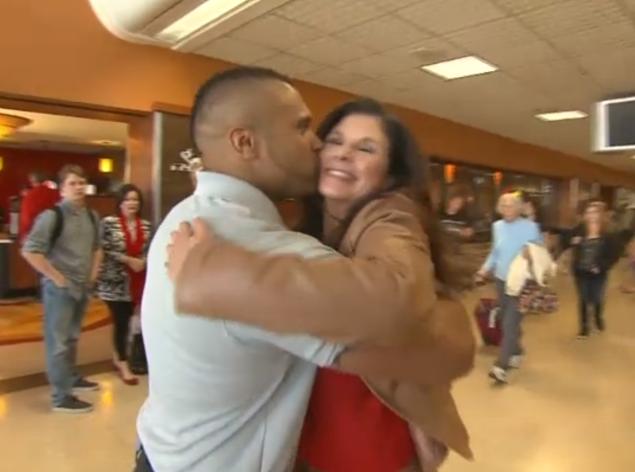
Adopting the burly, muscular, mohawk-sporting man is Lisa Godbold, his one-time foster mother.

“I was just overwhelmed with emotion,” Godbold added.

With a few pen strokes by Griffin, Godbold and Judge Richard Monroy, the adoption became official.

“This is going to be quite quick,” the judge told mom and son, all seated at a table. “If you blink, you miss it.”

Then son hugged mom. Mom cried.

“Congratulations to you both,” the judge declared.

Then a deputy took a photograph of three of them, a tradition that the judge noted is always done with small children and their adoptive parents.

Good time

The story dates to the early 1980s, when Godbold and her husband saw Griffin at an orphanage near their Sacramento home.

The smiling child seemed to fit perfectly with their family: Godbold is white. Her late previous husband was black, and the couple had two children who were, like Griffin, biracial.

The couple took Griffin in as a foster child. He quickly bonded with their sons, Gideon and Spencer.

“We were best friends,” Griffin said. “We’d run around, we did mischievous things and fun things. It was a good time.”

He lived with the family as a foster child for four years, until he was 13. Then, just two months shy of being adopted by them, it all fell apart.

Griffin said he wanted to be treated like a “real” son: He wanted to be disciplined like the couple’s other sons. He wanted to be spanked, he said.

So he innocently told a social worker that was what was going to happen.

The social worker then told her superiors, and soon Griffin was about to be removed from the household, he said.

Family ripped apart

One day, foster care officials took Griffin away, saying he could not live with Godbold’s family anymore.

“You can’t spank foster children. Maurice very much wanted that,” Godbold said. “We wanted him to feel like the rest of our kids. And there was a difference of opinion with some of the (child welfare) supervisors.”

Godbold said she fought to keep Griffin and was told she could lose her biological children, too.

CNN contacted the state agency responsible for the case, but its officials would not comment because it’s still considered a juvenile matter.

So Godbold had to let go. And as time moved on, Griffin says, he lost touch with what he felt was his only family.

“It was just an emptiness,” he said. “I couldn’t talk to anybody about it because nobody was there. I couldn’t call somebody; there was just a void in me.”

Griffin said that he acted out every chance he got in hopes the state would reunite him with the people he considered to be family.

He bounced from one foster home to another, never finding what he lost.

“I didn’t let anybody get close to me again,” Griffin said, holding back tears. “I hurt a lot of people. It was a rough road.”

Searching for each other

Despite several obstacles, Griffin and Godbold never stopped searching for one another.

Godbold’s husband died in 1998. She remarried and changed her last name, and moved.

But six years ago, Godbold found Griffin on social media. They communicated online and then one day she called him.

“She said, ‘hey baby,’ and I said I got to call you back,” Griffin said, trying to explain how overwhelmed he was by the reunion.

As she entered the courtroom Friday, Godbold harbored fear that a surprise would halt the proceeding.

“I was actually really nervous before walking in, even though signing on the line was a formality,” Godbold said. “I thought something might happen to keep it from becoming official today.”

Griffin is an example of triumph in foster care.

“I’m a living example of it, that I have been through it,” Griffin said. “I just never stopped. It will all work out.”

Godbold says the message is simple: don’t give up.

“Don’t give up – persevere. Keep looking for that love, that family connection, whether it’s with an infant or your 32-year-old child,” she added.

Griffin lives in San Diego and Godbold lives in San Jose, Calif., but now that they’re mother and son, they’ll be getting together often.

5712_10151405696355000_1657057176_n

“She’s my mother,” said Griffin. “She has always been my mother.”