What a difference two centuries have made! The smiles!! And yet these families are still relatively rare. So, also, what a difference two centuries have not made.
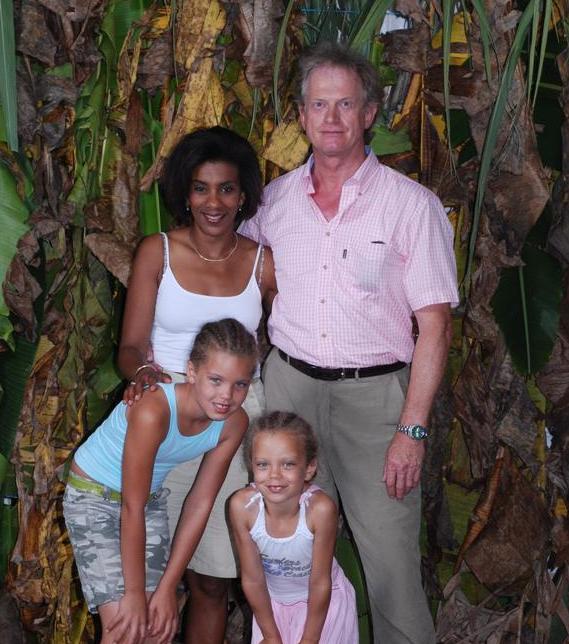


What a difference two centuries have made! The smiles!! And yet these families are still relatively rare. So, also, what a difference two centuries have not made.
I accidentally happened upon a fascinating thread discussing the photograph below. It’s definitely worth checking out if you’re interested in this sort of thing. Apparently, Mary categorized herself as “white” on the 1880 Census. I wonder how that was possible. Whatever the case, the point that there are approximately 3000 descendants of this family who, I have little doubt, consider themselves to be exclusively white brings me back to the novel idea that we are all mixed, we are simply American, and the veil of otherness is a detrimental illusion from which we desperately need to wake up. K?

JAMES W. EVANS,
Mr. Evans married Mary Eliza Hoggard, of North Carolina, February 8, 1844. They have three children: Mary Frances, (who married Mr. Frank Collins, a son of J. W. Collins, Register of Clay County, Missouri, and they live with Mr. Evans on the farm); John Henry, (was married August n, 1877, at Hainesville); and William James, (who was born August 29, 1848, and married Caroline Gow, a daughter of Arthur Gow, of Clay County, in November, 1875).
We learn… that the North Carolina counties involved are Clinton County and Clay Counties Missouri. The children grew-up, married and lived in these two counties. The daughter married a Collins.
Apparently, James Evans brought (not bought!) Mary Hoggard from North Carolina and married her in Missouri where they raised their family. This makes sense, since this part of Missouri would have been “Free.”
This indicates to me that whites named Evans and Collins living in these two counties today, have a good chance of being a descendant of the black woman in the photo.
This photo speaks volumes of the kind of dilemma a black mother married to a white man found herself in during the 19th century. This couple were married in Clinton County, Missouri, went by the surname Evans, and would have approximately 3000 descendants today.
The mother is clearly not thrilled with the photograph. I think she was forced to sit for it by her husband. She appears to be thinking it’s not a very good idea, that the photo could prove an embarrassment to her children. Indeed, it could prove an embarrassment to all her descendants 200 years into the future.
I think this is what she was thinking.
Let’s say the tall young man in the rear passed for white, married a white woman and had a family. This photo would not be considered a precious family heirloom but instead an indictment of Negro heritage.
Does this explains why the mother is not smiling…?
All kinds of scary things were going on in the Slave states. People were stock-piling weapons. People were talking about succession. The young man standing was about military age. Free blacks were being snatched-up and sold back into slavery. If the woman had local relatives she had surely cut herself off from them. No way should could afford to have her kin be part of her new family.
At school the children were probably catching hell because of their black mother. If the mother wasn’t on the verge of a nervous breakdown she would be around the time her eldest started talking about joining a local regiment to fight the yankees and preserve slavery.
Her husband’s family surely would have disowned him by then and no white family would have anything to do with them. Of course if they lived on a farm their contact would be minimal, but if they lived on a farm they had slaves and that must have made her a mess too.
But the main thing is sitting for the portrait must have seemed insane to her. Her kids look white. Each one could easily pass. Why do something that would doom them forever to second-class citizenship? She had to be thinking that. The sit had to be the last thing she wanted for her children — proof they were black.
Had the kids looked like mulattoes, it would have been a different story. But these kids look completely white. They could pass with no problem at all — so why do something that could get them lynched?
And that photo would do that had her eldest married a local white girl.
That’s my theory why the mother doesn’t look happy.
That’s six generations. Let’s figure each of her descendants in each of these generations had three children who went on to have three children up until today.
1875 3 times 3 = 9
1900 3 times 9 = 36
1925 108
1950 324
1975 974
2000 2916
That’s almost 3000 “whites” descended from black Mary Hoggard.
See how nonsensical this white-black thing is?
Then:

Now:

Get with the program.
I’m super-curious about this guy and am itching to know more about the experiential intricacies of his Black/Jewish upbringing, and how he reflects on all of that from where he sits currently as the “New Jew in Hip-Hop.” I don’t think this is a direct quote from Drake, but it rings true: “Finally, his outsider background has become an asset.” That’s exactly how I feel about my own self and I wouldn’t be surprised if a multitude of biracials are emerging into the same space of appreciation for the experience and are cultivating ways to make use of it in a world that was not ready to handle our truth before. Some still aren’t ready. Look out, some!

By JON CARAMANICA
For most of his teenage years Drake, tall, broad and handsome, was still known as Aubrey Graham (Drake is his middle name) and played the basketball star Jimmy Brooks on the popular Canadian teenage drama “Degrassi: The Next Generation.” In the last 18 months, though, he’s become the most important and innovative new figure in hip-hop, and an unlikely one at that. Biracial Jewish-Canadian former child actors don’t have a track record of success in the American rap industry.
But when “Thank Me Later” (Aspire/Young Money/Cash Money) is released this week, it will cement Drake’s place among hip-hop’s elite. It’s a moody, entrancing and emotionally articulate album that shows off Drake’s depth as a rapper, a singer and a songwriter, without sacrificing accessibility. That he does all those things well marks him as an adept student of the last 15 years: there’s Jay-Z’s attention to detail, Kanye West’s gift for melody, Lil Wayne’s street-wise pop savvy.
In rapid fashion Drake has become part of hip-hop’s DNA, leapfrogging any number of more established rappers. “I’m where I truly deserve to be,” Drake said over quesadillas at the hotel’s lobby bar. “I believe in myself, in my presence, enough that I don’t feel small in Jay’s presence. I don’t feel small in Wayne’s presence.”
But “Thank Me Later” is fluent enough in hip-hop’s traditions deftly to abandon them altogether in places. Finally his outsider background has become an asset. As a rapper, Drake manages to balance vulnerability and arrogance in equal measure, a rare feat. He also sings — not with technological assistance, as other rappers do, but expertly.
Then there’s his subject matter: not violence or drugs or street-corner bravado. Instead emotions are what fuel Drake, 23, who has an almost pathological gift for connection. Great eye contact. Easy smile. Evident intelligence. Quick to ask questions. “He’s a kid that can really work the room, whatever the room,” said his mother, Sandi Graham. “Thank Me Later” has its share of bluster, but is more notable for its regret, its ache.
As for Ms. Berry’s cousin, Drake’s interested, of course, but wary. “I think I have to live this life for a little bit longer before I even know what love is in this atmosphere,” he said. More fame only means less feeling, he knows.
Dodging vulnerability has been a fact of Drake’s life since childhood. His parents split when he was 3. An only child, he lived with his mother, who soon began battling rheumatoid arthritis, a condition that eventually prevented her from working, forcing Drake to become responsible at a young age. “We would have this little drill where, Lord forbid something happened, if there was a fire or an emergency, he would have to run outside and get a neighbor and call 911,” Ms. Graham said. His father, Dennis, who is black, was an intermittent presence — sometimes struggling with drugs, sometimes in jail.
“One thing I wasn’t was sheltered from the pains of adulthood,” Drake said. When something upset him as a teenager, he often told himself: “That’s just the right now. I can change that. I can change anything. The hand that was dealt doesn’t exist to me.’ ”
From an early age he’d been interested in performing, whether rewriting the lyrics to “Mary Had a Little Lamb” or spending time as a child model. By then, he and his mother were living in Forest Hill, a well-to-do, heavily Jewish neighborhood on the north side of Toronto, where he attended local schools, often the only black student in sight. His mother is white and Jewish, and Drake had a bar mitzvah. At school he struggled academically and socially. “Character-building moments, but not great memories,” he recalled. In eighth grade he got an agent and was soon sent off to audition for “Degrassi: The Next Generation,” an updated version of the popular 1980s Canadian drama.
He auditioned after school, on the same day, he said, that he first smoked pot from a bong. Nevertheless he landed the role of the wealthy, well-liked basketball star Jimmy Brooks, who was originally conceived as a white football player.

“Part of his journey is trying to figure where he does fit in in the world, having a white Jewish mom and a black, often absentee father,” said Linda Schuyler, a creator of the show. “It’s almost a comfort factor with Jimmy Brooks. That was the antithesis of his life at the time. It was probably reassuring and a bit escapist for him to play that role.”
Sometimes he was hiding even when the cameras were off, sleeping on the show’s set. “When I woke up in the morning, I was still the guy that could act and laugh,” he said. “It’s just that home was overwhelming.” Along with “Degrassi” came a new, more diverse school closer to the set, where he first tried rapping in public. As he got older, he also tried out his verses on one of his father’s jailhouse friends, who listened over the phone…
I’m loving the ideas raised in this piece reflecting on the Pew Research Center’s report on interracial marriage which I blogged about earlier this week. Was that this week? Anyway, I think it’s healthy for white identity to be “threatened”. I’ve been under the impression that white identity is without definition beyond the color and the perks that come with it. Perhaps the perceived “threat” will bring about a deepened awareness of the struggle to maintain personal identity in the face of adversity, stereotypes, and societal expectations. For thoughtful “minorities” this endeavor is par for the course, however it seems to me that the majority of the “majority” do not expend energy grappling with such issues. By being called upon to do so, a new common ground may be created. A ground upon which we collectively come together to redefine “America’s essential character”. Other than that, all I have to say is that I was shocked by the stat that less than 5% of whites marry outside of their race. Not because I was under the impression that the number would be large, but because in the last couple of years I’ve witnessed (and am thrilled to be a part of) the blossoming of a community of biracial people who are proud and happy to be such. Where did we all come from if the numbers are so low!? I suppose that in the grand scheme of things there still aren’t all that many of us. I simply went from 0-60 in a flash, so to speak.

Ithaca, New York (CNN) — According to a recent report by the Pew Research Center, one of every seven new marriages in 2008 was interracial or interethnic — the highest percentage in U.S. history. The media and blogosphere have been atwitter.
Finally, it seems, we have tangible evidence of America’s entry into a new post-racial society, proof of growing racial tolerance. Intermarriage trends are being celebrated as a positive sign that we have come to think of all Americans as, well, Americans.
But others have an entirely different take — a more ominous one. They see increasing interracial marriage rates as proof that the country is amalgamating racially.
To them, intermarriage is a putative threat to whites and America’s essential character. Their concerns are heightened by recent Census Bureau projections that the U.S. will become a majority-minority society by the middle of the century.
My research with Ken Johnson, a demographer at the University of New Hampshire, indicates that for American’s youngest residents, that future is now. Nearly half of U.S.births today are to minority women.
It’s time for everyone — on all sides of this issue — to relax and take a deep breath. The reality is that racial boundaries remain firmly entrenched in American society. They are not likely to go away anytime soon.
We are still far from a melting pot where distinct racial and ethnic groups blend into a multi-ethnic stew.
Indeed, seemingly overlooked in the Pew Report is the finding that less than 5 percent of all married whites have a spouse of a different race or ethnicity. The vast majority of whites today — as in the past — marry other whites.
What is changing are marriage patterns among America’s minorities, but in ways that are not easy to understand or summarize in short news releases. (Pew used the categories of non-Hispanic whites, blacks, Asians, American Indians and Hispanics.)
For example, Pew reports that the share of newly married blacks with spouses of a different race increased threefold between 1980 and 2008. Media accounts have variously trumpeted this as good or bad news for America’s future, depending on the presumptive beliefs and attitudes of their audiences about racial matters.
It is easy to forget the U.S. Supreme Court waited until 1967, in Loving v. Virginia, to outlaw state prohibitions against interracial marriage. Increases in black-white marriages, at least on a percentage basis, are large because baseline numbers are very small.
Romantics like to believe that love is blind. We embrace the idea that falling in love is a product of our emotions rather than rational deliberation. Of course, the empirical evidence suggests otherwise. Love may be blind, but it clearly is not color-blind.
Indeed, for all the hyperventilation, the demographic reality is that only about 15 percent of newly married blacks today became married to whites or other minorities. This is hardly a basis for celebrating a new racial tolerance in America or, if you prefer, for now believing that white identity is rapidly being lost to interracial intimacy and childbearing.
Unfortunately, most of the nation’s headlines ignored Pew’s observation that intermarriage rates with whites actually have declined among Asians and Hispanics since 1980. This is something new.
My research with Julie Carmalt and Zhenchao Qian, to be published in Sociological Forum, documents recent declines in intermarriage rates among U.S.-born Hispanics and Asians after decades-long increases. Declines in intermarriage have been largest among the second generation, the U.S.-born children of immigrant parents.
Among second-generation Hispanics, for example, intermarriages with whites declined by more than one-third between 1995 and 2008. Over the same period, they became more likely to marry Hispanic immigrants.
Since 1980, there has been a fivefold increase in the number of native-born Asian women marrying Asian immigrants.
One explanation is that substantial new immigration has simply expanded the marriage opportunities for native-born Hispanics and Asians. But it is also likely that the extraordinary recent growth of the immigrant population has reinforced a new sense of identity rooted in shared ethnicity and culture. This seems to have encouraged more in-marriage with co-ethnics at the expense of more out-marriage with whites.
Demographers sometimes consider intermarriage to be the final step in the assimilation process, or an indicator of racial boundaries or lack of them. The current retreat from intermarriage among America’s non-black minorities raises new questions about racial and ethnic balkanization in America.
Issues of race and immigration are an important part of the public dialogue.
In today’s highly charged political environment, it is easy to latch onto information that buttresses our own point of view and preconceptions.
Unfortunately, short headlines and easy-to-digest narratives about rising intermarriage rates tend to oversimplify or even distort a complicated statistical story that is still unfolding.
The opinions expressed in this commentary are solely those of Daniel T. Lichter.
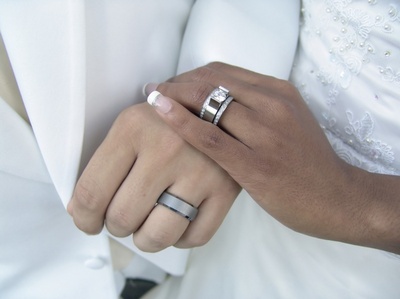
I’m thrilled to know that The Public Theater is once again “putting this mosaic out into the world.” And that Ruben Santiago-Hudson has biracial kids. And that he speaks openly about it. Actually that’s not extraordinary, but I didn’t know that about him before. I love The Winter’s Tale. My favorite monologue is in it. If I weren’t too persnickety to wait in line for hours for tickets, I would be sure to see this. However, it’s not gonna happen. My loss, I’m sure. Just for clarification, the “yay” is for depicting a “non-traditional” marriage/family. Not for Hudson marrying a Swede and having mixed kids. Although I like that a lot too.

Ruben Santiago-Hudson has been the epitome of excellence for over 30 years; winning a Tony Award for Seven Guitars, numerous honors for the HBO adaptation of his acclaimed solo play Lackawanna Blues, and plaudits for his direction of several shows including Things of Dry Hours and The First Breeze of Summer. This summer, he’s starring in the Public Theater’s Shakespeare in the Park production of The Winter’s Tale, and in the fall, he’ll be back co-starring on ABC’s hit crime drama Castle. TheaterMania recently spoke with Santiago-Hudson about these projects.
THEATERMANIA: What made you want to do The Winter’s Tale this summer rather than just take a nice breather between shooting Castle?
RUBEN SANTIAGO-HUDSON: I just love the challenge of doing Shakespeare. I am part of the Public Theater family and I got a call to look at the play, and before I could even finish it, I said I’d love to do it.
TM: Your character, Leontes, is considered one of the most difficult in the canon, since you accuse your wife and best friend of infidelity without any seeming cause. How do you justify that?
RSH: It is a challenge to make that action comprehensible to the audience. But I look at the text. Polixenses may be my friend, but he’s stayed with my family for nine months — and I think if anyone stayed that long at my house, I’d find fault with them. And I am sure over that time, Leontes has seen some glimpses of unusual behavior — perhaps wearing less clothing around each other or laughing too loud.
TM: Still, you cause your wife to kill herself and banish your infant daughter. How is the audience supposed to sympathize with that?
RSH: I hope the audience sees that I balance my cruelty with much love and that my actions came from defending my honor and that my rage is from jealousy and madness. It’s important that I am not just being the stereotypical angry black man. And when it all comes clear, I’m the most penitent person — I’m almost a saint by the end of the play.
TM: As is typical of many productions at the Public, the cast is completely multi-racial. For example, your wife, Hermoine, is being played by Linda Emond, who is white. What are your thoughts about this?
RSH: I think it reflects the mirror of modern society. When you look in the newspaper, you see Sandra Bullock with a black child. And this play reflects what my real family looks like — my wife is Swedish and our children are biracial — so it’s great to put out this mosaic to the world. And I think we should put the best artists we can on stage, and what I love about the Public Theater’s audience is they feel the same way. They don’t care if the king is black and the queen is white; they’re out there to see this play done well.

Fantastic commentary on something that I totally missed in the media. I honestly don’t know who Drake is. I’ll look him up in a sec…. Oh. I see. Anyway, Whitney Teal makes such great points here (a fav being that one would never compare G.W. Bush to Eminem), and has me wanting to make a list of all the “kinds of biracial” that I can imagine. And then I want to study the intricacies of the experiences that molded the various varieties of biracialness. I love biracial. It never gets old for me. I suppose you can call me Captain Obvious for that statement.
By Whitney Teal
Has the election of President Obama changed the way we think about biracial people in this country? I’d argue that it’s questionable. Especially when people are drawing comparisons between the prez — a half-white, half-Kenyan, Ivy League-educated lawyer — and Aubrey Graham, otherwise known as Drake, who is a half-Jewish and half-African-American entertainer from Canada. Yeah, I don’t see the similarities either.


But TheRoot.com contributor Thomas Chatterton Williams, who describes himself as the son of a black father and a white mother,” seems to think that the two mulattoes (his word, not mine) deserve a comparison. Yes, Williams thinks that it’s helpful to compare a Canadian rapper and the President (as he puts it, one of the “most visible mulattoes living and working today”). And he’s not alone, either. A few months back, a couple of my Twitter friends and I ripped Chester French band member David-Andrew ‘D.A.’ Wallach a new one for tweeting that he was discussing “all the similarities” between the two men. When I asked him to explain himself, he replied, “For one, I think they’re both extremely studied.” Womp, womp, cop-out. Lots of men are studied. President Obama and Drake are both, simply, biracial. And they’re not even the same “kind” biracial either, but that doesn’t seem to make a difference.
When I showed my sister the story on The Root, she screamed (via Google Messenger) and replied, “Obama and Drake in the same sentence? Do people mention [President] Bush and Eminem in the same sentence?” She’s right. White men are allowed to choose their own identities. Black men not so much, and biracial men certainly not. Which begs the question, why can’t we see that one biracial person is not the same as the next?
In general, polite company, we as general, polite people, recognize that a person’s experiences are not solely dictated by their race or ethnicity. For example, I don’t think people considering Lucy Liu, a famous actress, and Connie Chung, an award-winning journalist, would try and argue that the two have much in common, at least on the surface. The same with Denzel Washington and Reggie Bush, or Barbara Streisand and Heidi Fleiss. No comparisons. But people, general and polite as they are, still seem to view the experiences of biracial people in this country as singular in nature.
And often, as The Root essay explores, polarizing. “Mixed-race blacks […] are the physical incarnation of a racial dilemma that all blacks inevitably must confront: To sell out or keep it real? That is the question,” writes Williams, who spends the better part of 1,000 words waxing on about the definition of authentic blackness (or at least how he sees it). According to Williams, a mixed-race person must choose to be black, like the president and like Drake, who “both proudly define themselves as black.” A mixed-race person must then “act black,” which Williams sees as wearing loose clothes and playing basketball.
If blackness meant just one thing, and if mixed-race people were able to align themselves with just one part of their identity, then his essay might hold more weight. But black people don’t have just one identity, at least not to ourselves. Hollywood directors, novelists and journalists may see us as trash-talking, saggy pant-wearing basketball fanatics, but I don’t think that’s how we see ourselves. And by asserting that he can turn his black switch on and off, simply by altering the fit of his pants, Williams — though he may identify as black — shows how much he doesn’t understand the complexity of black culture.
Which is why I don’t believe that we should automatically label mixed-race people as black; they’re mixed-race. Being biracial may be similar to African-American culture, just as West African and West Indian cultures share similarities to black culture, but ultimately have their own dialects, dress, worship practices, food and courtship rituals. But biracial people etch out their own identities. Sure, they may be similar to that of African-Americans or other cultures. But it’s limiting to both black and biracial people when society automatically labels anyone with brown skin and textured hair black. Whether we’re talking about President Obama or anyone else, what it means to be biracial is an entirely individual question.


It’s Loving Day! Interracial Marriage has been legal nationwide for an entire 43 years! Imagine that. A few days agao CNN.com ran this piece giving us an idea of what people really think about interracial marriage today. I think it an appropriate post for the occasion.
Your views on interracial marriages
(CNN) — “Interracial/interethnic marriage is a great way of fighting war, hatred and prejudice. Think about it. If we all are mixed, who can we hate?” wrote a reader about a CNN.com story on race and marriage.
That comment was one of the thousands of responses to the story about a new study from the Pew Research Center that found interracial and interethnic marriages are at a record high of about one in seven.
About 14.6 percent of newly married couples reported in 2008 that they married outside their race or ethnicity, according to the Pew report released Friday. In 1980, about 6.8 percent of newlywed couples surveyed said their spouse was of another race or ethnicity.
Overall, reader reactions voiced support for mixed relationships, with many commenters proudly identifying themselves as being in an interracial or interethnic relationship.
“I’ve been happily married in a mixed race marriage for seven years. To anyone who would like to oppose mixed race marriage: What gives you the right? I pay taxes, served in the U.S. military (where I was disabled) and watched all kinds of races die in service to the pledge to protect every American’s freedom. So as far as I’m concerned, blood only has one color: RED, and there’s only one race: the human one,” wrote BeerMan5000.
Reader RippedJeans, a black woman, talked about marrying her white boyfriend of three years. She wrote, “I could not be happier! I love him for the MAN that he is, and I’m truly grateful for having him in my life. Love is colorblind. …”
Danchar821 was also in support of interracial marriages. Reflecting on her personal experience, Danchar821 wrote. “We met online through mutual friends. I went to Mexico every month last year and we were married. I could not be happier. There are cultural differences, but if anything, they have helped me to grow as a person. She is wonderful and so loving and I feel truly blessed and happy. The racism that some people show on here is truly sad. We are expecting our first child — a boy — in September.”
Another couple talked about their wedding ceremony, which celebrated their cultural differences. Reader cellblock131 wrote, “I am Hispanic and married a white woman. … When it came to our wedding, we had a mixture of both cultural practices. For example, my dad read passages in Spanish, then her dad read them in English. The reception had traditional white American dances, plus Mexican in the mix. It was a wonderful wedding.”
One reader identified only as Guest said he won’t date outside his race.
“I care what race the women I date are. I am a white male. I date only white females. Sure there are attractive women in other races but I stick with my own. It’s America land of the free,” wrote Guest.
AntigoneR ignores people’s objections.”I can only speak for myself, but I really don’t care how many people accept or do not accept my interracial relationship. I don’t recall asking their opinion. Having said that, I’m glad to see that the trend in society is more accepting, and that racial barriers are crumbling. I wish it were faster.”
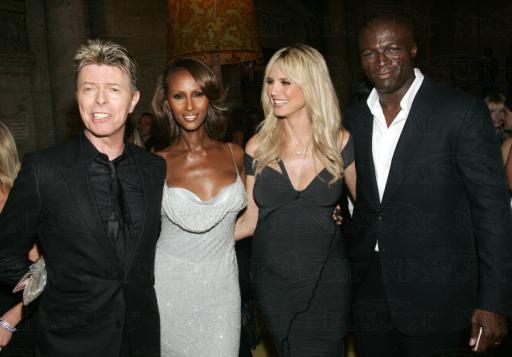 (fwiw: i’m realizing at this very moment that none of these people are American by birth)
One commenter echoed a common view among the Millennial Generation, found in an earlier study this year from the Pew Center that reported 85 percent of 19- to 28-year-olds accept interracial and interethnic relationships. SIR10LY wrote: “It’s 2010. I can’t even believe this is still an issue! If two people love each other, let them be. … If you’re opposed to it, get with the times already!”
Children of mixed marriages also shared their views.
Reader Anex wrote, “Product of an Interracial marriage and darn proud of it! I’m a happy mutt!”
Other readers pointed to the challenges of marrying someone outside their race.
“But one thing the article does not mention is divorce among interracial couples is much higher than same-race couples. Challenges in understanding, family relations and pressures overall are higher. People should know what they’re getting into,” warned a reader.
WHATRU wrote, “I’m an Arab, my husband is white. It gets more complicated after you have kids. The cultures and beliefs are just too different. It is easier to marry your own kind.”
Reader Toadlife wrote that racial discrimination can also be difficult. “Race matters because racial discrimination continues to happen all around us to this day. If you think otherwise, you are naive and probably white and have all white relatives. Thankfully, we’ve come to a point in our society where race is not a determining factor in one’s fate, but it can still be an obstacle from time to time,” Toadlife wrote.
Reader nal4america said her decision about whom to date is influenced by what race she grew up with. “I’m of West Indian decent and I grew up in a small town in Utah. I am so used to dating outside of my race that I don’t even date men of my race simply because I am not attracted to them. I think the environment you grow up in plays a huge factor in the mate you select. I am 95 percent certain my husband will be of a race other than my own and that’s fine because I believe in the American Race.”
Native Americans had yet another take on the situation.
“… [T]here can never truly be justice and real harmony on stolen land … just like there can never be peace and harmony in a house that’s been burglarized and its inhabitants marginalized and oppressed … ask an Apache or Navaho or black American if they are happy to live in a society dominated by white people. The indigenous were here for many thousands of years before the Europeans destroyed the culture and lands of the indigenous almost worldwide,” wrote hotepk. “…What must happen is either they go back to Europe or pay restitution — like any other convict guilty of a crime — otherwise there will continue to be struggle.”
Ndngirl2010 responded: @hotepk–I am full blooded Navajo and I’m fine with living alongside whites and get this –*gasp*– I married one! A majority of my family doesn’t harbor any animosity toward any other race. Let bygones be bygones and, instead, focus on the future.”
The readers who responded to CNN’s coverage on the Pew Research Center study seemed to acknowledge the growing blurring of races and ethnicities.
Reader HalfBaked shared: “My wife’s biological mother is Filipino/Mexican and her biological father is Scottish. She was adopted at birth into a German-Jewish family. My mother’s side is Italian/Turkish and my father was Hungarian. Our kids are about as ‘mixed’ as you can get.”
Never heard of her, but my interest has been piqued. Cool name. Cool hair. The hair story she relays at the end calls to mind the biracial girl who was removed from her classroom. You can read the interview in it’s entirety HERE and/or check out her website HERE.
CP: Your prior album, Sankofa, was almost entirely made up of personal confessionals, whileHigh Noon Teeth incorporates more narrative storytelling and poetic metaphor. Why the shift in tone?
Brown: Some of the songs on Sankofa I hope to never sing again because they’re just so personal. That whole album was a reckoning of sorts that I felt like I had to go through to get to where I am now with my music. I was definitely writing much more imaginative songs this time around, rather than just about my personal experiences, and that was new for me. I talked about metaphors in songwriting a lot with Alexei [Casselle of Roma di Luna] and Joe [Horton, a.k.a. Eric Blair of No Bird Sing] while I was writing the album because that was all new terrain for me, and they both write songs just swarming with beautiful images. I don’t feel the need to be as blatant as I used to. This record was really all about pushing outside of my normal comfort zone and trying to take things to the next level creatively. Hopefully fans that have followed me for a while will appreciate that things are changing.
CP: One holdover from Sankofa is the presence of a song about your childhood, growing up biracial in small-town Tennessee (on Sankofa it was called “Bluegrassy Tune”; it’s present onHigh Noon Teeth in a new arrangement titled “Bound to Happen”). It’s an unflinchingly intense narrative (“Well my daddy was a black man and my mom blond hair, blue eyed/You know people would stare at us children/Like we were some suspicious kind”). What led you to feature it again this time around?
Brown: I decided to record that song the very last day I was in the studio for Sankofa when it was still super new. As I was playing it with the band, it rearranged itself and fine-tuned itself so I wanted to present it again. It’s an important song to me. At least once a week probably I still encounter some stupid racial situation. People ask me all the time if my hair is real, and I was at a show where a woman actually grabbed my hair and jerked it out of nowhere. It caught me so off guard and I remember going home and crying and being so angry. I felt conflicted, part of me wanted to educate her and part of me wanted to smack her and say, “How dare you touch me!” So the song is sort of my way of reaching out and taking the educational route and saying this is who I am and what my experiences have been. Depictions of mixed-race people are very popular in the media now and it’s a little strange for me because I’ve always looked this way. Growing up I was constantly made fun of for my hair; apparently now it’s a cool look.

I am so, so sad to be missing this year’s festival! It just doesn’t feel right. If you are in L.A. this weekend, do yourself a favor and attend it. Shine some light there for me, please.


Sincerely,
Heidi & Fanshen & Jenni
www.mxroots.org
 mulatto diaries