lisa is all

I am reblogging this blog post because the poem is so sweet and the book it was found in sounds like one that should be a school library staple.  I found it HERE.

Poem: “Lisa” by Beverly McLoughland (biracial)

…in a book titled “Through Our Eyes: Poems and Pictures About Growing Up”. I probably picked the book because it had “atypical” (not the usual blonde-haired and blue-eyed) girls on the cover. To see this, I knew it was intentional. I was happy to see children of different races and ethnicities represented on the pages. The book is filled with sweet poems, but we have especially enjoyed this one:

Lisa’s father is

Black

And her mother is

White,

And her skin is a

Cinnamon

Delight,

Her hair is

Dark

And her eyes are

Light,

And Lisa is

Lisa,

Day and

Night.

And Lisa is

Lisa,

Night and

Day,

Though there are

People

Who sometimes

Say–

Well, is Lisa

That,

Or is Lisa

This? –

Lisa is

Everything

She is.

Lisa is

Lisa,

Day and

Night,

And her skin is a

Cinnamon

Delight,

And Lisa is

Sun

And Lisa is

Star,

And Lisa is

All

The dreams that

Are.


improving the nation’s racial pains

This little article means a lot to me.  It brought some things into focus.  Beyond defusing what I perceive to be the invisibility of the “mulatto,” this race work is important to me because I recognize the truth in the statement “We don’t know how to know each other.”  It pains me because I know how to know each other.  I am each other.  And I know that outside of the dogma of race, there ain’t much difference between anybody.  Oh, and of course, I’ve gotta get this book.

Author takes on difficult race issues

By Bradley Schlegel

WHITPAIN — Growing up in a home with racial preconceptions, Lauren Deslonde said she lacked the knowledge to mount a credible challenge.

“We never talked about race,” said Deslonde, a Lansdale resident and psychology major at Montgomery County Community College.

She said Bruce Jacobs’ book can provide the proper tools to help her 5-year-old biracial daughter learn to improve the nation’s racial pains.

Jacobs, the author of “Race Manners for the 21st Century: Navigating the Minefield Between Black and White Americans in an Age of Fear,” explained Tuesday to an audience of students, faculty and staff that issues between races will improve once people begin to relate on a more personal level.

“It’s a big problem,” he said. “We don’t know how to know each other. In this country, that idea is lost. Or we’ve never had the ability to get that gift.”

The book provides strategies to help people better understand each other, according to Jacobs, who appeared during a Presidential Symposium held in the Science Center auditorium.

“Bruce Jacobs tells it like it is,” said Karen A. Stout, the college’s president, in her introduction. “And he helps all us do the same thing with clarity.”

Discussions over race — which evoke feelings of shame, rage and fear in African-American and self-identified white people — are often unproductive, according to Jacobs.

“This is a hard issue,” he said. “We’re working against a headwind.”

Two of the many impediments include our nation’s history and the media’s role in coarsening the discussion to maximize profits, according to Jacobs.

He said many citizens are still in denial about a culture founded on human slavery and genocide of the Native Americans.

“This gets in our way every day,” said Jacobs, a self-described writer, poet and musician. “All I want to know is, ‘Are you down with repairing the damage or not?'”

On the media, he said companies have replaced journalists and commentators with “rage talk radio” that “scares the pants off of anyone” wishing to have a thoughtful discussion over race and politics.

“That has nothing to do with democratic discourse,” Jacobs said. “It’s a false standard.”

He presented five strategies to make conversations more survivable and rewarding: embrace a person’s goodness while challenging bad ideas; be prepared to occasionally speak inappropriately; talk to people as they show themselves to be; don’t wait for a major issue to communicate with people of another race; and don’t shy away from discussing difficult issues.

The symposium helps students learn to relate to people of other races, according to Sam Wallace, a cultural geography professor at the school.

“Many of my students have not had much contact with the outside world,” he said. “Some have never been to Philadelphia.

SOURCE

smash the bnp

I suppose this would be the British equivalent of someone registering me as a member of the KKK.

I looked around the internet to see if I could find any more about the following story.  The only other mention of it was found on stormfront.org, a white pride kinda site. So sad.

-What a load of pig droppings!
Most likely she signed up herself and only after a while noticed that there was a member’s list and now she regrets the decision and comes up with a fake “omg hackerz!!”-story

On the bright side: The woman is a prime example of what happens to White Intelligence when interbreeding with inferior breeds of “humans”.

-I reckon she joined the BNP hoping to get a free holiday to Africa.
It amaze me on how face book is taking so seriously with people. with kids killing them selves over been bullied on it and stuff.  Any way shouldn’t she be more traumatized finding out her dads a spear chucker.

Mixed race woman tells of her anger after computer hacker registered her as BNP member

by Matt Hurst, Birkenhead News

Maxine DeenA WOMAN of mixed race has told of her anger and upset after a computer hacker registered her as a BNP member.

Maxine Deen, whose father is African and her mother white British, says she hasn’t been able to eat or sleep since discovering the changes last week.

The 40-year-old told the News: “People have been ringing my family and saying, why has your daughter joined the BNP?”

She says the trauma has been so great that her youngest child, aged just ten, won’t go out anymore and her extended family feels deeply insulted.

Maxine, who has three children and lives in Tranmere, said: “Last week I wasn’t able to get on my email so my sister looked at my profile on Facebook and discovered the hacker has got me to join the BNP and given all my details out to everyone.

“I am not a member of the BNP, I’m from a black family and my children are black.”

To make matters worse, the BNP website lists her as a member, including her address.

The 40-year-old said: “It’s just made me feel really ill, I haven’t slept or eaten.”

A spokesperson for Merseyside Police said: “Merseyside Police is investigating an allegation of harassment made by a woman from Wirral through the social networking website Facebook.

“An officer has visited both parties involved.”

Maxine’s immediate family are committed Rastafarians, and she said: “I can’t put into words how they feel being exposed to the BNP.”


changing attitudes and understandings about race

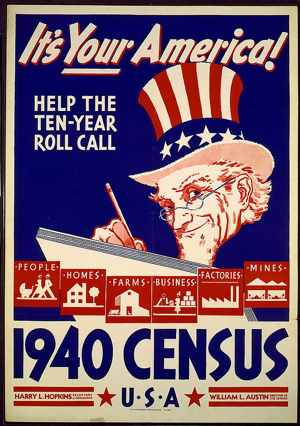
I thought I was over the Census, but my interest keeps getting piqued despite my best efforts to ignore the chatter.  What I’m most intrigued by at this moment is the notion that in the next decade or two, if we keep changing our attitudes and understandings for the better, a majority of Americans could come to view themselves as mixed race.  And by that I mean Americans who today consider themselves to be exclusively white or black despite the abstract knowledge that we are all mixed up to some extent.  And if that paradigm shift happens there won’t be much use in classifying ourselves in terms of “race” because we will see ourselves as generally more similar than different regardless of color/phenotype.  Although I respect Obama’s right (and that of every individual) to self-identify any way he chooses, I feel that the checking of just one box is holding us back from reaching that “promised land” where we aren’t so entrenched in these antiquated notions of race and color, but perhaps more interested in heart, spirit, intellect …. Once again I’m a bit speechless because I’m not sure what the world will look like when instinctively and instantly we take people for what the truly are instead of what they truly look like.

Rep. Patrick McHenry claims every census in history has asked for an individual’s race

SOURCE

In an op-ed piece for the conservative Web site Red State on April 1, 2010, Rep. Patrick McHenry, R-NC, the ranking Republican on the Information Policy, Census and National Archives Subcommittee, sought to tamp down some of the misinformation being spread about the census by “otherwise well-meaning conservatives” and warned that failing to fully participate in the census could create a competitive advantage for Democrats.

Specifically, McHenry attempted to allay the fear among some Republicans who distrust the government and view the census as overly prying.

…In his posting on Red State, McHenry said “the most private question on this year’s form asks for an individual’s race and that question has been asked by every census since the 1790 census conducted under then-President George Washington.”

We decided to check that claim out, which was similar to one from Census Bureau Director Robert M. Groves in a March 15, 2010, press release: “It’s one of the shortest forms in our lifetime with just 10 questions very much like the questions James Madison and Thomas Jefferson helped craft on the very first Census.”

Conveniently, the U.S. Census Bureau keeps historical records online of all the questions asked in every census going back to the first one in 1790.

If you follow the census questions asked through U.S. history, you can see how they reflect changing attitudes and understandings about race.

Yes, the 1790 census and others in the early years of the survey addressed race, but it was hardly a matter of checking a box. Rather, the census asked about the number of free white males and females; the number of “all other free persons” and the number of slaves.

By 1850, the Census asked about people’s “color.” According to the Census archives, this column was to be left blank if a person was white, marked “B” if a person was black, and marked “M” if a person was mulatto. A separate form listed slave inhabitants, the last census to do so. By 1870, the “color” options included “W” for white, “B” for black, “M” for mulatto, “C” for Chinese (a category which included all Asians), or “I” for American Indian. The 1890 census added Japanese and more mixed-race categories — mulatto, quadroon and even octoroon, according to amounts of perceived African blood. By 1920 Filipino and Korean sprang up, along with the improbable racial term “Hindu.” New labels emerged after World War II, with Hawaiian, Eskimo and others joining the parade of terms.  The question morphed into “color or race” in the mid-1900s, and then, finally to just “race” in 1970. In 1980, in addition to race, the Census began asking if a person was of Spanish or Hispanic origin or descent.

It’s fair to say that every census has addressed the issue of race in some fashion. But we think it’s a bit of a stretch when McHenry says “this year’s asks for an individual’s race and that question has been asked by every census since the 1790 census.”

In the 1790 Census (and several after it), a respondent was not simply asked their race. Rather, they were asked to list the number of white people, the number of “other free persons” and the number of slaves. In other words, it didn’t ask for the race of non-whites. One could argue this reflects the common attitude about race at the time. But that’s hardly the same as the 2010 version that simply asks a person’s race.

Prior to the Civil War the census was more concerned with whether someone was enslaved or not, than establishing whether someone was white. This is a very different conception from our modern idea of race. Post Civil War, the terminology changed (from “color” to “race,” for example) and the categories expanded over time. Certainly these are different standards when compared to today’s measures. But again, one could argue that the questions comported with attitudes about race at those times, and the census has always asked discriptive questions that corrolate to race. So we rule McHenry’s claim Mostly True.

denying the rich history of america’s multiracial realities

these are my sentiments exactly, jason haap!  i try so hard not to judge or be offended by anyones’ choice to self-identify as they choose, but…. come on obama!!  how will we ever move forward if the most recognized living ‘mulatto’ doesn’t think it matters that he is one?  how will we eradicate the vestiges of the one-drop rule, which implies that black blood is a pollutant, and that if your drop is visible you better forget about the rest and fall in line at the back with the other tainted ready to fight the good fight?  if we can’t get rid of that idea, then how will we get to the point where we see ourselves in everyone because we are indeed all mixed up and there is no inherent opposition.  i have a feeling that we as a human race could reach untold heights if we redirected the energy that we (perhaps unconsciously) spend on categorizing/demonizing/stereotyping/judging/comparing/othering toward a more inclusive, unified system of brotherly commune. like, no fighting, no distrust, no base-less fear. what!? i don’t even know how to say what i mean. maybe there’s not a word for it. yet.

Unfortunate message to our mixed-race children

by Jason Haap, an educator, citizen media activist, and father of two multiracial children

SOURCE

The “one drop” rule is alive and well for America’s multiracial children! Last week, President Obama gathered fanfare from national media. Despite the obvious existence of his white mother, he checked just one box on his census form regarding his racial identity: “Black, African Am., or Negro.” By ignoring the option of checking multiple boxes (or of writing in a word like “multiracial”), Obama sent an unfortunate message to America’s mixed-race children.

People may have the freedom to pick racial identities individually, but Obama’s public actions as president of the United States deny the rich history of America’s multiracial realities, hearkening back to a racist period that said one drop “black” makes a person “all black.”

I remember, a few months ago, playing with my kids at the Cincinnati Children’s Museum. I heard one boy point at my oldest son and call him “that black kid.” Certainly my children are more brown-skinned than me, but they are also more fair-skinned than their mother. That’s because I have multiracial children, and I think it’s too bad their racial identities are being formed by a backward-thinking American culture before they are even old enough to notice skin color might mean something in the first place.

Despite the mythologies some of us have been raised to believe, there is nothing “stronger” about black blood. It does not “take over” a baby’s genes if one parent is black and the other white. These ideas were promulgated by racists who wanted to scare white people into thinking their genes would be obliterated by the act of intermixing with blacks. But it’s just not true. It’s bunk science and even bunkier sociology.

When the Race exhibit came to the Cincinnati Museum Center, I learned how some cultures have radically different ways of articulating race – such as in Brazil, where dozens of descriptive terms are used instead of polarizing opposites like simply “white” or simply “black.” Instead of helping move our racial understandings into the 21st century, Obama’s public actions have placed us back into the old racist thinking of the one drop rule, and that’s a shame.

if you look like one, you could be another

Brilliant!!! I love everything about this!  I’ll admit that I felt what I would have described back then as “weird” about my (mixed)race.  Looking back, I think “shame” fits the bill.  I’m so happy to hear that acknowledged, and even happier that feelings are changing to pride.  Mine included.

Danbury’s multi-racial students to star in film

Eileen FitzGerald

DANBURY — The three boys wore jeans and long-sleeve T-shirts. The two girls each wore a dozen bracelets and necklaces. They looked like typical students in the library media center at Broadview Middle School.

It was their differences, however, that brought them together Monday. They’re subjects in a documentary in which Western Connecticut State University professor Marsha Daria is examining the identity and social relationships of multiracial children.

Daria is interviewing elementary, middle and high school students to help educators and teacher training programs consider multiracial students in the curriculum and school issues.

The sixth-, seventh- and eighth-graders carry the roots of about a dozen ethnic heritages, including African American, Spanish, Italian, Scottish, Irish, Chinese and Portuguese.

“It’s cool to be two races, because you get to experience two different cultures and those countries,” sixth-grader Jonathan Garcia, 11, said.

Jonathan, who is half Chinese and half Puerto Rican, was a little nervous to be interviewed but glad to express his feelings about the issue for the movie.

“This gives me a chance to say that what race you are doesn’t matter. If you look like one, you could be another,” he said. “Sometimes they say I am Asian, but what bothers me is that I’m not all Asian. They say things about Asians that I don’t think are nice.”

Sometimes he points out people’s negative comments, and they acknowledge they were wrong. Other times he ignores what people say.

Eighth-grader Kiani Oliveira, 14, who is Portuguese, African American, Indian and Scottish, wanted people to know that multiracial people are unique.

“Like we look different. Our skin color is different, and our hair and eyes can be different — unique,” she said. “It’s not harder to be multiracial. My friends take me as I am and think I’m cool.”

A Western Connecticut State University Professor, Marsha Daria, is filming a documentary on multiracial children. Daria and the film crew where filming at Broadview Middle School in Danbury on Monday March 29, 2010. From left, cameraman Scott Volpe of WCSU media services, Broadview student Kiani Oliveira, 14, and Professor Marsha Best. Photo: Lisa Weir

Daria is doing this project during her sabbatical as an education professor at WestConn, where she has taught since 1995. Her film crew is from WestConn –Rebecca Woodward, Scott Volpe and Renato Ghio– and she consults Emmy award-winning producer and director Karyl Evans.

“It’s critical to examine the ways in which we talk about race and ethnicity. There is a change in how kids view themselves. They used to be ashamed, but now you see a lot of pride. They want people to know who they are,” Daria said.

“It used to be a marginalizing experience, but not anymore. They feel special.”

Daria will use the results of the 2010 Census in the documentary, which are likely to be more specific about race than the 2000 census, in which seven million people reported they were of mixed race.

“I want to educate. To bring awareness to kids who are mixed race. We do become a better country when we accept each other,” she said. “There are good and bad in every group. We should accept people for who they are.”

Seventh-grader Robert Best, 12, who is Italian, African American, Indian and Irish, hopes the film will help people understand that multiracial kids are just like other kids.

“People think African-American people steal and white people are laid back, and I’m supposed to be like both of them, but I don’t like that,” he said. But he wouldn’t want things to be different for children who are multiracial, because it would put them in a separate group.

Seventh-grader Marissa Segura, 12, who is Costa Rican and Italian, and Nasir Fleming, 13, an eighth-grader who is Puerto Rican, African American, Italian, Native American, and a little Irish were also questioned.

The students, all American born, said they mostly celebrate American holidays and eat all types of food, including traditional food from their dominant cultures. They usually talk about typical teen topics — things like school and music — with friends from all over.

Marissa has friends from all over and wishes people would stop guessing and ask what nationality she is.

“All my friends are from different places,” she said. “My sister said I never have a friend who is actually from America. I just get along with a lot of people and have a lot of friends.”

Nasir said he’s annoyed when people think he is only African American.

“When I was younger it made me feel sad, but now it’s just whatever,” he said. “Some friends aren’t cool about who they are, because society tries to make them feel they are nothing.”

It might be easier to stay quiet when you are classified a certain way, he said, “but if you want to keep your rights you should explain who you are.

“People who are diverse are like a little community, but we’re all different,” Nasir said. “If you had to find a similar thing about us, it’s that we don’t like being titled one thing. It’s not OK to be judgmental, to stereotype.”

SOURCE
the greatest negro?

I immediately thought of Obama while reading this article and am quite, quite certain that most agree that he is indeed a “Negro.”  That there was debate around Douglass’ negrocity ( I like to make up words sometimes) is of interest to me because I’m fascinated by the fact that mulatto was a valid and recognized identity in America before 1920.  Then it wasn’t anymore.  The ranking of Negroes from greatest to least strikes me as ludicrous.  That being said, the question, “Will Obama go down in history as the greatest Negro who ever lived?” popped into my head.  And then I thought that seeing as he isn’t one “in the full sense of the term,”  MLK probably outranks him.  How quickly I went from judging the system of rankings to ordering some myself!

Knoxville’s farewell to a civil-rights icon

By Robert Booker

SOURCE

A large crowd packed into Logan Temple A.M.E. Zion Church to honor the memory of the country’s best known civil-rights advocate. Among them were Knoxville’s black elite.

It was Feb. 25, 1895, and they had come to say farewell to Frederick Douglass, who had been born into slavery and died six days earlier.

Two days before the memorial, The Knoxville Tribune had its say about Douglass and wondered if he was a true Negro: “If we consider Douglass as a Negro, he was the brightest of his race in America. But he was not a Negro in the full sense of the term. Although born a slave, his father was a white man and his mother was a mulatto. Born a bastard and a slave, he rose to distinction and influences, and there were those among a class of white people who delighted to honor him.

“There are those who class him as the greatest Negro. This estimate of him is extravagant and unwarranted. In the first place he was not a Negro, and in the next place he is outranked by other Negroes. The greatest Negro who ever lived was Toussaint L’Ouverture the Haitian general, whose death was and will always be a dishonor to France. No Negro in this country ever approached L’Ouverture in intellect.”

L’Ouverture (1744-1803) was the Haitian independence leader who took part in the slave revolt in that country in 1790. He joined the Spaniards when they attacked the French in 1793, but fought for the French when they agreed to abolish slavery. By 1801 he had virtual control over Hispaniola, but was arrested and died in a French prison.

The blacks who spoke at the Douglass memorial took issue with the Tribunes’s assessment of him.

Attorney Samuel R. Maples said he wanted “to correct a statement in one of the local papers that Douglass boasted of his white blood and denied being a Negro. This was not true. Douglass never denied being a Negro. He was very proud of his race.”

Attorney William F. Yardley, who had introduced Douglass when he spoke here at Staub’s Opera House Nov. 21, 1881, said Douglass “Was the victim of the great American curse – slavery. He slept with dogs and ate the crumbs from his master’s table, but his great mind and energy lifted him to the loftiest heights of fame. He was not a creature of circumstance but of force. He was tireless and had been the greatest blessing to his race.”

Charles W. Cansler spoke of Douglass as “An anti-slavery agitator who represented a great moral principle and not a minister of malice. He was seventy-eight years old when he died and spent his life earnestly in the extension of freedom and in establishing justice among men. He was the Moses of his race, and it is hard to tell what his heath means to us.”

Rev. J.R. Riley, pastor of Shiloh Presbyterian Church, spoke of Douglass as a leader: “He was carved by the hand of deity to be a great leader, though cradled in the most iniquitous institution – American slavery – and schooled in dire adversity, his power of mind and greatness of spirit had surmounted all, and he stood out boldly as the greatest man of his race and the peer of all great men.”

It seems that Riley, who was pastor of Shiloh from 1891 to 1913, knew Douglass personally and they had many experiences together. He said his friend had “great personal magnetism. His quick wit and ability to read men made him irresistible in his influence among men.”

the cover of the sheet music for Frederick Douglass's funeral march

This image shows the front cover of “Frederick Douglass Funeral March.”  At each corner of his portrait are pen and ink drawings in circular frames that depict the slave trade, bondage, auction block, and freedom.

speaking of isabella fowler…

So here’s what came from my search for more on Isabella Fowler.  In these paragraphs excerpted from Black Slaveowners: free Black slave masters in South Carolina, 1790-1860 by Larry Koger we see where the intraracial divide between mulattoes and “negroes”started.  I must admit that I am disappointed (to say the least) in the behavior of these privileged “biracials.”  I cannot defend the behavior.  Don’t want to.  On the other hand, it’s easy for me to sit in judgement in the year 2010 when my freedom and my opportunity for advancement are not on the line.  I would love to believe that back then, were I given the choice I would free my people.  That I would not see myself as separate from or better than, and that the only privilege I would take advantage of would be the one by which I could exercise my right to right some wrongs and provide an opportunity for others to be liberated and elevated alongside me.  I would love to believe that… but circumstances were different and I can’t possibly know how I would have behaved.  I do know that none of those attitudes/ideals have taken root in me, yet the accusations continue to be hurled and conclusions jumped to.  All of that being said, it’s 2010 and the time for ridding ourselves of these old paradigms of house slaves vs. field hands is long overdue. Maybe by 2012… according to Willie Lynch (perhaps a mythical “legend”) that’s when the stronghold of slave conditioning will lose it’s grip.

The mulatto children of slave masters, who were accepted as legitimate heirs, held a position in the household of their fathers which placed them in a superior status over the other slaves.  These children were accustomed to the master-slave relationship; however, they conceived of themselves not as slaves but slave masters.  In spite of the fact that they were of African descent, the white blood that ran through their veins separated them from their fellow black slaves on the estates of their fathers.  For example, the children of Michael Fowler, a white planter of Christ Church Parish, and his black companion named Sibb were raised in an environment which condoned slavery.  According to Calvin D. Wilson, in 1912, “there was a rich planter in Charleston named Fowler who took a woman of African descent and established her in his home…. There was a daughter born, who was called Isabella; the planter insisted that she should be known as Miss Fowler.”  Clearly Michael Fowler expected his slaves to serve and regard his mulatto children as thought they were white.  So the offspring of Fowler were treated as little masters and mistresses by the slaves of their father.

In fact, the process of cultural assimilation was so complete that the children of Michael Fowler, once reaching maturity and inheriting their father’s plantation and slaves, chose to align themselves with the values of white slaveowners rather than embracing the spirit of freedom and liberty espoused by the abolitionists.  In 1810, the estate of the deceased Michael Fowler was divided among his mulatto children….  When the descendants of Michael Fowler received their slaves, manumission was still the privilege of the slaveowners; however, none of the heirs chose to emancipate their slaves… Undoubtedly, the children of Michael Fowler considered slavery a viable labor system and chose to hold their slaves in bondage.

Mulatto children were not always acknowledged as the offspring of white slaveholders.  However, upon the death of their owners, they occasionally were manumitted and provided for once freed.  These children  probably were unaware of the bond of kinship to their owners.  Yet that bond allowed them to receive preferential treatment from their slave masters.  The unknowing mulatto offspring of white slaveowners often were trained as house servants or artisans.  Although they were not acknowledged as the children of slave masters, their encounter with the culture of their masters influenced them to become slaveowners.

In fact, the slaves of both mixed and unmixed racial heritage who served as house servants or artisans accepted certain aspects of the culture of white slaveowners.  Regrettably, the close interaction with the Southern culture influenced many slaves to identify with their owners.  For the house slaves, the contact with their masters and mistresses perpetuated the difference between themselves and the majority of the slaves who tilled the soil.  The house servants were taught to consider themselves superior to the common field hands.  Furthermore, the house slaves’ conception of superiority was reinforced by their dress, food, and housing, which was slightly better than that given to the field hands.  So it was that they separated themselves from the field slaves and occasionally accepted the values of their slaveowners and looked upon slavery as a justified institution.  As a consequence, they envied the life of splendor that their owners enjoyed and viewed slavery as a means of obtaining the luxuries possessed by their masters.

SOURCE

blacks were ashamed, whites felt guilty

I would love to take this tour.  So many fascinating (albeit horrifying) pieces of our nation’s history are highlighted.  Underground railroad, black slave owners, paved over cemeteries, middle passage “reception,” color hierarchy.  I’m elated by the notion of forsaking shame and guilt in favor of honest discussion to ensure that this never happens again.  I’d like to think that “it” happening again is an impossibility, and that now our ultimate goal is to get rid of the vestiges of slavery.  Clearly we’re making progress.

Taking a Gullah tour of Charleston

BY SARAH STAPLES

The biggest hint that Charleston is a very different breed of Southern Belle — and that I’m on no ordinary city tour — comes as our air-conditioned mini-bus reaches the mainly African-American east side, a warren of economically deprived streets framing what was once an important stop on the Underground Railroad.

I look up to see a most unusual Star Spangled Banner flying bold African colors of red, black and green from a worn-looking flagpole. It’s an expression of indomitable Gullah pride, explains tour guide Alphonso Brown.

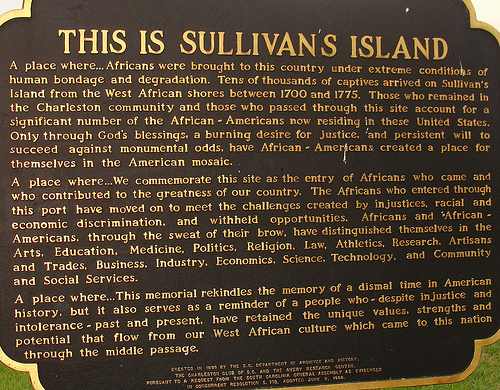
Like many living in the east side, Brown himself is Gullah: a descendant of slaves who endured the brutal “middle passage” from West Africa and the Caribbean during the 18th century, landing at Charleston’s bustling port before being sent to toil on plantations across the South.

Brown’s popular Gullah Tour, which marks its 25th anniversary this year, brims with atypical landmarks like this flag, as it excavates vestiges of an uglier time hidden amid the exquisite cobblestone streets and pastel-painted Georgian home fronts.

A multi-million-dollar waterfront estate, for example, looks impressive — until it is revealed to have been built by a rich slave ship proprietor who added slave quarters and a threatening-looking spiked gate to pen in human chattel. Later, we stop and stretch our legs in a parking lot owned by a Catholic church. It turns out to conceal the paved-over graves of freed slaves, for it was once their cemetery.

And the bus rolls on.

It’s potentially uncomfortable subject matter for his mixed-race audience, but Brown manages to keep the atmosphere light, sprinkling his commentary with anecdotes and jokes, and slipping in and out of the sing-songy Creole of his forefathers. “I-eh hab disshuh dreem,” he recites in Gullah. “We hol’ dees trut’ fuh be sef-ebbuhdent, dat all man duh mek equal.”

Plumped with West-African and Elizabethan English influences, Gullah was initially spoken in secret and spread wherever slaves were taken, along the coast and barrier islands as far as Georgia, and down to around Jacksonville, Fla.

SULLIVAN’S ISLAND


Sullivan’s Island, opposite Charleston, became the macabre version of Ellis: a processing station where newly arrived slaves were kept in preventive isolation before their auction at The Old Slave Mart downtown, which today is a museum.

When the Civil War ended, emancipated blacks stayed on the barrier islands, renting rooms from former masters or squatting on abandoned plantations. In their isolation — bridges were few — they incubated the distinctive Gullah body of traditions for cooking, planting, fishing, praying and burying that are subtly evident throughout Charleston and the Lowcountry today.

Front porches in the city, we learn, often face southeast for shade, as per the African custom. Charlestonians were early, enthusiastic practitioners of root medicine and witchcraft. In literature, the tales of Brer Rabbit and Brer Fox derive from West African oral storytelling. And characteristic dishes, from spicy stone ground grits and shrimp to slippery-smooth okra gumbo, are Gullah to the core.

The inside of Brown’s mini-bus is ringed with pictures of inspiring Gullah throughout history and modern times. Among them is Clarence Thomas, second black appointee to the U.S. Supreme Court, and Philip Simmons, lauded by the Smithsonian Institution as a National Folk Treasure for his ornamental iron gates, which dress many of the city’s architectural landmarks.

CIVIC ACTIVISM

Politically, we learn, the Gullah have been determined organizers of abolitionist and Civil Rights movements. Dr. Martin Luther King, Jr. often retreated to St. Helena Island’s Penn Center — where one of America’s first schools for freed slaves was established — and may have begun drafting his 1963 I have a dream speech there.

More recently, in the run-up to the last presidential election, the Gullahs’ organized support for Barack Obama helped him clinch the crucial South Carolina primary.

Brown, who grew up in nearby Rantowles — not far from the site of the failed Stono River Rebellion of 1739, in which runaway slaves killed 20 whites before they were themselves slain — is justifiably proud of his ancestors’ achievements and defiant will.

He doesn’t deliver history in monochrome. Brown’s choice of material portrays a complex view of race relations in Charleston, which even during slavery was never officially segregated. We’re told, for example, that one of the richest freed black families was the DeReefs, whose patriarch, Richard Edward DeReef, owned multiple businesses — and at least 16 slaves.

Color was such a delineator of social status that freed “octoroons,” who had one-eighth black blood, judged themselves superior to “quadroons” with one-quarter slave ancestry. They, in turn, held themselves above mulattos, the children of white fathers who were often referred to, in delicate conversation, as “friends.” The divisions were physically embodied in the city’s many integrated churches, where slaves worshipped from the balconies while freed blacks sat behind whites in the lower pews.

A SENSE OF PRIDE

Two hours speed by on this tour. Brown makes it clear that Gullah traditions thriving in secrecy and isolation for centuries have more recently become a source of civic pride. Efforts to preserve and celebrate the culture are being stepped up, he says. And events, such as the Gullah Festival in Beaufort each May, or the Penn Center Heritage Days Celebration every second weekend in November, draw ever-growing crowds.

“Slavery was always a taboo subject: blacks were ashamed and whites felt guilty,” says Chuma Nwokike, owner of Gallery Chuma, which hosts works depicting traditional activities like crabbing and sweetgrass basket-sewing. The gallery doubles as rendezvous point for Brown’s tour.

“Now, the younger generation wants to acknowledge what went on, so we’re better able to come together and say, ‘how can we make sure it never happens again?’ ”

SOURCE

alice disrobed

More on the Rhinelander Trial.  I’d like to make a movie about this.

Leonard “Kip” Rhinelander Trial (1925)

The New Rochelle, New York annulment trial of Leonard “Kip” Rhinelander and his wife, Alice Jones Rhinelander, was a much-publicized issue in the 1920s which highlighted white America’s definitions of race, class, and marriage.

Alice Jones was the daughter of working-class English immigrants.  Her mother was known to be white, while her father’s ancestry was “mixed.”   Leonard “Kip” Rhinelander was descended from a wealthy, white New York family.

Rhinelander and Jones met in 1921, fell in love, and married in 1924.  Because of the Rhinelander family prestige, the union soon became public.  In the social atmosphere of the 1920s, it was scandalous that Rhinelander would marry a woman of lower socioeconomic class, or who possessed any “non-white” blood.  Rhinelander’s father pushed the annulment lawsuit brought by his son only weeks after the wedding, in which Rhinelander, Jr. charged Mrs. Rhinelander with deceiving him as to her race.  The prosecution argued that if Leonard had known she was “not white,” he would not have married Alice.  A leading issue in the trial thus became what Alice Rhinelander’s true race was, bringing into sharp focus the arbitrary nature of white America’s obsession with racial classification during that period.

Attorneys on each side attempted to answer this question using Alice Jones Rhinelander’s social network, her father’s ancestry, and even her language as evidence of her racial status.  The Rhinelander attorneys attempted to paint Leonard as a “dupe” victimized by a “vamp,” playing on sexualized stereotypes of African American women, while defense counsel resorted to desperate means to prove that Rhinelander must have known his bride was not “white” when they induced a stricken Alice to disrobe before the jury.

During the trial, the court required Alice to disrobe on the witness stand for examination of her skin. The court wanted the jury to inspect the color of her nipples.

The Rhinelander Trial held the public in its grip for the better part of 1925, with both black and white press weighing in with varying opinions.  Ultimately, on December 6, 1925, the jury ruled in Mrs. Rhinelander’s favor.  Playing on the notion that race can be visually established, the defense attorney successfully “showed” Mrs. Rhinelander to be “colored,”  argued that she could not have deceived her husband, and therefore his claims for annulment were invalid.

LATE IN 1929, Alice agreed to a divorce in exchange for a small monthly pension, and with the stroke of a pen a Nevada judge erased Kip Rhinelander’s social error. According to the terms of the settlement, Kip Jr. paid Jones a lump sum of $32,500 and $3,600 per year for life if she would disown their family name. Ironically, Jones would outlive her ex-husband by 50 years, passing away in 1989. On her gravestone read the name Alice J. Rhinelander.

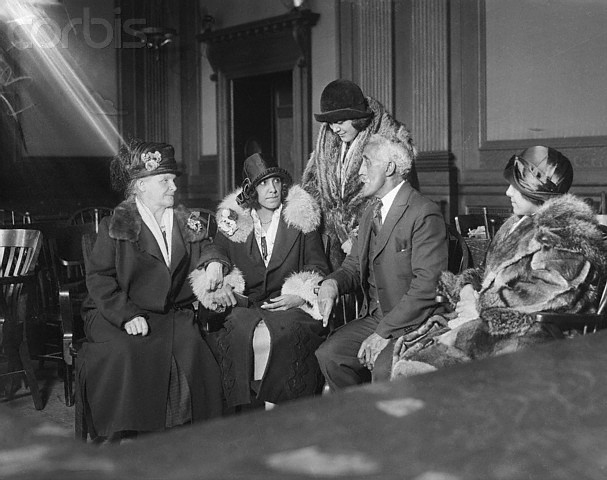
Original caption: Photo shows Mrs. Alice Rhinelander surrounded by relatives as jury decides case…Rhinelander jury locked for night; both sides anxiously await verdict. “Sentiment, passion, and prejudices should not interfere with your honest determination,” Justice Morschauser charged jury deciding Rhinelander case. Having failed to reach a verdict by 5:50 p.m. December 4th, they were ordered locked for the night. Left to right: Mrs. Jones, Alice, Grace, Jones, and Emily awaiting verdict.

SOURCE