Image
Reply


…but it shouldn’t be a secret. That really hit home for me.
I wish that this young woman could talk to Nia. I hope that she at least reads the essay. Not that Nia touched on the topic of having racist black parents to contend with, but I think that Danielle could be inspired by the way in which Nia boldly and candidly addresses many of the issues facing interracial couples.
Yes, I called Danielle’s parents racist. They are. I’ve found that some people are under the impression that black people can’t be classified as racist. That that is a delineation that we reserve for the “oppressor.” So not true.
Case in point from U-Mich Race Card Project:
Kwende Idrissa Madu
Russellville, AL
I imagine it’s gonna be a tough row to hoe going through life in America completely unwilling and unable to trust a white man. I also imagine that it could be a large majority of “minorities” who really feel that way.
Back to Danielle though: I admire her for not letting go of the love of her young life. For seeing and feeling beyond her parents’ antiquated and limiting fear based belief system. And for deciding that it’s time to “come out” and love in the open and let the cards fall where they may because that is the only way for her to truly live.
A YOUNG WOMAN FEARS THAT HER FAMILY WON’T ACCEPT THE LOVE OF HER LIFE
ByDANIELLE T. POINTDUJOUR
![[CONFESSIONS]<br /><br /><br /><br />
�I�m Hiding My Interracial Relationship From My Parents�](https://i0.wp.com/static.ebony.com/interracial_couple_caro2_article-small_22298.jpg)
I grew up surrounded by love. I have the fondest memories of my parents spontaneously stealing ‘private’ kisses, the grand romantic gestures of my aunts and uncles and watching my grandparents dancing to old records in their living room. Love was all around me and I spent hours dreaming of the day I’d have one to call my own. It wasn’t until high school that I started to realize that the love I saw and wanted came with conditions.
Since I wasn’t allowed to date until I was 16, I had a secret boyfriend in the months leading up to that milestone birthday. Mike was the best beau a teen girl could have—tall, handsome, funny and happy to carry my books and hold my hand. He reminded me a lot of my father, the way he played with me and did ‘man’ things like pulling out my chair and holding all the doors. He was great, so naturally I thought nothing of bringing him home for my parents to meet right after I turned 16. I thought nothing of the fact that he’s White.
I’ll never forget the look on my parents’ faces when Mike walked through the door: confusion mixed with horror. When he left—after an hour of awkward silence interrupted by short bursts of conversation—the drama began. My parents forbade me from seeing my honey again and told me that boys “like him” are only interested in me for sex and that I should “stick to my own kind.” They tried to scare me with stories of violent racism and visions of children addicted to drugs because of their struggle with identity. I tried to explain that his race didn’t matter to me, the way he treated me did. I wanted him to know that Mike’s love reminded me of the love I grew up with. They weren’t trying to hear it.
For the rest of our high school years we dated in secret and by the time college came, the boy that held my hand became the man who held my heart. Still, I had to have Black male friends pretend to take me on dates to throw my parents off. I made up excuses to not come home on breaks so I could spend them with Mike’s family, who welcomed me with open, loving arms and had a hard time understanding my choice to hide our relationship.
I tried a few times to slip the topic of interracial dating into conversations with my parents, telling stories of friends who were happily dating or getting married. The response was always the same: “Good for them, but you’re going to bring home someone that looks like us.” My father even hinted that he would cut off my college funds if I went “that way.”
I felt trapped.
After college, Mike and I decided to apply for graduate school in Spain. While his parents were thrilled that we would be living abroad together and sharing an adventure, mine were worried about me going so far away and wondered how I would find the man of my dreams in a country where the majority of the people don’t speak English. Little did they know the man of my dreams was actually a reality and had been in my life for quite some time.
It has been six months since we moved to Spain together and almost seven years since we started dating, and I couldn’t be happier! All the fears my parents have for our relationship have yet to materialize, even here in this foreign land. Our love for each other has grown so much that I’ve come to realize that it’s time to tell my parents. I love this man and I want to shout it from the rooftops. I no longer care what my parents or anyone else thinks about it and I’m tired of lying. Love is many things, but one thing it shouldn’t be is a secret. Recently, we’ve been talking more about marriage and our future—both things that I want my parents to experience with us. I hope that they can try to be open-minded enough to share in our love, but if not, that’s okay. We have plenty of family and friends around that support us unconditionally and they can appreciate just what love is supposed to be: colorblind and limitless.

I really love everything about this story. Except the part where Maurice was taken from his family. But, then again, without that part there wouldn’t be a heartwarming story of perseverance and triumph and love and connection to inspire and reinforce the message: Don’t give up.
I was especially moved by this: “I didn’t let anybody get close to me again…I hurt a lot of people…” I think we’ve all encountered painful experiences that have left us tempted, or perhaps determined, not to let anyone get close enough to hurt us again. And then we consciously or unconsciously start a cycle of hurting ourselves and each other out of fear of being hurt. Seems silly when you look at it like that. Seems serious if you’re stuck in it.
San Diego, California (CNN) — A boyhood wish finally came true. But Maurice Griffin had to wait until he was a man for it to happen.
At age 32, the California man was adopted Friday.
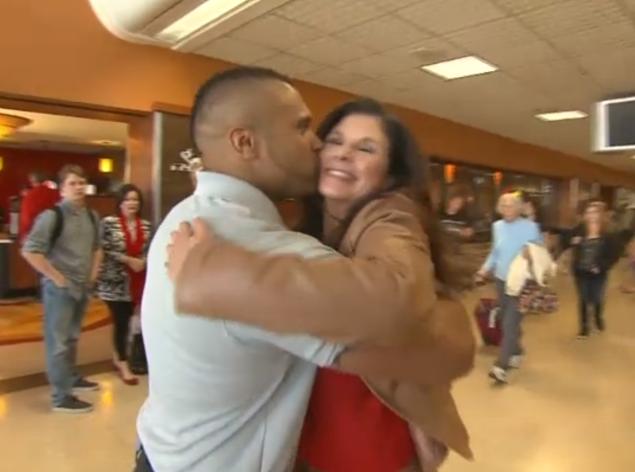
“It was the best day in my life,” Griffin said after the proceeding in San Diego Juvenile Court. “I fought for 10 years and finally the day came.”
Adopting the burly, muscular, mohawk-sporting man is Lisa Godbold, his one-time foster mother.
“I was just overwhelmed with emotion,” Godbold added.
With a few pen strokes by Griffin, Godbold and Judge Richard Monroy, the adoption became official.
“This is going to be quite quick,” the judge told mom and son, all seated at a table. “If you blink, you miss it.”
Then son hugged mom. Mom cried.
“Congratulations to you both,” the judge declared.
Then a deputy took a photograph of three of them, a tradition that the judge noted is always done with small children and their adoptive parents.
Good time
The story dates to the early 1980s, when Godbold and her husband saw Griffin at an orphanage near their Sacramento home.
The smiling child seemed to fit perfectly with their family: Godbold is white. Her late previous husband was black, and the couple had two children who were, like Griffin, biracial.
The couple took Griffin in as a foster child. He quickly bonded with their sons, Gideon and Spencer.
“We were best friends,” Griffin said. “We’d run around, we did mischievous things and fun things. It was a good time.”
He lived with the family as a foster child for four years, until he was 13. Then, just two months shy of being adopted by them, it all fell apart.
Griffin said he wanted to be treated like a “real” son: He wanted to be disciplined like the couple’s other sons. He wanted to be spanked, he said.
So he innocently told a social worker that was what was going to happen.
The social worker then told her superiors, and soon Griffin was about to be removed from the household, he said.
Family ripped apart
One day, foster care officials took Griffin away, saying he could not live with Godbold’s family anymore.
“You can’t spank foster children. Maurice very much wanted that,” Godbold said. “We wanted him to feel like the rest of our kids. And there was a difference of opinion with some of the (child welfare) supervisors.”
Godbold said she fought to keep Griffin and was told she could lose her biological children, too.
CNN contacted the state agency responsible for the case, but its officials would not comment because it’s still considered a juvenile matter.
So Godbold had to let go. And as time moved on, Griffin says, he lost touch with what he felt was his only family.
“It was just an emptiness,” he said. “I couldn’t talk to anybody about it because nobody was there. I couldn’t call somebody; there was just a void in me.”
Griffin said that he acted out every chance he got in hopes the state would reunite him with the people he considered to be family.
He bounced from one foster home to another, never finding what he lost.
“I didn’t let anybody get close to me again,” Griffin said, holding back tears. “I hurt a lot of people. It was a rough road.”
Searching for each other
Despite several obstacles, Griffin and Godbold never stopped searching for one another.
Godbold’s husband died in 1998. She remarried and changed her last name, and moved.
But six years ago, Godbold found Griffin on social media. They communicated online and then one day she called him.
“She said, ‘hey baby,’ and I said I got to call you back,” Griffin said, trying to explain how overwhelmed he was by the reunion.
As she entered the courtroom Friday, Godbold harbored fear that a surprise would halt the proceeding.
“I was actually really nervous before walking in, even though signing on the line was a formality,” Godbold said. “I thought something might happen to keep it from becoming official today.”
Griffin is an example of triumph in foster care.
“I’m a living example of it, that I have been through it,” Griffin said. “I just never stopped. It will all work out.”
Godbold says the message is simple: don’t give up.
“Don’t give up – persevere. Keep looking for that love, that family connection, whether it’s with an infant or your 32-year-old child,” she added.
Griffin lives in San Diego and Godbold lives in San Jose, Calif., but now that they’re mother and son, they’ll be getting together often.

“She’s my mother,” said Griffin. “She has always been my mother.”

I’m excited to share this article, not only because my friend Nia wrote it, but because finally someone has been bold and truthful enough to lay this stuff out for us. I mean, yes, we all know that these stereotypes exist. We have all heard, witnessed, or discussed these taboos. But in bits and pieces. Nia gave us, like, the entire run down. From personal experience. It’s the kind of experience that literally created me, yet it’s also one that I haven’t had exactly. I have dated white guys certainly. I have had people say to me, with words or hostile, disappointed, or dismissive glances “you’ve turned your back on your own kind.” But because (despite appearances and societal definition) I’m white too, I never felt like I was really in an interracial relationship in the same way that a “monoracial” black woman might. I ponder different things when I imagine my future children.
So, thank you, Nia for boldly going where most wouldn’t. For candidly and hilariously covering the whole story. I hope your kids don’t get asked “What are you?” I hope that if they do, they’ll know with unshakeable certainty that the answer is “I am a brilliant child of God and Nia and Bill.” I know they will have a sense of humor about it. I can’t wait to meet them.



When I said mildly obsessed I wasn’t exaggerating. I find these Race Cards to be moving and powerful and unsettling and inspiring. Michael Bolton (not that Michael Bolton) and Bill Rowe, you really got to me. What a genius project. It is a brilliant way of taking the racial temperature of an America with a huge population of “Millennials” who think in 160 character blurbs and who we hope are the “raceless” generation. Of course we Gen X-ers and the Boomers, and even the Builders have Millennial tendencies, so no one should feel excluded from this. This isn’t for Generation Y, but when you’re taking the racial pulse at The University of Michigan, you will get a sense of how to close to “raceless” our youngest adults are.

Click HERE to submit your own Race Card. I’d love to hear which 6 words you chose, so please leave it in the comment section below if you feel inclined to share. I’m crafting one myself. Right now I’ve got:
I think I like the last one best. I think the ones the rhyme are cheesy. I think the word race probably doesn’t have to be in it, so I need to start thinking outside of the box I’m currently stuck in on this one.
Here are a few of the ones that intrigued me most. Of course, I was drawn to the “interracial” ones for obvi reasons. There are so many intriguing entries to dig through on the Race Card Project website.

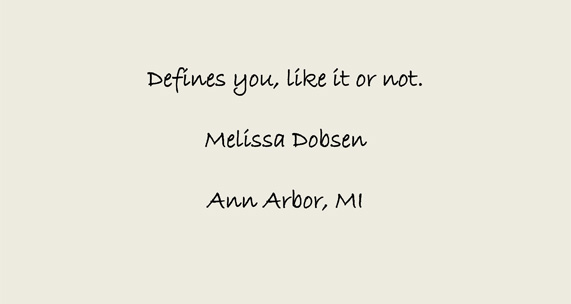
Kimberly Dorsey
Detroit, MI
I am bi-racial and have been raised in a white family inside Detroit. I have suffered many racially motivated injustices in my travels and it makes me angry when people pretend race doesn’t matter. It matters when you are the one being discriminated against.
Paul David Binkley
Delaware, OH
My wife of twenty two years and I are interracially married, she black and myself white.
Over our years together we have dealt with countless thoughtless comments and questions.
Here is one such event recalled here to explain my six word story.
A few years back, when our youngest still fit in a grocery cart, I was shopping alone with the three of them, engrossed in a price comparison, when an older woman approached and asked bluntly, “are those your kids?”
Wincing, I glanced over at them. My oldest daughter was tracing the colorful letters of a cereal box with her finger. My son was standing with his binkly in his mouth and fingers of one hand gripping the cart. And my baby girl was just sitting there quiet, not even remotely misbehaving.
Reconsidering her question. “Are those your kids,” I realized its true nature. Thinking myself clever, I answered, “Would I bring them to the grocery store if they weren’t?”
To which she humorlessly rejoindered, “No. I mean are they your REAL kids?”
Too desensitized to be deeply offended, I gritted my teeth and answered plainly, “Yes, they are my REAL kids.”

Michael Bolton
Scottsdale, AZ
Understanding Race Project- University of Michigan
Dad Caucasian. lived life in black neighborhood mostly. studied black history–college+leisure. love black culture esp music, classic jazz. slave narratives. am black myself but cannot pass as such. other dad, my partner, black, died. am now single dad, not planned. bringing up son in white priviledged neighborhood. not me, not him, we’re poor, but we’re here. avoiding ‘young black males’=main cause of death for ‘young black males’. life so cheap for ‘young black males’. not *my* son. i miss diversity.
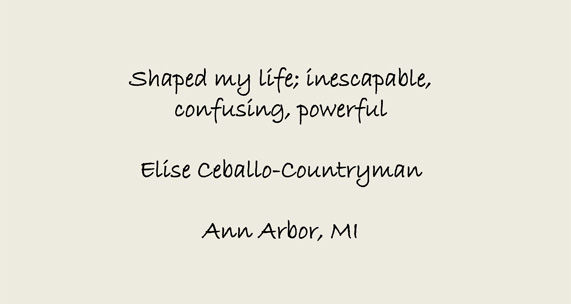
Bunny Vee
Philadelphia, PA
Bill Rowe
Bucks County, PA
It was 1971 and I was ashamed the moment I said it. Jeff was a friend and to impress the wrong person I said something terrible. What impresses me to this day is the way that he responded. He just said “you don’t mean that” and never said another word. If I read the situation correctly, Jeff forgave the unforgivable. I have never been able to forgive my behavior and I am ashamed to this day of what I did. I moved to another school the following year and we lost contact. I never apologized and wish that I could.
Jeff, wherever you are, I have two 6 word sentences for you. You are the epitome of grace. I’m sorry beyond power of words.

In the last three years, I have not been racially focused. I suppose, then, that it should come as no surprise to me that I had never heard of The Race Card Project until yesterday. And then yesterday I became mildly obsessed with it. And with it’s creator Michele Norris. If scheduling will allow, I just might finally make the return to my alma mater for the final events in April. I am so thrilled that this is happening in Ann Arbor, and I look forward to the “results.” How do college students feel and/or think about race in 2013. Will these race cards be vastly different from those of older generations? Are they full of dismay, anxiety, and cowardice? Or are they the boldly outspoken, “color blind” generation we’ve been waiting for? I’d place my money on the former. No offense to the Millennials, I just don’t think we’ve come that far. Yet.
March, 2013
In the last three years, thousands of people across the U.S. have participated in the Race Card Project, an innovative social-issue undertaking created by award-winning journalist Michele Norris. The project gathers participants’ six-word descriptions of their view of race written on postcards or online forms. Based on the range, quality and number of collected responses, the Twitter-like approach to such a weighty topic is inspiring a deeper and revealing conversation.
On Tuesday, March 12, Norris (photo left) arrives in Ann Arbor to meet with students, faculty and staff in a formal kick-off of the Race Card Project at the University of Michigan, marking the first partnership between the project and an American university. Cards will be distributed to students at U-M’s Law School, Michigan Union, Haven Hall, and Diag on central campus, and Pierpont Commons on north campus.
“Despite all the talk about America’s consternation or cowardice when it comes to talking about race, I seemed to have found auditorium after auditorium full of people who were more than willing to unburden themselves on this prickly topic,” said Norris, who returns to campus April 18 when thousands of expected filled-in race cards will be displayed on U-M’s iconic Diag. On that day, she will also conduct a town-hall forum on race at Rackham Auditorium.
U-M’s participation in the Race Card Project comes amid a semester-long exploration of race coordinated by the College of Literature, Science and the Arts. The theme semester, “Understanding Race Project,” examines the many notions of race through an extensive range of public exhibits, performances, lectures, symposia and more than 130 courses in several disciplines designed to explore the concept and implications of race.
For more information on U-M’s theme semester, please visit: https://www.lsa.umich.edu/themesemester/aboutthemesemesters/understandingraceproject
“The Race Card Project is a compelling and novel approach to gather people’s immediate reactions and attitudes about race,” said Martha Jones, co-chair of U-M’s Understanding Race Project theme semester, and associate professor of Afroamerican and African Studies and History. “Bringing Michele Norris to campus connects U-M and our work educating students about race into the nonacademic, social world where discourse about race might be less formal, but profoundly revealing,” said Jones, who is also co-chair of the Program on Race, Law and History at U-M’s Law School.
During her upcoming two-day visit to campus, Norris will host a Race Card dialogue with U-M President Mary Sue Coleman and her executive officers, who will submit their own six-word descriptions on race, ethnicity and cultural identity. In addition, she will meet with students, who are circulating the postcards on campus.
Norris is currently National Public Radio guest host and special correspondent. She is a former news correspondent for ABC NEWS, and a frequent guest on “Meet the Press” and “Chris Matthews Show.”
In 2009, the National Association of Black Journalists named Norris Journalist of the Year. During her career, she co-hosted NPR’s Democratic presidential candidate debates, covered Republican and Democratic conventions, and moderated a series of conversations with voters on the intersection of race and politics.
Race and identity are the focus of Norris’ personal account, “The Grace of Silence: A Memoir,” published in 2010. In the book, she delves into family secrets that raise questions about her racial legacy.
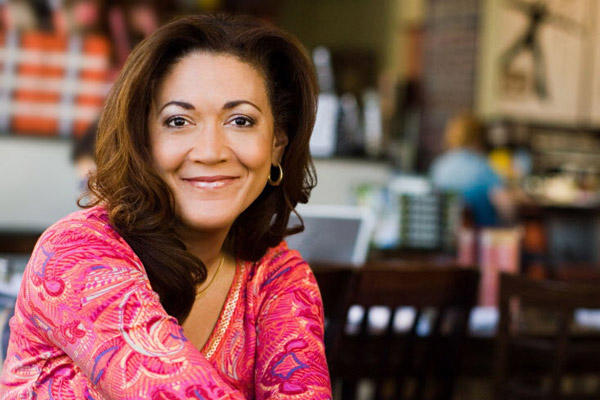
More on Norris and The Race Card Project:
…Ms. Norris left her position (as host for NPR) in October 2011 when her husband, Broderick Johnson, joined President Obama’s re-election campaign as a senior adviser. At that time she thought she’d return to “All Things Considered” after the campaign. But then, during her leave of absence, she poured herself into The Race Card Project, something she had started while on a book tour in 2010 to spur conversations about race.
The project invited participants to distill their thoughts about race to six words and submit them on postcards or on social networking Web sites. “I asked people to think about their experiences, their observations, their triumphs, their laments,” she said. To date she has received more than 12,000 submissions, conveying messages like these:
— “My skin makes my life easier.”
— “Waiting for race not to matter.”
— “Don’t vote for that black guy.”
— “I am a conservative, not racist!”
— “Who do you mean by ‘they?’“
— “Underneath, we all taste like chicken.”
“At some point I realized I couldn’t walk away from it,” Ms. Norris said in a telephone interview Thursday, describing how she “accidentally tripped into this next chapter of my career.”
But hosting “All Things Considered” is “all-encompassing,” Ms. Norris said, and she wouldn’t have had enough time to devote to follow-up interviews with the respondents and features about race. So she and Ms. Smith conceived a new role for her that will include Web and radio segments related to The Race Card Project; profiles and in-depth segments about politics, the kind she has produced for years; and guest-hosting opportunities.

 mulatto diaries