Unknown's avatar

About Tiffany

I am "biracial", but I'm mostly lots of other things

speaking of freedom

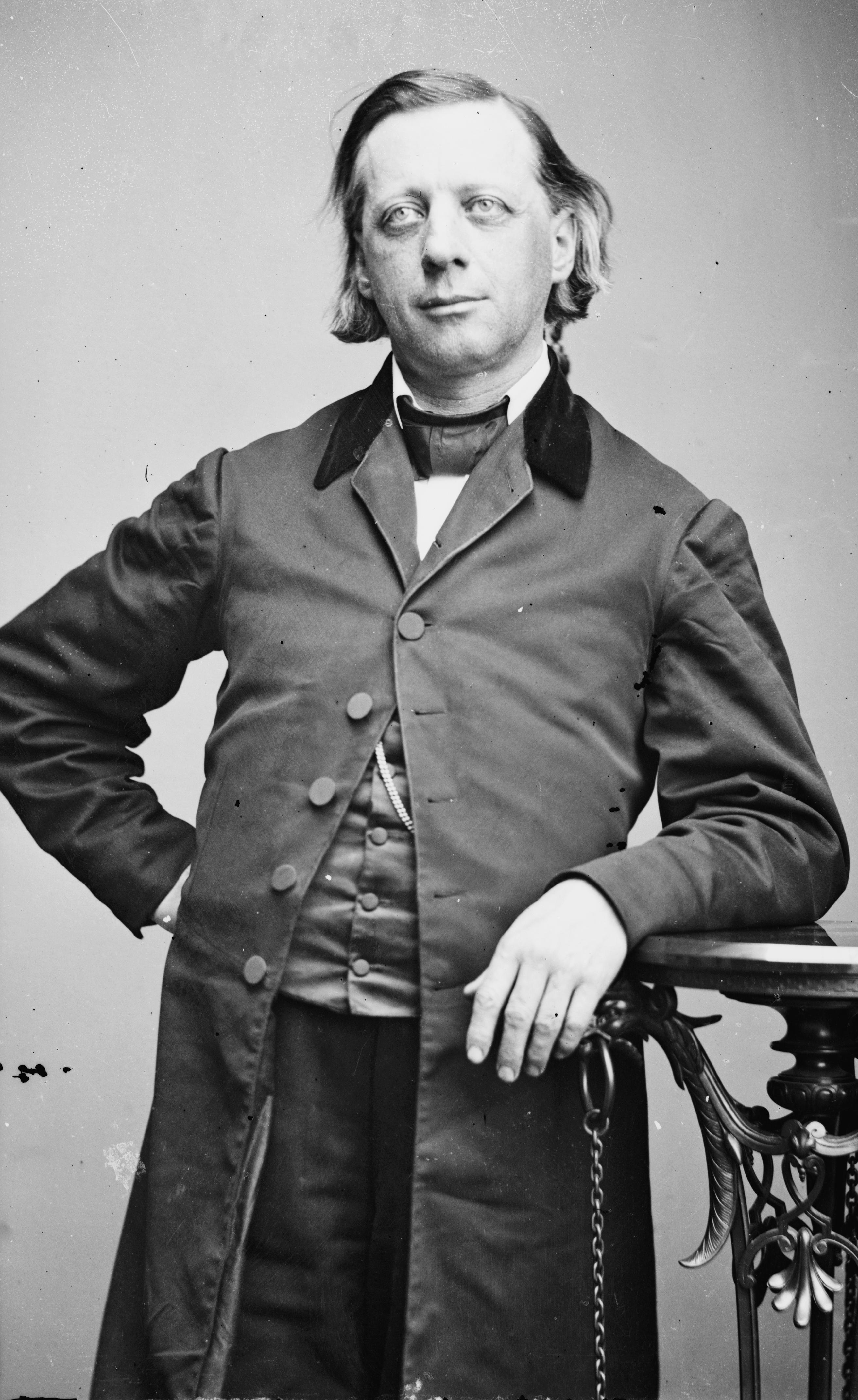
I cannot forget that “liberty and justice for all” wasn’t really for all.  So much for being impeccable with your word, Founding Fathers.  Here’s an interesting snippet of the history of the struggle for freedom in this nation.  The struggle of those who toiled to build it and cultivate it’s wealth, and one man who was dedicated to assisting them.  I’m curious about the early years of Henry Ward Beecher’s life.  I wonder how he came to see the truth, when the illusion was set up to work in his favor.

Underground Railroad

VIA

The road to freedom is one of the great themes of American history. The story of the Underground Railroad exemplifies the profound power of that journey. Following the lead of its famed antislavery preacher Henry Ward Beecher, Plymouth Church played a fundamental part in New York City ‘s underground activity.

From the very beginnings of slavery in America, slaves escaped to freedom. They ran to the wilderness; they went to live with the ever-hospitable Indians; they slipped into cities and made their claim as free Blacks. In the Revolutionary era, Puritan New England and Quaker Pennsylvania passed legislation abolishing slavery. The exodus northward, which came to be known as the Underground Railroad, began. By 1831, the term “Underground Railroad” had been coined to describe the informal, secretive network of ordinary citizens, Black and White, whose safe houses offered refuge.

Although Plymouth Church was not established until 1847, just fourteen years before the start of the Civil War, it later became known as “the Grand Central Depot” of the Underground Railroad. Oral tradition and several published memoirs tell us that slaves seeking passage to Canada may have hidden in the tunnel-like basement beneath the church sanctuary (this space can still be visited during our public and school tours). Beecher’s private stenographer, T.J. Ellinwood, quotes the Minister as claiming, “I opened Plymouth Church”, though you did not know it, to hide fugitives. I took them into my own home and fed them. I piloted them, and sent them toward the North Star, which to them was the Star of Bethlehem.“ The Rev. Charles B. Ray, an African-American living in Manhattan, and the founding editor of the Colored American newspaper, was quoted as saying, “I regularly drop off fugitives at Henry Ward Beecher‘s Plymouth Church in Brooklyn.” Other churches in Brooklyn and Manhattan, especially Black churches, also hid escapees, but most have since moved to newer buildings. Plymouth Church is one of the few active Underground Railroad congregations in New York still housed in its original location.

Henry Ward Beecher

Plymouth’s first minister, the Rev.Henry Ward Beecher , spearheaded and symbolized Plymouth’s antislavery activity, but the founding members of Plymouth selected him as their pastor in no small part because they knew he would do so. He already had a record as an opponent to slavery when he made those beliefs clear in his trial sermon for Plymouth. Beecher and his peers were greatly influenced by the Second Great Awakening, a Protestant religious revival of the early 1800’s, firmly committed to abolishing slavery. As a student at Amherst College, he helped found an abolitionist organization, which was promptly shut down by the faculty. At seminary in Cincinnati, he contributed to an antislavery newspaper which was mobbed and destroyed; he also patrolled the streets of that city, fully armed, when temporary special policemen were called upon to protect free Blacks from threats. When he was a minister in Indianapolis, his limited preaching on the subject caused members to leave his church, but he remained active in the Underground Railroad there, as his widow, Eunice, recalled years later.

Enormous publicity surrounded one of Beecher’s first antislavery acts at Plymouth Church. In 1848, 77 fugitive slaves were sold in Washington after the failure of the largest group escape attempt on the Underground Railroad. In that group were two teenage girls, the Edmondson sisters. Thanks to the fundraising efforts of people like Beecher to regain the girls’ freedom, the Edmondsons galvanized public support for the abolitionist movement – and inspired Beecher’s own sister, Harriet, to write Uncle Tom’s Cabin.

Beecher, with his newly elevated public profile, had to be especially circumspect in harboring escaped slaves. Eventually, in 1872, he was named by The Brooklyn Eagle as an active participant in the Underground Railroad. The article claimed that Plymouth’s minister helped dozens of fugitives in cooperation with a man in New York named “Napoleon.” This Napoleon “had the matter of escape under his charge and whenever a slave was sent on to Mr. Beecher he, Napoleon, would fix things along the Central Railroad and see to it that the officials along the route were got into friendly disposition for the fugitive.” The article does not indicate Napoleon’s race, but he may well have been Black, for Black involvement in the Underground Railroad almost certainly exceeded that of Whites.

There are believed to be many members of the Plymouth congregation who were active in the Underground Railroad. Evidence suggests that escaped slaves were hidden in the homes of several Plymouth members. The Church treasurer, S.V. White, had a small chamber in his house said to have been used to hide runaways, a room that was still in existence in the 1900s. One of the Church’s greatest activists in the Underground Railroad was Lewis Tappan. He is best remembered as a leader in organizing efforts to release the escaped slaves of the Amistad in 1839. Later, he helped fund the creation of Plymouth Church (his daughter, Lucy Tappan Bowen, was one of the original 21 members), but he did not join until 1856. As part of his work helping runaway slaves, he provided refuge in his home to a 15-year-old girl who escaped by pretending to be a male conductor on a New York-bound ferry.

All this was taking place in one of the most pro-slavery states of the North. Not until 1827 was slavery finally abolished in New York. Much of this attitude may be traced to the years when New York was a proprietary colony of the Duke of York, a major shareholder in the slave-trading Royal Africa Company. With his powerful influence, he instructed the governors to do everything possible to sell more slaves. After independence, the close business relations between Southern planters and New York merchants continued to enhance pro-owner sympathy.

Whatever ambivalent feelings about slavery remained in New York, they were greatly tested in 1850. That year, the country began negotiating slavery in the newly acquired territories seized during the Mexican-American War. The designation of new slaveholding states, plus the passage of the Fugitive Slave Act requiring all American citizens to assist in apprehending runaway slaves, incensed many Northerners. The work of the Underground Railroad intensified. These were the years of Plymouth Church’s greatest involvement, and, by 1860, it was certainly the most famous church in America. One year later, the Civil War began, and Plymouth continued to supply material and spiritual support to a devastated country. Five brutal years later, slavery was outlawed, and Plymouth Church’s role in the Underground Railroad could finally, thankfully, come to an end.

The exact statistics of the Underground Railroad – how many slaves escaped, how many free citizens aided them – will never be known. But we do know that this was a time and an undertaking in which Blacks and Whites came together to right a grievous wrong. It should also be said that, for the members of Plymouth Church, and for most if not all of those who took part, they did so to live out their Christian faith.
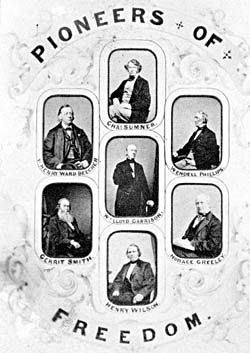

Portraits of abolitionists Charles Sumner, Henry Ward Beecher, Wendell Phillips, William Lloyd Garrison, Gerrit Smith, Horace Greeley and Henry Wilson, c. 1866

if only…

by the way, i’m not depressed (right now).  not that there’s anything wrong with being depressed, of course.  i mean it’s nothing to glorify, but i’m not throwing shade.  especially because i’ve been there.  i think if we’re honest we’ve all been there for a minute at least.  i just got on roll with the topic, so…

ha! (or re: another social taboo)


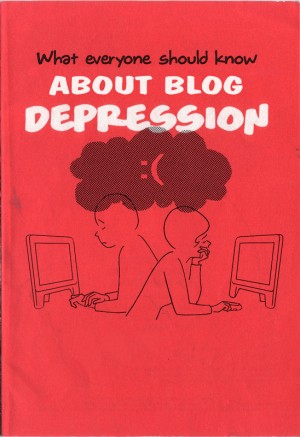
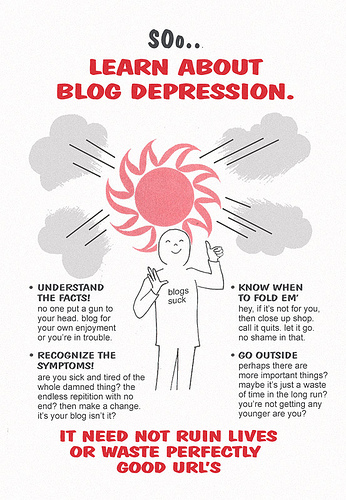
Here’s what the creator of the pamphlet had to say about back in 2005:

hey,

since you are curious let me chime in:

i’ve (obviously) been paying attention to the spread of this pamphlet since sunday went i put it up and it has proven to be very popular. on the one hand it’s meant to be humorous, and people are certainly taking it in that spirit, but on the other hand i think the strong reaction does point to some fairly large grains of truth nestled within.

i know that i have felt a lot of the “symptoms” i put into the pamphlet. i created it durring a bout of dissatisfaction in point of fact. i’ve also seen many other bloggers complain, mope, moan, and eventually close up shop. so i think, joke though it may be, it struck a nerve.

blogging is fascinating in that (professional / goods and services sites aside) it has no practical purpose. it is truly an art if looked at in those terms. it is such a new form, and such a public form, that the growing pains are uncommonly visible.

i often feel the form is mutating right beneath our fingertips.

-jmorrison

another social taboo

The first taboo being openly discussing biraciality without adhering to the one-drop rule.  Of course I find this blog post to be interesting, or I wouldn’t put it up here.  I appreciate the bit about biracial identity as well as the outline of the overall struggle and the shame that go along with the labels of mental illness in this country.  Especially in the black community.

Coming out of an entirely different closet… the one of mental illness

by Eliza Barnett

VIA

Unfortunately as prevalent as mental health disorders are the nation (50+ million diagnosed in the US alone) and world wide, it still tops the ranks as the most difficult to admit.

Higher than revealing to be a victim of domestic abuse, sexual assault, or molestation, harder than confessing a drinking problem or previous bankruptcy; surveys have even shown it to more difficult than admitting ones gender identity or homosexuality. Sufferers face significant social taboos. And it doesn’t affect just one type of person. Mental illness knows nothing of age, race, gender, or economic background.

You don’t have to personally admit it yourself to believe the notion the reality that people are more likely to break off, or not even start, a relationship with someone with mental issues -which I for one find particularly interesting because members of society are more likely to stay with someone with a physical disability. People with mental disorders tend to prefer to hide their illness like major depression and anxiety, because unlike people with physical illnesses, people with mental disorders must also fear being rejected by family & friends, harassed, fired or not hired, or denied child custody—just for starters.

(Please check out this personal blog discussing the Price of being Bipolar in Public)

Last week I had an entire conversation with a friend about them being practically afraid to admit their Christian faith at their workplace because of the negative assumptions his non-same faith based peers might think about his character or behavior.

Once you know someone’s religious preference it changes your whole personality to people who don’t agree with you. Sometimes it’s like every negative image or thought they have about it becomes who I am as a person- even though I haven’t changed. It’s their behavior towards me that has.

I’ve read more than a few articles of a biracial person attempting, or enjoying the ability to pass for one race over another—not because they have a problem with it necessarily themselves, but because other people do.

Sometimes it’s like every negative stereotype or prejudice they have against a race I share membership of encompasses who I am as a person. Granted racism is an ongoing issue for those of one race, but it is just as prevalent towards those of plural heritage.

Sexual orientation discrimination —don’t even get me started.

(great message board discussion here coming coming out as gay with coming out as bipolar)

Mental illness sufferers are also victims of discrimination and the issue continually needs to be recognized.

“I’m Asian, I’m gay, and I have faced discrimination – but not for the reasons most people think; it was actually when I got depression that I faced most discrimination.”

(Quote from an article in the Guardian)

Attempts to end this discrimination are being lead by strong individuals, in the public eye, and by everyday people. Changed perception comes through increased knowledge and visibility.

People need to be taught that mental disorders don’t come from places of personal weakness, and don’t make everyone violent or unpredictable. They need to be made comfortable in seeking help. (Two thirds of sufferers in need of treatment do not seek it. ) Even more importantly open, honest visibility helps others with the illnesses themselves to stand up without shame.

Negative stigma’s of this variety aren’t just external, they’re internal. Who wants to think of themselves as crazy…? When feelings of guilt, shame, or a notion that you’re somehow weakened for needing help are thrown in the mix, it only reinforces the negative feelings.

Isn’t it always the case that telling the ones you love is the hardest thing to do? This isn’t any different. And ignorance towards the idea of mental disorders can to be hard to deal with; some people may not even believe mental illnesses exist. Americans particularly have vast misconception that all mental disorders can be simply be self-corrected with enough work.

Similar to the first step in admitting you have an addiction; your own acceptance is where it all begins. Examine your own feeling first and foremost. You have control over who you tell, so it’s okay to be cautious about it.

“There is no rule for who needs to know about your mental illness diagnosis, but sharing it with someone is a great way to get support.

The silence helps maintain the ignorance about mental illness.”

(http://www.webmd.com/mental-health/features/coming-out-about-mental-illness?page=2)

That being said,

“It doesn’t mean that it is always beneficial to open up indiscriminately about mental health, to your detriment. It would be wonderful if everybody came out.

But it is a very subjective decision and consequences should be considered. Society isn’t at the place of acceptance that it needs to be. Not everyone in the world needs to know if you struggle with diabetes or hypertension or some other illness. The same is true for mental illness. Those with the disorder, are the ones in charge, and should think about what the payoff is to share information about their mental health. For example, if you need to miss work to see a psychiatrist, you might want to tell your employer about what you are going through.”

When someone does react negatively, agree to disagree or try to educate that person. Share educational materials. Share your own experience. And to those on the receiving end of the information, think before you speak.

“Try to react the same way you would if you were told about a physical health problem that you don’t know much about. Avoid trying to be the hero or savior. Being empathic and understanding is one thing, but trying rescue someone is a completely different. You shouldn’t try to fix them. This is something that is way beyond your capacity.”

Treatment and support from others goes a long way; the mental illness journey is a rough one for everyone involved. Help is required, it’s critical down the path of recovery, management of ones condition, and ability to lead constructive and healthy lives. Support can and does come from strangers as well, who share in this unity of diagnosis. As corny as it sounds, sharing is caring.

–Posted By Eliza Barnett