
3


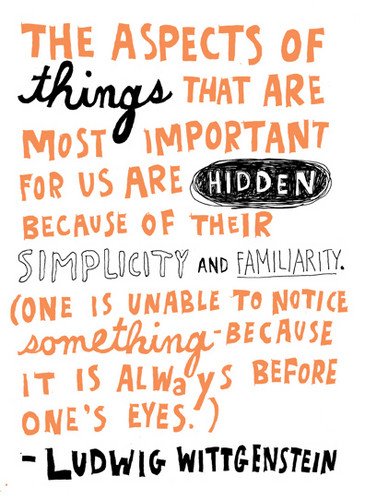
Here’s more of the article I excerpted from last Sunday…
By Pema Chödrön
Let’s say you’re having a conversation with someone. You’re one with the whole situation. You’re open and receptive and there and interested. Then there is a little shenpa pulling-away, a kind of uneasy feeling in the stomach—which we usually don’t notice—and then comes our big thought. We are suddenly verbalizing to ourselves, “How am I looking here? Did I just say something stupid? Am I too fat? That was a stupid thing to say, wasn’t it, and I am too fat….”
Some thought or other causes us to split off, and before we know it we’re completely self-absorbed. We’re probably not even hearing the words of the person we’re conversing with, because we have retreated into a bubble of self-absorption. That’s splitting off. That’s dividing in two.
The Buddha taught about this basic split as the birth of dualism, the birth of self versus other, of me versus you. It happens moment after moment. When we start out, we are “one-with.” We have a sense of our interconnectedness, though we might not use that fancy word. We’re simply listening and there. And then, split! We pull back into our own worry or concern or even our own elation. Somehow we’re no longer together. Now it’s more about me and self, rather than them and other. By contrast, being “one-with” is neither about other nor about self. It’s just totally open, present, there.
Settling the Score
If the path of the peacemaker, of happiness, is being open and receptive and one with your experience, then settling the score is the path of making war, whereby aggression gives birth to aggression and violence gives birth to violence. Nothing is settled. Nothing is made even. But the mind of settling the score does not take that into consideration. When you are caught by that mind, because of the highly charged and ever-expanding emotionality you’re going through, you do not see what settling the score is really doing. You probably don’t even see yourself trying to settle the score.
If we started to think about and talk about and make an in-depth exploration of the various wars around the world, we would probably get very churned up. Thinking about wars can indeed get us really worked up. If we did that, we would have plenty of emotional reactivity to work with, because despite all the teachings we may have heard and all the practice we may have done, our knee-jerk reaction is to get highly activated. Before long, we start focusing on those people who caused the whole thing. We get ourselves going and then at some irrational level, we start wanting to settle the score, to get the bad guy and make him pay. But what if we could think of all of those wars and do something that would really cause peace to be the result? Where communication from the heart would be the result? Where the outcome would be more together rather than more split apart?
In a way, that would really be settling the score. That would really be getting even. But settling the score doesn’t usually mean that. It means I want my side to win and the other side to lose. They deserve to lose because of what they’ve done. The side that I want to lose can be an individual in my life or a government. It can be a type or group of people. It can be anything or anyone I point the finger at. I get quite enraged thinking about how they’re responsible for everything, so of course I want to settle the score. It’s only natural.
We all do this. But in so doing we become mired in what the Buddhist teachings refer to as samsara. We use a method to relate to our pain. We use a method to relate to the underlying groundlessness and feelings of insecurity. We feel that things are out of control, that they are definitely not going the way we want them to go. But our method to heal the anguish of things not going the way we want them to is what Dzigar Kongtrul Rinpoche calls pouring kerosene on the fire to put it out.
We bite the hook and escalate the emotional reactivity. We speak out and we act out. The terrorists blow up the bus and then the army comes in to settle the score. It might be better to pause and reflect on how the terrorists got to the place where they were so full of hatred that they wanted to blow up a bus of innocent people. Is the score really settled? Or is the very thing that caused the bus to be blown up in the first place now escalating? Look at this cycle in your own life and in your own experience. See if it is happening: Are you trying to settle the score?

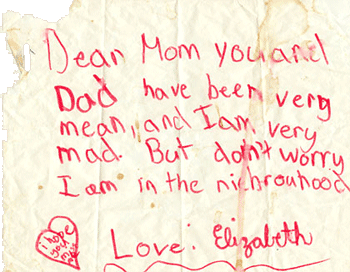
So many great things come out of Ann Arbor. Such as Found. I have the first book and it has provided me with hours of side-splitting, rolling on the ground laughter. I finally checked the website out today, and while I laughed really hard at some of them I did manage to stay in my seat. Definitely worth adding to your list of websites to waste some time perusing.






This is so right on! Thank you, Karen Finney. I’m so glad my (white)grandparents allowed me in to their lives. And so are they! It’s the “little” things…
On another note, this sentence, “the very existence of antimiscegenation laws had been enacted for the purpose of perpetuating the idea of white supremacy,” speaks to the very reason I fell down this rabbit hole I’ll now call the mulatto trail. I realized one day that anti-miscegenation and the one-drop rule perpetuate the idea of white supremacy, and that by subscribing to that antiquated rule I was upholding that ridiculous notion. The anti-miscegenation thing has legally been eradicated, but ask any interracial couple who has walked down a street together, and I’m sure they’ll tell you that on more than one occasion they’ve been given the evil-eye or gawked as if they were freaks of nature. Or both. And as for the one-drop rule, head on over to my youtube channel, scroll through the comments, and you’ll see that it looms large in the consciousness. And many people don’t seem to be willing to let it go.
By KAREN FINNEY
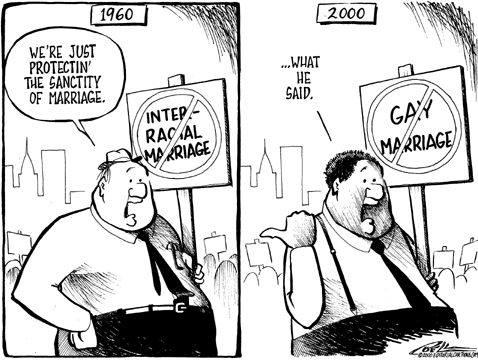
Yesterday’s ruling that California’s Proposition 8 is unconstitutional reaffirms a long-held American value that no matter how you try to spin it, separate is not equal. While some may not agree with same-sex marriage, history should remind us that our Constitution calls us to recognize that the laws in it apply equally, not to be picked apart to support a political agenda or bias. The arguments being used against same sex marriage are frighteningly similar and equally offensive as those once used against interracial marriage. While a Gallup poll in 1967 found that 74 percent of Americans disapproved of interracial marriage, it’s almost hard to remember just how far we’ve come.
I was 16 years old before I was allowed in my grandfather’s home in Greensboro, North Carolina. That’s how long it took for him to even begin to re-think his shame over having a mixed-race granddaughter. He believed, as did many at the time, miscegenation was wrong on moral and legal grounds. Thankfully for me, my parents disagreed. They were married in New York City and had me despite the fact that it was illegal in their home states of Virginia and North Carolina to do so. Thankfully for our country, in the case of Loving v. Virginia, the Supreme Court saw beyond the fear and bigotry of the moment and ruled that antimiscegenation laws violated fundamental American values of Due Process and Equal Protection Under the Law as guaranteed to every American by our constitution.
Just as some used to say that marriage is only valid between a white man and white woman, some now argue that marriage can only be between a man and a woman. Arguments have also been made that same-sex marriage dilutes the institution of marriage, just as similar arguments suggested that interracial marriage diluted the white race. My personal favorite absurd justification says that (despite the idea that we are all God’s children and loved equally) gay marriage is against the laws of God and nature. That argument was used by Leon M. Bazile, the judge in the initial case against the Lovings, who said:
Almighty God created the races white, black, yellow, malay and red, and he placed them on separate continents. And but for the interference with his arrangement there would be no cause for such marriages. The fact that he separated the races shows that he did not intend for the races to mix.
The Supreme Court’s ruling in the Loving case also recognized that the very existence of antimiscegenation laws had been enacted for the purpose of perpetuating the idea of white supremacy:
There is patently no legitimate overriding purpose independent of invidious racial discrimination which justifies this classification. The fact that Virginia prohibits only interracial marriages involving white persons demonstrates that the racial classifications must stand on their own justification, as measures designed to maintain White Supremacy.
Similarly, as Judge Vaughn Walker today affirmed, denying gay couples the right to marry, not only denies basic civil rights, liberty, and freedom, but also codifies bigotry.
 Karen Finney is a political analyst for MSNBC and an independent consultant working with political and corporate clients in the areas of political and communications strategy. She brings over 16 years of experience in national politics and campaigns ranging from the Clinton administration to New York State to the Democratic National Committee.



…love watermelon that much!

 mulatto diaries