Unknown's avatar

About Tiffany

I am "biracial", but I'm mostly lots of other things

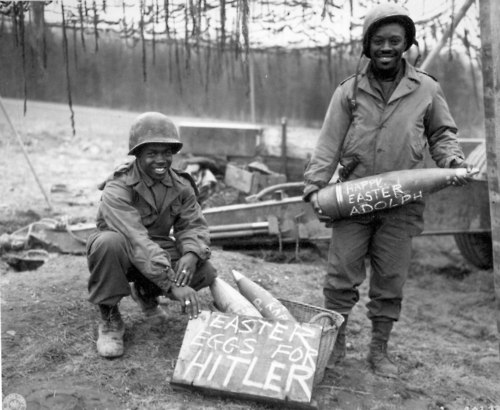
re: but seriously, happy easter

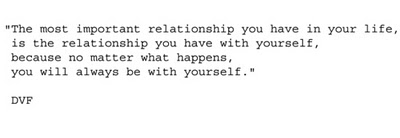
much more serious… or we could just call it truthful insight… found it on paulo coelho’s blog… yes, he has one… and yes, i think it’s worth checking out….

Revolutionary and Rebel

Khalil Gibran had said that twenty centuries ago, men loved the weakness in Jesus and did not understand his power.

Jesus did not live as a coward and did not die complaining and suffering. He lived as a revolutionary and was crucified as a rebel.

“He was not a bird with broken wings, but a violent storm.”
“He was not a victim of his persecutors and had not suffered at the hands of his executioners – he was free before all.”
“He came to awaken a new and strong soul, which made every heart a temple, an altar, and every human being a priest.”

Looking carefully at his life, we see that, although he knew that his passion was inevitable, he tried to give us a sense of joy in every gesture.

He must have thought long and hard before deciding what his first miracle should be.

He must have considered the healing of a paralyzed man, the resurrection of the dead, the expulsion of a demon, something that his contemporaries would have considered as “noble”. After all, it would be the first time to show the world that he had come as the Son of God.

And it is written: his first miracle was turning water into wine – for a wedding party.

May the wisdom of this gesture inspire us, and be always present in our souls: the spiritual quest is compassion, enthusiasm and joy too.

Passion: let me not beg for the stilling of my pain

“Let me not pray to be sheltered from dangers,
but to be fearless in facing them.

Let me not beg for the stilling of my pain,
but for the heart to conquer it.

Let me not look for allies in life’s battlefield,
but to my own strength.

Let me not crave in anxious fear to be saved,
but hope for the patience to win my freedom.

Grant that I may not be a coward,
feeling Your mercy in my success alone;

But let me find the grasp of Your hand in my failure.”

by Rabindranath Tagore

connect with strangers on a human level

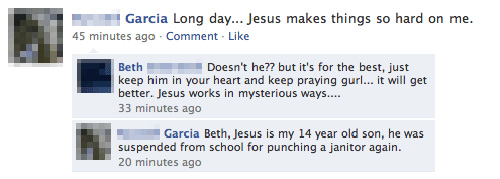
or be kind… or (seeing as it’s easter and all) wwJd

regardless of the title, i thought it a touching story…

Thomas Hawk:“Every so often you take a photograph that has personal impact on your life.  This photo is one of those for me.
I took this photo on the Burnside Bridge in Portland.  The Burnside  Bridge is one of the areas of Portland where homeless people congregate.   There are a few homeless shelters there and lots of homeless people  hang out just underneath the bridge.  I was up shooting the bridge at  night and the “Made in Oregon” neon sign that can be seen from the bridge.
While I was shooting I was wearing headphones and listening to music  on my iPhone.  As I was walking across the bridge this man, this man, approached me saying something while I had my headphones  on.
In a moment that I am very ashamed of I did not remove my headphones.   Instead I said back to the man that I didn’t have any money.  I said  this to the man without having heard what he was asking me.  I could  tell from his expression that he was annoyed by my response.  At this  point I took my headphones off to hear what he was saying.
What the man said to me was that he didn’t want my money.  That he  was not asking me for money, that he was asking me if I would take his  photograph.  I was very embarrassed.  First off, I didn’t even have  enough respect for another human being to take my headphones off and  hear him out in the first place.  And secondly I’d jumped to a  conclusion that the man simply was trying to get me to give him money.  I  felt bad that I’d insulted this man.  And I felt ashamed of the way I’d  treated another human being.
After our interaction on the bridge I could not get my interaction with  this man out of my head for the next few days.  I was so ashamed at  myself for jumping to the conclusion that I had and for not removing my  headphones to speak with the man when he approached me.  This beautiful  man had approached me and wanted nothing more than to be photographed by  a stranger.  He was giving his image to me and I felt that I’d treated  him so badly.  I also felt bad that I didn’t even try to get his name or  an address or something afterwards to send him the photograph.  I had  been taken by surprise by the interaction and was flustered and had  acted poorly and thoughtlessly.
This interaction made me decide to try and make a greater effort in the future to connect with strangers on a human level.”
complete story here

Thomas Hawk:

“Every so often you take a photograph that has personal impact on your life. This photo is one of those for me.

I took this photo on the Burnside Bridge in Portland. The Burnside Bridge is one of the areas of Portland where homeless people congregate. There are a few homeless shelters there and lots of homeless people hang out just underneath the bridge. I was up shooting the bridge at night and the “Made in Oregon” neon sign that can be seen from the bridge.

While I was shooting I was wearing headphones and listening to music on my iPhone. As I was walking across the bridge this man, this man, approached me saying something while I had my headphones on.

In a moment that I am very ashamed of I did not remove my headphones. Instead I said back to the man that I didn’t have any money. I said this to the man without having heard what he was asking me. I could tell from his expression that he was annoyed by my response. At this point I took my headphones off to hear what he was saying.

What the man said to me was that he didn’t want my money. That he was not asking me for money, that he was asking me if I would take his photograph. I was very embarrassed. First off, I didn’t even have enough respect for another human being to take my headphones off and hear him out in the first place. And secondly I’d jumped to a conclusion that the man simply was trying to get me to give him money. I felt bad that I’d insulted this man. And I felt ashamed of the way I’d treated another human being.

After our interaction on the bridge I could not get my interaction with this man out of my head for the next few days. I was so ashamed at myself for jumping to the conclusion that I had and for not removing my headphones to speak with the man when he approached me. This beautiful man had approached me and wanted nothing more than to be photographed by a stranger. He was giving his image to me and I felt that I’d treated him so badly. I also felt bad that I didn’t even try to get his name or an address or something afterwards to send him the photograph. I had been taken by surprise by the interaction and was flustered and had acted poorly and thoughtlessly.

This interaction made me decide to try and make a greater effort in the future to connect with strangers on a human level.”

complete story here

VIA

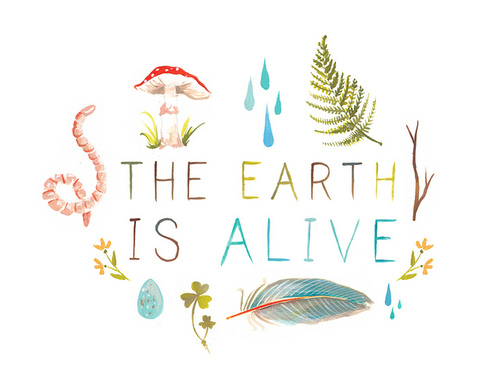
speaking of earth day

Under the title, Trash is Not Trash, photographer Gaby Herbstein worked with illustrator Pablo Bernasconi to come up with this wonderfully whimsical series which asks us to reflect on the importance of recycling and think about what we can do to reduce our ecological footprint. (Ecological footprint is a measure of human demand on the Earth’s ecosystems. It compares human demand with planet Earth’s ecological capacity to regenerate.)

With sweet children as her models, Herbstein does a great job in delivering an important message, gently reminding us who we’re ultimately leaving this world to. The series was created for a 2011 calendar.

Gaby Herbstein’s website

VIA

speaking of halle berry

i tumbled upon this interesting thread today at black hair media.com.  i personally feel that, of course, they “should be able to” call themselves black women.  i am all about self-identifying as one sees fit.  i wonder what kind of run-ins the questioner has had with biracial women with white mothers that would instigate such an inquiry.  in my opinion, many (certainly not all, or even most) biracial women that i know who have white mothers (into which category fall most of the biracial people i know) not only identify themselves as black, but seem more steeped in black culture than… well… than… me.  i have some theories as to why that is… i’m reluctant to share them… i’m going to sleep on it and hopefully grow a pair overnight, then come back and update this post adding my speculations tomorrow or sometime this weekend.

Topic: biracial women with white mothers
Posted: Today at 11:21am
-Do you think that biracial women with white mothers and black fathers should be able to call themselves black women? I get frustrated with this because how can they be a black woman when they didn’t even come from one and really don’t know much about us. I don’t think they should get that title. I hate hearing Halle Berry (who has a white mother) be called “The most beautiful black woman). To me, that just seems unfair. Who else feels this way?
-I don’t think anyone who’s biracial (that is, black and white) regardless of which one of their parents is black or white should be calling themselves black. If the mother’s white and the father’s black, you are mulatto. If the mother’s black and the father’s white you are a mulatto. Case closed.
 -i use to feel this way..but honestly it all about how they are raise..if they want to identify themselves as white or black they have the right to..what would you say if it were you? AlSO, i rather someone tell me their either black or white.. rather than running around screamin “im mixed” all the time.
 -You know what I just realized??…why do people think of mutliracial people like they are slices of pizza???

Genetics dont work like that.
 -I think white people call every bi racial person black just because they are darker.
Ive only see people sometimes calling biracial white in Africa.
Plus, for me its hard to see biracial peeps with white mothers who raised them feeling they are black just because they have white culture. When you have a black mother and live with her, you feel black just because of what your mother taught you.
But some biracial with white moms, who know they are rejected by their white part, take advantage on the black community since they like them. I guess OP thats the Hally berry case.
-um it depends. i think mixed girls with white moms tend to be more whitewashed. i dont view some of them as true black people because they identified with their white mom more so of course they are gonna have that white influence.  vs. a mixed person with a black mom who was the main influence a lot of times u can just tell a difference. plus some of them like hauts said feel better than regular blacks and take advantage of the praise and attention. NOT ALL MIXED PEOPLE, BUT SOME
also if you are half nonblack and half black, you cannot be the prettiest black anything. how that work when half your genes come from a white woman? halle may be the prettiest mixed woman but her beauty cannot represent black women b/c she is not fully black.

oh… baby nahla…

sorry for the sporadic posting.  i’ve been working out of town and it’s harder than i’d anticipated to keep up with the blog.

anywho, i figured i’d get around to acknowledging this mess….

some readers and viewers and friends have asked me how i feel about this, and all i can say is that it makes me sad.  i just do not understand the impetus to uphold the one drop rule.  i’m baffled.  it’s so illogical to me.  it clearly only applies to racially mixed with black people.  i’d go so far as to say that it only applies to racially mixed black and white people.  i am quite sure that other mixes do not have such strict identification restrictions.  if you are anything other than black + white, you are not so harshly criticized for claiming the whole of yourself (not that i believe that racial categories constitute the whole of a human self.) i totally understand allegiance to the black community.  i understand that society’s gonna view you one way if you look one way (however, i think the jury’s still out on nahla’s phenotype.)  regardless of that though, i think we’re coming to a time in the collective consciousness of humanity, where it’s most important to be what you are.  regardless of history or politics.  the best we can do is be who we are.  and once we each accept and embrace our authentic selves, it’ll be so much easier to accept and embrace our fellow man as his/her authentic self. whoever they say they are.  whatever they show us they are.  and it’s by defying these antiquated “rules” that we free ourselves and each other to… be ourselves… and each other…

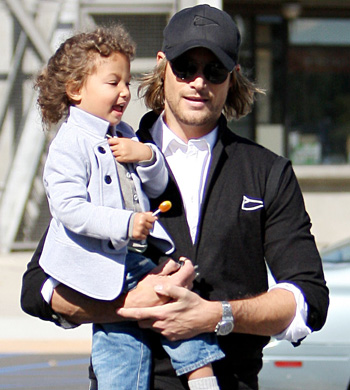
but back to nahla, i’m confident that she’ll find her way, find herself. but, goodness gracious i think her parents are going to make it much more difficult than necessary with this “she’s black because there’s a one drop rule” vs. “don’t you call my child black” (see below) nonsense that we’ve read about… ay yai yai

via TMZ

Sources connected with the former couple tell TMZ … whenever Gabriel would read a story about Nahla that referred to her as “black,” he would go off, insisting his baby was white.  We’re told Gabriel would tell Halle and others they should demand a “retraction” when such references were made regarding his daughter.

As TMZ previously reported, sources tell us Gabriel has called Halle the “N” word  — and one woman previously involved with him referred to him as a “borderline racist.”

Halle Berry on her daughter’s race and interracial romance

As her custody battle with ex Gabriel Aubry turns ugly, Halle Berry is speaking out to the March issue of Ebony magazine about their daughter Nahla and the role that race plays in her own relationships.

The Oscar winner, whose mother is white and father is black, tells Ebony that she identifies herself as a black woman but plans to let 2 1/2-year-old Nahla — whose dad is white and French Canadian — make her own decision about her race when she’s old enough.

“I’m not going to put a label on it,” she says. “I had to decide for myself, and that’s what she’s going to have to decide — how she identifies herself in the world. And I think, largely, that will be based on how the world identifies her. That’s how I identified myself.”

But, Berry adds, “I feel like she’s black. I’m black and I’m her mother, and I believe in the one-drop theory.”

Regardless, the actress acknowledges that being biracial isn’t easy.

“If you’re of multiple races, you have a different challenge, a unique challenge of embracing all of who you are but still finding a way to identify yourself, and I think that’s often hard for us to do,” she explains. “I identify as a black woman, but I’ve always had to embrace my mother and the white side of who I am, too. By choosing, I’ve often [wondered], ‘Well, would that make her feel like I’m invalidating her by choosing to identify more with the black side of myself?'”

Like Aubry, Berry’s current boyfriend, actor Olivier Martinez, is white, but she tells Ebony love has nothing to do with skin color.

“I’m very connected to my community, and I want black people to know that I haven’t abandoned them because I’ve had a child with a man outside of my race and I’m dating someone now outside of my race who is Spanish and French,” says Berry, who has romanced men from a variety of ethnic groups.

“I have never been more clear about who I am as a black woman…the people I have dated sort of hold up a mirror to me and help me realize more of who I really am,” she said. “And who I really am is a black woman who is struggling to make my race proud of me, who is struggling to move black women forward in the profession I’ve chosen, and those relationships have actually helped me identify myself more clearly. Not to say that I wasn’t able to do that when I was married to two black men, but it certainly hasn’t detracted from feeling very connected to my community, and who I really am at my core.”

Berry goes on to say that “the truth is that it’s taken me a long time to learn how to love myself, and color isn’t really a part of what I look at when I’m deciding who I want to spend time with. I look for the soul, the person, the evolution, what he believes in, who [he is as a person] and how does it affect me in a positive way.”

Divorced from athlete David Justice and singer Eric Benet, Berry has vowed to never marry again, but now says she might make an exception.

“The only reason I would is if I found somebody who proved to be on-another-level special to me,” she says. “And if for some reason I felt like it would be important for Nahla and her sense of family unit. I’ve been married twice, and [the marriages] didn’t work out. They were painful divorces, and I’m not so sure I ever want to subject myself to that kind of pain and heartbreak again. I don’t know if I can.”