mary ellen pleasant

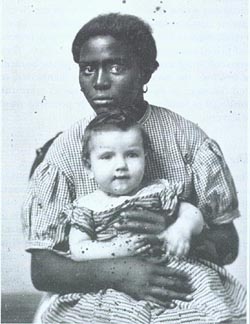
As I was searching the internets last week for photos of black women with white children, I stumbled upon a historical figure who, once again, I am shocked and dismayed to never before have heard mention of:  Mary Ellen (“Mammy”) Pleasant.  I want to know so much more!  Or at least the truth.  I highly doubt that Mary Ellen needed to conjure the dark forces to leverage social change, however I’m sure that that tale eased the minds of the opposition and provided ammunition for attacking Pleasant’s ideals.  I found quite a few intriguing articles on her life and chose the following two to share.  Honestly, when someone next asks me who (dead or alive) I would most like to have dinner with, Mary Ellen Pleasant will be on the short list.

hdr_index

“American civil rights began in the 1850’s with Mary Ellen Pleasant.”  Racism surprised African Americans like Pleasant who came to the Bay Area because they believed in a better life in San Francisco… The Bay Area, where Pleasant lived, became a “hotbed of civil rights activity” in the 19th century and the activists’ rallying cry was “eradicating slavery.”- Dr. Albert Broussard

Mary Ellen Pleasant (1814? – 1904)
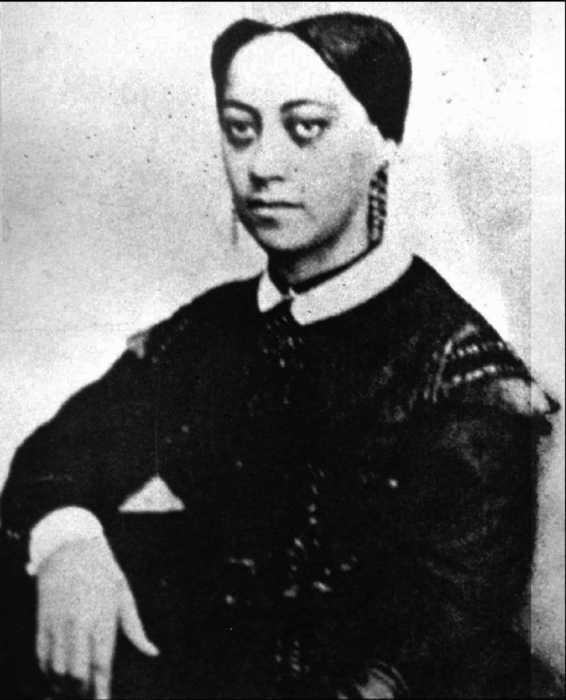
SSMt7.St.4

VIA

Mary Ellen Pleasant is perhaps better known as “Mammy Pleasant”, but it was a name she detested. She was born a slave in Georgia some time between 1814 and 1817, the illegitimate daughter of an enslaved Vodou priestess from Haiti and a Virginia governor’s son, John Pleasants. She was bought out of slavery by a planter and indentured for nine years as a store clerk with abolitionist Quakers in Massachusetts.

Around 1841 she married a wealthy mulatto merchant/contractor from Ohio and Philadelphia named James Smith, who was also a slave rescuer on the Underground Railroad. The two worked to help slaves flee to safety in Canada and safe states. Smith died in 1844, leaving her a $45,000 fortune and a plantation run by freedmen near Harper’s Ferry, Virginia.

Because of slaver reaction to her own ongoing Underground Railroad activities, she was forced to flee to New Orleans in 1850 where she met the Vodou queen Marie Laveau who trained her in how to “pressure the powerful to help the powerless” —blacks and poor women—gain rights and jobs. She then went to San Francisco, arriving in April 1852. Because she had no “freedom papers” she passed herself off as white, while she worked as a steward and cook in a white boardinghouse and invested in real estate and various business activities.

Pleasant’s training with Marie Laveau proved beneficial. Pleasant became so successful at leveraging social change that many called her San Francisco’s “Black City Hall”. Her activities and her money helped ex-slaves avoid extradition, start businesses and find employment in hotels, homes and on the steamships and railroads of California.

In 1858 she returned to the East, bought land to house escaped slaves, and aided abolitionist John Brown both with money and by riding in advance of his famous raid at Harper’s Ferry encouraging slaves to join him.

She went back to San Francisco where her investments with an influential business partner helped her amass a joint fortune estimated at $30 million. She later led the Franchise League movement in San Francisco that earned blacks the right to testify in court, and to ride the trolleys. Her lawsuit in 1868 in San Francisco against the North Beach and Mission RailRoad was used as a precedent in 1982 to achieve contemporary civil rights. Mary Ellen Pleasant died in San Francisco in 1904. Her body was taken by friends to Napa and buried in Tulocay Cemetery. On her tombstone is inscribed “the mother of civil rights in California.”

For more information, incuding a book on Mary Ellen Pleasant by Susheel Bibbs, see http://hometown.aol.com/mepleasant.

VIA

“Mammy Pleasant: Angel or Arch Fiend in the House of Mystery?”

By p. joseph potocki

Mary Ellen “Mammy” Pleasant’s legacy is an enigma rolled up inside layers of legend, gossip, greed, fantasy, racism and conjecture.

This week’s column title first headlined Sunday’s edition of the San Francisco Call—back on May 7, 1899. That 19th century investigative hit piece featured three unflattering John Clawson illustrations portraying “Mammy Pleasant” as a bonneted evil-eyed crone. The story gobbled up the entire front page of that day’s paper. Its “Angel or Arch Fiend” dualism embodies endless confusion and contradictory assertions surrounding the life of this incredible woman—confusion and contradictions lingering on to this very day.

The “Mammy” tag, clearly meant to be a slam, fits neatly within a cluster of Black stereotypes. While Pleasant’s tall, thin frame, her finely honed features and regal bearing contrast sharply with the rotund happy-to-be-a-slave mammy of plantation lore, the name itself attempts to place her on par with a Samba, an Uncle Tom, Step and Fetchit, or to a licentious Jezebel. The mythology of these “halcyon days” of slavery is what social historian Eric Lott calls “the dialectic flickering of racial insult and racial envy.”

Mary Ellen “Mammy” Pleasant’s legacy is an enigma rolled up inside layers of legend, gossip, greed, fantasy, racism and conjecture. She’s been called “San Francisco’s Powerful And Sinister Ruler”, “The Black City Hall”, but also a “one woman social agency” and “the Mother of Civil Rights in California.” That covers one heck of a lot of reputational territory.

Some claim that Mary Ellen Pleasant was a mixed blood Voodoo Queen who aimed “the black arts” against her enemies, that she sold babies, murdered as many as 49 people, ran brothels, committed fraud, spied through walls on victims she would later blackmail, and that she held unholy powers over a vast network of underlings and protégés. One rival charged that Pleasant murdered the rival’s husband, and having accomplished the dastardly deed Pleasant then “put her fingers in the hole in the top of his head and pulled out the protruding brains.”

Others tout Mary Ellen Pleasant’s work as a philanthropist, her many devoted friends, both black and white, her financial wizardry, undying devotion to women’s and civil rights, and, before that—her commitment to the abolition of slavery. In fact, Mary Ellen Pleasant’s Napa gravestone reads—“SHE WAS A FRIEND OF JOHN BROWN.”

Indeed, upon Brown’s capture following his ill-fated attack on Harper’s Ferry he carried with him a promissory note signed MEP. Had not the authorities misread the letter M for a W its certain Mary Ellen Pleasant’s neck would have been stretched as did John Brown’s.

Everything about Pleasant’s formative years is subject to debate. She was born a slave in Virginia, or Georgia, or perhaps it was Louisiana. She claims to have been born free in Philadelphia on August 19, 1814. Others say she was born in 1817, give or take a year—or two. She was convent educated, or else was entirely self-taught. Her mother may have been a West Indies Voodoo Queen, or not. Her father was a wealthy white slave owner. Then again, perhaps he was a slave. Nobody knows for sure.

What we do know is that sometime between 1848 and 1852 Mary Ellen Pleasant arrived in San Francisco. She may have been accompanied by her second husband, a former slave named James Pleasant, or Pleasants, or perhaps it was Pleasance. Whatever his surname it’s clear that the shrewd, focused and ambitious Mary Ellen was a power unto herself.

James, who died in 1877, seems hardly to have factored into Mary Ellen’s life. His one notable contribution was in the co-creation of Mary Ellen’s one and only child, Elizabeth, whom she called Lizzy. However, Mary Ellen gave their daughter her first husband’s family name, which was Smith. It was only fair, since James Henry Smith had left seed money to Mary Ellen upon his death some years before. Mary Ellen built her financial empire with the help of these funds.

Once in San Francisco, Pleasant set about purchasing boardinghouses, real estate, laundries, restaurants and stock shares in mines, railroads and other business ventures. This was no small accomplishment in an era of near unfettered legal bias against both racial minorities and women. Monies from these investments built her the 30-room mansion dubbed “the House of Mystery,” atop Cathedral Hill in San Francisco.

In her later years Pleasant purchased a large tract of land set against the Mayacamas Mountains. She named it Beltane, either after Thomas Bell, or, as some critics claim, in honor of the ancient pagan celebration of the same name. Beltane lies outside Glen Ellen, in the heart of the Sonoma Valley. The stately New Orleans-style Victorian house she built there (now a B&B) is set amidst an immense flowering garden and hundreds of shady oaks. One fanciful claim is that Pleasant cast Voodoo spells from a cave somewhere on the property.

But with all her accrued wealth, Mary Ellen Pleasant seems always to have performed, or dressed as if she performed, domestic labor. It’s said that she would ride to the markets in her own custom built carriage, accompanied by a driver and a footman, each garbed in impeccable livery. Though always attired in a servant’s black dress and large white apron, she “walked like a duchess.”

Sometime in the mid 1860s Mary Ellen Pleasant hooked up with a stockbroker named Thomas Bell. The “canny Scot” was money savvy, but lacked imagination. Pleasant took him under her wing. Together they created one of the largest financial partnerships in that era of San Francisco. Pleasant and Bell may (or may not) have been lovers.

It’s said that Mary Ellen arranged Thomas’s marriage to the future Teresa Bell, having first instructed Teresa in the “genteel arts” necessary to flourish in elite society. Others say Thomas Bell discovered the beautiful Teresa on a visit to a house of ill repute. No matter which story is true it seems the marriage provided adequate cover from charges of miscegenation, which might otherwise have been leveled at the cohabitation of the white Thomas Bell with the octoroon (or perhaps quadroon) “Mammy” Pleasant.

What’s undeniably true is that Mary Ellen Pleasant was actively involved in the Underground Railroad, and that she placed both former slaves and geographically displaced freemen as domestics in many of San Francisco’s “better” households. She also clearly advocated for and personally rescued unprotected and often attractive young white women, who Mary Ellen then trained to become the wives and mistresses of wealthy men in The City.

These actions led to many of the questionable charges against her, since persons beholden to Pleasant for their livelihoods provided her their eyes and ears within San Francisco’s most prominent households.

Mary Ellen was well into her 80’s when her finances began to unravel. She’d both overextended her business dealings, and had incurred the wrath of her former protege, Teresa Bell. Mary Ellen had exposed Teresa’s young lover to embezzlement charges, landing him a stint in San Quentin prison. As payback, the mentally unhinged Teresa became Pleasant’s eternal foe. She set to pummeling Pleasant’s good name—even long after seeing Mary Ellen to her grave. The sensitive nature of Thomas Bell’s and Mary Ellen Pleasant’s financial partnership allowed Teresa to gain control of their mutual resources following Thomas’ death. As a result Mary Ellen Pleasant was stripped of her wealth and forced into bankruptcy.

Pleasant’s diaries were stolen and lost to posterity, while many of Teresa’s hallucinatory rants made their way into newsprint following Pleasant’s death. Consequently, Teresa Bell’s accounts fundamentally shifted the Mary Ellen Pleasant mythos into the realm of evil phantasma. Fortunately, contemporary scholars have begun setting Mary Ellen Pleasant’s record as straight as a story with such twists, squiggles and gaping holes can be set. As confusing and contradictory as her life story may be, Mary Ellen Pleasant optimistically forecast her own legacy when she wrote:

“… You can’t explain away the truth.”

Mary Ellen Pleasant

SOURCE


re: a mammy tale

I want to yell so loud that Baby Girl can hear me that dirty ain’t a color, disease ain’t the Negro side a town.  I want to stop that moment from coming-and it come in ever white child’s life- when they start to think that colored folks ain’t as good as whites.- The Help

old photo of baby Ralph in an elaborate lace christening dress held proudly by a large black woman

"Black man with white child and dog." http://www.flickr.com/photos/george_eastman_house/2720789660/

“Black man with white child and dog.” via a “Manny”

"White-capped nurse holding infant." http://www.flickr.com/photos/floridamemory/3248110220/

“White-capped nurse holding infant.” via
"Negro domestic servant, Atlanta, GA, May 1939." http://www.flickr.com/photos/nypl/3110575890/“Negro domestic servant, Atlanta, GA, May 1939.” via

"Child and nurse." http://www.flickr.com/photos/george_eastman_house/2678243048/

“Child and nurse.” via

…the dichotomy of love and disdain living side-by-side is what surprises me- The Help

Mammy & Child-1850

some photos found @ postpostracial

yesterday’s history

When I started reading this article I thought, “This is about to be some ‘tragic mulatto’ b.s.”  Much to my surprise, it isn’t really.  I think Sarah played the part of the tragic mulatto very well, and got exactly what she wanted and deserved.  I wonder if the congregation’s response would have been different if “Pinky” hadn’t been quite so pink, but maybe “Brownie” instead.  Just a thought.  I also like this piece of our history because once upon a time, in a former life in which I considered myself black, I was a nanny and I worked in Brooklyn Heights and I walked by that church every day and was very drawn to it.  Part of me knew… And part of me was so clueless.

On This Day in History: June 1
Rev. Beecher’s Freedom Auction

by Vernon Parker

VIA

On June 1, 1856, Henry Ward Beecher, minister of Plymouth (Congregational) Church, and an ardent supporter of the antislavery cause, held a public “auction” of a young mulatto slave named Sarah to dramatize the evils of slavery.

The Brooklyn Daily Eagle reported that “she had been brought from a plantation near Staunton, Virginia.” When Sarah was called to the pulpit, she … “walked slowly, head bowed, and took a seat near the famous minister. She lifted her eyes, stared at the spellbound audience, and burst into sobs. Her plight tugged at the heart of the most stolid Congregationalist as Beecher’s inflamed rhetoric described her life. Daughter of a well-known white citizen, she had been put up for sale by her own father. The slave dealer involved contacted Beecher through a mutual friend and they struck a deal allowing Sarah to go north with the promise of either her return or the full manumission fee.”

The mock auction raised sufficient funds to purchase her freedom and buy her a modest home in Peekskill, New York.

The following is an excerpt from James H. Callender’s book Yesterdays on Brooklyn Heights: “As the anti-slavery agitation increased, Mr. Beecher thundered his invectives against the slave-owners of the South, and many of the leading men of his church were said to be directors of the famous ‘Underground Railroad’ by which fugitive slaves were passed along from the South across the border to Canada. It was at the close of one of his most powerful sermons that Mr. Beecher said he had a little matter he wished to present to the congregation. No one had any idea as to what he was going to say and the people waited in profound silence.

“He then suddenly burst forth, ‘Sarah, come up here!’ As the audience gazed, a little mulatto girl arose in the body of the church, ran up the pulpit steps and took Mr. Beecher’s hand. Turning to the assembled multitude, he said — ‘This little girl is a slave, and I have promised her owner $1,200, his price for her, or she will be returned to slavery. Pass the baskets.’ A scarcely stifled sob arose from the almost three thousand present. Bills of all denominations, jewelry, and watches and chains were flung in the overflowing baskets and when the total was counted, Mr. Beecher announced, amid thunders of applause, that Sarah was free, and enough remained to strike the shackles from the limbs of several others.”

A tintype of Sarah, also known as “Pinky,” the young mulatto slave whose freedom was “auctioned” by Rev. Henry Ward Beecher.

racial identity shaped by social experience, or white mulattoes

This entire post is reblogged from Renegade South: histories of unconventional southerners.  I find it to be a fascinating piece of American history.  It’s one of those stories in which “american” history and “african-american” history are so intertwined that a distinction between the two can hardly be made.  That’s just how it always should be, in my opinion.  This country has just one history.  It’s black and white and everything in between.  The story is long and may be hard to follow, but I think it’s worth the effort.

The Family Origins of Vernon Dahmer, Civil Rights Activist

by renegadesouth

Vernon F. Dahmer, a well known Mississippi civil rights worker, was murdered in 1966 by white supremacists connected to the Ku Klux Klan. Before the night of January 10, 1966, when the Dahmer grocery store and home were firebombed, Vernon had been leading voter registration drives in his community. To facilitate that effort, he had recently placed a voter registration book in the grocery store he owned.

Dahmer Grocery Store

Vernon Dahmer’s grocery store, located on Monroe Road, 3.5 miles from the Jones County line. Photo courtesy of Vernon Dahmer, Jr.

Vernon Dahmer, Western Union Telegram

It took many years and five court trials to convict KKK Imperial Wizard Sam Bowers in 1998 of having ordered the murder of Vernon Dahmer. Today, Dahmer is revered for his courageous work on behalf of black civil rights. In honor of his memory, both a street and memorial park in Hattiesburg bear his name.

In the essay that follows, Dahmer’s grandniece, Wilmer Watts Backstrom, and Yvonne Bivins, a member of his extended family, enrich our understanding by telling the story of his family roots in southern Mississippi. Dahmer’s multiracial heritage included white, black, and Indian ancestors. The narrative begins with the story of his grandmother, Laura Barnes.

The Family Origins of Vernon F. Dahmer, Mississippi Civil Rights Activist

By Wilmer Watts Backstrom and Yvonne Bivins

Laura Barnes was born in Jones County, MS in October 1854. According to her daughter, Roxanne Craft, “she was given to a black family to raise because she was born out of wedlock to a white girl.”

The 1870 census for Twp 9 in NE Jones County, Mississippi, shows that fifteen-year-old Laura was living in the household of Ann Barnes, a 55-year-old mulatto woman born in Mississippi whose occupation was housekeeper. A young mulatto boy, Augustus, age 12, also lived in the home.  Living next door to the Barnes family were Andrew and Annice (Brumfield) Dahmer.

Laura Barnes

Laura Barnes, grandmother of Vernon Dahmer, Sr., courtesy of Vernon Dahmer, Jr.

After the Civil War, Andrew Dahmer and his brothers became traveling salesmen who peddled their wares in Wayne, Jones, and Perry Counties in Mississippi. Andrew soon met and married Annice Brumfield, whose mother, Altamarah Knight Brumfield, was the daughter aunt of Newt Knight and Serena Knight.

Andrew and Annice’s neighbor, Laura Barnes, met Andrew’s brother, Peter Dahmer, in the early 1870s. They began a relationship that resulted in the birth of a baby boy in 1872, who Laura named George Washington Dahmer. Peter apparently did not acknowledge his child, and soon moved to Chickasaw County with several brothers, where they farmed and built a mercantile business.

For giving birth out of wedlock, Laura became a “marked woman.” During this period in her life, she operated a boarding house for the railroad and sawmill workers in northeast Covington County and near “Sullivan’s Hollow” in Smith County. The “Hollow” was notorious for its lawlessness and racial bigotry.  Blacks were not welcome there.  Black families that did live there were descendants of Craft and Sullivan slaves.

Laura hired a black man from the hollow named Charlie Craft. Working closely together on her place, they soon fell in love and developed a relationship. This would bring trouble, because although Laura was raised by a mulatto woman and listed as mulatto on census records, whites still considered her off limits to a black man.

Charlie and Laura Barnes Craft

Charlie and Laura Barnes Craft, grandparents of Vernon Dahmer. Photo courtesy of Vernon Dahmer, Jr.

Charlie Craft was born in Smith County, MS, around 1853.  According to family history, he was part Creek Indian and part African, with piercing eyes and coal black straight hair. A former slave of Bryant Craft, Charlie was known as a man who had never run from a fight. Story has it that after a shootout with the infamous Sullivans, he left Smith County, but doubled back to spirit away his siblings. Because newly freed slaves were not welcome in Smith County, they moved to Covington County, where they settled on a ridge south of the Hollow in the Oakohay area. Here, they established a prosperous community called Hopewell.

By 1880, thirty-year-old Charlie and twenty-eight-year old Laura lived in the Oakohay District.  Four children lived with them: George (Laura’s son by Peter Dahmer), age 10; [Roxanne] Viola, age 7; Bettie, age 5; and Elnathan, age 2. All, including Laura and her son George, were listed as “mulattos” on the 1880 federal manuscript census for Covington County.  Living nearby were Charlie Craft’s mother, Melvina, and several siblings.

One night a local white mob filled with home brew surrounded and attacked their home.  Both Laura and Charlie were excellent shots. Laura shot and killed one of attackers as they tried to protect their children from the mob and, in so doing, the couple had to flee “the ridge.” Laura’s son, George Dahmer, helped them escape.  Upon arriving in the Kelly Settlement, they moved off in the swamps on the Leaf River on the old “William Jenkins Place.”

George Washington Dahmer

George Washington Dahmer, father of Vernon Dahmer, son of Laura Barnes Craft and Peter Dahmer, stepson of Charlie Craft. Photo courtesy of Vernon Dahmer, Jr

The area commonly known as Kelly Settlement was settled by John Kelly, a white man born in North Carolina about 1750.  John and his wife, Amelia, left Hancock County, GA, and arrived in Mississippi in late 1819, settling in Perry County.  By 1820, the Kelly household included John, Amelia, sons Green, 16, and Osborne, 18, Osborne’s wife Joene, and nine slaves. Among these slaves were the parents of Sarah, whose descendants later formed Kelly Settlement. Although the 1820 federal manuscript census for Perry County listed no free blacks living in the household of John and Amelia Kelly, descendants claim that Sarah’s folks were not slaves, but free people who accompanied the Kelly family to Mississippi.

After the Civil War, Sarah’s children began to homestead land, marry, and raise children.  Working together as they had down on John Kelly’s place, they cleared the land to raise crops, cut timber, and hauled it to the Leaf River by oxen to float it down to the Gulf Coast.

Laura Barnes Craft’s son, George Dahmer, moved to the Kelly community ahead of the rest of the Crafts. In 1895, George married Ellen Louvenia Kelly, the daughter of Warren Kelly and Henrietta McComb.  Like his own mother, Laura, Ellen’s mother, Henrietta, was a white child born out of wedlock and given to a black family, the McCombs, to raise.  The McCombs were living on the William Jenkins place when the Crafts arrived in Perry County.  Ellen Kelly’s father, Warren Kelly, was the mulatto son of Green H. Kelly and the grandson of John Kelly, the original white settler of the area. Warren Kelly’s mother was Sarah, the daughter of John Kelly’s slaves (or perhaps free black servants).

Warren Kelly

Warren Kelly, son of Green Kelly and Sarah Kelly, father of Ellen Kelly Dahmer, grandfather of Vernon Dahmer. Photo courtesy of Vernon Dahmer, Jr.

It was to this community that Charlie and Laura Barnes Craft fled with the aid of Laura’s son, George Dahmer. According to Wilmer Watts Backstrom (their great granddaughter), Charlie and Laura’s family lived in isolation for many years after being forced out of Covington County; they were prone to violent disagreements and exhibited heated tempers. This family drank heavily with much cursing.  They lived down in the swamps isolated from the community until the children were all grown.  As the children became adults, they gradually moved out of the swamps, married and had families of their own.

Charlie was employed by Green Kelly as a night watchman on the Leaf River. He died before 1910 in Forrest County, MS.  By that year, several of his and Laura’s children were married and living in Kelly Settlement, MS. Although Laura’s name does not appear on the 1910 Census, she was still alive that year. In 1920, she lived with her oldest child, daughter Roxanne Craft Watts, on the Dixie Highway, Forrest County, MS.  Laura died on 5 June 1922.

Ellen Louvenia Kelly

Ellen Louvenia Kelly, wife of George Dahmer, mother of Vernon Dahmer, daughter of Warren and Henrietta McComb Kelly. Photo courtesy of Vernon Dahmer, Jr.

Laura’s son and Charlie’s stepson, George Dahmer, identified as a black man even though his mother and biological father were white, demonstrating how strongly one’s racial identity is shaped by social experience.

George and Ellen Kelly Dahmer were the parents of Vernon Dahmer. George was known as an honest, hardworking man of outstanding integrity, rich in character rather than worldly goods. Like his father, Vernon worked hard and became a successful storekeeper and commercial farmer. Before his tragic death, he served as music director and Sunday school teacher at the Shady Grove Baptist Church, as well as president of the Forrest County Chapter of the NAACP. He and his wife, Ellie Jewell Davis, were the parents of seven sons and one daughter.

Vernon F. Dahmer, Sr.

Vernon F. Dahmer, Sr. Photo courtesy of Vernon Dahmer, Jr.

Vernon and Ellie Dahmer Family

Vernon Dahmer’s wife and children: seated left to right, George Weldon, Ellie J., Alvin; standing, left to right, Vernon Jr., Betty Ellen, Harold. Photo courtesy of Vernon Dahmer, Jr.

re: emancipated slaves

I posted this picture a couple of weeks ago, but just came across an article (found HERE) with details on those in the photograph.  Wow!
One Drop3.jpg

In honor of Confederate History Month, I present a group of emancipated Louisiana slaves. The following letter was written by Colonel George Hanks, who commanded a Union Corps composed entirely of black troops. Hanks was attempting to raise money for the education of freed slaves:

To the Editor of Harper’s Weekly:

The group of emancipated slaves whose portraits I send you were brought by Colonel Hanks and Mr. Phillip Bacon from New Orleans, where they were set free by General Butler. Mr. Bacon went to New Orleans with our army, and was for eighteen months employed as Assistant-Superintendent of Freedmen, under the care of Colonel Hanks. He established the first school in Louisiana for emancipated slaves, and these children were among his pupils. He will soon return to Louisiana to resume his labor.

Rebecca Huger is eleven years old, and was a slave in her father’s house, the special attendant of a girl a little older than herself. To all appearance she is perfectly white. Her complexion, hair, and features show not the slightest trace of negro blood. In the few months during which she has been at school she has learned to read well, and writes as neatly as most children of her age. Her mother and grandmother live in New Orleans, where they support themselves comfortably by their own labor. The grandmother, an intelligent mulatto, told Mr. Bacon that she had “raised” a large family of children, but these are all that are left to her.

Rosina Downs is not quite seven years old. She is a fair child, with blonde complexion and silky hair. Her father is in the rebel army. She has one sister as white as herself, and three brothers who are darker. Her mother, a bright mulatto, lives in New Orleans in a poor hut, and has hard work to support her family.

Charles Taylor is eight years old. His complexion is very fair, his hair light and silky. Three out of five boys in any school in New York are darker than he. Yet this white boy, with his mother, as he declares, has been twice sold as a slave. First by his father and “owner,” Alexander Wethers, of Lewis County, Virginia, to a slave-trader named Harrison, who sold them to Mr. Thornhill of New Orleans. This man fled at the approach of our army, and his slaves were liberated by General Butler.The boy is decidedly intelligent, and though he has been at school less than a year he reads and writes very well. His mother is a mulatto; she had one daughter sold into Texas before she herself left Virginia, and one son who, she supposes, is with his father in Virginia. These three children, to all appearance of unmixed white race, came to Philadelphia last December, and were taken by their protector, Mr. Bacon, to the St. Lawrence Hotel on Chestnut Street. Within a few hours, Mr. Bacon informed me, he was notified by the landlord that they must therefore be colored persons, and he kept a hotel for white people. From this hospitable establishment the children were taken to the “Continental,” where they were received without hesitation.

Wilson Chinn is about 60 years old, he was “raised” by Isaac Howard of Woodford County, Kentucky. When 21 years old he was taken down the river and sold to Volsey B. Marmillion, a sugar planter about 45 miles above New Orleans. This man was accustomed to brand his negroes, and Wilson has on his forehead the letters “V. B. M.” Of the 210 slaves on this plantation 105 left at one time and came into the Union camp. Thirty of them had been branded like cattle with a hot iron, four of them on the forehead, and the others on the breast or arm.

Augusta Boujey is nine years old. Her mother, who is almost white, was owned by her half-brother, named Solamon, who still retains two of her children.

Mary Johnson was cook in her master’s family in New Orleans. On her left arm are scars of three cuts given to her by her mistress with a rawhide. On her back are scars of more than fifty cuts given by her master. The occasion was that one morning she was half an hour behind time in bringing up his five o’clock cup of coffee. As the Union army approached she ran away from her master, and has since been employed by Colonel Hanks as cook.

Isaac White is a black boy of eight years; but none the less intelligent than his whiter companions. He has been in school about seven months, and I venture to say that not one boy in fifty would have made as much improvement in that space of time.

Robert Whitehead–the Reverend Mr. Whitehead perhaps we ought to style him, since he is a regularly-ordained preacher–was born in Baltimore. He was taken to Norfolk, Virginia, by a Dr. A. F. N. Cook, and sold for $1525; from Norfolk he was taken to New Orleans where he was bought for $1775 by a Dr. Leslie, who hired him out as house and ship painter. When he had earned and paid over that sum to his master, he suggested that a small present for himself would be quite appropriate. Dr. Leslie thought the request reasonable, and made him a donation of a whole quarter of a dollar. The reverend gentleman can read and write well, and is a very stirring speaker. Just now he belongs to the church militant, having enlisted in the United States army.

changing attitudes and understandings about race

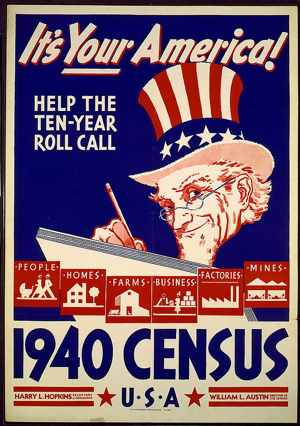
I thought I was over the Census, but my interest keeps getting piqued despite my best efforts to ignore the chatter.  What I’m most intrigued by at this moment is the notion that in the next decade or two, if we keep changing our attitudes and understandings for the better, a majority of Americans could come to view themselves as mixed race.  And by that I mean Americans who today consider themselves to be exclusively white or black despite the abstract knowledge that we are all mixed up to some extent.  And if that paradigm shift happens there won’t be much use in classifying ourselves in terms of “race” because we will see ourselves as generally more similar than different regardless of color/phenotype.  Although I respect Obama’s right (and that of every individual) to self-identify any way he chooses, I feel that the checking of just one box is holding us back from reaching that “promised land” where we aren’t so entrenched in these antiquated notions of race and color, but perhaps more interested in heart, spirit, intellect …. Once again I’m a bit speechless because I’m not sure what the world will look like when instinctively and instantly we take people for what the truly are instead of what they truly look like.

Rep. Patrick McHenry claims every census in history has asked for an individual’s race

SOURCE

In an op-ed piece for the conservative Web site Red State on April 1, 2010, Rep. Patrick McHenry, R-NC, the ranking Republican on the Information Policy, Census and National Archives Subcommittee, sought to tamp down some of the misinformation being spread about the census by “otherwise well-meaning conservatives” and warned that failing to fully participate in the census could create a competitive advantage for Democrats.

Specifically, McHenry attempted to allay the fear among some Republicans who distrust the government and view the census as overly prying.

…In his posting on Red State, McHenry said “the most private question on this year’s form asks for an individual’s race and that question has been asked by every census since the 1790 census conducted under then-President George Washington.”

We decided to check that claim out, which was similar to one from Census Bureau Director Robert M. Groves in a March 15, 2010, press release: “It’s one of the shortest forms in our lifetime with just 10 questions very much like the questions James Madison and Thomas Jefferson helped craft on the very first Census.”

Conveniently, the U.S. Census Bureau keeps historical records online of all the questions asked in every census going back to the first one in 1790.

If you follow the census questions asked through U.S. history, you can see how they reflect changing attitudes and understandings about race.

Yes, the 1790 census and others in the early years of the survey addressed race, but it was hardly a matter of checking a box. Rather, the census asked about the number of free white males and females; the number of “all other free persons” and the number of slaves.

By 1850, the Census asked about people’s “color.” According to the Census archives, this column was to be left blank if a person was white, marked “B” if a person was black, and marked “M” if a person was mulatto. A separate form listed slave inhabitants, the last census to do so. By 1870, the “color” options included “W” for white, “B” for black, “M” for mulatto, “C” for Chinese (a category which included all Asians), or “I” for American Indian. The 1890 census added Japanese and more mixed-race categories — mulatto, quadroon and even octoroon, according to amounts of perceived African blood. By 1920 Filipino and Korean sprang up, along with the improbable racial term “Hindu.” New labels emerged after World War II, with Hawaiian, Eskimo and others joining the parade of terms.  The question morphed into “color or race” in the mid-1900s, and then, finally to just “race” in 1970. In 1980, in addition to race, the Census began asking if a person was of Spanish or Hispanic origin or descent.

It’s fair to say that every census has addressed the issue of race in some fashion. But we think it’s a bit of a stretch when McHenry says “this year’s asks for an individual’s race and that question has been asked by every census since the 1790 census.”

In the 1790 Census (and several after it), a respondent was not simply asked their race. Rather, they were asked to list the number of white people, the number of “other free persons” and the number of slaves. In other words, it didn’t ask for the race of non-whites. One could argue this reflects the common attitude about race at the time. But that’s hardly the same as the 2010 version that simply asks a person’s race.

Prior to the Civil War the census was more concerned with whether someone was enslaved or not, than establishing whether someone was white. This is a very different conception from our modern idea of race. Post Civil War, the terminology changed (from “color” to “race,” for example) and the categories expanded over time. Certainly these are different standards when compared to today’s measures. But again, one could argue that the questions comported with attitudes about race at those times, and the census has always asked discriptive questions that corrolate to race. So we rule McHenry’s claim Mostly True.

the greatest negro?

I immediately thought of Obama while reading this article and am quite, quite certain that most agree that he is indeed a “Negro.”  That there was debate around Douglass’ negrocity ( I like to make up words sometimes) is of interest to me because I’m fascinated by the fact that mulatto was a valid and recognized identity in America before 1920.  Then it wasn’t anymore.  The ranking of Negroes from greatest to least strikes me as ludicrous.  That being said, the question, “Will Obama go down in history as the greatest Negro who ever lived?” popped into my head.  And then I thought that seeing as he isn’t one “in the full sense of the term,”  MLK probably outranks him.  How quickly I went from judging the system of rankings to ordering some myself!

Knoxville’s farewell to a civil-rights icon

By Robert Booker

SOURCE

A large crowd packed into Logan Temple A.M.E. Zion Church to honor the memory of the country’s best known civil-rights advocate. Among them were Knoxville’s black elite.

It was Feb. 25, 1895, and they had come to say farewell to Frederick Douglass, who had been born into slavery and died six days earlier.

Two days before the memorial, The Knoxville Tribune had its say about Douglass and wondered if he was a true Negro: “If we consider Douglass as a Negro, he was the brightest of his race in America. But he was not a Negro in the full sense of the term. Although born a slave, his father was a white man and his mother was a mulatto. Born a bastard and a slave, he rose to distinction and influences, and there were those among a class of white people who delighted to honor him.

“There are those who class him as the greatest Negro. This estimate of him is extravagant and unwarranted. In the first place he was not a Negro, and in the next place he is outranked by other Negroes. The greatest Negro who ever lived was Toussaint L’Ouverture the Haitian general, whose death was and will always be a dishonor to France. No Negro in this country ever approached L’Ouverture in intellect.”

L’Ouverture (1744-1803) was the Haitian independence leader who took part in the slave revolt in that country in 1790. He joined the Spaniards when they attacked the French in 1793, but fought for the French when they agreed to abolish slavery. By 1801 he had virtual control over Hispaniola, but was arrested and died in a French prison.

The blacks who spoke at the Douglass memorial took issue with the Tribunes’s assessment of him.

Attorney Samuel R. Maples said he wanted “to correct a statement in one of the local papers that Douglass boasted of his white blood and denied being a Negro. This was not true. Douglass never denied being a Negro. He was very proud of his race.”

Attorney William F. Yardley, who had introduced Douglass when he spoke here at Staub’s Opera House Nov. 21, 1881, said Douglass “Was the victim of the great American curse – slavery. He slept with dogs and ate the crumbs from his master’s table, but his great mind and energy lifted him to the loftiest heights of fame. He was not a creature of circumstance but of force. He was tireless and had been the greatest blessing to his race.”

Charles W. Cansler spoke of Douglass as “An anti-slavery agitator who represented a great moral principle and not a minister of malice. He was seventy-eight years old when he died and spent his life earnestly in the extension of freedom and in establishing justice among men. He was the Moses of his race, and it is hard to tell what his heath means to us.”

Rev. J.R. Riley, pastor of Shiloh Presbyterian Church, spoke of Douglass as a leader: “He was carved by the hand of deity to be a great leader, though cradled in the most iniquitous institution – American slavery – and schooled in dire adversity, his power of mind and greatness of spirit had surmounted all, and he stood out boldly as the greatest man of his race and the peer of all great men.”

It seems that Riley, who was pastor of Shiloh from 1891 to 1913, knew Douglass personally and they had many experiences together. He said his friend had “great personal magnetism. His quick wit and ability to read men made him irresistible in his influence among men.”

the cover of the sheet music for Frederick Douglass's funeral march

This image shows the front cover of “Frederick Douglass Funeral March.”  At each corner of his portrait are pen and ink drawings in circular frames that depict the slave trade, bondage, auction block, and freedom.

emancipated slaves, white and colored

On January 30, 1864, Harper’s Weekly printed an engraving of a photograph, entitled “Emancipated Slaves, White and Colored,” depicting three adults and five children who had been brought north from Louisiana by Colonel George H. Hanks and set free by Major General Nathaniel P. Banks. The group made a series of public appearances and were photographed as part of a campaign to raise funds for public schools for freed slaves, the first of which was established by Major General Banks in October 1863. The hope was, writes Kathleen Collins in “Portraits of Slave Children,” that “these enigmatic portraits of Caucasian-featured children” would galvanize “Northern benefactors to contribute to the future of a race to which these children found themselves arbitrarily confined” (207). The “white slaves” depicted in the engraving were described by the editor of Harper’s as being “as white, as intelligent, as docile, as most of our own children” (66). “Yet,” he continued, “the ‘chivalry,’ the ‘gentlemen’ of the Slave States, by the awful logic of the system, doom them all to the fate of swine; and, so far as they can, the parents and brothers of these little ones destroy the light of humanity in their souls” (66). In comparing these unfortunate slave children to those of its subscribers, the magazine hoped to stir their emotions against a system so unconscionable that it doomed its own children to a life of unspeakable cruelty.

SOURCE

speaking of isabella fowler…

So here’s what came from my search for more on Isabella Fowler.  In these paragraphs excerpted from Black Slaveowners: free Black slave masters in South Carolina, 1790-1860 by Larry Koger we see where the intraracial divide between mulattoes and “negroes”started.  I must admit that I am disappointed (to say the least) in the behavior of these privileged “biracials.”  I cannot defend the behavior.  Don’t want to.  On the other hand, it’s easy for me to sit in judgement in the year 2010 when my freedom and my opportunity for advancement are not on the line.  I would love to believe that back then, were I given the choice I would free my people.  That I would not see myself as separate from or better than, and that the only privilege I would take advantage of would be the one by which I could exercise my right to right some wrongs and provide an opportunity for others to be liberated and elevated alongside me.  I would love to believe that… but circumstances were different and I can’t possibly know how I would have behaved.  I do know that none of those attitudes/ideals have taken root in me, yet the accusations continue to be hurled and conclusions jumped to.  All of that being said, it’s 2010 and the time for ridding ourselves of these old paradigms of house slaves vs. field hands is long overdue. Maybe by 2012… according to Willie Lynch (perhaps a mythical “legend”) that’s when the stronghold of slave conditioning will lose it’s grip.

The mulatto children of slave masters, who were accepted as legitimate heirs, held a position in the household of their fathers which placed them in a superior status over the other slaves.  These children were accustomed to the master-slave relationship; however, they conceived of themselves not as slaves but slave masters.  In spite of the fact that they were of African descent, the white blood that ran through their veins separated them from their fellow black slaves on the estates of their fathers.  For example, the children of Michael Fowler, a white planter of Christ Church Parish, and his black companion named Sibb were raised in an environment which condoned slavery.  According to Calvin D. Wilson, in 1912, “there was a rich planter in Charleston named Fowler who took a woman of African descent and established her in his home…. There was a daughter born, who was called Isabella; the planter insisted that she should be known as Miss Fowler.”  Clearly Michael Fowler expected his slaves to serve and regard his mulatto children as thought they were white.  So the offspring of Fowler were treated as little masters and mistresses by the slaves of their father.

In fact, the process of cultural assimilation was so complete that the children of Michael Fowler, once reaching maturity and inheriting their father’s plantation and slaves, chose to align themselves with the values of white slaveowners rather than embracing the spirit of freedom and liberty espoused by the abolitionists.  In 1810, the estate of the deceased Michael Fowler was divided among his mulatto children….  When the descendants of Michael Fowler received their slaves, manumission was still the privilege of the slaveowners; however, none of the heirs chose to emancipate their slaves… Undoubtedly, the children of Michael Fowler considered slavery a viable labor system and chose to hold their slaves in bondage.

Mulatto children were not always acknowledged as the offspring of white slaveholders.  However, upon the death of their owners, they occasionally were manumitted and provided for once freed.  These children  probably were unaware of the bond of kinship to their owners.  Yet that bond allowed them to receive preferential treatment from their slave masters.  The unknowing mulatto offspring of white slaveowners often were trained as house servants or artisans.  Although they were not acknowledged as the children of slave masters, their encounter with the culture of their masters influenced them to become slaveowners.

In fact, the slaves of both mixed and unmixed racial heritage who served as house servants or artisans accepted certain aspects of the culture of white slaveowners.  Regrettably, the close interaction with the Southern culture influenced many slaves to identify with their owners.  For the house slaves, the contact with their masters and mistresses perpetuated the difference between themselves and the majority of the slaves who tilled the soil.  The house servants were taught to consider themselves superior to the common field hands.  Furthermore, the house slaves’ conception of superiority was reinforced by their dress, food, and housing, which was slightly better than that given to the field hands.  So it was that they separated themselves from the field slaves and occasionally accepted the values of their slaveowners and looked upon slavery as a justified institution.  As a consequence, they envied the life of splendor that their owners enjoyed and viewed slavery as a means of obtaining the luxuries possessed by their masters.

SOURCE

richard dereef

I wanted to know more about this “colored slave owner” after reading that small bit about him in the gullah tour article.  There is more information out there than I’d expected.  I wish I could see a photograph of his Caucasian and Indian (American) parents.  The New York Times article truly fascinates me.  First of all, I’d love to know who wrote it!  Secondly, it’s nice to hear (although there’s nothing nice about the sick and twisted system) that there were legitimate and acknowledged mulatto children.  But that nice feeling quickly disappeared when I searched for more information on Isabella.  I’ll include that in a separate post.

[Richard DeReef]

Richard Edward DeReef was one of the richest black men in Charleston. He had a Wharf at the end of Chapel Street, was in the “woodage business” (wood), and owned rental properties, most of which are located on the East side of Charleston. Because of his dark complexion he would have never been accepted into Charleston’s elite mulatto society but he claimed to be of Indian descent, and he had money.

IMAGE: ON RIGHT — Richard Edward Dereef (1798-1876), a free black wood factor and real estate investor, built this small two story frame single house sometime after he purchased the site in April, 1838. The site was part of a large lot, extending to Calhoun Street, on which Dereef erected several buildings, of which only this house remains. Dereef, a native Charlestonian, was one of the wealthiest men of the free black community. He and his son, Richard, Jr., had a wood factorage business on Dereef’s Wharf at the foot of Chapel Street, and lived nearby on Washington street. By 1867 Dereef had conveyed this property, apparently built for rental purposes, to Margaret Walker, a black woman.
(Stockton, unpub. MS.) SOURCE

COLORED SLAVE OWNERS.; One Family of Mixed Blood in Charleston Owned Forty Negro Servants.

May 26, 1907, Sunday

To the Editor of the New York Times:

Truth is stranger than fiction, and had not the information of the ownership of slaves by colored citizens of Charleston, and elsewhere, been sent forth by such an authority as The News and Courier, the statement would have been regarded as incredible. But The News and Courier has not stated nearly all the truth which is, according to your confession, surprising to you, and, according to your belief, surprising to many others in the North.

The prevalent views, State documents, Congressional debates, and lecture courses bearing upon the general subject render it difficult of belief that the proclamation of emancipation by Mr. Lincoln reduced many colored people of the South, and especially in the City of Charleston, from a state of affluence and competence to a condition of need, if not of poverty.

But such was the case.

Those slave owners were not called “negroes,” but “colored people,” as they were generally of mixed blood- sometimes of Caucasian and African; sometimes of Caucasian and Indian; (American.)  Many of the colored people of Charleston had no African blood whatever.  The question you ask, and The News and Courier failed to answer, is:  How did those people come into possession of their slaves- by inheritance, gift, or purchase?  The answer is, By all these ways.  They were generally the children of rich planters who, in the early days of the coast settlements, established themselves in lower South Carolina, with Charleston as the centre of operation.  These children were regarded as such, and not as illegitimate of slaves.  They bore the name of the father with recognition and as by right.  They were also educated.

Upon the death of the father these children would come, by inheritance, into possession of the estate, including beasts of burden, slaves, etc.  There was a very large number of free colored people in Charleston in the eighteenth century.

An interesting article on this subject may be found in the January issue of The Southern Workman.  Some of those who owned slaves in years before the war were by name De Reefs, McKinlays, Westons, Hollaways, Thornes, and Howards.  There are descendants of some of those people in  New York and Brooklyn to-day.  There is information enough at hand on this subject to fill a book, but let me relate you one story which may prove interesting.

There was a rich planter in Charleston of the name of Fowler.  He took a woman of African descent and established her in his home.  Whether there were a pledge of relationship or form of ceremony is not of record, but it was known that he had no other family.  There was a daughter born in that home to whom was given the name of Isabella.  But the planter insisted upon it that all persons should know her as Miss Fowler.  She grew to womanhood, and was married to Richard De Reef, a young man of Caucasian-Indian blood.  At the time of her marriage her father presented to her as a wedding gift a plantation and a sufficient number of slaves to work it.

The News and Courier says that two colored Charlestonians had each fourteen slaves, but the records of the family showed that at emanicpation Mrs. Isabella De Reef liverated forty instead of fourteen.

In another thing the News and Courier is wrong- that is, in saying those free persons of color had no political privileges.  The De Reef brothers- Richard and Joseph- born, respectively, in 1798 and in 1802, voted on reaching their majority, and ever after.  Some others may have enjoyed the same privilege, but there are colored men in Charleston to-day, and some now living elsewhere, who could claim the right to vote on the “grandfather clause”;  these were never enfranchised by an amendment to the Constitution of the United States.

A former Charlestonian.

New York, May 23, 1907.

click HERE for a link to a copy of the original NYTimes article